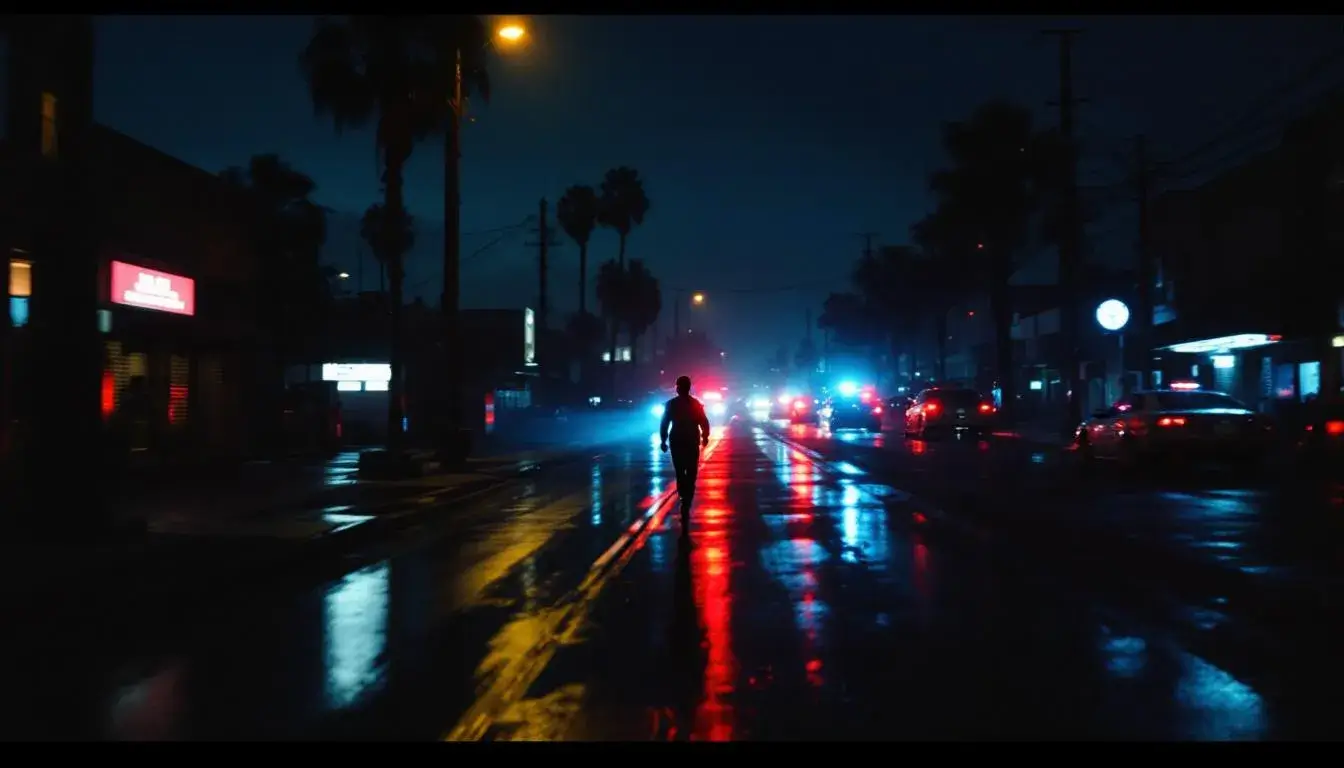
Ice-T 6 in the Mornin’: The B-Side That Invented Gangsta Rap
Ice-T 6 in the Mornin’ is the song that invented West Coast gangsta rap. Not influenced it, not paved the way for it — invented it. Released in 1986 as a throwaway B-side that Ice-T didn’t even think people wanted to hear, “6 in the Mornin'” became the blueprint for everything from N.W.A to Dr. Dre to Three 6 Mafia. One track, recorded on a shoestring budget by a former Army soldier who was faking party rap until his friends told him to stop pretending. What came out was a first-person crime narrative so vivid and immediate that it created a genre overnight.
Quick Facts: Ice-T “6 in the Mornin'”
| Artist | Ice-T |
| Song | 6 in the Mornin’ (also spelled “6 ‘N the Mornin'”) |
| Released | 1986 (12″ single B-side); 1987 (on Rhyme Pays album) |
| A-Side | “Dog’n the Wax (Ya Don’t Quit-Part II)” |
| Label | Techno Hop Records |
| Producer | Afrika Islam and the Unknown DJ |
| Genre | Gangsta rap, West Coast hip-hop |
| Significance | Widely considered the first West Coast gangsta rap song |
| Covered By | Three 6 Mafia, Master P, 2nd II None |
The B-Side Nobody Expected — How Ice-T 6 in the Mornin’ Was Born
In 1986, Ice-T was still figuring out who he was as a rapper. His early records — starting with “Coldest Rap” in 1982 — were party tracks. He was doing what he thought rappers were supposed to do: talk about the party, hype the crowd, keep it light. As he later told NPR’s Fresh Air: “I tried to rap in the party rap-type style because I was under the impression that’s what rappers did. But it was kind of like I was faking it.”
His friends called him on it. “My friends were like, you know, Ice, man, talk about what we do, man. Talk about how we live.” So he did. He wrote “6 in the Mornin'” as a first-person street narrative — a day-in-the-life story starting with a police raid at dawn and spiraling through crime, prison, and consequences.
Here’s the part that makes the story remarkable: Ice-T didn’t even think it was the main event. “6 in the Mornin'” was released as the B-side of a 12-inch single called “Dog’n the Wax (Ya Don’t Quit-Part II)” on Techno Hop Records. The A-side was the party track. The B-side was the experiment. As Ice-T recalled: “It was a B-side. I really didn’t think that that was what people wanted to hear, but the B-side turned out to be the biggest record and ended up being my identity, really.”
The B-side blew up. The A-side was forgotten. And Ice-T never made another party rap track again.
Schoolly D and the East Coast Spark That Lit the West Coast Fire
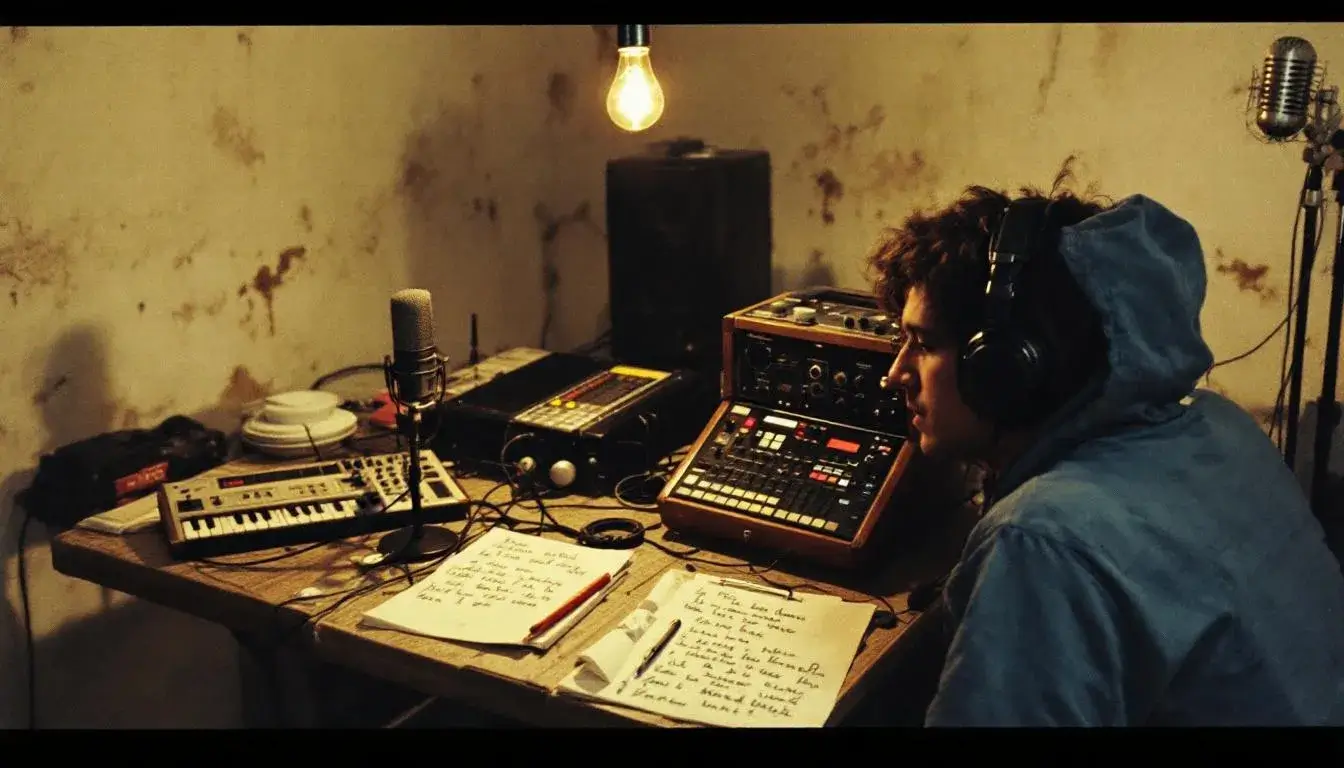
Ice-T didn’t invent gangsta rap in a vacuum. He’s always been honest about his inspiration: Schoolly D, a Philadelphia rapper whose 1985 track “P.S.K. What Does It Mean?” was the first hip-hop song to openly reference gang life (the title stands for Park Side Killers, a Philadelphia gang). Schoolly D’s raw, unapologetic delivery showed Ice-T that rap didn’t have to be about parties and bragging — it could be about the street, told straight, with no moral filter.
But what Ice-T did with that influence was distinctly West Coast and distinctly his own. Where Schoolly D’s approach was confrontational and aggressive, Ice-T brought narrative structure. “6 in the Mornin'” isn’t a collection of street boasts — it’s a story with a beginning, middle, and end. It starts at 6 AM with cops at the door, follows the protagonist through a day of crime and chaos, and ends with consequences. Ice-T called his writing style “faction” — factual situations put into fictional settings. “That way I could create these great adventures and these great stories.”
The literary DNA runs deeper. Ice-T took his stage name from Iceberg Slim (Robert Beck), the pimp-turned-author whose 1967 memoir Pimp: The Story of My Life pioneered the first-person criminal narrative in American literature. Schoolly D gave Ice-T permission to rap about the streets. Iceberg Slim gave him the storytelling framework. “6 in the Mornin'” was where those two influences collided.
Inside the Lyrics — A Verse-by-Verse Breakdown
The song opens with one of the most iconic lines in hip-hop history:
“6 in the mornin’, police at my door / Fresh Adidas squeak across the bathroom floor”
In two lines, Ice-T establishes character, setting, tension, and action. It’s 6 AM. Cops are raiding. The protagonist isn’t fighting — he’s running, Fresh Adidas squeaking on linoleum as he escapes through the bathroom window. That squeaking detail is what separates good writing from great writing. It’s specific, visual, and sensory in a way that no rapper had been before.
From there, the song unfolds as a series of connected vignettes — a day in the life of a young man on the wrong side of the law in mid-1980s South Central Los Angeles. The protagonist moves through gambling, confrontations, drug dealing, encounters with women, and run-ins with rival gangs. Each verse brings a new scenario, but the through-line never breaks: this is a life lived at full speed with the law always one step behind.
What makes the ice-t 6 in the mornin lyrics so influential isn’t just the subject matter — it’s the delivery. Ice-T uses a talk-rap style that’s closer to spoken word than the rhythmic cadences of Run-DMC or LL Cool J. The effect is conversational, almost confessional, like a friend telling you a story at 2 AM. This wasn’t how rappers sounded in 1986. East Coast hip-hop was about rhythmic precision and lyrical acrobatics. Ice-T was telling a movie in your ear.
The song’s moral complexity is also ahead of its time. Ice-T doesn’t glorify the lifestyle or condemn it — he reports it. The protagonist isn’t a hero or a villain. He’s a product of his environment, making choices that have consequences. When the narrator eventually faces those consequences, the listener understands both the appeal of the lifestyle and its inevitable endpoint. This “faction” approach — part autobiography, part fiction — would become Ice-T’s signature and the template for West Coast gangsta rap. For fans looking to rep the era that started it all, our Ice-T – Rhyme Pays Hoodie pays tribute to the debut album that gave “6 in the Mornin'” its permanent home.
How One B-Side Launched an Entire Genre
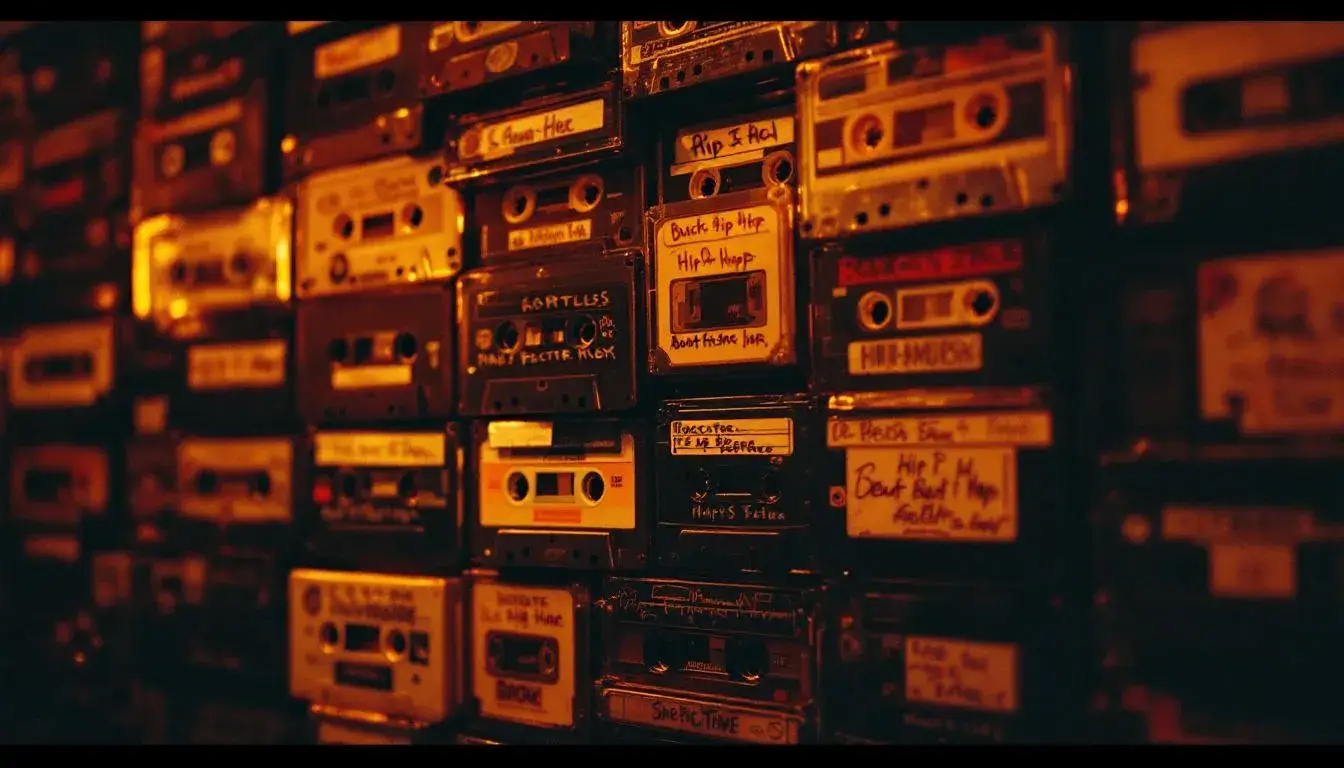
“6 in the Mornin'” spread through LA the way music moved in 1986: through cassette dubbing, car stereos, and word of mouth. There was no streaming, no social media, no playlist algorithms. A track either hit or it didn’t, and this one hit so hard that it changed the course of West Coast hip-hop permanently.
The track proved there was a massive audience for street narratives told from the inside. Within two years of its release, the floodgates opened:
- 1987 — Ice-T released Rhyme Pays, the first hip-hop album with a Parental Advisory sticker, with “6 in the Mornin'” as a featured track
- 1988 — N.W.A released Straight Outta Compton, taking the gangsta rap template Ice-T created and adding group dynamics and production polish
- 1988 — Ice-T released Power, his platinum sophomore album that refined the storytelling approach
- 1990s — The genre exploded with Snoop Dogg, Tupac, Dr. Dre’s The Chronic, and hundreds of West Coast artists building on the foundation Ice-T laid
As rapper 2nd II None put it: Ice-T’s “6 in the Mornin'” changed rap. It showed every kid in South Central, Compton, and Long Beach that their stories — the real stories, not the party versions — were worth telling. They call it gangster rap, but Ice-T always had a different name for it. “They call it gangster rap, but I called it reality-based rap, you know? And that’s how that form of music got started.”

Rep the Culture
Rhyme Pays gave “6 in the Mornin'” its album home and became the first hip-hop record to carry a Parental Advisory sticker. This hoodie honors the album that kicked open the door.
The Legacy — From Harvard to Three 6 Mafia

Nearly four decades later, “6 in the Mornin'” keeps proving its importance. In November 2023, Harvard University opened “Day One DNA: 50 Years in Hiphop Culture” — an exhibition at the Hutchins Center featuring over 200 objects from the personal archives of Ice-T and Afrika Islam. On display were Afrika Islam’s original Technics 1200 turntables from the late ’70s, the E-mu SP-1200 used to produce Ice-T’s albums, studio reels, concert footage, and the artifacts of a partnership that shaped West Coast hip-hop from the ground up.
The song’s direct musical influence is documented on WhoSampled. Three 6 Mafia recorded “3-6 in the Morning” — a direct cover. Master P recorded “6 ‘N Tha Mornin'” — another cover. 2nd II None did their own version. Dr. Dre sampled it on “Some L.A. Niggaz” from 2001. Papoose sampled it with Jadakiss and Jim Jones on “6am.” Even Ice-T himself sampled it on “O.G. Original Gangster” in 1991, tying the song that started his career to the album widely considered his masterpiece.
Ice-T went on to build one of the most diverse careers in entertainment — from the Body Count band and two Grammy wins to over 25 years playing a detective on Law & Order: SVU. But it all traces back to one B-side, one bathroom floor, and one pair of Fresh Adidas at 6 in the morning. For the full breakdown of his hip-hop catalog from Rhyme Pays to O.G., read our deep dive on Ice-T’s greatest rapper songs.
FAQ — Ice-T 6 in the Mornin’
When was “6 in the Mornin'” by Ice-T released?
“6 in the Mornin'” was first released in 1986 as the B-side of the 12-inch single “Dog’n the Wax (Ya Don’t Quit-Part II)” on Techno Hop Records. It was later included on Ice-T’s debut album Rhyme Pays in 1987, where it became one of the album’s most well-known tracks.
Is “6 in the Mornin'” the first gangsta rap song?
“6 in the Mornin'” is widely considered the first West Coast gangsta rap song. However, Schoolly D’s “P.S.K. What Does It Mean?” (1985) from Philadelphia is often credited as the earliest gangsta rap track overall. Ice-T has always acknowledged Schoolly D’s influence, but “6 in the Mornin'” was the track that established the first-person street narrative as a West Coast art form and directly influenced N.W.A and the gangsta rap explosion that followed.
What does “6 in the Mornin'” mean?
The title refers to 6 AM — the time when police conduct early-morning raids on suspected criminals. The opening line, “6 in the mornin’, police at my door / Fresh Adidas squeak across the bathroom floor,” depicts the protagonist being woken by a police raid and escaping through his bathroom window. The song then follows his day through crime, confrontations, and consequences.
Who inspired Ice-T to write “6 in the Mornin'”?
Two primary influences: Schoolly D, whose 1985 track “P.S.K.” showed Ice-T that rap could address street life directly, and Iceberg Slim (Robert Beck), the pimp-turned-author whose first-person crime narratives gave Ice-T his storytelling framework and his stage name. Ice-T’s friends also pushed him, telling him to stop making party rap and “talk about how we live.”
Who has covered or sampled “6 in the Mornin'”?
Three 6 Mafia recorded a direct cover called “3-6 in the Morning,” and Master P covered it as “6 ‘N Tha Mornin’.” 2nd II None also released their own version. Dr. Dre sampled it on “Some L.A. Niggaz” from the 2001 album, and Papoose sampled it with Jadakiss and Jim Jones on “6am.” Ice-T himself sampled it on “O.G. Original Gangster” in 1991.
What album is “6 in the Mornin'” on?
“6 in the Mornin'” appears on Ice-T’s 1987 debut album Rhyme Pays, released through Sire Records. Rhyme Pays was the first hip-hop album to carry a Parental Advisory sticker, and “6 in the Mornin'” was one of the primary reasons for the advisory label.
Was “6 in the Mornin'” based on a true story?
Partially. Ice-T describes his writing style as “faction” — factual situations put into fictional settings. He explained: “It was like factual situations — not always from me — put into fictional settings. That way I could create these great adventures and these great stories.” So while the song draws on real experiences from South Central LA, it’s not a literal autobiography.
What style of rapping does Ice-T use in “6 in the Mornin'”?
Ice-T uses a talk-rap or spoken-word style that was unusual for 1986 hip-hop. Rather than the rhythmic, cadence-heavy delivery popular on the East Coast (Run-DMC, LL Cool J), Ice-T’s flow is conversational and narrative-driven — closer to storytelling than traditional rapping. This approach made the lyrics feel more like a confessional than a performance, and it became foundational to West Coast gangsta rap’s sound.
A B-side nobody expected. A bathroom floor nobody forgot. Ice-T’s “6 in the Mornin'” didn’t just launch a career — it launched a genre, a coast, and a style of storytelling that runs through hip-hop’s DNA to this day. From a Philly rapper’s influence to a Harvard exhibition, from Fresh Adidas to Three 6 Mafia covers, the song that Ice-T thought people didn’t want to hear turned out to be the one they couldn’t stop listening to. Nearly forty years later, reality-based rap is still the dominant force in hip-hop. It all started at 6 in the morning.

🎧 Never Miss a Drop
Exclusive product releases, hip-hop deep dives, and member-only discounts. Straight to your inbox.
Free forever. No spam. Unsubscribe anytime.

Get the Culture, Delivered
Deep dives into hip-hop history, exclusive product drops, and discounts sent straight to your inbox. No spam, just culture.
Join 2,000+ hip-hop heads already in the loop. Unsubscribe anytime.