Ice-T’s Power Album: The 1988 Record That Wrote the Rules of Gangsta Rap
The Power album by Ice-T didn’t just raise the bar for gangsta rap — it wrote the rulebook. Released on September 13, 1988, Ice-T’s sophomore record landed in the middle of the greatest year in hip-hop history. The same twelve months gave us Public Enemy’s It Takes a Nation of Millions to Hold Us Back, N.W.A’s Straight Outta Compton, and Big Daddy Kane’s Long Live the Kane. Yet Power held its own, going platinum and proving that street narratives could be intelligent, cinematic, and cautionary all at once. Three decades later, a rapper named Pusha T would publicly credit one of its tracks for inspiring his entire career.
Quick Facts: Power Album Ice-T
| Artist | Ice-T |
| Album | Power |
| Release Date | September 13, 1988 |
| Label | Sire Records / Warner Bros. |
| Producers | Ice-T and Afrika Islam |
| Length | 49:38 (13 tracks) |
| Billboard 200 Peak | #35 |
| Certification | Platinum (RIAA) |
| Key Singles | “I’m Your Pusher,” “High Rollers” |
Power Dropped in the Greatest Year in Hip-Hop History

To understand why the power album Ice-T released in 1988 matters so much, you have to understand what else was happening that year. Between May and October of 1988, hip-hop released more classics than most decades produce:
- June 1988 — Public Enemy, It Takes a Nation of Millions to Hold Us Back
- June 1988 — Big Daddy Kane, Long Live the Kane
- August 1988 — N.W.A, Straight Outta Compton
- September 1988 — Ice-T, Power
Ice-T had momentum coming in. His “Colors” single — the title track for Dennis Hopper’s gang film — had dropped in April 1988 and became a mainstream hit. His 1987 debut Rhyme Pays had already made history as the first hip-hop album to carry a Parental Advisory sticker. Ice-T didn’t just slap the label on — he helped design it, saying he wanted it to look “like a bullet or a condom.”
But Rhyme Pays was raw. Good, but raw. Power was the creative leap. Where the debut relied on straightforward beats and street tales, Power brought layered production, complex narratives, and a sonic sophistication that announced Ice-T wasn’t just a street rapper with a good story — he was an artist building a body of work.
Afrika Islam and the Sound of Power

The secret weapon behind Power was Afrika Islam — and his story is one of hip-hop’s great untold narratives. Born Charles Andre Glenn in the Bronx in 1967, Afrika Islam was a Zulu Nation member who launched “Zulu Beats” on WHBI 105.9 in 1981 — hip-hop’s first radio show — when he was just 14 years old. He eventually moved to Los Angeles and became Ice-T’s primary producer, crafting the sound of four gold-selling albums.
For Power, Islam and Ice-T worked out of Syndicate Studios West — which was really just DJ Evil E’s home studio. The gear was minimal but purposeful: an E-mu SP-1200 sampler and a Roland TR-909 drum machine. Islam programmed 12 of the album’s 13 tracks, with the lone exception being “Personal,” handled by Bilal Bashir.
The sampling strategy was brilliant. Islam drew from James Brown (“Funky Drummer,” “Give It Up or Turnit a Loose”), Curtis Mayfield (“Pusherman”), Isaac Hayes (“Joy”), Parliament, Edwin Starr (“Easin’ In”), Heart (“Magic Man”), and The Pointer Sisters (“Yes We Can Can”). This wasn’t random crate-digging — it was a deliberate fusion of East Coast production knowledge with West Coast street narratives. Islam brought the Bronx’s funk-sampling tradition to LA’s gangsta rap stories, creating a sound that didn’t exist before Power.
“Radio Suckers” stands out as the most densely layered production on the album — a track criticizing radio stations for ignoring authentic hip-hop, built on a wall of samples that proved exactly what radio was missing. Mark Wolfson mixed the entire album at Entourage Studios in Los Angeles, giving it a clarity that most 1988 hip-hop records couldn’t match.
Power Album Ice-T Track Breakdown: From “I’m Your Pusher” to “Soul on Ice”
Thirteen tracks. Forty-nine minutes. Here’s what makes the key cuts on the power album Ice-T released in ’88 so essential:
“I’m Your Pusher” — The Curtis Mayfield Flip That Named Pusha T
The lead single, released August 23, 1988, samples Curtis Mayfield’s “Pusherman” from the 1972 Super Fly soundtrack, along with James Brown’s “Funky Drummer” and Biz Markie’s “Make the Music With Your Mouth, Biz.” The premise is genius: Ice-T casts himself as a drug dealer, but his product is hip-hop music. It’s an anti-drug track disguised as a street anthem.
The song also contains a direct shot at LL Cool J — the bridge features an addict turning down drugs named after the Queens rapper. Ice-T later explained that LL was “on his ‘I’m the greatest rapper in the world’ thing” at the time, and as LA’s representative, he felt obligated to step to him. LL eventually retaliated on “To da Break of Dawn” from Mama Said Knock You Out (1990), but the two reconciled and toured together decades later.
The deepest legacy? Pusha T named himself after this song. At the Grammys, Pusha told Revolt: “I seen him standing outside of a hotel one day and I actually did tell him.” Ice-T responded publicly: “Absolutely nothing but respect to Pusha T. Love is love… one of the best to ever do it.”
“Drama” — The Cautionary Tale
A recently released convict seeks revenge and ends up on death row. The protagonist’s closing lament — “A puppet of the big game, an institutional thing / I wouldn’t be here if I fed my brain” — captures Ice-T’s entire artistic philosophy on Power: show the reality, then show the consequences.
“High Rollers” — The Hit Single
Released as the second single in January 1989, “High Rollers” peaked at #9 on Hot Rap Songs and #63 on the UK Singles Chart. Built on an Edwin Starr “Easin’ In” sample, it details the high-living street hustler lifestyle while warning that the party always ends badly. It was the album’s most commercially accessible track.
“Girls L.G.B.N.A.F.” — The LL Cool J Parody
The title stands for “Let’s Get Butt Naked and F—.” Ice-T wrote it as a deliberate, crude parody of LL Cool J’s “I Need Love,” explaining that writing “I need looove” would be wimpy. Sampling The Pointer Sisters’ “Yes We Can Can,” it’s the album’s most divisive track — intentionally provocative, zero subtlety.
“Soul on Ice” — The Iceberg Slim Closer
Named after Eldridge Cleaver’s 1968 memoir, this spoken-word closer plays over Les McCann’s “Harlem Buck Dance Strut.” It tells the story of a hustler who has finally saved enough to leave the streets — only to be assassinated on the day he plans to walk away. It’s the album’s thesis statement: crime carries consequences you cannot escape. The title also nods to Ice-T’s own name, taken from pimp-turned-author Iceberg Slim (Robert Beck), whose literary influence runs through every narrative on the record.
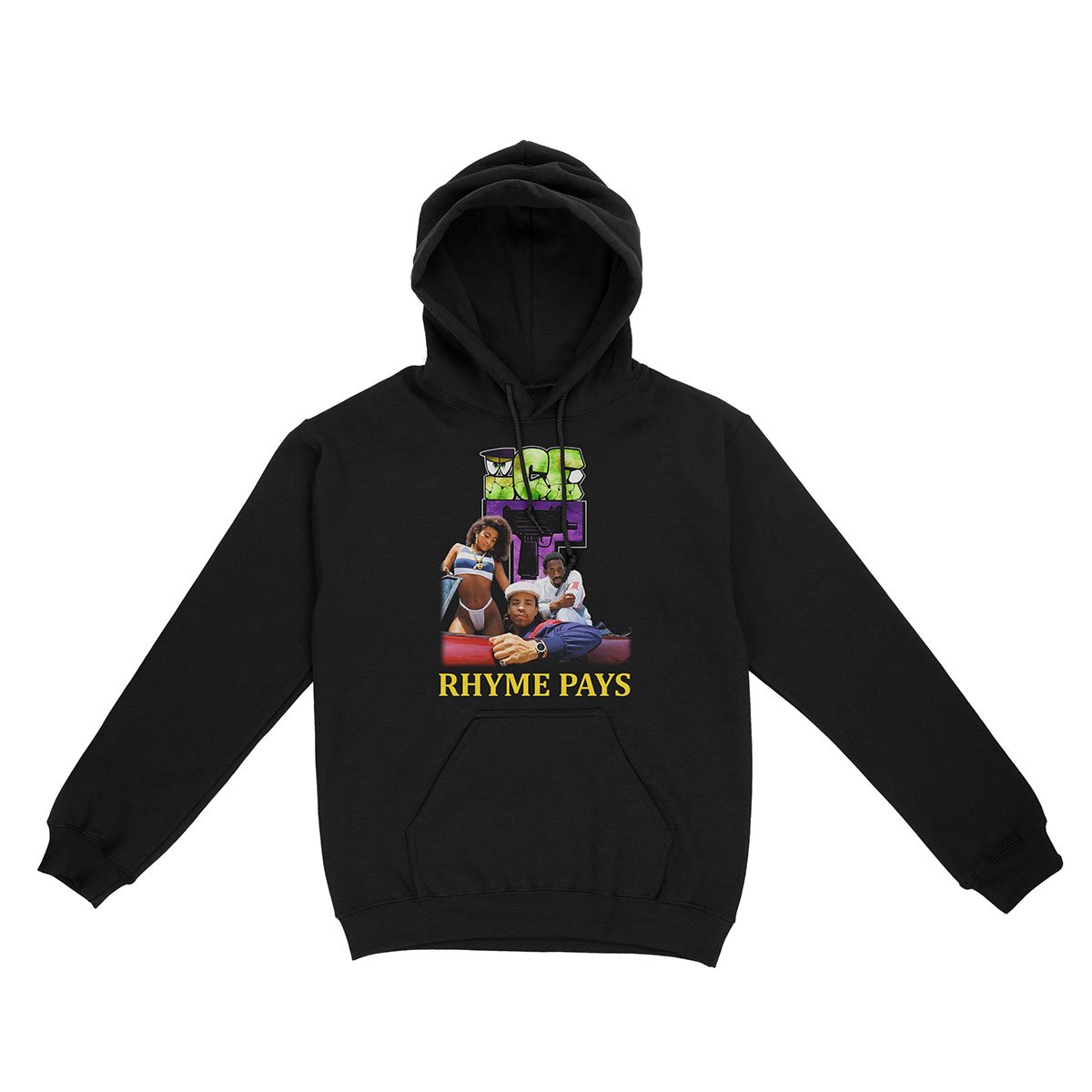
For fans looking to rep Ice-T’s foundational era, our Ice-T – Rhyme Pays Hoodie celebrates the debut album that set the stage for Power — back-to-back records from the man who brought gangsta rap storytelling to the mainstream.
The Power Cover: Darlene Ortiz, Glen E. Friedman, and the Shot That Shocked America

The Power cover is one of the most recognizable images in hip-hop history — and the story behind it is as deliberate as the music inside.
The photographer was Glen E. Friedman, already a legend for shooting album covers for Black Flag, Minor Threat, the Beastie Boys, and Public Enemy. Friedman brought a punk-rock authenticity to everything he shot, and the Power cover was no exception.
The image features Ice-T alongside his girlfriend Darlene Ortiz in a bikini holding a sawed-off shotgun, with DJ Evil E nearby. The back cover reveals Ice-T concealing an automatic weapon. Ortiz bought five different bathing suits for the shoot and later said she got her first gun at age 11 — she thought “it would be a powerful statement to see a woman holding a gun.”
The response was immediate. The Chicago Tribune accused Ice-T of “perpetuating stereotypes.” The Sydney Morning Herald called it a “violence-glorifying, women-denigrating sleeve.” Ice-T’s defense was simple: the image represented “the power that he and Darlene had attained in the rap world.” It was aspirational — not a threat, but a statement of arrival.
The controversy only helped sales. Power debuted at #102 on the Billboard 200, climbed to #35 over its 33-week run, hit #6 on the R&B/Hip-Hop Albums chart, and went gold by January 1989. It was eventually certified platinum by the RIAA — Ice-T’s only album to reach that milestone.
Wear Your Roots
Ice-T’s Rhyme Pays and Power were back-to-back masterpieces that built West Coast rap from the ground up. Rep the debut album that started it all.
Power’s Legacy: From Platinum Sales to Pusha T’s Name
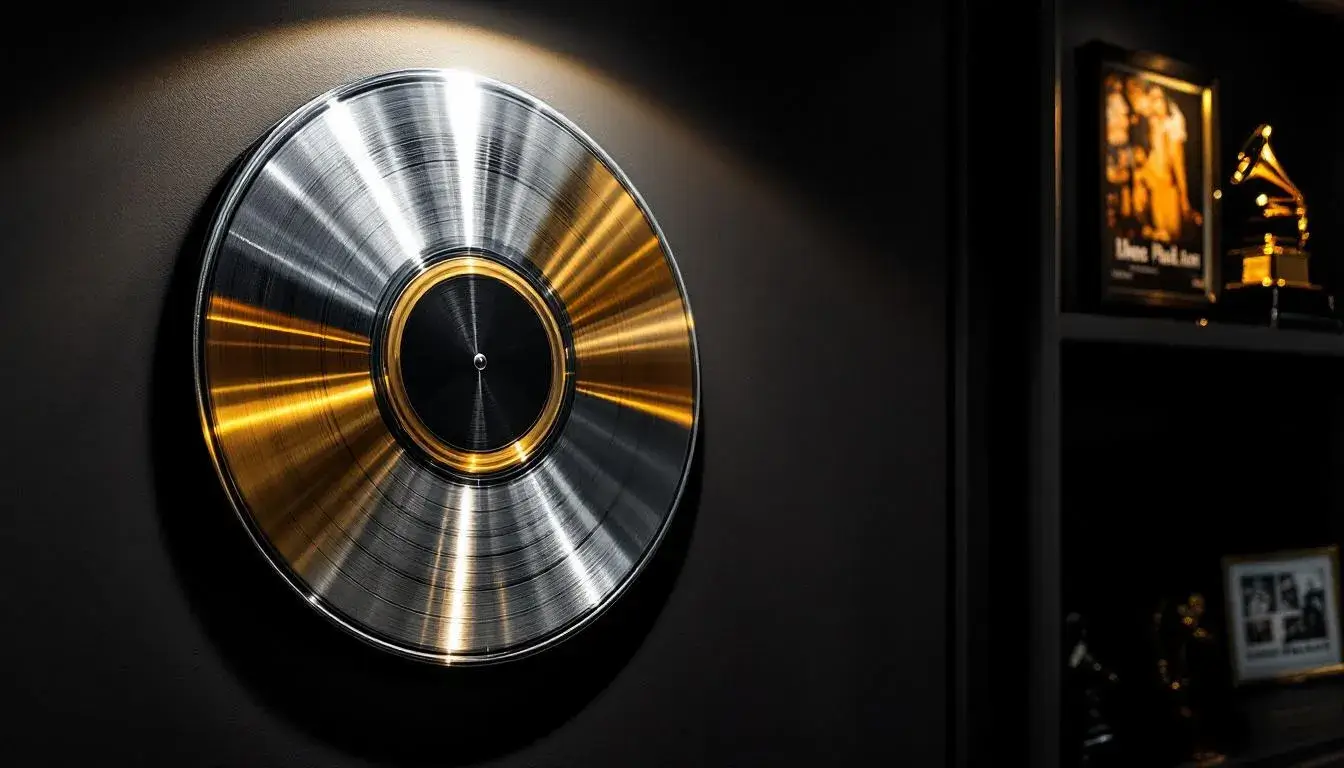
AllMusic gave Power four out of five stars, writing: “In the next few years, gangsta rap would degenerate into nothing more than cheap exploitation and empty cliches, but in Ice’s hands, it was as informative as it was captivating.” Rolling Stone later ranked it #96 on their list of the 200 Greatest Hip-Hop Albums of All Time.
What separates Power from the gangsta rap it helped create is the moral framework. Ice-T wasn’t glorifying — he was reporting. Every hustler in these songs faces consequences. Every high roller eventually falls. “Soul on Ice” ends with a man killed on the day he planned to go straight. That’s not exploitation — it’s Greek tragedy set to SP-1200 beats.
The influence extends far beyond the album’s own era. Pusha T naming himself after “I’m Your Pusher” is the most direct line, but Power‘s narrative approach — first-person street stories with built-in consequences — became the template for everyone from Scarface to Kendrick Lamar. Ice-T proved you could make hard music that was also smart, and that distinction mattered more as gangsta rap exploded through the ’90s.
In 2023, Power got a 35th anniversary reissue on limited “Ice Cold Gold” colored vinyl — a collector’s edition pressed in the Czech Republic and distributed through specialty retailers. The reissue was a reminder that the album’s audience never went away; they just got older.
Ice-T himself went on to release O.G. Original Gangster in 1991 — widely considered his masterpiece and the album that introduced Body Count to the world. He’s been playing Detective Tutuola on Law & Order: SVU for over 25 years, Body Count won two Grammys, and the Merciless album in 2024 featured David Gilmour on a “Comfortably Numb” cover. But Power remains his commercial peak — his only platinum record, and the album that proved gangsta rap storytelling could be literature. For the full story on Ice-T’s hip-hop catalog, check out our deep dive on Ice-T’s greatest rapper songs.
FAQ — Power Album Ice-T
What year did Ice-T’s Power album come out?
Power was released on September 13, 1988, through Sire Records and Warner Bros. It was Ice-T’s second studio album, following his 1987 debut Rhyme Pays and dropping just months after his “Colors” movie soundtrack single became a mainstream hit.
Is Ice-T’s Power album about drugs?
No. While Power addresses street life, drugs, and crime, Ice-T’s approach is consistently cautionary rather than glorifying. The album’s biggest single, “I’m Your Pusher,” uses drug-dealing as a metaphor for distributing hip-hop music with an explicit anti-drug message. Ice-T described his style as reportorial — describing realities and their consequences rather than endorsing them.
What samples are on “I’m Your Pusher” by Ice-T?
“I’m Your Pusher” samples three classic records: Curtis Mayfield’s “Pusherman” from the 1972 Super Fly soundtrack (the primary sample), James Brown’s “Funky Drummer,” and Biz Markie’s “Make the Music With Your Mouth, Biz.” The Curtis Mayfield sample is the backbone of the track, flipping the original drug-dealer narrative into a music-as-salvation message.
Who produced Ice-T’s Power album?
Power was co-produced by Ice-T and Afrika Islam, a former Zulu Nation member from the Bronx who launched hip-hop’s first radio show, “Zulu Beats,” on WHBI 105.9 in 1981. Afrika Islam programmed 12 of the 13 tracks using an E-mu SP-1200 sampler and Roland TR-909 drum machine. The one exception was “Personal,” programmed by Bilal Bashir.
Did Pusha T name himself after the Ice-T song?
Yes. Pusha T has publicly confirmed that Ice-T’s 1988 track “I’m Your Pusher” directly inspired his rap name. He told Revolt about meeting Ice-T at a hotel and telling him about the inspiration. Ice-T responded with “absolutely nothing but respect” and called Pusha “one of the best to ever do it.”
Why was the Power album cover controversial?
The cover, shot by legendary photographer Glen E. Friedman, features Ice-T alongside his girlfriend Darlene Ortiz in a bikini holding a sawed-off shotgun. The Chicago Tribune accused Ice-T of “perpetuating stereotypes,” while the Sydney Morning Herald called it “violence-glorifying.” Ice-T defended it as representing the power he and Darlene had achieved in the rap world.
How did Power perform on the charts?
Power peaked at #35 on the Billboard 200 over 33 weeks, reached #6 on the R&B/Hip-Hop Albums chart, went gold by January 1989, and was eventually certified platinum by the RIAA. “High Rollers” peaked at #9 on Hot Rap Songs. It remains Ice-T’s only platinum-certified album.
What is “Soul on Ice” by Ice-T about?
“Soul on Ice” is a spoken-word closing track performed over Les McCann’s “Harlem Buck Dance Strut.” It tells the story of a hustler who has saved enough money to leave the street life forever, only to be assassinated on the day he plans to walk away. The title references Eldridge Cleaver’s 1968 memoir, and the track serves as the album’s thesis: crime carries consequences you cannot escape.
Ice-T’s Power wasn’t just a great album — it was a proof of concept. It proved that gangsta rap could be platinum-selling, critically respected, and morally grounded all at once. It proved that a rapper from South Central could collaborate with a Bronx-born Zulu Nation producer and create something that transcended both coasts. And it proved that a street kid who named himself after a pimp novelist could write narratives as devastating as any American fiction. In the greatest year hip-hop has ever seen, Power earned its name.

🎧 Never Miss a Drop
Exclusive product releases, hip-hop deep dives, and member-only discounts. Straight to your inbox.
Free forever. No spam. Unsubscribe anytime.
Get the Culture, Delivered
Deep dives into hip-hop history, exclusive product drops, and discounts sent straight to your inbox. No spam, just culture.
Join 2,000+ hip-hop heads already in the loop. Unsubscribe anytime.