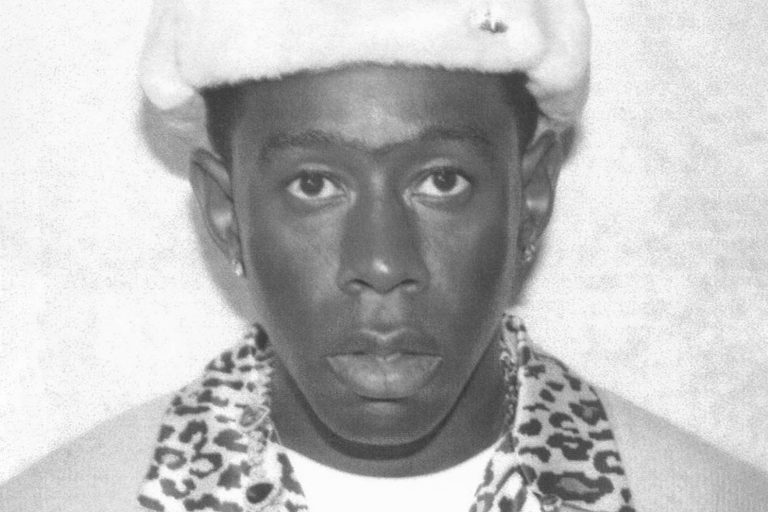
Rakim The 18th Letter: The Comeback Album That Proved the God MC Never Left
Rakim The 18th Letter is the solo debut album that shouldn’t have worked — and it debuted at #4 on the Billboard 200. Released on November 4, 1997, after a five-year absence from recorded music, Rakim The 18th Letter proved that hip-hop’s most influential lyricist hadn’t just survived the golden age — he’d been sharpening his blade in silence. With production from DJ Premier, Pete Rock, DJ Clark Kent, and Father Shaheed, The 18th Letter remains one of the greatest comeback albums in hip-hop history.
| Detail | Info |
|---|---|
| Album | The 18th Letter |
| Artist | Rakim (William Michael Griffin Jr.) |
| Released | November 4, 1997 |
| Label | Universal Records |
| Producers | DJ Clark Kent, Pete Rock, DJ Premier, Father Shaheed, Nick Wiz |
| Length | 54:10 (12 tracks + skits) |
| Chart Peak | #4 Billboard 200, #1 Top R&B/Hip-Hop Albums |
| Certification | RIAA Gold (500,000 units) |
| Lead Single | “Guess Who’s Back” |
| Bonus | The Book of Life (Eric B. & Rakim greatest hits disc) |
The Five-Year Silence — Where Did Rakim Go?

When Eric B. & Rakim released Don’t Sweat the Technique in 1992, they were already fraying at the seams. Royalty disputes and creative disagreements had poisoned the partnership. By 1993, the most important MC-DJ duo in hip-hop history was officially over.
Then Rakim disappeared.
For five years — from 1992 to 1997 — the God MC released almost nothing. No solo singles. No guest verses on other people’s albums. No interviews. In an era when Biggie, Tupac, Nas, Jay-Z, and Wu-Tang were rewriting the rules of hip-hop on a monthly basis, Rakim was a ghost. The man who invented internal rhyme schemes, who taught every rapper after him how to use multisyllabic patterns, who fundamentally changed what the microphone could do — he just… wasn’t there.
What was he doing? In a 2018 NPR interview with Stretch and Bobbito, Rakim finally broke his silence about the split. The duo had three albums left on their MCA contract, and Eric B. proposed they each do a solo record to fulfill the deal faster — each keeping full profits from their respective albums. Rakim agreed and signed off on Eric B.’s solo project. But when it was time for Rakim’s turn, Eric B. refused to sign off. “He felt that if he would have signed, for some reason that I wasn’t going to sign back to the last album,” Rakim explained. “Bitter taste in my mouth for a long time.”
The fallout was compounded when MCA Records was restructured in 1994, dropping Rakim from the label entirely. He was locked out of recording by both a dissolved partnership and a collapsed label deal. An early version of what would become The 18th Letter reportedly leaked in 1995, further complicating the timeline. It wasn’t until 1996 that Rakim secured a new deal with Universal Records. But through all of it, Rakim — who had always treated rapping like a spiritual discipline rooted in his Five Percenter faith — wasn’t going to come back with anything less than a masterpiece.
For the full story of the Eric B. & Rakim era that preceded this album, see our complete Eric B. and Rakim songs guide.
1997 — The Year Rakim Walked Back Into
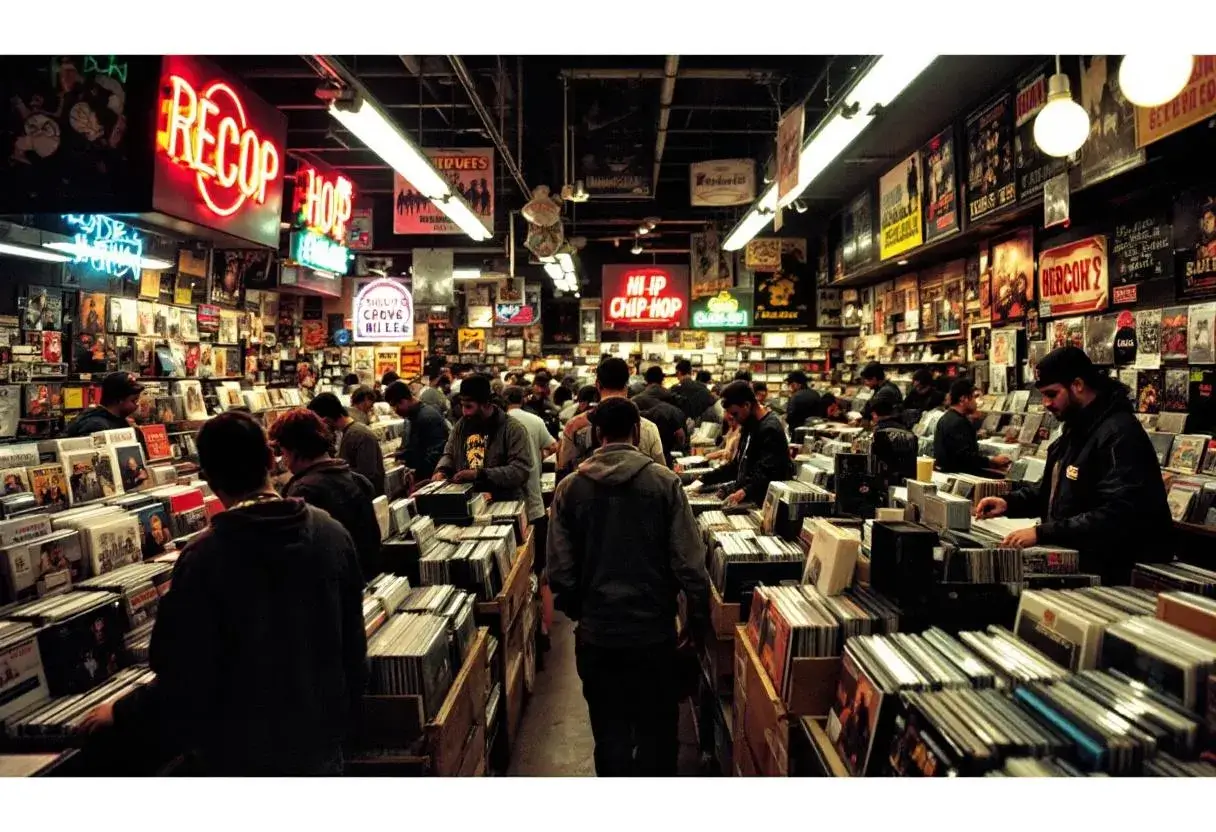
To understand why Rakim The 18th Letter mattered, you have to understand the hip-hop landscape Rakim was returning to in 1997. It was a completely different world from the one he’d left.
March 1997: The Notorious B.I.G. was murdered in Los Angeles, six months after Tupac’s death in September 1996. The East Coast-West Coast war had claimed its two biggest stars. Hip-hop was traumatized and searching for direction.
The shiny suit era was in full swing. Puff Daddy’s No Way Out dominated the charts with sample-heavy pop-rap. Ma$e’s “Mo Money Mo Problems” and Diddy’s “I’ll Be Missing You” were everywhere. The music was glossy, commercial, and — for old-school heads — dangerously far from hip-hop’s lyrical roots.
Wu-Tang Clan had released Wu-Tang Forever in June, a sprawling double album that proved underground hip-hop could sell 600,000 copies in its first week. Missy Elliott debuted with Supa Dupa Fly, announcing a new era for women in hip-hop. The Firm — Nas, AZ, Foxy Brown, and Nature — dropped their anticipated (and ultimately disappointing) album.
And here’s the detail that makes this story even wilder: Jay-Z’s In My Lifetime, Vol. 2 dropped on the exact same day — November 4, 1997. The old guard and the new guard, head to head on the same Tuesday. Jay-Z debuted at #3. Rakim debuted at #4. The margin was razor-thin.
Into this chaos walked Rakim, a 29-year-old Long Island MC who hadn’t released a song in five years, carrying a solo album and a greatest hits compilation. The question wasn’t whether he was still good — everyone assumed that. The question was whether anyone still cared.
They cared. The 18th Letter debuted at #4 on the Billboard 200 and hit #1 on the R&B/Hip-Hop chart. The answer was emphatic.
The Producers Who Built The 18th Letter

Rakim’s greatest strategic decision on The 18th Letter was his choice of producers. Instead of chasing whatever was hot in 1997, he assembled a Mount Rushmore of boom-bap architects — producers who understood that their job was to build a foundation, not compete with the MC.
DJ Premier contributed two tracks: “It’s Been a Long Time” and “New York (Ya Out There).” Premier was at the absolute peak of his powers in 1997 — he’d just produced Gang Starr’s Moment of Truth sessions and had become the most sought-after producer in New York. His trademark scratched hooks and hard-hitting drums gave Rakim the sonic equivalent of a red carpet.
Pete Rock handled “The Saga Begins” and “When I’m Flowin’.” Rock’s jazz-infused, sample-heavy production had defined the early ’90s through his work with CL Smooth, and his beats for Rakim had a warmth and sophistication that played perfectly against the lyrical density. “The Saga Begins” in particular is a Pete Rock masterclass — lush horns over a head-nodding break.
DJ Clark Kent was the album’s MVP, producing more tracks than any other contributor: “Remember That,” “Guess Who’s Back,” and “Stay a While.” Kent — better known today as a sneaker collector and cultural figure — was a serious production talent in the late ’90s, and his work on “Guess Who’s Back” gave Rakim his most iconic solo moment.
Father Shaheed of the Poor Righteous Teachers produced the title track, “The 18th Letter (Always and Forever).” It was a fitting choice — the Poor Righteous Teachers were fellow Five Percenters, and the track’s spiritual undertones aligned perfectly with the album’s themes of knowledge, self-mastery, and divine mathematics.
The production lineup reflected Rakim’s approach to his entire career: deliberate, uncompromising, and rooted in hip-hop’s core values. For fans who share that same reverence for the culture, our Eric B and Rakim Follow The Leader Hoodie captures the duo’s legacy — the partnership that made The 18th Letter‘s solo triumph possible in the first place.
Track-by-Track Breakdown

“The 18th Letter (Always and Forever)” — Produced by Father Shaheed
The album’s mission statement. Over Father Shaheed’s rolling drums and soul sample, Rakim declares his return and his purpose. The title — a reference to R being the 18th letter of the alphabet, and to Rakim’s Five Percenter identity — sets the tone for an album that’s as much spiritual autobiography as it is a hip-hop record. The flow is more measured and confident than the rapid-fire delivery of Paid in Full, reflecting a decade of evolution.
“It’s Been a Long Time” — Produced by DJ Premier
The emotional heart of the album. Premier builds a bed of warm strings and a Bobby Byrd vocal sample (“I’m not gonna push you, baby…”) while Rakim addresses his five-year absence with a mix of humility and supreme confidence. “It’s been a long time, I shouldn’t have left you / Without a dope beat to step to” — that opening line, referencing his own classic “I Know You Got Soul,” is one of hip-hop’s great self-aware comeback moments. Premier makes the moment even more powerful by scratching samples from “Eric B. Is President” and “I Know You Got Soul” — Rakim’s own past — into the beat. And then, in the same breath, Rakim delivers the line that draws the line: “I ain’t down with Eric B. no more.” It’s hip-hop therapy through music. The New York Times called the album’s backing tracks “gripping and richly textured,” and this song is the best example.
“Remember That” — Produced by DJ Clark Kent
A retrospective track where Rakim looks back on his career and the golden era of hip-hop. Clark Kent’s production is clean and understated, giving space for Rakim’s storytelling to take center stage. The wordplay here is vintage Rakim — internal rhymes stacking on top of each other with the kind of architectural precision that made him famous.
“The Saga Begins” — Produced by Pete Rock
Pete Rock delivers one of the album’s richest productions — layered horns, a thick bass line, and his signature filtered vocal samples creating a sonic backdrop that feels like a Blaxploitation film score. Rakim rises to the occasion, delivering some of the densest lyricism on the album. This is the track that convinced skeptics: the five-year absence hadn’t dulled Rakim’s pen — it had sharpened it.
“Guess Who’s Back” — Produced by DJ Clark Kent
The lead single and the album’s hardest track. Clark Kent built the beat around a Bomb Squad-style layered production — thick drums, aggressive samples, and an energy that practically dared the rest of hip-hop to respond. The song peaked at #32 in the UK and #1 on the UK Dance chart, giving Rakim genuine international chart success as a solo artist. “Guess Who’s Back” is the sound of a legend reminding you why he earned that title.
“New York (Ya Out There)” — Produced by DJ Premier
Premier’s second contribution, and a love letter to New York City at a time when the city was grieving Biggie’s death and processing the end of the East-West war. Rakim’s delivery is commanding — he’s not mourning, he’s rallying. The scratched hook and boom-bap drums are quintessential Premier, and the track served as a reminder that New York hip-hop’s foundation was still standing.
“The Mystery (Who Is God?)” — Produced by Naughty Shorts/Bill Blass
The album’s most overtly spiritual track, and one of the deepest dives into Five Percenter theology that Rakim ever recorded. Where earlier songs like “Follow the Leader” wove Supreme Mathematics into the background, “The Mystery” puts it front and center. It’s not an easy listen for casual fans, but for anyone interested in understanding Rakim’s worldview, this track is essential.
“When I’m Flowin'” — Produced by Pete Rock
Pete Rock’s second contribution is a smoother, jazzier affair — a showcase for Rakim’s flow at its most relaxed and confident. Where “The Saga Begins” was dense and aggressive, “When I’m Flowin'” is the sound of a master operating with nothing to prove. It’s the kind of track that separates listeners into two camps: those who appreciate technical mastery and those who need fireworks. Rakim never cared about the second group.

Wear Your Roots
Before The 18th Letter there was Follow The Leader. Our hoodie honors the Eric B. & Rakim partnership that built the foundation for everything Rakim achieved solo.
The Meaning Behind “The 18th Letter” — Five Percenter Numerology
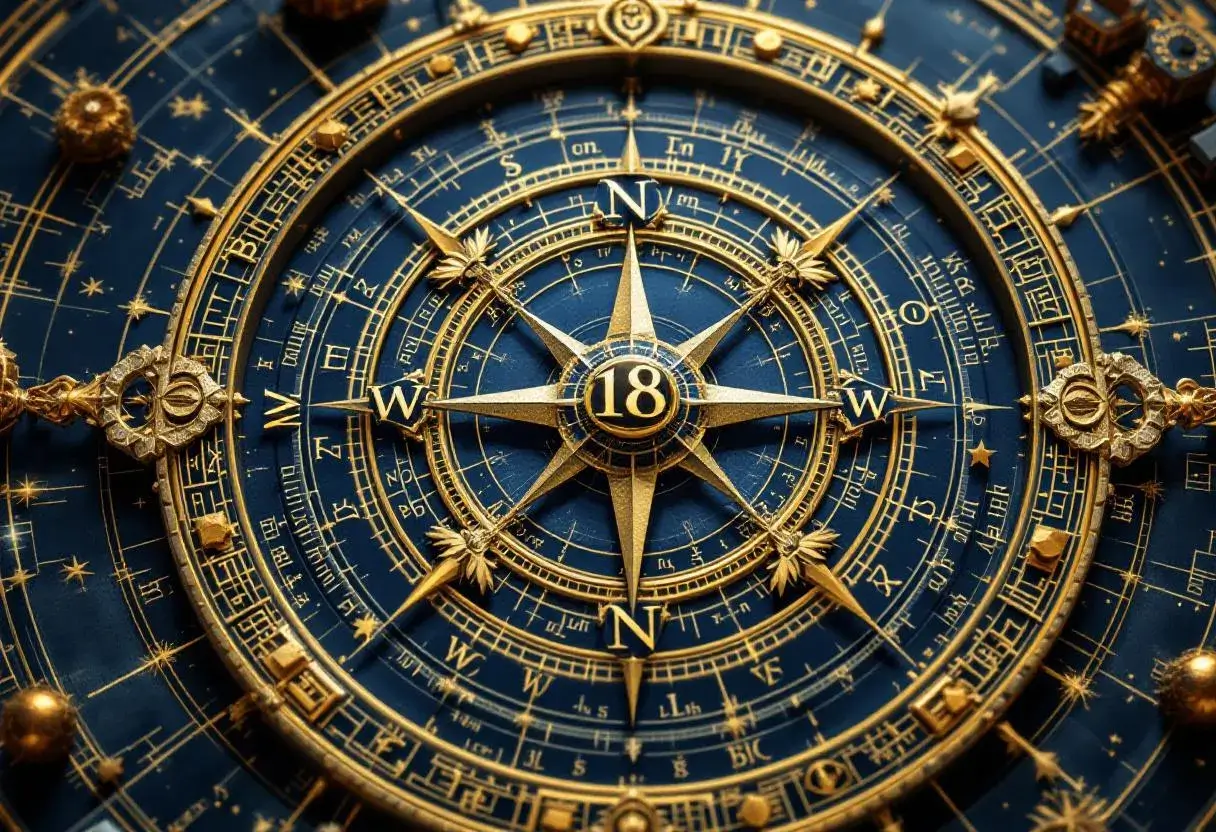
The album’s title operates on multiple levels, and understanding them reveals how deeply Rakim’s music is intertwined with his spiritual practice.
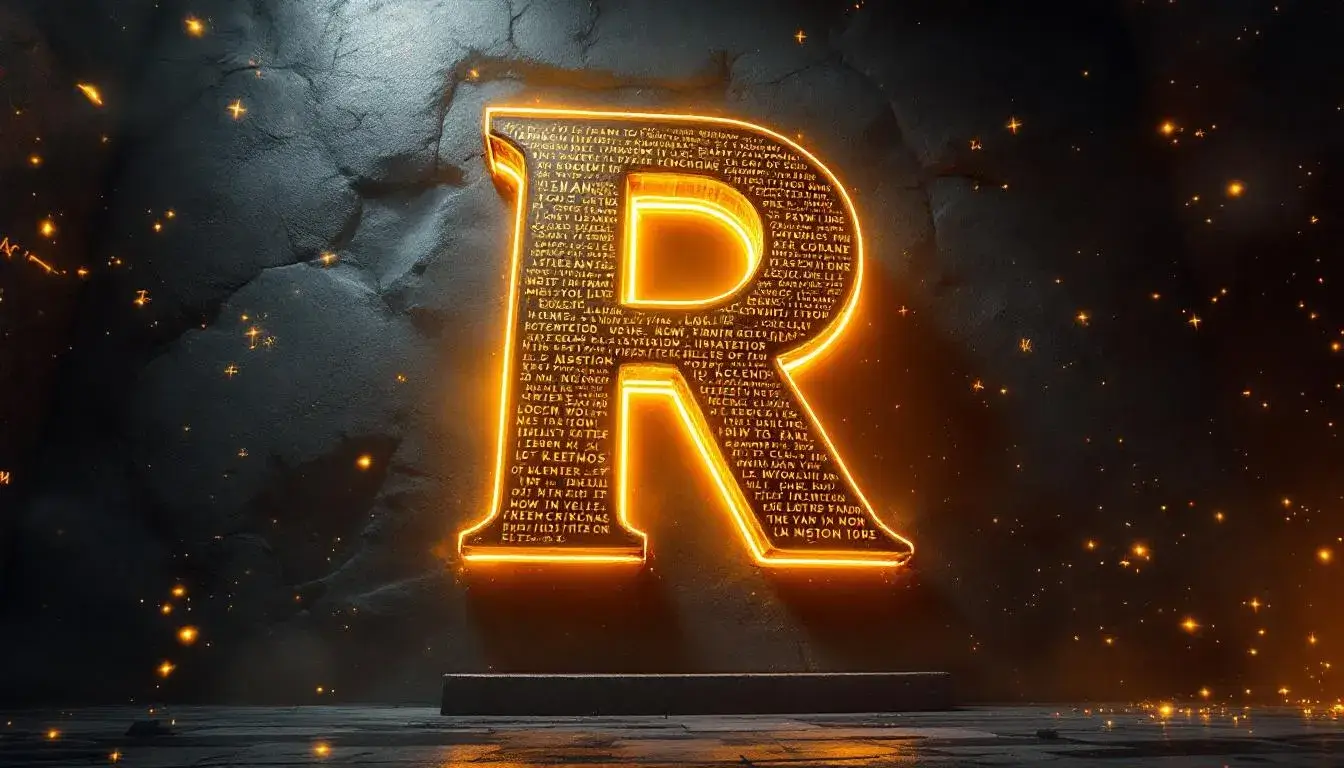
The surface level: R is the 18th letter of the English alphabet. R for Rakim. Simple, clean, iconic branding for a solo debut.
The Five Percenter level: In the Nation of Gods and Earths (the Five Percent Nation), letters and numbers carry deep spiritual significance. The Supreme Mathematics and Supreme Alphabet are systems of meaning where each number and letter corresponds to a concept. In Supreme Alphabet, R stands for “Ruler” — the one who governs with knowledge and wisdom. For Rakim, calling himself The 18th Letter wasn’t just a marketing move. It was a theological statement: I am the Ruler of this domain.
The numerological level: 1 + 8 = 9. In Supreme Mathematics, 9 represents “Born” — the completion of a cycle, the manifestation of all knowledge into reality. Rakim’s solo debut, then, was literally named “Rebirth” in the coded language of his faith. Five years of silence. A new beginning. Born again through the 18th letter.
This kind of layered meaning runs through Rakim’s entire catalog, but The 18th Letter is where it’s most deliberate. From the title to tracks like “The Mystery (Who Is God?)” to the recurring references to “building” and “dropping science,” the album is Rakim’s most complete expression of how Five Percenter philosophy and hip-hop lyricism can be one and the same thing.
The Book of Life — the Eric B. & Rakim greatest hits compilation included with the album — reinforced this idea. By packaging his past alongside his present, Rakim wasn’t just being commercially savvy (though he was — it gave new fans an entry point). He was saying: everything I did with Eric B. led to this. The story is continuous. The book of my life is one unbroken thread.
Frequently Asked Questions About Rakim’s The 18th Letter
What does “The 18th Letter” mean?
R is the 18th letter of the English alphabet — R for Rakim. It also has deeper significance in Five Percenter theology, where R represents “Ruler” in the Supreme Alphabet. The numbers 1 and 8 add up to 9, which represents “Born” in Supreme Mathematics, symbolizing Rakim’s rebirth as a solo artist.
When was The 18th Letter released?
The 18th Letter was released on November 4, 1997, through Universal Records. It was Rakim’s first solo album after splitting from DJ Eric B. in 1993.
How did The 18th Letter perform commercially?
The album debuted at #4 on the Billboard 200 and reached #1 on the Top R&B/Hip-Hop Albums chart. It was certified Gold by the RIAA for selling 500,000 copies. The lead single “Guess Who’s Back” charted in both the US and UK.
Who produced The 18th Letter?
The main producers were DJ Clark Kent (who produced the most tracks, including “Guess Who’s Back”), DJ Premier (“It’s Been a Long Time,” “New York”), Pete Rock (“The Saga Begins,” “When I’m Flowin'”), Father Shaheed of the Poor Righteous Teachers (the title track), and Nick Wiz (“Show Me Love”).
What is The Book of Life?
The Book of Life was an Eric B. & Rakim greatest hits compilation disc packaged with The 18th Letter. It included classics from their four duo albums (1987-1992) and served as both a career retrospective and an introduction for new listeners discovering Rakim for the first time.
Why was Rakim silent for five years before this album?
After the Eric B. & Rakim split in 1993, Rakim dealt with legal complications from the breakup and navigated label politics. Rather than rushing out material, he waited until he had both the right production team and the right creative vision. The five-year gap, while unusual, only amplified the anticipation and made the album’s #4 debut even more impressive.
Is The 18th Letter considered Rakim’s best solo album?
Yes, by most fans and critics. AllMusic gave it 4 out of 5 stars, Pitchfork rated it 8.0/10, and it remains the highest-charting and best-selling album of Rakim’s solo career. Its combination of elite production, sharp lyricism, and comeback narrative makes it the standard against which his later solo work is measured.
How does The 18th Letter compare to the Eric B. & Rakim albums?
The production is more polished and varied than the Eric B. era — having Premier, Pete Rock, and Clark Kent gave the album a range that Eric B.’s solo production couldn’t match. The lyricism is denser and more mature. What’s lost is the raw, pioneering energy of records like Paid in Full and Follow the Leader. For a deep dive into those albums, see our Eric B. and Rakim songs guide and our complete Rakim career overview.
The 18th Letter is the rare comeback album that actually lives up to the weight of expectation. Rakim didn’t try to reinvent himself, chase trends, or prove he could adapt to the shiny suit era. He did what he always did — write dense, precise, spiritually grounded verses over the best beats available — and trusted that the quality would speak for itself. Twenty-eight years later, it still does.

🎧 Never Miss a Drop
Exclusive product releases, hip-hop deep dives, and member-only discounts. Straight to your inbox.
Free forever. No spam. Unsubscribe anytime.
Get the Culture, Delivered
Deep dives into hip-hop history, exclusive product drops, and discounts sent straight to your inbox. No spam, just culture.
Join 2,000+ hip-hop heads already in the loop. Unsubscribe anytime.