Malice Rapper: The Untold Story Behind Hip-Hop’s Greatest Comeback
Malice rapper Gene Thornton Jr. did something almost nobody in hip-hop has ever pulled off. He walked away from one of the most celebrated duos in the genre, found faith, abandoned the name that defined him for over a decade — and then came back to win a Grammy. The story of the malice rapper isn’t just another comeback narrative. It’s a three-decade odyssey of addiction, spiritual transformation, and creative vindication that forced the entire rap world to reconsider what a second act can look like.
Born in the Bronx and raised in Virginia Beach, Malice spent years as one half of Clipse alongside his younger brother Pusha T, building a catalog that defined early-2000s street rap. Then he disappeared. And when he returned as No Malice, the industry didn’t know what to do with him. The 2025 release of Let God Sort Em Out and a Grammy win at the 68th ceremony proved every doubter wrong.
The Clipse Era: Why the Malice Rapper Was Always the Secret Weapon

Clipse formed in 1992 when Gene and Terrence Thornton — Malice and Pusha T — started rapping together in Virginia Beach. The Neptunes’ Pharrell Williams discovered them early, and that production partnership would become one of the most important in hip-hop history. But the road wasn’t smooth.
Their debut album Exclusive Audio Footage was shelved in 1999 when Elektra Records folded their imprint. Three years of industry purgatory followed before Lord Willin’ finally dropped on Star Trak in 2002. The album debuted at number four on the Billboard 200, powered by “Grindin'” — a percussion-driven masterpiece that needed no melody to dominate every radio in America.
On Lord Willin’, Malice established the template that would define his entire career. Where Pusha T attacked beats with braggadocio and velocity, Malice operated with surgical precision. His verses were denser, more layered, stuffed with double entendres that rewarded repeated listening. Listen to his verse on “Virginia” — every bar contains at least two meanings, and the wordplay folds back on itself like origami.
Then came Hell Hath No Fury in 2006, and Malice reached his apex. The album is widely considered one of the greatest hip-hop records of the 2000s. Pitchfork gave it an 8.9. Critics pointed to Pusha T’s charisma, but heads who studied the lyrics knew — Malice was the sharper pen. Tracks like “Momma I’m So Sorry” showed a vulnerability that Pusha rarely accessed. That tension — between the glamour of the lifestyle and the weight of its consequences — became Malice’s signature territory.
Even as Clipse achieved critical acclaim, tensions simmered beneath the surface. By Til the Casket Drops (2009), Malice was already questioning everything. The album underperformed commercially and critically, and Malice has since been candid about how disconnected he felt from the material. The game was changing. But more importantly, so was he.
From Malice to No Malice: The Transformation That Stunned Hip-Hop

Around 2011, Gene Thornton Jr. made a decision that the rap world found genuinely confusing. He became a born-again Christian. Not the convenient, post-scandal kind of conversion that celebrities cycle through. A real, total, life-altering commitment. He changed his stage name from Malice to No Malice, physically rejecting the identity that had made him famous.
The industry’s reaction was predictable: dismissal. When No Malice released his solo debut Hear Ye Him in 2013, critics didn’t know where to file it. The production was strong — Pharrell contributed beats — but the subject matter had shifted entirely from cocaine narratives to faith testimonies. Hip-hop, a genre that rewards authenticity above almost everything else, didn’t quite believe this version was authentic yet.
What skeptics missed was the through line. The same observational precision Malice brought to street-life storytelling — the guilt, the moral accounting, the weight of choices — was now applied to spiritual reckoning. His 2016 memoir Wretched, Pitiful, Poor, Blind and Naked laid it bare: the drug use, the psychological damage, the moment he realized the lifestyle was consuming him from the inside. The 2013 documentary The Other Side of the Game provided visual evidence of a man who wasn’t performing righteousness but living it.
Let the Dead Bury the Dead followed in 2017. Commercially, it barely registered. But it refined No Malice’s approach: faith-driven bars delivered with the same technical sophistication that made his Clipse verses legendary. He wasn’t dumbing down his pen game for the church crowd. He was applying it differently. For those paying attention, the skill had never left — only the subject had changed.
The Return: Let God Sort Em Out and the Malice Rapper’s Grammy Triumph

When Pharrell Williams announced that Clipse was reuniting for a new album in 2024, the expectations were enormous. The duo hadn’t released a project together in fifteen years. Pharrell was coming off Piece by Piece, his LEGO biopic. Pusha T had built a solo career that put him in the conversation for best active rapper. Could Malice — now going by his original name again, having dropped the “No” — match the energy of the present while honoring the growth of the past?
Let God Sort Em Out answered with authority. Released in 2025 with Pharrell producing every track, the album was immediately recognized as something special. It debuted in the top ten on the Billboard 200 and earned near-universal critical praise. Malice didn’t just keep up — he frequently outshone his brother. Tracks like “Chains & Whips” and “So Be It” showcased a rapper who had somehow gotten better during his absence, his pen sharpened by a decade of introspection rather than dulled by the passage of time.
At the 68th Grammy Awards in 2026, Clipse won Best Rap Performance for “Chains & Whips.” The album was also nominated for Best Rap Album, and “So Be It” earned a nod for Best Music Video. For Malice — a rapper who had been written off by mainstream hip-hop for over a decade — it was total vindication. Not many artists get to prove that faith and fire can coexist in the same verse. Malice proved it on a Grammy stage.

Rep the Clipse Legacy
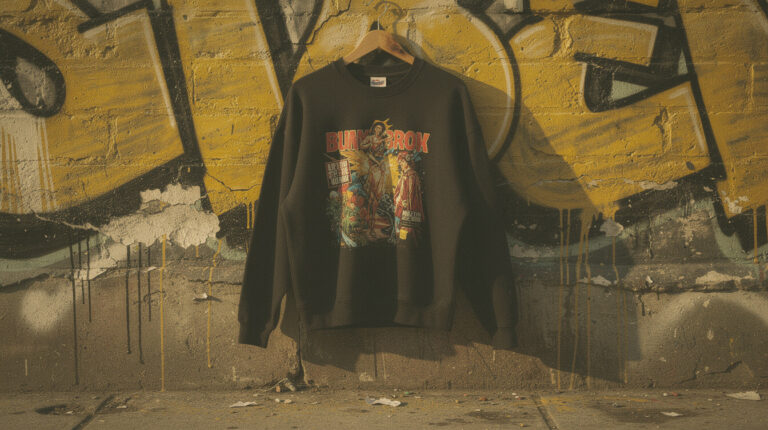
Hell Hath No Fury defined an era. This tee keeps that energy alive — raw, uncut, and unmistakably Clipse.
What Makes the Malice Rapper’s Pen Game Elite

What separates Malice from the pack isn’t volume or velocity — it’s density. Every Malice verse operates on multiple levels simultaneously. His wordplay isn’t the punchline-heavy approach of a Lil Wayne or the conceptual storytelling of a Kendrick Lamar. It’s closer to a cipher — every line encodes information that only reveals itself on the third or fourth listen.
Revolt TV’s 2025 deep dive into 15 standout Malice tracks without Pusha T documented features stretching across eras — from early Neptunes collaborations with Kelis and Pharrell to faith-driven verses alongside Lecrae and Bizzle. Across all of them, the technical foundation remains constant: multisyllabic rhyme schemes, internal rhyme patterns that most rappers don’t attempt, and a conversational delivery that disguises how complex the actual writing is.
His number scheme on tracks like “F.I.C.O.” from Let God Sort Em Out had Dissect Podcast breaking it down frame by frame — proving that Malice at 53 is writing with more precision than rappers half his age. That’s the other part of the story: longevity. Malice is proof that the pen doesn’t have to dull with age. If anything, lived experience — the highs, the lows, the faith, the doubt — has given him more to write about, not less.
If the wordplay on Hell Hath No Fury hit you the way it hit us, you’ll appreciate the Clipse Let God Sort Em Out T-Shirt — it captures the energy of the reunion that proved the pen never went anywhere.
Frequently Asked Questions About Malice Rapper
What is Malice the rapper’s real name?
Malice’s real name is Gene Elliott Thornton Jr. He was born on August 18, 1972, in the Bronx, New York City, and raised in Virginia Beach, Virginia.
Why did Malice change his name to No Malice?
Around 2011, Gene Thornton became a born-again Christian and changed his stage name from Malice to No Malice to reflect his spiritual transformation and rejection of the street persona he’d built his career on.
Are Pusha T and Malice brothers?
Yes. Gene Thornton Jr. (Malice) and Terrence LeVarr Thornton (Pusha T) are biological brothers. Together they form the hip-hop duo Clipse. Gene is the older brother, born in 1972, while Terrence was born in 1977.
What is Clipse’s best album?
Hell Hath No Fury (2006) is widely considered Clipse’s masterpiece. Produced entirely by the Neptunes, it earned an 8.9 from Pitchfork and remains one of the most acclaimed hip-hop albums of the 2000s. Their 2025 reunion album Let God Sort Em Out has also entered the conversation.
Did Malice win a Grammy?
Yes. At the 68th Grammy Awards in 2026, Clipse won Best Rap Performance for “Chains & Whips” from Let God Sort Em Out. The album was also nominated for Best Rap Album, and the track “So Be It” was nominated for Best Music Video.
What solo albums has Malice released?
As No Malice, he released Hear Ye Him (2013) and Let the Dead Bury the Dead (2017). He also published the memoir Wretched, Pitiful, Poor, Blind and Naked in 2016 and appeared in the documentary The Other Side of the Game (2013).
Final Thoughts
The malice rapper story isn’t just about one MC’s journey. It’s about what hip-hop can look like when an artist refuses to be defined by a single era, a single style, or a single identity. Gene Thornton Jr. built a legacy with Clipse, burned it down by choice, rebuilt in the wilderness of Christian hip-hop where almost nobody was watching, and then returned to the mainstream stage with a Grammy-winning album that proved the pen was sharper than ever.
In an industry obsessed with youth and novelty, Malice is the ultimate counterargument. Fifty-three years old, three decades deep, and still writing bars that require a decoder ring to fully unpack. Whether you know him as Malice, No Malice, or Gene Thornton — you’re looking at one of the most underrated lyricists in hip-hop history, finally getting the recognition the culture owed him all along.
For more on his story, read our complete biography of Malice from Clipse.

Never Miss a Drop
Album deep dives, artist spotlights, exclusive merch drops, and the stories behind the culture. Straight to your inbox. No filler — just the real.

🎧 Never Miss a Drop
Exclusive product releases, hip-hop deep dives, and member-only discounts. Straight to your inbox.
Free forever. No spam. Unsubscribe anytime.

Get the Culture, Delivered
Deep dives into hip-hop history, exclusive product drops, and discounts sent straight to your inbox. No spam, just culture.
Join 2,000+ hip-hop heads already in the loop. Unsubscribe anytime.