
Method Man Tical: The Dark, Smoky Masterpiece That Launched Wu-Tang’s Solo Era
Method Man Tical dropped on November 15, 1994, and immediately established itself as the opening salvo in Wu-Tang Clan’s legendary solo campaign. Before Raekwon built his purple tape, before GZA sharpened his liquid swords, and before Ghostface laid down his ironman armor, it was Clifford Smith — the smooth-yet-rugged voice from Staten Island — who stepped up first. RZA’s dark, smoke-filled production met Method Man’s effortless charisma, and the result was an album that debuted at number four on the Billboard 200 and went platinum inside eight months. More than three decades later, Method Man Tical remains one of the most compelling solo debuts in hip-hop history.
This deep dive breaks down everything that made Tical a classic — the recording sessions haunted by a flooded studio, the 13-track journey through RZA’s murkiest beats, the singles that crossed Method Man over to mainstream audiences, and the lasting impact on East Coast hip-hop. Whether you grew up rewinding “Bring the Pain” on a worn-out cassette or you’re just discovering the Wu-Tang solo catalog, this is the definitive guide.
The Birth of Method Man’s Solo Vision
When Wu-Tang Clan released Enter the Wu-Tang (36 Chambers) in November 1993, the group’s innovative business model allowed each member to sign solo deals with different labels. Method Man was the natural choice to go first. His self-titled track on 36 Chambers had already become a fan favorite, and his appearance on the remix of “C.R.E.A.M.” showcased a voice and personality that could carry an entire project.
Def Jam Recordings signed Method Man, making him the first Wu-Tang member to secure a major-label solo deal. The label saw what hip-hop heads already knew — Meth had crossover appeal without sacrificing street credibility. His deep, raspy voice carried a playful energy that set him apart from the more cerebral styles of GZA or the unpredictable chaos of ODB.
The plan was straightforward but audacious: RZA would produce almost the entire album, maintaining the sonic cohesion that made 36 Chambers feel like a world unto itself. But where 36 Chambers was a collective showcase, Tical would be a two-man operation — RZA behind the boards, Meth on the mic, with minimal features from the rest of the Clan. If you want to explore how other Wu-Tang members approached their solo debuts, check out our breakdown of Ghostface Killah’s Ironman, which followed Tical’s template with a very different energy.
Method Man Tical: Inside RZA’s Dark Production Lab

The story of how Method Man Tical was recorded reads like a hip-hop survival tale. RZA’s 36 Chambers Studios — the basement workspace where Wu-Tang’s signature sound was born — flooded in 1993, destroying equipment and pre-recorded material. Several beats intended for Tical were lost in the flood. Rather than start from scratch at a professional facility, RZA rebuilt and recreated the beats, often hastily, in conditions that actually enhanced the album’s grimy aesthetic.
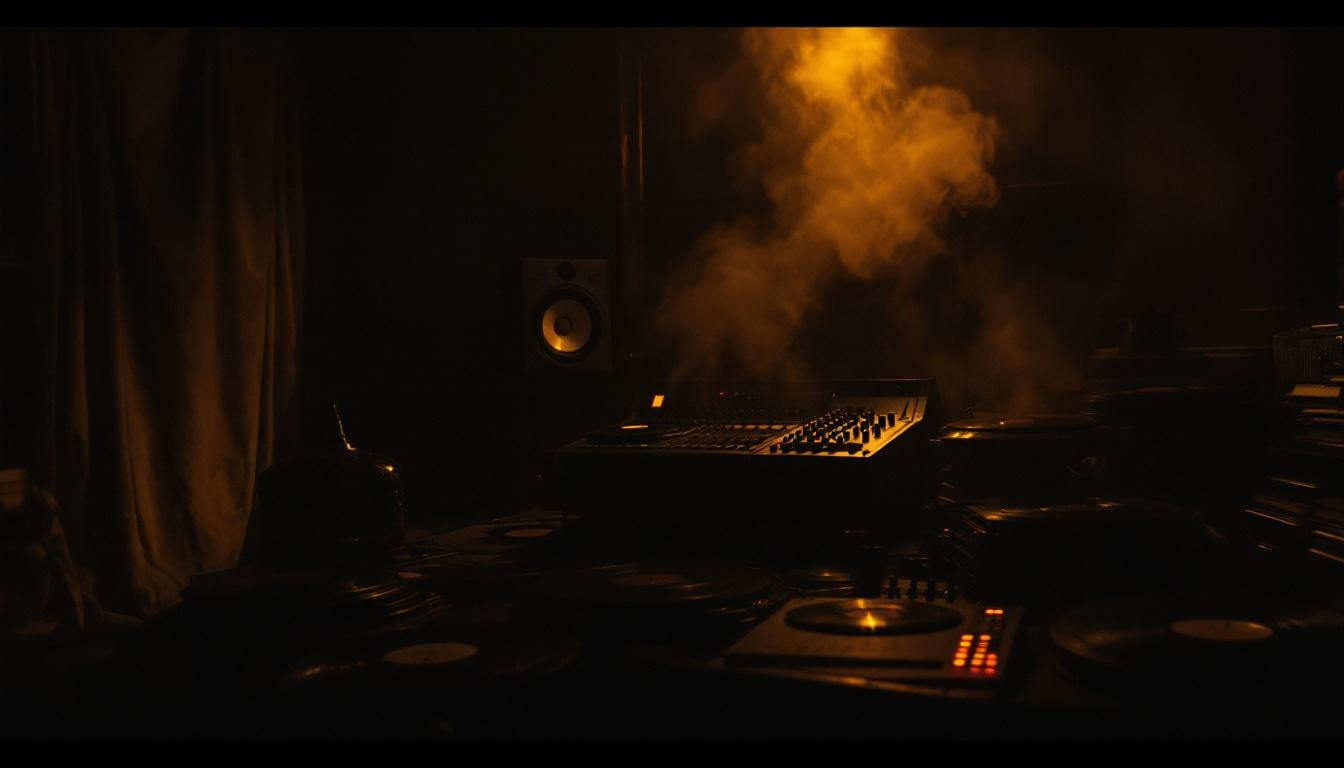
That flooding accident became the album’s secret weapon. The recreated beats carried a rawness, an imperfection, that gave Tical its distinctive character. RZA’s production style on the album features dusty lo-fi synths, depressing piano jabs, poorly dubbed martial arts film dialogue, and layers of sonic grime that feel like they were recorded in a basement during a thunderstorm — because, in a sense, they were.
With the exception of “Sub Crazy” (co-produced by 4th Disciple) and “P.L.O. Style” (co-produced by Method Man himself), RZA handled every beat on the album. This wasn’t just production — it was world-building. Each track exists in the same murky sonic universe, connected by the same dark palette of sounds that RZA would continue refining across the first wave of Wu-Tang solo records.
The competitive process for securing beats was itself part of Wu-Tang’s creative engine. Clan members would battle for exclusive recording rights to RZA’s instrumentals, and Method Man — by virtue of going first — had his pick of the arsenal. The beats he chose leaned into the darkest corner of RZA’s catalog, creating an album that sounded like hip-hop heard through a haze of smoke.
Method Man Tical Tracklist: Breaking Down All 13 Tracks

The Method Man Tical tracklist runs 13 tracks deep, each one contributing to an album that rewards front-to-back listening. Here’s the complete breakdown:
1. “Tical” (Title Track)
The album opens with its namesake — a slow-burning, bass-heavy declaration of intent. Built on samples from Carlos Bess and Isaac Hayes’ “Do Your Thing,” the track sets the smoky tone for everything that follows. Martial arts film clips from The 36th Chamber of Shaolin and Ten Tigers of Kwangtung connect the track directly to Wu-Tang’s mythology.
2. “Biscuits”
A menacing, stripped-down beat over which Meth delivers some of his most aggressive bars. The track showcases the harder edge of his delivery — less charm, more bite.
3. “Bring the Pain”
The lead single and arguably the album’s signature track. Method Man told Complex that he had this beat “for a long fucking time” before the album sessions — he’d requested it from RZA specifically for his solo debut. After the flood destroyed the original, RZA remade it, and the recreated version became one of the most iconic boom bap instrumentals of the 1990s.
4. “All I Need”
The original album version is a raw love letter — tender by Meth’s standards, but still wrapped in RZA’s dark production. The later remix featuring Mary J. Blige would become the album’s biggest commercial hit (more on that below).
5. “What the Blood Clot”
One of the album’s hardest-hitting tracks, featuring Meth channeling Jamaican dancehall influences. The patois-inflected delivery adds another dimension to his already versatile vocal toolkit.
6. “Meth vs. Chef” (feat. Raekwon)
A mock battle between Method Man and Raekwon that ranks among the best posse cuts in Wu-Tang’s catalog. Both emcees trade bars with “ginsu-precise rhymes,” and the competitive energy is electric. This track survived the studio flood as one of the original pre-flood recordings.
7. “Sub Crazy”
Co-produced by 4th Disciple, this track features some of the heaviest bass on the album. The production deviates slightly from RZA’s template, bringing a subsonic thump that shakes speakers.
8. “Release Yo’ Delf” (feat. Blue Raspberry)
Blue Raspberry’s soulful vocals add warmth and melody to the album’s murky atmosphere. The blaring warlike horns and interpolation of Gloria Gaynor’s “I Will Survive” create one of the album’s most memorable and anthemic moments. Released as the third single, it peaked at number 98 on the Hot 100.
9. “P.L.O. Style” (feat. Carlton Fisk)
Co-produced by Method Man himself, this is one of the album’s more experimental cuts. Carlton Fisk (a Wu-Tang affiliate) adds a different energy alongside Meth’s own production instincts.
10. “I Get My Thang in Action”
A quintessential mid-album cut that keeps the energy consistent without overreaching. Meth rides the beat with confidence, delivering street narratives wrapped in his signature swagger.
11. “Mr. Sandman” (feat. RZA, Inspectah Deck, Streetlife, Carlton Fisk, Blue Raspberry)
The album’s biggest posse cut brings out the extended Wu family. Inspectah Deck’s appearance here is a preview of the lyrical sharpness he’d showcase on his own solo work — our deep dive into Inspectah Deck’s Uncontrolled Substance explores how his pen game evolved from these early features.
12. “Stimulation”
A late-album cut that finds Meth in a more relaxed, seductive mode. The production shifts toward a smoother groove, offering a brief change of pace before the album’s close.
13. “Method Man (Remix)”
The album closes with a reimagined version of his iconic 36 Chambers track, bringing the solo journey full circle back to its Wu-Tang origins.
The Singles That Made Method Man a Household Name

Three singles drove Method Man Tical from underground acclaim to mainstream success, each one expanding Meth’s audience without diluting his core appeal.
“Bring the Pain” dropped as the lead single and immediately became a hip-hop anthem. It peaked at number 45 on the Billboard Hot 100 and hit number one on the Hot Dance chart. The track’s relentless energy and quotable bars made it a staple on mixtapes and in DJ sets throughout the mid-90s. To this day, “Bring the Pain” remains one of the most requested tracks at any Wu-Tang-related event.
“Release Yo’ Delf” served as the album’s third single, reaching number 98 on the Hot 100. While its chart position was modest, the track’s blaring horns and anthemic hook made it a concert staple and a fan favorite that’s held up remarkably well over the decades.
“I’ll Be There for You/You’re All I Need to Get By” — the Puff Daddy-remixed version featuring Mary J. Blige — became the album’s breakout crossover moment. Released in 1995, it climbed to number three on the Billboard Hot 100, hit number one on the Hot Rap, Dance, and R&B charts, and eventually went platinum with over 800,000 copies sold. The track won a Grammy Award for Best Rap Performance by a Duo or Group in 1996, cementing Method Man’s status as one of hip-hop’s biggest stars. This remains his only solo record to produce two Billboard Hot 100-charting singles — a feat none of his five subsequent solo albums have matched.
If you’re a real Method Man fan looking to rep the Tical era, our Method Man Tical Tribute Tee captures the raw energy of that 1994 debut in a premium, limited-edition design. Pair it with some throwback headphones and the vinyl pressing, and you’ve got the full experience.
RZA’s Sonic Blueprint: How Method Man Tical Defined the Wu-Tang Sound

Understanding Method Man Tical requires understanding RZA’s production philosophy in 1994. The Abbott was operating in the first phase of his self-imposed five-year plan — the period where he maintained near-total creative control over Wu-Tang’s collective and solo output. Every beat was designed to fit a larger sonic universe, and Tical was the first solo expansion of that universe.
RZA’s production on Tical is characterized by several signature elements. The lo-fi, deliberately raw mixing that makes every track sound like it was recorded on a four-track in a concrete room. The martial arts film samples — dialogue clips from Shaw Brothers films that serve as interludes, intros, and atmospheric seasoning. The soul samples chopped and pitched beyond recognition, turning warm R&B source material into something cold and menacing. And the drums — hard, dry, and unpolished, hitting with the impact of bare knuckles on concrete.
What separates Tical from the other first-wave Wu-Tang solo albums is its specificity of mood. Where Only Built 4 Cuban Linx would feel like a crime film and Liquid Swords would evoke a martial arts epic, Tical feels like a late-night session in a dimly lit room — smoky, hazy, and unapologetically raw. The title itself — slang for cannabis-laced product, or a play on “methodical,” or even (as Meth himself later revealed) an acronym for “taking into consideration all lives” — perfectly encapsulates the album’s multifaceted personality.
This production template would influence an entire generation of East Coast producers who sought to capture that same balance of darkness and groove. Without Tical proving that the Wu-Tang sound could sustain an entire solo project, the floodgates for Raekwon, GZA, Ghostface, and the rest might never have opened the same way.

Rep the Tical Era
Our limited-edition Method Man Tical Tribute Tee pays homage to the album that started the Wu-Tang solo wave. Bold design, premium fabric, made for real heads who know the history.
Method Man Tical’s Legacy and Cultural Impact

The numbers tell part of the story. Method Man Tical went gold on January 18, 1995 — just two months after release — and platinum by July 13 of that year, certifying over one million copies sold. It debuted at number four on the Billboard 200 and hit number one on the Top R&B/Hip Hop Albums chart.
But Tical’s real legacy is structural. It proved the Wu-Tang business model worked. When RZA negotiated the unprecedented deal allowing each member to sign with different labels while remaining a group, skeptics wondered if solo projects would cannibalize the Clan’s appeal. Tical answered definitively: solo albums strengthened the brand. Each release expanded the Wu-Tang universe while driving fans back to the collective work.
In 1996, Select magazine ranked Tical number 28 on their list of the 100 Best Albums of the 90s. Ego Trip placed it at number 12 among the greatest hip-hop albums released in 1994 alone — a stacked year that also saw Nas’ Illmatic, Outkast’s Southernplayalisticadillacmuzik, and Notorious B.I.G.’s Ready to Die. Holding your own in that company is the definition of a classic.
Method Man’s charisma on Tical also opened doors beyond music. His natural screen presence led to acting roles, and the Meth & Red partnership with Redman — previewed on “Meth vs. Chef” — would become one of hip-hop’s most beloved duos. For all the Wu-Tang solo catalog, Method Man Tical was the proof of concept that made everything else possible. If you’re shopping for authentic Wu-Tang merch that honors this era, our complete guide to Wu-Tang Clan gifts has you covered.
Frequently Asked Questions About Method Man Tical

What does “Tical” mean?
The word “tical” is street slang for cannabis product laced with additional substances. It also works as a play on “methodical,” fitting Method Man’s moniker. In 2017, Method Man revealed on Viceland’s Desus & Mero that Tical is also an acronym for “Taking Into Consideration All Lives.”
When was Method Man Tical released?
Tical was released on November 15, 1994, through Def Jam Recordings. It was the first Wu-Tang Clan solo album released after the group’s 1993 debut, Enter the Wu-Tang (36 Chambers).
Who produced Method Man Tical?
RZA produced virtually the entire album. The only exceptions are “Sub Crazy” (co-produced by 4th Disciple) and “P.L.O. Style” (co-produced by Method Man). This near-complete production control was typical of RZA’s five-year plan for Wu-Tang solo releases.
Did Method Man Tical win any awards?
The single “I’ll Be There for You/You’re All I Need to Get By” featuring Mary J. Blige won the Grammy Award for Best Rap Performance by a Duo or Group in 1996. The album itself went platinum, certifying over one million copies sold.
How did Method Man Tical perform on the charts?
Tical debuted at number four on the Billboard 200 and reached number one on the Top R&B/Hip Hop Albums chart. The single “I’ll Be There for You” peaked at number three on the Hot 100, making it one of the highest-charting Wu-Tang solo singles ever.
Final Thoughts: Why Method Man Tical Still Hits
More than three decades after its release, Method Man Tical endures because it captured something genuine. Not the polished, focus-grouped version of hip-hop that major labels were already pushing in the mid-90s, but something darker, realer, and more personal. RZA’s production gave the album an atmosphere that no one has successfully replicated. Method Man’s voice — that impossible combination of smooth and rugged — gave it a soul that no algorithm can manufacture.
Tical was the first solo chapter in what became one of music’s greatest sagas. It proved that the Wu-Tang Clan wasn’t just a group but an empire, that RZA’s vision could scale from one album to nine simultaneous solo careers, and that Method Man’s star power was strong enough to carry the weight of going first. For anyone who loves hip-hop, for anyone who respects the craft of production and the art of MCing, Method Man Tical isn’t just an album worth revisiting — it’s an album that demands it.
Never Miss a Drop
Album deep dives, artist spotlights, exclusive merch drops, and the stories behind the culture. Straight to your inbox. No filler — just the real.

🎧 Never Miss a Drop
Exclusive product releases, hip-hop deep dives, and member-only discounts. Straight to your inbox.
Free forever. No spam. Unsubscribe anytime.

Get the Culture, Delivered
Deep dives into hip-hop history, exclusive product drops, and discounts sent straight to your inbox. No spam, just culture.
Join 2,000+ hip-hop heads already in the loop. Unsubscribe anytime.