Lauryn Hill’s Complete Discography: 4 Albums, 30 Years, and the Industry She Walked Away From
The math on Lauryn Hill albums is one of the strangest stories in hip-hop. Across thirty years of cultural dominance, the woman widely cited as the greatest female emcee of all time has released exactly four full-length records — two with the Fugees, one solo studio LP, and one MTV Unplugged set. That’s it. Drake puts out four projects in a slow eighteen months. Lauryn Hill needed three decades.
But the catalog isn’t thin because she ran out of songs. It’s thin because she made a decision the music industry still can’t process: she walked away. And the four records she did finish — Blunted on Reality (1994), The Score (1996), The Miseducation of Lauryn Hill (1998), and MTV Unplugged No. 2.0 (2002) — are arguably more influential per release than any discography in modern hip-hop. Below, the complete Lauryn Hill albums story, ranked, contextualized, and unpacked. Plus the lost projects, the New Ark lawsuit, and the question that’s been hanging over the culture since the Clinton administration: why no second album?
At a Glance: The Lauryn Hill Albums Discography
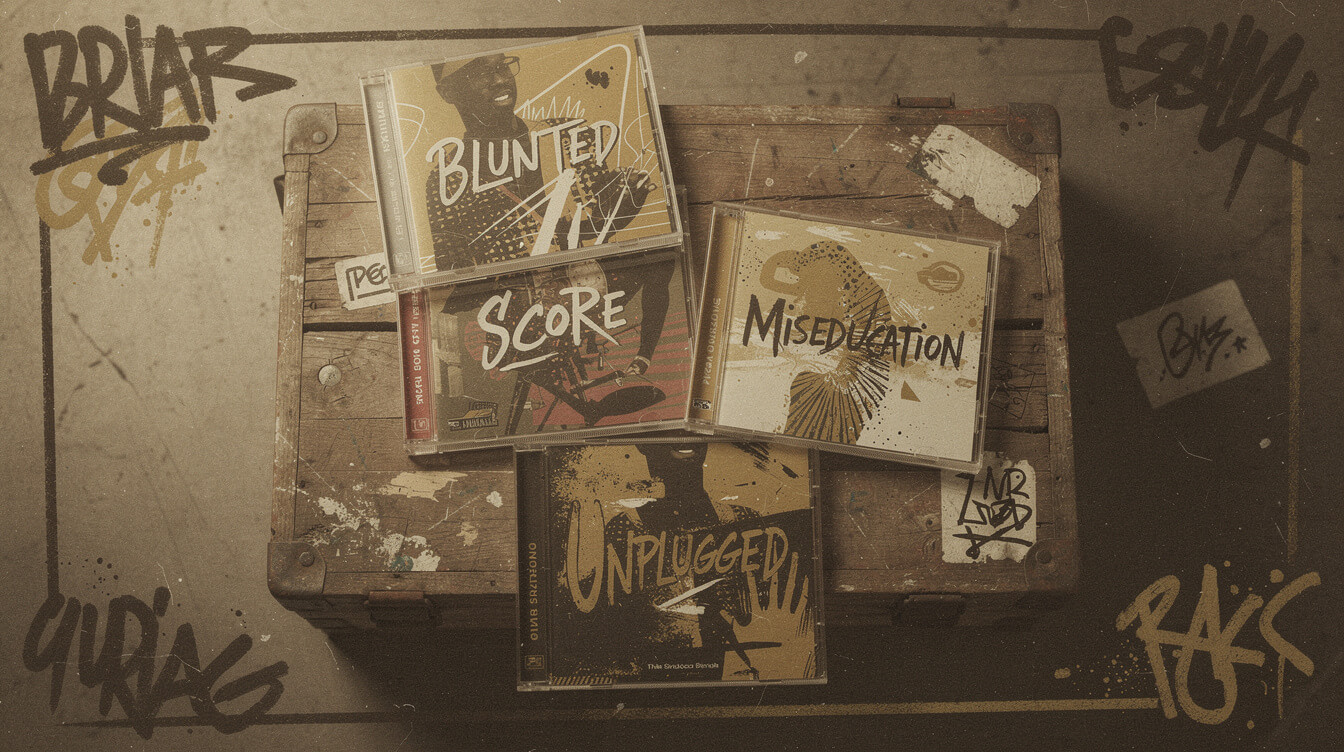
Four releases, three labels, two acts, one career. Here’s the entire output, in chronological order:
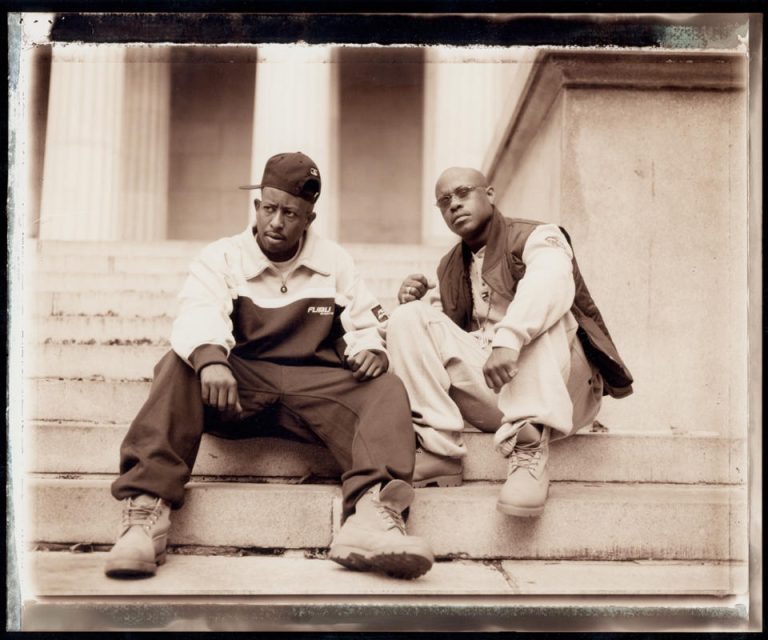
- Blunted on Reality — Fugees, Ruffhouse/Columbia, February 1994. Lauryn’s recorded debut at age 18, alongside Wyclef Jean and Pras Michel. Sold sluggishly out the gate; reissued in 1996 with the Salaam Remi remix of “Nappy Heads” that finally cracked the Billboard Hot 100.
- The Score — Fugees, Ruffhouse/Columbia, February 1996. Diamond-certified (10× Platinum in the U.S.), six million in the U.S. and over twenty million worldwide, the bestselling hip-hop album by a group at the time.
- The Miseducation of Lauryn Hill — solo, Ruffhouse/Columbia, August 1998. Debuted at No. 1, sold 423,000 copies its first week (then a Soundscan record for a female artist), won five Grammys including Album of the Year — the first hip-hop record to ever take that trophy. Diamond certified in 2021.
- MTV Unplugged No. 2.0 — solo live, Columbia, May 2002. Recorded in a single take in Studio 4A, July 21, 2001. Two discs, twenty-one tracks, all new acoustic compositions written after Miseducation. Polarizing at release; re-evaluated as a landmark vulnerability record.
Note what’s not on this list: a second solo studio album. There has never been one. Not in 2003, not in 2010, not in the post-streaming era. The closest she has come is the 2014 cover of “Feeling Good” for the Nina Revisited Nina Simone tribute, the 2016 release of “Consumerism,” and a handful of one-off features. The story of the Lauryn Hill discography is, in a strict sense, the story of four records — and the dozens of records that never happened.
Blunted on Reality (1994): The Fugees’ Rough First Draft

Before there was L-Boogie, before there was Ms. Hill, there was an 18-year-old Lauryn Hill on a Ruffhouse Records debut that almost killed the Fugees’ career. Blunted on Reality dropped February 1, 1994, and stiffed hard — initial sales were in the tens of thousands, and Columbia briefly considered dropping the group. The label’s frustration was simple: the record sounded like every other early-90s East Coast hip-hop record. Boom-bap drums, hyped-up rapid-fire verses, Wyclef and Pras out in front, Lauryn mostly relegated to hook duty and occasional vocal flourishes.
But buried in the back half of the record, the seeds were already there. “Vocab” — the Salaam Remi acoustic remix released later in ’94 — has Lauryn singing lead over a stripped-down arrangement that previews the entire neo-soul movement two years before D’Angelo’s Brown Sugar. “Nappy Heads,” the Remi remix, became the song that saved the Fugees. Released to radio in summer 1994, it climbed to No. 49 on the Hot 100, finally gave Ruffhouse a reason to keep the group, and shifted the trio’s center of gravity from Wyclef’s polyrhythmic delivery to Lauryn’s voice.
Listening back, Blunted on Reality is the document of a group searching for an identity. They knew they wanted to be hip-hop, but they were also Caribbean kids in suburban New Jersey raised on reggae, gospel, and Brazilian samba. They hadn’t figured out how to braid those threads yet. They would. Two years later, on The Score, they’d braid them so tightly the rest of the genre had to follow.
The Score (1996): When Lauryn Eclipsed the Group

The pivot record. February 13, 1996, the Fugees released The Score, and within twelve months they were the bestselling group in hip-hop history. Six million copies in the U.S., over twenty million worldwide, two No. 1 singles (“Killing Me Softly” and “Ready or Not”), and a sound that no one had ever fully integrated before: hip-hop drums, reggae bass, soul vocals, Caribbean songwriting structure, and lyrics that pulled equally from The Carter, KRS-One, Bob Marley, and the Bible.
The arrangement was deceptively simple. Wyclef Jean produced the bulk of the record (with Salaam Remi and Jerry Wonder Duplessis), pulling samples from Enya, Stevie Wonder, A Tribe Called Quest, and most famously Roberta Flack’s 1973 cover of the Charles Fox composition “Killing Me Softly with His Song.” But the architecture of every hit single ran through Lauryn. She wrote the topline melody for “Killing Me Softly.” She wrote and sang lead on “Fu-Gee-La,” “Ready or Not,” and “Zealots.” Her verse on “How Many Mics” is still cited as one of the greatest single verses by a female emcee — full stop, no qualifier needed.
By the time the Score tour wrapped in 1997, it was obvious to anyone watching: Lauryn was the group. Wyclef was the producer-frontman; Pras was the connector. But the voice, the writing, the gravitas — that was her. The natural next move was for her to leave. She did. The Fugees never released another studio album. They tried — sessions for a third record happened in 2004-2005 around a brief reunion tour — but the magic of ’96 has never been recaptured. The Score remains the only Fugees album most listeners need to know about, and the launching pad that made the rest of the Lauryn Hill discography possible.
The Miseducation of Lauryn Hill (1998): The Lauryn Hill Album That Rewrote Hip-Hop

Of all the Lauryn Hill albums, this is the one that broke the genre open. August 25, 1998. The Miseducation of Lauryn Hill. Debuted at No. 1, sold 423,000 copies its first week — at the time the largest opening week ever recorded by a female artist of any genre. Won five Grammys at the 1999 ceremony, including Album of the Year, the first time a hip-hop record had ever won that category. Went diamond. Stayed in the Billboard 200 for over 90 weeks. The cover, designed by photographer Eric Johnson and art director Sara Rotman, was modeled on a yearbook — Lauryn in profile, etched on the side of a wooden school desk like she had carved her name into the institution itself.
The record is a masterclass in conscious-rap-meets-neo-soul construction. “Lost Ones” is the diss track — to Wyclef, to the industry, to anyone who confused her for a child after she got pregnant by Rohan Marley at 22 and was told her career was over. “Doo Wop (That Thing)” is the moral lecture wrapped in a Ron Carter bass line and a No. 1 single — the first debut single by a female emcee ever to enter the Hot 100 at No. 1. “Ex-Factor” is the breakup ballad. “To Zion” is the love letter to her son and the public refusal to abort him that the industry pushed her toward. “Forgive Them Father” is the gospel reckoning. “Everything Is Everything” is the closer, the manifesto, the Joel Davis piano riff that John Legend played on at age 18.
What makes Miseducation a generational record isn’t the chart performance — it’s that the album, top to bottom, articulated a specific cultural moment: Black women in late-1990s hip-hop were expected to either play the sex symbol (Lil’ Kim, Foxy Brown) or the silent helpmeet. Lauryn refused both. She made an album about motherhood, faith, betrayal, racial pride, and self-determination, and she sold ten million copies of it. There is no Beyoncé Lemonade, no SZA SOS, no Solange A Seat at the Table without this template. If you’ve been digging into our take on how Miseducation rewrote the rules for Black women in hip-hop, you already know the lineage that flows from this record.
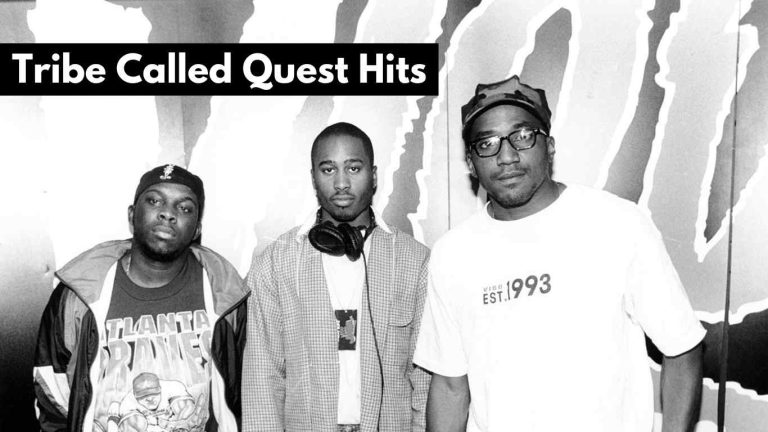
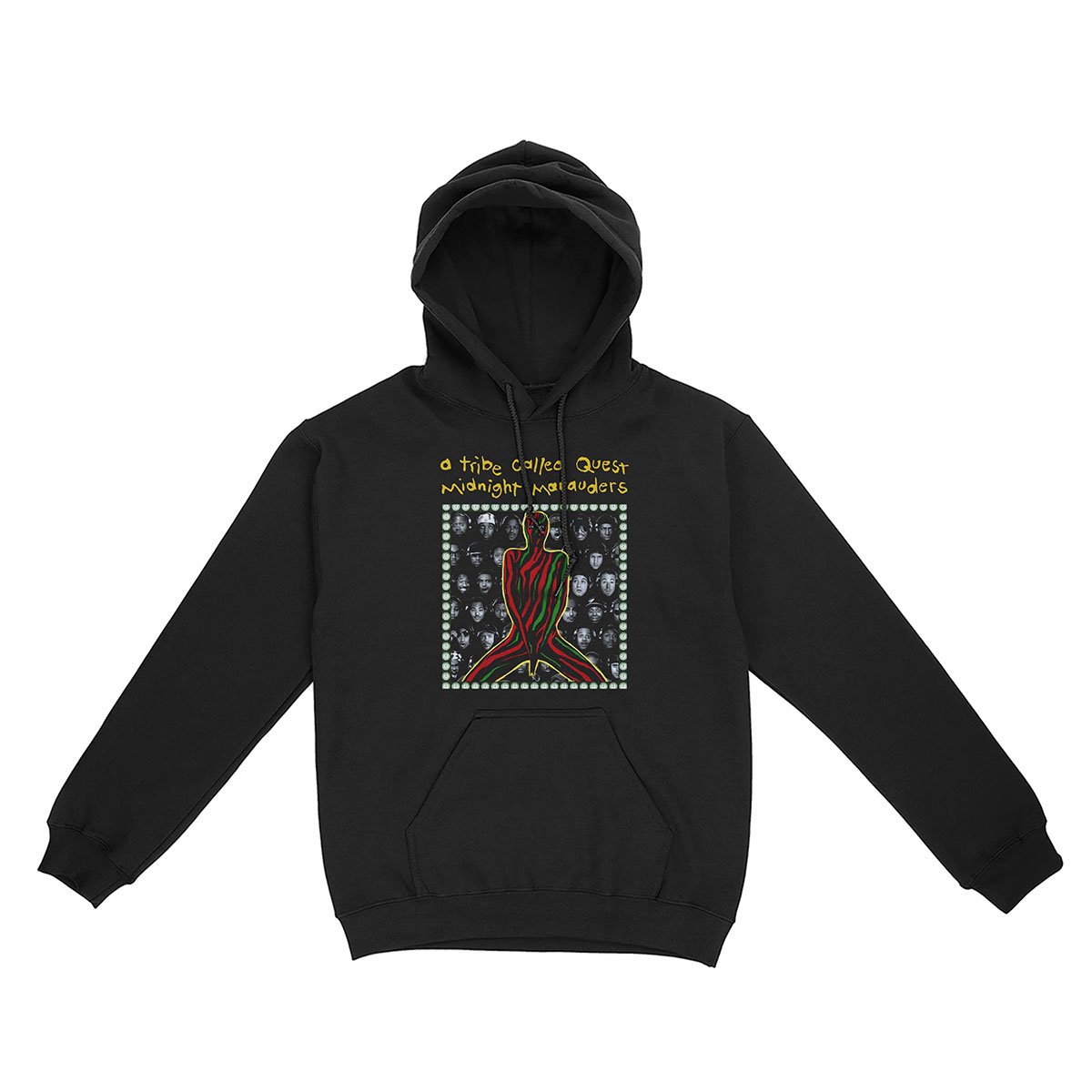
Honor the record in everyday wear — our A Tribe Called Quest Midnight Marauders Hoodie sits in the same Native Tongues sonic universe Lauryn was raised in, and Q-Tip co-produced “Lost Ones” and “Final Hour” on Miseducation — a direct line from the Quest catalog to the chair Lauryn was carving her name into.
MTV Unplugged No. 2.0 (2002): The Bravest Live Record in Hip-Hop
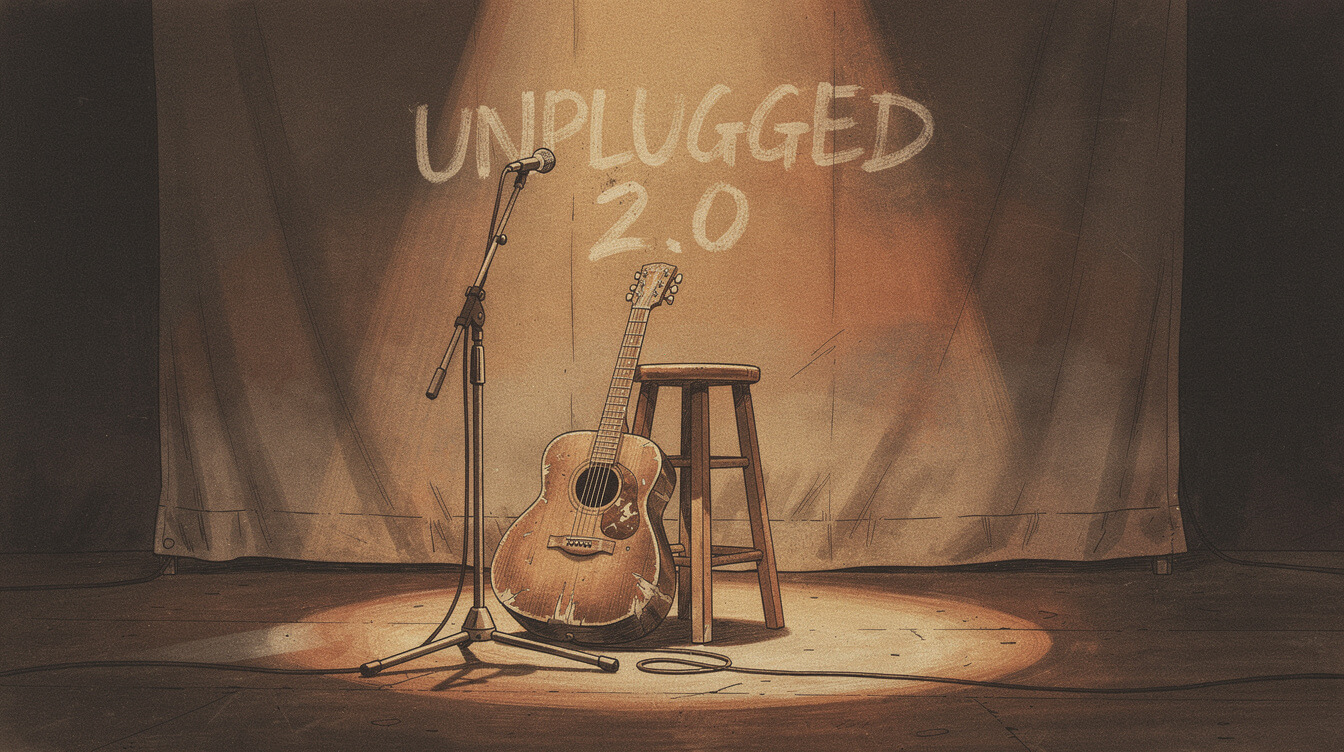
If Miseducation was the coronation, MTV Unplugged No. 2.0 was the abdication. Recorded July 21, 2001 in MTV’s Studio 4A in front of a small studio audience, released May 7, 2002 as a two-disc set, 21 tracks across roughly 100 minutes — every song new, every song acoustic, every song written between 1999 and 2001 while Lauryn was actively dismantling the persona that Miseducation had built.
The critical reception was brutal. Pitchfork gave it a 4.5. Rolling Stone called the long spoken interludes “self-indulgent.” Sales were a fraction of Miseducation — it still went platinum in the U.S., but on the back of pent-up demand, not on the music’s merits as understood at the time. The complaint was uniform: where was the Lauryn from “Doo Wop”? Why were the songs raw, unfinished, sometimes off-key? Why was she talking so much between tracks about ego death and corporate captivity?
Twenty-three years later, that critical consensus has inverted. Unplugged 2.0 is now widely understood as one of the bravest live records in hip-hop — a public document of an artist abandoning the contract between performer and audience in real time. The songs (“Mystery of Iniquity,” “Mr. Intentional,” “I Find It Hard to Say (Rebel),” “I Get Out”) are full-throated rejections of the music business, sung over a single acoustic guitar that Lauryn was still learning to play. The spoken interludes are not filler — they’re the album. She is telling the audience, on tape, that she will not be making another Miseducation. She is telling the audience that the version of her they fell in love with no longer exists. And she is doing it without irony, without a producer in her ear, without the safety net of a hit single. Hip-hop had never done that before. It still hasn’t.
Wear the Sound That Raised Her
Q-Tip produced two cuts on Miseducation. The Native Tongues lineage that fed Lauryn’s writing started right here, on Tribe’s third LP. Carry the lineage in the Midnight Marauders Hoodie — heavyweight cotton, classic mid-90s album-cover print.
The Lost Lauryn Hill: ‘Repercussions,’ Unreleased Cuts, and the New Ark Lawsuit

The Lauryn Hill discography you can buy is four albums. The Lauryn Hill discography that exists is much larger. There is a credible second solo album — or at least the materials for one — recorded between 2000 and 2002, originally rumored to be titled Repercussions. Bits of it have leaked over the years: “I Gotta Find Peace of Mind” (the only track from those sessions that surfaced officially, on Unplugged 2.0), and a handful of demos that have circulated on fan forums for two decades.
The reason that record never came out is well-documented in court records. In 1998, four producer-songwriters who called themselves the New Ark — Vada Nobles, Rasheem Pugh, Tejumold Newton, and Johari Newton — sued Lauryn and Sony, claiming she had not credited them for their contributions to Miseducation. The case settled out of court in February 2001 for what is widely reported to be a five-million-dollar payment. The legal mechanics aren’t the interesting part; what’s interesting is what the suit did to Lauryn psychologically. She had publicly declared, in the Miseducation liner notes and in interviews, that she wrote every song herself. The New Ark suit revealed that several tracks had outside writing contributions she hadn’t formally credited. The credibility hit, internally, was enormous.
Layered on top: a 2012 tax case (she pleaded guilty to failing to file returns for 2005-2007, served three months in federal prison in 2013, paid roughly one million in back taxes and fines), the 1999 New York Times interview where she gave the line about preferring “to have my children starve” rather than have white people consume her music, and the years of management churn that followed. The pattern is consistent: every time the industry tried to extract another Miseducation, she pulled further back. By 2010, the catalog had stopped expanding. Live performances continued — the Miseducation Anniversary Tour has been running on and off since 2018 — but new recordings have effectively halted.
Frequently Asked Questions About the Lauryn Hill Albums
How many Lauryn Hill albums are there? Four full-length releases total. Two with the Fugees: Blunted on Reality (1994) and The Score (1996). Two as a solo artist: The Miseducation of Lauryn Hill (1998, studio) and MTV Unplugged No. 2.0 (2002, live). There has never been a second solo studio album.
What is the best Lauryn Hill album to start with? If you’ve never heard her, start with The Miseducation of Lauryn Hill — it’s the most accessible entry point, contains every Lauryn idea in finished form, and is widely available on every streaming platform. Move to The Score second to hear her in group context. Save Unplugged 2.0 for last; it’s the deepest cut and rewards patience.
Why hasn’t Lauryn Hill released a second solo album? The honest answer is layered: the New Ark lawsuit (settled 2001) burned her on collaborative credit, the music industry’s response to Miseducation created a creative cage she rejected, motherhood and faith reordered her priorities (she has six children), and a 2013 federal tax conviction interrupted her ability to record. She has stated in multiple interviews — most notably the 1999 NY Times piece and her 2018 open letter — that her silence is intentional, not a creative block.
Is The Miseducation of Lauryn Hill diamond certified? Yes. The RIAA certified the album diamond (10× platinum) on March 19, 2021 — the second hip-hop album by a woman to reach that level. Twenty-three years from release to diamond certification, almost entirely on the back of streaming-era discovery by listeners who weren’t born when it came out.
Where can I rank Lauryn Hill albums by quality? Most critical lists rank them: 1) The Miseducation of Lauryn Hill, 2) The Score, 3) MTV Unplugged No. 2.0, 4) Blunted on Reality. The gap between 1 and 2 is small. The gap between 3 and 4 is large. Unplugged 2.0 has climbed steadily in retrospective rankings; it now appears in the top 50 of most “best live albums of the 2000s” lists.
Has Lauryn Hill ever announced a new album? Repeatedly, between 2008 and 2014, then less frequently. No release has materialized. The 2014 Nina Simone tribute, the 2016 standalone single “Consumerism,” and a handful of festival appearances are the only studio output of the last decade. The Miseducation 25th Anniversary Tour (2023-2024) reignited speculation, but as of mid-2026 no new studio album is on a label release schedule.
For more on the album that built the entire conversation, dig into our deep read on The Miseducation of Lauryn Hill at 28 and our birthday tribute, Lauryn Hill Turns 51 — The Architect Who Made the First Rap Album of the Year.
Final Thoughts: The Discography That Refused to Be Owned
Most discographies grow. The Lauryn Hill discography contracted. After 1998, every move was a subtraction — fewer interviews, fewer photo shoots, fewer songs, fewer collaborators, fewer concessions. Unplugged 2.0 is the last record she made on terms anyone outside her circle would recognize as “label-ready.” Everything since has been on her terms, at her schedule, in whatever venue she chooses to walk into that month.
The temptation is to read that as tragedy — a generational talent silenced by lawsuits and tax trouble and her own perfectionism. But the inverse reading is more honest. Lauryn Hill is one of the only major artists in modern hip-hop who genuinely succeeded in extracting herself from the industrial machine that creates major artists. She made the album, she won the awards, she sold the records, she watched the industry try to replicate the formula, and she walked out the side door before they could lock the contract on her. The four-album catalog isn’t a failure. It’s a refusal. And in an era where artists are measured by their output velocity — singles every Friday, album every twelve months, content every hour — refusal is the loudest statement available.
The records are still here. The records are still selling. And every time a new generation discovers Miseducation, they discover the same thing every prior generation found: that the artist who made it was never going to give them a part two, and that the absence is part of the art. Stay creative — The Custom Creative Team.

Get the Culture in Your Inbox
Album breakdowns, classic-era essays, and first looks at every new tee, hoodie, and neon we drop. No spam, just the culture — direct from the Custom Creative crew.

🎧 Never Miss a Drop
Exclusive product releases, hip-hop deep dives, and member-only discounts. Straight to your inbox.
Free forever. No spam. Unsubscribe anytime.

Get the Culture, Delivered
Deep dives into hip-hop history, exclusive product drops, and discounts sent straight to your inbox. No spam, just culture.
Join 2,000+ hip-hop heads already in the loop. Unsubscribe anytime.