De La Soul, J Dilla, and Tupac: Two Legends, Two Unfinished Stories
De La Soul’s 1996 album Stakes Is High connected them to two hip-hop legends—and both stories ended in tragedy. J Dilla produced the title track, cementing a creative bond that death would sever too soon. Meanwhile, the album’s anti-gangsta rap stance ignited a feud with Tupac Shakur that would never be resolved. This is the story of how one album tied De La Soul to two of hip-hop’s most beloved figures—and why neither relationship got the ending it deserved.
Quick Facts: De La Soul’s Legend Connections
| The Album | Stakes Is High (July 2, 1996) |
| J Dilla’s Contribution | Produced title track “Stakes Is High” |
| Tupac Conflict | Started 1993, escalated with Stakes Is High release |
| J Dilla’s Death | February 10, 2006 (age 32) |
| Tupac’s Death | September 13, 1996 (age 25) |
| Tragic Timeline | Tupac died 2 months after album release; beef unresolved |
| De La Soul Members | Posdnuos, Trugoy the Dove (d. 2023), Maseo |
Stakes Is High: The Album That Changed Everything

In 1996, De La Soul was at a crossroads.
Their debut 3 Feet High and Rising had revolutionized hip-hop with its playful, sample-heavy approach. But by the mid-90s, gangsta rap dominated the charts. Death Row Records was king. The Native Tongues movement that De La Soul had helped create felt like ancient history.
De La Soul’s response was Stakes Is High—an album that took direct aim at hip-hop’s violent turn.
“Sick of R&B bitches over bullshit tracks / Cocaine and crack, which brings sickness to Blacks,” Trugoy rapped on the title track. It was a declaration of war against the very sound ruling hip-hop.
The album also marked a creative rebirth. Tommy Boy Records, sensing a commercial dud, gave De La Soul minimal budget and almost no promotion. Freed from label interference, the trio crafted their most personal, sonically adventurous work yet.
And they reached out to a young Detroit producer who was just starting to make waves in the underground.
Jay Dee’s Gift: How J Dilla Shaped De La Soul’s Masterpiece

James Dewitt Yancey—known to the world as J Dilla, then still going by Jay Dee—was 22 years old when he produced the title track for Stakes Is High.
It was one of his earliest major placements. And it was perfect.
Dilla’s beat for “Stakes Is High” was everything De La Soul needed: soulful but gritty, smooth but urgent. Built around a Grover Washington Jr. and Ahmad Jamal sample, the track gave Posdnuos and Trugoy the foundation to deliver their manifesto against hip-hop’s commercialization.
The collaboration made sense. Both De La Soul and Dilla shared a commitment to pushing boundaries. Both valued soul and funk. Both were more interested in artistry than chart positions.
“He was ahead of his time,” Posdnuos would later say about Dilla. “The way he flipped samples, the way he understood rhythm—nobody was doing what he was doing.”
The Stakes Is High album also featured production from Dilla’s Slum Village collaborators, creating a bridge between De La Soul’s Native Tongues legacy and Detroit’s emerging neo-soul movement. The album introduced Mos Def to a wider audience, featured Common, and planted seeds that would bloom into the entire alternative hip-hop renaissance of the late 90s and 2000s.
For fans looking to honor this legendary collaboration, our De La Soul “Stakes Is High” T-Shirt celebrates the 1996 masterpiece that brought De La Soul and J Dilla together—a tribute to the moment when two visionary forces created something timeless.
But while De La Soul was building bridges with Detroit, they were burning one with the West Coast.
The Tupac Beef Nobody Wanted

The conflict between De La Soul and Tupac Shakur started with a misunderstanding that spiraled into genuine animosity.
In 1993, De La Soul released the music video for “Ego Trippin’ (Part Two).” The video featured the trio parodying various hip-hop stereotypes, including scenes that some interpreted as mocking gangsta rap’s excesses.
Tupac saw it differently. He believed the video was directly mocking his “I Get Around” video, which had been released the same year. Whether intentional or not, the perceived slight set Tupac off.
“Those are just some sucka-ass niggas,” Tupac said in subsequent interviews, accusing De La Soul of being fake intellectuals who looked down on street-level artists.
De La Soul denied any intentional mockery. Trugoy later explained that “Ego Trippin'” was satirizing the entire industry, not targeting Tupac specifically. But the damage was done.
The beef simmered for years. Then Stakes Is High dropped in July 1996.
The album’s explicit criticism of gangsta rap felt like a direct attack on everything Tupac represented. Lines about “sickness” in Black communities and the commercialization of violence could easily be read as shots at Death Row’s dominance.
Tupac responded on “Against All Odds,” released posthumously on The Don Killuminati: The 7 Day Theory: “De La Soul turned hoes, now they pose like they hard.”
He also recorded the unreleased “Watch Ya Mouth,” which featured even more direct attacks on the Native Tongues veterans.
Two months after Stakes Is High was released, Tupac was murdered in Las Vegas.
The beef was never resolved. There was no reconciliation, no handshake, no moment of understanding. Just an argument frozen in time, preserved forever in wax.
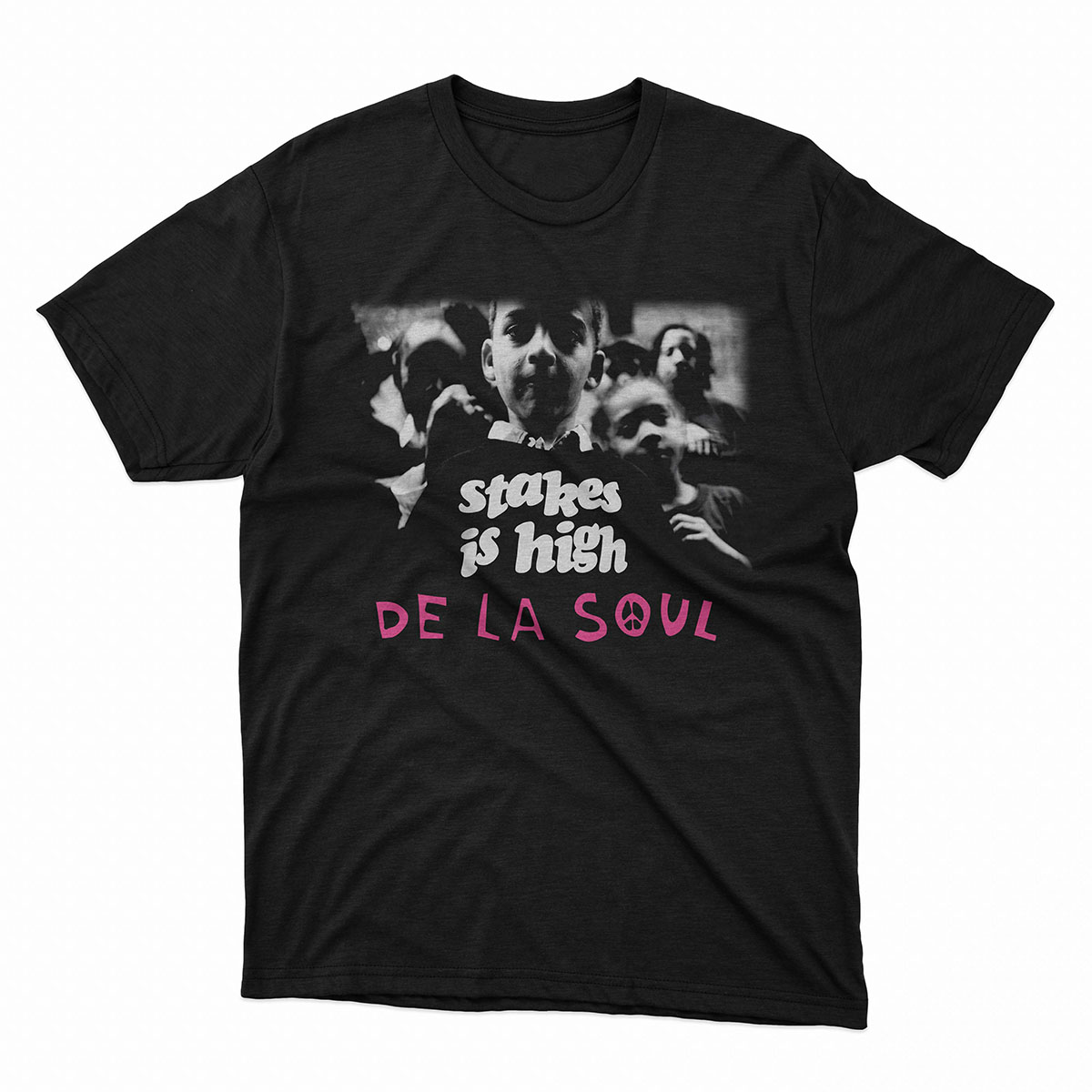
Own a Piece of History
The album that connected De La Soul to J Dilla and sparked the Tupac beef. Rep the 1996 classic that changed hip-hop.
Two Deaths, Two Unfinished Stories

Here’s the cruel irony of De La Soul’s history: both of their most significant relationships with hip-hop legends ended without closure.
J Dilla died on February 10, 2006. He was 32 years old, taken by a rare blood disease called thrombotic thrombocytopenic purpura combined with lupus. His final album, Donuts, was released three days before his death—a 31-track instrumental masterpiece crafted from a hospital bed.
De La Soul and Dilla had continued collaborating after Stakes Is High. Dilla produced tracks for De La Soul’s 2001 album AOI: Bionix. The creative bond remained strong. But Dilla’s death cut short what could have been decades more of collaboration.
“We lost one of the greatest producers ever,” Maseo said after Dilla’s passing. “He was family.”
Tupac died on September 13, 1996—just two months after Stakes Is High was released. He was 25 years old, gunned down in a still-unsolved drive-by shooting in Las Vegas.
The beef with De La Soul was never resolved. There was no phone call, no backstage conversation, no mutual friend brokering peace. Tupac went to his grave still angry at the Native Tongues veterans, and De La Soul never got the chance to clear the air.
In later interviews, De La Soul members expressed regret about the conflict. Trugoy acknowledged that the whole thing was a misunderstanding that got out of hand. Posdnuos noted that they had mutual respect for Tupac as an artist, even if the personal relationship soured.
But regret doesn’t rewrite history. The beef remains frozen at its worst moment.
The Weight of Legacy
For De La Soul, these two relationships represent opposite poles of their experience in hip-hop.
J Dilla represents the pure artistic collaboration—two visionary forces meeting at exactly the right moment and creating something timeless. The Stakes Is High title track stands as one of the greatest conscious hip-hop songs ever recorded, and Dilla’s production is a huge reason why. Their relationship was about mutual respect and creative growth.
Tupac represents the cost of being outsiders. De La Soul’s refusal to conform to gangsta rap’s dominance made them enemies of one of the genre’s biggest stars. Their willingness to criticize hip-hop’s direction meant burning bridges with artists who took the criticism personally.
Both relationships ended tragically. Both left things unsaid.
And now, with Trugoy the Dove’s death in February 2023, the full story will never be told. The trio that collaborated with Dilla and clashed with Tupac is down to two surviving members. The memories, the regrets, the what-ifs—they belong to Posdnuos and Maseo alone now.
What This Means for Hip-Hop History
De La Soul’s connections to J Dilla and Tupac illuminate something important about the 1990s: it was a decade of creative collision.
Artists weren’t operating in silos. The Native Tongues philosophy was meeting the emerging Detroit sound. East Coast consciousness was clashing with West Coast gangsta. And in the middle of it all, De La Soul was making an album that would tie them to both movements in permanent, complicated ways.
Stakes Is High matters because it captured that moment of transition. Hip-hop was becoming a billion-dollar industry, and De La Soul was asking whether the culture’s soul would survive the money. Dilla’s production gave that question a groove. Tupac’s anger showed how high the stakes really were.
Three decades later, the album sounds prophetic. The commercialization De La Soul warned about has only intensified. The authenticity they championed is now a marketing buzzword. And the legends they connected with—Dilla, Tupac, and now Trugoy himself—are all gone.
What remains is the music. And the reminder that hip-hop history isn’t just about hits—it’s about relationships, conflicts, and the human beings behind the records.
Frequently Asked Questions
Did J Dilla produce for De La Soul?
Yes. J Dilla (then known as Jay Dee) produced the title track “Stakes Is High” on De La Soul’s 1996 album of the same name. This was one of Dilla’s earliest major production placements. He later produced additional tracks for De La Soul’s 2001 album AOI: Bionix, including “Baby Phat.” The collaboration represented a creative bond between De La Soul’s Native Tongues legacy and Detroit’s emerging neo-soul movement.
What was the beef between Tupac and De La Soul?
The conflict began in 1993 when Tupac believed De La Soul’s “Ego Trippin’ (Part Two)” video was mocking his “I Get Around” video. De La Soul denied intentional mockery, but Tupac took offense. The beef escalated when De La Soul’s 1996 album Stakes Is High criticized gangsta rap, which Tupac took personally. He dissed them on “Against All Odds” and the unreleased “Watch Ya Mouth.” Tupac was killed in September 1996, two months after Stakes Is High was released, and the beef was never resolved.
Did De La Soul ever reconcile with Tupac?
No. Tupac died on September 13, 1996, just two months after De La Soul released Stakes Is High. The conflict was never resolved. De La Soul members have expressed regret about the misunderstanding in subsequent interviews, but there was never an opportunity for reconciliation before Tupac’s death.
What album did J Dilla produce for De La Soul?
J Dilla produced the title track “Stakes Is High” on De La Soul’s fourth studio album, Stakes Is High (1996). He also contributed production to their 2001 album AOI: Bionix. The Stakes Is High collaboration is particularly significant because it was one of Dilla’s earliest high-profile placements and helped establish his reputation as a producer.
Why is Stakes Is High important in hip-hop history?
Stakes Is High is significant for several reasons: it featured early production from J Dilla, introduced Mos Def to a wider audience, included contributions from Common, and represented De La Soul’s most direct critique of hip-hop’s commercialization. The album marked a creative turning point where the group, freed from major label expectations, crafted their most personal work. It’s now considered a classic of conscious hip-hop and a bridge between the Native Tongues era and the alternative hip-hop renaissance of the late 1990s.
How did J Dilla die?
J Dilla (James Dewitt Yancey) died on February 10, 2006, at age 32. He suffered from thrombotic thrombocytopenic purpura (TTP), a rare blood disorder, combined with lupus. Despite his illness, he continued making music until the end. His final album, Donuts, was released on February 7, 2006—his 32nd birthday and three days before his death. He made much of the album from his hospital bed.
Were De La Soul and A Tribe Called Quest friends with J Dilla?
Yes. J Dilla had close ties to both groups through the broader Native Tongues/alternative hip-hop community. He produced extensively for A Tribe Called Quest, including major contributions to Beats, Rhymes and Life (1996) and The Love Movement (1998). His work with De La Soul on Stakes Is High (1996) was part of this same creative network. Q-Tip of A Tribe Called Quest was particularly close to Dilla and has spoken extensively about their friendship and collaboration.
What happened to Trugoy from De La Soul?
David Jolicoeur (Trugoy the Dove) died on February 12, 2023, at age 54. He had been battling congestive heart failure for several years. Trugoy was co-founder and member of De La Soul from 1987 until his death. He passed away just three weeks before De La Soul’s catalog finally became available on streaming platforms after a decades-long dispute with their former label, Tommy Boy Records.
De La Soul’s relationships with J Dilla and Tupac represent two sides of hip-hop’s 1990s story: the creative collaborations that pushed the art form forward, and the conflicts that tore the community apart. Both stories ended in tragedy. Both remind us that behind the music, there were human beings with limited time to make peace, create art, and say what needed to be said.

🎧 Never Miss a Drop
Exclusive product releases, hip-hop deep dives, and member-only discounts. Straight to your inbox.
Free forever. No spam. Unsubscribe anytime.

Get the Culture, Delivered
Deep dives into hip-hop history, exclusive product drops, and discounts sent straight to your inbox. No spam, just culture.
Join 2,000+ hip-hop heads already in the loop. Unsubscribe anytime.