Follow the Leader Rakim: How Hip-Hop’s Vocabulary Doubled on a 1988 Sophomore Album
Talib Kweli — a man who has built a 25-year career on the proposition that words matter more than almost anything — was once asked for his favorite verses ever written. Not his favorite rap verses. His favorite verses, full stop, in any form, by anyone. On that list sat the opening sixteen of the title track from Follow the Leader. Follow the Leader Rakim verses are the kind of thing writers cite when they want to explain to non-rap people what the form is actually capable of, and that 1988 album is where the William “Rakim” Griffin who could out-rap anyone became the Rakim every rapper since has been measured against.
That is the argument this piece is going to make and back up with receipts: Follow the Leader is not just the better Eric B. & Rakim album in a vacuum-sealed crate-digger sense. It is the record where the vocabulary of hip-hop measurably doubled — denser rhyme, deeper sample sourcing, a longer afterlife in other people’s songs — and the case for it sitting above Paid in Full is louder than the culture’s muscle memory lets on.
Follow the Leader, Rakim’s 1988 Setup: A Duo With Something To Prove
Here’s the thing nobody tells you about sophomore albums in 1988: they were supposed to be the stumble. Paid in Full had landed in 1987 like a meteor — “Eric B. Is President,” “I Know You Got Soul,” “My Melody,” the title track. It rewrote what an MC was allowed to sound like overnight: calm, internal, jazz-cool, no shouting, all precision. The expectation for the follow-up was the usual one. Cash a check. Tour the hits. Slide.
Instead the duo blew up their own deal. They walked away from 4th & B’way and signed to Uni Records, a subsidiary of MCA, and went into Power Play Studios in Queens with a different posture entirely. Follow the Leader dropped on July 26, 1988, and the RIAA certified it Gold barely two months later, on September 27, 1988. It peaked at #22 on the Billboard 200 and #7 on the Top Black Albums chart — the best US chart showing of the duo’s career, better than the debut everyone canonizes.
Production was Eric B. and Rakim, with live instrumentation handled by Rakim’s brother, Stevie Blass Griffin. That family-band detail matters more than it sounds. This wasn’t a beat tape with raps on top. It was a record assembled by people who could play, who understood arrangement, who treated a rap album like a body of music rather than a delivery system for punchlines. If you’ve followed the duo’s full arc, our breakdown of what happened to Eric B. and Rakim shows how rare that creative alignment was — and how short the window stayed open.
Understand the pressure of the moment. In 1988, the sophomore slump wasn’t a superstition, it was the base rate. Rap careers ran in eighteen-month cycles; the second record was usually where the magic thinned out and the label’s hand got heavy. Worse, the bar Rakim had to clear wasn’t somebody else’s — it was his own. He had personally rendered half the rappers in New York obsolete a year earlier. The Juice Crew was at its commercial peak, Big Daddy Kane was about to drop Long Live the Kane, BDP was reloading. The smart money said the only direction left for the guy who’d already perfected understatement was down. Follow the Leader is what it looks like when an artist hears “you can’t possibly top that” and treats it as a dare instead of a compliment.
The Words-Per-Minute Argument: Why Follow the Leader Rakim Verses Hit Different
Robert Christgau, reviewing the album for the Village Voice, reached for an unusual yardstick. He praised Rakim’s “ever-increasing words-per-minute ratio” and compared him to a young Bob Dylan. Read that again. A rock critic, in 1988, is telling you the most interesting thing about this rapper is throughput — that the meaningful unit of measurement is how much language he can pack into a bar without it collapsing into noise.
That is not a metaphor. It is a measurable claim, and you can hear it the second you A/B two verses. Pull a verse from Paid in Full‘s “Eric B. Is President” — already a landmark of restraint, end-rhymes landing clean on the four. Now pull the title track from Follow the Leader, or worse, “Lyrics of Fury.” The end-rhyme is still there, but underneath it Rakim has woven three or four internal rhyme chains per couplet, syllables doubling back on themselves mid-line, consonants alliterating in clusters of five.
“Music makes mellow maintains to make melodies for MCs / Motivates the breaks, I’m everlasting” — five hard “M” attacks across two bars, every stressed syllable a rhyme or an alliteration, and the sentence still parses as a complete thought.
Peter Watrous in the New York Times called him “one of the most distinctive rappers in the business” and reached for a football metaphor — a voice that traveled like a perfectly thrown spiral, tight and rotating and unbothered. The point all three writers were circling: between 1987 and 1988, the ceiling on how much craft you could fit into sixteen bars went up, and Rakim is the one who raised it.
The technical innovation underneath the praise is specific, and it’s worth naming because it’s the part that actually changed the form. Pre-Rakim, the dominant flow sat on the beat — bar-ends locking to the snare, the rhyme scheme telegraphing itself a mile out, the cadence essentially a nursery-rhyme skeleton with attitude. Rakim pulled the voice off the one. He let phrases spill across the bar line, started rhymes in the middle of a measure and resolved them three words into the next, and treated the drum pattern as a floor to walk across rather than a railing to hold. Paid in Full introduced that idea. Follow the Leader weaponized it — same calm tone, triple the information density, the enjambment now load-bearing instead of decorative.
Every technical rapper who came after is downstream of this record. Nas’ notebook precision, Big Pun’s syllable avalanches, Eminem’s internal-rhyme machinery, Black Thought’s marathon control, MF DOOM’s drunk-genius wordplay, Kendrick’s pocket games — all of it traces back to the moment Rakim proved you could be the densest and the calmest voice in the room at the same time. The “lyrical miracle” lineage people now roll their eyes at? It started as a revelation, right here. For the full map of how this voice evolved, our guide to every Eric B. and Rakim song traces the density curve track by track.
Follow the Leader, Rakim’s Crate-Digging Leap: Eric B. Becomes a Musicologist
If Rakim doubled the words, Eric B. doubled the source material. Paid in Full was, sonically, a James Brown record once removed — the “Funky Drummer” break and its cousins doing the heavy lifting, the way most of golden-age New York was building in 1987. It worked because the raps were superhuman, but the palette was narrow.
Follow the Leader went digging in a different part of the crate entirely. The title track alone pulls from Bob James’ “Nautilus” (1974) — that eerie, weightless jazz-funk loop that became the spine of the song’s whole cosmic atmosphere — plus Baby Huey’s “Listen to Me” (1971), a psychedelic-soul deep cut, and the drums off Coke Escovedo’s “I Wouldn’t Change a Thing” (1976), a slab of Latin funk, with Eric B. & Rakim self-sampling their own “I Know You Got Soul” on top of it. Jazz-funk, psych-soul, Latin funk, and a callback to their own catalog — in one beat.
That Bob James “Nautilus” choice deserves its own paragraph, because it is one of the most consequential sample selections in rap history. “Nautilus” — a moody, almost ambient 1974 jazz-funk instrumental — would go on to become sample-canon, the backbone of records from Slick Rick’s “Children’s Story” to Ghostface to Main Source to dozens more. But Follow the Leader got there early and used it best, building an entire cosmic-noir atmosphere out of a record most rap producers in 1988 had never flipped to. That is the difference between using samples and hearing them. Eric B. wasn’t grabbing the loudest four bars on a famous break; he was listening to a quiet jazz record for the part that would sound like outer space under Rakim’s voice.
The academic William Jelani Cobb, writing in To the Break of Dawn in 2006, put it precisely: this record featured “a broader spectrum of sounds than the James Brown samples that had defined the initial release.” That is the whole thesis in one sentence from a scholar who wasn’t trying to start a fan argument. Eric B. stopped being a beat-maker and became a crate-digging musicologist, and in doing so he handed the next decade of producers — the Premiers, the Pete Rocks, the RZAs — permission to treat the entire history of recorded music as raw material instead of just the funk 45s everyone already knew. The boom-bap golden age that followed runs on this assumption. It started getting normalized here.
The Singles: Microphone Fiend, The R, Lyrics of Fury, and a Catacombs Video
The album front-loads its case. “Microphone Fiend” is the one people quote first — the addiction conceit, “I was a fiend before I became a teen,” the rapper as an obsessive who needs the mic the way an addict needs the next hit. The hook is so structurally clean it has been borrowed for thirty-five years; Rage Against the Machine covered the song outright on their 2000 album Renegades, which tells you everything about how far past the rap audience this writing traveled. A rock band that built its entire identity on rage looked at hip-hop’s catalog and decided this was the text worth reinterpreting.
“Lyrics of Fury” is the technical Everest, the one rappers play for other rappers, the verse where the words-per-minute argument stops being theoretical — “I’m rated ‘R’ — this is a warning, ya better void / Poets are paranoid, DJs D-stroyed.” It is two-plus minutes of unbroken internal rhyme delivered at a temperature somewhere around absolute zero. Nobody sounds like they are trying that hard while sounding like they are not trying at all. “The R” is the manifesto, the title an entire philosophy compressed into a single letter — knowledge of self, the God MC, the Five Percent lexicon folded so deep into the bars that it functions as both lyric and lesson.
Then there’s the title track itself, which carries the album’s dual meaning. On one level “Follow the Leader” is straight battle-flexing — a sci-fi scenario where lesser MCs tailspin trying to keep up, “Soon you suddenly see a star / You better follow it ’cause it’s the R.” On another it is a Five Percent Nation–shaped call to self-education: “a little knowledge is dangerous / It can’t be mixed, diluted, it can’t be changed or switched.” Rakim is telling you to follow him and to stop following anyone, in the same song, and both readings are correct.
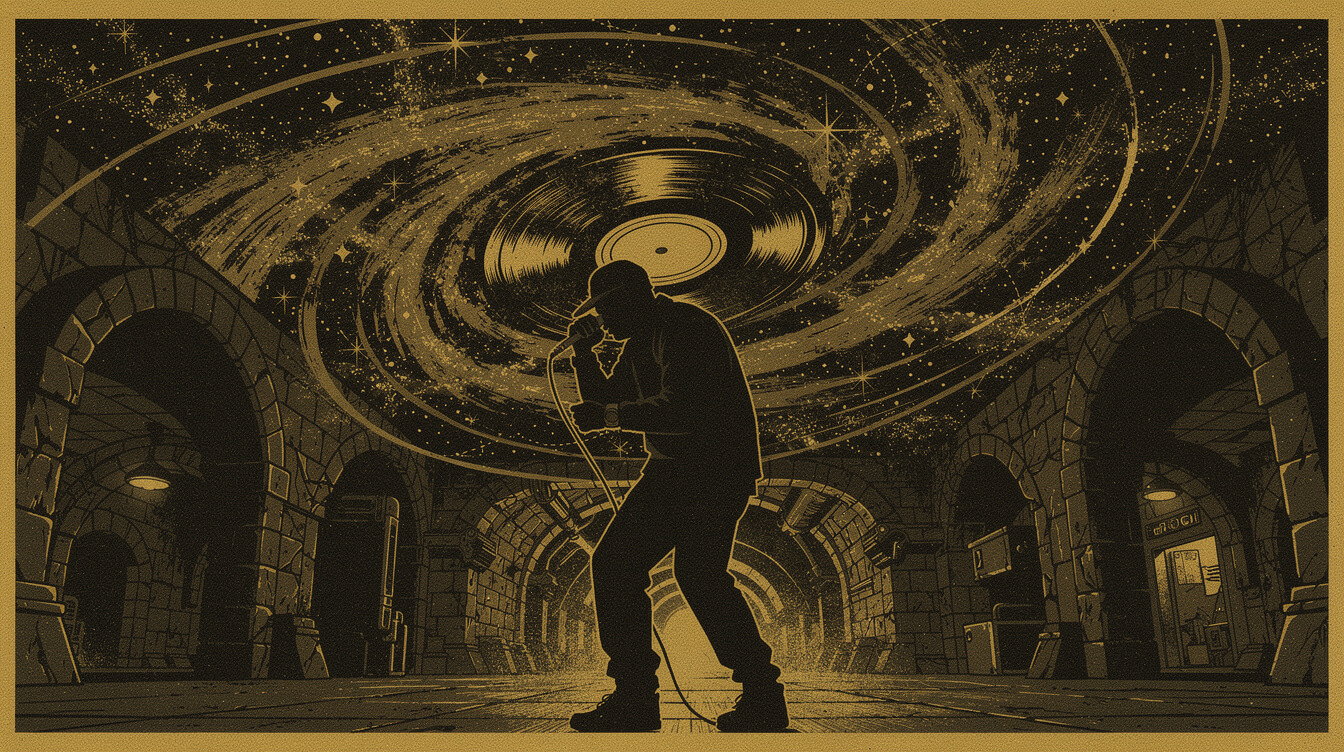
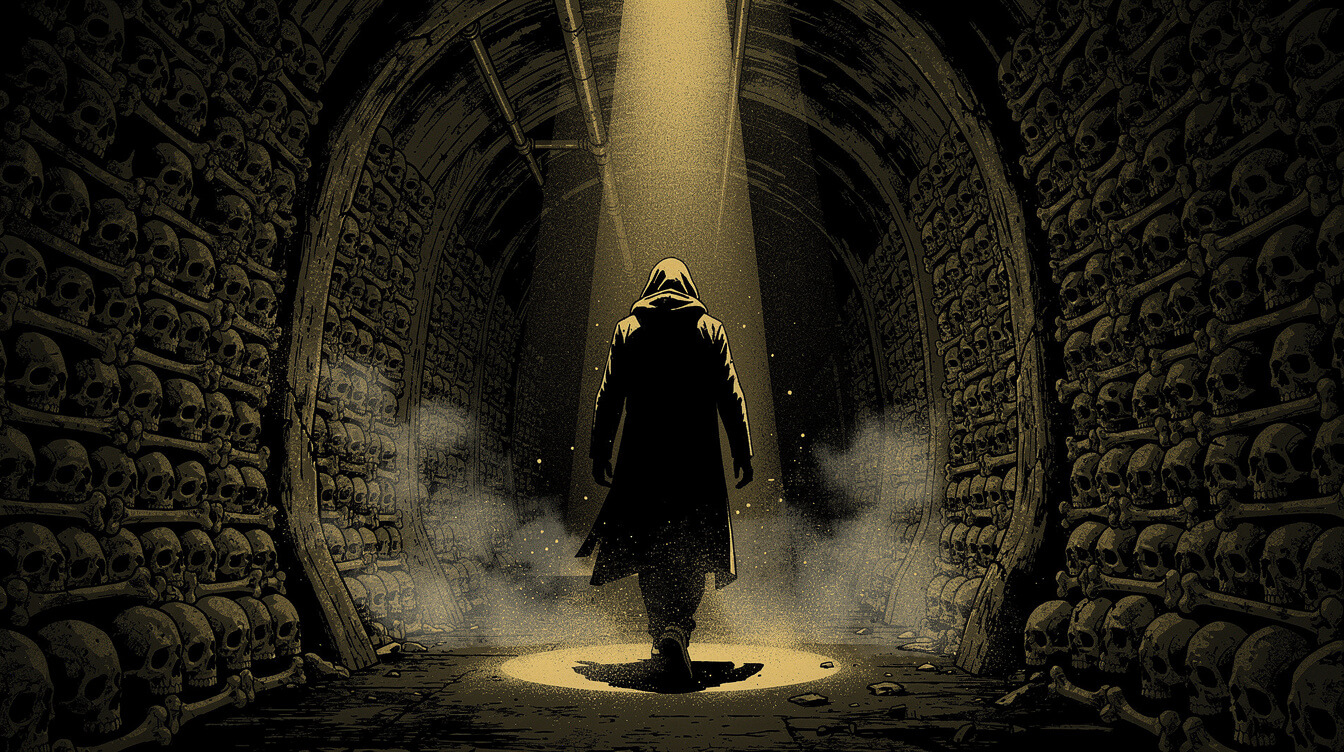
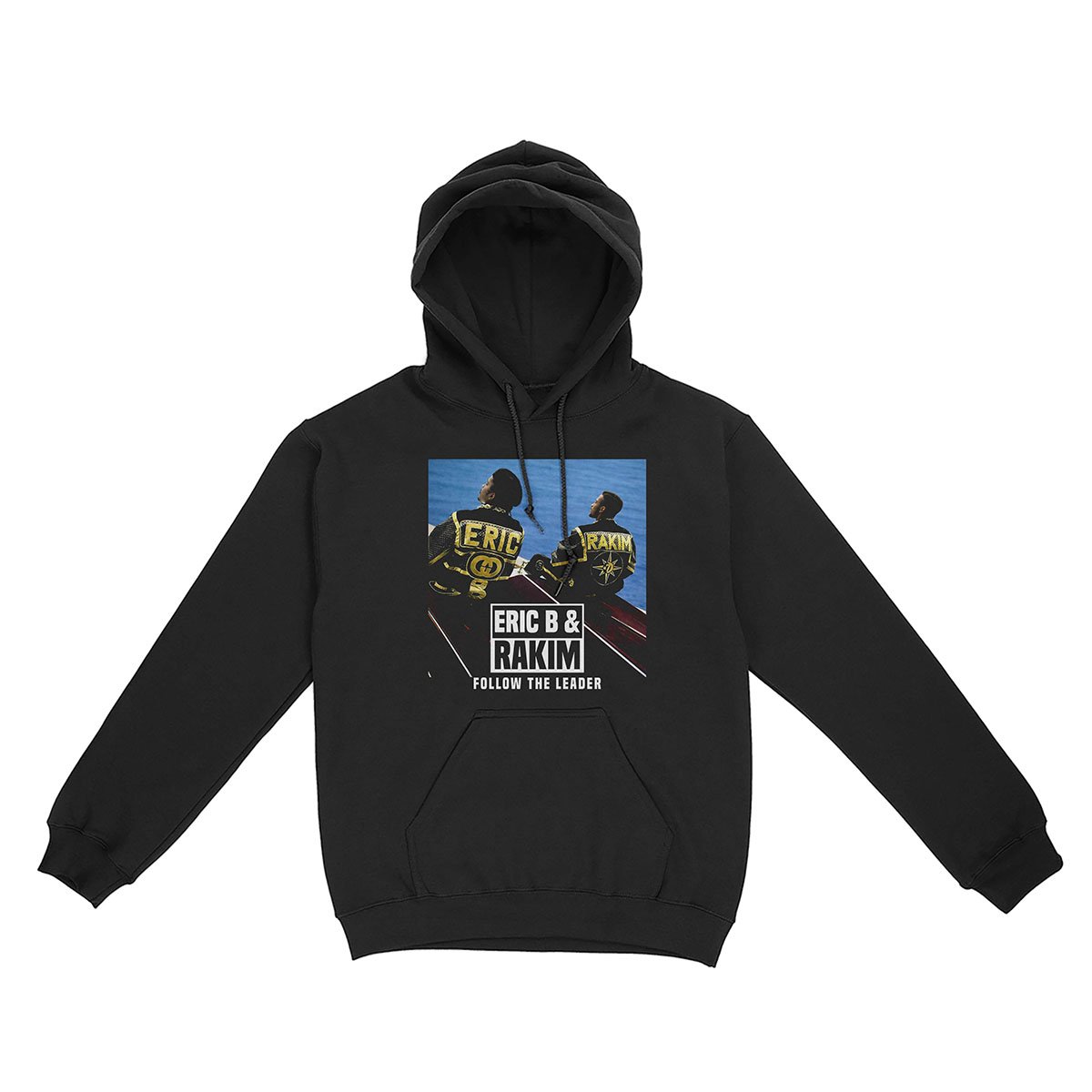
The music video, directed by Maureen Pawley, was filmed in the Catacombs of Paris — actual underground ossuary tunnels, bone-walled, cold, cosmic. It is one of the most visually committed rap videos of the era and it matched the record’s sci-fi-noir lyricism perfectly. The single did real numbers too: #16 on Hot Black Singles, #11 on Hot Dance/Disco, #5 on Hot Dance Music/Maxi-Singles Sales. We made the Eric B. & Rakim Follow the Leader hoodie to put that exact energy on your chest — same cosmic palette, same Catacombs-tunnel mood, same Rakim aura — for the people who keep this album in permanent rotation.
The 100-Song Tail: How Follow the Leader Kept Rapping After 1988

Here is the receipt that ends most arguments. The Follow the Leader title track has been sampled, interpolated, or directly lifted in more than 100 songs — WhoSampled literally tags it “Sampled in More Than 100 Songs,” a club very few records of any genre belong to.
- “Classic (Better Than I’ve Ever Been)” — KRS-One, Kanye West, Nas, and Rakim himself, 2007, a Nike-commissioned posse cut built on the DNA of this exact record. The lineage closing a loop on itself.
- Mobb Deep, “Cradle to the Grave” — 1995, Queensbridge’s bleakest era reaching back to Rakim for its bones.
- Bobby Brown, “On Our Own” — 1989, the Ghostbusters II smash, a #2 Hot 100 pop record carrying a piece of an underground rap album inside it barely a year after release.
That KRS-One/Kanye/Nas/Rakim record is worth sitting with for a second, because it is the loop closing on itself in real time. “Classic” was a 2007 commission — a Nike anniversary record — and the brief was essentially “summon the spirit of real hip-hop.” Four generations of lyricists, including Rakim himself, answered that brief by building on the bones of a song he had recorded nineteen years earlier. The culture was asked to point at its own foundation, and it pointed here. When the thing you made in 1988 is still the answer to “what does the real version sound like” in 2007, you did not make an album. You made a reference standard.
And then the strangest receipt of all. In 2019, Jonathan Hay, Mike Smith, and Benny Reid released Follow the Leader (Reimagined as Jazz) — the entire album rebuilt as instrumental jazz. It spent four non-consecutive weeks at #1 on the Billboard Jazz Albums chart, knocking Michael Bublé’s Love out of the top spot. A 1988 rap record, stripped of its rapper, beat a crooner standards album at jazz, three decades later. Albums that merely influence people do not do that. Albums that became part of the musical water supply do.
Better Than Paid in Full? The Contested Claim, Settled Honestly
Let’s be fair to the other side, because the other side has a real argument. Paid in Full wins the cultural-recall scoreboard and it isn’t close. It is the one civilians can name. “Eric B. Is President” and “I Know You Got Soul” are the songs that get sampled into the mainstream, soundtrack the documentaries, define the era in three notes. If hip-hop has a Rosetta Stone, the debut is it. Nobody serious is taking that away.
But “the one everyone names” and “the better album” are different claims, and on the second one the critics on the record line up behind the sophomore. Steve Huey at AllMusic frames Follow the Leader as the artistic improvement. Pitchfork’s Jess Harvell wrote that its high points “are as high as any rap group has gotten,” and described the moment it captured — a brief window where people genuinely believed you could become a millionaire on skills alone. Cobb’s academic read points the same direction. Christgau’s words-per-minute praise was for this record. The consensus among people whose job is to listen closely, rather than to remember fondly, is that the second album is the higher one.
The strongest counter-argument deserves a straight answer. Someone will say: Paid in Full did the actual inventing — the calm voice, the off-beat flow, the template — so the debut is the more important record by definition, and importance is what “better” should mean. Fair. But invention and mastery are not the same achievement, and hip-hop of all genres should know the difference. The first person to do a thing and the person who does it so completely that everyone after has to reckon with their version are rarely the same artist, and when the culture is honest it tends to canonize the master, not just the inventor. Paid in Full opened the door. Follow the Leader is what was on the other side of it, fully built, no scaffolding left showing. You can hold both truths: the debut changed the game, and the follow-up is the better game.
This is also just what great sophomore albums do when the artist refuses to coast — the pattern recurs across hip-hop, most famously when Nas followed Illmatic with It Was Written and dared to be more ambitious instead of safer. Rakim did it first, in 1988, and the rest of his catalog only deepens the case: trace it through our complete Rakim albums guide, and you can hear the standard he set here echoing all the way to The 18th Letter and his solo run. The debut is the legend. Follow the Leader is the masterclass.
Wear the Catacombs Energy
We made a hoodie that puts the Follow the Leader artwork on your chest — same cosmic palette, same Catacombs-tunnel mood, same Rakim aura. If this album lives in your rotation, this is the one to wear when it does.
Frequently Asked Questions
When was Follow the Leader by Eric B. & Rakim released?
Follow the Leader was released on July 26, 1988, the duo’s second studio album. They had just left 4th & B’way Records and signed to Uni Records, a subsidiary of MCA. The album was certified Gold by the RIAA on September 27, 1988 — barely two months after release.
What samples are in Follow the Leader (title track)?
The title track samples Bob James’ “Nautilus” (1974) for multiple elements, Baby Huey’s “Listen to Me” (1971) for the hook/riff, Coke Escovedo’s “I Wouldn’t Change a Thing” (1976) for drums, and self-samples Eric B. & Rakim’s own “I Know You Got Soul.” The Bob James “Nautilus” loop is the spine of the song’s atmosphere.
What does “Follow the Leader” by Rakim actually mean?
The title carries a dual meaning. Rakim is both (1) inviting listeners to seek their own knowledge — “a little knowledge is dangerous / It can’t be mixed, diluted, it can’t be changed or switched” — a Five Percent Nation–influenced call to self-education, and (2) flexing on rival MCs, painting a sci-fi scenario where lesser rappers tailspin trying to follow him: “Soon you suddenly see a star / You better follow it ’cause it’s the R.”
Where was the Follow the Leader music video filmed?
The music video for the title single was filmed in the Catacombs of Paris. The cosmic, sci-fi-noir imagery in Rakim’s lyrics matched the underground-tunnel visual perfectly. It was directed by Maureen Pawley.
How did Follow the Leader perform on the charts?
The album peaked at #22 on the Billboard 200 and #7 on the Top Black Albums chart — the duo’s best-charting album in the US. The title track reached #16 on the Hot Black Singles, #11 on Hot Dance/Disco, and #5 on Hot Dance Music/Maxi-Singles Sales.
Is Follow the Leader better than Paid in Full?
Critics on the record think so. Steve Huey (AllMusic), Pitchfork’s Jess Harvell, and academic William Jelani Cobb all rate Follow the Leader as the artistic peak. Christgau praised Rakim’s “ever-increasing words-per-minute ratio” in his Village Voice review. The popular vote still leans Paid in Full because of name recognition, but on craft, Follow the Leader is the higher album.
What is Follow the Leader (Reimagined as Jazz)?
It’s a 2019 instrumental reworking of the entire album by Jonathan Hay, Mike Smith, and Benny Reid. It spent four non-consecutive weeks at #1 on the Billboard Jazz Albums chart, dethroning Michael Bublé’s Love.
Who produced Follow the Leader?
The title track and album were produced by Eric B. and Rakim themselves. The instrumental contributions came from Rakim’s brother, Stevie Blass Griffin, who played multiple instruments. It was recorded at Power Play Studios in New York City.
What songs sample “Follow the Leader” by Eric B. & Rakim?
Over 100 tracks have sampled it. Notable ones include “Classic (Better Than I’ve Ever Been)” by KRS-One/Kanye West/Nas/Rakim (2007), Mobb Deep’s “Cradle to the Grave” (1995), and Bobby Brown’s “On Our Own” (1989). Per WhoSampled, the title track is tagged “Sampled in More Than 100 Songs.”
Final Thoughts: The Album That Became the Measuring Stick
Most classic albums are great because of what they did. Follow the Leader is great because of what it made possible. After July 26, 1988, “lyrical” stopped meaning clever and started meaning dense — measurable, stackable, internal-rhyme-deep. “Produced” stopped meaning the funk break everyone had and started meaning the whole library. The bar for what a rapper had to be able to do, and what a beat had to be made of, moved up in one summer and never came back down.
That’s why Talib Kweli’s list makes sense. That’s why a jazz trio could rebuild the thing in 2019 and top a chart with it. Follow the Leader Rakim is not nostalgia — it’s the standard, still doing its job, and the receipts only get louder the closer you listen. If you want to keep going, the full Rakim songs guide walks every album, guest verse, and lost record in the catalog. Put the album on. Read the liner notes. Then go count the syllables.
Stay creative — The Custom Creative Team
Get the Culture in Your Inbox
No spam, no fluff — just hip-hop history, drops, and the receipts. Join the Custom Creative list and keep the knowledge coming.

🎧 Never Miss a Drop
Exclusive product releases, hip-hop deep dives, and member-only discounts. Straight to your inbox.
Free forever. No spam. Unsubscribe anytime.
Get the Culture, Delivered
Deep dives into hip-hop history, exclusive product drops, and discounts sent straight to your inbox. No spam, just culture.
Join 2,000+ hip-hop heads already in the loop. Unsubscribe anytime.