Tha Crossroads, Decoded: How Bone Thugs Turned Grief Into Hip-Hop’s Fastest-Rising No. 1
The morning bone thugs n harmony crossroads hit number one on Billboard, the chart had to print a comparable. The last song that climbed to the top of the Hot 100 that fast was The Beatles’ “Can’t Buy Me Love” in 1964. That is the gap. Thirty-two consecutive years of popular music between a Liverpool pop record and five kids from East 99th Street singing about a dead mentor. Most people who know Tha Crossroads know it as a funeral song. The story underneath is bigger than that.
It is the story of a private memorial that became a national elegy, broke a chart record nobody expected to fall, and waited twenty-three years for its missing verse. Here is what almost nobody writes about this record. Tha Crossroads was not the original song. It was a rebuild. There was an earlier version called “Crossroad,” singular, written for one specific person whose name you have probably never read in print. Eazy-E’s death is what turned that song into the one you know. This is how that happened, decade by decade, line by line.
Who Bone Thugs Were Before Anybody Was Listening
Cleveland in 1993 was not a hip-hop city. The genre had landed everywhere by then. New York had golden age. Los Angeles had Death Row. Atlanta had OutKast warming up in the basement. Houston had the Geto Boys deep into their second act. Cleveland had nothing on a major label. Bizzy Bone, Wish Bone, Layzie Bone, Krayzie Bone and Flesh-n-Bone were teenagers from the East 99th Street neighborhood with a sound nobody else on a major label was making. Four-part harmony stacked like a church choir. Triplet flows running at a speed that sounded like the tape was sped up. Lyrics about death and the afterlife sitting on top of melodies that came straight out of the gospel tradition.
The group flew themselves to Los Angeles to find Eazy-E. The audition story is hip-hop folklore at this point. They sang for him over a pay phone, then in person, and Eazy signed them to Ruthless Records on the spot. Their debut EP Creepin on ah Come Up dropped in June 1994. “Thuggish Ruggish Bone” was the breakout single. By the time the group returned to the studio with producer DJ U-Neek to make their first full-length, they had a debt to the man who saw them when nobody else did. They named the album after the place they came from. E. 1999 Eternal. East 99 Eternal. Forever and ever. The title was a postal address, a prayer, and a thank-you note all at once.
Act One: Crossroad Was a Song for One Specific Dead Friend

If you skip to track twelve of the original E. 1999 Eternal pressing, you do not find “Tha Crossroads.” You find a song called “Crossroad.” Singular. No “tha.” The lyrics are not the lyrics you remember. There is a name in them that the radio version of the song did not carry. Wallace “Wally” Laird the third. He was a friend of the group from the neighborhood who had been killed before the album was finished. Bone wrote “Crossroad” for him specifically. The chorus was his eulogy.
That is the song’s first form. A funeral record for one person. Not a Grammy bid. Not a chart play. A piece of music made by Cleveland kids for a specific dead friend they loved. DJ U-Neek produced the original beat. Krayzie Bone wrote the hook. There is no posthumous tribute album industrial machinery in this version. There is just a young group on their first full-length doing what hip-hop has always done when it loses one of its own. Naming the dead out loud, on the record, so the name does not disappear. The original “Crossroad” appeared on the July 25, 1995 release of E. 1999 Eternal, and almost nobody plays that take now because the version that came after eclipsed it. But the original is the seed of everything that followed.
The album that holds this song is also a piece of clothing now. We made an E. 1999 Eternal Bone Thugs-n-Harmony Hoodie because this is the record that holds the original. If you want to know which member sings which part of the four-part harmony, our breakdown of the Bone Thugs-n-Harmony members and their roles walks through the vocal stack voice by voice.
Act Two: Eazy-E Died, and the Song Had to Hold Everybody
March 16, 1995. Eric Wright, the artist the world called Eazy-E, checks into Cedars-Sinai Medical Center in Los Angeles. He is thirty-one years old. Ten days later, on March 26, 1995, he is dead from complications of AIDS. He had been planning a new solo album. He had reunited with Dr. Dre at a court-ordered mediation only weeks before his hospitalization. He had a wife, a newborn child, four months of life left in him when he checked in. And then he had ten days. Bone Thugs were not famous yet when their mentor died. They were a year into their career on a debut EP. He was the only major-label believer they had. The grief that followed was professional and personal at the same time.
What happens next is the move that makes Tha Crossroads what it is. DJ U-Neek and the group rebuild “Crossroad.” They keep the beat. They keep Krayzie Bone’s hook melody. They rewrite the verses. They widen the dedication. Wally Laird stays in the song in spirit, but the record is now for Eazy too, and for Bone’s other lost friends, and for anybody listening who has buried somebody they love. Krayzie’s chorus does the heavy lifting. “And I miss my Uncle Charles, y’all.” That line is the rewrite tell. The personal becomes communal. The funeral song for one specific person becomes a funeral song for everybody who has ever had to write one. They retitled it “Tha Crossroads,” with the article, to mark it as the public version.
Ruthless Records released it as the third single from E. 1999 Eternal in April 1996. The single artwork names Eazy at the top. The music video opens on a graveyard with the Grim Reaper walking through it, and the rest of the visual ties together every loss Bone could fit inside four minutes of screen time. Eazy-E first, of course. But also the Carlos referenced in the lyrics. The friends who never made the album credits. By the spring of 1996, Tha Crossroads was no longer a song for Wally. It was a song for every Bone funeral the camera had ever filmed and every Bone funeral the camera had missed.

Wear The Album That Holds The Song
E. 1999 Eternal is the record where Crossroad first lived and where Tha Crossroads was rebuilt. The hoodie is for the heads who know the difference.
Act Three: Breaking a Chart Record Untouched Since The Beatles
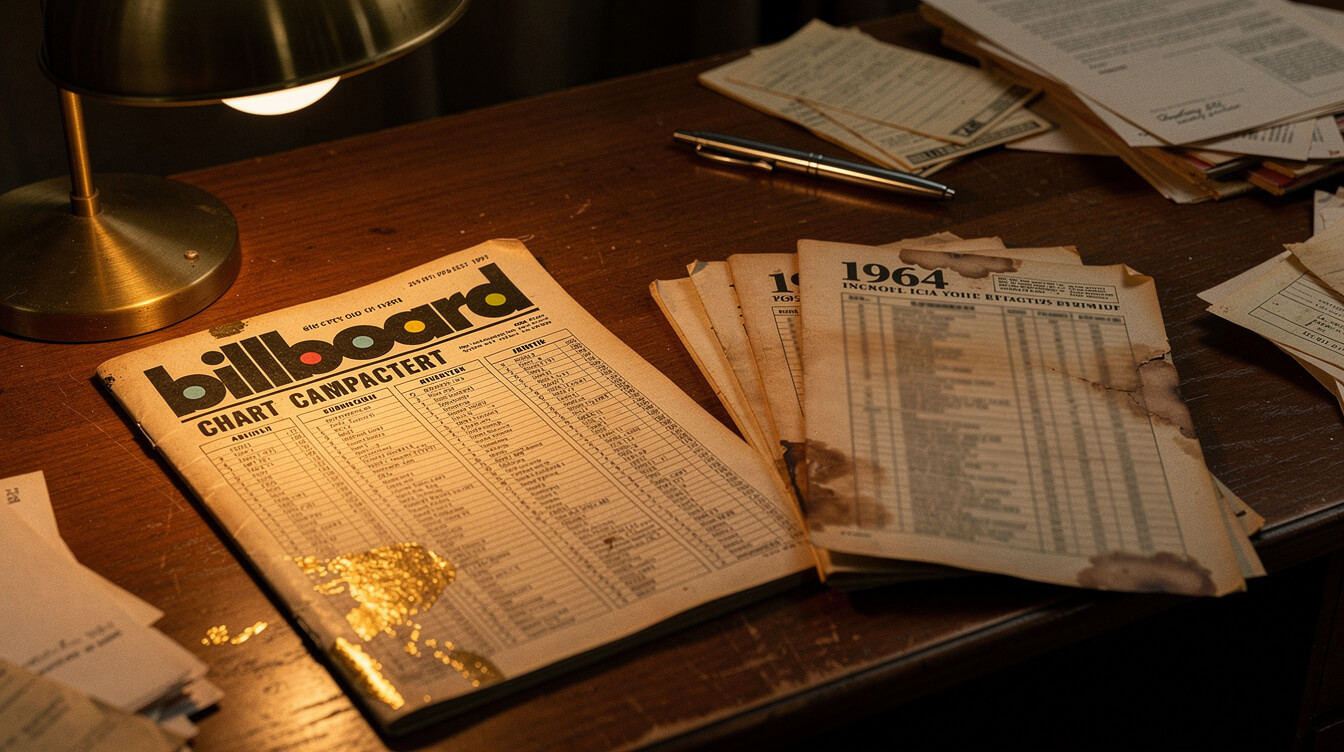
Here is where the chart history gets impossible. Tha Crossroads debuted at number two on the Billboard Hot 100 on May 4, 1996. That alone made it the highest-debuting rap single in history at the time. The genre had been on the chart for nearly a decade and a half and no rap record had entered above the number two mark on its first week. Two weeks later, on May 18, 1996, it climbed the final rung to number one. From release to the top of the chart in basically a single billing cycle.
Billboard pulled the comparable for the speed of the ascent. The last song to jump from a cold-open entry to number one in that few weeks was The Beatles’ “Can’t Buy Me Love.” 1964. The Hot 100 had been measuring popular music for thirty-two consecutive years between those two events, and no song in any genre had matched the velocity Bone Thugs were now setting. A Cleveland group with two records of catalogue. An elegy for a man dead just over a year. A four-part harmony song about going to heaven and missing somebody named Charles. That is what broke the record. Not a marketing push. Not a film tie-in. A funeral song that the audience could not stop playing.
The cultural math of that May matters. The spring of 1996 was Tupac season. All Eyez on Me had dropped in February. The Death Row machine was at full output. Biggie’s Ready to Die was eighteen months into the public bloodstream. The East versus West cold war was at its loudest. And the song that beat all of them to the top of the Hot 100, faster than any chart measuring period could remember, was a song about grief from the smallest hip-hop city in the country. That is not coincidence. That is the audience telling the industry what the music was actually about that year. The story everybody else was selling was beef. The story everybody wanted to hear was loss.
The Grammy, The Hook, and the Vocal Architecture That Beat the Room

February 26, 1997. The 39th Annual Grammy Awards. Tha Crossroads wins Best Rap Performance by a Duo or Group. It beat A Tribe Called Quest’s “1nce Again,” Beastie Boys’ “Get It Together,” the Fugees’ “Fu-Gee-La,” and Quad City DJ’s “C’mon N’ Ride It (The Train).” Tribe and Fugees on the same ballot alone would have made that the heavyweight rap category of the year. The Bone Thugs win was not a coronation. It was the Recording Academy formally acknowledging what the audience had already decided eight months earlier on the chart.
Listen to the vocal architecture of the song and you understand why no other rap record was going to beat it that night. Krayzie Bone carries the hook. His voice has a sandpaper softness that lets a sad melody sit where a hard rap melody would have crashed. Bizzy Bone takes the highest verse, sung at the edge of his head voice, and his triplet flow is so fast it sounds like a violin sweep across the bar. Layzie Bone smooths the handoff with a baritone that anchors the whole harmony. Wish Bone fills the syllables between everyone, the connective tissue in the stack. Four voices arranged in actual four-part church harmony. The hook is genuinely sung, not chanted, not melodic-rapped. This is gospel architecture applied to a rap record. Play it next to anything else from the 1996 charts and you can hear the gap. There was nothing else like it on the radio that year because there had never been anything else like it on the radio period.
Long after the Grammy, that vocal stack is the part of the record that keeps it in rotation. Drake learned from it. Future learned from it. Every melodic rapper who has lived in the harmony pocket since 1996 has at some point been compared to Krayzie Bone, whether or not the comparison was made out loud. The receipts on Bone’s invention of contemporary sing-rap are sitting right there in the hook of this song. The genre lineage from Tha Crossroads to whatever sits on the streaming charts this week is a straight line you can trace bar by bar. Stetsasonic understood hip-hop as music before most of the genre did. Bone Thugs proved that thesis on the biggest chart stage of the decade.
The Twenty-Three-Year Coda: Flesh-n-Bone, Lost Archives, and Publishing Rights

The song closed at two times platinum, a Grammy on the shelf, and a chart record in the books. But the Bone Thugs family had a missing piece. Flesh-n-Bone was incarcerated through most of the E. 1999 Eternal sessions on a prior assault charge. He had been on the EP. He missed the album. He missed “Crossroad” the first time and “Tha Crossroads” the second time. Bone Thugs were a five-member group with their biggest record built around four voices and a brother’s worth of empty space inside the harmony.
Bone spent years trying to recover the masters and the unused vocal takes. Ruthless Records, after Eazy-E’s death, was reorganized under his widow Tomica Wright. Publishing went where publishing tends to go in the years after a label founder dies. Bone Thugs wrote and toured and put out solo records and the chapter on Ruthless ownership sat open for almost two decades. Then it closed. In 2019, the group released a project called Lost Archives Vol 1. On it is a version of “Crossroad” with Flesh-n-Bone’s verse intact. Twenty-three years after the original chart-breaker, the song finally had every brother on it.
The receipts on Lost Archives Vol 1 matter for one reason. Bone Thugs put it out themselves, on their own terms, after the publishing fight had finally landed in their favor. The song that started as a memorial for a dead friend, then became a national elegy for a dead mentor, then became a Grammy-winning chart-breaker, finally became a family piece. All five Bone members in the same recording. Almost a quarter century late. Hip-hop does not usually get coda endings this clean. This one did, and the fact that it took the group regaining their own publishing to make it happen is the receipt that ties the whole arc together.
Frequently Asked Questions About Tha Crossroads
What is Tha Crossroads about?
It is an elegy for the dead. It began as “Crossroad,” dedicated to the group’s friend Wallace “Wally” Laird the third, then was remade into “Tha Crossroads” as a wider tribute after the March 1995 death of their mentor Eazy-E.
Was Tha Crossroads originally a different song?
Yes. The original “Crossroad” appeared on E. 1999 Eternal in July 1995. After Eazy-E’s death the group rebuilt the song with new verses and a wider dedication, then released it as the album’s third single in April 1996 under the title “Tha Crossroads.”
Did Tha Crossroads break a chart record?
Yes. It was the highest-debuting rap single ever, entering the Billboard Hot 100 at number two on May 4, 1996, then hitting number one on May 18, 1996. That was the fastest a song had reached number one since The Beatles’ “Can’t Buy Me Love” in 1964.
Did Tha Crossroads win a Grammy?
Yes. It won the 1997 Grammy for Best Rap Performance by a Duo or Group at the 39th Annual Grammy Awards on February 26, 1997. It was also certified double platinum in the United States.
Why is Flesh-n-Bone not on the original Tha Crossroads?
He was incarcerated during the E. 1999 Eternal sessions, so his vocals were not on the released version. A version of the song including Flesh-n-Bone surfaced in 2019 on Lost Archives Vol 1, after the group had regained control of their publishing rights from Ruthless Records.
Who produced Tha Crossroads?
DJ U-Neek produced both the original “Crossroad” and the rebuilt “Tha Crossroads.” He was Bone’s primary in-house producer through the E. 1999 Eternal era.
Final Thoughts: Why Tha Crossroads Still Hits Like a Funeral
Tha Crossroads works because every layer of it is honest. The grief is for specific people. The names are real. The hook is sung, not performed. The chart numbers were not manufactured by a marketing push. The audience felt the loss and pushed the record up the chart faster than any genre had ever moved a song. The Grammy in February 1997 was the institutional catch-up. The 2019 Flesh-n-Bone version on Lost Archives Vol 1 was the family catch-up. Thirty years after Krayzie Bone first wrote a verse for a kid named Wally, the song still sounds like a funeral because it always was one.
Hip-hop is built on receipts. Bone Thugs left these specific ones. East 99th Street. Cedars-Sinai. Eazy-E, March 26, 1995. Wally Laird the third. Billboard, May 18, 1996. The Beatles, 1964. Grammy, February 26, 1997. Lost Archives Vol 1, 2019. The story is dated. The story is named. That is why the song does not age. Grief that specific never goes out of style. Stay creative, and keep the receipts.
Hip-Hop Receipts In Your Inbox
We send one cultural deep dive a week. Anniversary breakdowns, lost verses, producer credits, and the receipts behind the records you already love. No filler.

🎧 Never Miss a Drop
Exclusive product releases, hip-hop deep dives, and member-only discounts. Straight to your inbox.
Free forever. No spam. Unsubscribe anytime.

Get the Culture, Delivered
Deep dives into hip-hop history, exclusive product drops, and discounts sent straight to your inbox. No spam, just culture.
Join 2,000+ hip-hop heads already in the loop. Unsubscribe anytime.