Drake Iceman Review: What Every Critic Missed About Aubrey’s Coldest Album
The most honest line on Drake’s Iceman — the album everyone’s been trying to figure out how to feel about — is buried at the end of “National Treasures.” “The Iceman was a nice man, now I’m hot and cold.” That’s the pitch, the persona flip, and the confession all in one bar. And it’s the reason every serious Drake Iceman review written in the last two months has landed somewhere between “this is his best rapping in a decade” and “this is the moment his aura permanently cracked.” Both are right. That’s the problem.

Since Iceman dropped as the first entry in Drake’s three-album megadrop on May 18, 2026, the discourse has been circular. Pitchfork gave it a reader-scored zero. GQ called it his best in ten years. Anthony Fantano gave it a light 2. Reddit split down the middle. Everyone agrees on the beef context and disagrees on whether the record is any good. We think everyone’s arguing about the wrong record. Here’s the Drake Iceman review that starts from the album itself — not from the box score of a 2024 rap battle.
The Comeback That Wasn’t: What Iceman Is Actually Trying to Do

Every Drake project since 2018 has been sold as a reinvention. Iceman is different: it’s sold as a trilogy, part one of three albums (Iceman, Habibti, Maid of Honour) that together clock in at nearly two and a half hours. The framing is a script. Iceman is the “aggrieved” one — the score-settler. Habibti is the lovesick one. Maid of Honour is the club one. It’s an interesting move on paper. On record, it means Drake spent forty-plus minutes trying to sound cold, and the tape shows every muscle in his face he had to tense to hold the face.
The Michael Jackson sequined-glove cover is not a subtle choice. Drake is invoking a numbers king — the biggest solo star pop music ever produced — at the exact moment he needs the culture to stop counting Spotify streams. That’s the internal contradiction of the whole album cycle. He wants us to weigh the debut-week numbers on Iceman against the cultural verdict of “Not Like Us,” and pretend the two are the same currency. They’re not, and he knows they’re not, which is why every third bar is about them.
What Iceman is actually trying to do is reset the persona. Toronto sad-boy Drake, the one who invented the “vulnerable rapper” template that Kid Cudi cracked open and Drake commercialized, is not coming back. That guy lost. The new Drake is supposed to be a heavyweight, a filibuster machine, an ex-nice guy with a grudge list. The pitch is coherent. The execution is where it falls apart — and that’s really what any honest Drake Iceman review has to reckon with next.
The Iceman Sound: 40 Steps Back, Wheezy Steps Up
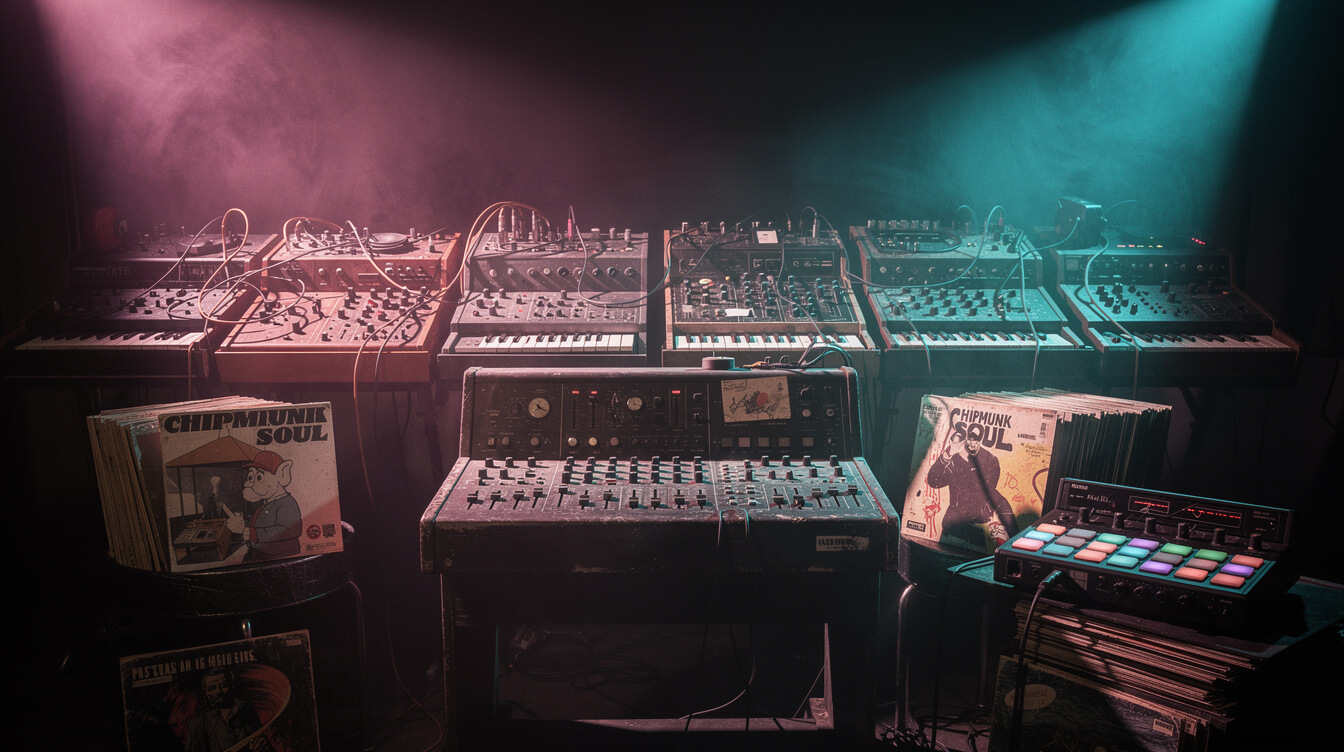
The single most quietly devastating stat in the credits: Noah “40” Shebib’s name appears on only two Iceman tracks. Forty is the guy who built the moody, cavernous, underwater sound that made Take Care the template every 2010s R&B-rap crossover copied. He’s been the ballast on every Drake record since So Far Gone. His near-absence here is the sonic thesis of what’s wrong with the album.
In 40’s place: Wheezy, Southside, Cardo, Conductor Williams, and a rotating cast of trap heavy-hitters who each get a few beats to submit and then move on. “Ran to Atlanta” credits eight producers, which is a mission statement in itself — nobody is steering the ship. When Conductor Williams shows up on “Firm Friends,” you feel the difference immediately: that slippery, dust-and-vinyl chop that pulled Griselda out of a Buffalo basement. It’s the best-sounding beat on the record, and Drake spends it complaining about arbitration.
The sonic identity that does come through: chipmunk-soul loops sped up into a permanent shiver. “Shabang” runs on it, “Janice STFU” runs on it, “2 Hard 4 the Radio” runs on it. It’s the boom-bap-adjacent aesthetic that hip-hop keeps returning to — the same lane Eric B. & Rakim built four decades ago and that Conductor and Alchemist have kept in circulation. The Drake take on it is competent. It’s just weirdly anonymous. When you can swap producers freely mid-track and lose no signature, that’s not a sound. That’s a mood board.
The bigger sonic tell is the beat switch. Nearly every song on Iceman has one, and it almost always signals a moment where Drake couldn’t figure out how to finish a song idea. It’s the audio equivalent of a college essay’s second-half topic pivot. It works on “Dust.” It sabotages “Whisper My Name.” By the middle of the record, you start bracing for it.
Track-by-Track: 5 Songs Worth Your Time, 8 That Aren’t
Skip the “listen to it in order” instinct. Here’s a triage playlist for the honest listener.
The Keepers
- “Make Them Cry” — The opener, and easily Iceman‘s most affecting moment. The “part of me died” admission, the therapist joke (“she’s very attractive”), and the confession that his father functions more like “his son’s older brother” are the closest Drake comes to the pre-corporate vulnerability that made him. The beat switch is unnecessary, but the first three minutes are the best three minutes of his last three albums.
- “Dust” — Best gym track on the record. The chipmunk-soul chop is muscular, the “blow the dust off your plaques” refrain is the one Kendrick jab that actually lands, and Drake sounds like he cares. The intro non-sequitur is skippable; the rest is not.
- “B’s on the Table” — Legal thriller Drake. The “I’m fightin’ the man, not suin’ the rapper” bar is either a mission statement or a legal disclaimer, depending on your read. Either way, the flow is dexterous.
- “Firm Friends” — Conductor Williams beat, classy and unhurried. Drake ruins it lyrically, but keep it on for the loop alone.
- “Whisper My Name” (first half) — For the eerie, larger-than-life opening. Cut it off before the beat switch and it’s the best mood cue on the album.
The Skips
- “Ran to Atlanta” — Eight producers, no chemistry. The Molly Santana feature is the lowest-effort verse on the record.
- “Make Them Remember” — Leaked hours early as “1am in Albany.” Lyrical exercise; emotional dead end.
- “Little Birdie” — Sounds like a demo that got lost in the export.
- “Don’t Worry” — Four minutes of the same vocal lead. Skip.
- “Burning Bridges” — Kodak Black flow without the Kodak Black urgency. The music video is better than the song.
- “Plot Twist” — The half-committed UK accent. Either bite the accent or don’t.
- “Janice STFU” — Great chorus, bars go to the delulu deep end in the second half.
- “Make Them Know” — The closer. The “aboriginal / indigenous” simile alone earns the skip.
The Kendrick Question: How Iceman Talks About the Beef Without Naming Him

Kendrick Lamar’s name is not spoken once on Iceman. He is on every song.
Drake handles the loss of the biggest rap beef in history by adopting the diplomat’s move: never say the name, cover it with a hundred oblique references, and pretend the crowd didn’t see the knockout. On “Make Them Remember” alone, there are at least six lines you can only parse if you were online in May 2024 — the double-pump lattes bar, the “you got bodied by a short guy” implication, the “white kids listen to you ’cause they feel some guilt” indictment, and the strange, straining “why people want to not see me on top of the mountain like I do the Dew?” line that grasps for the Jewish-fair-skin angle without landing anywhere useful.
The most telling receipt is who’s here and who isn’t. 21 Savage returns as the ride-or-die. Future is on “Ran to Atlanta” — which is odd, because Future was one of the artists Drake seemed to hold at arm’s length after the beef went nuclear. Sexyy Red gets a hook. There is no PARTYNEXTDOOR, no Rihanna clearance, no Toronto-diaspora endorsement that would signal the mainstream is still with him. The features feel like Iceman is a group text where a couple of exes have muted the thread.
The most honest read on the whole thing: Drake made his best Drake Iceman review defense inside the album by opening it with “a piece of me died in 2024” — an acknowledgment stronger than any of his post-beef press. He just couldn’t sustain the honesty for forty-five more minutes. If you’re building a wardrobe around this era of the culture, our Kendrick Lamar Fan-Art Vintage T-Shirt is a simple way to say which side of the game tape you fall on, without needing to litigate it in the group chat.
Habibti + Maid of Honour: Why the Trilogy Frame Made Iceman Worse
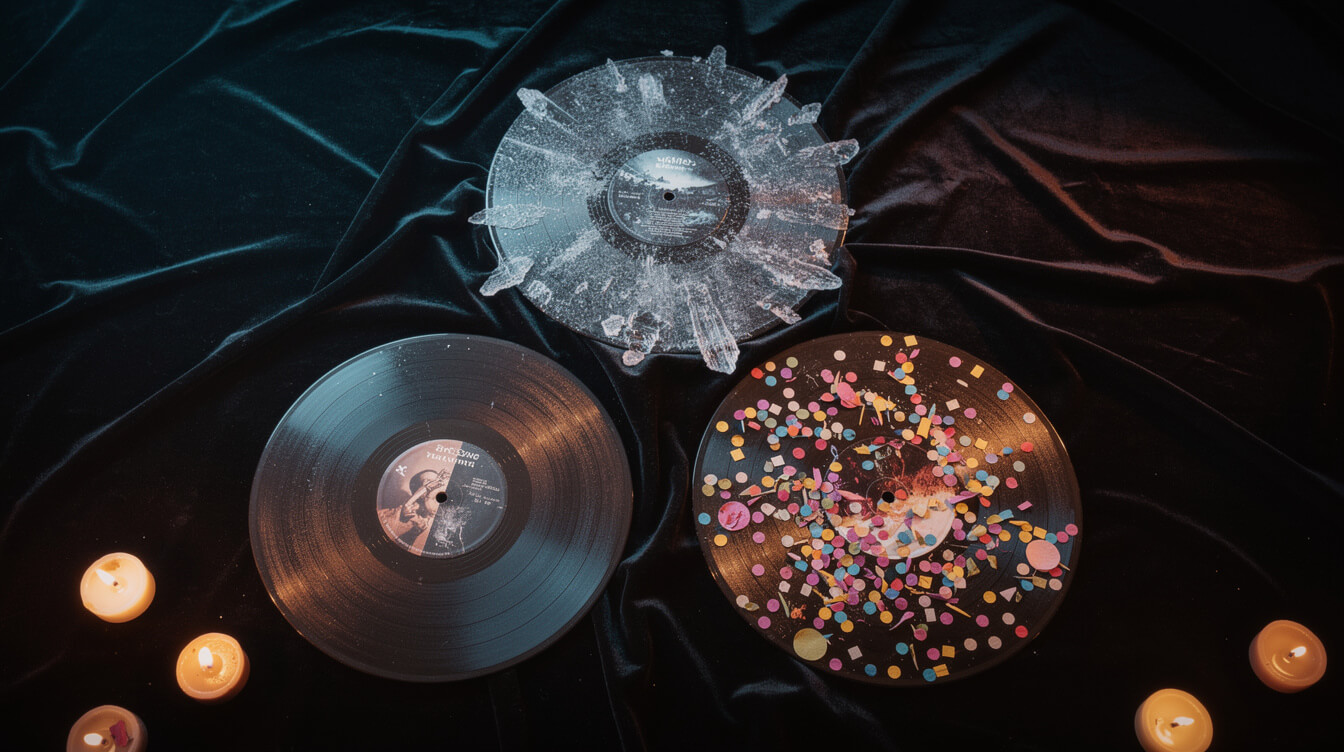
Here’s the argument no critic wanted to make in the first-week rush: Iceman would be a stronger album if it were a normal album. The trilogy framing broke it before you pressed play.
Split personalities work in fiction. They rarely work as album strategy, because they force the artist to over-signal what each project is “about.” Iceman is the aggrieved one, so every song has to have a target. That’s why the record feels like it’s constantly checking its own scoreboard — because Drake decided upfront that this is the record where he’s not allowed to be lovesick or lit. He’s contractually cold for 45 minutes.
Rumor around industry desks is that the three-album drop was a way to close out the Universal contract — a numerical stunt with a paperwork motive. Whether or not that’s true, the trilogy has the effect of splitting the best songs across three projects. “Burning Bridges” would be a highlight on a lean 12-track Drake album. Buried in a 20-track “aggrieved” record, it drags. Nine years ago a Clipse reunion showed that hip-hop still rewards focused, patient project-craft — as we covered in our breakdown of Let God Sort Em Out. Iceman is the counterexample: more songs, less shape.
What the trilogy actually reveals: Drake’s editing muscle has atrophied. When you release two and a half hours at once, you’re telling the audience you couldn’t cut anything. There’s no Nothing Was the Same-era executive producer whispering “does this one belong?” The saddest three seconds on the whole trilogy is the moment you realize there’s nobody in the room who can tell him no.
Drake Iceman Review — Our Verdict + FAQ

Custom Creative’s verdict: Iceman is a 5.5/10 album trying to be a 9. It’s Drake’s most competent rap record since Nothing Was the Same, and his least essential since Honestly, Nevermind. Five songs are genuinely good. Eight are cruise-control. The last four minutes are the worst closing sequence in his catalog. If it were a 40-minute record, it would be the mixed-but-interesting comeback everyone wanted. As a trilogy anchor, it’s a monument to the wrong instinct.
Is Iceman Drake’s best album in ten years?
Only if you don’t count Nothing Was the Same or If You’re Reading This It’s Too Late, both of which are inside that window. The GQ headline is provocative link-bait; the actual GQ review argues the visuals are what pull it up. On music alone, Iceman is his best rapping in a decade — the flows are more dexterous than they’ve been since NWTS. It’s also his most emotionally airless.
What’s the tracklist for Iceman?
Twenty tracks anchored by the four-part “Make Them” suite: Make Them Cry, Make Them Pay, Make Them Remember, Make Them Know. Highlights also include Dust, B’s on the Table, Firm Friends, Shabang, Ran to Atlanta, Whisper My Name, 2 Hard 4 the Radio, National Treasures, Janice STFU, Little Birdie, Don’t Worry, Burning Bridges, Plot Twist, and the leftover single “What Did I Miss?” 21 Savage carries the feature load; Future, Sexyy Red, and Molly Santana round out the guest list.
Is Iceman a diss album against Kendrick?
Not by name. The record never says “Kendrick,” “Lamar,” or “K-Dot” once. But roughly a third of the bars only make sense if you read them as post-beef processing — from the “blow the dust off your plaques” line on “Dust” to the “white kids listen to you” bars on “Janice STFU.” It’s a subliminal album more than a diss album.
Where does Iceman rank in Drake’s discography?
Our order, from the top: Take Care → Nothing Was the Same → If You’re Reading This It’s Too Late → Views → Scorpion → Iceman → For All the Dogs → Certified Lover Boy → Honestly, Nevermind → More Life (mixtape). Iceman lands mid-pack, mostly on the strength of the first six tracks. If you’re catching up on the release-cycle context, read our June 2026 breakdown of the Iceman release-date saga before you dive in.
Should I listen to Iceman before Habibti and Maid of Honour?
Yes — but skim first. Play the five keepers from our tracklist above, then decide if the world is worth two more discs. Habibti is the R&B slow-burn; Maid of Honour is the club-forward one. Reviewing those is another day’s work.

The Real Winner of the Beef, on Your Chest
While Drake spent two years and three albums trying to rewrite the ending, the culture already picked its side. Wear the receipt — Kendrick Lamar fan-art vintage hoodie, heavyweight fleece, hand-illustrated Compton portrait.
Final Thoughts: What Iceman Says About the Cold Winter of Modern Rap
Iceman is a record made by a superstar who no longer has an editor because he can no longer hear one. That’s the deeper story here — bigger than the beef, bigger than the numbers, bigger than any single Drake Iceman review. When the industry’s most commercially dominant rapper drops three albums in a weekend and the culture shrugs, you’ve reached the end of a specific era. Volume no longer solves the problem it used to solve.
The cold winter of mainstream rap in 2026 isn’t Drake’s fault — but Iceman is its clearest artifact. Streaming rewards catalog scale. Cultural relevance rewards focus. Those two economies are pulling in different directions, and this album is what happens when an artist tries to serve both. The heir to Take Care is a 20-track filibuster. The Michael Jackson glove on the cover is a reach for a legacy that was built on precision, not on quantity.
The good news, buried in there: Drake can still rap. “Make Them Cry,” “Dust,” and the Conductor Williams beat on “Firm Friends” prove the tools are intact. If Iceman is truly rock bottom, then whatever comes after this trilogy has a real chance to be his Blueprint — the mid-career course-correction that Jay-Z pulled off after his own worst-received stretch. Whether Drake has the self-awareness to make that pivot is a different question. On this evidence, we’re not holding our breath.
Stay creative — the culture’s still cooking, even when the biggest star in the room isn’t.
The Culture, Delivered Weekly
Album breakdowns, era retrospectives, and the drops that hit before Twitter catches up. No fluff, no algorithm bait — just the culture, from heads who actually listen.

🎧 Never Miss a Drop
Exclusive product releases, hip-hop deep dives, and member-only discounts. Straight to your inbox.
Free forever. No spam. Unsubscribe anytime.

Get the Culture, Delivered
Deep dives into hip-hop history, exclusive product drops, and discounts sent straight to your inbox. No spam, just culture.
Join 2,000+ hip-hop heads already in the loop. Unsubscribe anytime.