Eric B & Rakim: How Long Island’s Quietest Duo Rewrote What Hip-Hop Could Sound Like
Long Island doesn’t get first billing when people tell hip-hop’s origin story. The Bronx does. Queensbridge does. Compton and Brooklyn eventually do. But somewhere between 1985 and 1987, in a working-class hamlet called Wyandanch, an 18-year-old with a spiral notebook met a DJ with a record collection deep enough to sample from, and together they built Eric B & Rakim — the quietest revolution the genre has ever seen. This is the definitive guide to how a Long Island duo who barely raised their voices ended up rewriting what an MC could sound like, why every multi-syllabic rhyme scheme in hip-hop today traces back to Rakim’s notebook, and how a career that produced four albums in five years still casts the longest shadow over golden-age rap.
What follows is the full arc — Paid in Full in 1987, Follow the Leader in 1988, Let the Rhythm Hit ‘Em in 1990, Don’t Sweat the Technique in 1992, the MCA contract that ended it, Rakim’s solo run, and the direct lineage from the God MC to Nas, Notorious B.I.G., Big L, Big Pun, Jay-Z, and Earl Sweatshirt. If you’ve ever wondered why heads still bow at Rakim’s name three decades after his last album with Eric B, you’re about to find out.
Long Island Over the Bronx: The Wyandanch Setup That Rewrote the Sound
By 1985, hip-hop had a template. LL Cool J was shouting at you. Run-D.M.C. was shouting at you louder. Kool Moe Dee, Big Daddy Kane, and KRS-One would soon be shouting at you with more precision. The rule was simple: a rapper commanded a room by projection, cadence, and the sheer physicality of the voice. Volume equaled authority.
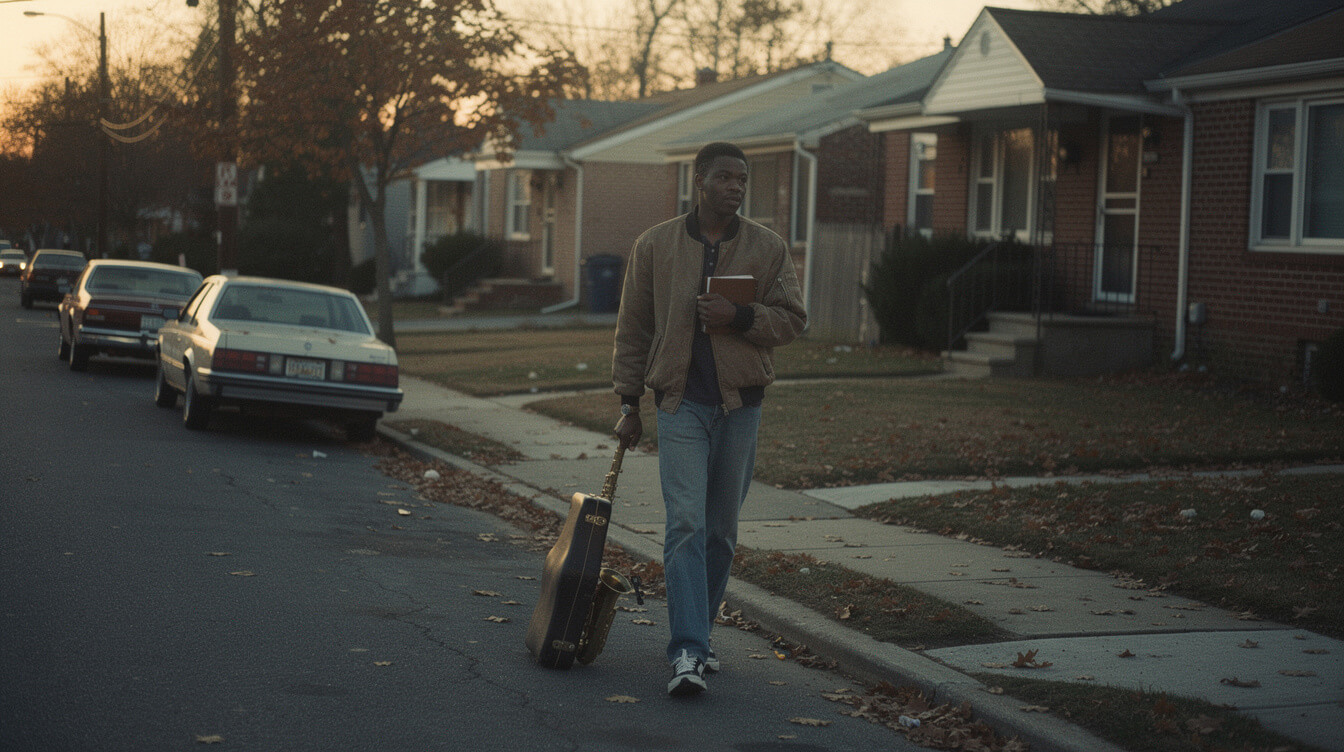
Then a kid named William Griffin Jr. — soon to be known as Rakim Allah — walked into a Wyandanch studio session with a notebook full of rhymes written the way a jazz musician writes charts. He didn’t raise his voice. He didn’t need to. His producer partner, Eric Barrier, wasn’t from the Bronx either. He was from Elmhurst, Queens, working as a mobile DJ around Long Island’s club circuit, deep enough into 1970s soul and jazz records that his crates could carry an entire album’s sample bed.
The Wyandanch setup mattered more than the Bronx would have. Rakim was five years younger than most of the Bronx pioneers, which meant he came of age listening to hip-hop as a fully formed genre rather than helping invent it. That distance gave him room to critique it. Where Bronx MCs were codifying the rules, Rakim was already looking for their exits. He was a saxophonist first — cousin to jazz legend Ruth Brown, raised in a house where John Coltrane and Charlie Parker played more than Sugarhill 12-inches — and he treated the microphone the way Coltrane treated the tenor: as an instrument, not a bullhorn.
Eric B, meanwhile, had spent years watching mobile DJs build sets in real time. He understood that a beat could be a canvas as easily as a battle weapon. When he cut demos with Rakim in early 1986, the two of them made a bet that would define golden-age hip-hop: what if we made the beat as heavy as anyone else’s, but the rhyming as quiet and precise as a jazz solo? What if the MC didn’t have to yell to matter?
Paid in Full (1987): The Four Singles That Broke the Shout Rule

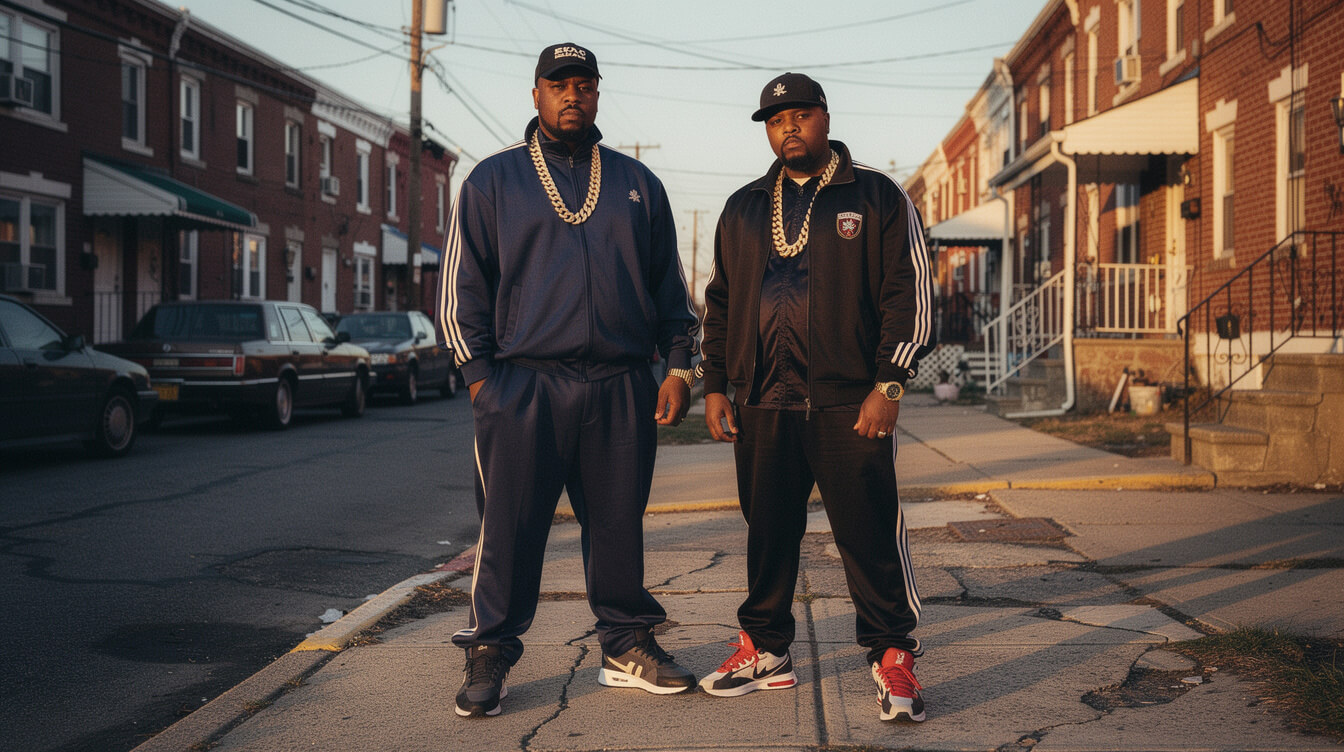
The demo made its way to Marley Marl’s Mr. Magic radio show on WBLS in July 1986 — the same show that broke half of Queensbridge — and the reception was immediate. Eric B & Rakim’s Paid in Full arrived on 4th & B’way in July 1987 with a cover so plainly-lit it looked like a Polaroid: two men in gold chains, dead-eyed at the camera, no artifice. The album ran 10 tracks and 39 minutes. It contained four singles that redrew the map of what hip-hop could be.
“Eric B. Is President” came first — technically released in July 1986 as a 12-inch, then anchored the album a year later. Built on a loop of Fonda Rae’s “Over Like a Fat Rat” plus James Brown’s “Funky President,” it was the first Rakim vocal most of America heard. He rhymed for 24 bars straight without breaking, without a hook interruption, without changing dynamics. It was closer to Miles Davis playing a modal solo than to any 1986 rap record. Radio didn’t know how to program it. Heads didn’t stop rewinding it.
“I Ain’t No Joke” opened the album with Rakim announcing his aesthetic in the first eight bars: “I hold the microphone like a grudge / B will hold the record so the needle don’t budge.” Notice what’s happening there — internal rhyme (microphone / grudge / hold / record) plus onomatopoeia (budge as physical friction) plus a conversational cadence that treats the beat as a bassline to walk over, not a wave to ride on top of.
“Move the Crowd” showed the range: same low-affect voice, but now with a spiritual message threaded through the boasting — Rakim was Five Percent Nation, and the album is the first time hip-hop dealt seriously with the theology. “My Melody” broke the mold entirely by making the beat feel like it was chasing the vocal instead of the other way around.
And the title track — “Paid in Full” — closed the record with a Coldcut remix (the “Seven Minutes of Madness” version) that broke the Ofra Haza sample into international pop consciousness. That single Coldcut mix arguably invented the sampladelic UK rave scene four years before The Prodigy formalized it. The album went gold, then platinum, and the shout rule was over. You could whisper now. You could think out loud. You could rap like an adult.
The Rakim Flow, Dissected: What Actually Changed on 175 Grams of Vinyl
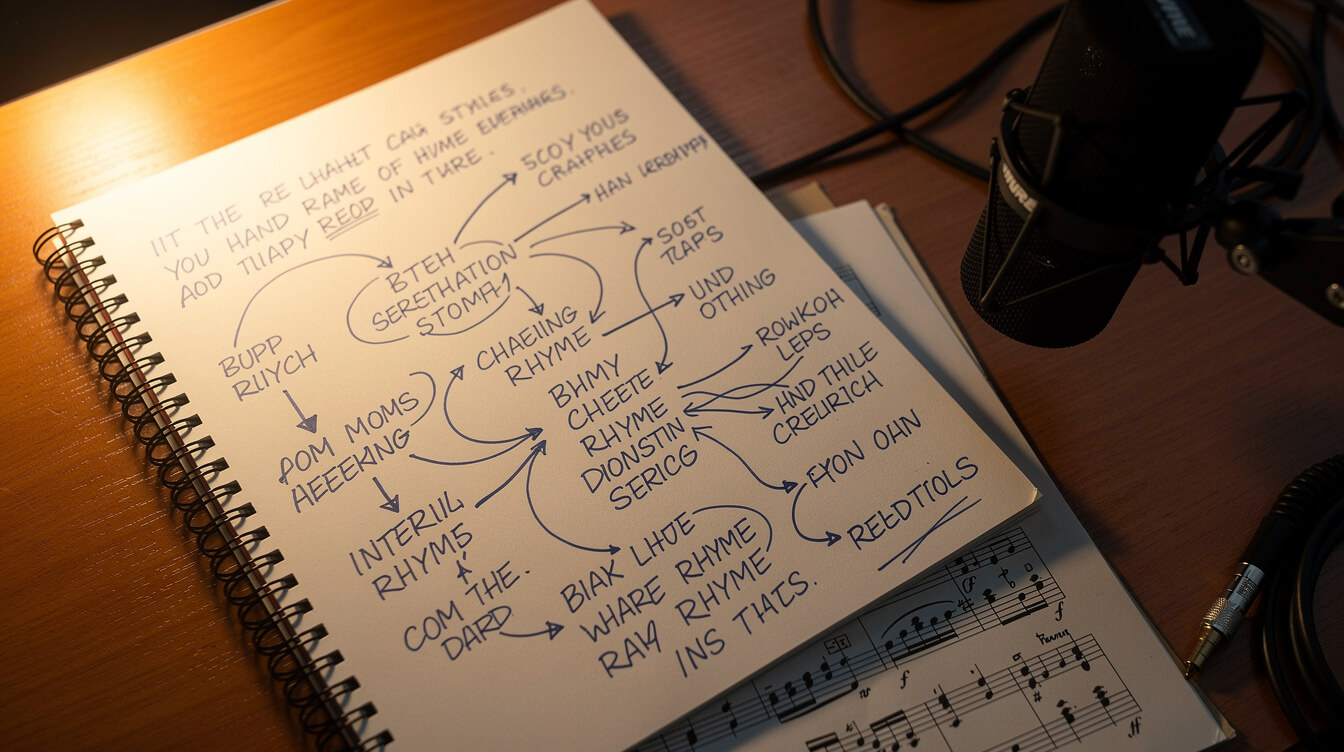
Every serious discussion of Rakim’s influence eventually collapses into vague praise. He’s called the greatest, the God MC, the blueprint. That’s true but insufficient. What actually changed on the Rakim records, technically, was three things: rhyme density, syllable arrangement, and tempo relative to the beat.
Internal Rhyme Density
Pre-Rakim, mainstream hip-hop rhymed at the end of each bar. Rakim rhymed inside each bar, then inside each phrase inside each bar. On “Microphone Fiend” (1988), listen to the second verse: “I’m rated R, this is a warning, ya better void / Poets are paranoid, DJ’s D-stroyed.” The rhymes stack — rated / warning / paranoid / D-stroyed — with the payoff landing on the assonance chain rather than the terminal rhyme. That’s four internal rhymes in two bars, which was mathematically more than any rap record before it.
Multi-Syllabic Rhyme Chains
By “Lyrics of Fury” (1988), Rakim was rhyming three and four syllables at a time. “I’m rated R, this is a warning, ya better void” gets doubled: “I take seven kids from Philadelphia / Bottle ’em, hold ’em, kid the schedule of a.” Read that out loud and you’ll hear five stressed syllables mapping to five stressed syllables. That structural symmetry — what Adam Bradley in Book of Rhymes later called “compound rhyme” — was the innovation Nas would inherit, sharpen, and hand to every generation after him.
Conversational Tempo Over an Uptempo Beat
The final trick was the hardest to hear because it sounded like nothing. Rakim rhymed slightly behind the beat. Where LL Cool J attacked the one, Rakim let the beat pass and answered it a half-breath late, the way Frank Sinatra sang behind Nelson Riddle’s tempo. This created the illusion of thought — of a man reasoning in real time, not reciting. It’s why Rakim records feel calm even when the drum programming is ferocious. Every rapper who ever sounded “unbothered” — Nas, Jay-Z on Reasonable Doubt, MF DOOM, Larry June, Earl Sweatshirt — inherited that pocket. If you want to hear the technique in action, our full breakdown of Follow the Leader traces the exact bars where he first commits to it fully.
The Marley Marl Question: Who Actually Produced “Paid in Full”?
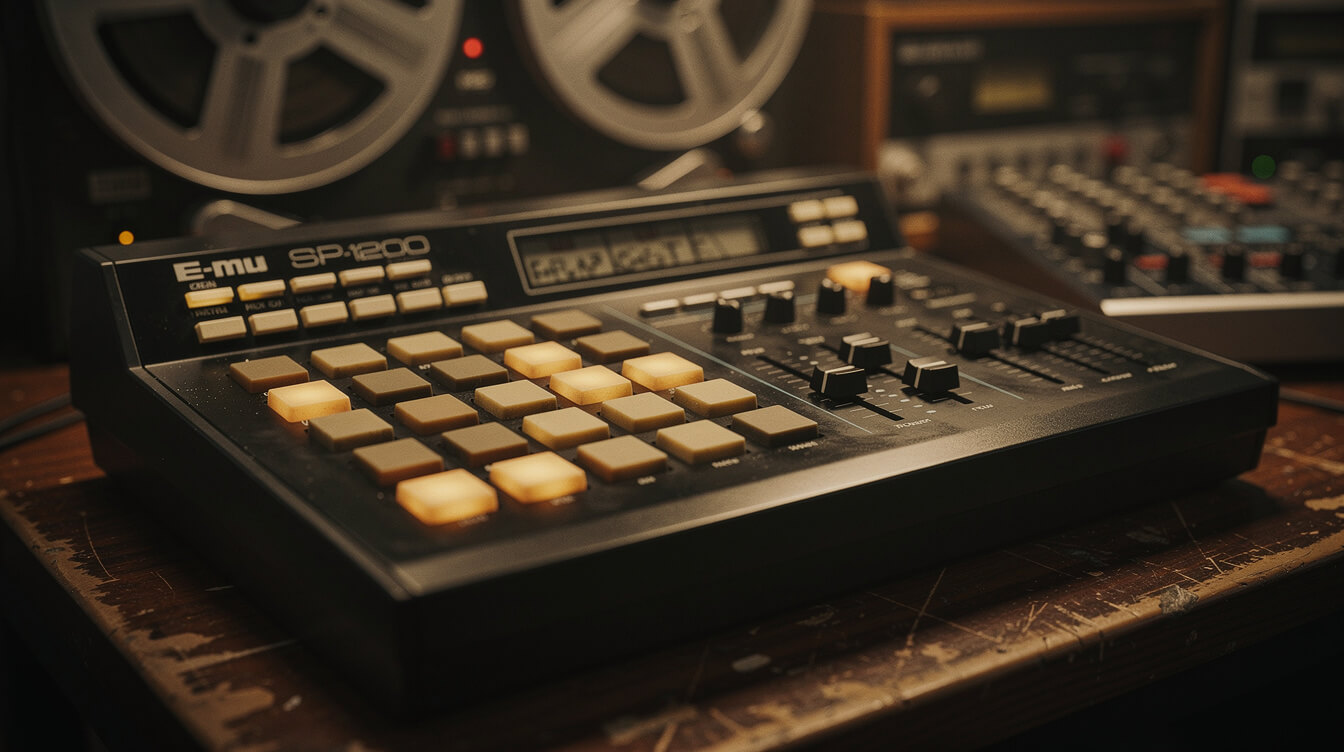
This is where every Eric B & Rakim story gets murky, and where most retellings dodge. The album is credited to Eric B & Rakim as producers. Marley Marl and his engineer, DJ Doc, have both said publicly that Marley did the drum programming and most of the production work on the original demos — including the Fonda Rae flip that became “Eric B. Is President.”
Marley told the story most directly in a 2015 Wax Poetics interview: he sequenced the SP-1200 drums, laid the loops, and handed the tapes back. He was uncredited. He was, by the industry standards of 1986, robbed. The dispute festered publicly through the 1990s and cooled by the 2000s, but the receipts stayed on the record — Eric B & Rakim’s albums after Marley’s involvement ended still sound recognizably like Eric B & Rakim, which suggests Eric B did carry the sonic identity forward. But the foundation of “Eric B. Is President” was Marley Marl.
Why does this matter? Because Marley’s SP-1200 programming on Paid in Full was the direct predecessor of what he’d do a year later with Big Daddy Kane on Long Live the Kane, Biz Markie on Goin’ Off, and MC Shan on Down by Law. If Marley did those drums on Paid in Full, then boom-bap has a single inventor with a single hand on the SP-1200, and that inventor is Marley Marl. The received history — that boom-bap emerged organically from a scene — gets replaced by a more precise one: Marley invented the drum feel, then handed it to five different MCs in 18 months, and each of them fingerprint-tagged it in their own way.
None of this diminishes what Rakim did. Rakim was a lyricist, not a producer, and his innovations were vocal. But if you want to understand why Paid in Full sounds so definitive, so genre-defining, it helps to know that the drum programming on it was already a mature aesthetic — Marley Marl’s — and Rakim’s voice was the only thing on Earth quiet enough to sit on top of it without flattening it.
Follow the Leader → Let the Rhythm Hit ‘Em → Don’t Sweat the Technique: The Arc That Ended Too Soon

Follow the Leader (July 1988) was the sophomore statement, and it doubled down on complexity — literally. The title track’s opening verse from Rakim contained more internal rhymes per bar than any album cut in hip-hop history to that point. The production, now handled by Eric B with the Bomb Squad’s Stephen Stein assisting on some cuts, moved beyond loops into a jazzier, denser bed of samples that anticipated The Low End Theory by three years.
If you want to wear the era, the Eric B and Rakim Paid in Full T-Shirt in our shop is built on the same 1987 gold-chain iconography as the album cover — a piece that lands in the same visual language the record used to announce itself.
Let the Rhythm Hit ‘Em (May 1990) was the group’s transitional album — sharper drums, harder samples, Rakim continuing to compress more syllables into the same measure. It didn’t sell as well, but it’s the album most producers cite when they explain the DNA of early-90s East Coast production. Q-Tip has spoken about how “In the Ghetto” from this album shaped his understanding of what a beat could refuse to do. The record was studied by every 1991-92 debut — Nas’s demo tapes, Main Source, Pete Rock’s early work.
Then Don’t Sweat the Technique (June 1992). The closing chapter of the group’s original run. The title track is the tightest three-minute lyrical performance of Rakim’s career — call it his “Blue in Green.” It ranks up there with any technical vocal exhibition in the culture. “Casualties of War,” on the same record, was a first-person Persian Gulf soldier narrative that predicted the entire “conscious rap” wave Common and The Roots would formalize in 1994-95. And “What’s on Your Mind” showed Rakim could write a love song without breaking his aesthetic. It sold gold, again. And then, without warning, it was over.
Why They Really Split: The MCA Contract Dispute (Not the Beef)
The press version of the Eric B & Rakim breakup is that the two men fell out personally. That’s mostly wrong. The actual story is a contract dispute with MCA Records, and it was ugly enough that neither party talked about it publicly for a decade.
In late 1992, MCA offered Eric B & Rakim a group renewal deal. Rakim wanted to go solo — not because he was angry at Eric B, but because he’d been drafting solo material for two years and wanted the freedom to release it under his own name. Eric B, according to reporting done later by The Source and confirmed by both parties in a 2015 Vibe retrospective, wanted to sign the group deal.
MCA’s contract structure made a “just Rakim” solo release contractually impossible without both signatures — a common label tactic in the 90s that kept groups locked together via cross-collateralized advances. The two men entered a legal limbo that lasted almost five years. Rakim’s debut solo album, The 18th Letter, didn’t drop until November 1997 — five and a half years after Don’t Sweat the Technique. Those five years cost the culture a Rakim solo album that would have arrived at the peak of golden age, right alongside Illmatic, Ready to Die, and Reasonable Doubt.
The press narrative that this was a personal beef was easier to sell magazines with, but the men themselves have been consistent for 20 years now: they still speak, they still respect each other, and they reunited on stage as recently as 2018. The split was corporate, not personal.
Rakim’s Descendants: How to Spot the Flow in Nas, BIG, Big L, Pun, Jay-Z, and Earl
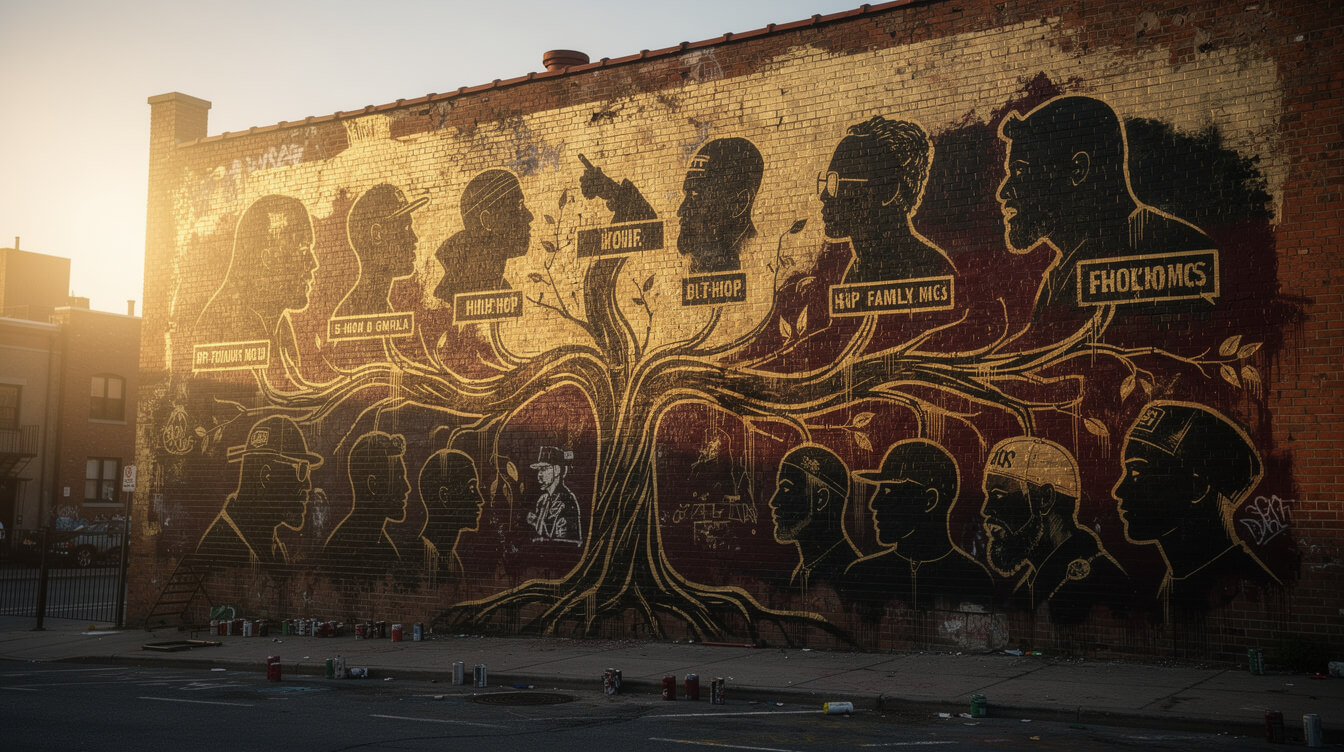
The clearest way to measure Rakim’s influence is by tracing the specific technical innovations forward into who used them where. Every 1990s East Coast lyrical breakthrough is a Rakim descendant. Here’s how to hear it:
Nas on Illmatic (1994): “N.Y. State of Mind” verse two is Rakim’s internal-rhyme density transposed into Queensbridge diction. Nas told The Source in 1994 that he wrote his first bars trying to sound like Rakim on “In the Ghetto.” For the full breakdown, see our Illmatic decoded.
Notorious B.I.G. on Ready to Die (1994): Big’s conversational tempo — that unrushed pocket where he seems to be thinking mid-bar — is Rakim’s “half-breath behind the beat” trick, translated into a heavier, bigger-bodied voice. “Juicy” is Big rapping like a Rakim who grew up in Bed-Stuy instead of Wyandanch.
Big L on Lifestylez ov da Poor & Dangerous (1995): Big L took Rakim’s multi-syllabic rhyme chains and dialed them to eleven. “Put It On” is nothing but internal rhymes. If Rakim was the classical composer, Big L was the mannerist heir who pushed the technique to ornamental extremes.
Big Pun on Capital Punishment (1998): The multi-syllabic tradition, taken further. Pun rhymed six syllables at a time on “Twinz (Deep Cover ’98)” — a technical peak that begins in Rakim’s notebook and ends in the Bronx.
Jay-Z on Reasonable Doubt (1996): The conversational-tempo trick is Jay’s foundation. Our full Reasonable Doubt breakdown covers how the entire album’s calm authority is Rakim’s aesthetic reapplied to Marcy Projects storytelling.
Earl Sweatshirt on Some Rap Songs (2018): The most recent direct heir. Earl’s late-career pocket — quiet, behind the beat, dense internal rhyme, loops shorter than the vocal — is Rakim’s methodology recomposed for the streaming era. Read Earl’s interviews and Rakim’s name comes up more than anyone’s.
The cosign legacy: Rakim has been publicly generous with his cosigns for 30 years and stingy at the same time. He’s blessed Nas, Kendrick Lamar, Black Thought, and Rapsody. He has notably not blessed anyone whose flow he considers imitative without innovation. A Rakim cosign is one of the last remaining credentials in hip-hop that money can’t buy — which is why Kendrick’s 2013 acknowledgment of Rakim on “Ronald Reagan Era” (Kendrick calling himself “the new Rakim” and Rakim later saying he approved) mattered so much culturally.
Eric B & Rakim FAQ
Are Eric B and Rakim still on speaking terms?
Yes. Despite the ugly late-90s MCA contract limbo, both men have been publicly cordial since the early 2000s. They toured together in 2017-2018 for the 30th anniversary of Paid in Full, and have appeared together at multiple industry events since. Rakim confirmed in a 2022 Rolling Stone interview that they still speak by phone regularly.
Which Eric B & Rakim album is the best starting point?
Paid in Full (1987) is the standard answer, and it’s the right one for historical context. But if you want the version of the group that shows their fully-formed technical peak, start with Follow the Leader (1988) — the sophomore album where Rakim’s flow reaches its final form and Eric B’s production locks into the sample-heavy East Coast sound that would define the next five years.
Why is Rakim called the God MC?
Rakim was a member of the Nation of Gods and Earths (the Five Percent Nation) from an early age. “God” in Five Percent theology refers to Black man’s divine potential, not a supernatural being. The nickname reflects both his religious affiliation and the culture-wide agreement that his technical mastery of the microphone approached something like divine standard. It’s simultaneously a spiritual title and a technical honorific.
Did Marley Marl really produce Paid in Full?
Marley Marl produced portions of the album — including the foundational drum programming on “Eric B. Is President” — but was largely uncredited. Both Marley and DJ Doc have confirmed this on record. Eric B carried the sonic identity forward on later albums, but the DNA of the debut’s drum feel came directly from Marley’s SP-1200.
What was Rakim’s first solo album?
The 18th Letter, released November 1997 on Universal. The delay from Don’t Sweat the Technique (1992) to The 18th Letter (1997) was entirely the result of the MCA contract dispute that kept the group nominally intact for five years while both men were legally unable to release under their own names.
Final Thoughts: The Longest Shadow in Golden-Age Rap
Eric B & Rakim only made four albums together. They spent five years in prime form and then, contractually, disappeared for another five. And yet three decades after the last of those albums dropped, every serious lyricist in hip-hop can still trace at least one technique they use back to a Wyandanch teenager’s notebook. That is the definition of a foundational contribution. Not just influence — architecture.
The most useful way to think about their catalog now is not as a discography but as a syllabus. If you want to understand where multi-syllabic rhyme came from, start with “Microphone Fiend.” If you want the origin of the conversational-tempo pocket that Nas and Jay-Z inherited, start with “In the Ghetto.” If you want to hear the exact moment hip-hop stopped shouting and started thinking out loud, drop the needle on “Eric B. Is President” and count to 16. That’s the moment. Everything after it was built on top.
Stay creative — The Custom Creative Team

Wear the God MC Era
The 1988 sophomore album that doubled hip-hop’s vocabulary, printed on a heavyweight cotton tee built for the culture that studied it.
Get the Culture in Your Inbox
One weekly note on hip-hop history, new drops, and the stories the mainstream keeps getting wrong. No filler.

🎧 Never Miss a Drop
Exclusive product releases, hip-hop deep dives, and member-only discounts. Straight to your inbox.
Free forever. No spam. Unsubscribe anytime.
Get the Culture, Delivered
Deep dives into hip-hop history, exclusive product drops, and discounts sent straight to your inbox. No spam, just culture.
Join 2,000+ hip-hop heads already in the loop. Unsubscribe anytime.