Nas’ Illmatic: The Ten-Song Blueprint That Flopped Before It Became Untouchable
On April 19, 1994, a 19-year-old from Queensbridge dropped a record that the industry had already decided was undercooked. Nas Illmatic hit shelves at No. 12 on the Billboard 200, moved roughly 59,000 copies in week one, and watched its two singles fail to break the upper rungs of the Hot Rap chart. Columbia Records’ A&R notes from the era read like a polite shrug. The album would not be certified platinum until 2001 — seven years after its release.
Today, every list of the greatest hip-hop albums ever made puts Illmatic at or near the top. Spin, Rolling Stone, Complex, The Source, Pitchfork — the consensus is so total it feels like it was always there. It wasn’t. The story of how a commercial disappointment became hip-hop’s most untouchable debut is not the story you’ve heard. It’s an origin myth, a paradox, and a quiet referendum on how the canon actually gets built — by time and consensus, not by week-one SoundScan.
Hip-Hop’s Most Perfect Debut Flopped on Arrival in 1994
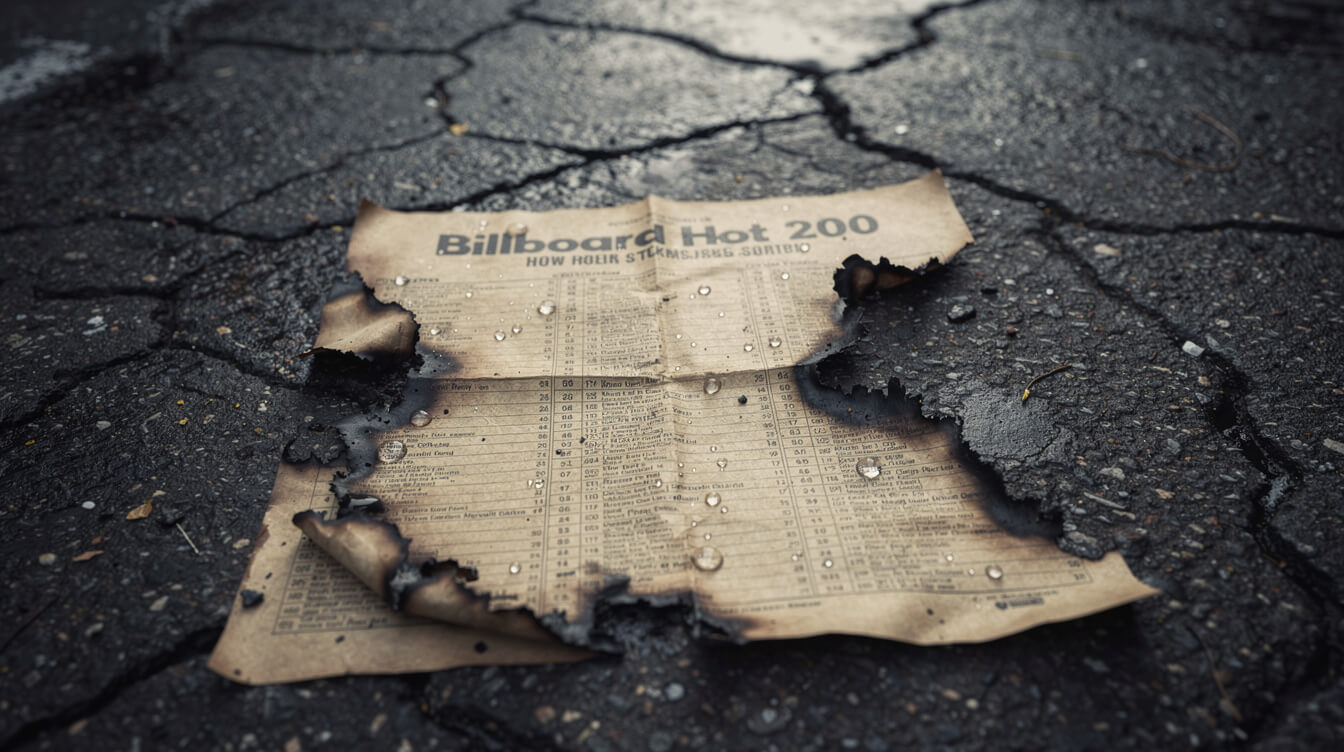
The numbers are not flattering. Illmatic debuted at No. 12 on the Billboard 200, posting first-week sales in the high 50,000s — well below Columbia’s expectations for a record they had spent two years and a quiet fortune assembling. The lead single, Halftime, peaked at No. 8 on the Hot Rap Singles chart. The follow-up, Life’s a Bitch featuring AZ, never charted at all. The third single, The World Is Yours, reached No. 13 on Hot Rap and No. 41 on Hot R&B/Hip-Hop. By the metrics the industry actually trusted in 1994 — SoundScan, Billboard, radio rotation — Illmatic was a near-miss.
Context matters. The same calendar year, Snoop’s Doggystyle was still selling, Warren G’s Regulate… G Funk Era would move 3 million units, and the Notorious B.I.G.’s Ready to Die would land in September and earn its platinum plaque before Christmas. Hip-hop in 1994 was a commercial juggernaut. Illmatic was a critically adored album that the buying public, on first contact, did not vote for in sufficient numbers to put it where it now sits in memory.
So why does the Wikipedia entry, the Apple Music editorial, the every-listicle-ever-written treat this album like an unflinching commercial monument? Because the story of Illmatic is not the story of week one. It is the story of what happened after — and what was hidden inside the album that nobody outside hip-hop’s monk class understood until much later.
Before Illmatic, There Was a Verse on Someone Else’s Classic

To understand why Illmatic landed the way it did, you have to rewind to 1991, when a kid called Nasty Nas opened a song on someone else’s album with a line so audacious it took rap a decade to fully process it: “When I was twelve, I went to hell for snuffin’ Jesus.” That song was Main Source’s Live at the Barbeque, the seventh track on their debut LP Breaking Atoms. Nas was 17. The verse was his first recorded appearance. It is, by any reasonable measure, the single most consequential guest verse in 1990s hip-hop.
Main Source — Large Professor with Toronto’s Sir Scratch and K-Cut — were a working New York rap group whose producer (Large Pro) had the ear of half the borough. Large had met Nas a couple of years earlier through a mutual contact at a Queensbridge studio session, was floored by the kid’s pen, and stashed him on Live at the Barbeque as a flex. The verse did exactly what it was designed to do: it lit up the underground tape circuit and convinced everyone who heard it that whoever Nasty Nas was, he was inevitable.
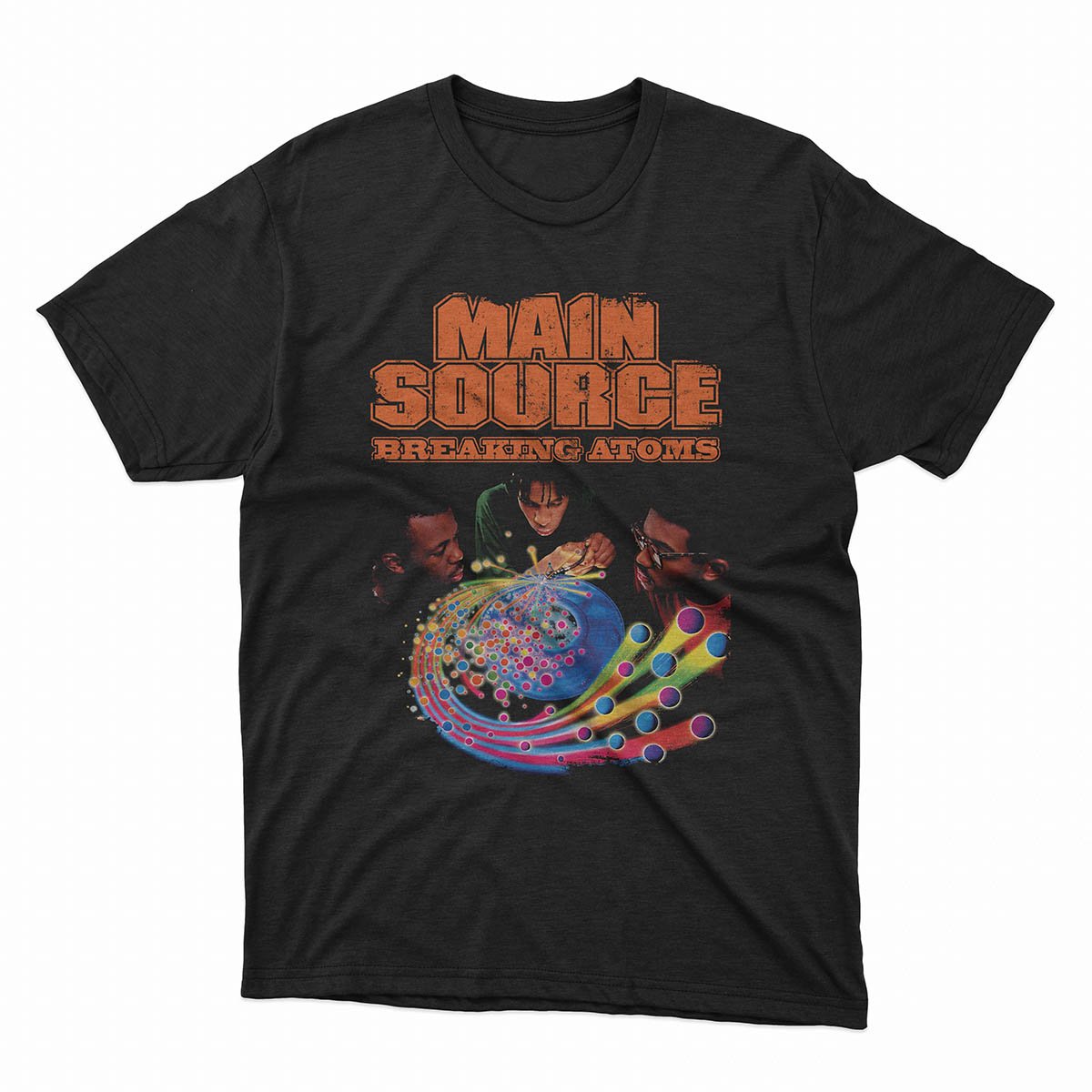
If you want to hold the prologue to Illmatic in your hand, the record that holds Nas’s first recorded verse still has its own merch — our Main Source Breaking Atoms tee exists because that 1991 LP is, quite literally, the album that gave the world Nas before Nas had an album. It’s the only piece of fabric we make that is older than Illmatic itself.
The two-and-a-half years between Live at the Barbeque and Illmatic were the longest pre-album wait in early-’90s rap. Demos circulated. The legendary Halftime appeared on the Zebrahead soundtrack in 1992 and ripped a hole in the underground. Mixtapes carried unreleased Nas verses from the Queensbridge basement years. By the time the album arrived in April 1994, anyone who lived inside hip-hop already considered it a classic. Anyone outside — including a lot of Columbia’s marketing department — was hearing the name for the first time.
The Five-Producer Summit That Built One Cohesive Film
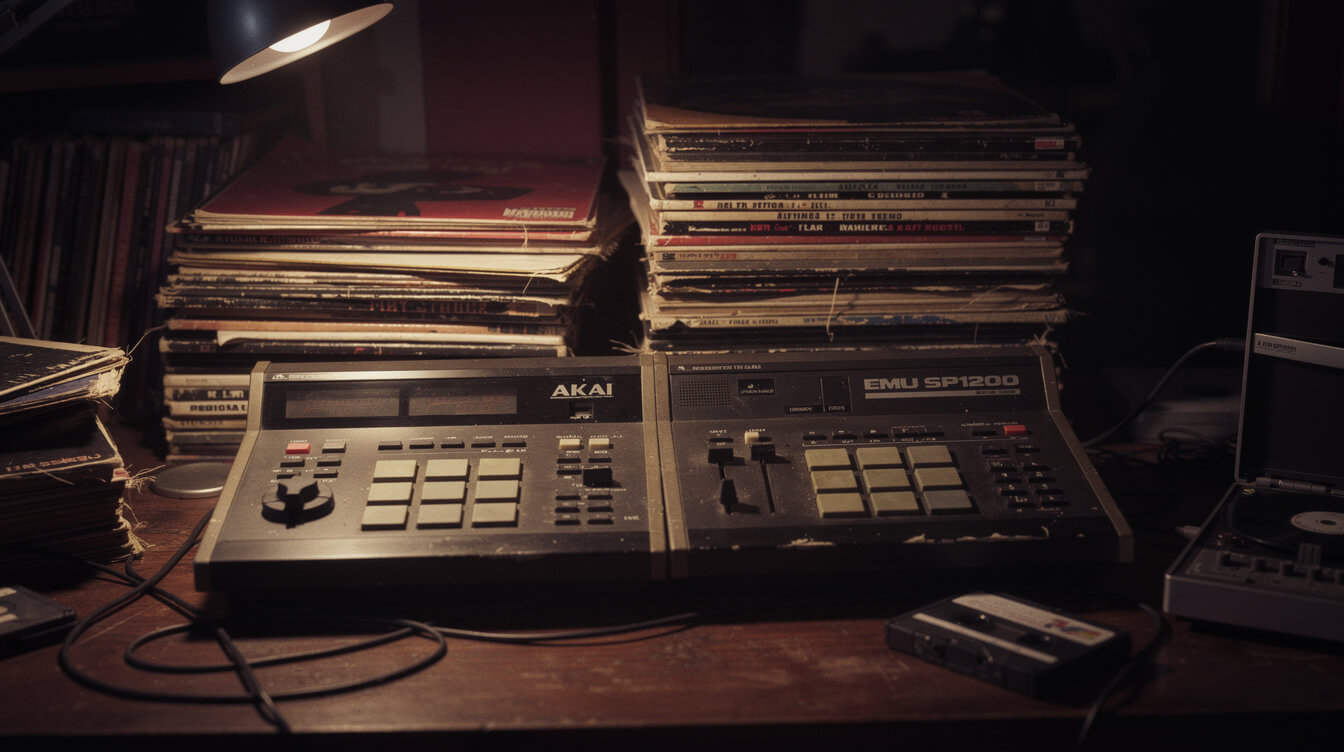
Illmatic was one of the first rap albums to assemble what would later be called a producer summit. Five names handled the ten tracks: Large Professor, DJ Premier, Pete Rock, Q-Tip, and L.E.S. Today that’s a flex you’d see on the credits of a deluxe-edition major. In 1994 it was unprecedented — and the miracle of Illmatic is that it does not sound like a compilation. It sounds like one cohesive film.
The cohesion is engineered. Each producer was given roughly the same brief: chop a sample, build a beat, lock it into a specific mood band — autumnal, late-night, Queens at street level. DJ Premier set the tone with the opening track, N.Y. State of Mind, which flips Joe Chambers’s Mind Rain and Donald Byrd’s Flight Time into one of the most quoted instrumentals in rap. Pete Rock used Long Red by Mountain on The World Is Yours. Q-Tip turned Ahmad Jamal’s I Love Music into the bedrock for One Love. L.E.S. flipped Michael Jackson’s Human Nature on It Ain’t Hard to Tell. Large Professor handled Halftime, It Ain’t Hard to Tell co-production, and the album’s overall sonic A&R.
The legend that most clearly captures how the album got made is DJ Premier’s own account of recording N.Y. State of Mind. Nas walked into D&D Studios, Premier handed him the beat, and Nas freestyled what would become the song’s opening verse — the one every rap fan has memorized — on a take Premier had assumed was a warm-up. Nas paused, said “I don’t know how to start this,” and then proceeded to lay down the verse you know. Premier kept it. “He was not ready,” Premier has said in multiple interviews. “We used that first take.”
That story is not a flex — it’s a tell. It says Illmatic was not the labored product of endless re-recording. It was a teenager hitting flow state in front of five of New York’s sharpest producers and them being smart enough to print the first pass. The album is, in the most literal sense, a documentary recording of a 19-year-old who was already at his peak.
The Album That Held Nas’s First Verse
Main Source’s Breaking Atoms is the prologue to Illmatic — the 1991 LP that carried “Live at the Barbeque” and Nas’s first recorded verse. The tee for the people who know exactly where the story starts.
Ten Songs, Zero Filler: The Architecture, Decoded
Illmatic clocks in at 39 minutes and 50 seconds across ten tracks. But the album really only has nine songs — the opener, The Genesis, is a 1:43 collage of subway noise, a sample of Nas’s Live at the Barbeque verse playing on a TV in the background, and a Queensbridge basement argument between Nas, his brother Jungle, and AZ. It’s a curtain, not a song. That deliberate move — using your first slot to frame your origin story rather than to chase a single — was a quiet declaration of intent.
Track two, N.Y. State of Mind, is the thesis statement and probably the most studied opening rap performance of the 1990s. Track three, Life’s a Bitch, brings AZ for the only guest verse on the entire album — a deliberate scarcity move. Track four, The World Is Yours, gives Pete Rock his shimmering Long Red flip. Track five, Halftime, was the proof-of-concept the underground had already absorbed two years earlier.
Side B opens with Memory Lane (Sittin’ in da Park) — DJ Premier flipping Reuben Wilson’s We’re in Love into a quiet-storm Queensbridge reminiscence. One Love, the epistolary letter to incarcerated friends, sits at track seven, the album’s emotional center. One Time 4 Your Mind at eight is the Large Professor relax-track, the closest Illmatic gets to filler — and it’s still better than most of what charted that quarter. Represent at nine is the Queens block anthem. It Ain’t Hard to Tell at ten is the closing flex — the Human Nature sample, the “I’m the smooth criminal on beat breaks” line, the door slamming.
No interludes. No skits beyond the opening collage. No producer’s tag. No outros. No bonus track. No remix on the original pressing. The brevity is the point. In 1994, when most rap albums ran 70 to 80 minutes to maximize the CD format, Illmatic at 39:50 felt like a curated short film. It still does. It is the rap album that taught the genre that less is a flex.
The Garage, the Bootlegs, and the 60,000 Copies
Here is the part of the Illmatic story the encyclopedias skip. Months before the official release, a finished mix of the album leaked. It leaked hard. By early 1994 the streets of New York were drowning in unauthorized cassette dubs of an album Columbia had not yet shipped. MC Serch — the Third Bass alum who had been instrumental in getting Nas signed to Columbia in the first place — eventually located a garage somewhere in the outer boroughs containing, by his own account, roughly 60,000 bootleg copies of Illmatic ready for street distribution.
Serch had to call the label. Columbia had to make a decision: scrap the planned summer release window and push the official date forward to compete with their own bootleg, or stay the course and watch the album’s street-economy version eat the legitimate first-week numbers. They picked door number one. Illmatic was rushed to retail on April 19, 1994 — months earlier than originally planned — specifically to head off the cassette tide.
This is the secret behind the disappointing first week. The 59,000 SoundScan units that Columbia recorded were a fraction of the actual circulation. The album had already been heard, taped, dubbed, traded, and worn out by tens of thousands of New York hip-hop heads before it was legally available. The buying audience that mattered most — the one whose word-of-mouth would build the canon — already owned a version they hadn’t paid for. They didn’t need to walk into a record store on release day. They had been listening since January.
What looks like a commercial disappointment in the SoundScan column is actually a different story entirely: an album so loved by its core audience that they pirated it into the ground before it could be sold. Few rap LPs have had a more flattering failure.
How Illmatic Became the Greatest — The Slow-Burn Canonization
The canonization of Illmatic happened in three slow waves. The first wave was the working hip-hop press: The Source famously gave the album 5 mics in its April 1994 issue — only the second album ever to earn the rating, after De La Soul’s 3 Feet High and Rising. (The first was actually disputed; Illmatic was, by some accounts, the first solo rap album to clear the five-mic bar.) That 5-mic review was the seed. Hip-hop’s most respected magazine had drawn a line in the sand.
The second wave came in 1996 and 1997, when Nas dropped It Was Written and Mobb Deep, Wu-Tang, and Biggie were all redefining what the form could carry. Suddenly Illmatic looked like the inflection point — the record that had set the rules everyone else was now writing inside of. It Was Written would itself become a hugely successful record, and the comparison Nas’s sophomore drew to his debut canonized Illmatic by proxy: critics couldn’t talk about the new album without re-evaluating the first.
The third wave was the listicle era. From 1998 onward — when magazines began publishing “greatest albums ever” rankings as a genre — Illmatic moved up every list, every year, until it sat at or near the top of every credible one. Rolling Stone’s 500 Greatest Albums has it inside the top 100. Time Magazine’s All-TIME 100 includes it. Pitchfork put it at 6 on their best-of-the-1990s ranking. The platinum certification finally came in 2001 — seven years late, an asterisk that nobody talks about because it became irrelevant. The album was already untouchable by then.
This is the paradox that nobody states out loud. Illmatic became the greatest rap album ever made not because it sold the most copies fastest, but because it kept selling, year after year, while critics, peers, and a new generation of listeners kept naming it. Nas’s Queensbridge lineage runs through this — alongside the canonical Bridge Wars lineage carried by Eric B & Rakim, whose Follow the Leader set the lyrical-density bar Nas was reaching to clear. The canon is built, not born.
Frequently Asked Questions
How many songs are on Illmatic?
Ten tracks — and only nine are full songs; the opener “The Genesis” is an intro skit built from subway sound, a TV-playing-in-the-background sample of Nas’s Live at the Barbeque verse, and a Queensbridge-basement argument. That brevity is the point: no filler, no radio bait. The total runtime is 39 minutes and 50 seconds, making it one of the shortest debut LPs of its era.
Who produced Illmatic?
Five producers: Large Professor, DJ Premier, Pete Rock, Q-Tip, and L.E.S. It was one of the first rap albums to assemble a producer summit and still sound like one cohesive record — every beat sits inside the same mood band, the same autumnal Queensbridge frame.
Was Illmatic a commercial success when it came out?
No. It debuted at No. 12 on the Billboard 200 with roughly 59,000 copies in week one — below Columbia’s expectations — and its singles barely charted. It was certified platinum only years later, in 2001. The disappointing first week is itself misleading: by Columbia’s own admission, an estimated 60,000 bootleg cassettes were circulating in New York before the official release date.
What was Nas’ first recorded appearance?
The opening verse on Main Source’s Live at the Barbeque, the seventh track on their 1991 album Breaking Atoms. He was 17 years old, still going by the name “Nasty Nas,” and the verse contained the “snuffin’ Jesus” line that lit up the underground tape circuit and triggered the chain of A&R conversations that eventually led to his Columbia deal.
Why is Illmatic considered the greatest hip-hop album?
Lyrical density, producer cohesion, and zero filler across ten tracks — but its status was built by a slow accumulation of critical consensus over years, not by first-week sales. The Source 5 mics in April 1994 was the seed; the listicle era from 1998 onward, plus the perpetual comparison to It Was Written and every Queens-rooted album that followed, canonized it. By the time the platinum plaque arrived in 2001, the canon had already closed around it.
Final Thoughts
The lesson Illmatic teaches is not the one its mythos suggests. It is not that perfect art always finds its audience. It is that the canon is a slow-moving thing, built by the people who care most, in arguments and reviews and arguments-about-reviews that take years to settle. Illmatic at No. 12 in 1994 is the same album as Illmatic at No. 1 on every all-time list in 2024. What changed was not the music. What changed was who was listening, how many of them there were, and what they had learned to hear.
If you want to listen to Illmatic now, the simple version is on every streaming platform. The richer version is on a turntable, with the lyrics in front of you, and an open Rakim discography on the desk to hear the lineage Nas was both inheriting and finishing. The album is 39 minutes and 50 seconds. It is also, on its best day, the entire history of New York rap compressed into a single short film. That two things can be true at once is the whole point. Stay creative — The Custom Creative team.
Get the Hip-Hop Deep Dives in Your Inbox
One culture-first essay a week — album anniversaries, producer credits, beef receipts, and the receipts most write-ups skip. No fluff, no listicle filler.

🎧 Never Miss a Drop
Exclusive product releases, hip-hop deep dives, and member-only discounts. Straight to your inbox.
Free forever. No spam. Unsubscribe anytime.
Get the Culture, Delivered
Deep dives into hip-hop history, exclusive product drops, and discounts sent straight to your inbox. No spam, just culture.
Join 2,000+ hip-hop heads already in the loop. Unsubscribe anytime.