Aaliyah ‘Are You That Somebody’ at 28: The Timbaland Loop That Redrew the Hip-Hop / R&B Border
Ask a hip-hop head to name the record that dissolved the border between rap and R&B and you will hear a dozen answers. Ask a Timbaland head and you will get one. Aaliyah “Are You That Somebody” — the 1998 Dr. Dolittle soundtrack cut with the baby coo, the empty-space beat, and the sixteen from Static Major that reads like a rap verse sung in cursive. Twenty-eight years later, it still sounds like nothing else that came before it and blueprint-level for almost everything that came after.
This is the loop that made hip-hop and R&B share the same pocket. It landed on a children’s movie soundtrack, was blocked from a Billboard Hot 100 #1 by an accounting rule most fans have never heard of, and quietly rerouted the DNA of pop music for the next decade. With Aaliyah’s 25-year memorial landing August 25, 2026, it is worth reopening the file — because most retrospectives will lean on the wrong facts.

The Song That Started With a Soundtrack (Dr. Dolittle, 1998)
Every rewriting of pop music history has a strange origin document. For this one, it is the Eddie Murphy family comedy Dr. Dolittle, released June 26, 1998. The soundtrack dropped a month earlier on May 26, and it opened with “Are You That Somebody.” Blackground Records — the family label that had shepherded Aaliyah’s career since she was fifteen — used the soundtrack slot as a bridge between One in a Million (1996) and the self-titled 2001 album that was still three years off. That single soundtrack placement, on a movie about a man who talks to animals, became her definitive career moment.
It should not have worked. Movie tie-in singles in the late 1990s were almost always a graveyard — a marketing tool for the film, a filler slot for the artist. Instead, the song went on to earn Aaliyah her first Grammy nomination (Best Female R&B Vocal Performance, 1999), a pair of MTV Video Music Award nominations, and — depending on how you count — the finest lead vocal of her career. The Dr. Dolittle credit line is one of pop music’s great historical accidents, the kind of detail readers rarely see attached to a career-defining record.
Timbaland’s Production Blueprint: The Baby Coo, The Sample, The Stutter

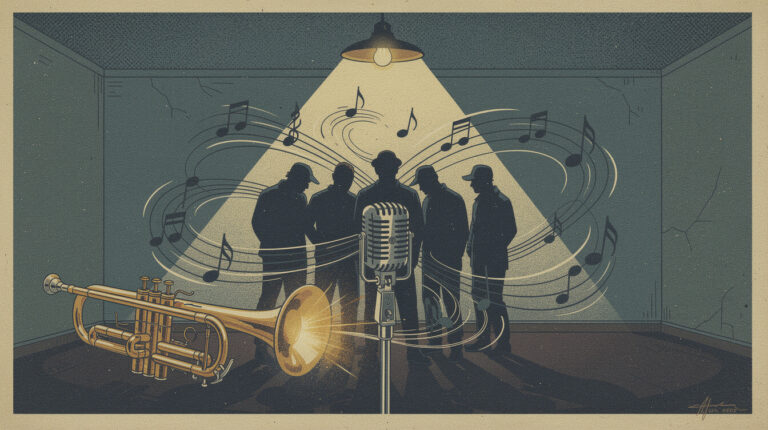
Timbaland’s production on “Are You That Somebody” is the beat every producer of the next decade tried to reverse-engineer. It is also — technically speaking — barely there. Pull it apart in a DAW and the arrangement is one of the emptiest number-one radio records of the entire 1990s: a syncopated kick and snare pattern with unusually wide pockets, a bassline that plays hide-and-seek with the downbeat, sparse guitar plucks, and that infamous baby coo looped on top of everything.
The internet has spent twenty-five years mislabeling the sample source. Some say it is a Perrey and Kingsley cut. Others attribute it to a novelty children’s record. Timbaland himself has told the story on record: he was flipping through a mid-1960s sound-effects compilation and found a row of baby vocalizations. He looped one, ran it through the sampler with a slight pitch shift, and dropped it in the empty space above the drum pattern. That is it. The most iconic sample in late-1990s R&B came from a public-domain foley library.
The Timbaland stutter — the micro-fills, the hiccup hi-hats, the way he lets the beat breathe with negative space where a lesser producer would fill the pocket — this is the record where that vocabulary hit its purest form. He would go on to expand it in the DNA of “The Rain (Supa Dupa Fly),” “Big Pimpin’,” “Cry Me a River,” and eventually the Furtado and JT records of the 2000s. But the empty-space beat was born here.
Static Major: The Uncredited Songwriting Genius
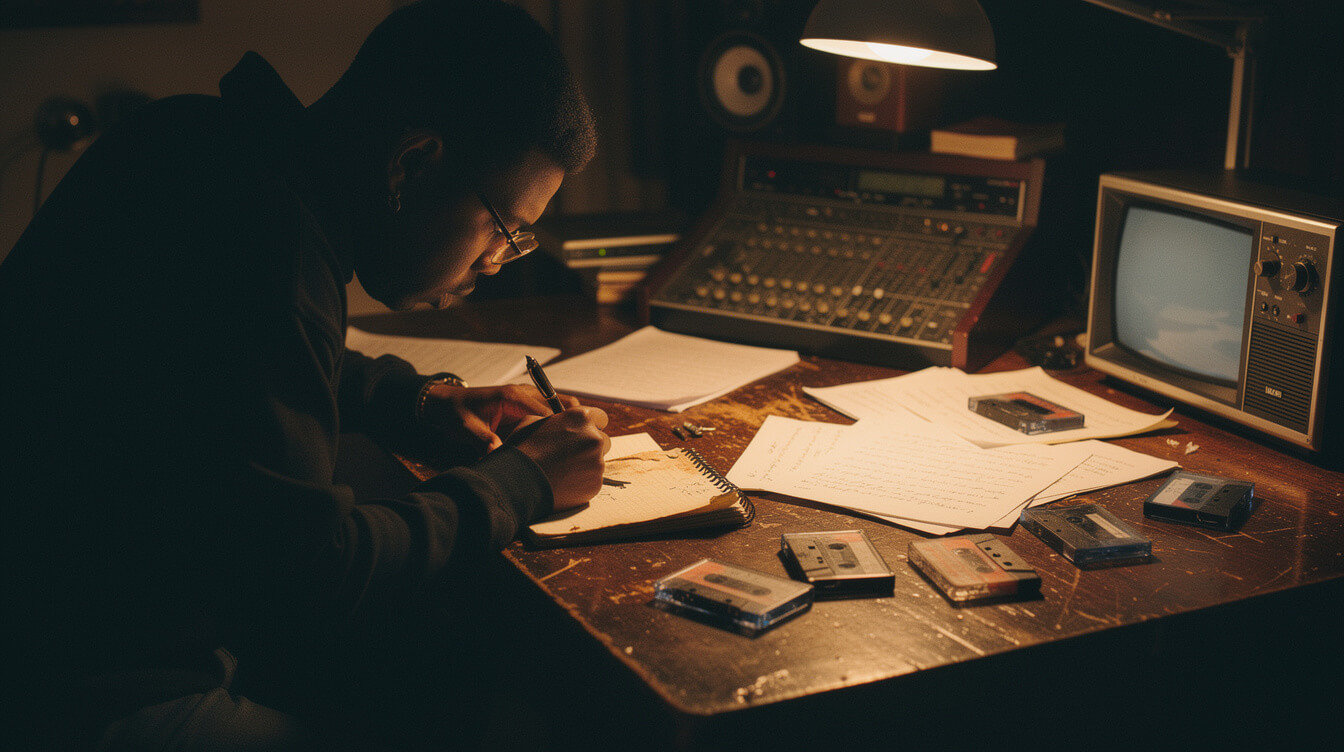
If Timbaland gets top billing on the production, Stephen Ellis Garrett Jr. — Static Major — is the reason the melody, the phrasing, and the vocal cadence of “Are You That Somebody” sound like Aaliyah invented a new way to sing. He wrote it. He also wrote her follow-up “More Than a Woman,” “Try Again,” Ginuwine’s “Pony,” and — after his 2008 death at age 33 — the diamond-certified Lil Wayne #1 “Lollipop.”
Static was from Louisville, Kentucky, an unusual pedigree for the Virginia-adjacent Swing Mob collective led by DeVanté Swing of Jodeci. He was one leg of the R&B trio Playa, whose 1998 debut Cheers 2 U is one of the most slept-on records of the era. But his real body of work sits under other people’s names. When you hear an Aaliyah, Ginuwine, or Truth Hurts vocal from 1996 to 2001 that phrases like a rapper thinking like a singer, you are hearing Static’s pen — the source code Aaliyah delivered so cleanly that the world never bothered to look up who wrote it.
The tragedy of Static Major is that most listeners learned his name because of a diamond record that came out after he died. His single largest contribution to the culture — reshaping the vocabulary of what an R&B melody could do around a Timbaland-style empty beat — went uncredited in real time.
Where “Are You That Somebody” Sits in the Timbaland Cinematic Universe
You cannot understand “Are You That Somebody” as a standalone. It is one panel in a much larger production universe Timbaland was building between 1996 and 2001, and the panels rhyme.
- Missy Elliott — “The Rain (Supa Dupa Fly)” (1997): The Ann Peebles flip, the “beep beep, who got the keys to the jeep” hook, the same syncopated-swing kick pattern. This is Timbaland’s opening statement.
- Ginuwine — “Pony” (1996): Written by Static Major and Timbaland. The frog-croak bass, the exaggerated stutter fills, the empty-space arrangement — this is the beta test that “Are You That Somebody” perfected.
- Jay-Z — “Big Pimpin'” ft. UGK (1999): The Baligh Hamdi sample, the flute loop, the way the beat trades space with the vocal. Same production DNA — this time inflected for a Southern rap crossover.
- Aaliyah — “Try Again” (2000): Written by Static. Roland TB-303 acid line, more empty pocket, the record that finally gave her a #1 on the Billboard Hot 100 — as the first-ever song to top the chart on airplay alone.
Look at this as a producer’s discography — not an artist’s — and Timbaland’s 1996 to 2001 run reads like Jay-Z’s Blueprint at 25 at the album level. Every one of these records is a variation on the same instrument: negative space, syncopation, a lead vocal that phrases as if it were a rap. “Are You That Somebody” is the cleanest form of the argument.
Aaliyah’s Hip-Hop Bridge: The DMX, Missy, and Static Major Cluster

Aaliyah is filed under R&B, but her cultural gravity was always hip-hop. She toured with DMX during the Ruff Ryders takeover of 1999-2000, co-starred with him in Romeo Must Die (2000) and Belly-adjacent visuals of that era, and shared management ecosystems with a rotating cast of Def Jam and Blackground rap acts. Her closest creative peer was Missy Elliott, not another lead R&B vocalist. Her most consistent songwriter was Static Major, a Louisville rapper-turned-writer who threaded the Swing Mob needle. The people building her records were hip-hop people applying an R&B accent.
That is why “Are You That Somebody” reads differently to a hip-hop audience than to an R&B one. Rap listeners hear the empty pocket, the syncopation, the way the vocal phrases sit behind the beat like an MC would sit them. R&B listeners hear the melodic run, the harmony stack in the outro, the lyrical vulnerability. Both audiences claim the record — and both are right. This is the crossover song most successful because it was never designed to be one.
If you want to trace this hip-hop-adjacent lineage through the culture, the through-line runs from Aaliyah’s One in a Million (1996) to Ginuwine’s Ginuwine…The Bachelor (1996) to OutKast’s Aquemini the same year “Are You That Somebody” dropped — a year where Southern hip-hop and Virginia R&B were quietly reshaping American radio while New York was still processing the death of Biggie.

Represent the Def Jam / Blackground Crossover Era
Method Man was one of the few rappers Aaliyah cut a duet with — Made in America from the 2000 Romeo Must Die soundtrack. Our limited-edition Method Man Tical tribute tee is a hand-drawn homage to the record that opened the same crossover era. Wu-Tang legacy, cotton weight, and street-art design details you can only get from Custom Creative.
The Music Video: Baby Girl, The Warehouse, The Aesthetic Streetwear Copied
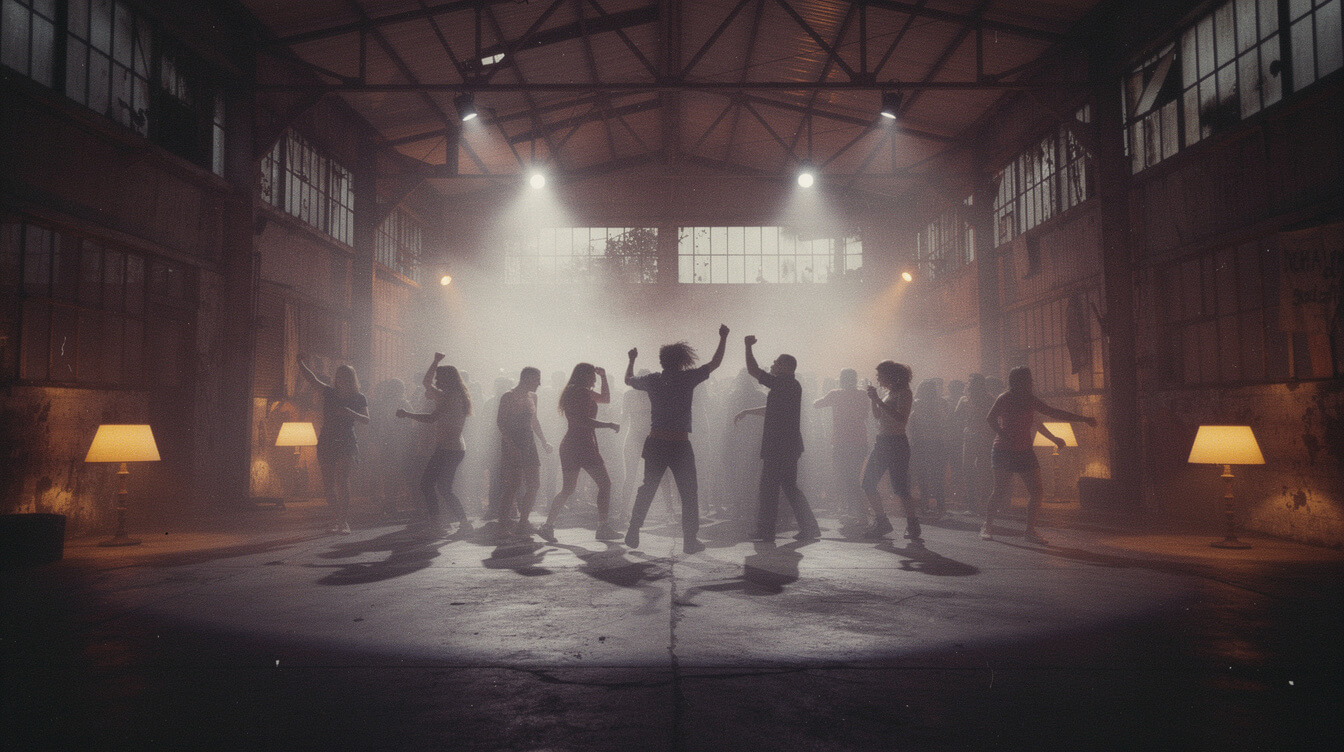
The “Are You That Somebody” music video was directed by Mark Gerard and shot inside Griffith Park in Los Angeles — specifically the Bronson Caves, the same rock formation that served as the Batcave in the 1966 Batman TV series. Choreography by Fatima Robinson. The video closes on a flamenco dance sequence and a full-cast group shot that reads today like a proto-Instagram frame: silhouettes, warm sodium lighting, motion blur, cinematic dust.
What made the visual so influential was not the caves. It was Aaliyah’s on-camera identity — the baby girl aesthetic. Cropped baby-tees, low-slung baggy Tommy Hilfiger denim, oversized sunglasses, the one-eye-hidden hair curtain, sneakers not heels. She looked like a rapper’s girlfriend from the block, not a pop star. Streetwear had never seen a lead R&B artist dress like this. Twenty-five years later, every “baby girl” style revival you have scrolled past on TikTok owes rent to this video.
The baby girl aesthetic seeded a lineage that runs through Ciara’s early-2000s tomboy phase, Rihanna’s tour merch in the Loud era, Kehlani’s Cloud 19 visuals, and any current-day artist who models a hip-hop-informed R&B look. Aaliyah did not invent tomboy-luxe streetwear on Black women — but she made it a commercially viable radio-superstar aesthetic. Everything since is variations on the theme.
Chart Performance vs. Cultural Impact: Why It Wasn’t a #1 (But Should Have Been)

Here is the accounting quirk that hip-hop trivia nights get wrong. “Are You That Somebody” peaked at #21 on the Billboard Hot 100, #1 on the Hot R&B Airplay chart, and #1 on Rhythmic Top 40 in 1998. It was the third most-played record on U.S. radio for the year. The reason it did not reach the top of the Hot 100 has nothing to do with popularity and everything to do with a rule that Billboard did not change until December 5, 1998 — six months after the song’s release.
Until that date, the Hot 100 formula required a commercial single to be released to retail — the little cassette or CD single you would buy at Sam Goody. Blackground never released one for “Are You That Somebody.” They wanted to protect album sales for the pending Aaliyah project. So the song was — by rule — ineligible for the top of the Hot 100, even as its airplay dominated the country. Once Billboard revised the methodology in December 1998 to allow airplay-only singles, the song re-entered and finally peaked at #21. In the counterfactual where Blackground had shipped a commercial single, “Are You That Somebody” was a #1 record on every metric that matters. Static Major and Timbaland’s second collaboration on Aaliyah — “Try Again” in 2000 — used the new methodology to reach #1 for four weeks straight. It was the first song in Billboard history to top the chart on airplay alone. The blueprint had already been drawn in 1998; the rules just needed to catch up.
Twenty-eight years on, the streaming era has flattened that distinction. “Are You That Somebody” now shows up on Spotify’s All Out 90s and 90s R&B playlists with hundreds of millions of plays, a data point that makes the 1998 Hot 100 peak a footnote. Culture wins. The chart is the receipt.
Aug 25, 2026: 25 Years After — Why This Song Refuses to Age
On August 25, 2001, Aaliyah died in a plane crash in the Bahamas after wrapping the “Rock the Boat” music video. She was 22 years old. Twenty-five years to the day — August 25, 2026 — the anniversary lands on a Tuesday. If you are reading this the week of, you have time to sit with the record.
What “Are You That Somebody” argues, twenty-five years after its author became a ghost, is that a great pop song is not a chart position or a certification. It is a coordinate — a fixed point where production philosophy, songwriting economy, vocal delivery, video aesthetic, and cultural context lock into a single unrepeatable moment. Timbaland kept refining the beat. Static Major kept writing better songs until the day he died. Aaliyah’s contemporaries kept releasing better records commercially. None of them ever caught this record.
It is also the record where you can hear, in real time, hip-hop and R&B stop being separate genres. Every crossover moment since — Beyoncé’s Roc-A-Fella collaborations, Drake’s entire catalog, The Weeknd’s whole aesthetic, SZA’s SOS, Doja Cat’s rap-sing pivot — traces its permission slip back to this three-minute-and-thirty-two-second cut from a 1998 Eddie Murphy movie. If August 25 is the day the culture stops to remember Aaliyah, the least we can do is remember the record correctly. It came from a soundtrack. It was written by a Louisville rapper. It was blocked from #1 by a rule. It changed the border of pop music forever.
The full lineage of 1998 in R&B and hip-hop is worth walking through the same week. Lauryn Hill’s Miseducation dropped one week later on August 25, 1998 — the same calendar day Aaliyah would later die. OutKast’s Aquemini arrived a month after that. Jill Scott was still two years from her debut. The whole ecosystem was under construction, and this soundtrack cut was one of its load-bearing walls.
Frequently Asked Questions
When was “Are You That Somebody” released?
The single dropped May 26, 1998, on the Dr. Dolittle motion picture soundtrack, roughly one month before the film’s June 26, 1998 theatrical release.
Who produced “Are You That Somebody”?
Timbaland produced the record and delivered the guest rap verse. The song was written by Timbaland and Static Major (Stephen Garrett Jr., 1974–2008).
What is the baby coo sample on “Are You That Somebody”?
Timbaland has said it came from a mid-1960s sound-effects compilation — a “row” of baby vocalizations he found while going through effects records. It is not a novelty children’s record and it is not, contrary to widespread internet lore, a Perrey and Kingsley sample.
Why did “Are You That Somebody” only peak at #21?
Blackground Records did not release a commercial single to retail, and until December 1998 the Billboard Hot 100 methodology required a physical single for eligibility. The record dominated U.S. radio in 1998 but was blocked from a Hot 100 #1 by that accounting rule.
Where was the music video filmed?
Director Mark Gerard shot the video in Bronson Caves inside Griffith Park, Los Angeles — the same rock formation used as the Batcave in the 1966 Batman TV series. Fatima Robinson choreographed. The video closes on a flamenco dance sequence.
Who is Static Major?
Static Major (Stephen Ellis Garrett Jr., November 11, 1974 – February 25, 2008) was a Louisville, Kentucky songwriter and singer, part of the R&B trio Playa and the Virginia-based Swing Mob collective. He wrote “Are You That Somebody,” “More Than a Woman,” “Try Again,” Ginuwine’s “Pony,” and the posthumous #1 Lil Wayne single “Lollipop.”
What is the DMX and Aaliyah connection?
Aaliyah co-starred opposite DMX in Romeo Must Die (2000) and toured with the Ruff Ryders / Cash Money joint runs of 1999–2000. Their creative overlap fits the wider Blackground / Def Jam / Ruff Ryders R&B-hip-hop crossover cluster of the late 1990s.
Is “Are You That Somebody” a hip-hop song or R&B?
Both. It is filed as R&B, but its production language (syncopated, sample-forward, hip-hop-timing), guest rap verse from Timbaland, and cultural ecosystem (Blackground / Def Jam / Ruff Ryders) place it in the crossover lineage more than the pure R&B lineage. It is the record where the two stopped being separate categories on radio.
Final Thoughts: The Loop That Refuses to End
Great records get re-listened to. Great coordinates get re-mapped. Twenty-eight years after “Are You That Somebody” dropped and twenty-five years after Aaliyah’s death, the record still argues for itself every time someone plays it — because the production philosophy it introduced never left. Timbaland’s negative space became the empty pocket at the heart of Drake’s OVO catalog. Static Major’s rap-thinking-as-singing became the SZA and Frank Ocean and The Weeknd blueprint. Aaliyah’s baby-girl aesthetic became the streetwear template on every current TikTok feed.
The song came from a soundtrack. That is the story most people forget. On August 25, 2026, when the timeline fills with Aaliyah tributes, remember the whole file: Static Major, the Blackground rule, the Griffith Park cave, the baby coo from a public-domain effects record, and the three-minute R&B cut from an Eddie Murphy movie that changed pop music forever. Some songs are hits. This one was a hinge.
If a memorial deserves a physical piece — something built to sit in your space and hold the weight of a moment — our Wu-Tang Forever Lighted Sign lives in that same 1998 New York / East Coast crossover era, hand-assembled and limited to 500 pieces worldwide. Stay creative — The Custom Creative Team.
Culture First. Merch That Earns Its Weight.
Weekly hip-hop retrospectives, anniversary deep-dives, and first-look drops on the culture pieces we design — straight to your inbox. No filler.

🎧 Never Miss a Drop
Exclusive product releases, hip-hop deep dives, and member-only discounts. Straight to your inbox.
Free forever. No spam. Unsubscribe anytime.
Get the Culture, Delivered
Deep dives into hip-hop history, exclusive product drops, and discounts sent straight to your inbox. No spam, just culture.
Join 2,000+ hip-hop heads already in the loop. Unsubscribe anytime.