Nas It Was Written: The Sophomore Album That Redefined Hip-Hop Ambition
When Nas dropped Illmatic in 1994, he set a bar so high that most heads assumed nobody — including Nas himself — could clear it. Two years later, Nas It Was Written landed on July 2, 1996, and did something nobody expected: it didn’t try to clear that bar. It built an entirely different arena. Where Illmatic was raw Queensbridge confessional over boom bap, It Was Written was a cinematic mob epic — polished, ambitious, and unapologetically commercial. Three decades later, this album still sparks one of hip-hop’s most heated debates: evolution or sellout? The answer reveals everything about what makes Nas one of the greatest to ever touch a mic.
Why Nas It Was Written Still Matters 30 Years Later
The year 1996 was arguably hip-hop’s most loaded twelve months. Jay-Z dropped Reasonable Doubt. OutKast delivered ATLiens. Ghostface Killah released Ironman, expanding the Wu-Tang universe. And right in the middle of all that, Nas made the boldest move of his career — he abandoned the underground aesthetic that made him a god and reached for mainstream dominance.
That pivot wasn’t random. By mid-1996, hip-hop was splitting into two economies. The underground still worshipped the gritty, sample-heavy production of DJ Premier and Pete Rock. But radio and MTV were hungry for something bigger — cleaner hooks, cinematic arrangements, crossover appeal. Nas saw the landscape shifting and made a calculated decision: he could stay in the boom bap lane and remain a critics’ darling, or he could compete with Biggie and Pac on the commercial battlefield.
He chose the battlefield. And It Was Written debuted at number one on the Billboard 200, moving 268,000 copies in its first week. That number wasn’t just impressive — it was a statement. The kid from Queensbridge wasn’t just an MC anymore. He was a mogul in the making.
Thirty years later, It Was Written sounds prophetic. The lush, orchestral production that purists hated in 1996 became the blueprint for late-90s East Coast rap. The Firm concept — Nas assembling a supergroup with AZ, Foxy Brown, and Cormega — anticipated the collaborative model that dominates hip-hop today. And tracks like “I Gave You Power” and “The Message” still hit with the same emotional weight they carried on day one.
The Making of It Was Written — From the Streets to the Studio

The most controversial decision Nas made on It Was Written wasn’t lyrical — it was logistical. He replaced the producers who built his sound. Illmatic‘s sonic architects — DJ Premier, Pete Rock, Large Professor, Q-Tip — were largely absent. In their place stood the Trackmasters, a production duo known for their radio-ready R&B-influenced beats.
Poke and Tone (the Trackmasters) brought a dramatically different palette. Where Premier chopped soul samples into jagged, hypnotic loops, the Trackmasters layered strings, piano runs, and polished drum programming. The result was undeniably glossy — and for many Illmatic loyalists, that gloss felt like a betrayal.
But listen deeper. Nas wasn’t dumbing down his lyricism to match the production. He was challenging himself to maintain the same narrative density and wordplay complexity over entirely different sonic terrain. Songs like “Take It in Blood” prove he could ride a Trackmasters beat with the same surgical precision he brought to Premier’s chops. The writing on It Was Written is every bit as sharp as Illmatic — it just lives in a different sonic world.
The album also features production from Havoc (of Mobb Deep), who delivered the haunting “The Message,” and a Dr. Dre contribution on “Nas Is Coming” — one of the earliest East Coast/West Coast production crossovers during the height of the coastal rivalry. That Dre collaboration alone was a power move that spoke to Nas’s ambition: he wasn’t picking sides. He was above the war.
Nas It Was Written Track-by-Track Breakdown

The album opens with “Album Intro,” a cinematic scene-setter that immediately signals this isn’t Illmatic part two. Nas positions himself as a mob boss narrating from the shadows — a storytelling framework that runs through the entire record.
The Message
Produced by Havoc, “The Message” is the album’s emotional anchor. Over a sparse, mournful beat, Nas reflects on death, loyalty, and the weight of street life. The hook — “Fake thug, no love, you get the slug, CB4 Gusto” — became one of ’96’s most quotable lines. This track alone silenced anyone questioning whether Nas could still deliver raw, uncut lyricism on this album.
Street Dreams
“Street Dreams” was the crossover hit that proved Nas’s commercial instincts were razor-sharp. Built around a sample of the Eurythmics’ “Sweet Dreams (Are Made of This),” the Trackmasters created a beat that was simultaneously radio-friendly and street-credible. The remix featuring R. Kelly pushed it even further into mainstream territory, and it became Nas’s biggest single to date.
I Gave You Power
This is the track that should end every debate about Nas’s lyrical ability on It Was Written. Written entirely from the perspective of a gun — first person, consistent metaphor, zero breaks in character — “I Gave You Power” is one of the most technically ambitious concept tracks in hip-hop history. The gun narrates its own life cycle: being manufactured, loaded, fired, and eventually discarded. It’s a masterclass in sustained metaphor that still gets studied in hip-hop writing circles today.
If I Ruled the World (Imagine That)
Featuring Lauryn Hill at the peak of her powers, “If I Ruled the World” became the album’s defining anthem. Hill’s hook transforms a utopian fantasy into something genuinely moving, and Nas’s verses balance political commentary with personal aspiration. The Trackmasters’ production here — built on a sample of Kurtis Blow’s original “If I Ruled the World” — bridges old school and new school seamlessly.
Affirmative Action
The Firm’s debut. Nas, AZ, Foxy Brown, and Cormega (later replaced by Nature) deliver a multi-verse crime narrative over a Trackmasters beat dripping with luxury. Each MC brings a distinct voice to the collective, and the chemistry is undeniable. This track laid the groundwork for The Firm’s self-titled album, which — despite mixed reviews — cemented the supergroup concept in hip-hop.
The Firm and the Evolution of Nas’s Sound

The Firm wasn’t just a side project — it was a statement about where Nas saw hip-hop heading. By assembling AZ (his Illmatic collaborator from “Life’s a Bitch”), Foxy Brown (the hottest female MC of the moment), and Cormega (a Queensbridge veteran with serious street credibility), Nas was building a brand. The concept was simple: a crew of elite MCs operating like a corporate entity. Street content, boardroom execution.
“Affirmative Action” gave listeners a taste, and the full Firm album followed in 1997. While that album disappointed commercially and critically, the model Nas pioneered — artist-led collectives functioning as brands — became the dominant structure of 2000s and 2010s hip-hop. From Roc-A-Fella to GOOD Music to TDE, every major crew traces some DNA back to The Firm concept.
The Queensbridge connection runs deep through It Was Written. Nas never abandoned his roots even as he reached for mainstream success. The projects still haunt every verse — the block parties, the cold stairwells, the coded language of survival. That tension between where he came from and where he was going gives the album its unique emotional texture. He was carrying an entire neighborhood on his back while trying to conquer the world.
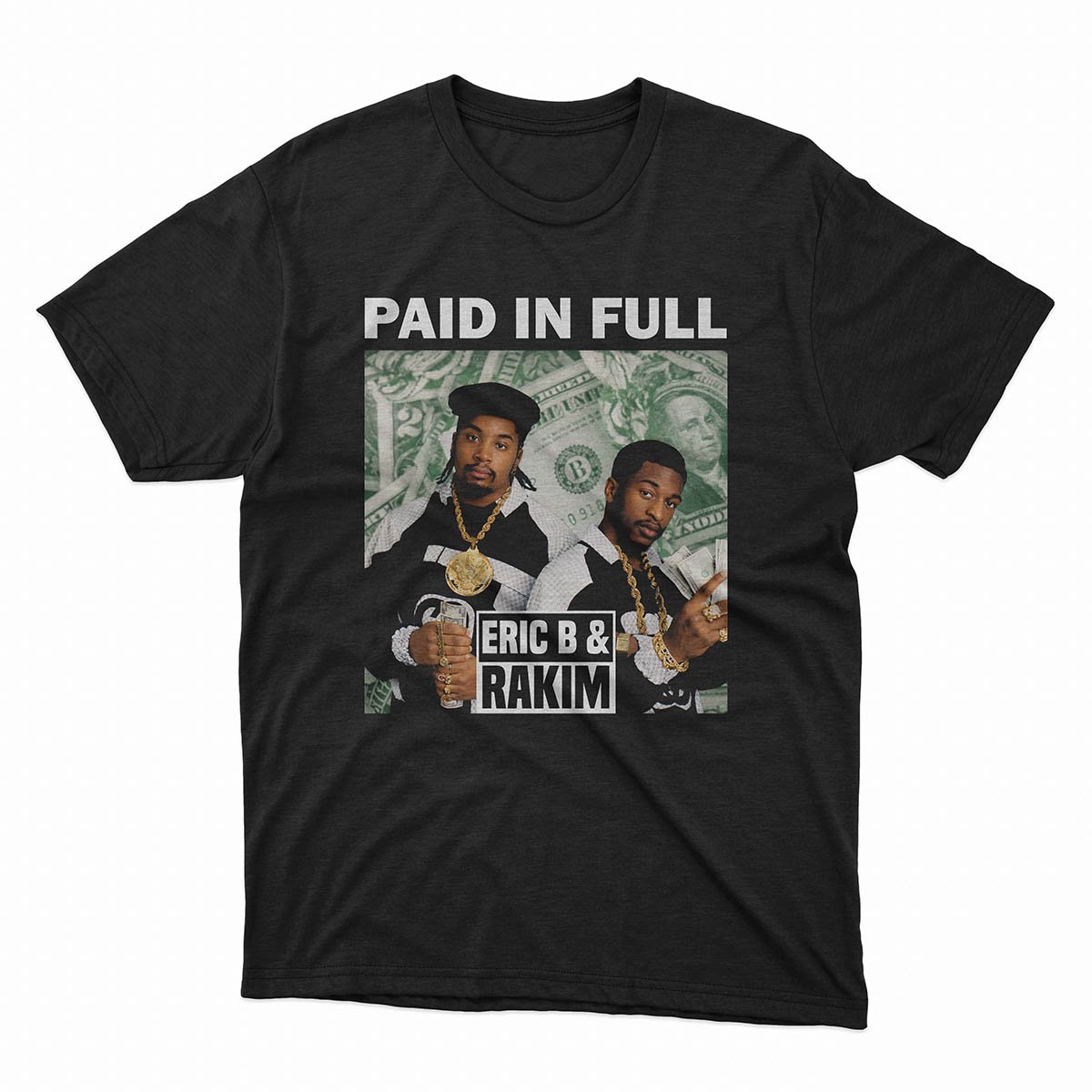
Nas inherited his lyrical precision from the generation before him — MCs like Rakim, whose revolutionary flow and vocabulary reshaped what was possible on the microphone. On It Was Written, you can hear Nas pushing Rakim’s legacy forward, taking that same God MC energy and wrapping it in a cinematic narrative framework that nobody else was attempting. If you rep the golden age lineage, our Eric B and Rakim Paid in Full T-Shirt is a must-own piece of the culture.
How It Was Written Changed Hip-Hop Production Forever

Before It Was Written, the East Coast production landscape was dominated by two sounds: DJ Premier’s chopped soul loops and the Wu-Tang’s kung-fu-sampling rawness. Nas’s embrace of the Trackmasters signaled a seismic shift. Suddenly, it was acceptable — even desirable — for serious lyricists to rap over polished, radio-ready production.
The ripple effects were immediate. By 1997 and 1998, a wave of East Coast artists followed Nas’s lead, pairing elite lyricism with mainstream-friendly beats. Mase, Puff Daddy’s entire Bad Boy aesthetic, and even Jay-Z’s pivot from Reasonable Doubt to Vol. 2… Hard Knock Life all owe something to the door Nas kicked open with It Was Written.
The Dr. Dre collaboration also mattered beyond the music. In 1996, the East Coast/West Coast beef was at its deadliest peak — 2Pac and Biggie were still alive, and the media was fanning flames daily. Nas quietly working with Dre on “Nas Is Coming” was a peace offering wrapped in a hit record. It demonstrated that artistic collaboration could transcend geographic tribalism — a lesson hip-hop took years to fully absorb.
The album’s string arrangements and orchestral elements also anticipated the production style that would dominate the early 2000s. From Kanye West’s chipmunk soul to Just Blaze’s bombastic horns, the lush musicality that Trackmasters brought to It Was Written planted seeds that bloomed for the next decade.
The production parallels across 1996 are striking. While Nas was building cinematic soundscapes, Method Man’s Tical had already proven that Wu-Tang members could create compelling solo sonic identities. That same year saw an explosion of artistic ambition across hip-hop, with every major artist pushing boundaries in their own direction.
Rep the Golden Age Lineage
Nas studied Rakim’s blueprint before rewriting the rulebook. Pay homage to the MC who made it all possible with this Paid in Full tribute tee.
Frequently Asked Questions About Nas It Was Written
When was Nas It Was Written released?
It Was Written was released on July 2, 1996, through Columbia Records. It debuted at number one on the Billboard 200 chart, making it Nas’s first chart-topping album and a commercial breakthrough that far surpassed Illmatic‘s initial sales.
Why did Nas change his sound from Illmatic to It Was Written?
Nas made a deliberate creative decision to evolve beyond the raw boom bap aesthetic of Illmatic. He partnered with the Trackmasters for a more polished, cinematic sound that could compete commercially with artists like Biggie and 2Pac. The move was controversial among purists but ultimately proved visionary, influencing the direction of East Coast hip-hop for years to come.
What are the best tracks on It Was Written?
The consensus standouts include “The Message” (a haunting Havoc-produced street anthem), “I Gave You Power” (a brilliant concept track told from a gun’s perspective), “Street Dreams” (the Eurythmics-sampling crossover hit), “If I Ruled the World (Imagine That)” featuring Lauryn Hill, and “Affirmative Action” with The Firm.
Who produced It Was Written?
The album was primarily produced by the Trackmasters (Poke and Tone), with additional production from Havoc (Mobb Deep), Dr. Dre, and DJ Premier. The Trackmasters’ lush, orchestral production style defined the album’s sound and represented a major departure from Illmatic‘s raw, sample-based beats.
Is It Was Written better than Illmatic?
This is hip-hop’s eternal debate. Illmatic is widely considered the greatest hip-hop album ever made — a flawless, concentrated statement. It Was Written is a different kind of achievement: more ambitious in scope, more commercially successful, and more influential on the direction hip-hop took in the late ’90s. They’re two sides of the same genius, and you don’t have to choose.
Final Thoughts — The Album That Proved Greatness Has No Ceiling
It Was Written is the album that made Nas a complete artist. Illmatic made him a legend among heads. But It Was Written proved he could adapt, expand, and dominate without sacrificing the core of what made him great. The lyricism is still surgical. The storytelling is still vivid. The Queensbridge DNA is still embedded in every bar.
Thirty years later, the album’s influence is everywhere. Every rapper who’s tried to balance artistic integrity with commercial ambition is walking a path Nas paved in 1996. Every producer who’s layered orchestral elements over street narratives is echoing what the Trackmasters built on this record. And every concept track that attempts sustained metaphor is competing with the impossible standard “I Gave You Power” set.
If you only know Nas from Illmatic, you’re only seeing half the picture. It Was Written is the other half — and it might be the half that matters most for understanding where hip-hop went next.
Never Miss a Drop
Album deep dives, artist spotlights, exclusive merch drops, and the stories behind the culture. Straight to your inbox. No filler — just the real.

🎧 Never Miss a Drop
Exclusive product releases, hip-hop deep dives, and member-only discounts. Straight to your inbox.
Free forever. No spam. Unsubscribe anytime.
Get the Culture, Delivered
Deep dives into hip-hop history, exclusive product drops, and discounts sent straight to your inbox. No spam, just culture.
Join 2,000+ hip-hop heads already in the loop. Unsubscribe anytime.