
Master P Songs, Ranked by the No Limit Business Move Behind Each Hit
Ranking Master P songs like Wikipedia does — album by album, chart position by chart position — misses the point of the entire catalog. Every hit Percy Miller ever pressed did a job. The song was the receipt for the business move, not the other way around. “Ice Cream Man” landed the Priority distribution deal that turned No Limit into a national label. “Bout It, Bout It” locked the film tie-in that spawned No Limit Films. “Make Em Say Uhh!” hit the Grammy stage and dragged the golden tank logo onto MTV forever. Read the discography that way — as a ledger, not a top-10 list — and you finally understand why 2026 independent rappers are still studying No Limit like a case study instead of a memory.
This is the ranking Wikipedia will never give you: the ten Master P songs that actually built the empire, in the order the business moves happened, with the receipts kept alongside the choruses. And at the bottom, the full ledger — every charting single, the business play behind each one, and the reason the whole run still matters right now.
Ice Cream Man (1997): The Song That Landed the Priority Deal

The song is a double entendre — Master P as pusher, ice cream as product — but the business move underneath it was straight distribution. Percy Miller had been pressing No Limit records himself since 1991, out of Richmond, California, hand-to-hand out of the trunk, then shipping wholesale into Louisiana. By late 1996 he had traction with independent releases like 99 Ways to Die, The Ghettos Tryin to Kill Me, and Ice Cream Man‘s own predecessor demos, but he was still capped by his own distribution ceiling. When Priority Records — the label that already had Ice Cube and Eazy-E on the West Coast — offered a distribution deal in 1997, the leverage Master P walked into the room with was Ice Cream Man itself. He kept 85 percent of his masters and 100 percent of his catalog under the No Limit banner, took Priority’s national pipeline, and treated the deal like a factory retooling, not a signing.
The song’s chorus — “ice cream, ice cream, everybody wanna be an ice cream man” — is Percy Miller taunting an entire industry that was still trying to shame Southern rappers for their hustle. He was the ice cream man in every sense: the guy at the corner who sold, then owned the truck, then owned the block. The record ended up going gold, but it was already the leverage that made the label go platinum. When you hear the horn stab that opens “Ice Cream Man,” you are actually hearing the No Limit Records business model boot up.
Bout It, Bout It (1996): The Independent Anthem That Built No Limit Films

Before Bout It, Bout It was a certified street anthem — and before its 1997 remix with Mia X pushed it into rotation on national radio — it was the theme song of a straight-to-video movie Percy Miller wrote, produced, and starred in from his own kitchen table. Costing something in the very low six figures to make, I’m Bout It sold over 250,000 copies on VHS in its first year and became a genuine cultural artifact of late-1990s Southern rap. No Limit didn’t chase the movie business. No Limit built it on top of a song.
The business play here is the deepest one in the whole catalog. Master P didn’t want a movie deal from Hollywood — he wanted a self-owned pipeline that let him take a song, spin it into a film, use the film to sell the CD, use the CD to sell the merch, and use the merch to seed the next release. Bout It, Bout It was the pilot for that flywheel. No Limit Films eventually produced or executive-produced dozens of features, including I Got the Hook Up with Anthony Johnson in 1998 and a run of direct-to-VHS titles that outsold most theatrical urban releases of the era. And every one of them started with a Master P song sitting on the marketing plan first, movie second.
The song itself is stripped down — one of the most naked bounce-influenced Master P productions ever released. That was intentional. It had to be small enough to travel through car speakers, boomboxes, and VHS soundtracks without losing its knock. It did.
Make Em Say Uhh! (1998): The National Broadcast of the Golden Tank

If Ice Cream Man got Master P the deal and Bout It, Bout It got him the film pipeline, Make Em Say Uhh! got him the logo on MTV. The lead single from Ghetto D — with Silkk the Shocker, Fiend, Mia X, and Mystikal all trading verses on a jack-move posse cut — hit number sixteen on the Billboard Hot 100 and stayed on the chart into the summer of 1998. The Grammy Awards nominated it for Best Rap Performance by a Duo or Group that year. It didn’t win, but the nomination did what Percy Miller needed: it dragged the golden tank logo of No Limit Records onto every music-industry broadcast in America.
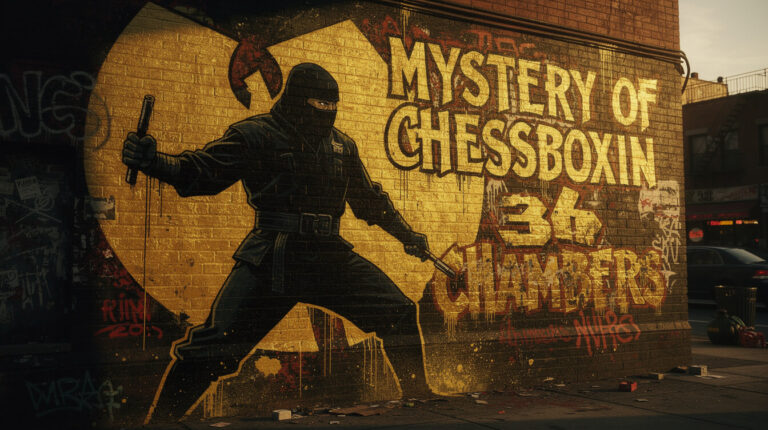
The business move behind this record was branding, plain and simple. By the time Make Em Say Uhh! was climbing the charts, No Limit was releasing new albums at a pace that critics openly called reckless: sometimes a new full-length every two weeks, with the recognizable Pen & Pixel cover art screaming from every rack in every record store in the South. Master P used Make Em Say Uhh!‘s national visibility to normalize that pace — to make No Limit’s release cadence feel like abundance rather than dilution. The tank became a signal of ownership: my label, my songs, my roster, my logo, my culture. If you loved Master P songs like this one, you loved the whole flag.
Southern rap merch culture in 2026 still runs on the memory of that broadcast. Every time somebody prints a bespoke Southern-rap tribute tee — Rap-A-Lot, Suave House, LaFace, No Limit itself — they’re building on the visual grammar Percy Miller made mainstream with a Grammy nomination. If you want to see how that torch is still being carried today, our OutKast Aquemini T-Shirt tees drop-cover-style Southern rap iconography that lives in the same visual lineage. Same era, same energy, same reason it still sells.
I Miss My Homies (1997): Grief as Brand Loyalty

This one is the song people underestimate — until they realize how much of the No Limit ecosystem it built. I Miss My Homies was released on Ghetto D in 1997 as a somber, string-driven memorial featuring Pimp C, Silkk the Shocker, and a wrenching first verse from Master P about his younger brother, Kevin Miller, who was murdered in 1990. It became one of the defining rap ballads of the late 1990s and got sampled and interpolated for years after. Kirk Franklin later reworked the beat for the gospel single “Lean on Me.” A whole generation of Southern rappers filed “I Miss My Homies” alongside Tupac’s “Life Goes On” and Ma$e’s “Been Around the World” as the emotional shorthand of the era.
The business receipt underneath the grief: Master P used I Miss My Homies to prove that No Limit could sit in the emotional register mainstream hip-hop kept assuming Southern rap couldn’t reach. Critics had been treating No Limit as pure commerce, no heart, all shock, all volume. This song broke that frame in three verses. The brand loyalty it built — the sense that if you rode with Percy Miller, he’d write about your loss the same way he’d write about a Priority check — is what let No Limit sell records to audiences that had never been to New Orleans. That’s the play. Grief, rendered as a promise the label kept.
Hoody Hooo (1999): The TRU Battle Cry That Locked the Roster

By 1999, No Limit was starting to feel the heat that always eventually catches an assembly-line label: too many releases, thinning margins, competitors like Cash Money about to sign their own Universal distribution deal. Master P responded with a roster consolidation move, and the anthem that came out of it was Hoody Hooo — TRU’s (The Real Untouchables) battle cry from the album Da Crime Family. Percy Miller, C-Murder, and Silkk the Shocker were the family unit. The song was the war chant that closed ranks around them.
The business move: after 1998’s spending spree, Percy Miller needed to remind the market — and his own artists — that No Limit’s core value proposition was the family, not the roster spread. Hoody Hooo did that in three minutes flat. It’s a simple record — call and response, hard-clapped snare, the TRU chant riding on top — but the strategic weight is enormous. It re-anchored the label around the Miller brothers themselves at a moment when defections and thinning attention could have unraveled the whole thing.
The chant also became a merch and stage moment for the rest of Master P’s touring career. When you hear a Southern rap crowd chant “Hoody Hooo” in a live set today, you’re hearing 1999’s roster-defense play still working. That’s how you know a business move landed: the chant outlives the balance sheet.
The Full Ledger: Every Charting Master P Song and the Business Play Behind It

The five songs above are the pillars. But the full Master P songs ledger extends much wider, and each entry maps to a specific business play No Limit was running at the time. Here is the complete tour of the charting singles, in order — the receipts that make the case that this catalog is a business textbook disguised as a Southern rap discography.
- “Bout It, Bout It II” (feat. Mia X, 1997) — the remix that got the original into national radio rotation. Business play: cross-promoting Mia X, No Limit’s flagship female MC, to broaden the label’s audience.
- “How Ya Do Dat” (with Young Bleed & C-Loc, 1997) — the Baton Rouge crossover. Business play: locking down Louisiana rap outside New Orleans city limits, so Cash Money couldn’t own the whole state.
- “Ice Cream Man” (1996-1997) — the album cut that became the Priority pitch. Business play: national distribution deal.
- “Make Em Say Uhh!” (feat. Fiend, Silkk the Shocker, Mia X & Mystikal, 1997-1998) — Billboard Hot 100 #16, Grammy nomination. Business play: national branding of the golden tank logo.
- “I Got the Hook Up” (feat. Sons of Funk, 1998) — soundtrack single for the No Limit Films movie of the same name. Business play: the label-film-soundtrack flywheel proven at scale.
- “Goodbye to My Homies” (feat. Silkk the Shocker & Sons of Funk, 1998) — the MP Da Last Don follow-up to “I Miss My Homies.” Business play: proving the emotional register wasn’t a one-off gimmick.
- “Thinkin’ Bout U” (feat. Mia X, 1998) — the R&B lane extension. Business play: pushing into radio-friendly territory to test how far the No Limit brand could stretch.
- “Hoody Hooo” (1999) — TRU roster-consolidation anthem. Business play: family unity signal at the peak of label overextension risk.
- “Souljas… We Ready” (1999) — Only God Can Judge Me lead single. Business play: reset year — signaling that Master P was pivoting from prolific releases toward strategic ones.
- “Bout Dat” (2005) — the comeback single after the No Limit bankruptcy of 2003. Business play: re-establishing Percy Miller as a solo brand after the label restructured.
Fifteen-plus solo studio albums, six on Billboard’s Top 10, three at number one on the Top R&B/Hip-Hop chart, over 75 million units sold across the No Limit catalog by industry estimates — the numbers alone are a legacy. But when you file each Master P song alongside the business play behind it, you get a catalog that reads like a Harvard case study written in bounce cadence. Every hit did a job. Every job funded the next one.
If you want to trace how this playbook still ripples through 2026 hip-hop economics, our deep-dive on Roc-A-Fella Records is the East Coast counterweight — a label that used the same “artist-owner takes the master, not the salary” logic, just with Manhattan penthouses instead of New Orleans warehouses. And the Boosie Badazz “Set It Off” chapter shows the Baton Rouge branch of the same tree, budded from what No Limit had proven a decade earlier.
Frequently Asked Questions About Master P Songs

What is Master P’s biggest song?
Make Em Say Uhh! is the commercial peak. Released as the lead single from 1997’s Ghetto D, it hit Billboard Hot 100 #16, earned a Grammy nomination for Best Rap Performance by a Duo or Group, and put the No Limit tank logo on national television for the first time. Culturally, “Bout It, Bout It” and “Ice Cream Man” have arguably longer shelf lives, but by strict chart placement, Make Em Say Uhh! is the peak.
How many albums did Master P release?
The Master P discography spans fifteen-plus solo studio albums, from 1991’s Get Away Clean through the 2020s independent releases, plus a mountain of No Limit compilations, TRU group albums with C-Murder and Silkk the Shocker, guest appearances on virtually every No Limit roster release from 1995-2001, and dozens of mixtapes. His most commercially significant run — Ice Cream Man, Ghetto D, and MP Da Last Don — landed between 1996 and 1998 and moved more than eleven million units combined in the U.S. alone.
What is Master P’s most streamed song today?
Streaming rankings shift by platform and by year, but the songs that consistently outperform their chart peaks in 2020s streaming numbers are Make Em Say Uhh!, Bout It, Bout It, and I Miss My Homies. That last one is the interesting outlier: it never charted higher than #61 on the Hot 100, but it has the streaming half-life of a record that was already treated as a canonical rap ballad on release. Cultural staying power is outpacing 1997 chart position by a wide margin.
Did Master P ever win a Grammy?
He was nominated for Make Em Say Uhh! in 1999 but did not win. Missy Elliott’s “The Rain (Supa Dupa Fly)” era took the category. Percy Miller himself has, over the years, treated the miss with the same detachment he treated most industry validation: the Grammy nomination did what he needed it to do, which was pull the tank logo onto the broadcast. Winning wasn’t the deliverable.
Why does Master P still matter to 2026 hip-hop?
Because the independent-rap economics playbook the industry celebrates right now — artist owns masters, artist owns catalog, artist runs label distribution as a factory, artist packages music with film and merch — is the No Limit playbook, dust-off and re-applied. Every artist skipping majors in 2026 is running some derivative of what Percy Miller built between 1995 and 1999. Redbubble and TeePublic shipping Master P and No Limit-adjacent SKUs this month is just downstream signal of the same cultural resurgence. The songs above are the case study.
Final Thoughts: The Ledger That Wikipedia Won’t Give You
Every top-10 list on the internet ranks Master P songs by chart position, streaming counts, or personal nostalgia. None of those rankings will tell you why the catalog matters. The catalog matters because each song was a receipt for a business move that changed how independent rap gets made in this country. Read it that way — as a fifteen-year corporate history told in bounce cadences — and you understand why No Limit still shapes the artist-first economics running through hip-hop in 2026.
Percy Miller didn’t build a discography. He built a distribution empire and then wrote songs to fund each expansion. That’s the real ranking, and the real reason the tank still gets tattooed on shoulders and printed on tees from Louisiana to Los Angeles a quarter century after the peak.
Stay creative — The Custom Creative Team
Rep the Southern Rap Blueprint
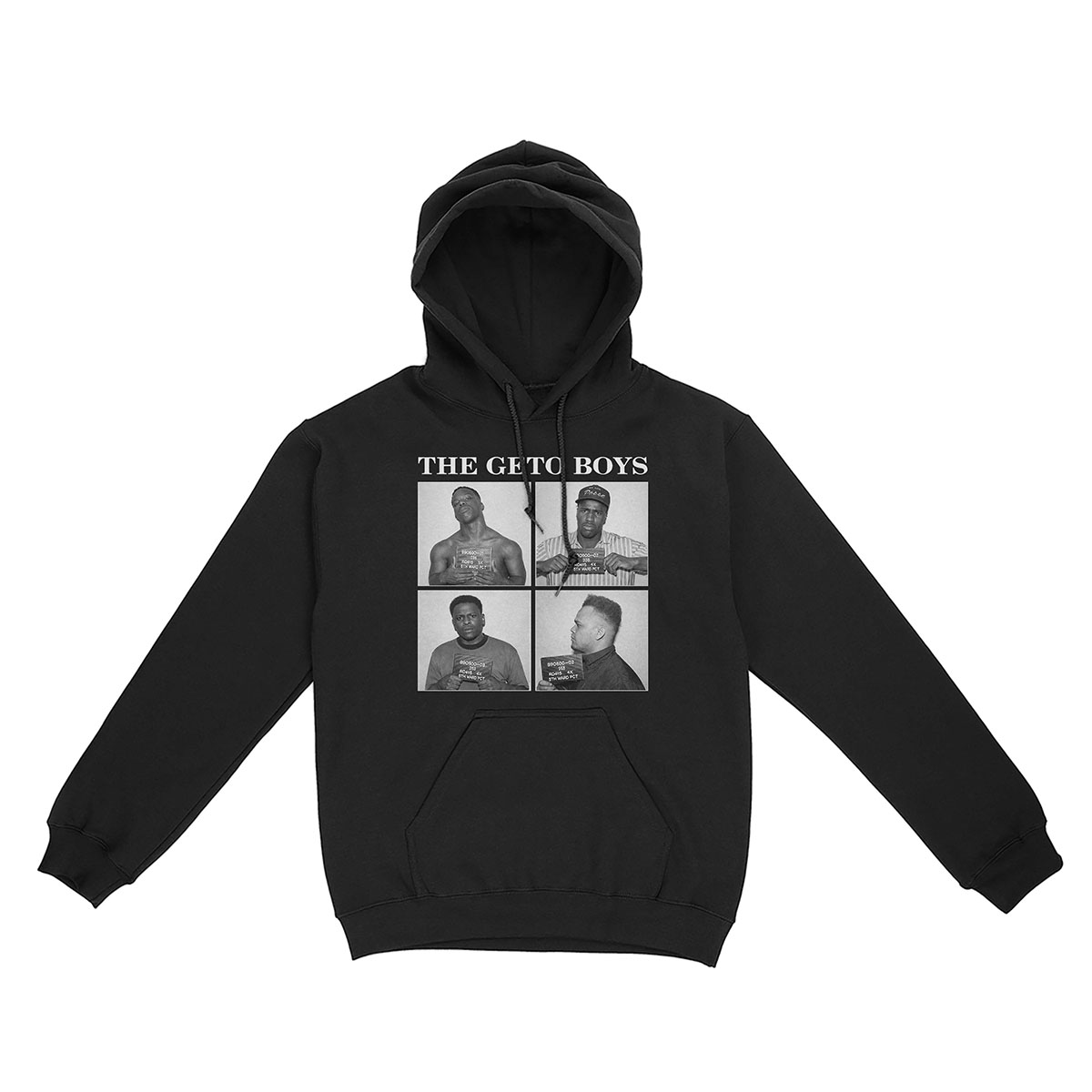
Before No Limit was national, Rap-A-Lot was proving Southern rap could carry a label. Our Geto Boys City Under Siege heavyweight hoodie reps the 1989 Houston album that made the entire No Limit playbook possible. Premium heavy-blend fleece, front chest print, Bella Canvas base.
Get the Culture in Your Inbox
Deep-dive hip-hop label histories, album retrospectives, and first-look drops on our tribute tees and neon signs. No corporate email, ever — just the culture, delivered.

🎧 Never Miss a Drop
Exclusive product releases, hip-hop deep dives, and member-only discounts. Straight to your inbox.
Free forever. No spam. Unsubscribe anytime.

Get the Culture, Delivered
Deep dives into hip-hop history, exclusive product drops, and discounts sent straight to your inbox. No spam, just culture.
Join 2,000+ hip-hop heads already in the loop. Unsubscribe anytime.