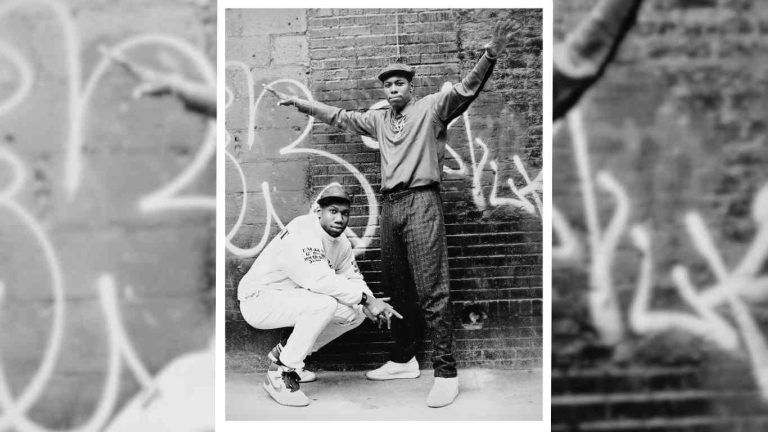
Roc-A-Fella Records, Fully Decoded: The 30-Year Empire Jay-Z, Dame & Biggs Built (And Why It’s More Valuable Than Ever in 2026)
The story you’ve heard about Roc-A-Fella Records is the rise-and-fall outline: three Brooklyn dudes start a label out the trunk in 1994, sell to Def Jam in 2004, fracture in public, and become a Wikipedia footnote. That outline is wrong by about thirty years. Roc-A-Fella didn’t end — it stopped pressing new music, traded ownership for catalog leverage, and quietly became one of the most valuable cultural assets in hip-hop. With the Reasonable Doubt 30 anniversary hitting June 25, 2026 and JAY-Z’s Yankee Stadium show on July 10 lining up as a de facto label reunion, the empire Dame Dash, Hov and Kareem “Biggs” Burke built is more relevant than it has been in two decades.
This is the full breakdown — the boardroom math, the split nobody fully understands, the chains and jerseys that became streetwear canon, and what’s still locked in Universal’s vault waiting on a 30th-anniversary release calendar. If you came up on this catalog, the next 12 months are the collector window of the decade.
1994: Three Brooklyn Hustlers Start a Label Because Every Major Passed on Jay-Z
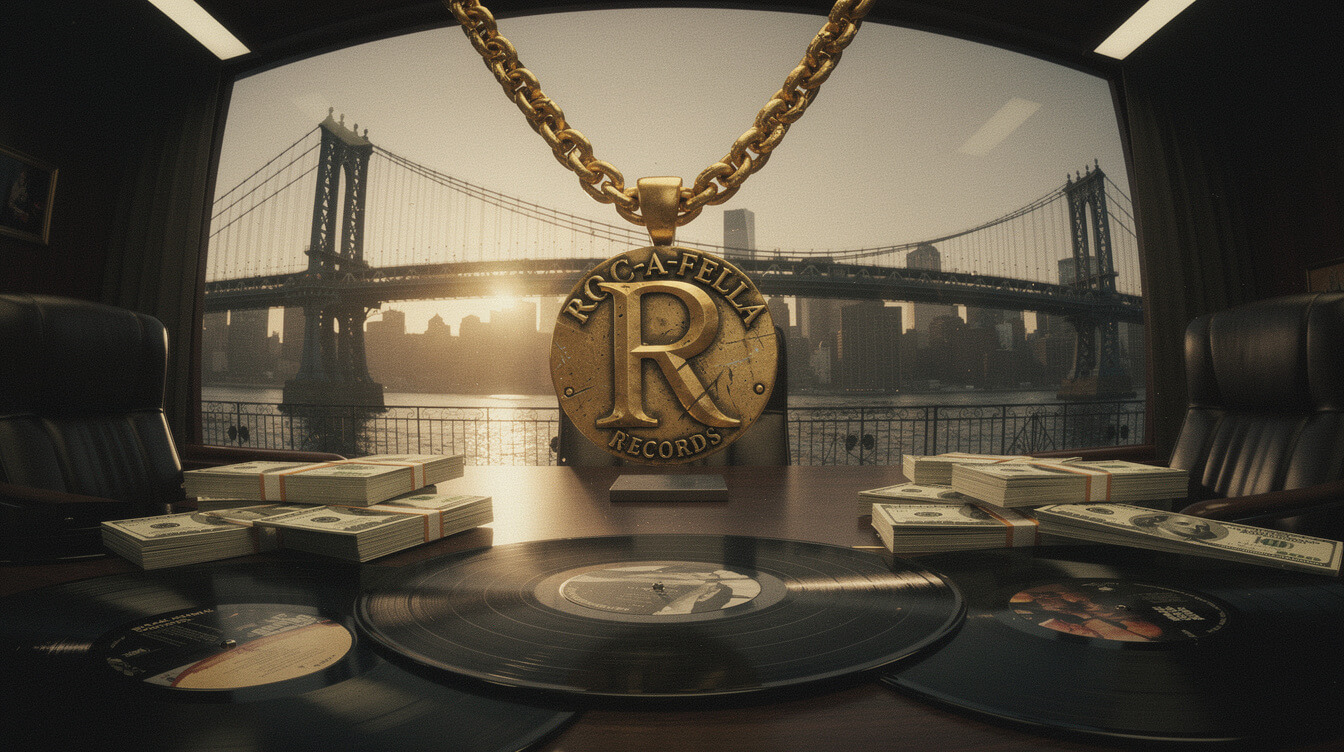
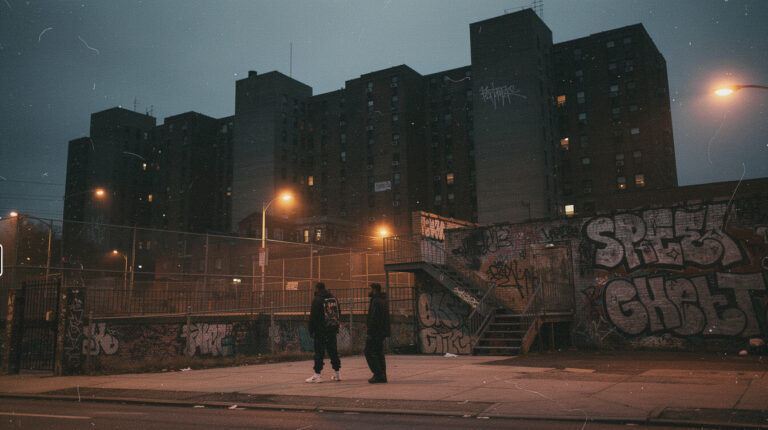
1994 in Brooklyn. Crack-era economics still running the corner. The major labels had Bad Boy on a hot streak and Def Jam in a transition decade, and not a single one of them wanted to sign a 24-year-old Marcy Projects rapper named Shawn Carter. The reason was simple — he didn’t fit the radio template. Too literal, too dense, too clearly an adult writing about adult money. So Jay-Z, Damon Dash and Kareem “Biggs” Burke did the only move left: build their own label, press their own vinyl, distribute through Priority. Roc-A-Fella Records was incorporated in 1995 with three equal partners, no outside investment, and the smallest A&R department in hip-hop — basically Dame’s apartment.
The name was a flex and a thesis. Roc-a-fella from Rockefeller, the white-shoe American banking dynasty — three Black entrepreneurs claiming generational-wealth posture before they had the bank account to back it. Dame ran the business, Biggs ran the streets and protection, Jay made the music. That was the structure. None of them had ever run a record label. All three had run hustles that operated on the same logic — recoup your investment, control your distribution, never let anyone touch your margin. Roc-A-Fella was built on that model, not on the major-label one, and that’s why it worked. By the time Reasonable Doubt dropped on June 25, 1996, the label had a debut album that out-quoted, out-produced and out-aged anything Def Jam was putting out — and the trio had already started planning the merch.
The Founder Dynamic: Why Dame Dash, Jay-Z & Kareem “Biggs” Burke Worked (Until They Didn’t)
The founder math at Roc-A-Fella was a three-legged stool and every leg knew its weight. Dame Dash was the engine — loud, indispensable, the guy who walked into a Sony meeting wearing a fur vest and refused to leave without a distribution deal. He cut the Priority pact in ’96, the Def Jam joint venture in ’97, the Rocawear apparel split-off in ’99. Dame’s superpower was that he never sold the label cheap because he never separated the label from the artist. To get Jay, you had to take Dame. To take Dame, you had to write a check on his terms.
Jay-Z was the catalog. Eight solo studio albums between 1996 and 2003, plus the Best of Both Worlds R. Kelly project, two Dynasty compilations, and dozens of guest verses that propped up the rest of the roster. Hov never missed a release window in those seven years — he literally dropped an album every Black Friday for half a decade. That metronome consistency is what built the catalog’s compounding value. Every Jay record made the next Beanie Sigel single sell, and every Beanie single sold the next Memphis Bleek mixtape.
Kareem “Biggs” Burke was the quiet third. Industry shorthand made Biggs the “money” guy, but the real role was infrastructure and trust. He kept the studio running, the artist housing covered, the day-to-day machine alive while Dame did business and Hov made records. When the partnership fractured in 2004, Biggs took the smallest public hit because he’d taken the smallest public credit — but he’d done arguably the hardest job: keeping a label of high-strung artists functional during a hostile-takeover-grade growth curve.
The reason the dynamic worked for a decade: each founder controlled a different cash-flow lane and respected the other two’s lanes. The reason it broke: the lanes started overlapping when the deal got too big to share.
Reasonable Doubt to The Dynasty: The Roster That Owned Hip-Hop Cool 1996-2002
The six-year run between June 1996 and December 2002 is when Roc-A-Fella stopped being a Jay-Z vehicle and started being a movement. Reasonable Doubt shipped in ’96 and got slept on commercially — debuted at No. 23, took years to hit Platinum — but the streets knew immediately. In My Lifetime, Vol. 1 hit Gold in 1997. Vol. 2… Hard Knock Life sold 5 million in ’98 and won Grammy Best Rap Album. By Vol. 3… Life and Times of S. Carter in ’99 and The Dynasty: Roc La Familia in 2000, the label wasn’t just Jay anymore — it was an entire ecosystem with its own internal star economy.
Beanie Sigel came in from Philly with The Truth in 2000 — a critical heat-check that proved the label could break a non-New York artist. Memphis Bleek got the brotherly-protégé runway and the loyalty edit. Cam’ron arrived in 2001 from the Def Jam side and turned Come Home With Me in ’02 into the pink-mink Roc-A-Fella era — bringing Juelz Santana, Jim Jones and the entire Dipset infrastructure with him. Freeway and Young Gunz rounded out the Philly bench. Kanye West was already producing for the label by 2001 (his beat for “Heart of the City” on Blueprint changed what Jay-Z sounded like) but wouldn’t get his own deal until 2002.
The reason this roster mattered: every artist on Roc-A-Fella in this stretch had a distinct lane that didn’t bleed into the others. State Property had its Philly mafioso lane. Dipset had Harlem flamboyance. Bleek had loyalty traditionalist. Kanye had producer-turned-rapper soul. Hov sat on top. The Brooklyn-Philly-Harlem-Chicago geographic spread gave the label four regional checkpoints when most labels had one. That’s why it owned hip-hop cool — the Roc was wherever you were from. Compare it to other labels’ iconography from this era and the Roc-A-Fella imprint stamp on a record sleeve was already a quality-control signal by 1999.
The 2004 Def Jam Sale & The Split That Still Hasn’t Healed (Dame vs Hov, Decoded)
The split has been mythologized for two decades and most of the telling is wrong. Here is what actually happened. In December 2004, Universal Music Group exercised its option to buy out the remaining 50% of Roc-A-Fella Records — Def Jam had purchased the first 50% in 1997 as part of the original distribution deal. The price for the second half: roughly $10 million split three ways. Jay-Z, Dame, and Biggs each cleared around $3.3 million in cash for their equity. Hov also accepted the President of Def Jam role as part of the package. Dame and Biggs got cash but no executive seat. That’s the moment the partnership broke.
The narrative that “Jay sold out Dame” misses the structural problem. UMG didn’t buy Roc-A-Fella the label brand outright — it bought the master recordings and the publishing rights to most of the catalog. The three founders kept the trademark, kept the iconography rights, and could technically have kept operating the imprint with new artists. But Dame, the loudest of the three, lost his title as de facto Roc-A-Fella CEO the second Jay took the Def Jam role above him on the org chart. Dame walked. Biggs walked. Hov stayed and tried to keep the label name viable for another decade under Def Jam, signing Tru Life and Teairra Marí and pushing the State Property and Dipset rosters until both crews fractured independently by 2007.
The post-split economics tell the real story. Dame launched DD172, the Damon Dash Music Group and a string of fashion ventures — none of which scaled the way Rocawear did. Biggs stayed mostly out of the press, eventually doing federal time on an unrelated drug conviction from 2008-2018, and returning to launch the Reasonable Doubt clothing label that licenses the album imagery directly. Hov built Roc Nation in 2008 as a management-first company with a label arm, sports agency, and live touring division — and turned it into the multi-billion-dollar holding it is today. The split didn’t end Roc-A-Fella. It split Roc-A-Fella into three reinventions, only one of which compounded into a generational empire.
Worth noting: the trademark situation is still messy in 2026. Biggs has fought for years to retain merchandise rights to the Roc-A-Fella name on apparel, while UMG holds the recording trademarks. Every time someone bootlegs a Roc-A-Fella tee, three different lawyers’ phones light up. That trademark friction is part of why authentic Roc-A-Fella-era apparel — vintage Rocawear, original Reasonable Doubt promo tees — has become its own collector category.
Roc-A-Fella in 2026: What the Reasonable Doubt 30 Anniversary Is Doing to the Collector Market
June 25, 2026 marks the 30-year anniversary of Reasonable Doubt. That’s the single most important date on the hip-hop calendar this year, and the collector market has been pricing it in for the last 12 months. Original 1996 first-pressing Reasonable Doubt vinyl is currently moving between $400 and $1,200 on Discogs depending on condition and label variant — the original Priority Records release with the Freeze logo commands the top of that range. The 2026 anniversary vinyl repress, announced by Roc Nation in March, sold out its first allocation within 18 minutes. There will be a second drop tied to the Yankee Stadium show on July 10. There will be a third tied to the holiday window.
The chain market is even more telling. Authentic Roc-A-Fella dynasty-era chains — the cursive R, the freeze logo medallion, the Hov-era cube — were never produced in serious quantity. Most of what existed in 1999-2002 was distributed inside the label as gifts and promo. Verified pieces in 2026 are selling between $4,000 and $25,000 depending on provenance, with chains worn in documented photos of label artists at the top of the curve. This isn’t speculation — Sotheby’s auctioned a verified Dame Dash freeze medallion in late 2025 for $18,500. The 30th anniversary is forcing a market that used to live on Instagram into the formal-auction tier.
The Yankee Stadium show on July 10 — JAY-Z’s first hometown stadium date in over a decade — is being positioned by Roc Nation as a de facto label reunion moment. Whether Dame and Biggs show up is the question every hip-hop journalist is asking. Either way, the show will be the largest single concentration of Roc-A-Fella-era catalog performed in one night in 30 years. Tour merch is already being designed. The collector window for anything stamped Reasonable Doubt 30 closes the moment the lights come up.
If you came up on this catalog, this is the year. Twenty years from now the 2026 anniversary cycle will be the cycle people reference when they ask what 30th-anniversary hip-hop nostalgia waves should look like.

Light Up the Brooklyn Label Era
Roc-A-Fella ran Brooklyn through the late ’90s. Wu-Tang ran Brooklyn-Staten the same years. Hang the cross-borough tribute over your bar — our Wu-Tang Forever Neon LED Sign, limited to 500 worldwide, ships insured with signature.
The Iconography: Chains, Logos, Jerseys & Album Covers That Became Streetwear Canon
Pull up an average 2026 streetwear lookbook and count the references back to Roc-A-Fella iconography. The cursive R. The Freeze logo with the angled diamond. The champagne flute from Reasonable Doubt‘s cover. The dynasty chain. The throwback jersey-and-Nike-Air-Force-1 combo that The Dynasty video locked in for a generation. Every one of those visual codes was a Roc-A-Fella signature first, then a streetwear convention, then a luxury house reference. Virgil Abloh cited the Roc dynasty era as a primary influence on his Off-White early lookbooks. Pharrell’s tenure at Louis Vuitton has openly invoked Hov’s late-90s tailored-streetwear silhouette as the modern-American-luxury reference point.
The Reasonable Doubt cover itself — Jay-Z in the Hef-pose with the champagne flute, the layered black-on-black, the gold accents — became the template for “elevated hustler” iconography that runs through every photo shoot at The Fader, GQ, Vogue for the next 25 years. The cover was shot by Jonathan Mannion, who’d go on to shoot most of the label’s iconic imagery. Mannion’s work for the Roc is now a separate collector category — original prints of his outtakes from the Reasonable Doubt session sell between $2,500 and $8,000.
The jersey-as-uniform play was Dame’s idea. By 2001, Roc-A-Fella artists in throwback jerseys was the most recognizable visual code in hip-hop. The Mitchell & Ness throwback resurgence in the mid-2000s — Reggie Jackson, Walter Payton, Earl Campbell jerseys flying out of every urban boutique — was 70% Roc-A-Fella’s doing. Memphis Bleek wore a different Negro League jersey in every video for two years. That single styling decision moved millions of dollars of vintage authentic jerseys through the secondary market. If you owned a sports boutique in 2002, you owed Roc-A-Fella a thank-you note.
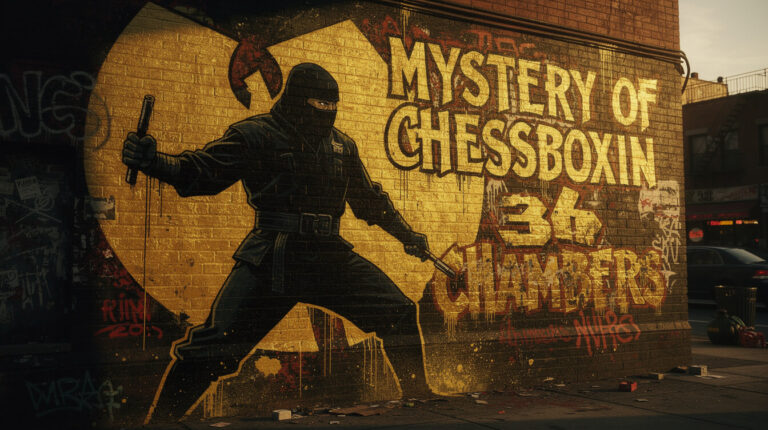
The catalog has parallels in Brooklyn’s other 90s label flagship. The Wu-Tang 36 Chambers iconography ran the same playbook from Staten Island the same decade — independent label, instantly recognizable logo, merch as marketing, artist-as-brand. The two labels never collaborated meaningfully but shared the same structural insight: in hip-hop, the visual identity has to be ownable in a single glance.
If you want a direct piece of the Brooklyn-Queens 1994 parallel era, our Nas Illmatic Hoodie sits in the same QB-Brooklyn 1994 cultural moment — both Illmatic and the founding of Roc-A-Fella happened in the same New York 12-month window, and both have aged into permanent canon.
What Jay-Z Actually Still Owns vs. What’s Locked in Universal’s Vault
The ownership map in 2026 is the most misunderstood part of the Roc-A-Fella story, so here’s the breakdown.
What Universal Music Group owns: The master recordings to every Roc-A-Fella release between 1996 and approximately 2008, including all of Jay-Z’s solo catalog from Reasonable Doubt through American Gangster. That includes the right to license those recordings for sync, repress vinyl, manufacture anniversary editions and split the royalties per the original deal terms. The 2026 Reasonable Doubt 30 vinyl repress is a Roc Nation / UMG joint product — UMG holds the masters, Roc Nation drives the marketing and the merch.
What JAY-Z owns: The publishing rights to most of his Roc-A-Fella era songs (writer/composer share), the Roc Nation brand, his post-2008 masters via the Roc Nation deal structure, and a healthy ownership stake in companies that license Roc-A-Fella imagery — including Reasonable Doubt LLC, the apparel company Biggs operates with Hov’s blessing. Hov also bought back his catalog of music videos from Universal in the early 2010s, which is why all the classic Roc-A-Fella era videos now live on his Vevo channel and not UMG’s general distribution.
What’s still in the vault: This is the interesting tier. Industry reports going back to 2018 have suggested UMG holds unreleased Reasonable Doubt-era recordings — alternate versions, unreleased verses, full unreleased Jay-Z songs from the 1995-96 sessions. None have officially surfaced. The 30th anniversary has industry watchers betting heavily that at least one previously unreleased Reasonable Doubt track will drop in 2026, likely tied to either the Yankee Stadium show or the December collector wave. If that happens, it will be the most significant unreleased hip-hop drop since the Tupac vault unsealings.
The other vault category: Roc-A-Fella roster releases that never properly released. Beanie Sigel had a fully recorded album shelved during the late-2000s Def Jam transition. Cam’ron’s full Killa Season 2 sessions sit somewhere in a Universal hard drive. Memphis Bleek recorded a fifth solo album that never came out. Every one of those projects is in the same vault and every one of those artists has been politely asking for the masters back for 15+ years.
Frequently Asked Questions About Roc-A-Fella Records
Who founded Roc-A-Fella Records?
Roc-A-Fella Records was founded in 1994-95 by three Brooklyn-born partners: Damon “Dame” Dash, Shawn “Jay-Z” Carter, and Kareem “Biggs” Burke. All three started as equal one-third equity owners. The label was independently funded with no outside investment until the 1997 Def Jam distribution deal.
When did Roc-A-Fella Records sell to Def Jam?
Def Jam parent company Universal Music Group acquired 50% of Roc-A-Fella in 1997 as part of the distribution deal, then exercised its option for the remaining 50% in December 2004 for approximately $10 million. That second sale is the moment the original founding partnership broke up.
Why did Jay-Z and Dame Dash fall out?
The split centered on the 2004 Def Jam sale and Jay-Z accepting the President of Def Jam executive role. Dame and Biggs took cash for their equity but were not offered executive seats at Def Jam. Dame, who’d been the public CEO face of Roc-A-Fella, viewed Hov taking the top job as a betrayal of the three-way partnership. There were also longer-running disagreements about Rocawear ownership, artist development priorities, and creative direction. Twenty years later, Dame and Hov have not publicly reconciled.
Is Roc-A-Fella Records still active in 2026?
The Roc-A-Fella imprint technically still exists under Def Jam / UMG but has not released a new artist signing in years. Roc Nation — Jay-Z’s 2008-launched company — functions as the spiritual and commercial successor. The Roc-A-Fella catalog continues to generate substantial revenue through streaming, sync licensing, anniversary vinyl pressings, and merchandise. The 2026 Reasonable Doubt 30th anniversary is the largest catalog activation in label history.
What is the rarest Roc-A-Fella collectible?
Original 1996 first-pressing Reasonable Doubt vinyl with the Priority Records / Freeze logo variant is the most-traded high-end collectible. Authenticated dynasty-era Freeze logo chains worn by label artists in documented 1999-2002 photos move at auction between $4,000 and $25,000+. Jonathan Mannion’s original photographic prints from the Reasonable Doubt cover shoot sit in the $2,500-$8,000 range. Verified provenance is everything in this market.
Final Thoughts: The Empire That Refused to End
The cleanest take on Roc-A-Fella Records in 2026 is this: the label hasn’t released new music in any meaningful sense for nearly two decades, and yet its commercial relevance, cultural footprint and collector value are all higher than they were at its 2002 peak. That’s not how labels usually age. Most catalogs are deflationary cultural assets — every year the audience that cares shrinks, every year the masters generate less per stream. Roc-A-Fella has gone the other direction. The catalog is more streamed, more sampled, more referenced and more collected than it was a decade ago.
The reason is structural. The three founders, even after splitting in public, separately built three different post-Roc empires that all keep the original catalog culturally live. Hov runs Roc Nation. Biggs runs Reasonable Doubt LLC. Dame runs his own media properties and never stops talking about the 90s on YouTube. Three different operators, three different channels, all driving traffic back to the same 30-year-old recordings. That’s why Reasonable Doubt 30 isn’t a nostalgia cash grab — it’s the natural compounding endpoint of an asset that’s been gathering interest in three different bank accounts since 2004.
If you’re a hip-hop head who came up on this catalog, the next 12 months are unrepeatable. The vinyl repress. The Yankee Stadium show. The merch drops. The probable vault unsealing. The collector market that’s only going one direction. Stack receipts, not regrets.
Stay creative — The Custom Creative Team
Get Hip-Hop Drops First
Weekly culture-grade hip-hop reading, anniversary breakdowns, and first-access merch drops from the Custom Creative crew. No spam, just the real.

🎧 Never Miss a Drop
Exclusive product releases, hip-hop deep dives, and member-only discounts. Straight to your inbox.
Free forever. No spam. Unsubscribe anytime.
Get the Culture, Delivered
Deep dives into hip-hop history, exclusive product drops, and discounts sent straight to your inbox. No spam, just culture.
Join 2,000+ hip-hop heads already in the loop. Unsubscribe anytime.