Every Public Enemy Member Explained: Chuck D, Flav, Terminator X, S1W & The Bomb Squad
Every top-ten Google result for Public Enemy members gives you the same thing: a roster. Chuck D on the mic, Flavor Flav on the clock, Terminator X on the wheels, Professor Griff and the S1W in the fatigues, the Bomb Squad in the credits. What none of them ever explain is why this specific arrangement of people functioned as a machine — why Public Enemy is the only group in hip-hop history whose lineup reads like the org chart of a militant political party, and why that structure is the entire reason they invented what we now call political rap.
That’s what this guide fixes. Below you get every Public Enemy member decoded — not just born-on dates and album credits, but the specific job each of them held in the ensemble system Chuck D built in Roosevelt, Long Island in 1985 and turned loose on Def Jam in 1987. The voice, the foil, the DJ, the paramilitary spectacle, the Minister of Information, the production collective. Six positions. One machine. Forty years of noise.
Chuck D: The Voice, the Politic, and the Long Island Origin
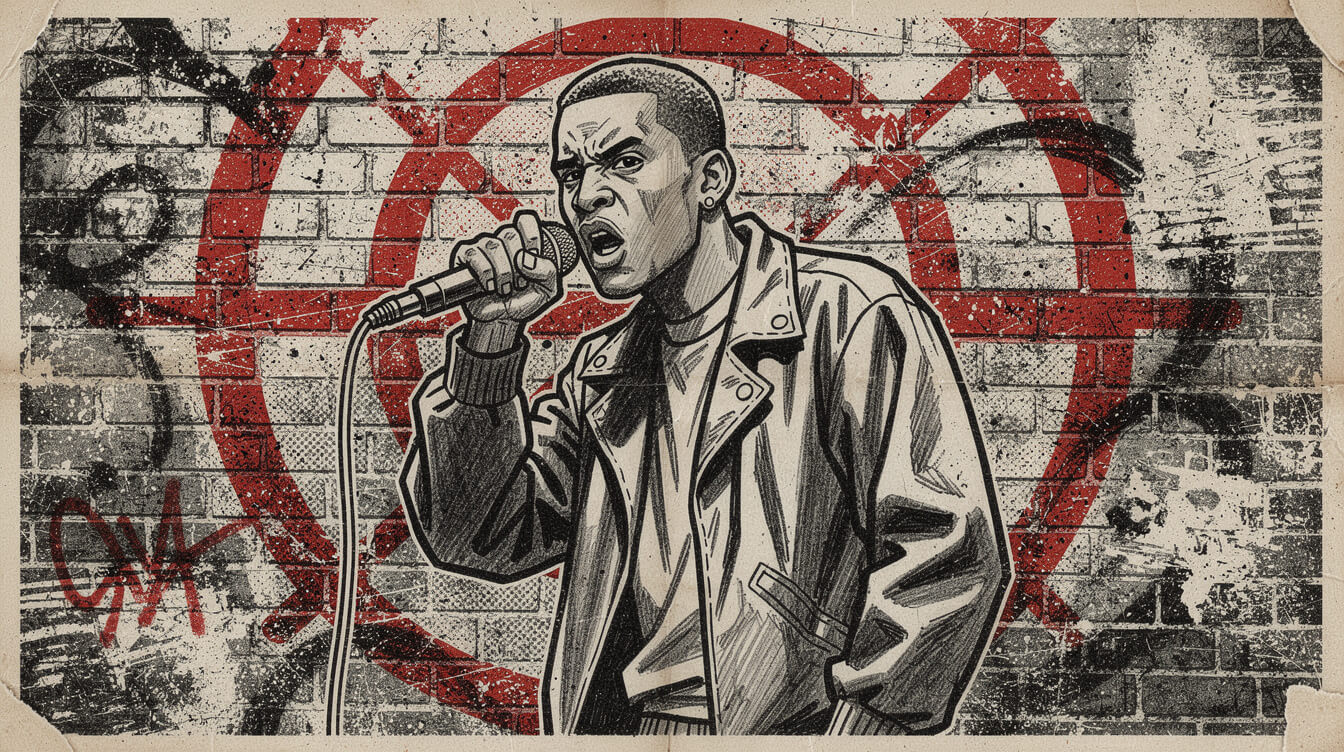
Carlton Douglas Ridenhour was born August 1, 1960 in Queens, raised in Roosevelt, Long Island — the same small suburb 20 miles east of the city that would eventually give us Rakim, EPMD and Biz Markie. That geography matters. Public Enemy wasn’t a Bronx group and it wasn’t a Compton group. It was a suburban Black Long Island group, which is the entire reason it sounded like nothing else on Def Jam’s roster in 1987.
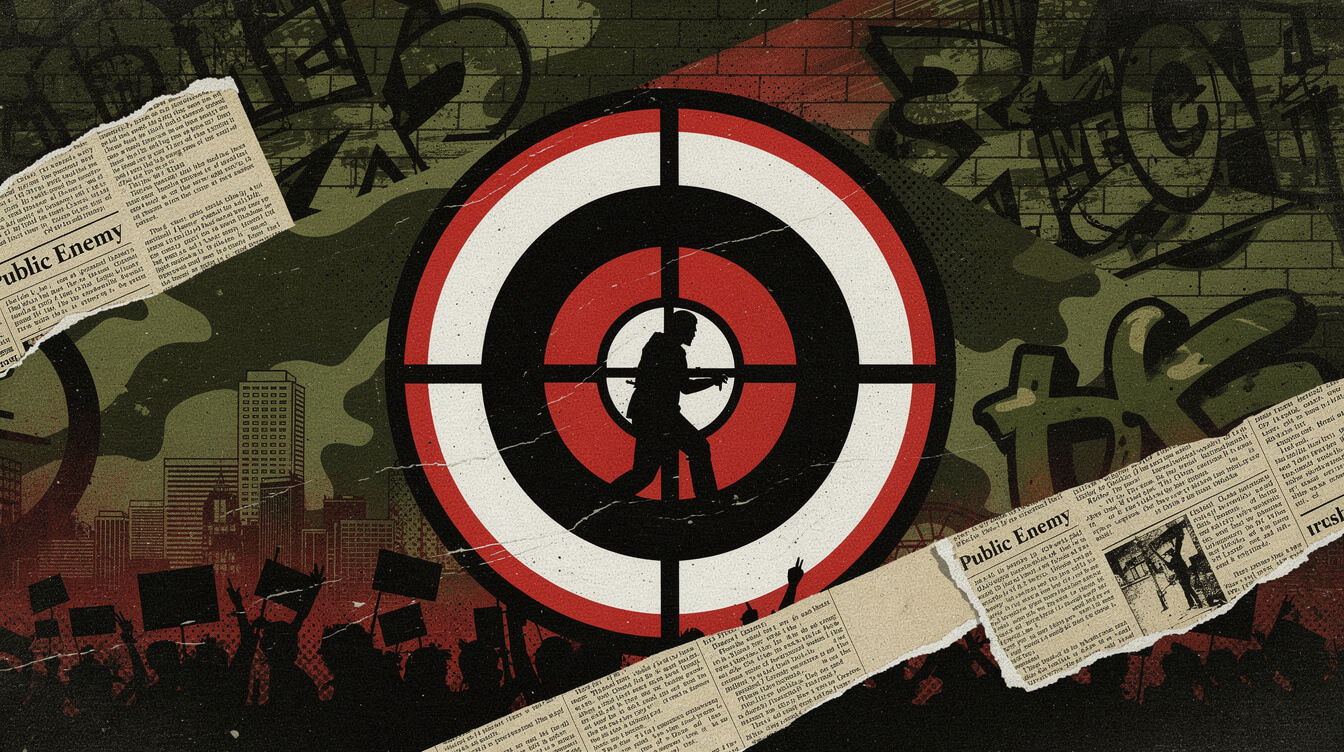
Chuck went to Adelphi University on Long Island’s south shore and studied graphic design. That’s not trivia — the target logo, the cover treatments for Yo! Bum Rush the Show and It Takes a Nation of Millions to Hold Us Back, the S1W’s uniformed staging, the entire visual identity that made PE feel like a movement instead of an act, all trace back to Chuck’s design training. At Adelphi he DJed the school radio station’s Super Spectrum Mix Hour alongside Hank Shocklee under the collective name Spectrum City, cutting demos and running block parties. One of those demos — “Public Enemy #1” — made its way to Def Jam co-founder Rick Rubin in 1986. Rubin chased Chuck for months. Chuck was 26, gainfully employed, and unconvinced rap could carry the political weight he wanted to put on it.
He signed anyway, in October 1986, on the condition that Public Enemy would not be a solo project. Everything that made the group functional as a system — the foil, the DJ, the spectacle, the Minister of Information, the production collective — got built out from that one non-negotiable. Chuck’s baritone (a booming, cadenced instrument he later credited to hollering across football fields at Roosevelt High) sat at the center of the arrangement, but the arrangement was the point. If you want a portrait of the man who architected all of this, our Chuck D graphic tee is the piece we designed for the head who understands that architecture; the target-logo aesthetic on the print is a direct nod to Adelphi-era Spectrum City.
Flavor Flav: The Hype Foil (Not the Sidekick)
William Jonathan Drayton Jr., born March 16, 1959, is the most misread member in the group. Two decades of reality television — Flavor of Love, Strange Love, VH1 celebrity roasts — flattened him into a cartoon. He is not a cartoon. He is the reason the ensemble works.
Chuck D has said, on the record, that Flav was mandatory. His baritone alone would have made Public Enemy monotonously severe — a sermon, not a song. Flav’s function was calibrated interruption: the yelped hook, the mid-verse call-out (“Yeah, boyee!”), the deliberately unhinged energy that let a track like “Fight the Power” or “Don’t Believe the Hype” land as protest and party at the same time. That’s not sidekick work. That’s structural. Take Flav out of “911 Is a Joke” — a song he leads, not backs — and the ambulance-response critique reads as a Chuck D lecture. Leave him in and it becomes the only political rap record that’s ever also been a comedy record.
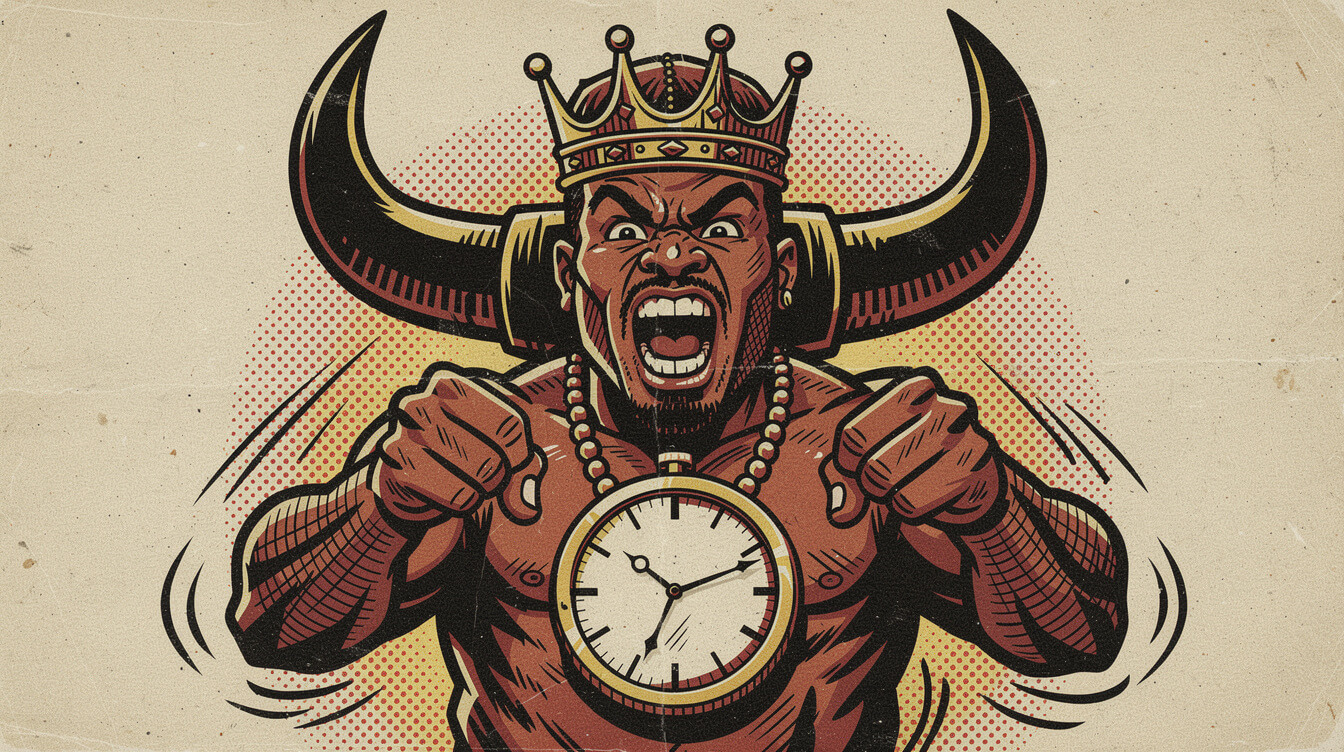
The clock and the viking horns and the crown weren’t costume. They were visual comic-punctuation, hung on a man who could actually play — Flav is a multi-instrumentalist, credited on drums, keys and bass on multiple PE records — and who was raised in a musical household in Roosevelt (yes, same block as Chuck; they knew each other before rap existed to them). Read the ensemble as a political-rap opera and Flav is the wise fool: the only character who’s allowed to say the thing the frontman can’t say without losing the room.
Terminator X, DJ Lord, and the Silent DJ Position
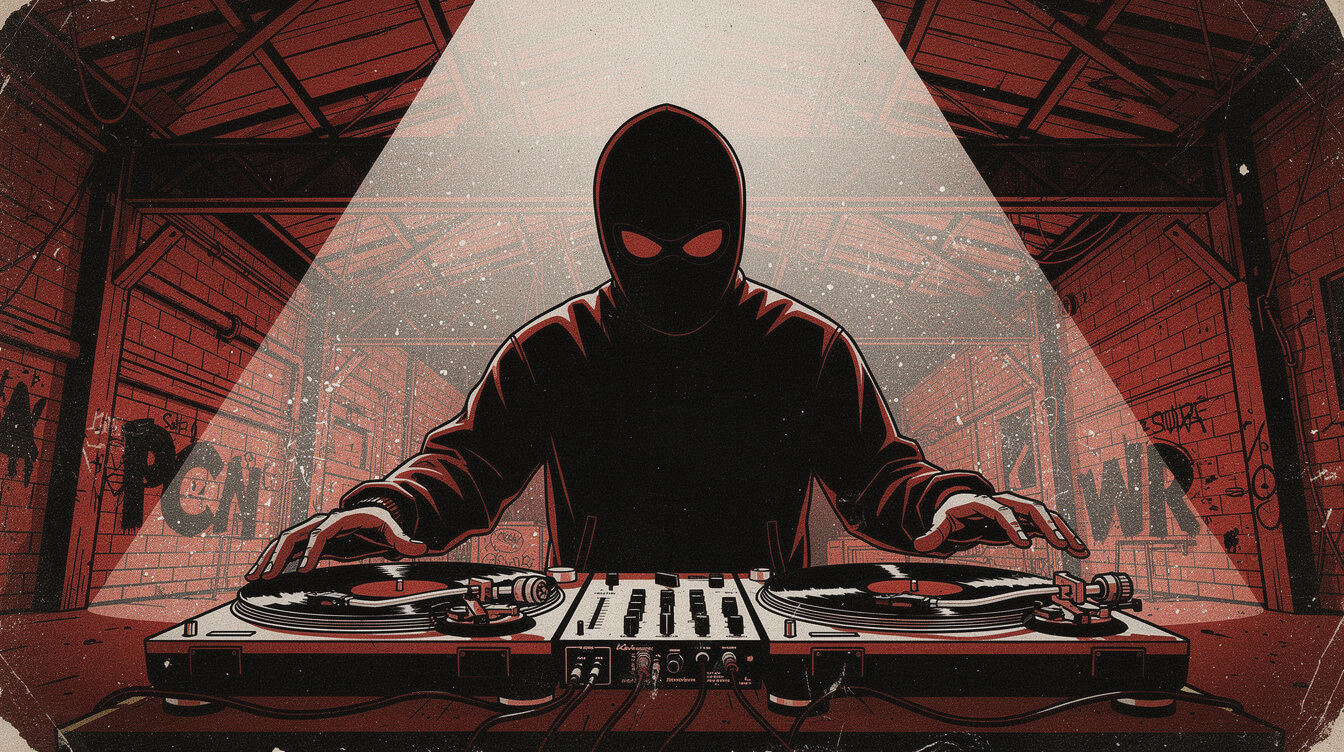
Norman Lee Rogers — Terminator X — was born August 25, 1966 in Long Island and joined PE in the group’s first year. His job description on the ensemble sheet was the strangest of any DJ in hip-hop: be silent. Not silent in the mix — his cuts, his signature transformer scratches, his “Terminator X to the edge of panic” name-drops are all over Nation of Millions and Fear of a Black Planet — but silent in interviews, silent on TV, silent in almost every promotional moment of the group’s peak run.
That silence was doctrine. Chuck D talked politics. Flav clowned. The DJ was the third rail: a masked, gaunt figure at the tables whose refusal to speak reinforced the idea that Public Enemy wasn’t a personality show, it was a unit with roles. When Terminator X did release a solo record — Terminator X & the Valley of the Jeep Beets in 1991 — the vocals were guest verses; his own voice never appears.
Terminator X quit in 1998 to run an ostrich farm in Vance County, North Carolina. That is not a joke and not an ending. It’s the most on-brand exit any DJ in hip-hop has ever made: the man who never spoke onstage retired to a field of ratites in the rural South, and PE’s tour DJ chair passed to Lord Aswod, better known as DJ Lord, who has held the spot from 1999 through every PE run and Prophets of Rage tour since. DJ Lord holds the position exactly the way the position was designed to be held — precise, name-checked, and silent-adjacent.
The S1W: Security of the First World as Political Spectacle
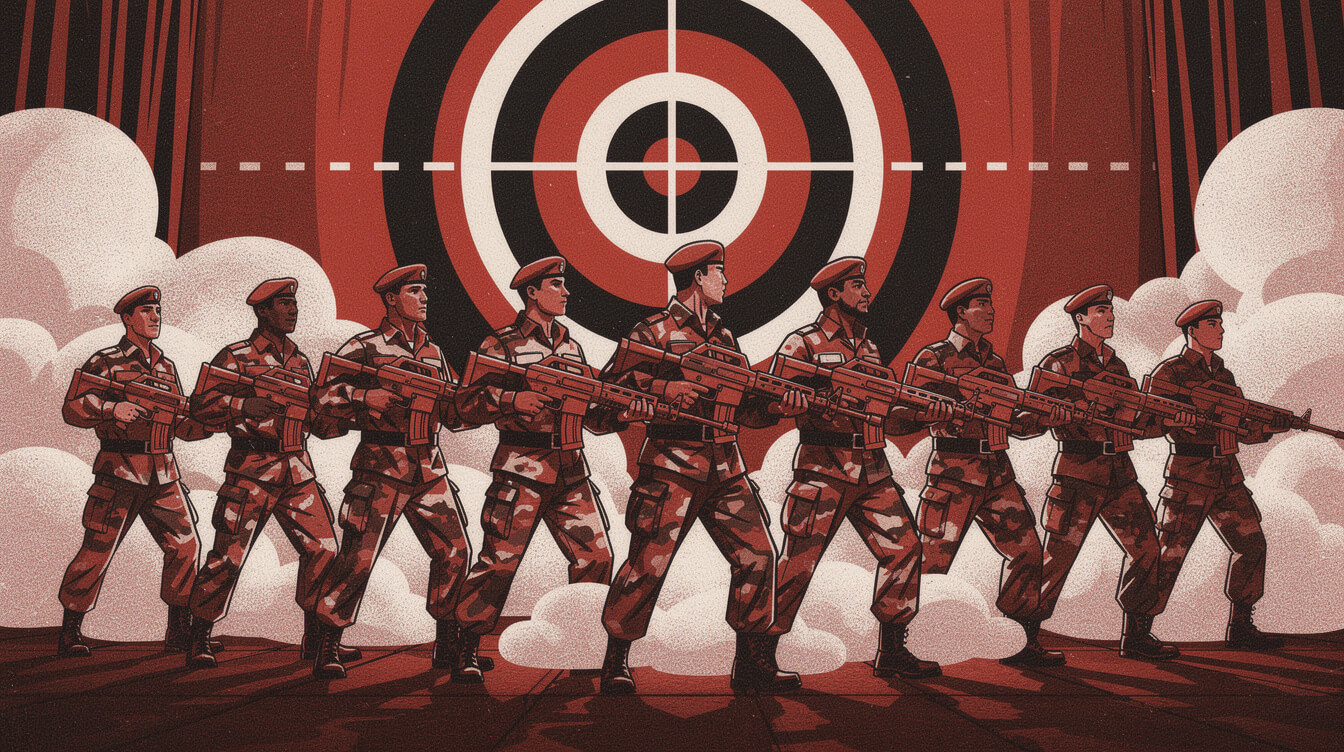
The four fatigued figures onstage in beret and camo, cradling replica Uzis and moving in choreographed formation behind Chuck and Flav, are the S1W — the Security of the First World. Line them up next to any other rap group’s dancers in 1988 and the difference is total. There are no dancers. There is a paramilitary drill team.
Names that count: James Bomb, Pop Diesel, James Norman and Chris Herald were the founding S1W, with Roger Chillous and others rotating in over the years. The concept was borrowed directly from the Nation of Islam’s Fruit of Islam — the security wing that provided suited, disciplined personal protection at Nation events — filtered through the theatrical politics of a Def Jam stage show. Chuck has repeatedly explained the choreography as intentional political spectacle: the S1W was designed to signal to a mostly white festival audience in 1988 that the Black men on this stage were not for their entertainment; they were a movement with security. It made suburbs nervous, which was the point.
Read the S1W next to the target logo, the black berets, and the group’s constant Malcolm-X-adjacent iconography and you get the whole visual thesis: hip-hop as continuous Black political theater, staged for an era before “protest art” was a genre. It is a straight throughline from PE’s S1W to the aesthetics of rap’s ongoing Malcolm X restaging — and, on the fashion side, to the block-by-block streetwear logic we mapped in our eighties hip-hop fashion guide.
Professor Griff: Minister of Information and the 1989 Rupture
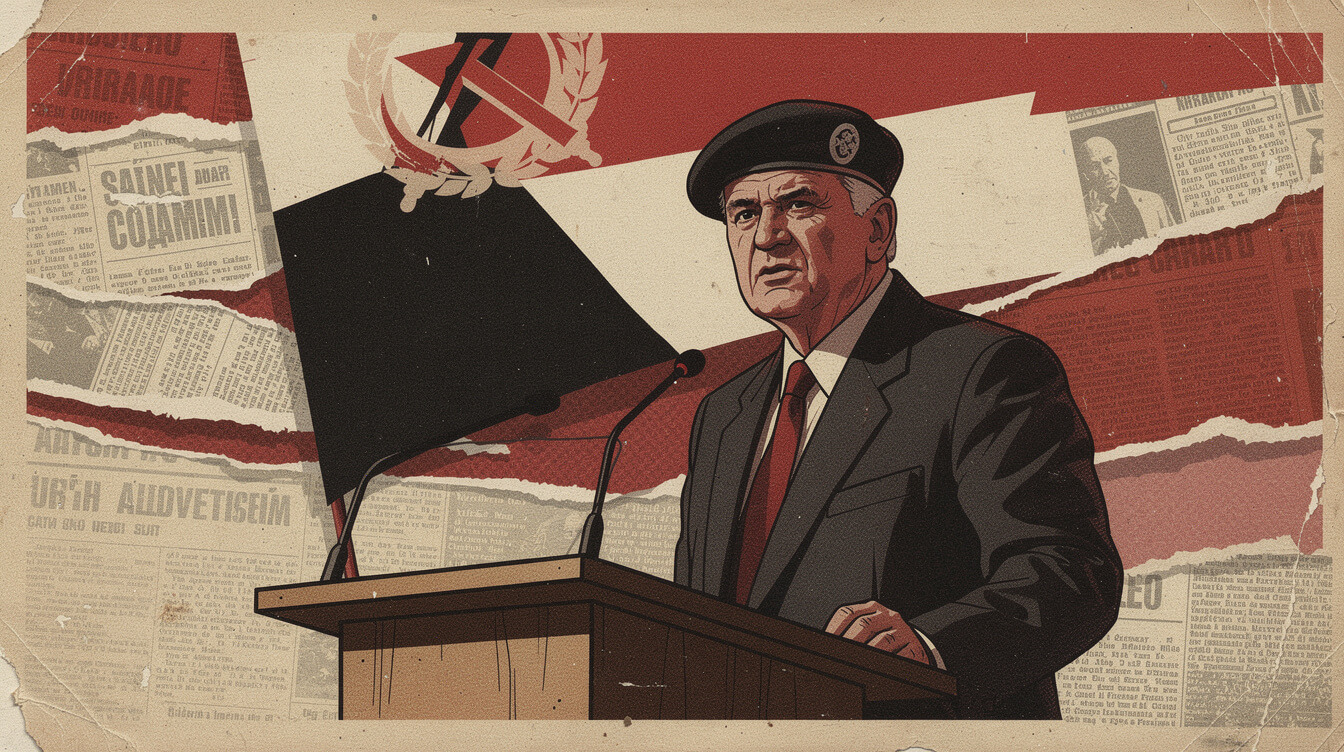
Richard Griffin was born August 1, 1960 (same day as Chuck; different year, different Long Island). He came into Public Enemy as the leader of the S1W and was formally titled Minister of Information — a role Chuck deliberately borrowed from the language of the Black Panther Party. On paper, Griff’s job was to speak to the press about the group’s political framework so Chuck could stay focused on the records. On the stage, he was the S1W’s commanding presence and a hype man in his own right.
In May 1989, Griff gave an interview to David Mills of the Washington Times in which he made a series of statements about Jewish people that were straightforwardly antisemitic. The fallout was immediate. Chuck D fired him. He then unfired him, then re-fired him, then eventually restructured his role into “Supreme Allied Chief of Community Relations” — a title that let PE keep him touring while distancing him from the media spokesperson chair. Griff himself later apologized in parts and doubled down in others; his own memoirs revisit the moment repeatedly.
You cannot write a serious guide to Public Enemy without naming what happened in 1989 and what it cost. It nearly ended the group. It changed how Def Jam handled political-rap press for the rest of the decade. It forced Chuck to write “Welcome to the Terrordome” — a song that tries, imperfectly, to metabolize the entire episode in real time. The Minister of Information seat has, by design, never been the same since. That’s the receipt.
The Bomb Squad: Hank Shocklee, Keith Shocklee, Eric Sadler, Chuck D
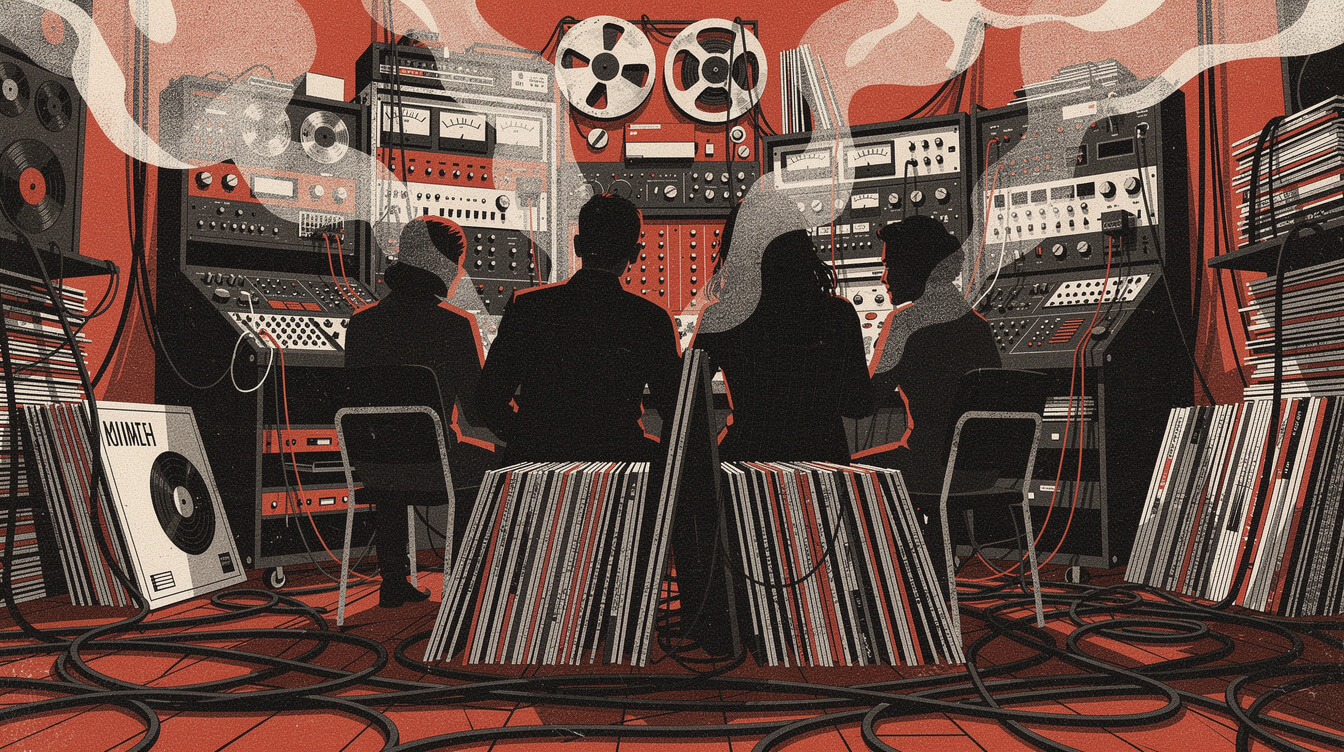
The last position on the ensemble sheet — and the one that produced the most-copied production template in hip-hop — is the Bomb Squad. Four names: Hank Shocklee (elder brother, Long Island Spectrum City co-founder, executive producer), Keith Shocklee (younger brother, Wildman engineer of the crate-dig), Eric “Vietnam” Sadler (musician, arranger, the man who made the noise resolve) and Chuck D himself, credited on production across the discography.
What the Bomb Squad did on It Takes a Nation of Millions to Hold Us Back (1988) and Fear of a Black Planet (1990) is impossible to overstate. Estimates from the credits and later Hank Shocklee interviews put the sample count on Nation of Millions at 200–300 across the album, and Fear of a Black Planet at 150+ per song on some tracks. That is not “beat-making.” That is dense, chaotic, layered political noise — sirens, saxophone shrieks, James Brown loops, JBs breaks, Slayer riffs, Otis Redding vocals, radio static, alarm bells — arranged so the dissonance itself becomes the political statement. The 1991 Grand Upright vs. Warner ruling (Biz Markie’s “Alone Again”) ended that production era in one court decision. Nobody can make Nation of Millions anymore, and the industry’s clearance economy is downstream of that closure.
The influence sheet is long. Rick Rubin cited the Bomb Squad as the reason he sold his stake in Def Jam and moved west. Dr. Dre has called Nation of Millions the record that made The Chronic possible (by force of opposition — Dre went minimal specifically because PE went maximal). The RZA has said Bomb Squad density is the entire reason Enter the 36 Chambers aimed low-fi instead of trying to match; you can hear the counter-response across the whole Straight Outta Compton era, our Fear of a Black Planet hoodie is the wearable receipt for the specific album where their density peaked.
Wearing the Politics: Nation of Millions on the Body
Public Enemy’s design language wasn’t decoration — it was doctrine. The target logo (Chuck D drew the first version on a napkin in 1986), the camo, the black-red-white palette, the S1W’s berets, the album cover for Nation of Millions with Chuck and Flav photographed behind bars: every visual choice reinforced the ensemble’s political thesis. Wearing a PE piece has always meant something specific — it’s the difference between wearing a band tee and wearing a stance.
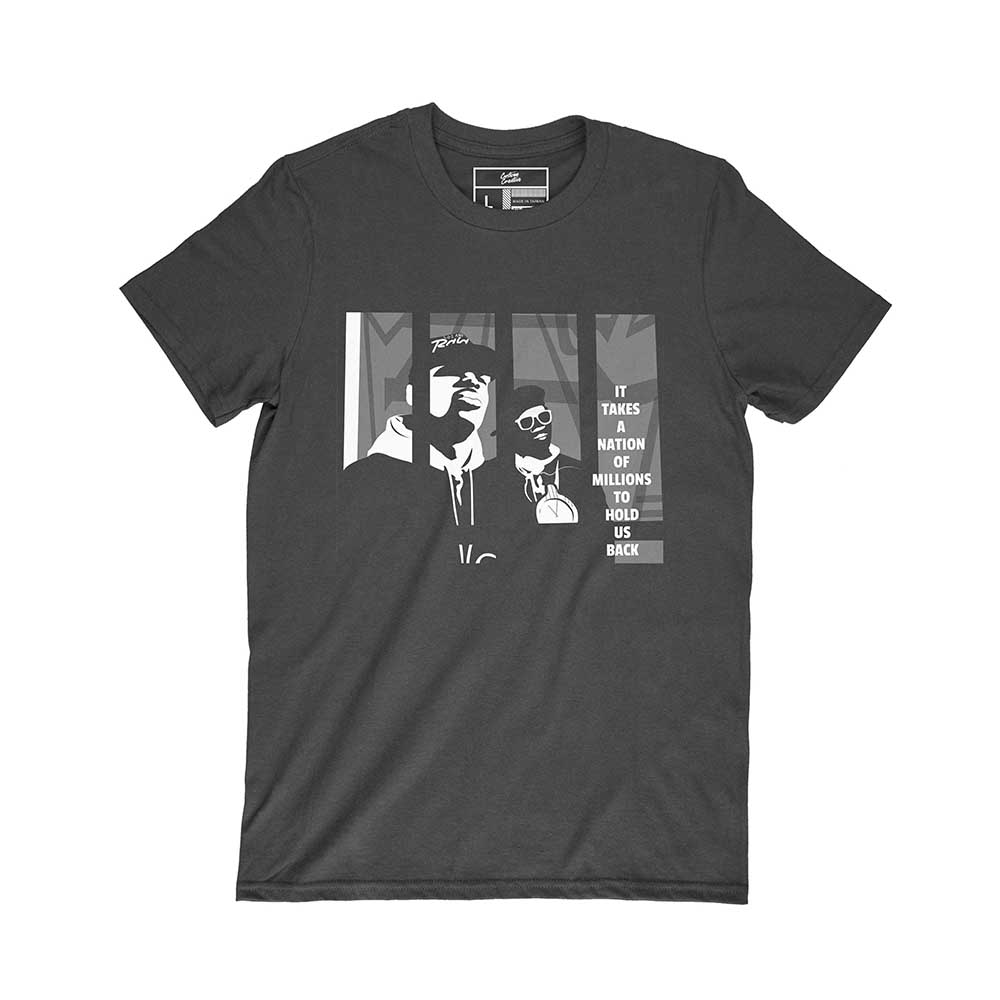
Nation of Millions Tribute Tee
The Bomb Squad’s magnum opus on a heavyweight black tee — target logo, camo cross-hatch, and cover-art callouts. Made for heads who know why 1988 still hits like it does.
Frequently Asked Questions About Public Enemy Members
How many members are in Public Enemy?
The core Public Enemy roster runs six positions: Chuck D (frontman), Flavor Flav (hype foil), Terminator X and later DJ Lord (turntables), Professor Griff (Minister of Information / S1W leader), the S1W collective (James Bomb, Pop Diesel, James Norman, Chris Herald and rotating members), and the Bomb Squad production collective (Hank Shocklee, Keith Shocklee, Eric Sadler and Chuck D himself). Counting individual bodies rather than positions, Public Enemy has fielded 10–12 credited members across its 1986–present run.
Who is the leader of Public Enemy?
Chuck D. He signed the group to Def Jam in October 1986, wrote or co-wrote every major single, designed the visual identity, and built the ensemble structure that gave every other member their role. Flavor Flav is the co-frontman and public face on TV, but the group’s political architecture — S1W, Minister of Information seat, silent-DJ doctrine, Bomb Squad production — is Chuck’s design.
Is Terminator X still in Public Enemy?
No. Terminator X retired in 1998 to run an ostrich farm in Vance County, North Carolina. DJ Lord has held the group’s live turntable position since 1999. Terminator X’s studio catalog with PE is his enduring credit; DJ Lord has co-produced newer material and toured every PE and Prophets of Rage run since taking the chair.
What happened to Professor Griff?
Griff was fired by Chuck D in June 1989 following the David Mills Washington Times interview in which he made antisemitic statements. He was later reinstated in a restructured role — Supreme Allied Chief of Community Relations — that kept him touring with the S1W but removed him from group press-spokesperson duties. He has appeared on and off PE releases since, and his own memoir Analytixz revisits the episode at length.
What is the Bomb Squad?
The Bomb Squad is the production collective behind PE’s first four albums. Hank Shocklee (Chuck D’s Spectrum City partner from Adelphi University), Keith Shocklee, Eric “Vietnam” Sadler and Chuck D himself made up the core lineup. Their signature is sample-density: 200–300 sources per album, sirens and saxophone shrieks layered against James Brown loops, and dissonance treated as political statement. It Takes a Nation of Millions to Hold Us Back (1988) and Fear of a Black Planet (1990) are the peak Bomb Squad records; the 1991 Grand Upright v. Warner ruling ended the sample-economy era they operated in.
Are Public Enemy still together?
Yes. Chuck D, Flavor Flav, Professor Griff, DJ Lord and members of the S1W continue to tour and record. The group’s 2020 album What You Gonna Do When the Grid Goes Down? was their first Def Jam release in 21 years. In 2020 Chuck also famously “fired” Flav publicly over a political disagreement — and unfired him days later, in a moment that read like a nod to the 1989 Griff cycle. As of 2026 Public Enemy is a working touring act, forty years into its Def Jam signing.
The Ensemble That Rewrote the Job Description
Six positions. One machine. Every rap group that has come after Public Enemy — from Wu-Tang’s nine-headed collective to Odd Future’s crew architecture to Griselda’s three-man block — is downstream of the idea that a rap group could be a system rather than a solo act with a hype man. Chuck D built the org chart. Flav made it human. Terminator X kept it disciplined. The S1W made it visible. Griff made it dangerous. The Bomb Squad made it loud enough to hear over the news cycle it was arguing with.
Read the members as an ensemble, not a roster, and Public Enemy stops being “a rap group with a lot of guys” and starts being what it always was: the first — and still the most functionally realized — piece of political theater rap ever built. Every list-post you’ll find on the SERP misses that. Now you don’t.
Hip-Hop Culture, In Your Inbox
Deep dives on the artists, albums, and moments that built the culture — delivered when it counts, never overloaded. Same energy as this piece.

🎧 Never Miss a Drop
Exclusive product releases, hip-hop deep dives, and member-only discounts. Straight to your inbox.
Free forever. No spam. Unsubscribe anytime.
Get the Culture, Delivered
Deep dives into hip-hop history, exclusive product drops, and discounts sent straight to your inbox. No spam, just culture.
Join 2,000+ hip-hop heads already in the loop. Unsubscribe anytime.