Jill Scott’s ‘Golden’ at 22: Neo-Soul’s Freedom Anthem Explained
June 15, 2004. A summer Tuesday. Hidden Beach Recordings drops the lead single from Jill Scott’s second studio album, and within the first eight bars — the horns, the swing, the way she leans into that opening line — “Golden” announces itself as the freedom anthem neo-soul had been waiting for. Twenty-two years later, the Golden song by Jill Scott is still the record that shows up in wedding playlists, protest speeches, TikTok freedom clips, and every gaming session that ever landed on Vibe 98.8 in GTA IV. This is the deep read on why it hits, why it lasts, and why Wikipedia’s 1,195-word article on it is a cultural crime.
We’re going to walk through the release, the lyrics, the production credits nobody talks about, the chart story, the sync-licensing second life, and where “Golden” sits inside Jill Scott’s catalog — the entry point that turned a Philadelphia poet-slash-vocalist into a household name. If you’ve been a Jilly from Philly head since Words and Sounds Vol. 1, some of this will be familiar. If you got here from a TikTok scroll and now you’re trying to understand what the shelf line means, you’re in the right place.
1. The 2004 Release: Beautifully Human Dropped and Golden Led the Charge
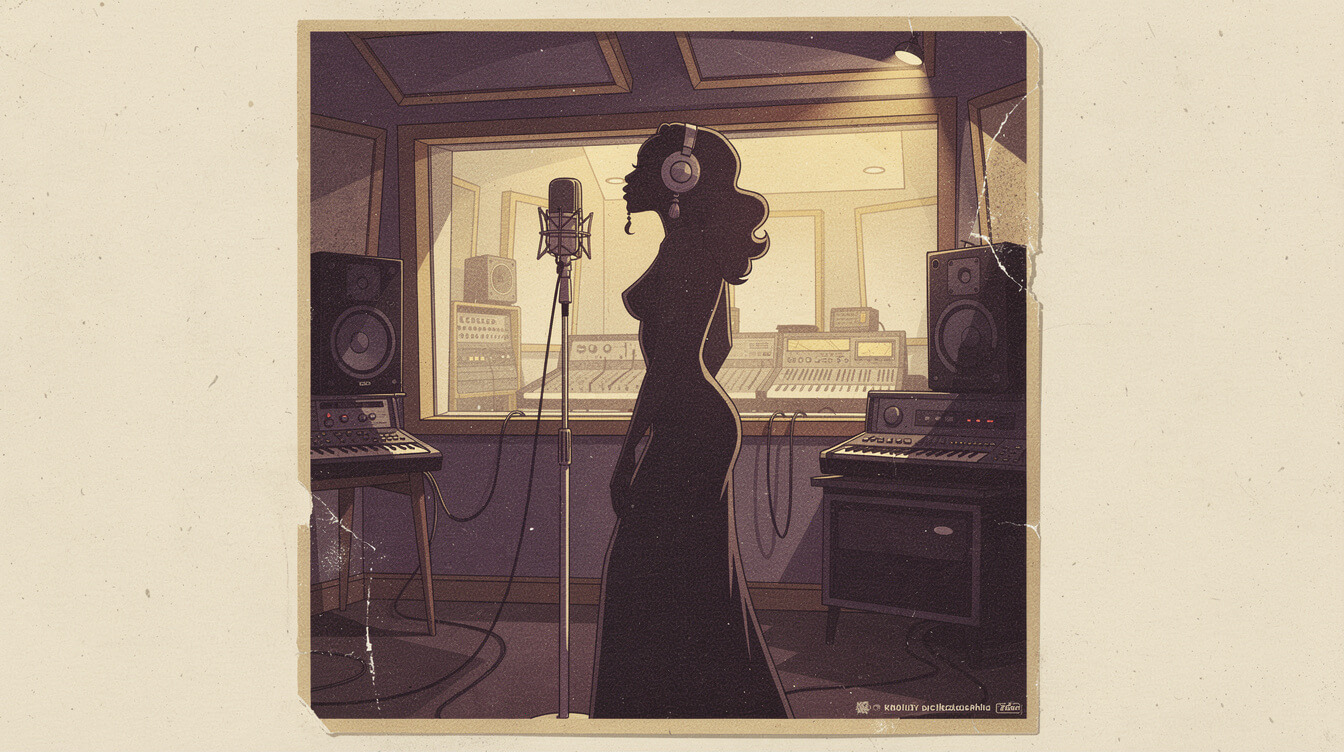
To understand “Golden,” rewind four years. Jill Scott’s 2000 debut, Who Is Jill Scott? Words and Sounds Vol. 1, sold two million copies on the back of “A Long Walk,” “He Loves Me (Lyzel in E Flat),” and “The Way” — but it did so as a slow-burn. Neo-soul was mid-cycle. Erykah Badu had dropped Mama’s Gun. D’Angelo’s Voodoo was still echoing. Musiq Soulchild had emerged from the same Philly water. Jilly stood out because she wasn’t just singing — she was reciting. The album was Words and Sounds, in that order.
Between the debut and the follow-up, Jill did what neo-soul artists did in that era: she went on the road, recorded a 2001 live album (Experience: Jill Scott 826+), showed up in The Cosby Show: A Different World spiritual descendants, and let her audience marinate. Four years between studio albums is death for pop artists. For a neo-soul poet with a live-band catalog and a devoted grown-folks audience, it was patience.
Then, on June 15, 2004, “Golden” dropped as a single. The album — Beautifully Human: Words and Sounds Vol. 2 — followed on August 31, 2004, on Hidden Beach Recordings. Recorded 2002 through 2004, the sessions moved across the deepest studios in Philadelphia: Sigma Sound (the room where Gamble & Huff built The Sound of Philadelphia), Axis, A Touch of Jazz (DJ Jazzy Jeff’s home base), and Home Cookin’. This was not an album made in Los Angeles or Atlanta or with the Neptunes at the board. This was a Philly album, made by Philly people, with Philly bones.
“Golden” was the flare gun. It said: we’re back, and we’re not chasing the radio.
2. The Lyrics Decoded: “I’m Taking My Freedom, Pulling It Off the Shelf”

The opening couplet is the whole song. “I’m taking my freedom, pulling it off the shelf / Putting it on my chain, wear it around my neck.” Six lines in and Jill has already given you the entire thesis: freedom is a thing you can pick up. It’s been sitting there. Nobody was going to hand it to you. You have to reach.
The shelf image is what makes it hit. Freedom isn’t described as an abstraction or a birthright. It’s an object. Something that fits in your pocket. Something you can wear like a chain. Something you can carry on a walk. In the second verse, she extends the metaphor: “I’m taking my freedom, putting it in my car / Wherever I choose to go, it will take me far.” Freedom becomes portable, functional, everyday. Not a mountaintop — a set of keys.
Context matters here. In 2004, Jill Scott was navigating what every neo-soul artist of her cohort was navigating: label politics, radio’s growing indifference to grown-folks R&B, and the tension between artistic patience and industry impatience. Hidden Beach was an independent joint-venture with Epic, and “Golden” reads, in part, as an artist’s declaration to herself about what freedom looks like when the machine is trying to define it for you. You take it. You put it on. You go.
But the lyric works because it’s not confessional. Jill wrote it — with longtime collaborator Anthony Bell — as a portable anthem. Anyone can put it on. Somebody just got out of a marriage. Somebody just quit a job that was eating them. Somebody just registered to vote. Somebody just left their parents’ house. Somebody just filed the paperwork on the business. Somebody just decided. That’s the song’s structural genius: the object metaphor lets a listener load it up with whatever freedom they need at that moment. It’s a lyric that ages by absorbing new context, not by aging out.
The pre-chorus — “I’m holding on to my freedom” — is the emotional turn. Everything before it is action. The pre-chorus is the reason. Freedom, once picked up, is worth clutching. And the chorus payoff — the horns arriving under “living my life like it’s golden” — is where the philosophy becomes lifestyle. “Golden” the lyric becomes Golden the frame. A way of moving through the world.
This is not a triumph song. It’s a declaration of intent. Twenty-two years later, that distinction is why it lasts.
3. The Production: Anthony “Ant” Bell, Sigma Sound, and the Philadelphia Horn Line
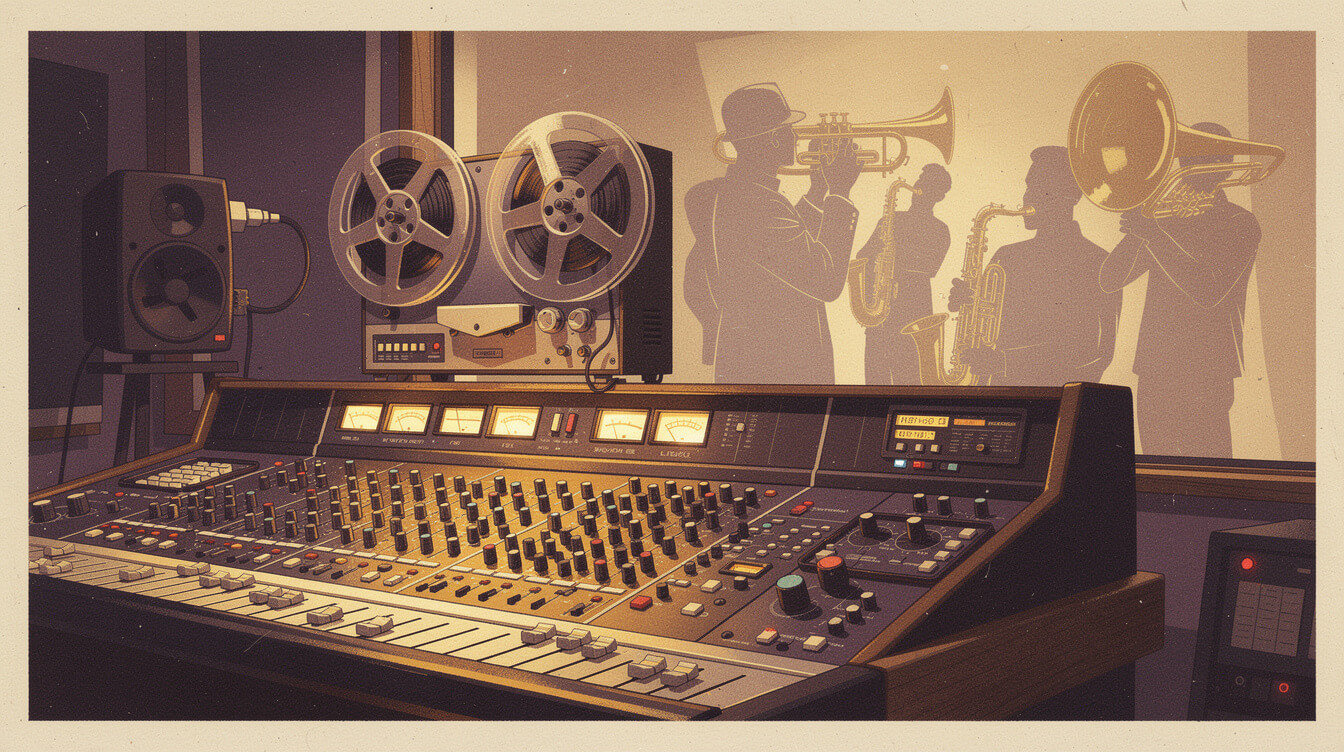
Here’s the credit nobody prints: “Golden” was produced by Anthony “Ant” Bell, who also co-wrote the song with Jill. Bell is a Philadelphia lifer, a producer/keyboardist whose fingerprints show up across the Jill Scott catalog and the broader Philly neo-soul stable. He’s not a name you’ll see on a Rolling Stone list. He should be.
What Bell built for “Golden” is a live-band record dressed as a pop single. The bass line walks. The drums are pocket-first — no digital snap, no Timbaland stutter. The rhythm guitar sits back. And then the horns. The brass arrangement — the four-note figure that answers Jill’s “living my life like it’s golden” — is straight out of the Gamble & Huff / MFSB / TSOP playbook. This is Philadelphia International DNA, filtered through a 2004 neo-soul sensibility. It’s warm the way analog is warm. It swings the way live musicians swing.
The choice to record at Sigma Sound Studios and the other Philly rooms wasn’t a nostalgia move — it was a fidelity move. Sigma is the studio where “Love Train” was cut, where “Me and Mrs. Jones” was cut, where a hundred Philly soul records were tracked in the seventies. Booking that room in 2004 signaled Jill’s alignment with a specific lineage. She wasn’t chasing what R&B was becoming (Ashanti’s Murder Inc. sound, Ciara’s crunk-and-B, Beyoncé’s early solo years). She was taking the sound of Philadelphia’s grown-and-sexy tradition and updating it for a generation of listeners raised on both De La Soul and Anita Baker.
The broader Beautifully Human credits back this up. James Poyser — The Roots’ pianist, Soulquarian co-conspirator, and a key architect of D’Angelo’s Voodoo — produced tracks. Andre Harris and Vidal Davis (Dre & Vidal, later Grammy-winning producers for Justin Timberlake and Musiq Soulchild) worked the boards. Carvin Haggins and Ivan Barias — the Carvin & Ivan team that shaped Musiq Soulchild’s earliest hits — were in the room. Raphael Saadiq contributed. Every producer on the album has a direct or one-degree tie to either the Philadelphia International lineage, the Soulquarians orbit, or the Roots’ Illadelph Halflife studio network.
This is why “Golden” sounds nothing like 2004 mainstream R&B. It was intentionally out of step with the moment. That’s the exact quality that let it survive every moment since.
4. Chart History: The Slow-Burn Adult R&B Evergreen
“Golden” was never a top-ten smash. That’s the point. On the US Hot R&B/Hip-Hop Songs chart, it peaked at #31. On the UK Singles chart, it climbed to #59. It cracked #10 on the UK Hip-Hop and R&B chart. Numbers that would look like disappointment for a 50 Cent single in 2004. Not the same measuring stick for a Jill Scott record.
What “Golden” did instead was live on Adult R&B radio — the format that catches the grown-folks demographic that pop radio ignores. WHUR in D.C. Kiss FM in New York. WVAZ in Chicago. Stations that played Jill next to Anita Baker, Maxwell, Musiq, Anthony Hamilton, Angie Stone. In that context, “Golden” was heavy rotation for years, not weeks. Adult R&B rotation isn’t Billboard, but it’s what sold albums. It’s what sold tickets. It’s what pays a poet’s mortgage.
Beautifully Human itself debuted at #3 on the Billboard 200 in September 2004 and earned Platinum certification from the RIAA. That’s not a chart flop dragging an album — that’s a lead single doing its job the neo-soul way, quietly and permanently. “Golden” was never designed to be a #1. It was designed to be a #1 in your car for the next twenty years.
The 12″ promo pressings tell the same story: four different mixes were serviced to DJs — the Original West Coast Mix, an East Coast 107 Mix, an Instrumental, and an A Cappella. The UK release added Wookie’s Sunshine Vocal Mix, a Jazmin Mix, and a Blackbeard Remix. This was a record built for the club, the barber shop, the mixtape, and the summer cookout — all before Spotify existed. That’s how you get a song into the culture in 2004: physical formats, radio patience, sync placement.
5. Why Golden Resurfaces Every Few Years — The Freedom Anthem’s Second-Life Cycles
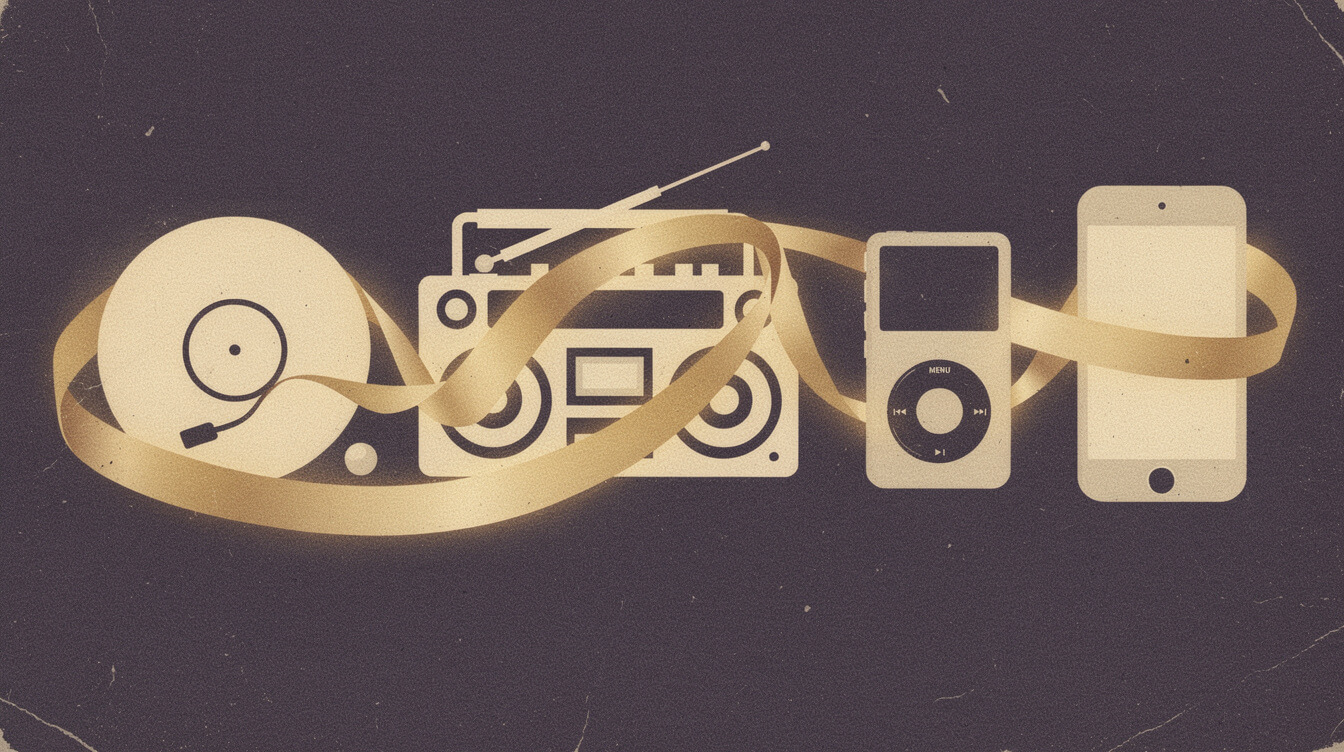
Here’s the pattern anybody who’s paid attention has clocked: “Golden” doesn’t stay away. Every five to eight years, it comes back around, plugged into whatever cultural moment needs a freedom anthem that isn’t screaming. Watch the cycles.
2004–2005 — The initial run. Album promo, Adult R&B rotation, tour dates, the earliest sync placement in Queen Latifah’s Beauty Shop (2005). The song establishes itself as a Jill Scott essential.
2008 — The GTA IV moment. Rockstar Games includes “Golden” on Vibe 98.8, the in-game R&B radio station in Grand Theft Auto IV. This is a bigger cultural drop than people credit. Millions of Gen X and Millennial gamers — many of whom had never bought a Jill Scott record — spent hundreds of hours listening to Vibe 98.8 while driving virtual Liberty City streets. “Golden” got a second wave of ears from a completely different demo. Nostalgic thirty-somethings will tell you they first heard the song in a video game.
2009 — The Obsessed sync. Beyoncé’s Steve Shill thriller Obsessed uses “Golden” in the soundtrack, extending the reach.
2012–2016 — Black joy playlists. The Obama years produced a wave of “Black joy” curated playlists — from magazines, editors, DJs, Solange, Issa Rae. “Golden” was a foundation cut on nearly every one. If you built a Black joy mix and left “Golden” off, you got called out in the comments.
2015–2020 — Movement soundtrack. Black Lives Matter marches, protest livestreams, and organizer playlists pull “Golden” back in. The freedom lyric hits differently when you’re playing it on a portable speaker at a rally. “I’m taking my freedom” starts reading less as personal declaration and more as collective one.
2019 — What Men Want sync. Taraji P. Henson’s rom-com uses the song in-scene. Sync fees continue to pay the annuity.
2020 — TikTok freedom clips. A generation of listeners who weren’t alive in 2004 discover the song via TikTok trends where users pair the chorus with graduation clips, quit-your-job announcements, and post-breakup glow-ups. The lyric absorbs 2020’s specific meaning: freedom from lockdown, freedom from a job that no longer served, freedom from a relationship that outstayed its welcome.
2023–2026 — The neo-soul nostalgia cycle. Millennials in their 30s and 40s hit the age where they curate playlists for their kids, their partners, their in-laws. Jill Scott’s catalog gets pulled forward. New R&B artists — Snoh Aalegra, H.E.R., Ari Lennox, Cleo Sol — cite Jill as an influence on interviews. “Golden” shows up on every “if you love H.E.R., go back to Jill Scott” listener funnel. Same shelf, same freedom, new hand reaching.
What every cycle has in common: the lyric is empty enough to hold new context, specific enough to still mean something. That’s a rare structural achievement in songwriting. It’s why “Golden” is closer to “Lean on Me” or “A Change Is Gonna Come” than to a 2004 pop hit. It’s evergreen because it was never trying to be a hit in the first place.
6. Where Golden Sits in Jill Scott’s Catalog: The Essential Entry Point
If a friend asks you for a Jill Scott starter pack, this is the sequence: “A Long Walk” (the 2000 debut single, still her signature record), “He Loves Me (Lyzel in E Flat)” (the 2000 live version that shows why she’s a poet first), “The Way” (2000 — the wedding-song evergreen), “Golden” (2004 — the freedom anthem), “Cross My Mind” (2005 — the slow-jam masterclass), “Hate on Me” (2007 — the swagger cut), and “So in Love” featuring Anthony Hamilton (2011 — the duet you play at the anniversary party).
Inside that sequence, “Golden” plays a specific role. It’s the pivot single — the record that took Jill from a beloved neo-soul insider to a household name whose songs got sync-licensed for the next twenty years. “A Long Walk” made the diehards. “Golden” made the crossover. Not because it went pop (it didn’t), but because its sync footprint and its lyrical shape gave it access to audiences that never touched her albums directly.
It’s also the Jill Scott song most likely to survive her catalog — the one that ends up on retrospective compilations, on the induction night at the Rock & Roll Hall of Fame if the Songwriter Hall inducts her (which they should), on the piano at the tribute concert. It’s the one your kids will hear and know is the important one. If you’re building an essential Jill Scott song ranking, “Golden” is a top-three regardless of whose list you’re reading.
What’s easy to miss inside that story: “Golden” also cemented Jill as part of a specific era’s female-led neo-soul canon alongside Erykah Badu, Lauryn Hill (the Miseducation era), India.Arie, and Angie Stone. That canon is having a serious cultural moment right now. If you’ve followed the neo-soul aesthetic through the 90s and into 2004, our deep dive on the 90s hip-hop and neo-soul aesthetic among Black women artists reads like a companion piece to this one. And if you want to hear where the neo-soul + hip-hop bridge went, our 1998 OutKast Aquemini deep read covers the album that soundtracked the same audience just six years earlier.
7. Living in the Golden Vibe: Home Decor, Prints, and the Aesthetic of Freedom
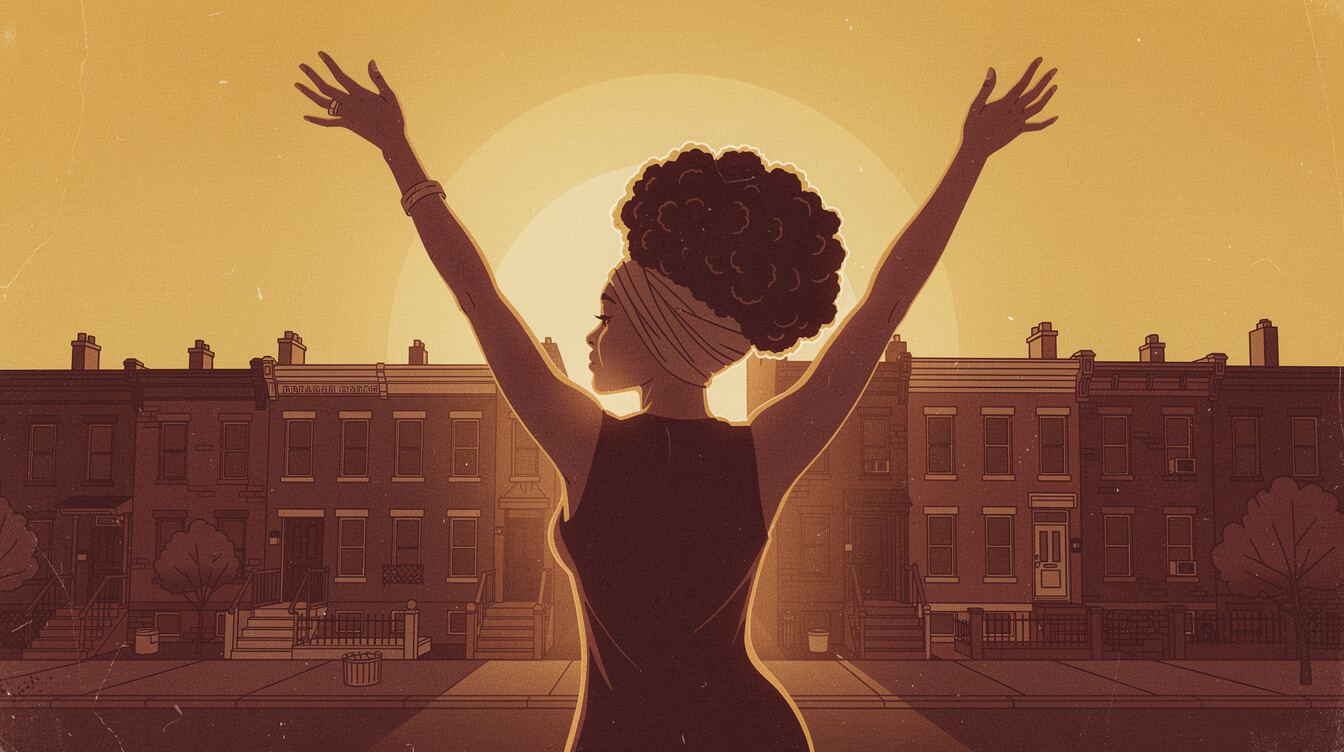
Here’s what nobody talks about — the “Golden” aesthetic. Honey warmth. Sunlit rooms. Vinyl on the shelf. Framed prints of Philly rowhouses. Brass horns as wall art. The song has an entire visual world that’s still shaping how neo-soul-era households furnish and decorate. If you’ve ever walked into a friend’s apartment and thought “this room feels like it’s playing Jill Scott” — that’s the Golden vibe. Warm palette, textured everything, room for the light to sit.
The lyric itself — “living my life like it’s golden” — has become one of those phrases people put on their walls. If you’re the kind of head who’s ever thought about turning a favorite lyric into a piece of framed wall art but stopped short of buying it as a mass-produced meme print, custom is the move. We make a custom SpectraGlass HD Print Panel that’s basically the neo-soul-poster upgrade — 4mm tempered glass, HD full-color print, museum-quality. Put “living my life like it’s golden” on it in a font you actually love. Frame a photo from your favorite Jilly show. Print an abstract in that honey-gold palette. Live in it.

Put “Living My Life Like It’s Golden” On Your Wall
Custom SpectraGlass HD Print Panel — 4mm tempered glass, museum-quality full-color print, arrives ready to display. Turn your favorite Jill Scott lyric, a photo from the show, or a neo-soul-era abstract into wall art that actually lasts.
And if you’re building out a female-led conscious rap and neo-soul apparel canon around the house, the Rapsody Laila’s Wisdom tee is the direct hip-hop-side cousin — Rapsody’s 2017 album is the album Jill Scott would’ve made if she’d rapped, and it’s the cleanest bridge in the current catalog.
8. Golden by Jill Scott: Frequently Asked Questions
What year did Jill Scott release Golden?
“Golden” was released as a single on June 15, 2004. It served as the lead single from her second studio album, Beautifully Human: Words and Sounds Vol. 2, which was released on August 31, 2004 via Hidden Beach Recordings.
What album is Golden by Jill Scott on?
“Golden” is the lead single from Jill Scott’s second studio album, Beautifully Human: Words and Sounds Vol. 2. The album debuted at #3 on the Billboard 200 and was certified Platinum by the RIAA. Follow-up singles from the album were “Whatever” (2005) and “Cross My Mind” (2005).
Who produced Golden by Jill Scott?
“Golden” was produced by Anthony “Ant” Bell, a longtime Jill Scott collaborator and Philadelphia-based producer. Bell also co-wrote the song with Jill Scott. The song was recorded at Philly studios including Sigma Sound (the historic home of the Philadelphia International Records / Gamble & Huff sound), during sessions that ran from 2002 to 2004.
What does the song Golden by Jill Scott mean?
“Golden” is a freedom anthem built around the metaphor of freedom as an object you can pick up, wear, and carry. The opening lines — “I’m taking my freedom, pulling it off the shelf / Putting it on my chain, wear it around my neck” — frame freedom as something available to anyone willing to reach for it. The song works as both personal declaration and collective anthem, which is why it resurfaces during every major cultural moment where “freedom” is at stake.
Did Golden by Jill Scott chart?
Yes, though not as a top-40 pop smash. “Golden” peaked at #31 on the US Hot R&B/Hip-Hop Songs chart, #10 on the UK Hip-Hop and R&B Singles chart, and #59 on the UK Singles chart. More importantly, it became a permanent Adult R&B radio staple in the US, played consistently for years after its release. The song has also had a long sync-licensing life: Beauty Shop (2005), Grand Theft Auto IV‘s Vibe 98.8 station (2008), Obsessed (2009), and What Men Want (2019).
What genre is Golden by Jill Scott?
“Golden” is a neo-soul record with deep Philadelphia soul and contemporary R&B DNA. The horn arrangement, live-band feel, and Sigma Sound recording pedigree tie it directly to the Philadelphia International lineage of Gamble & Huff. The song sits within the broader neo-soul canon of the early-to-mid 2000s, alongside Erykah Badu, Musiq Soulchild, D’Angelo, and Angie Stone.
Final Thoughts: The Anthem That Keeps Getting Younger
“Golden” turned twenty-two this summer. That number is a lie, because the song hasn’t aged. It’s collected new listeners the way the lyric collects new meanings — a shelf you keep reaching for, a chain you keep wearing. Wikipedia will tell you it peaked at #31 on the R&B chart, list the four remix mixes on the 12″, and move on. That reading misses the whole story. “Golden” is the neo-soul freedom anthem the format was building toward. It’s the record that took Jill Scott from Philly poet to household name. And it’s the song that will still be playing at Black joy playlists, protest cookouts, and TikTok graduation clips a decade from now, when the current cycle rolls into the next.
Living your life like it’s golden isn’t a lyric anymore. It’s a template. Reach for the freedom on your shelf. Put it in your pocket. Go.
Stay creative — The Custom Creative Team
The Culture, Delivered to Your Inbox
Hip-hop and neo-soul deep reads, artist retrospectives, and drops from the Custom Creative catalog — no fluff, no spam. Straight from the crew that lives the culture.

🎧 Never Miss a Drop
Exclusive product releases, hip-hop deep dives, and member-only discounts. Straight to your inbox.
Free forever. No spam. Unsubscribe anytime.
Get the Culture, Delivered
Deep dives into hip-hop history, exclusive product drops, and discounts sent straight to your inbox. No spam, just culture.
Join 2,000+ hip-hop heads already in the loop. Unsubscribe anytime.