They Reminisce Over You (T.R.O.Y.): The Story Behind Pete Rock & CL Smooth’s Eulogy Record
July 15, 1990. Indianapolis. Heavy D & the Boyz are on tour, and Trouble T-Roy — the group’s hype man, dancer, and the guy who made every show feel like a family reunion — falls from a hotel balcony and dies at 22. Two years later, his childhood friend Pete Rock takes that grief, a dusty jazz-funk loop, and a mic, and turns it into “They Reminisce Over You (T.R.O.Y.),” the record that’s still the first song a DJ reaches for when hip-hop loses somebody. This isn’t a lyrics-site rundown. This is the real story behind the sample, the verse, and the chart split that says everything about how rap mourned in 1992.
The Day Trouble T-Roy Died: How “They Reminisce Over You” Was Born

Troy Dixon — Trouble T-Roy — wasn’t a rapper. He was the guy who kept Heavy D & the Boyz’s live shows electric, the one dancing off the side of the stage while Heavy held the mic. He grew up in Mount Vernon, New York, the same few blocks that produced Pete Rock, CL Smooth, Al B. Sure!, and half of what became the Mt. Vernon soul-rap lineage. When T-Roy died on tour in Indianapolis in the summer of 1990, it wasn’t an abstract loss for Pete Rock — it was a friend from the block, gone at 22.
Pete Rock didn’t write a tribute right away. It took until 1992, when he and CL Smooth were assembling Mecca and the Soul Brother, for the grief to find its shape. He built the track around a loop that felt less like a beat and more like a held breath, and CL Smooth wrote a verse that never mentions T-Roy by name in its opening bars — it just sits in the feeling of losing someone before you’re ready to. That’s the whole trick of the record: it’s a eulogy that never announces itself as one until the hook lands.
Mount Vernon in the late ’80s wasn’t just a suburb north of the Bronx — it was a genuine talent incubator, tight enough that everybody in the extended crew knew everybody else. Heavy D, Pete Rock, CL Smooth, and T-Roy all moved through the same circles before any of them had a record deal. When Heavy D & the Boyz started touring behind Big Tyme, T-Roy wasn’t a hired hand — he was family on the road, the guy whose energy set the tone backstage. His death didn’t just take a friend from Pete Rock; it took a piece of the crew’s foundation, and that’s the weight the whole Mecca and the Soul Brother sessions were made under.
Anatomy of the Sample: How Pete Rock Flipped Tom Scott’s “Today”

The loop underneath T.R.O.Y. comes from Tom Scott and the California Dreamers’ 1967 cut “Today,” off the album Honeysuckle Breeze — a soft, string-and-horn-laced piece of late-’60s West Coast jazz that most rap listeners had never touched and never would have found on their own. That’s the Pete Rock signature: not flipping the obvious break everybody’s already looted, but digging into orchestral, string-heavy soul-jazz where nobody else was looking and finding the two bars that could carry a whole record’s emotional weight.
What makes the flip work isn’t just the source — it’s the restraint. Pete Rock doesn’t chop it into something busy or triumphant. He lets it breathe, keeps the drums soft, and layers a mournful horn stab on top that functions almost like a vocal ad-lib, answering CL’s bars the way a choir answers a preacher. It’s the blueprint for what “sample as emotional architecture” means in hip-hop production — the loop isn’t decoration, it’s the mood the whole song lives inside.
Pete Rock built his reputation on an SP-1200 and a crate-digging habit that went deeper than almost anyone working at the time — jazz breaks, obscure soul 45s, orchestral film scores, records most New York producers weren’t even flipping through. That’s why T.R.O.Y. doesn’t sound like anything else from 1992: it isn’t built on a break everybody already recognized from a decade of other records looting it. It’s built on a record so far outside rap’s usual sample pool that the loop itself became the discovery, not just the drums underneath it. That approach — find the emotion in the crate before you find the drums — is the thing later producers point to when they call Pete Rock one of the most important sample architects of the era, not just a hitmaker.
CL Smooth’s Verse as Elegy

CL Smooth was never the most technically flashy MC of his era, but on T.R.O.Y. his plainspoken, conversational flow is exactly the right tool. He doesn’t rap at the loss — he narrates through it, moving from block-level memories to abstract reflections on mortality without ever losing the thread of who this is actually about. The verse structure mirrors how grief actually moves: specific, then hazy, then specific again, circling back to the same unresolved ache.
What elevates it from a well-written verse to hip-hop’s go-to eulogy record is that CL never makes T-Roy’s death about performance. There’s no bravado, no flexing, none of the era’s usual posturing — just a guy from the neighborhood trying to put a friend’s memory into words that will outlast the moment. That’s why DJs still play it at memorials three decades later: it doesn’t ask the room to feel a certain way. It just tells the truth and lets the room feel what it feels.
Listen to how the verse moves and you notice CL never rushes toward the emotional payoff. He builds in specific, grounded memories — block-level detail, the texture of actual lived friendship — before he lets the verse widen into anything close to a universal statement about loss. That’s a harder needle to thread than it looks. A lot of tribute writing either stays too zoomed-in (a private eulogy nobody outside the friend group can connect to) or too zoomed-out (generic platitudes about loss that could apply to anyone). CL’s verse holds both at once, which is exactly why strangers who never met Trouble T-Roy still feel like they know something real about him after one listen.
“They Reminisce Over You” Hit #1 on Hot Rap Tracks — But Stalled on the Hot 100

T.R.O.Y. topped Billboard‘s Hot Rap Tracks chart but only climbed to #58 on the Hot 100 — a split that tells you everything about how hip-hop’s internal canon and the mainstream charts were operating on two different clocks in 1992. Inside the culture, the record was instantly recognized as something bigger than a single: it was a community text, the song that soundtracked cookouts, corner hangs, and eventually funerals, regardless of what pop radio decided to do with it.
That gap between rap-chart dominance and Hot 100 modesty is the story of golden-age hip-hop generally — the genre’s most emotionally significant records rarely translated one-to-one into crossover numbers, because the audience that mattered most for a record like this wasn’t reading Billboard. It was the block. If you’re building out your own tribute to the era, our Pete Rock & CL Smooth Mecca and the Soul Brother T-Shirt puts the actual album this record lives on right on your chest — no crossover translation needed.
It’s also worth remembering what T.R.O.Y. was competing against on the Hot 100 in 1992 — an era dominated by pop, R&B crossover, and a handful of hip-hop records that had already found a radio-friendly formula. T.R.O.Y. wasn’t built for that lane. It’s a mid-tempo, sample-driven meditation on grief with no hook built for a chorus singalong and no attempt at a crossover verse. Its Hot Rap Tracks #1 run is the more honest scoreboard — it tells you the record was recognized as essential by the audience that actually shaped hip-hop’s canon in real time, radio’s crossover math notwithstanding.
The Blueprint for Every Hip-Hop Tribute Record Since
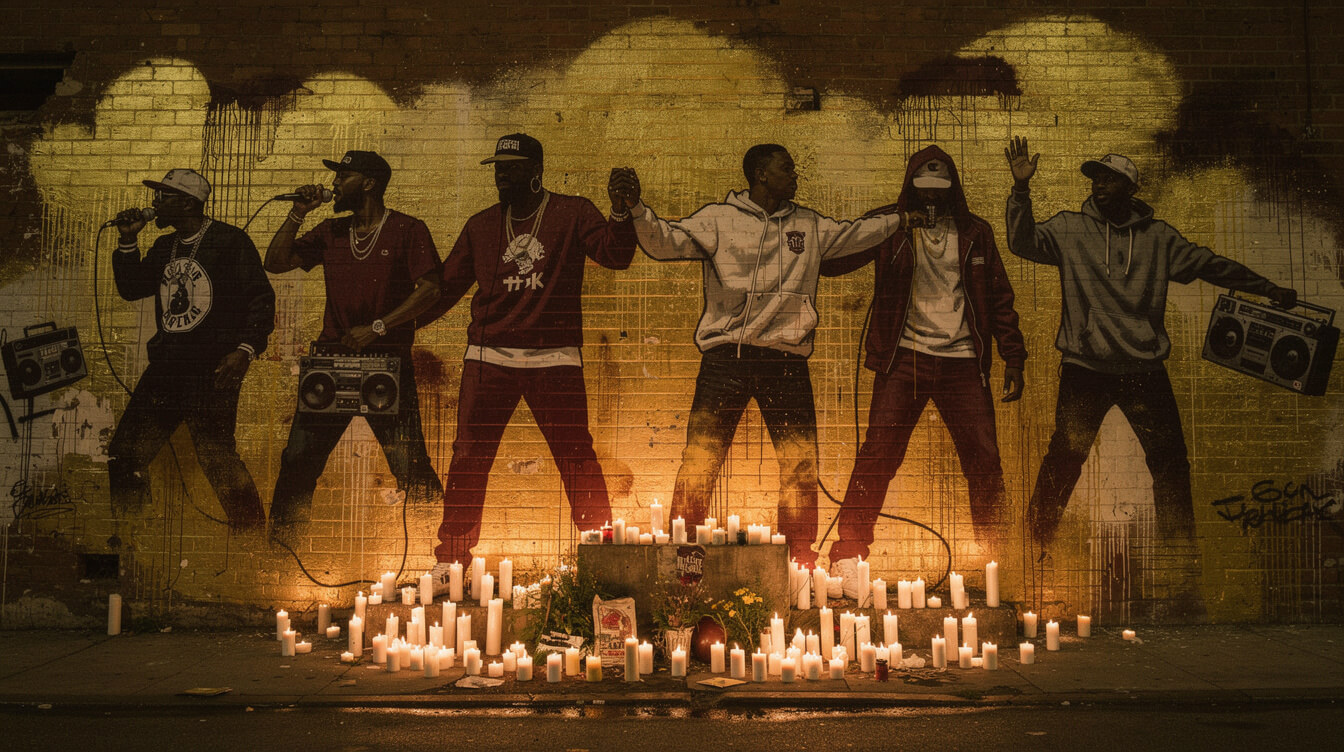
Every hip-hop tribute record that landed after 1992 is, in some way, in conversation with T.R.O.Y. — whether the artist making it knows it or not. The Notorious B.I.G.’s posthumous tributes, Nipsey Hussle’s crew memorializing him on wax, Dilla’s peers building whole projects in his memory, Takeoff’s Migos family working through loss in real time on record — all of them are working from the template Pete Rock and CL Smooth set: take the grief, don’t perform it, build a loop soft enough to hold it, and let the words do the rest.
What T.R.O.Y. proved, and what every tribute record since has had to reckon with, is that hip-hop could hold sincerity without losing its edge. Before this record, mainstream rap didn’t have a strong precedent for public mourning that wasn’t either maudlin or performative. CL and Pete Rock found the middle register — direct, unguarded, still undeniably a rap record — and that register is the one artists still reach for when they lose someone the culture needs to grieve out loud.
You can trace the mechanics almost like a formula once you know what to look for: a warm, restrained loop instead of a hard-hitting one; a verse built on specific memory rather than abstract sentiment; a hook that names the feeling without over-explaining it. Every generation reapplies that formula to its own losses, from mixtape-era tribute cuts to full posthumous album rollouts built around a fallen artist’s own verses. The instrument changes — sometimes it’s a full album, sometimes a single posthumous verse stitched into a new beat — but the emotional architecture T.R.O.Y. established, treat the loss as the subject and let the craft carry the weight rather than the spectacle, is still the standard everyone’s measured against.
Why DJs Still Reach for T.R.O.Y. at Funerals and Memorials
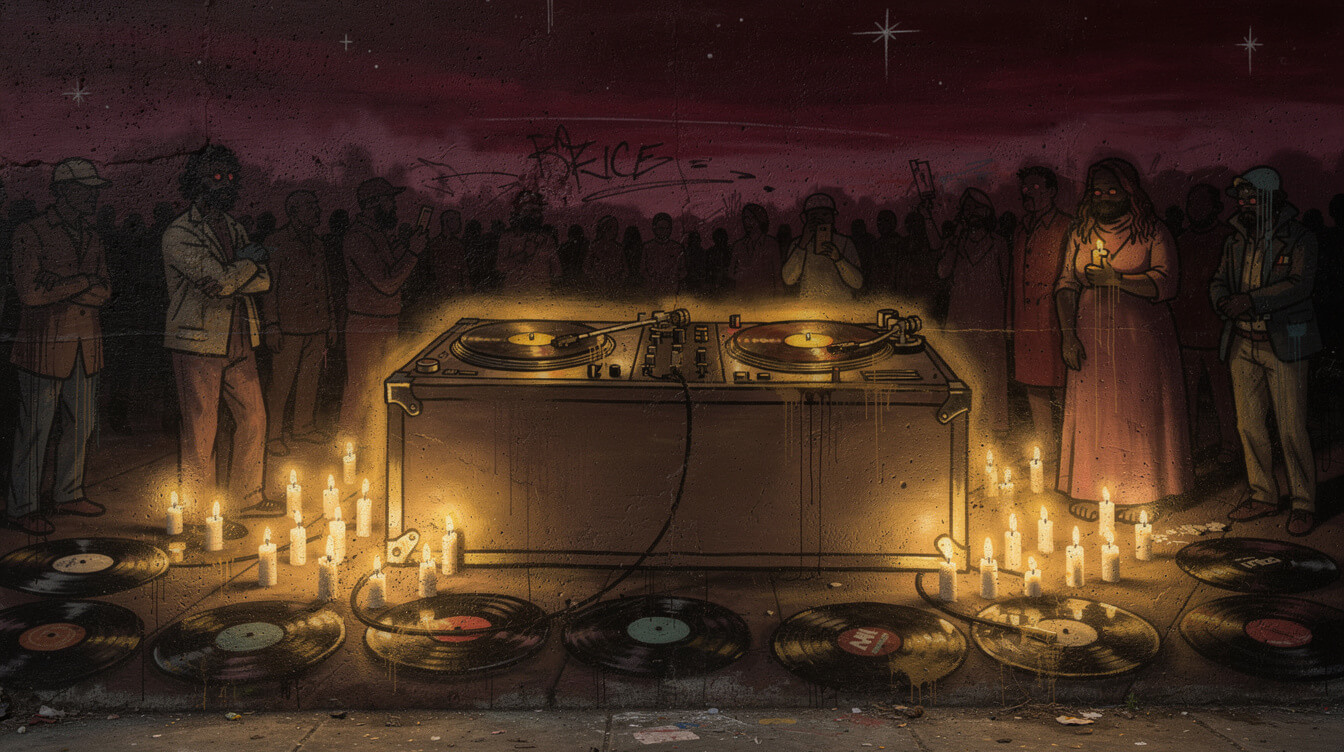
Walk into a hip-hop memorial service or a “celebration of life” set at a cookout thirty-plus years later, and there’s a real chance T.R.O.Y. gets played — often without introduction, because the room already knows what it means the second that horn stab hits. It’s become shorthand. DJs don’t need to announce it as a tribute song; the culture already coded it that way, the same way certain hymns get coded for a church funeral.
It’s worth remembering where this record actually sits: track four on Mecca and the Soul Brother, Pete Rock & CL Smooth’s full-length statement about Mt. Vernon, jazz-rap, and the Soul Brother #1 persona Pete Rock built his name on. We’ve covered the full album in our Mecca and the Soul Brother at 34 retrospective if you want the complete picture — this piece is deliberately just the one song, because T.R.O.Y. earned its own space outside the album’s shadow a long time ago. And if you want the earlier thread — Pete Rock’s actual first production credit, which came a couple years before T.R.O.Y. on Heavy D & the Boyz’s own catalog — our Big Tyme at 37 piece traces that connection back to where it started.
Frequently Asked Questions About T.R.O.Y.
Who was Trouble T-Roy?
Troy Dixon, known as Trouble T-Roy, was a dancer and hype man for Heavy D & the Boyz and a member of the Mt. Vernon, New York crew that also included Pete Rock, CL Smooth, and Heavy D himself. He died on July 15, 1990, at age 22, after falling from a hotel balcony while on tour with the group in Indianapolis.
What song is sampled on “They Reminisce Over You”?
The loop comes from Tom Scott and the California Dreamers’ “Today,” a 1967 track off the album Honeysuckle Breeze — an orchestral soul-jazz record well outside the sample sources most rap producers were mining in the early ’90s.
What album is T.R.O.Y. from?
It’s track four on Pete Rock & CL Smooth’s debut album, Mecca and the Soul Brother, released in 1992 on Elektra Records.
Did “They Reminisce Over You” chart?
Yes — it hit #1 on Billboard‘s Hot Rap Tracks chart while peaking at only #58 on the Hot 100, a gap that reflects how the song’s real significance registered inside hip-hop’s own audience long before (and beyond) any pop-chart crossover.
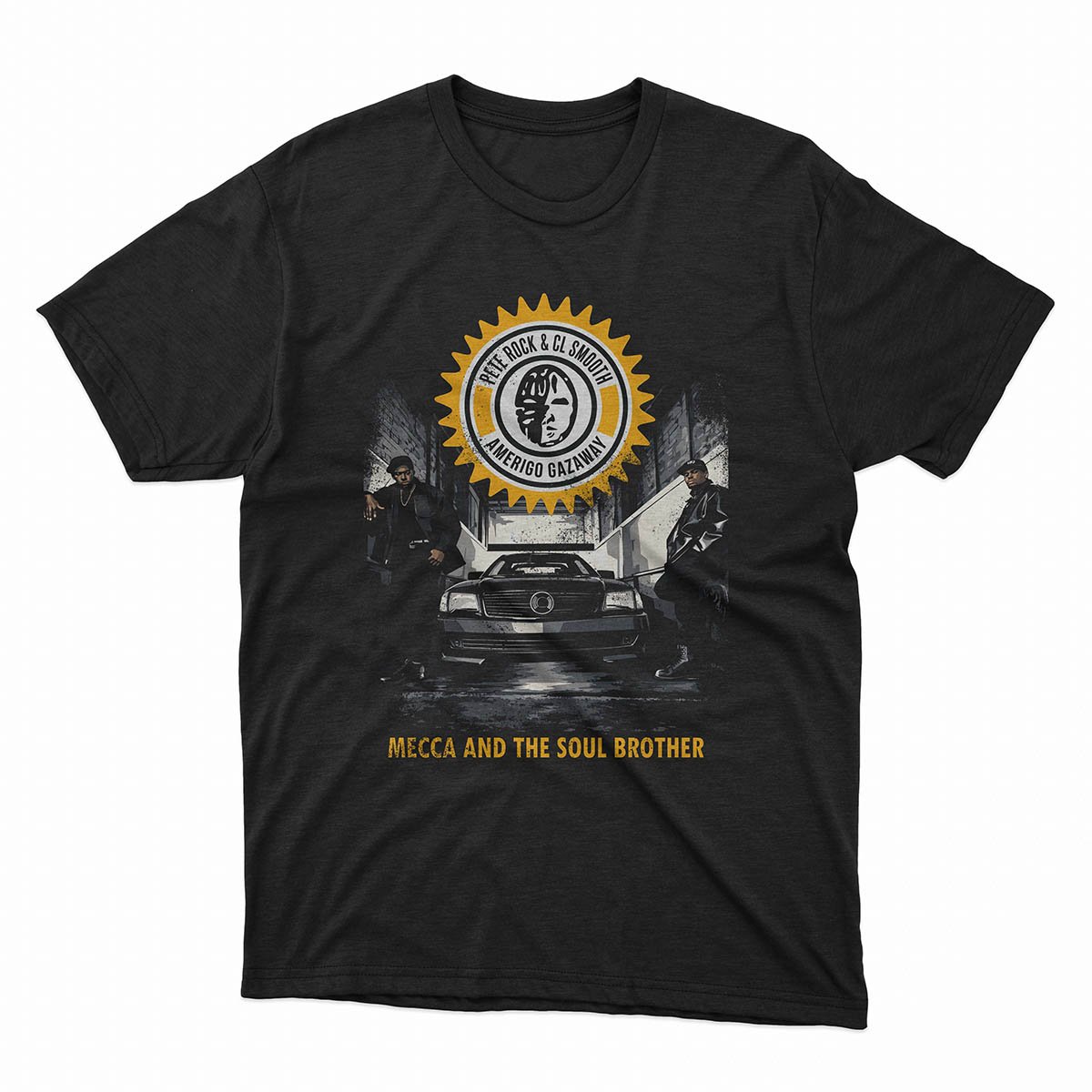
Rep the Album T.R.O.Y. Lives On
Mecca and the Soul Brother is the full statement — jazz-rap, Mt. Vernon pride, and the record that gave hip-hop its go-to eulogy. This tee puts the album cover on your chest.
Final Thoughts: The Record That Taught Hip-Hop How to Grieve
Thirty-plus years on, “They Reminisce Over You” hasn’t lost an ounce of its weight. It didn’t need a Hot 100 run to matter — it needed a community that recognized itself in the record and never let it go. That’s the real chart position that counts: the one measured in how many times a DJ has cued it up at a memorial, how many artists have quietly borrowed its blueprint without saying so, how many people still catch the horn stab and feel their chest tighten before a single word drops. Pete Rock and CL Smooth built something built to last precisely because they weren’t trying to build a hit. They were trying to hold onto a friend. Stay creative — The Custom Creative Team.
Culture in Your Inbox
Deep dives on the records that built hip-hop, straight from the Custom Creative crew. No spam, just the culture.

🎧 Never Miss a Drop
Exclusive product releases, hip-hop deep dives, and member-only discounts. Straight to your inbox.
Free forever. No spam. Unsubscribe anytime.

Get the Culture, Delivered
Deep dives into hip-hop history, exclusive product drops, and discounts sent straight to your inbox. No spam, just culture.
Join 2,000+ hip-hop heads already in the loop. Unsubscribe anytime.