DMX Albums in Order: Every Studio Album From It’s Dark and Hell Is Hot to Exodus
Hip-hop has bigger catalogs than this one, but few started like it. The DMX albums discography opens with a run the charts had never seen: his first five studio albums all debuted at No. 1 on the Billboard 200, and nobody had done that before. Two of those five came out within seven months of each other in 1998. Then the catalog splinters: a label switch, a six-year gap, an indie album, a release his own camp called unauthorized, and a posthumous goodbye that dropped seven weeks after he died. This guide covers every studio album in order, with the release dates, chart debuts, RIAA certifications, producers and singles, checked against the chart history, the RIAA database and the liner credits. Each album also gets one line on why it matters.
If you only know the hits, we’ve already covered two of them in depth: “Slippin’,” the song that turned hip-hop’s hardest voice into its most honest one, and who X was really mad at on “Party Up”. This piece is about the albums, all eight of them, plus the one that doesn’t count.
DMX Albums in Order: The Complete Studio Discography
DMX released eight studio albums between 1998 and 2021. Some streaming pages and fan lists count a ninth, Redemption of the Beast (2015), but Wikipedia and MusicBrainz both file it as a compilation, and his own camp disowned it (more on that below). Here’s the run at a glance:
| # | Album | US release | Label | Billboard 200 debut | RIAA |
|---|---|---|---|---|---|
| 1 | It’s Dark and Hell Is Hot | May 19, 1998 | Ruff Ryders / Def Jam | No. 1 | 4× Platinum |
| 2 | Flesh of My Flesh, Blood of My Blood | Dec 22, 1998 | Ruff Ryders / Def Jam | No. 1 (3 weeks) | 3× Platinum |
| 3 | …And Then There Was X | Dec 21, 1999 | Ruff Ryders / Def Jam | No. 1 | 5× Platinum |
| 4 | The Great Depression | Oct 23, 2001 | Ruff Ryders / Def Jam | No. 1 | Platinum |
| 5 | Grand Champ | Sep 16, 2003 | Ruff Ryders / Def Jam | No. 1 | Platinum |
| 6 | Year of the Dog… Again | Aug 1, 2006 | Ruff Ryders / Columbia / Sony Urban | No. 2 | — |
| 7 | Undisputed | Sep 11, 2012 | Seven Arts | No. 19 | — |
| 8 | Exodus | May 28, 2021 | Ruff Ryders / Bloodline / Def Jam | No. 8 | — |
The record nobody had set before
Five No. 1 debuts in a row, from 1998 to 2003, made DMX the first artist whose first five albums all opened at the top of the Billboard 200. Billboard’s own chart history and the discography tables agree on that framing. You’ll see “the only artist ever” and “Guinness record” thrown around online. We found no source for either, so we’re leaving them out. The real record is strong enough.
Release years vs. chart years
One thing confuses a lot of lists. Billboard credits Flesh of My Flesh to 1999 and …And Then There Was X to 2000, because both came out in late December and their No. 1 weeks landed on charts dated the following January. In the table and throughout this guide we use release dates. Keep that in mind when someone tells you DMX “had two No. 1 albums in 1998.” He released two albums in 1998 that both debuted at No. 1. That’s slightly different, and it matters for the record books, as you’ll see in a minute.
It’s Dark and Hell Is Hot (1998): The Debut That Made Def Jam Bark Again
Earl Simmons was born December 18, 1970, and raised in Yonkers. He was 27 when It’s Dark and Hell Is Hot arrived on May 19, 1998. That’s late for a debut, and you can hear every one of those years on it. He’d been around for most of the decade: guest verses, a buzz single, and what Wikipedia calls an unsuccessful early stint at Columbia. When the album finally landed through Ruff Ryders’ joint venture with Def Jam, it sounded like nothing else on the radio. Shiny-suit rap owned 1998. DMX showed up barking, praying and threatening, sometimes on the same track.
The sound: Dame Grease and PK, not Swizz
Most people assume Swizz Beatz built this album. He didn’t. The bulk of It’s Dark and Hell Is Hot was produced by Dame Grease and PK (P. Killer Trackz), with Irv Gotti and Lil Rob on “Intro” and “Crime Story.” Swizz produced exactly one track: “Ruff Ryders’ Anthem.” That one beat, all stabbing keys and dog-walk bounce, became the most famous thing on the album, which is why the credit gets blurred. The rest of the record is Grease’s grimy, low-end Harlem sound, and it’s darker than the anthem suggests.
The singles and the chart receipts
The album debuted at No. 1 on the chart dated June 6, 1998, with about 251,000 copies in its first week. It knocked Garth Brooks’ The Limited Series off the top spot. Country’s biggest seller of the decade got moved by a rapper from Yonkers. The singles didn’t chart nearly as high: “Get at Me Dog” peaked at No. 39 on the Hot 100, “How’s It Goin’ Down” at No. 70 and “Stop Being Greedy” at No. 79.
And “Ruff Ryders’ Anthem,” the song every DMX fan can shout? Billboard’s chart history shows it peaking at No. 16, but that peak came in April 2021, the week after he died. It’s since gone 2× Platinum. The anthem was always bigger in the streets than on the charts. It took losing him for the charts to catch up.
The cover and the certification
Jonathan Mannion shot the cover, the start of a photographer-artist partnership that ran all the way to Exodus 23 years later. The RIAA certified the album 4× Platinum on December 18, 2000, DMX’s 30th birthday. For a debut built on Dame Grease beats and pure aggression, with no pop crossover, that number still looks absurd.

Rep the Album That Started the Streak
No. 1 debut, 4× Platinum, and a sound that cut straight through the shiny-suit era. We made the DMX It’s Dark and Hell Is Hot T-Shirt for anyone who heard the bark in ’98 and never got over it.
Flesh of My Flesh, Blood of My Blood (1998): Two No. 1 Debuts in One Year
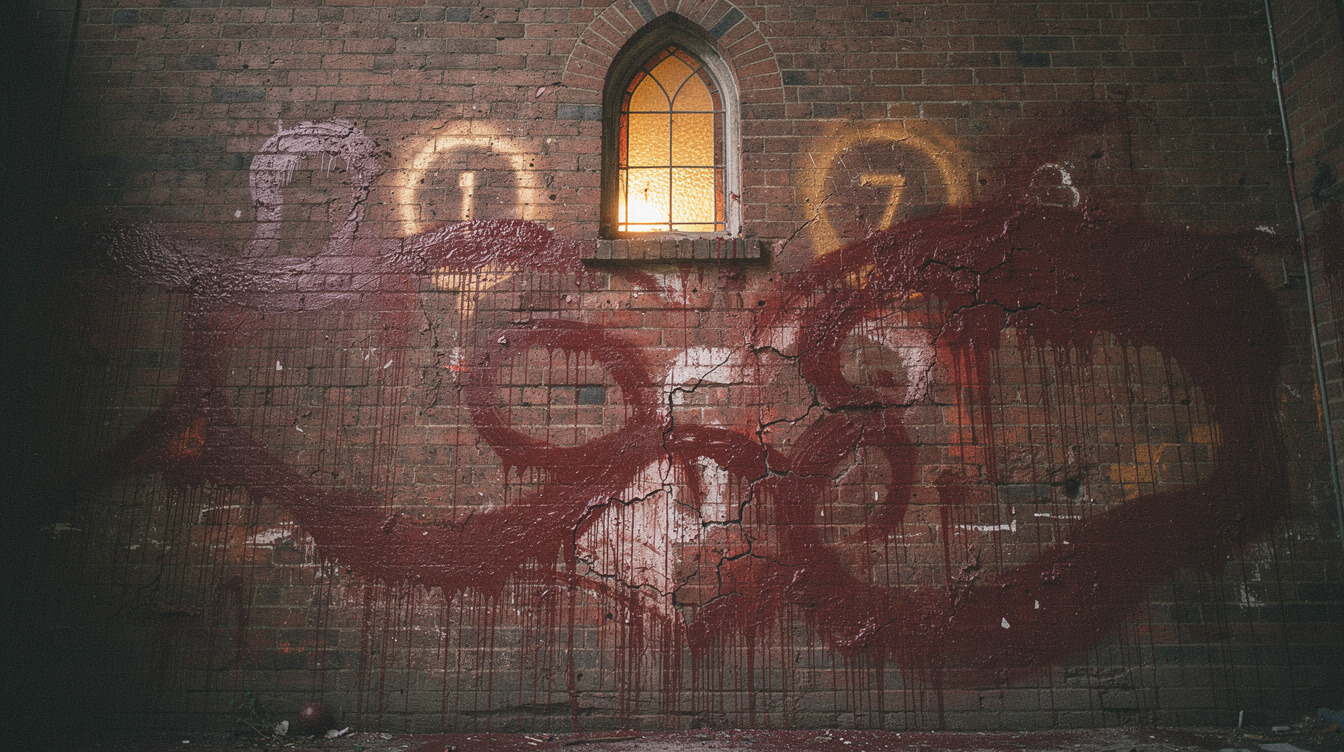
Seven months. That’s the gap between DMX’s debut and his second album, released December 22, 1998. Rappers in 1998 normally waited two years between albums. Def Jam put out the follow-up before the first one had finished its run, and it was bigger. Flesh of My Flesh, Blood of My Blood sold about 670,000 units in its first week and held No. 1 on the Billboard 200 for three straight weeks, on the charts dated January 9, 16 and 23, 1999. The album that finally knocked it off? Britney Spears’ …Baby One More Time. That gives you the whole late-’90s chart war in one handoff.
The record, framed correctly
The common claim is that DMX was “the first artist with two No. 1 albums in one year.” He wasn’t. 2Pac did it in 1996 with All Eyez on Me and the posthumous The Don Killuminati: The 7 Day Theory. The accurate version, which XXL and Wikipedia agree on, is that DMX was the second rapper ever, after 2Pac, to have two albums debut at No. 1 in the same year, and the first to do it while still alive. That’s a heavier sentence anyway.
Swizz Beatz takes the wheel
On the debut Swizz had one beat. Here he produced 10 of the 16 tracks and picked up an executive producer credit on the Discogs liner notes. That shift is the real story of the album. PK still has “Bring Your Whole Crew” and “Coming From,” Dame Grease has “Dogs for Life,” and DJ Shok produced “Slippin’.” But the Ruff Ryders house sound everyone remembers, keyboard-heavy and built to bounce, comes from this record.
The features nobody expected
Look at the guest list and you’ll see why this album felt like an event: Jay-Z and The LOX on “Blackout,” Mary J. Blige on “Coming From,” Jadakiss and Styles P on the posse cut, Drag-On on “No Love 4 Me,” and, strangest of all, Marilyn Manson on “The Omen.” A shock-rock star on a Def Jam album at the peak of the moral panic over both genres. Only DMX’s darkness could hold both.
The blood-bath cover
The cover shows DMX soaked in blood, and the story behind it is one of the best in hip-hop photography. Jonathan Mannion filled a tub with fake blood. DMX balked because he didn’t want to ruin his new pants. So Mannion took off his own pants and shot the session in his boxers, and X got in. Complex and XXL both carry versions of the story. They disagree on how many gallons of fake blood it took, so we won’t pick a number. Everyone agrees on the result: one of the most confrontational album covers ever to sit at No. 1.
…And Then There Was X (1999) and The Great Depression (2001): The Peak and the Turn

By 1999 DMX was the biggest rapper in the country, and he cashed it in on a third December release. …And Then There Was X, released December 21, 1999, became his best-selling album. It went on to 5× Platinum, certified February 7, 2001. Watch out for sites claiming 6×. The RIAA database says five.
…And Then There Was X: the party record
This is the album with “Party Up (Up in Here).” The song peaked at No. 27 on the Hot 100, his highest chart position while he was alive, and is now 3× Platinum. “What’s My Name?” (No. 67) and “What You Want” with Sisqó (No. 49) filled out the singles. Swizz, PK, Dame Grease, DJ Shok, Nokio and Irv Gotti’s team all have production credits, so it’s less of a one-producer record than Flesh. It also earned a Grammy nomination for Best Rap Album. We’ll go track by track on this one in a dedicated deep dive. For now, the headline is that this is the moment the dog went pop without changing his bark.
The Great Depression: DMX behind the boards
The Great Depression arrived October 23, 2001, six weeks after 9/11, into a very different country. It debuted at No. 1 with about 440,000 copies, the fourth straight No. 1 (we marked its 25th anniversary here). The detail most fans miss is that DMX produced his own beats on it: “Sometimes,” “Bloodline Anthem,” “When I’m Nothing” and “Prayer IV” carry his name in the production credits. Dame Grease, Black Key (“Who We Be,” “We Right Here”), Kidd Kold (“I Miss You,” with Faith Evans), PK and Swizz handle the rest. Stephanie Mills shows up on “When I’m Nothing.”
Where the numbers started to slip
This is where the turn shows. “Who We Be” peaked at No. 60 and “I Miss You” at No. 86, while “We Right Here” stalled on the Bubbling Under chart. The album went Platinum, not multi-platinum (some bios say triple; the RIAA says one). It’s still a No. 1 album and still a fan favorite for how personal it gets. But the commercial curve that had gone straight up for three years flattened here.
Grand Champ (2003) and Year of the Dog… Again (2006): The Streak Ends
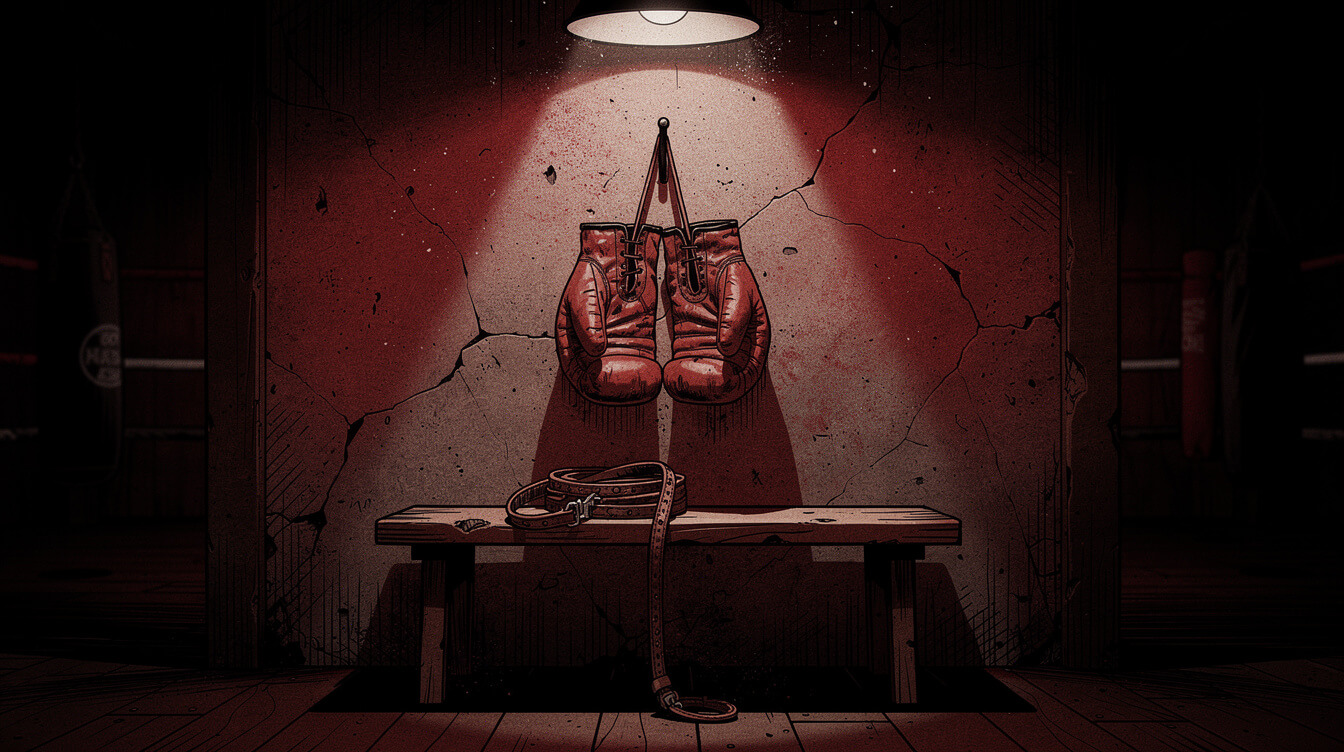
By the time of Grand Champ in 2003, DMX had already floated the idea of retiring, reportedly meaning this to be his last album. Wikipedia and period coverage both describe the plan, though we haven’t found the original interview, so treat it as reported, not quoted. He didn’t retire. But the album does feel like a closing statement for the Def Jam era.
Grand Champ: the fifth No. 1
Released September 16, 2003, Grand Champ debuted at No. 1 with 312,000 copies. That was the fifth straight No. 1 debut, completing the record. It went Platinum on November 7, 2003, and it’s his last album to earn an RIAA certification. The producer list shows how the industry had shifted: Swizz Beatz is still there, but so are Kanye West and No I.D., two Chicago producers on their way to dominating the decade, plus Rockwilder, DJ Scratch and Dame Grease. Guests include 50 Cent and Styles P on “Shot Down,” Eve and Jadakiss on “We’re Back,” plus Cam’ron, Monica and Patti LaBelle. The singles were “Where the Hood At?” and “Get It on the Floor.”
One common mix-up: “X Gon’ Give It to Ya” is often listed as a Grand Champ single. It was only an international bonus track there. It was actually the lead single from the Cradle 2 the Grave soundtrack (2003), became his most successful international single, and found a second life on the Deadpool soundtrack in 2016.
Year of the Dog… Again: the label switch
Then DMX left Def Jam. Year of the Dog… Again came out August 1, 2006 through Ruff Ryders, Columbia and Sony Urban Music. That was a return to Columbia, the label where his early ’90s run had gone nowhere. It debuted at No. 2 with about 126,000 copies, roughly a thousand short of the NOW 22 compilation. Billboard’s headline that week was literally “‘NOW 22’ Edges Out DMX’s ‘Dog’.” Five No. 1 debuts in a row, and a various-artists pop compilation ended the streak by a margin you could fit in one record store.
It still topped the R&B/Hip-Hop albums chart. Swizz Beatz and Scott Storch did most of the production, with Busta Rhymes, Jadakiss, Styles P and Amerie as guests. “We in Here” and the gospel-leaning “Lord Give Me a Sign” were the singles. We noted its 20th anniversary in our August 1 Today in Hip-Hop. It was the first DMX album without an RIAA certification. A year later Def Jam closed the chapter with The Definition of X: The Pick of the Litter (2007), a hits compilation that peaked at No. 26.
Undisputed, Redemption of the Beast and Exodus: The Late Run

The last stretch of DMX albums is scattered: legal trouble, prison time and health struggles split up the 2000s and 2010s. Six years passed between studio albums. When the music came back it was on an indie label, and the cleanest moment in the late catalog arrived only after he was gone.
Undisputed (2012): the indie comeback
Undisputed was released September 11, 2012 on Seven Arts Music, distributed by Fontana. It was his first studio album in six years. It debuted at No. 19 with about 17,000 copies, a long way from 670,000. Swizz Beatz and Dame Grease returned, and J.R. Rotem produced the lead single “I Don’t Dance,” with MGK. The production is uneven, but X still sounds like X. For hardcore fans it’s worth hearing the hunger of a 41-year-old trying to win the room back.
Redemption of the Beast (2015): the album that doesn’t count
On January 13, 2015, Seven Arts released Redemption of the Beast. DMX’s camp said it was never authorized. His brother and manager Montana told XXL the only contract with Seven Arts covered Undisputed, called the new release a pile of leftovers, and sent a cease-and-desist. Swizz Beatz posted on Instagram that it was “100% not the album X and I are working on.” Seven Arts, for its part, claimed it had bought the masters under a two-album deal. We haven’t found any record of how the dispute ended, so we won’t guess. What’s clear is that Wikipedia and MusicBrainz both classify it as a compilation, not a studio album, and that’s how we treat it here.
Exodus (2021): the posthumous goodbye
DMX died April 9, 2021, at 50. Seven weeks later, on May 28, 2021, Def Jam released Exodus, the album he had been building with Swizz Beatz, who is credited as executive producer. It’s named after his son Exodus, and Jonathan Mannion shot the cover, the same photographer who shot the 1998 debut. It debuted at No. 8 with about 32,000 units, his eighth top-10 album.
The guest list reads like a roll call of everyone who respected him: The LOX, Jay-Z and Nas on “Bath Salts” (later nominated for Best Rap Song at the Grammys), Griselda on “Hood Blues,” Lil Wayne, Snoop Dogg, Alicia Keys, Usher on “Letter to My Son,” and Bono on “Skyscrapers.” Kanye West produced the closer, “Prayer.” Ending the album on a prayer, in a catalog full of prayers, was the right call. We wrote about the album’s fifth anniversary here.
One more posthumous chart note: the week after he died, The Best of DMX (2010) jumped from No. 73 to No. 2 on the Billboard 200. That was the public telling the industry what they’d always known.
Where to Start With DMX Albums
Eight albums, one compilation dispute, and a lot of noise around the catalog. Here’s the on-ramp if you’re new, or if you only know the anthems.
Start with two albums
- It’s Dark and Hell Is Hot (1998): the purest DMX. Dame Grease’s grime, the prayers, the barks, the dialogues with the devil on “Damien.” If you only ever hear one DMX album, make it this one.
- Flesh of My Flesh, Blood of My Blood (1998): darker, more personal, with the Swizz sound taking shape. Play it right after the debut and you’ll hear how fast he was moving.
Then five songs
- “Ruff Ryders’ Anthem,” the one beat Swizz did on the debut and the one everyone knows.
- “Slippin’,” the confessional. Read our full breakdown of Slippin’ before you play it.
- “Party Up (Up in Here),” his biggest Hot 100 hit in his lifetime. Here’s who he was actually mad at.
- “How’s It Goin’ Down,” the smooth one that proved he could make a love song without losing the edge.
- “Bath Salts,” from Exodus, with Jay-Z and Nas. Three New York legends on one track, 23 years after “Blackout.”
For the deep cuts
Once you’re hooked, go to The Great Depression for the self-produced tracks and Grand Champ for the early Kanye and No I.D. beats. Save Exodus for last. It lands harder once you know the whole story.
And if you want something for the cold months while you work through the catalog, we made the DMX It’s Dark and Hell Is Hot Hoodie with the album that started it all front and center. Heavyweight and dark, like the record.
DMX Albums FAQ
How many studio albums did DMX release?
Eight: It’s Dark and Hell Is Hot (1998), Flesh of My Flesh, Blood of My Blood (1998), …And Then There Was X (1999), The Great Depression (2001), Grand Champ (2003), Year of the Dog… Again (2006), Undisputed (2012) and Exodus (2021). Redemption of the Beast (2015) is classified as a compilation, and his camp said it was released without his approval.
How old was DMX when his first album dropped?
He was 27. DMX was born December 18, 1970, and It’s Dark and Hell Is Hot came out May 19, 1998.
Did DMX really have five No. 1 albums in a row?
Yes. His first five studio albums, from 1998’s debut through 2003’s Grand Champ, all debuted at No. 1 on the Billboard 200, making him the first artist to do that. The streak ended in 2006 when Year of the Dog… Again debuted at No. 2, about a thousand copies behind NOW 22.
What is DMX’s best-selling album?
…And Then There Was X (1999) is his highest RIAA certification at 5× Platinum. It’s Dark and Hell Is Hot is 4× Platinum and Flesh of My Flesh, Blood of My Blood is 3× Platinum.
Which DMX album has “X Gon’ Give It to Ya”?
It was the lead single from the 2003 Cradle 2 the Grave soundtrack. It appears on Grand Champ only as an international bonus track, not as part of the standard US album.
What does DMX stand for?
According to Wikipedia’s biography, he took the name from the Oberheim DMX drum machine back when he was beatboxing for a local rapper, then turned it into an initialism: first “Divine Master of the Unknown,” later “Dark Man X.”
Final Thoughts: The Bark That Still Echoes
Put the DMX albums in order and you get the whole arc of a life: the hungry debut, the run where nobody could touch him, the self-produced turn, the label switch, the indie years, the fight over his own catalog, and a posthumous album that ends on a prayer. The chart record, five No. 1 debuts to open a career, will be hard for anyone to match. But it isn’t what people remember. They remember the voice: a man who sounded like he was fighting for his soul in public on every album.
So start with 1998 and work forward. When you get to Exodus, listen to the last track.
Stay creative — The Custom Creative Team
Get the Culture in Your Inbox
Catalog deep dives, credit receipts, anniversaries and first dibs on new drops. No spam, just hip-hop.

🎧 Never Miss a Drop
Exclusive product releases, hip-hop deep dives, and member-only discounts. Straight to your inbox.
Free forever. No spam. Unsubscribe anytime.

Get the Culture, Delivered
Deep dives into hip-hop history, exclusive product drops, and discounts sent straight to your inbox. No spam, just culture.
Join 2,000+ hip-hop heads already in the loop. Unsubscribe anytime.