DMX Slippin’: The Song That Turned Hip-Hop’s Hardest Voice Into Its Most Honest One
Most DMX records hit you in the chest. DMX Slippin’ hits somewhere lower and harder to reach. Released November 27, 1998 as the lead single from Flesh of My Flesh, Blood of My Blood, it’s the record where the barking stopped and Earl Simmons told you, in about five minutes, exactly how he got here: the abuse, the group homes, the bids, the drugs, the son who made him want to stop. No skits, no posse, no hard-knock posturing. One voice over a borrowed saxophone line, admitting he’s falling.
Page one of Google for “DMX Slippin” is all streaming links and Reddit threads. Nobody explains the song. So here’s the full breakdown: the year it came out of, what each verse confesses, the 1975 jazz record underneath it, why the album version is censored, how it connects to X’s faith, and why a federal judge ended up hearing it in a Manhattan courtroom twenty years later.
1998: The Year DMX Dropped Two #1 Albums
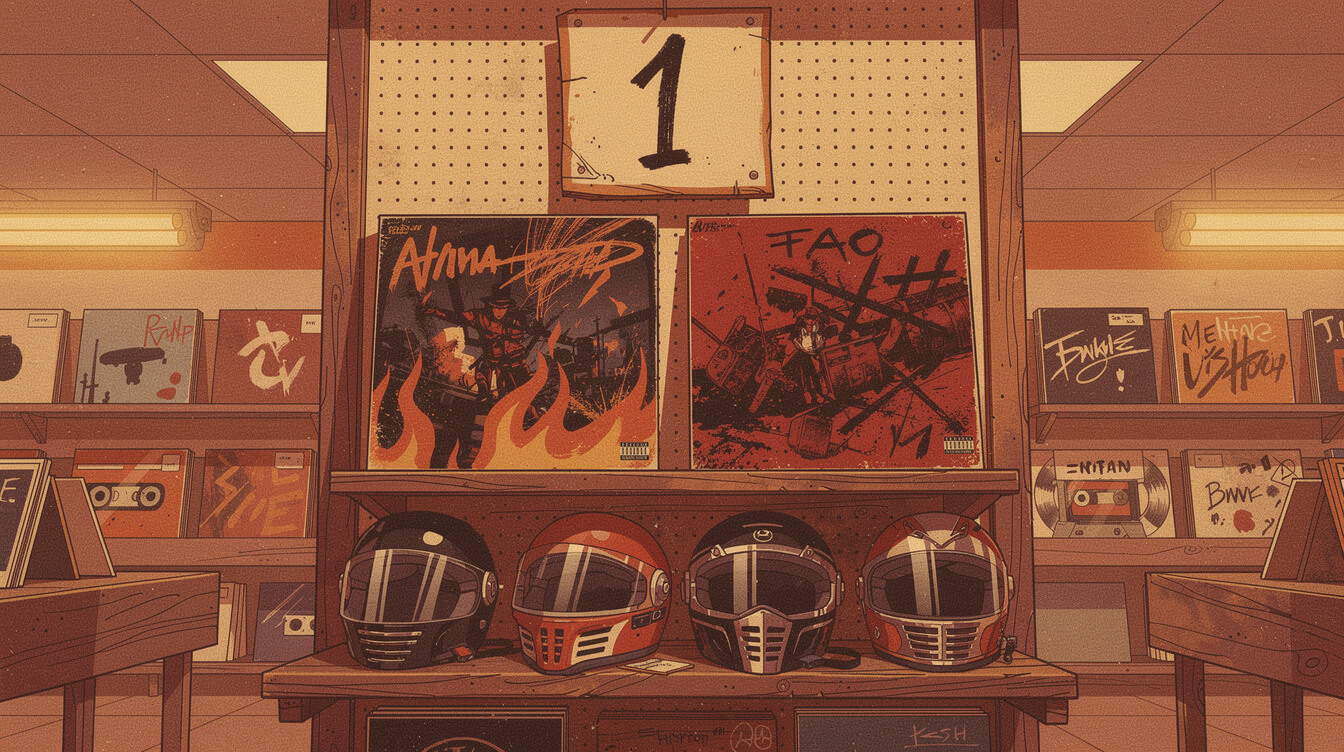
You can’t understand “Slippin'” without understanding the year around it. In 1998 DMX didn’t have a breakout. He had a takeover.
It’s Dark and Hell Is Hot: The Dog Off the Leash
It’s Dark and Hell Is Hot landed May 19, 1998 on Def Jam and Ruff Ryders. It debuted at #1 on the Billboard 200, selling 251,000 copies in its first week, and was eventually certified 4x Platinum. Shiny-suit Bad Boy owned the clubs at the time: Coogi, Jesus pieces, champagne. X came out of Yonkers in Timbs and a bandana with pit bulls on the leash, and the record was dark on purpose: snarling, skeletal beats from PK and Dame Grease, dog barks as punctuation, and “Damien” turning his own demons into a character.
Even then, the gentler side was already in the tracklist if you listened. “Look Thru My Eyes” was a plea for empathy. “The Convo” was a literal conversation with God over a Bee Gees “Nights on Broadway” sample. And there was the “Prayer” skit, where he talks straight to the Lord. The hard record had a soft spine.
Flesh of My Flesh, Seven Months Later
Then, instead of touring the debut for two years like everyone else would, X came back on December 22, 1998, just seven months later, with Flesh of My Flesh, Blood of My Blood. It also debuted at #1, sat there three straight weeks, and moved roughly 670,000 units in its first week according to MTV’s report at the time. Britney Spears’ …Baby One More Time finally knocked it off in January 1999. The album went 3x Platinum.
That made DMX only the second artist to put two albums at #1 on the Billboard 200 in the same calendar year. The first was 2Pac in 1996, with All Eyez on Me and the posthumous Makaveli record The Don Killuminati. Two #1s in one year, from a guy whose early-’90s run at Columbia had gone nowhere. Jonathan Mannion’s blood-soaked cover photo made the second album one of the most recognizable covers of the era. We broke that cover down in our 50-year history of the hip-hop album cover.
“Slippin'” was the single chosen to lead that second album. Coming off a year of “Get at Me Dog” and “Ruff Ryders’ Anthem,” Def Jam put out a slow, sax-driven confessional. That was the risk, and it worked.

The Album That Came Seven Months Before Slippin’
Before the confession came the chaos. We made a DMX It’s Dark and Hell Is Hot tee for the heads who were there in May ’98, when Yonkers took the Billboard 200 by force.
DMX Slippin’ Verse by Verse: The Childhood, the Fall, the Climb
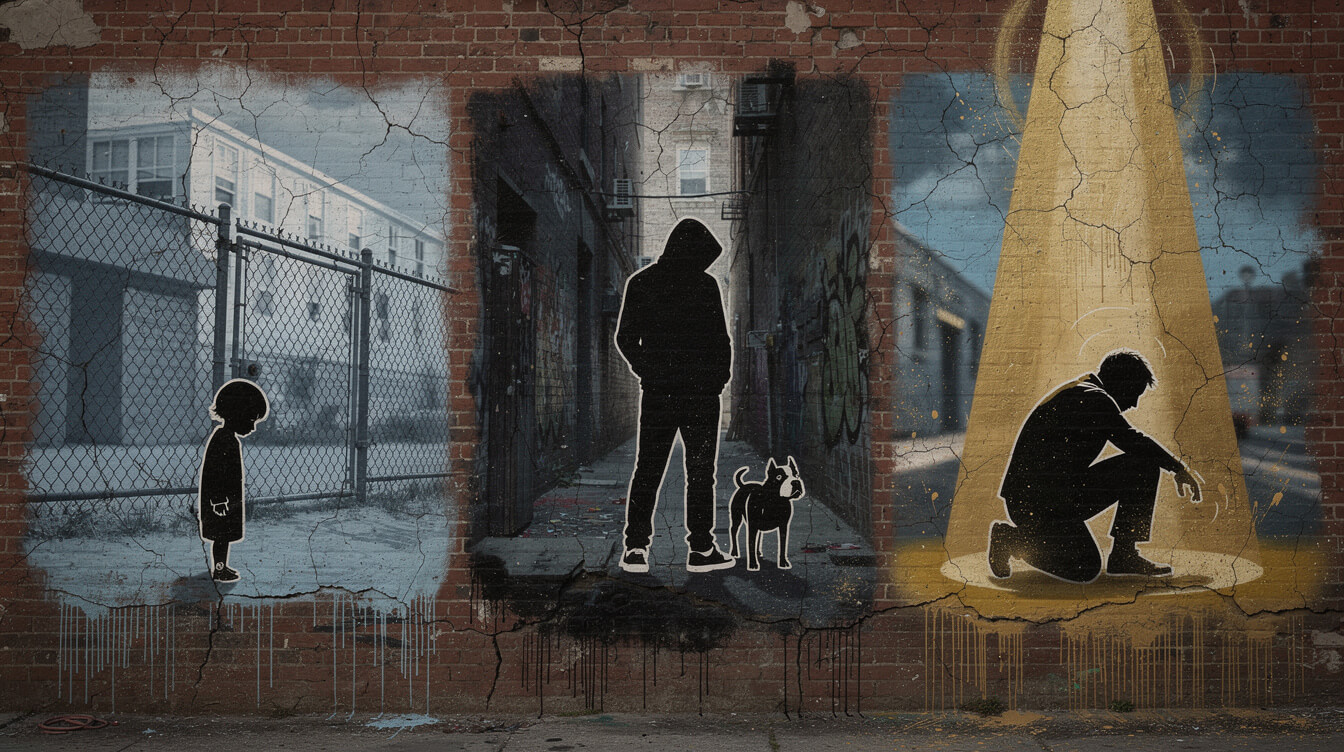
“Slippin'” has three verses, and they run in order through the first thirty years of Earl Simmons’ life. It’s autobiography in chronological order, and almost every line matches the record of his life.
The Hook: “I Can’t Get Up” Becomes a Prayer
The chorus is the whole thesis: he’s slipping, he’s falling, he can’t get up, and then the turn, he gots to get up. Anyone who grew up with late-’80s TV hears the echo. WhoSampled logs the hook as a nod to the 1989 LifeCall medical-alert commercial and its infamous “I’ve fallen and I can’t get up,” a line America turned into a punchline. X took a joke about helplessness and sang it like he meant it. That flip is the whole song in miniature.
Verse 1: Mama, Group Homes and the First Bid
The first verse opens with him taking stock (“mad different phases like mazes”) and hoping he lives long enough to see his kid do something better with their time than “bids.” Then he goes back to the start: “the drama with my mama.” The record backs him up. Born December 18, 1970 in Mount Vernon, Simmons was physically abused by his mother as a child. She sent him to live with relatives in Yonkers’ School Street housing at age five, and by ten he’d been put in a group home. “Group homes and institutions prepared my ass for jail” is literal. His first prison stint came in 1986 after he stole a dog from a junkyard.
The verse also asks the question every kid in that situation asks: was it my fault his father left? Then it closes on the one relationship he trusted. He never cared about much “but my dog.” Wikipedia’s account of his teens has him back in Yonkers at fifteen, sleeping in storage bins and befriending strays. The dogs weren’t a gimmick. They were family.
Verse 2: The Darker Side
“That ain’t the half.” The second verse is the descent: rolling one deep with the pit, robbing people, getting high just to function. He’s specific in a way rap rarely was in 1998. The morning blunt before he could “fly,” the forties that made him hate something, the cocaine, and three years later not cutting his hair or caring how he looked. He calls himself “possessed by the darker side,” and he ends the verse with the line that ties his addiction to his art: he wants to make records, but he’s messing it up. Then the hook comes back in, and it hurts more this time.
Verse 3: Rock Bottom, and a Son
Verse three hits “rock bottom” with people talking about how “that rock got him,” and then something changes. He sees someone on TV and thinks it could have been him. Then the reason: “now I’ve got a son.” No more getting high, no more forties. He gets back up and the fake friends come back too, and the verse ends with gratitude to the people who kept him strong and to the woman who “stuck with” him through it. The outro says it plainly: “This is from the heart, baby.”
Three verses, three decades: a child who couldn’t stop what was happening to him, a young man who chose the dark, and a father who chose to climb. That’s why it hits. Nobody is the hero yet. He’s just still trying.
The Beat Nobody Wanted: DJ Shok and Grover Washington Jr.’s “Moonstreams”
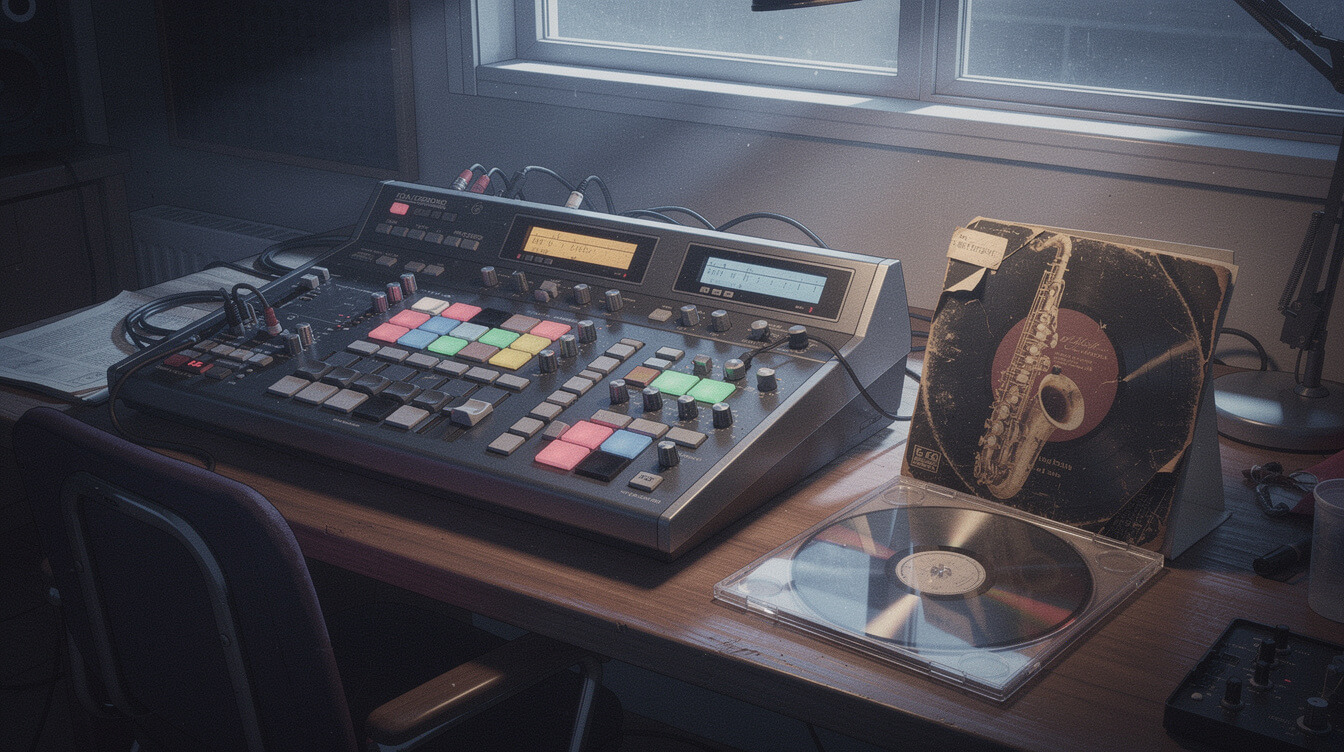
The production story behind DMX Slippin’ is as underdog as the lyrics, and it rarely gets told. “Slippin'” was produced by DJ Shok, Michael Gomez, a Yonkers producer who is credited as a co-writer alongside Simmons and Grover Washington Jr. in the album’s liner notes.
The Sample: “Moonstreams” (1975)
The bed of the track is “Moonstreams” by jazz saxophonist Grover Washington Jr., from his 1975 album Feels So Good. Both the album’s liner-note sample credits and WhoSampled confirm it. You’ll still see other sample sources floating around online; ignore them. It’s that mellow, moonlit Washington sax phrase, looped into something that sounds like the moment right before you break down crying.
A 1994 Beat From a Producer About to Quit
In a 2018 interview with writer Matteo Urella, Shok explained that he made the beat around 1994, while living with his parents, job-hunting and “thinking of giving up.” He loved the emotion in “Moonstreams” because “it really hit home.” The gear was an Akai S950 sampler, a Roland MC-50 for sequencing and a Korg X5DR for percussion. He pulled the sample from a CD, not vinyl, because his record had too many pops. He didn’t expect anything from it. It wasn’t the boom-bap he usually made, and he “never thought [it] would work in hip-hop.”
Ninety Minutes at Enterprise
Four years later, Shok had just signed with Ruff Ryders as an in-house producer and was flown to California, to Enterprise Studios, to pitch beats for Flesh of My Flesh. He only put the “Slippin'” beat on his DAT because his wife and friends insisted. By his account, Swizz Beatz heard it, said “hold on,” and came back with DMX, who seemed to already have the vocals and was waiting for the right track. X asked how fast Shok could lay it down, went into the booth, and recorded the verses in one pass. Def Jam started clearing the sample while they were still listening back. Shok says it took about an hour and a half from first listen to finished song. He also recalls Dame Grease adding the drop on the second verse without a word, which Shok took as respect.
Tamyra Gray on the Backgrounds
One more credit most fans miss: the background vocals belong to Tamyra Gray, who went on to compete on the first season of American Idol. The album’s liner notes credit her on “Slippin’.” Years before the TV fame, her voice was already on a DMX single that would go Platinum.
Why Is DMX Slippin’ Edited?
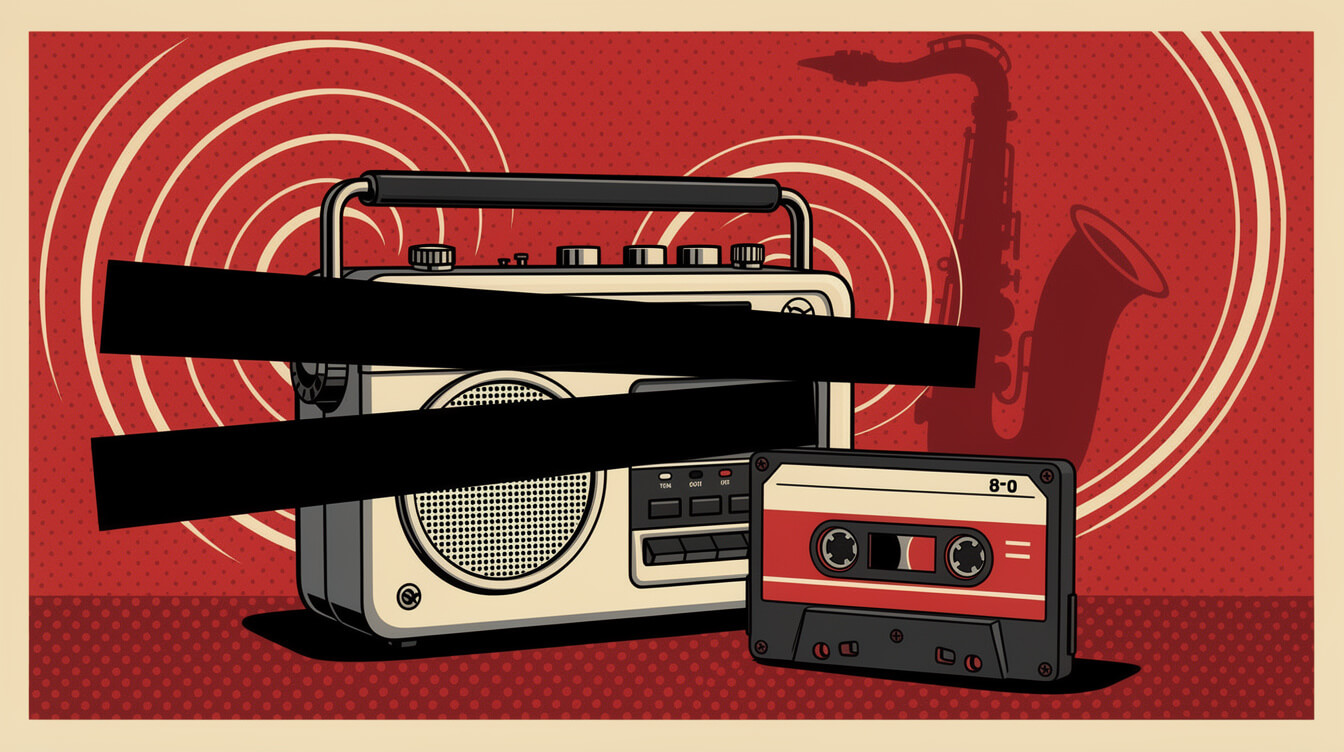
This is the question Google’s “People Also Ask” box keeps raising, and the answer is one of the strangest sample-clearance stories in hip-hop. Even on the explicit CD of Flesh of My Flesh, Blood of My Blood, the album version of DMX Slippin’ is censored.
The Sample-Clearance Condition
Complex’s history of rappers forced to censor their lyrics puts it simply: Grover Washington Jr. wouldn’t clear the “Moonstreams” sample without a promise of censorship. Genius’ annotation says the same: the “Moonstreams” publishers wouldn’t allow the sample if DMX used profanity. So the most raw, honest record DMX ever made went out with the curses muted on the album version. That’s why your old CD has gaps, and why heads still trade “explicit” versions online.
The Censored Version Became the Real One
The irony is that it may have helped. With the profanity muted, “Slippin'” could go places DMX’s other singles couldn’t, like daytime radio, school buses, and church vans. It peaked at #60 on Billboard’s Hot R&B/Hip-Hop Songs and #30 in the UK. Neither number explains how big the song really is. The RIAA has since certified it Platinum, a slow-burn number built on decades of people coming back to it. For a lot of listeners, the censored version is “Slippin’.” If you want the whole era on your back for the colder months, the DMX It’s Dark and Hell Is Hot Hoodie carries the 1998 debut’s cover energy.
Faith, Prayer and the Other Side of the Dog: Does DMX Believe in God?
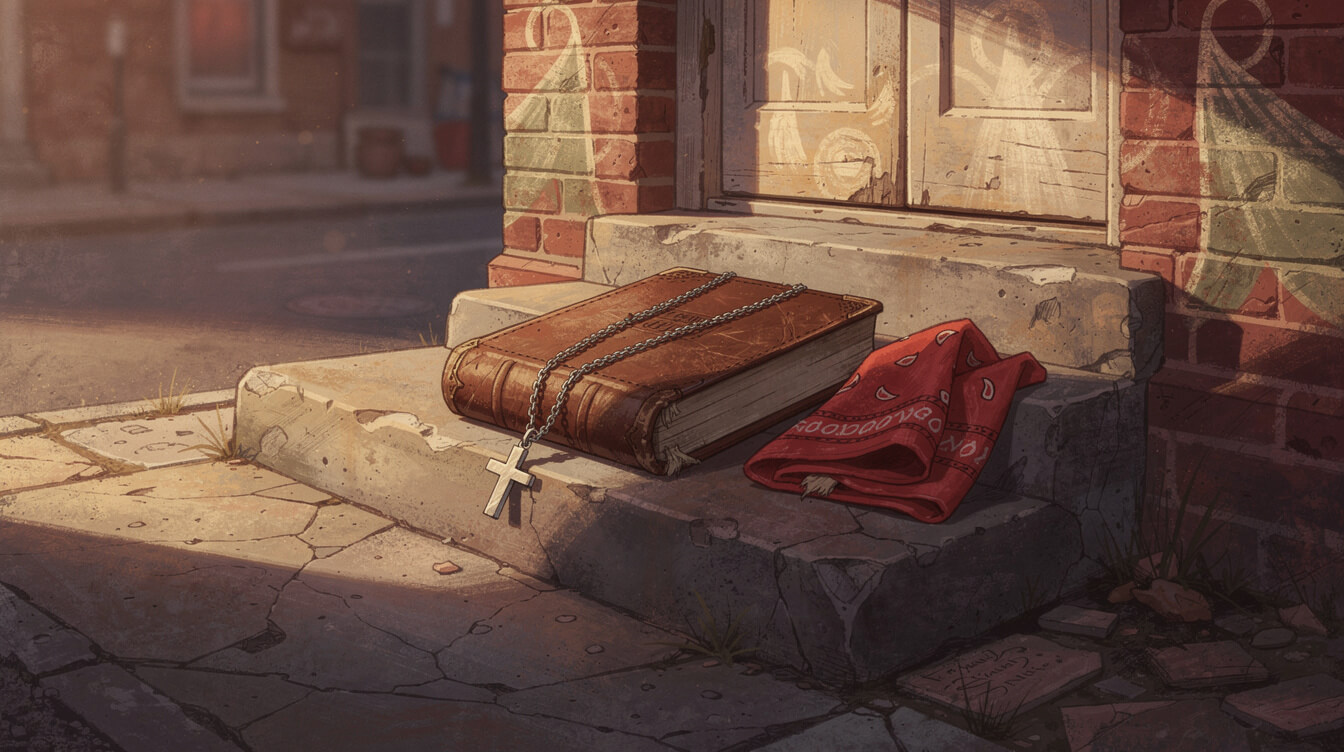
Another top Google question about DMX is whether he believed in God. The short answer is yes, openly and his whole career. DMX Slippin’ is where that faith is easiest to hear.
A Prayer on Every Album
DMX was raised a Jehovah’s Witness and drifted from it as a child. As an artist, though, he kept talking to God on record. It’s Dark and Hell Is Hot has its “Prayer” skit. Flesh of My Flesh closes with “Prayer II/Ready to Meet Him,” a seven-minute closer that follows “Slippin'” like a second confession. The whole emotional structure of his albums was the same: sin out loud, then repent out loud. “Slippin'” is the bridge between them. It’s the testimony before the prayer.
The Deacon From Yonkers
That wasn’t a phase. DMX described himself as a born-again Christian and said he read the Bible every day. He became a transitional deacon, said he got the call to preach in 2009, and aspired to be ordained as a pastor. MTV reported he had semi-retired at one point to study the Bible. In 2016 he gave a sermon at a church in Phoenix. Pitchfork ran a whole piece in 2021 titled “How DMX Found God.” The man barking on “Ruff Ryders’ Anthem” and the man preaching in Phoenix were the same person, and “Slippin'” is where you can hear both.
Why the Contradiction Was the Point
Rap critics in 1998 didn’t always know what to do with a guy who made “Damien” and “The Convo” on the same album. Fans got it right away. DMX never presented faith as having it figured out. He presented it as asking for help while still falling. That’s the hook again: I can’t get up, but I’ve got to.
Why DMX Slippin’ Became Hip-Hop’s Get-Back-Up Anthem
Most songs fade from the charts and stay there. “Slippin'” kept showing up again, in a courtroom, in the music of a new generation of rappers, and in the lives of people who say it got them through something.
Played for a Federal Judge (2018)
In March 2018, DMX faced sentencing in Manhattan federal court on a tax-fraud plea, with prosecutors asking for five years. His longtime attorney, Murray Richman, got permission from U.S. District Judge Jed Rakoff to play one DMX song, and chose the “Slippin'” video, which portrays X’s youth. Richman told NBC News he wanted to show “how far” Simmons had come from a childhood he called the most horrible upbringing he’d ever heard of. DMX reportedly sobbed as his childhood was described. Rakoff gave him one year instead of five. A song written about getting back up was literally entered as evidence that he had.
The Mall Story
DJ Shok tells a quieter story. Walking through a mall with X, a woman came up, hugged DMX, and told him the song had gotten her son through the worst time of his life. X pointed at Shok and said, “That’s the guy who did that beat right there,” and she hugged him too. Spend five minutes in the comments under any upload of the video and you’ll find hundreds of versions of that story.
The Next Generation Flips It
The song’s DNA keeps showing up in new records. Meek Mill named a 2016 track “Slippin'” with Future and Dave East, a nod to X’s original. In 2022, Brooklyn drill star Fivio Foreign interpolated it on “Can’t Be Us” from B.I.B.L.E., flipping the hook into a boast that he “ain’t slippin’ or fallin’.” DMX himself went back to it on 2011’s “Last Hope.” When a hook gets quoted across three generations of New York rap, it’s part of the language now.
After April 2021
When DMX died on April 9, 2021, at 50, The Ringer’s obituary described him “barking his way through hits like ‘Ruff Ryders’ Anthem'” one moment and “repenting and philosophizing on tracks like ‘Slippin”” the next. That second half is the man. His casket at the Brooklyn homegoing service carried one word in large letters: FAITH. You can read our tribute to his posthumous album in DMX’s Exodus at 5, and more of his catalog in our August 1 Today in Hip-Hop. The best way to honor “Slippin'” isn’t to treat it as an elegy. It’s to play it the way it was made, as a song about getting up.
If You Love DMX Slippin’, Play These Next (Plus FAQ)
If DMX Slippin’ is your entry point, these are the cuts that show the same honest side of X, all from the run that built his legend.
The Confessional Playlist
- “Look Thru My Eyes” (It’s Dark and Hell Is Hot, 1998). PK and Dame Grease on the boards. The blueprint for “Slippin'” six months early.
- “The Convo” (It’s Dark and Hell Is Hot, 1998). A two-way conversation with God over a Bee Gees “Nights on Broadway” sample. The strangest and most moving flip on the album.
- “Coming From” featuring Mary J. Blige (Flesh of My Flesh, 1998). PK again, with Mary bringing the gospel weight.
- “Prayer II/Ready to Meet Him” (Flesh of My Flesh, 1998). The closer. Play it right after “Slippin'” and the album’s arc makes sense.
- “Lord Give Me a Sign” (2006). Later-career X going full testimony, single-length.
For the cinematic side of the same year, X starred alongside Nas in Hype Williams’ Belly (1998). We cover it in Hype Williams’ films and hip-hop’s visual language. For the Ruff Ryders family tree, see our Jadakiss Kiss tha Game Goodbye anniversary.
Who produced DMX Slippin’?
DJ Shok (Michael Gomez), a Yonkers producer signed to Ruff Ryders as an in-house producer in 1998. It’s his best-known production.
What does “Slippin'” sample?
“Moonstreams” by Grover Washington Jr., from the 1975 album Feels So Good. The hook also nods to the 1989 LifeCall “I’ve fallen and I can’t get up” commercial line.
When did “Slippin'” come out, and on which album?
It was released as a single on November 27, 1998, as the lead single from Flesh of My Flesh, Blood of My Blood, DMX’s second album, which came out December 22, 1998.
Why is the album version of “Slippin'” censored?
Clearing the “Moonstreams” sample came with a condition: no profanity. Complex and Genius both report that the Washington side wouldn’t clear the sample for an explicit version, so even the explicit album has the clean “Slippin’.”
Who sings the background vocals on “Slippin'”?
Tamyra Gray, who later competed on the first season of American Idol. The album’s liner notes credit her.
How did “Slippin'” perform on the charts?
It peaked at #60 on Billboard’s Hot R&B/Hip-Hop Songs and #30 on the UK Singles Chart, and it’s certified Platinum by the RIAA. Its cultural weight is much bigger than those peaks suggest.
Twenty-eight years on, DMX Slippin’ is still the DMX song people send to a friend who’s going through it. Not the bark, the confession. Play it loud and let it remind you that falling isn’t the end of the story.
Stay creative — The Custom Creative Team
Get the Culture in Your Inbox
Song breakdowns, album anniversaries, sample receipts and first dibs on new drops. No spam, just hip-hop.

🎧 Never Miss a Drop
Exclusive product releases, hip-hop deep dives, and member-only discounts. Straight to your inbox.
Free forever. No spam. Unsubscribe anytime.
Get the Culture, Delivered
Deep dives into hip-hop history, exclusive product drops, and discounts sent straight to your inbox. No spam, just culture.
Join 2,000+ hip-hop heads already in the loop. Unsubscribe anytime.