Hype Williams Films: The Director Who Built Hip-Hop’s Entire Visual Language
Before he was bending fisheye lenses around Busta Rhymes’ face or wrapping Missy Elliott in a bin-bag-shiny tracksuit, Hype Williams was tagging subway walls in Queens. Today you know the warped lenses and liquid-chrome sets as “the hip-hop look” — but there was one mind behind almost all of it. Hype Williams films are the reason ’90s and 2000s rap videos still feel like the most ambitious visual era the genre ever had, and his one and only feature, Belly, is still quoted on T-shirts and moodboards nearly thirty years later. Nobody’s connected the full throughline — the graffiti writer, the video director, the one-and-done filmmaker, and the neon-and-chrome aesthetic Custom Creative still pulls from today. So let’s connect it.
Hype Williams Films Begin in Graffiti: From Queens Writer to Hip-Hop’s Most Important Director
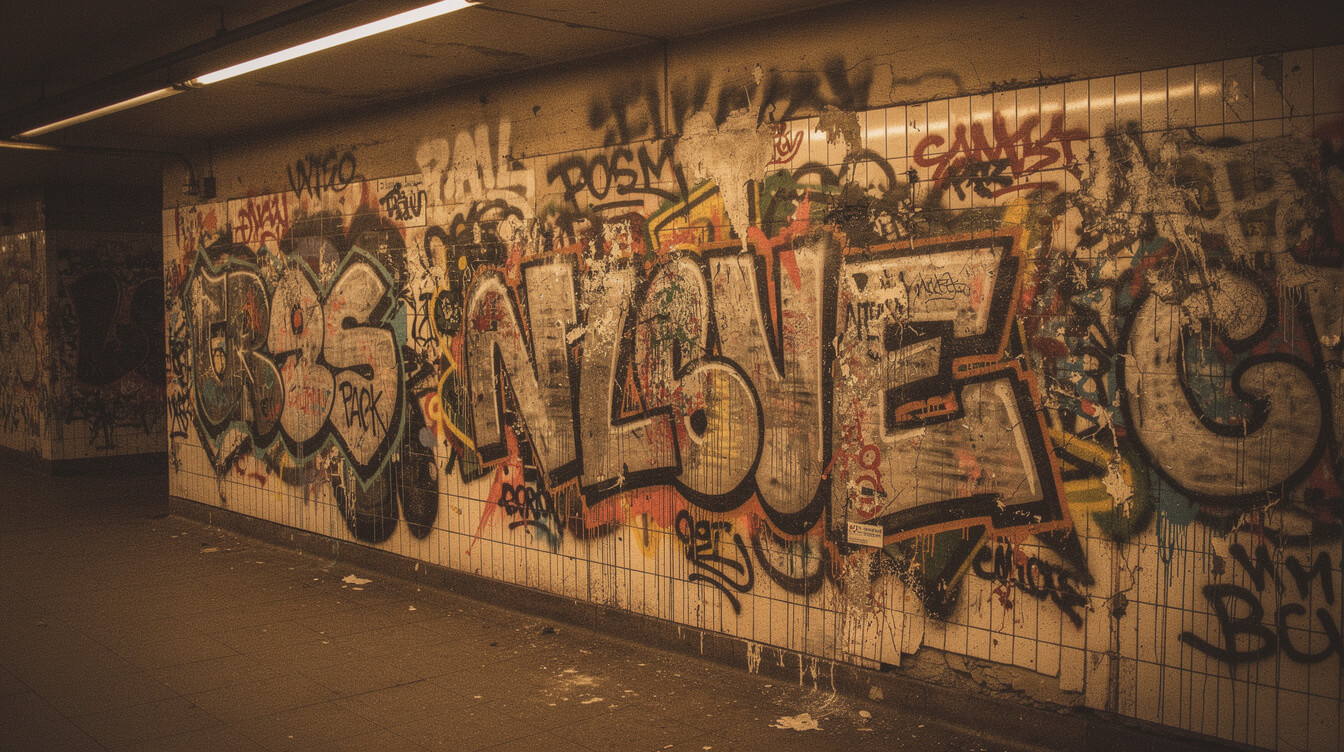
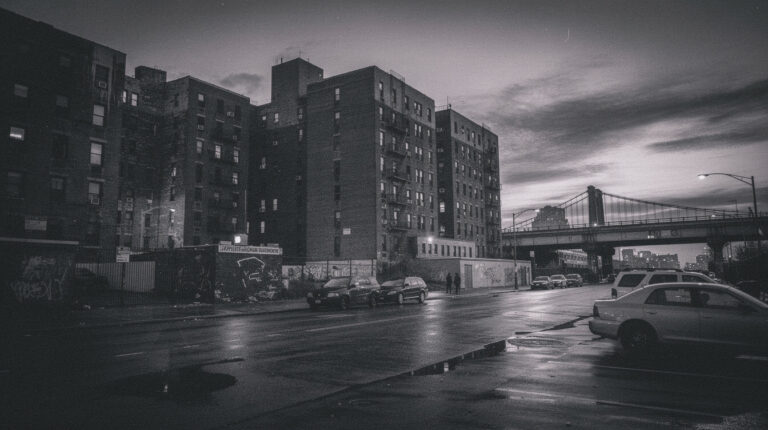
Harold “Hype” Williams was born August 1, 1970, in Queens, New York, of mixed African-American and Honduran descent. He went to Adelphi University, but his real education happened on walls — he tagged storefronts, playgrounds, and billboards under the name HYPE, pulling visual DNA straight from Keith Haring and Jean-Michel Basquiat. That’s not a cute footnote. It’s the whole key to his career: a graffiti writer’s eye for bold shape, high contrast, and maximalism, pointed at a camera instead of a spray can.
His break came through Classic Concepts Video Productions, where Lionel “Vid Kid” Martin and legendary Video Music Box VJ Ralph McDaniels gave him his first real shot under the Filmmakers With Attitude (FWA) banner — the same public-access-adjacent world that was building the infrastructure for Yo! MTV Raps-era hip-hop television. From there, Williams didn’t just direct videos. He art-directed an entire decade of how rap was allowed to look on screen, the same way Russell Simmons and Rick Rubin had already proven hip-hop could carry a feature film — a lineage you can trace all the way back to Krush Groove and the Def Jam origin story thirteen years earlier.
Why the Graffiti Background Actually Matters
It’s easy to treat “he used to write graffiti” as a throwaway biographical detail. It isn’t. Graffiti forces a writer to communicate instantly, at a distance, in a color palette that reads against a cluttered background — bold outlines, saturated fills, maximum legibility. That’s a completely different visual training than film school gives you. Williams pulling from Haring and Basquiat specifically (not just “street art” broadly) matters too: both artists built careers on turning raw, unfiltered mark-making into gallery-grade statements. Williams did the same trick on a different canvas — he took a visual language built for a brick wall and scaled it up to a 35mm frame, then to a $9.6 million theatrical release.
Ralph McDaniels and the Infrastructure Nobody Credits
Ralph McDaniels’ Video Music Box predates Yo! MTV Raps by years and gave Williams (and a generation of hip-hop video directors) a venue to even exist in the first place. Before cable money and major-label video budgets showed up, McDaniels was the one building the pipeline — local New York access television to national rap culture. Williams walking through that door with Lionel Martin isn’t a footnote; it’s the entire reason a Queens graffiti writer ended up with a camera crew instead of just a rap sheet.
The Visual Signatures He Invented: Fisheye, Chrome, and Maximalism
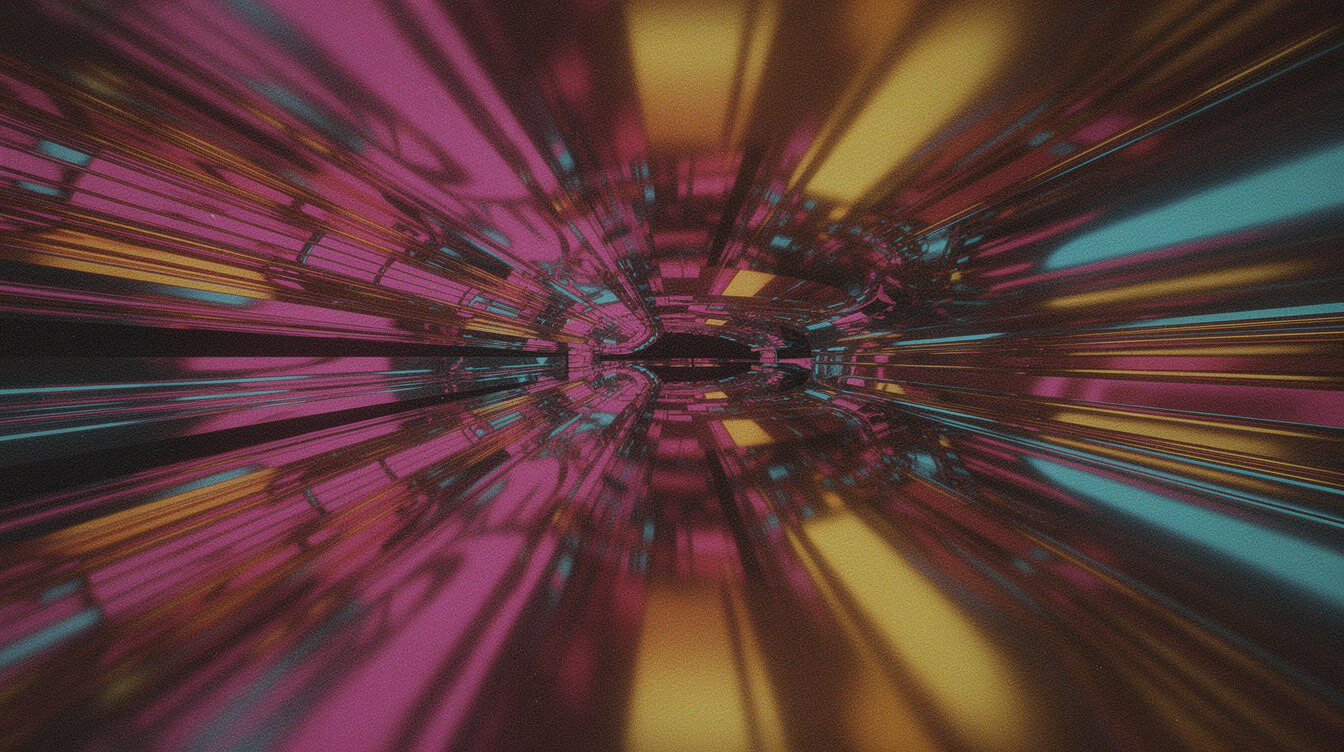
Ask Missy Elliott about the blow-up suit in “The Rain (Supa Dupa Fly)” and she’ll tell you exactly whose idea it was. “When we first met, Hype said he loved my music, and he felt that the video should reflect my sound, and for him, my music sounded futuristic,” she told Complex. “When he pitched the idea of the blow-up suit and the fisheye lens for ‘The Rain,’ I wasn’t hesitant because I’ve always been a risk-taker.” That video dropped off Supa Dupa Fly, and it’s the single clearest proof of concept for Williams’ entire philosophy: nothing was off-limits visually, as long as it matched the artist’s sound.
Jay-Z has said something similar about “Can’t Knock the Hustle,” their first collaboration. “It felt like cinema,” he recalled — and he singled out cinematographer Malik Hassan Sayeed, Williams’ regular collaborator, for the quality of the light. That’s the under-discussed half of the Hype Williams formula: the fisheye lens and the chrome surfaces get the credit, but Sayeed’s camera work is doing just as much of the labor.
The Trophy Case
The industry noticed. Williams picked up the Billboard Music Video Award for Best Director (1996), the Jackson Limo Award for Best Rap Video for Busta Rhymes’ “Woo Hah!! Got You All in Check” (1996), an NAACP Image Award (1997), a Music Video Production Association Award for Black Music Achievement (1997), an MTV VMA for Best Rap Video with Will Smith’s “Gettin’ Jiggy wit It” (1998), Best Group Video for TLC’s “No Scrubs” (1999), and a BET Award for Best Director for Kanye West’s “Gold Digger” (2006) — the same year MTV handed him the Michael Jackson Video Vanguard Award for his body of work.
The Kanye Run Never Really Stopped
Kanye West holds the record for most collaborations with Williams at 20 videos, starting with “Diamonds from Sierra Leone” in 2005. That partnership didn’t stay in the 2000s either — Williams directed Kanye’s “Heartless” video in 2008 and “All of the Lights” in 2011, proving the fisheye-and-chrome eye he built in the ’90s still worked a decade-plus later, just pointed at a different era of rap stardom. Busta Rhymes is second on the collaboration list with 16 videos, going all the way back to that 1996 debut.
Belly (1998): The Only Feature Film He Ever Made, and the One That Still Sells Merch
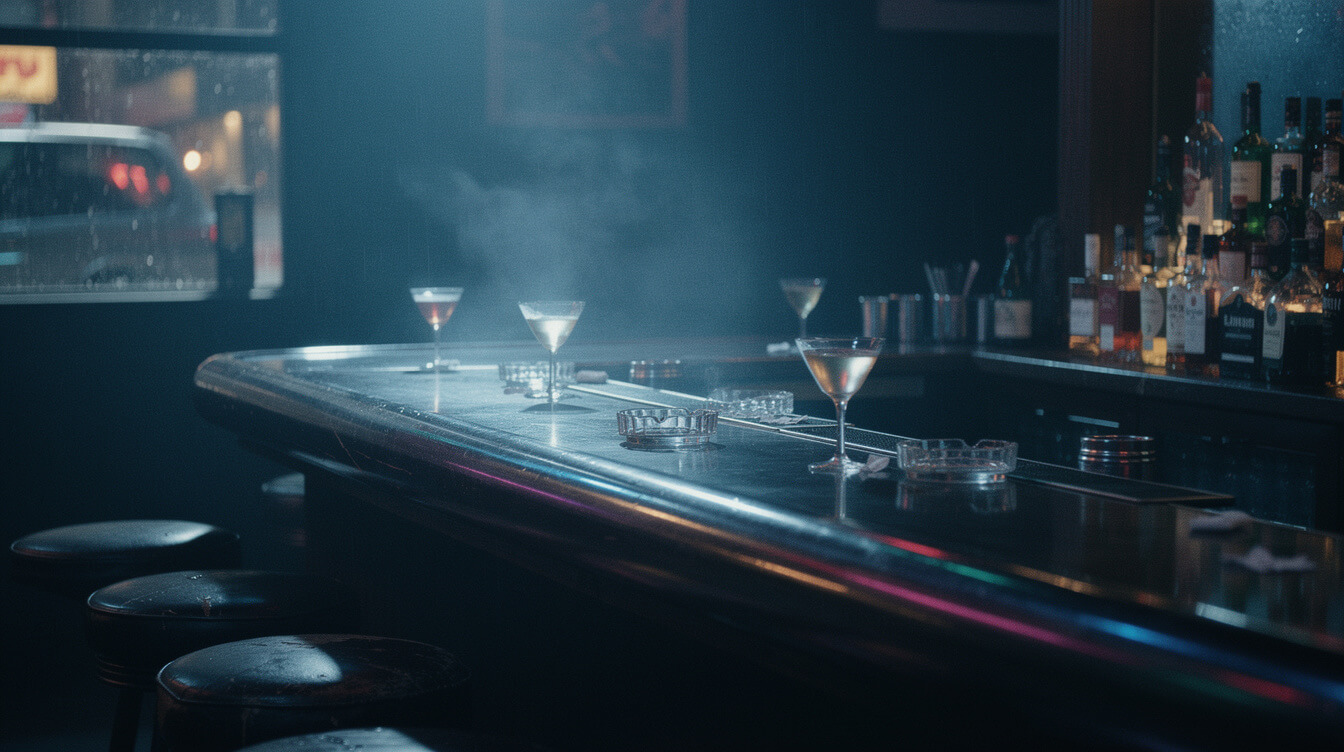
In 1998, Williams took his first and, to date, only swing at a feature film. Belly released November 4, 1998, through Artisan Entertainment, written and directed by Williams off a story he co-wrote with Nas and Anthony Bodden. Malik Sayeed shot it again, which is exactly why the thing looks the way it does — all blue-tinted nightclub strobes and chrome-plated interiors, like one of his music videos stretched to ninety-six minutes.
Here’s the part the reviews missed and the culture never did: Belly marked the feature film debuts of both Nas and DMX, alongside Taral Hicks, Method Man, and TLC’s T-Boz, with an uncredited cameo from Sean Paul and Mr. Vegas.
The Plot: Two Queens Criminals, One Doomed Pipeline
Set in 1999, the story follows Tommy “Buns” Bundy and Sincere, two Queens street criminals, through a violent nightclub robbery that opens the film. Sincere has a girlfriend and an infant daughter and is already having second thoughts about the life; Buns has no such hesitation and pushes into a new heroin operation, striking a deal with Ox, a wealthy Jamaican drug lord who demands a very specific favor in return later. The crew expands the operation out to Omaha, Nebraska, which is exactly where it starts falling apart — a police raid, a double-cross from inside the crew, and a hitman named Shameek sent to settle it all. Buns eventually travels to Jamaica himself to repay Ox’s favor, which only pulls him deeper into violence that follows him home. It’s a plot critics found overstuffed in 1998. Nobody in the audience cared, because the plot was never the point.
That’s exactly why nobody remembers Belly for its plot. They remember the way it looks, the way DMX and Nas wore their clothes in it, and the fact that it exists at all as the one time Hype Williams pointed his camera at a feature-length story. That singularity is exactly why, almost thirty years later, it sits in the same cult-classic lane as Menace II Society — another ’90s hip-hop film critics underrated on release and the culture never let go of.
Critics vs. Culture: The Numbers Behind the Cult Classic
On a $3 million budget, Belly made $9.6 million at the box office — a solid return, not a blockbuster. Reviews at the time were generally negative on the story but consistently singled out the cinematography for praise, which is the exact split that tends to produce a cult classic instead of a flop that disappears. Twenty-seven years on, that’s precisely what happened: the plot criticism faded from memory, and the visual reputation only grew.
Nas, DMX, and Method Man: Why Belly’s Cast Still Defines Streetwear Today
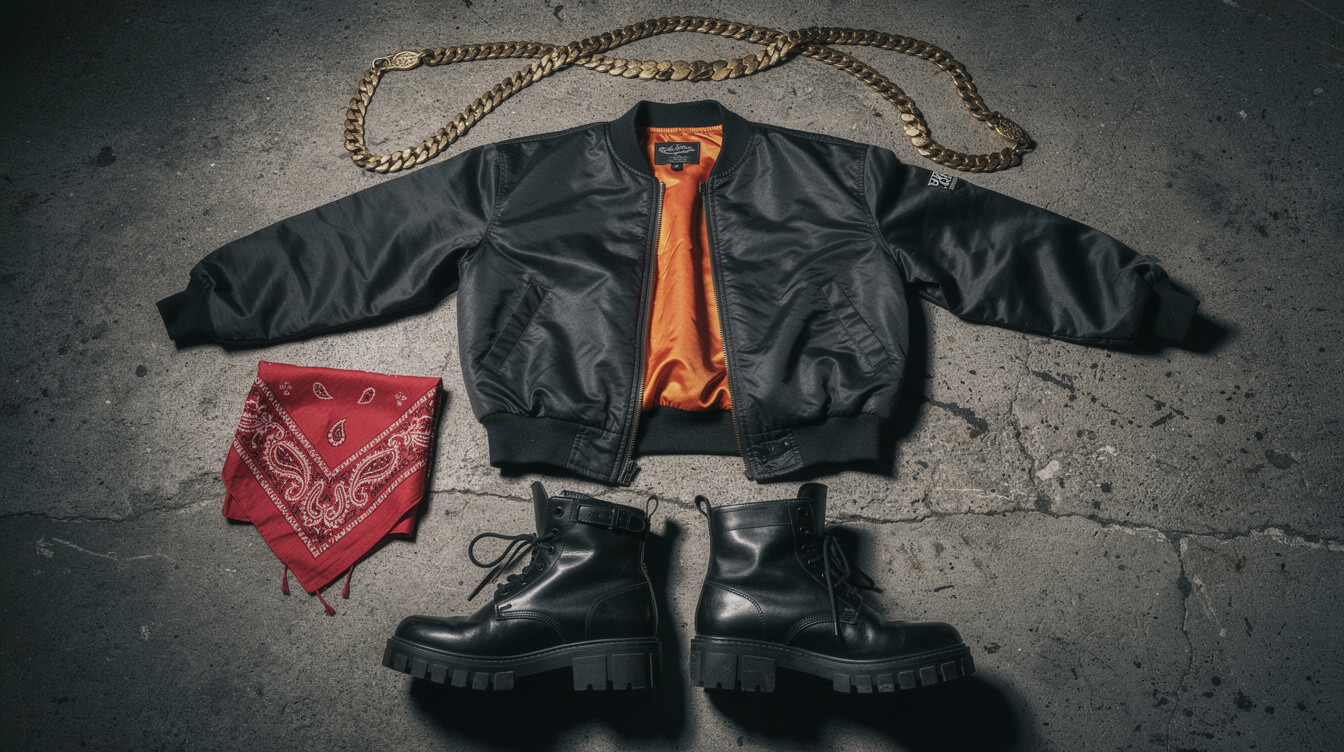
Strip the plot away and Belly is basically a ninety-six-minute style reel: silk shirts under leather, chrome jewelry catching every strobe light, bandanas, fur, and bulletproof-vest-as-fashion-statement years before “tactical streetwear” was a search term. Nas and DMX made their acting debuts in it, but what stuck culturally wasn’t the performances — it was the wardrobe. That’s the same reason a Hype Williams video and a Hype Williams film read as one unified visual world instead of two separate projects. The clothes were doing character work the script wasn’t always pulling off.
Malik Sayeed’s Camera Made the Clothes Look Expensive
None of that wardrobe reads the same way without Malik Sayeed’s camera behind it. The same cinematographer who made Jay-Z feel like he was “shooting cinema” on “Can’t Knock the Hustle” is the one lighting every chrome surface and silk shirt in Belly. That’s not a coincidence — it’s the direct continuation of the same video-director eye, just given a feature-length canvas to work with. Strip Sayeed’s lighting out and it’s a crew of people in nice clothes. With it, it’s a reference image stylists still pull from.
The Method Man Thread
Method Man’s in that cast too, and he’s Wu-Tang Clan to the core — which is exactly the kind of direct line that’s hard to find anywhere else in this filmography. If you want a piece of that specific lineage, we made the Method Man “Tical Tribute” Tee as a straight callback to that era of his catalog — the same stretch of Method Man’s career that put him in Williams’ frame in the first place.
Why Hype Williams Never Made a Second Feature (and Why It Doesn’t Matter)
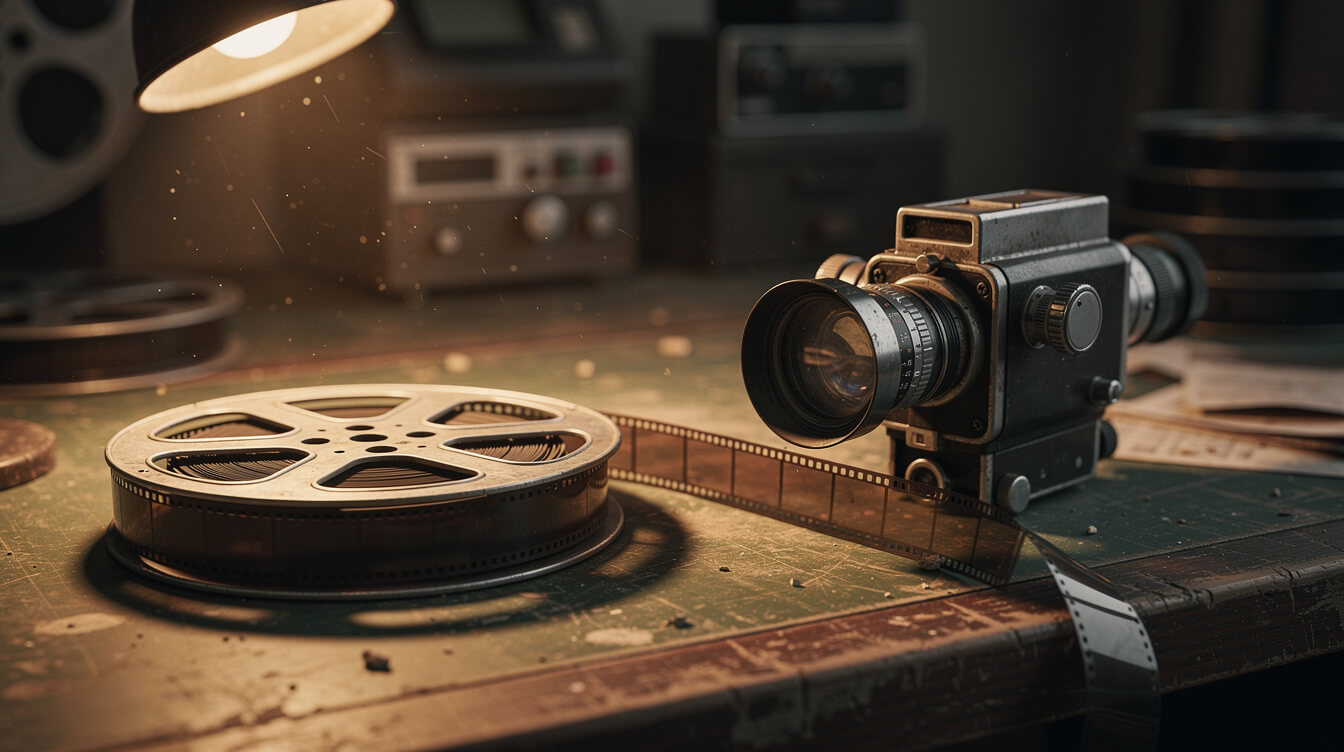
It’s not that Williams stopped trying.
Five Dead Projects in Four Years
In 1999, he signed a two-year overall deal with New Line Cinema to write and direct features. The first project, a film called Mothership, died in development. Around the same time, he was in talks with MTV for an animated series about the world of music and celebrity — that died in development too. In 2000, Warner Bros. hired him to direct Speed Racer; he left the project in 2001, and it eventually came out in 2008 under the Wachowskis instead. In 2003, Disney bought a zombie horror script he’d written, called Thrilla — same outcome, development hell. Four green-lit-adjacent projects, four dead ends, inside a five-year stretch.
The Kanye Exception: Runaway
The closest Williams got back to the film world after that run of dead projects was writing Kanye West’s 2010 short film Runaway — not directing this time, but shaping the story for a 35-minute film that itself became a cult visual artifact, the exact same outcome Belly had twelve years earlier. It’s worth noticing that pattern: whenever Williams gets anywhere near long-form filmmaking again, the result tends to become a cult object instead of a mainstream hit, whether he’s behind the camera or just behind the pen.
What “One and Done” Actually Protects
Put those four dead projects next to one finished film and the pattern is obvious: Hollywood kept trying to buy Hype Williams as a filmmaker, and it kept not working out. But here’s why that’s irrelevant to his legacy. Belly being the only one means it never got diluted by a mediocre follow-up, never got compared unfavorably to a sequel, never aged into “that director’s early work.” It stayed exactly what it was on day one — the one time the best music video director alive got a feature-length budget and total creative control. A filmography with one entry can still be a complete statement.
Frequently Asked Questions About Hype Williams and Belly

Is Belly really the only movie Hype Williams ever directed?
Yes. As of today, Belly (1998) remains his sole feature film directing credit. Everything else — Mothership, the MTV animated series, Speed Racer, Thrilla — died in development before a camera rolled.
Did Nas and DMX actually make their acting debuts in Belly?
Yes, both rappers’ first film roles are in Belly, alongside Taral Hicks, Method Man, and T-Boz, with an uncredited cameo from Sean Paul and Mr. Vegas.
Why does Belly have a cult following if critics didn’t like it on release?
Critics panned the plot but praised the cinematography, and the film has since built a cult following specifically for its visuals, its cast, and how accurately it captures 1990s hip-hop culture — the exact qualities that tend to outlast a weak script.
What happened to Hype Williams’ Speed Racer project?
He was hired by Warner Bros. in 2000, left the project in 2001, and the film eventually released in 2008 directed by the Wachowskis instead.
Is Hype Williams related to any other music video directors?
Yes — he’s the uncle of music video director Erik White, who’s built his own career in the same space.
Who is Malik Sayeed, and why does his name keep coming up?
Malik Hassan Sayeed is the cinematographer behind both Williams’ breakout videos — including Jay-Z’s “Can’t Knock the Hustle,” which Jay-Z has said “felt like cinema” — and Belly itself. If the Hype Williams look has a second author, it’s him.
Which video best represents the Hype Williams aesthetic?
Missy Elliott’s “The Rain (Supa Dupa Fly)” is the one most people point to first — the blow-up suit and fisheye lens together, built specifically to match Elliott’s description of her own sound as “futuristic.”
Why Hype Williams Films Still Shape Street Art and Neon Culture Today
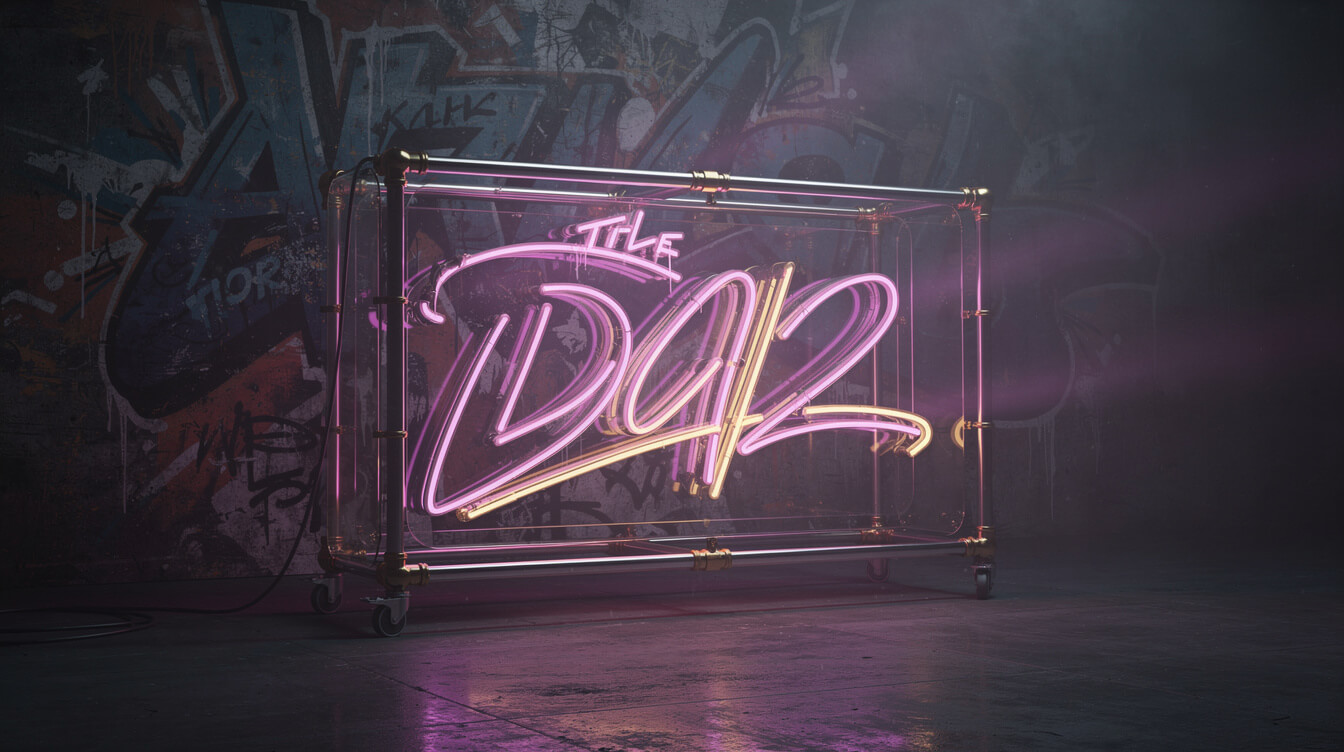
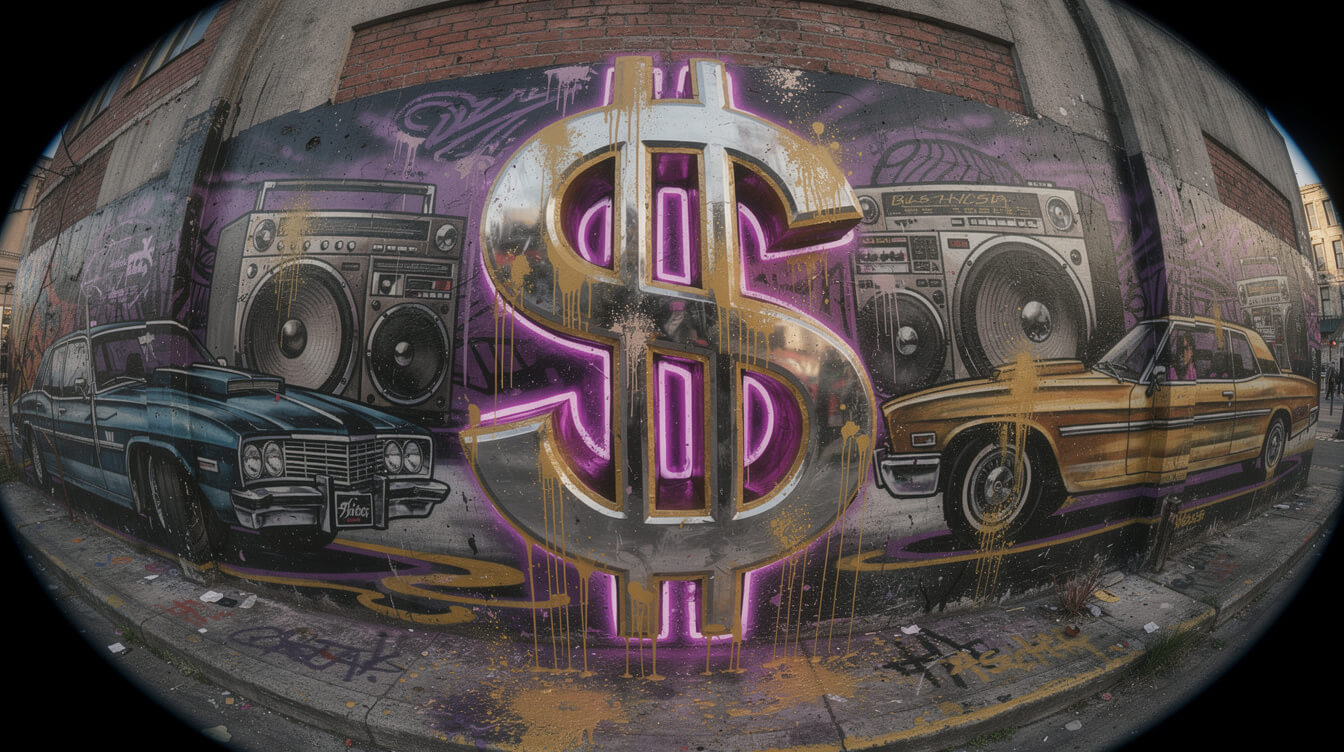
Here’s the throughline nobody writes down: a graffiti writer’s instinct for bold shape and maximum contrast became a video director’s fisheye-and-chrome signature, which became the visual grammar an entire generation of streetwear and merch design still runs on. Neon color blocking. Chrome reflections. A single image doing the work of a whole paragraph. That’s not just “the Hype Williams look” — that’s the same design logic behind a glowing LED sign on a bedroom wall or a street-art print that reads instantly from across a room.
We feel that connection every time we build something with a neon palette. The Wu-Tang Forever Neon LED Sign — same Wu-Tang orbit Method Man came out of, same chrome-and-glow aesthetic Williams pioneered on camera decades before anyone was putting it on a wall.

Wu-Tang Forever Neon LED Sign
The same chrome-and-glow visual language Hype Williams built his entire career on, now glowing on your wall. Limited edition Wu-Tang Forever tribute piece.
One feature film, one legendary catalog of videos, and a visual language that outlived the format it was invented for. That’s the whole case for Hype Williams — he didn’t just direct hip-hop’s biggest moments, he built the lens everyone still looks through.
Stay creative — The Custom Creative Team
Get the Culture in Your Inbox
New artist spotlights, drop alerts, and the stories behind the merch — straight to your inbox, no spam.

🎧 Never Miss a Drop
Exclusive product releases, hip-hop deep dives, and member-only discounts. Straight to your inbox.
Free forever. No spam. Unsubscribe anytime.
Get the Culture, Delivered
Deep dives into hip-hop history, exclusive product drops, and discounts sent straight to your inbox. No spam, just culture.
Join 2,000+ hip-hop heads already in the loop. Unsubscribe anytime.