Shock G: Gregory Jacobs, the Humpty Hump Hustle, and the Piano Man Who Put 2Pac on Record
Everybody knows the nose. Fewer people know the hands. Shock G was Gregory Jacobs: a self-taught piano player, a former teenage radio DJ who got fired for loving Funkadelic too much, the producer behind 2Pac’s first great hit, and the man who built a character so convincing that his own manager said he wouldn’t answer to his real name with the glasses on. Shock G made “The Humpty Dance” a forever party record, but the bigger story is the musician underneath it. He carried P-Funk from Tampa to Oakland, put live keys inside sample-era rap, and put Tupac Shakur on wax before anybody knew what Pac would become.
Most of what ranks for his name right now is obituaries and net-worth guesses from April 2021. This is the musician profile instead. We checked the credits against the liner notes, corrected the claims everybody copies, and told the story in Shock’s own words where he left them.
Who Was Shock G? Gregory Jacobs, the Musician Behind the Nose
He was born Gregory Edward Racker on August 25, 1963. Jacobs was his mother’s maiden name, and he took it later. Wikipedia says he was born in Queens, but Shock’s Wax Poetics interview, the BBC and the AP all say Brooklyn. Either way he was a New York kid who spent his childhood bouncing between the East Coast and Tampa, Florida. By his own account in a 2008 Q&A, he was singing Stevie Wonder’s “Uptight” at age five in Poughkeepsie. By eleven he was drumming in Tampa bands after his father moved the family south for a job.
The Drummer Who Won “Most Talented” Playing P-Funk
The P-Funk thread runs through his whole life, and it starts early. In 1978, as a drummer, he won the “Most Talented” trophy at Greco Junior High School in Tampa. As Shock told it, he won it playing Parliament’s “Flashlight” with a cover band he called Parliament 2. Think about that for a second: a junior-high kid in Florida picks the most Mothership song possible to win a talent prize. Everything Digital Underground later became was already in that choice.
From “Shah-G” to Shock G
The name was an accident. After his parents split, he spent time back in New York, where he traded the drums for turntables while hip-hop was still underground. His first rap name was MC Starchild, another Parliament nod. Then his cousin Shah-T, of the parody-rap group No Face, suggested “Shah-G,” because “Shah” means king. Greg heard it as “Shock G.” In Queens at the time, “Shock” was a popular prefix the way “Grandmaster” was in the Bronx, so the mishearing made sense to him, and it stuck.
Fired From WTMP for Playing “Knee Deep”
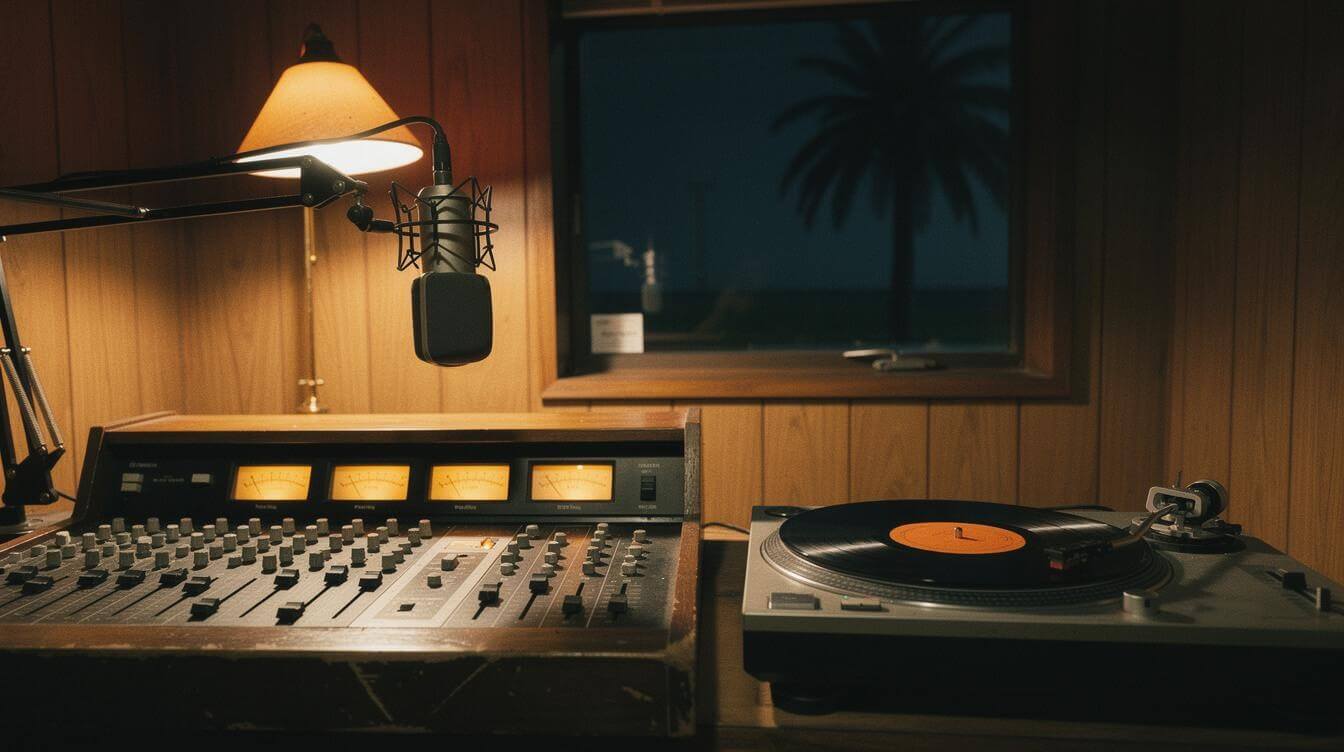
Back in Tampa as a teenager, he got an on-air slot at WTMP, the city’s main R&B station. Shock called himself “Rackadelic” on air; Wikipedia says “Gregory Racker.” It didn’t last. He was fired for playing the full fifteen-minute album version of Funkadelic’s “(Not Just) Knee Deep” in a slot a fraction of its length. Wikipedia says five minutes. In his 2008 telling it was four, and he blew through the station ID and the news break. Most DJs get fired for something boring. Shock got fired for loyalty to George Clinton.
The Piano Man Teaches Himself
“At 18 I gave up DJing to teach myself piano,” he said in that 2008 interview. He learned by sneaking into practice rooms at music stores and on college campuses, and then studied music theory at Hillsborough Community College. That’s the part the obituaries skip. Shock G could play. He worked as a keyboardist around Tampa, then moved to Los Angeles and played keys in a pop-funk band called Onyx. He said he quit “cause the lead singer literally thought he was Prince.”
The Music Store Deal That Started Digital Underground
He ended up in the Bay Area selling keyboards at a music store. Accounts differ on whether the store was in Oakland or San Leandro. One customer was a jazz drummer named Jimi Dright, better known as Chopmaster J. Shock sold him a home studio worth about $5,000, and he had a condition. “Our deal was that if I made a couple house calls to set stuff up, he’d let me finish my demo on his equipment,” Shock told Brian Coleman for the book Check the Technique. Digital Underground formed in Oakland in 1987: Shock G, Chopmaster J and Kenny-K (Kenneth Waters). Their first 12-inch, “Your Life’s a Cartoon” backed with “Underwater Rimes,” came out in 1988 on Macola and TNT, the small label run by Atron Gregory. Shock wrote, produced and performed both songs and drew the cartoon cover. By his own count it sold somewhere around 18,000 to 20,000 copies and was a surprise hit in the Netherlands. That was enough to get Tommy Boy Records on the phone.
Humpty Hump: The Shock G Alter Ego He Never Broke

Humpty Hump made his first appearance, unnamed, on “Doowutchyalike,” Digital Underground’s 1989 Tommy Boy single. It reached No. 19 on Billboard’s rap chart. Then the character got a name, a voice and a backstory, and Shock G built one of the most committed bits in music history.
Edward Ellington Humphrey III and the Deep Fryer
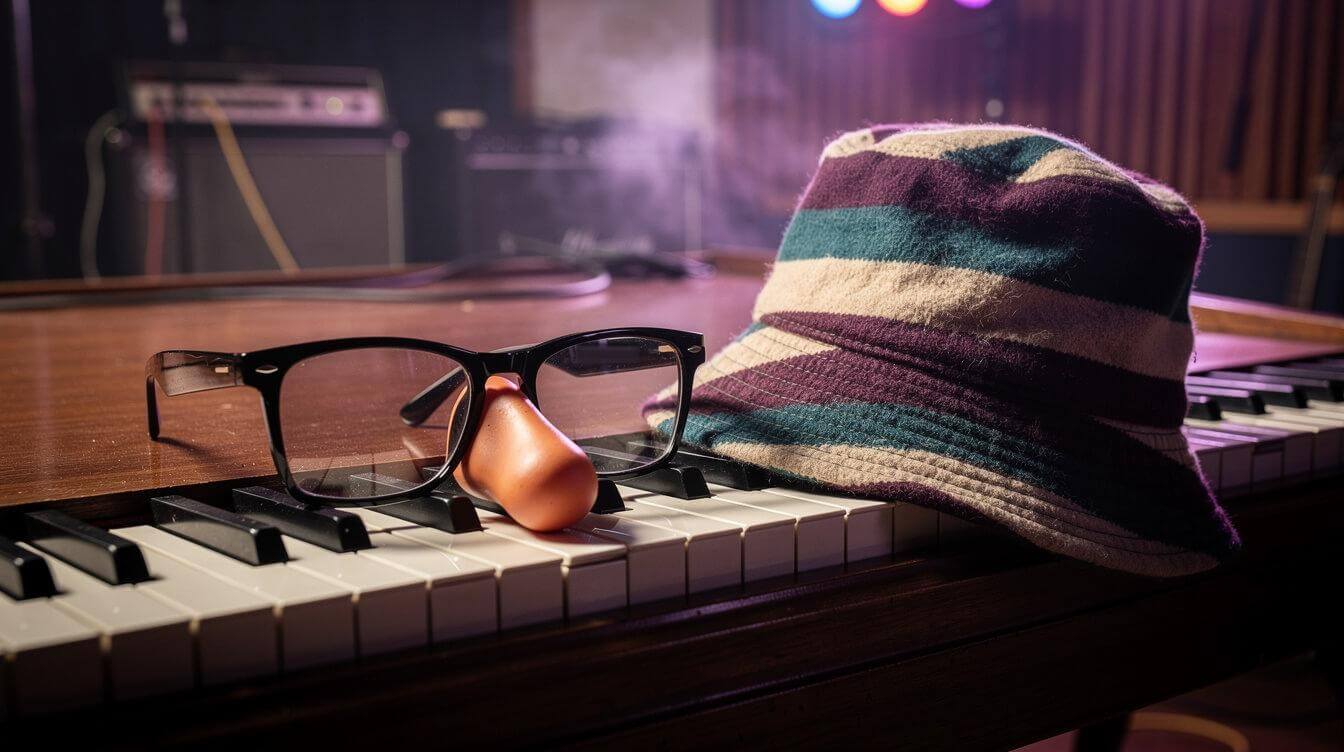
According to Digital Underground’s press kit, Humpty was really Edward Ellington Humphrey III, a former singer with a group called Smooth Eddie and the Humpers. He wore Groucho glasses with an oversized rubber nose because he’d burned his own nose in a deep-fryer accident. Humpty talked in a nasal voice, wore loud clothes and a bucket hat, and was everything Shock was not. Shock G pointed to George Clinton as the model. Clinton used characters to keep the paparazzi and label people guessing: “Which one is George Clinton? He’s either Starchild or Sir Nose,” Shock explained to Wax Poetics. Andy Kaufman’s characters were another influence.
Stand-Ins, a Brother and a Writer Credit for a Fictional Man
Shock kept the two apart so carefully that plenty of fans thought Humpty and Shock were different people. When both needed to appear at once, he used stand-ins, and his brother Kent Racker sometimes played Humpty or Shock, as the Washington Post, the BBC and the AP all reported after his death. “If Shock G had Humpty’s nose on, he wouldn’t answer you if you called him by his real name!” Atron Gregory told POW Magazine. The best receipt is on the record itself. The Discogs liner credits list “The Humpty Dance” as written by Gregory Jacobs and Eddie Humphrey. The fictional man has a songwriting credit. Shock confirmed the joke years later: “We got to split this four ways: T. Shakur, Money B, G. Jacobs, E. Humphrey.”
“The Humpty Dance”: The Last-Minute Song That Became Forever
“The Humpty Dance” almost wasn’t on the album. It went on late, after a track called “Underground System” was pulled over sample clearance. The drums come from Sly and the Family Stone’s “Sing a Simple Song,” the handclap snare from Parliament’s “Theme From the Black Hole,” and the chorus vocal from Parliament’s “Let’s Play House.” Shock is credited as producer and with the synth bassline. The single dropped at the turn of 1990. Wikipedia says January 1990, but the sleeve reads ℗1989. It went to No. 1 on Billboard’s rap chart for five weeks, No. 7 R&B and No. 11 on the Hot 100. The RIAA certified it Platinum on April 23, 1990, and it earned a Grammy nomination. One line tells you what Shock was up to: “I’m about to ruin the image and the style that you’re used to.” In a year when rap was getting tougher and more uniform, he showed up in a fake nose and dared you not to dance.
It became a sample engine almost immediately. Gang Starr flipped it on “Lovesick” in 1991 (we broke down that era in our Gang Starr songs guide), and Ice Cube used it on “Who’s the Mack?” WhoSampled now counts well over 200 uses.
Sex Packets: The Concept Album Under the Party
Sex Packets came out in spring 1990 on Tommy Boy. It went Platinum on September 18, 1990, and peaked at No. 24 on the Billboard 200. The concept is pure P-Funk science fiction: a government-made pill called G.S.R.A. that gives you a vivid sexual dream, which Chopmaster J later described as a response to the AIDS era. Shock told Coleman he wanted to “bridge the gap between Prince and hip-hop.” “The Piano Man” is credited with keys on the record, and the cover art is credited to “Rackadelic,” his old radio name, now used for his drawings. One more jewel, from Wax Poetics: “Both Humpty and Tupac came along after we recorded that album. That’s why neither appear in the cover photo.”
Shock G and 2Pac: From Roadie to Recording Debut
The question people Google most is some version of “Who was Tupac’s closest friend?” Digital Underground’s history gives a better answer than a friendship ranking. Shock G was the musician who gave 2Pac his first job, his first recorded verse and the beat for his first big hit. Call him mentor and producer, not best friend.
Roadie First, Not a Dancer
Atron Gregory, Digital Underground’s manager, also managed Tupac, and Pac joined the touring crew as a roadie. Wikipedia calls him a “backup dancer.” Chopmaster J disagreed in Rolling Stone’s 2017 oral history: “No, he wasn’t a dancer.” Pac was a guy willing to do whatever the show needed, including doing the Humpty Dance on stage. In the same oral history, Gregory says an early Pac demo got rejected because he “sounded like Ice Cube.” Imagine being the label that passed on that tape.
“Same Song”: Pac’s First Released Verse
Pac’s first released verse came on “Same Song,” issued in January 1991. It was on the soundtrack to Dan Aykroyd’s comedy Nothing but Trouble and on Digital Underground’s This Is an EP Release. Digital Underground is credited as producer on the single. The group also appears in the film, which makes it Pac’s first movie credit too. We still sell a vintage Digital Underground design featuring Tupac and Shock G because that moment, Pac in the background of somebody else’s record about to take over, is the whole origin story in one frame.
The Underground Railroad: Who Actually Produced 2Pacalypse Now
2Pacalypse Now arrived in November 1991 on Interscope. We marked the 35th anniversary in our 2Pacalypse Now Today in Hip-Hop. The liner notes credit production to a crew called The Underground Railroad: Big D the Impossible, Shock-G, Pee Wee, Jeremy, Raw Fusion and Live Squad. Shock G is credited as producer on “Words of Wisdom” and “Rebel of the Underground,” and he plays keys as The Piano Man elsewhere on the album. So “co-producer of 2Pacalypse Now” is accurate. “Shock G produced ‘Trapped,'” which half the obituaries say, isn’t quite right. “Trapped” is credited to The Underground Railroad, was co-written by Pee-Wee Gooden, and has Shock G on backing vocals. (We told that single’s story in our Trapped 35th-anniversary piece.)
The Piano Man Behind “I Get Around” and “So Many Tears”
If you want the clearest proof that Shock G was a producer first, look at the two Pac records he’s credited on after the Digital Underground years. One was Pac’s breakthrough hit. The other is one of the saddest songs on Pac’s best album.
“I Get Around”: The D-Flow Production Squad
“I Get Around” came out in 1993 on Strictly 4 My N.I.G.G.A.Z…. The 12-inch credits production to The D-Flow Production Squad, which is Shock G under another name. The Piano Man is credited on keys and rhythm arrangement, and Shock G and Money-B have guest verses. It peaked at No. 11 on the Hot 100, the same peak as “The Humpty Dance.” The RIAA database shows its Platinum plaque dated March 31, 2021. That’s nearly 28 years after release and three weeks before Shock died. Plenty of recaps call it “platinum in 1993,” and that’s wrong.
The Saafir Beat and the Verse Pac Wrote for Shock
The backstory comes from inside the circle. Money-B told VladTV in 2017 that the track was first meant for the Oakland rapper Saafir. Shock took it back and gave it to Pac while the two were beefing. Then the verses: “That’s how Pac wound up writing my verse,” Shock told Rolling Stone. “He just started walking around the room with a pen and paper.” Money-B adds a detail. Shock rapped the verse Pac wrote, “but Shock kinda just altered it, just a little bit,” while Money-B turned down the verse Pac wrote for him and wrote his own. In the same Rolling Stone piece, DJ Fuze says he missed the video shoot with a hangover. That’s very Digital Underground.
“So Many Tears”: Stevie Wonder, Slowed Down
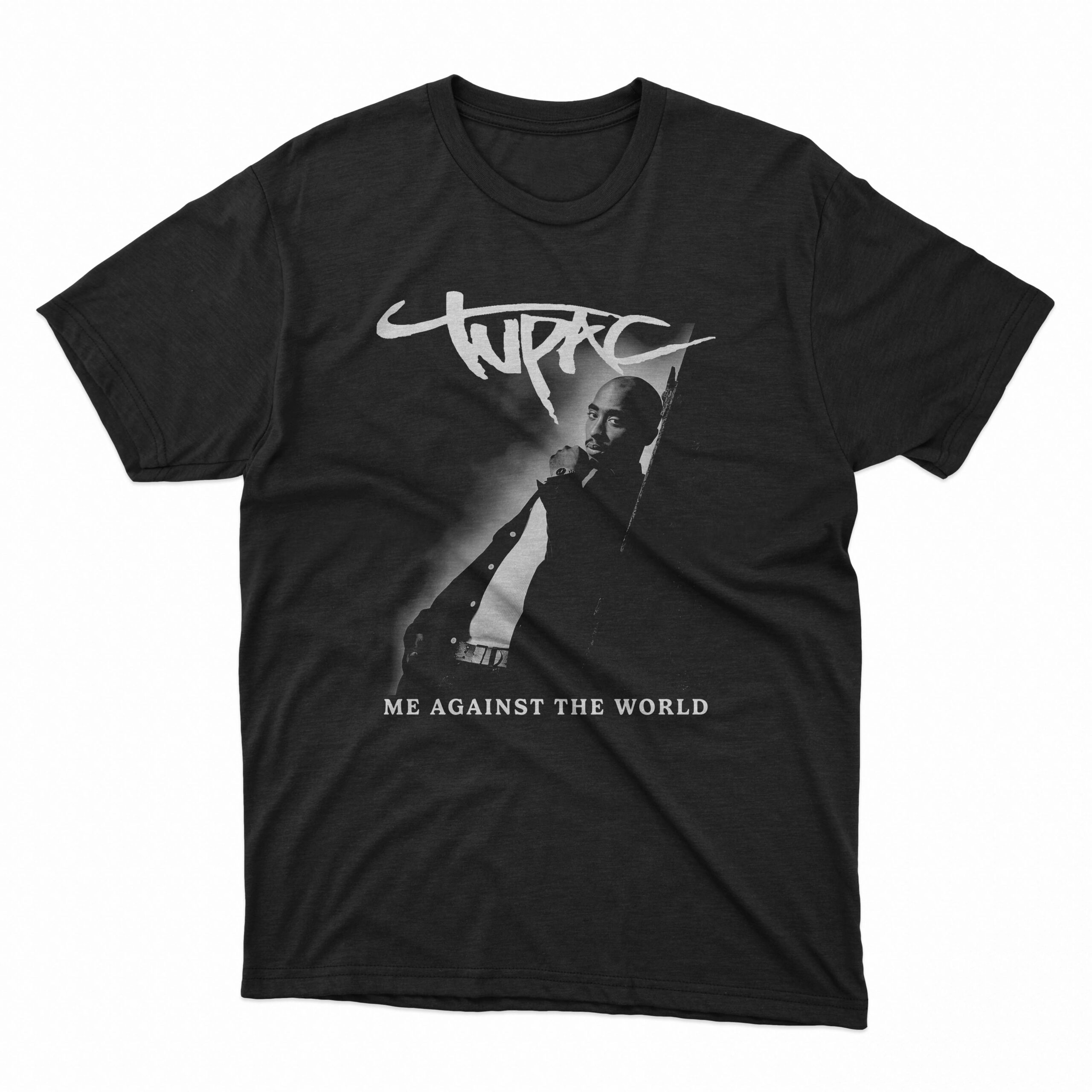
“So Many Tears,” from 1995’s Me Against the World, is credited to the “D-Flizno Production Squad,” another Shock alias, with G. Jacobs among the writers. It’s built on Stevie Wonder’s “That Girl,” which the single’s notes credit. It brings the story full circle: the five-year-old singing “Uptight” in Poughkeepsie ends up producing a Stevie flip for the most important rapper of the decade. Note that “So Many Tears” is a single from the album, not an album itself, which at least one ranking page gets wrong. For the full album context, see every Tupac album explained, and for the art, the story behind every 2Pac album cover. And if Me Against the World is your Pac album, the Tupac Me Against The World T-Shirt puts that 1995 era on cotton.
The 1995 Era, Built on a Shock G Beat
We made the Tupac Me Against The World Tee for the album where Pac’s pain went public and “So Many Tears” played on the Piano Man’s keys. A tribute to the record, made for heads who know the liner notes.
Raw Fusion and the November 1991 Double Drop
To see how Digital Underground actually worked, look at the side projects. The group operated more like a workshop than a band, and Raw Fusion is the best example.
Money-B and DJ Fuze’s Spin-Off
Raw Fusion was Money-B and DJ Fuze, Digital Underground members with a harder-edged project of their own. It wasn’t a Shock G group. The LP credits list Money-B on lead vocals, DJ Fuze on scratches and Raw Fusion as producer. Shock’s fingerprints are still all over it. He raps on “Funkintoyoear,” the Piano Man plays on “Throw Your Hands in the Air,” and Shock, Humpty and Saafir all appear on “Do My Thang.” The credits also list “Rockin’ to the P.M.” as written by Gregory Jacobs and produced by Digital Underground. And Tupac shows up on “#1 with a Bullet,” one of his earliest appearances as a rapper anywhere.
One Crew, Two Albums, One Day
Wikipedia dates both Live from the Styleetron and 2Pacalypse Now to November 12, 1991. Discogs gives only the year, so treat the exact day as a single-source date. Even so, the picture is clear. In the same season, the same Oakland crew put out Pac’s debut and Money-B and DJ Fuze’s debut, with Raw Fusion credited as producers on Pac’s album and Pac rapping on Raw Fusion’s. Shock G sat in the middle of both. Nobody in the SERP connects these two records, and that’s the point. Digital Underground wasn’t just a hit group with a funny nose. It was a production house that turned out a generation of Bay Area records.
The Bay Lineage
That workshop model is a big part of why the Bay sounded like itself in the ’90s: funk-first, a little weird, proudly independent. It’s the same scene that gave us the Hieroglyphics crew (see our Del the Funky Homosapien birthday piece) and the hustle-first independence covered in our E-40 retrospective.
Shock G the Producer, Beyond the Underground
The production résumé goes well past Pac. Credits need care here, though, because a lot of what circulates online is wrong.
The Luniz and the “I Got 5 on It” Correction
On the Luniz’ 1995 debut Operation Stackola, Shock G produced “Broke Hos,” produced and rapped on “5150,” and has a co-production credit on another track. “I Got 5 on It” itself was produced by Tone Capone, not Shock, even though the two names get blurred together all the time. A year later, Shock’s “We Got More,” featuring the Luniz and credited to the D-Flow Production Squad, landed on the Don’t Be a Menace to South Central While Drinking Your Juice in the Hood soundtrack.
Prince, George Clinton and the Funk Elders
Two of his heroes ended up as collaborators. Prince’s 1998 triple-disc Crystal Ball includes “Love Sign (Shock G’s Silky Remix),” so the kid who wanted to “bridge the gap between Prince and hip-hop” literally did it on a Prince record. At Woodstock 1999 he performed with George Clinton and the P-Funk All-Stars, which means the teenager fired for playing “Knee Deep” ended up on the same stage as the people who made it. In 2010, when a critic went after Clinton’s legacy, Shock wrote a public open letter defending him. He’s also among the interviewees in the 2005 documentary Parliament Funkadelic: One Nation Under a Groove, and he speaks in the Tupac documentary Thug Angel.
Murs, Def Jux and a Solo Record
In 2003 he produced “Risky Business” for Murs, released on Definitive Jux, and appeared on it as both Shock G and Humpty Hump. A golden-age funk-rap architect showing up on one of the defining indie-rap labels of the 2000s says a lot about how far his respect reached. The next year he released his own solo album, Fear of a Mixed Planet. If that Bay-to-indie lineage is your lane, the Del “I Wish My Brother George Was Here” T-Shirt and the Souls of Mischief 93 ’til Infinity T-Shirt carry the same Oakland DNA.
Shock G’s Legacy: April 2021 and What He Left
Shock G was found dead in Tampa on April 22, 2021, at 57. On June 10, 2021, the Hillsborough County Medical Examiner ruled it an accidental overdose of fentanyl, methamphetamine and alcohol. He died days after DMX and Black Rob, a brutal stretch for ’90s hip-hop.
Why Shock G Still Matters
Three things outlive him. First, the drums. “The Humpty Dance” is one of the most reused records in rap, and it only exists because he wrote it in a hurry after another track got pulled for clearance. Second, the keys. In an era built on samples, Shock was a trained player putting live piano into rap records, with “The Piano Man” credited on sleeve after sleeve. Third, the bridge. He carried a straight line from Parliament through Oakland to Tupac Shakur, and he did it with jokes, cartoons and a rubber nose. “Characters live on longer than human beings do,” he once said, quoted by the London Review of Books. He was right about Humpty. But the man who said “I’m not Humpty. My home life is really quiet and simple” to Wax Poetics deserves to be remembered too.
Start Here: Six Shock G Tracks
- “Doowutchyalike” (1989): Digital Underground’s mission statement and Humpty’s first, unnamed appearance.
- “The Humpty Dance” (1990): Sly drums, Parliament claps and a writer credit for a fictional man.
- “Same Song” (1991): the first released Tupac verse, from the Nothing but Trouble soundtrack.
- “Kiss You Back” (1991): Shock’s softer side from Sons of the P.
- “I Get Around” (1993): the D-Flow Production Squad beat that broke Pac wide.
- “So Many Tears” (1995): Stevie Wonder’s “That Girl” turned into Pac’s confession.
Shock G FAQ
Who sang “The Humpty Dance”?
Shock G, performing as his alter ego Humpty Hump. The song is credited to Digital Underground. The liner notes list the writers as Gregory Jacobs and “Eddie Humphrey,” Humpty’s fictional real name.
Were Shock G and Humpty Hump the same person?
Yes. Gregory Jacobs played both, and kept them apart so carefully that many fans believed they were two people. At shows and video shoots he used stand-ins when both had to appear, sometimes his brother Kent Racker.
What did Shock G produce for 2Pac?
He was part of The Underground Railroad production crew on 2Pacalypse Now, with producer credits on “Words of Wisdom” and “Rebel of the Underground” and keys as The Piano Man. He produced “I Get Around” as The D-Flow Production Squad and “So Many Tears” as the D-Flizno Production Squad. He did not produce “Trapped.” He sings backing vocals on it.
Why does Humpty Hump wear the glasses and the nose?
In the official press-kit story, Edward Ellington Humphrey III burned his nose in a deep-fryer accident. In reality, Shock borrowed the idea from George Clinton’s characters: a disguise lets the performer disappear and the character take over.
Where was Shock G born?
In New York City, on August 25, 1963. Wikipedia says Queens, but his own Wax Poetics interview and the BBC and AP obituaries say Brooklyn. He grew up between New York and Tampa, Florida.
How did Shock G die?
He was found dead in Tampa on April 22, 2021, at age 57. The Hillsborough County Medical Examiner ruled the death an accidental overdose of fentanyl, methamphetamine and alcohol.
Stay creative — The Custom Creative Team
Get the Culture in Your Inbox
Liner-note receipts, producer stories, anniversaries and first dibs on new drops. No spam, just hip-hop.

🎧 Never Miss a Drop
Exclusive product releases, hip-hop deep dives, and member-only discounts. Straight to your inbox.
Free forever. No spam. Unsubscribe anytime.
Get the Culture, Delivered
Deep dives into hip-hop history, exclusive product drops, and discounts sent straight to your inbox. No spam, just culture.
Join 2,000+ hip-hop heads already in the loop. Unsubscribe anytime.