Tupac Albums: Every LP, Living and Posthumous, Explained
The story of Tupac Shakur’s catalog isn’t the four albums he dropped while he was breathing. It’s the gap. The bifurcation. The fact that one of hip-hop’s most prolific artists made four tupac albums alive — and the industry has spent thirty years pulling another seven full-length records out of the vault since the night of September 13, 1996. No other artist in this genre has a discography that doubles in death. Not Biggie. Not Big L. Not Big Pun. Tupac is the singular case, and the actual story of his recorded work is the war over who got to release what, when, and from whose tape reels.
This is the read most discography pages skip. Wikipedia gives you a list. Genius gives you a tracklist. We’re going to give you the actual arc — the political-rap kid from the Bay who turned into a Death Row chess piece, the prison album most critics still call his best, the Makaveli farewell written six weeks before his death, and the master-tape war between Death Row, Interscope, Amaru Entertainment, and his mother’s estate that runs all the way to 2026. Pull up.
The Doubled Catalog: Four Alive, Seven-Plus Posthumous
Tupac released four solo studio albums while he was alive: 2Pacalypse Now (1991), Strictly 4 My N.I.G.G.A.Z. (1993), Me Against the World (1995), and All Eyez On Me (1996). Then he was killed in Las Vegas on September 13, 1996, six weeks before the release of The Don Killuminati: The 7 Day Theory on November 5 — technically the first record of his posthumous catalog, though the recording sessions wrapped while he was still alive.
What followed is unprecedented. R U Still Down? (Remember Me) in 1997. Still I Rise with the Outlawz in 1999. Until the End of Time in 2001. Better Dayz in 2002. Loyal to the Game in 2004. Pac’s Life in 2006. Plus a tangle of compilations, soundtracks, and the original One Nation sessions that have leaked in pieces across two decades. Conservatively that’s seven full-length posthumous LPs. Generously, the number climbs past ten depending on how you count Greatest Hits, the Better Dayz double-disc cut, and the unreleased material that surfaces every few years.
Biggie’s the only artist in the same conversation, and the math isn’t close: two albums alive, four posthumous. Tupac doubled himself in death. The vault never closed. That’s the actual story.
The Political Years: 2Pacalypse Now (1991) and Strictly 4 My N.I.G.G.A.Z. (1993)
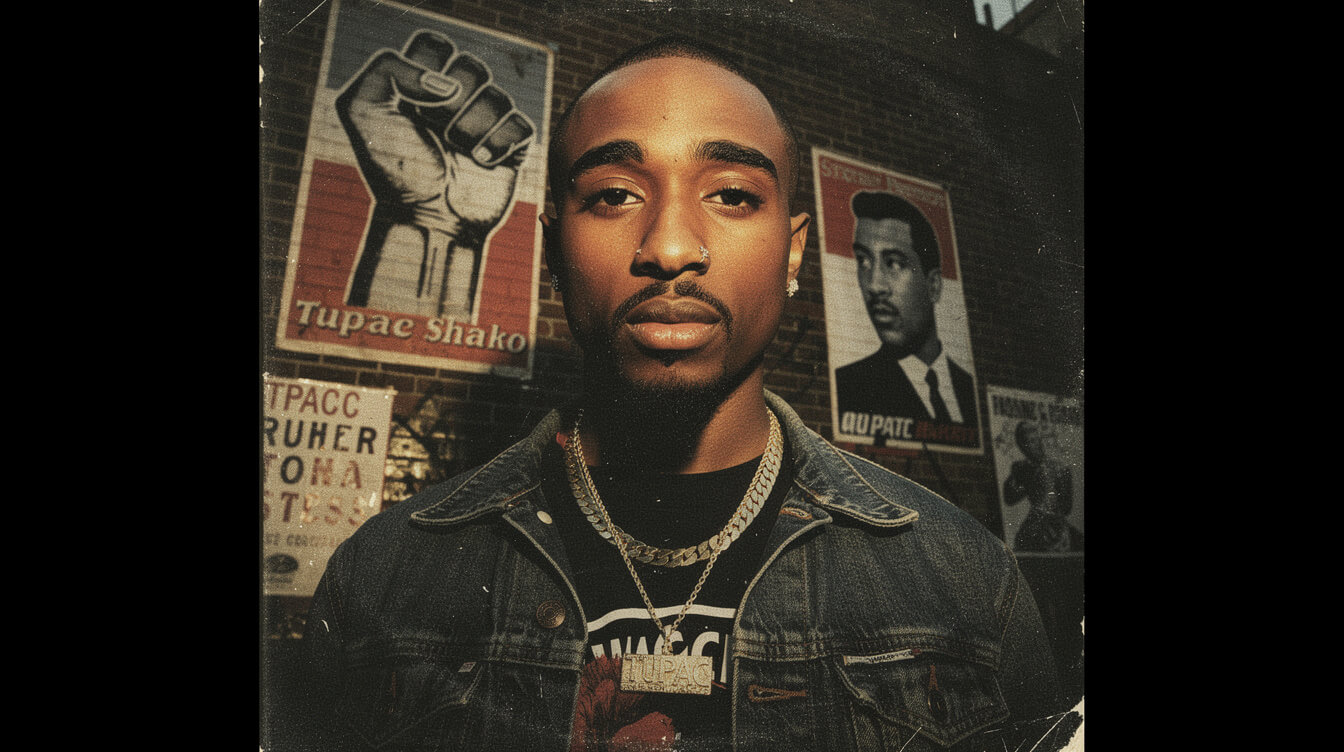
To understand Tupac you have to understand Afeni Shakur. His mother was a Black Panther who beat a 156-count conspiracy case while pregnant with him in 1971. He grew up steeped in Panther ideology, Black liberation theology, and the political-rap framework that shaped his early lyrics. So when his solo debut 2Pacalypse Now dropped on November 12, 1991 — after he’d been the political conscience inside Digital Underground’s touring crew — it sounded like nothing else on the West Coast. “Brenda’s Got A Baby” was a teen-pregnancy story-rap told with a social-worker’s empathy. “Trapped” was a Black-male-in-the-system thesis statement. “Words of Wisdom” name-checked Marcus Garvey, Nat Turner, and Geronimo Pratt.
The album moved modestly in the marketplace and detonated culturally. Vice President Dan Quayle famously said the record “has no place in our society” after a Texas state trooper was killed by a man whose car contained the cassette — the kind of free-press blunder that ages a record’s politics into permanent canon. Hip-hop largely forgets 2Pacalypse Now; political-rap historians treat it like sacred text.
Two years later, Strictly 4 My N.I.G.G.A.Z. arrived on February 16, 1993, and the register shifted. “Keep Ya Head Up” was the empathetic single — a record dedicated to Latasha Harlins and the Black women raising hip-hop’s next generation. “I Get Around,” produced by Shock G and featuring his Digital Underground crew, was the radio-friendly counterweight. The album peaked at #4 on the Billboard 200 and went platinum, making Tupac a commercial force for the first time. The political-rap thesis was still intact. He just learned how to bury it inside a hook the radio would actually play.
Me Against the World (1995): The Prison Album, His Best
This is the one most critics put first when they’re being honest. Me Against the World dropped on March 14, 1995 while Tupac was sitting in Clinton Correctional Facility serving 1.5 to 4.5 years on a sexual-abuse conviction. The album was recorded before the November 1994 Quad Studios shooting where he caught five bullets in a Manhattan lobby and accused Bad Boy of setting him up — but it was released while he was incarcerated, and that context changes everything.
“Dear Mama” is the record. The most-played mother song in hip-hop, a Joe Sample-sampled letter to Afeni that turned her crack-era addiction and Panther sacrifices into shared catharsis. “So Many Tears” took Stevie Wonder’s “That Girl” and built a meditation on mortality that played as a premonition by the time he died. “Lord Knows” was the prayer-as-confession. “Temptations” was the morality-tale single. The album became the first record ever to debut at #1 on the Billboard 200 by an artist who was incarcerated at the time of release.
What makes it the consensus pick for Tupac’s best work is the absence of theater. There’s no Death Row machine yet, no thug-life branding apparatus, no chess game with Bad Boy. It’s just Tupac alone with a microphone, his catalog of fears, and the specific clarity that comes from sitting in a cell while your record is going platinum on the outside. If you only have time to listen to one of the four tupac albums released in his lifetime, this is the one.
All Eyez On Me (1996): The Death Row Pivot at 30

February 13, 1996. Suge Knight had just posted Tupac’s $1.4 million bail to spring him from prison, with the understanding that he’d sign to Death Row Records on the way out. All Eyez On Me was the proof. Hip-hop’s first true double LP — twenty-seven tracks across two discs, a self-funded statement of how much music he could make in one breath after eleven months in a cell. The record hit 9× platinum, spent six weeks at #1 on the Billboard 200, and went on to become the second-highest-selling rap album of the 1990s behind Biggie’s Life After Death.
Sonically it’s a Death Row record top to bottom. Dr. Dre’s “California Love” is the canonical West Coast anthem — the Roger Troutman talkbox hook, the Woody Woodpecker sample, the Mad Max video that put low-riders and post-apocalyptic palm trees into the visual vocabulary forever. “How Do U Want It” with Jodeci’s K-Ci and JoJo was the radio crossover. “Picture Me Rollin'” was the prison-victory-lap. “I Ain’t Mad At Cha” was the elegy that previewed his own funeral within seven months. The 30th anniversary on February 13, 2026 made the album new again — a milestone the rest of hip-hop’s anniversary cycle was forced to reckon with.
But here’s the catch: All Eyez On Me is also where the political-rap kid disappears. The thug-life-as-brand framing — the chains, the bandana, the “Outlaw Immortal” mythology — is Death Row’s machine working. Tupac is still the most charismatic rapper alive on every bar. He just stopped writing the kind of songs that made Quayle nervous and started writing the kind of songs that made him a movie star. The trade-off is the record’s central tension. For more on how 1996 reshaped the entire hip-hop landscape, see our reads on Wu-Tang Forever and OutKast’s ATLiens — the same year, different blueprints.

Wear the Makaveli Era
Heavyweight hoodie honoring the Don Killuminati farewell. Premium streetwear cut for cold nights and long playlists. Wear it like he meant it.
The Don Killuminati: The 7 Day Theory (1996) — The Makaveli Farewell
Tupac recorded The Don Killuminati: The 7 Day Theory in August 1996, reportedly across a stretch of three to seven days at Can-Am Studios in Tarzana. The record dropped on November 5, 1996 — fifty-three days after he was killed in Las Vegas. Technically it’s still being released under a living-artist contract since the masters were turned in before his death, but the album is universally read as the first posthumous Tupac LP. The handoff between living and posthumous catalog runs right through this record.
Under the Makaveli alias — taken from the Renaissance political philosopher Niccolò Machiavelli — the writing turns harder, more apocalyptic, more diss-track-heavy. “Hail Mary” is the closing argument: an organ-driven funeral hymn with Tupac as both prophet and martyr. “To Live & Die in L.A.” was the West Coast anthem stripped of All Eyez‘s gloss. “Against All Odds” was the diss track aimed at Mobb Deep, Nas, Jay-Z, Bad Boy, and a roster of music-industry power players — the kind of record you only release when you’ve decided the rules of the game no longer apply to you.
The Makaveli alias also birthed the “Tupac is alive” conspiracy lineage that’s run for thirty years now — Machiavelli’s The Prince contains a passage about faking your own death to lure your enemies into vulnerability, and Tupac fans turned that footnote into an entire mythology. The cover art — Tupac crucified, captioned “in no way is this portrait an expression of disrespect for Jesus Christ” — sealed the iconography. If you want to live in the Makaveli era, our Tupac Don Killuminati T-Shirt carries the cover-art weight without the religious controversy.
The Posthumous Era: Amaru, the Vault, and Why the Catalog Keeps Growing
The posthumous catalog starts in earnest in November 1997 with R U Still Down? (Remember Me), a double LP of pre-Death Row material recorded between 1992 and 1994 that Afeni Shakur licensed to Jive Records through her newly-formed Amaru Entertainment. Amaru is the load-bearing piece of this whole story. Afeni founded the label specifically to take control of her son’s unreleased work — the masters Interscope and Death Row hadn’t already locked up — and to make sure the family, not the labels, owned the future releases.
From there: Still I Rise in December 1999, a fully Outlawz-led record assembled from sessions Tupac cut in 1996 with his crew. Until the End of Time in March 2001, a double LP that hit #1 and went 4× platinum on the strength of the title track’s Mr. Mister “Broken Wings” sample. Better Dayz in November 2002, another double LP, this one anchored by the Eminem-produced “Thugz Mansion.” Loyal to the Game in December 2004, Eminem’s full-album curation. Pac’s Life in November 2006 for the tenth-anniversary cycle. Then the cadence slows but never stops — compilations, soundtrack cuts, the One Nation sessions surfacing in pieces, the occasional Outlawz-collaborated track from the vault.
The honest read: the posthumous catalog is uneven by design. Some of these records are essential (the R U Still Down cuts, the original “Letter 2 My Unborn”). Some are overproduced (the Eminem-era curation pushed sonic palettes Tupac never approved). Some exist because a label needed a Q4 release more than because the music demanded it. That’s the trade-off when an artist this prolific dies at 25 with hundreds of unreleased tracks in the vault. Quality control becomes a tug-of-war between commerce, legacy, and what the artist would have actually signed off on. Bone Thugs’ “Tha Crossroads” cycle — same year, same posthumous-grief energy — is a useful parallel for how 1996 reshaped how hip-hop processed loss.
The Master-Tape War: Death Row → Interscope → Amaru → Estate
This is the part the Wikipedia discography page doesn’t tell you. When Tupac signed to Death Row in October 1995, his three-album deal handed Suge Knight an extraordinary chunk of leverage over the catalog. All Eyez On Me and The Don Killuminati both landed inside that deal. The unreleased material — and there was a mountain of it — was contested from the first week after his death.
Interscope, Death Row’s distribution partner, owned a chunk through its master-rights chain. Death Row, even after Suge Knight’s federal indictments and bankruptcy filings in the early 2000s, retained another chunk. Afeni Shakur’s Amaru Entertainment carved out the third — the pre-Death Row recordings, the early-career masters, the personal-archive material. The estate spent the next two decades reclaiming master rights piece by piece, with notable settlements landing in 1997 (the Amaru founding), 2008 (the Death Row catalog acquisition by WIDEawake Entertainment in bankruptcy), and 2013 (the Universal/Death Row master consolidation).
What this means for the listener: every reissue era of the Tupac catalog reads like a different chapter of who currently holds the rights. The 1997-2002 Amaru-Jive era leaned introspective and Afeni-curated. The 2003-2006 Eminem-Interscope era leaned commercial and producer-curated. The 2010s era leaned toward repackaging and re-mastering for streaming. Afeni Shakur died on May 2, 2016, and the estate’s stewardship passed to a trust — which is why the 2020s have seen the catalog reorganize again under fresh executor control, and why the 30th-anniversary All Eyez On Me reissue cycle in 2026 reads as the trust’s first major-anniversary statement. The West Coast lineage that All Eyez set in motion runs all the way to records like Kendrick Lamar’s GNX, where the conversation about California rap dominance Tupac started is still being argued thirty years later.
Ranking the Living-4: One Defensible Order, Two Edge Cases
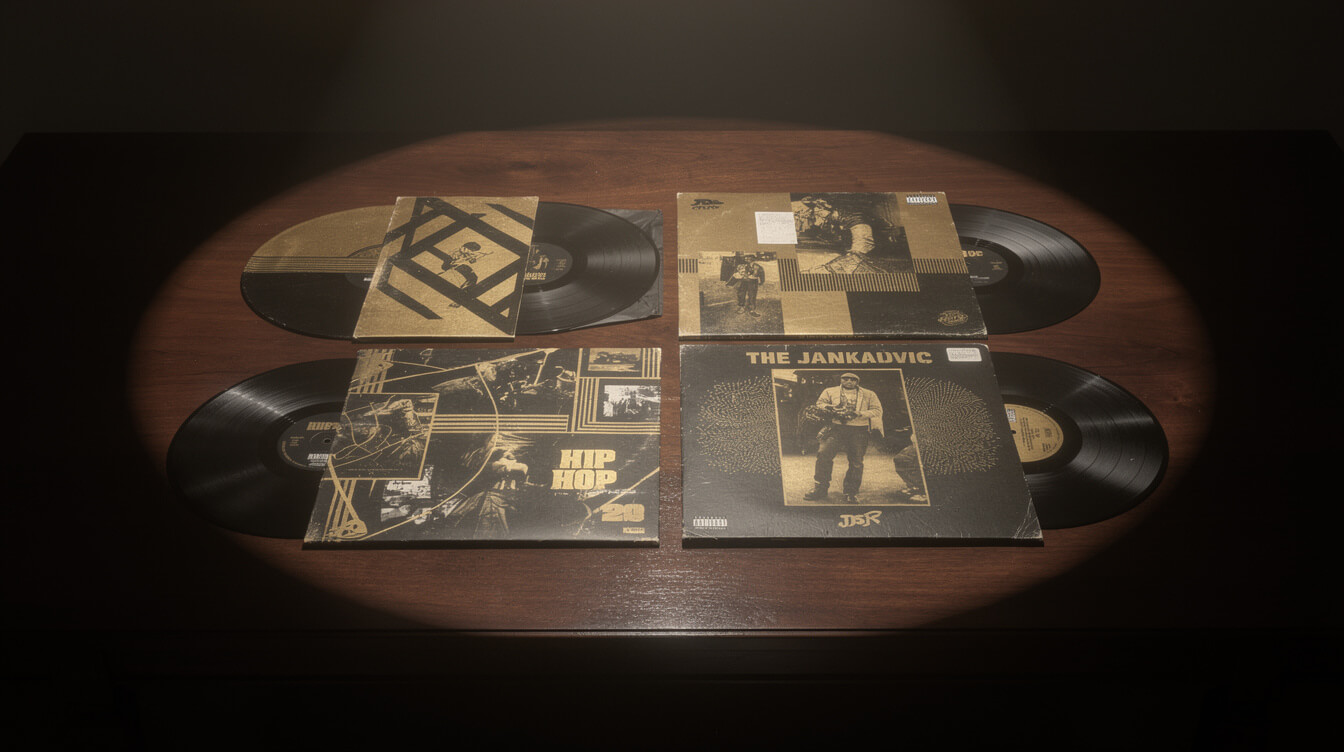
Here’s the defensible ranking, in the voice of someone who’s listened to all four front-to-back this week. Push back in the comments — that’s part of the deal.
- Me Against the World (1995) — the consensus critical pick. Most cohesive front-to-back. “Dear Mama,” “So Many Tears,” “Lord Knows,” and the title track are an unbroken peak. The prison-context production gives it a singular emotional register that doesn’t repeat anywhere else in the catalog.
- All Eyez On Me (1996) — the commercial colossus and the most-influential record. Every double-LP in modern hip-hop is downstream of this. The argument for #1 is real if you weigh cultural impact over album-as-statement coherence. “California Love” and “I Ain’t Mad At Cha” alone justify the placement.
- Strictly 4 My N.I.G.G.A.Z. (1993) — the bridge record. “Keep Ya Head Up” is canon, “I Get Around” is the radio anthem, and the rest of the LP is where you actually hear Tupac learning to write hooks. Underrated by most rankings; we have it third.
- 2Pacalypse Now (1991) — the political-rap underrated argument. The debut hits different now that we know everything that followed. If you weight political coherence and the Black Panther-lineage thesis statement above commercial reach, this one moves up two slots. We have it fourth because it’s the rawest production-wise, not because it’s the least important.
The two edge cases: Me Against the World versus All Eyez On Me for the top spot is a values question, not a quality question. Pick “best record” and it’s Me Against the World. Pick “most important record” and it’s All Eyez. 2Pacalypse Now versus Strictly 4 for the bottom two is the same exercise inverted — pick coherence of vision and the debut wins, pick craft and the sophomore wins.
Frequently Asked Questions About Tupac Albums
How many Tupac albums are there in total?
Four solo studio albums released while he was alive: 2Pacalypse Now (1991), Strictly 4 My N.I.G.G.A.Z. (1993), Me Against the World (1995), and All Eyez On Me (1996). Then at least seven major posthumous LPs starting with The Don Killuminati: The 7 Day Theory (November 1996) and running through Pac’s Life (2006). Counting compilations, soundtracks, and the various reissue editions, the total catalog runs into the high teens or low twenties depending on what you classify as a proper album versus a compilation.
What was the last Tupac album released before he died?
All Eyez On Me on February 13, 1996. The Don Killuminati: The 7 Day Theory was recorded before his death but released on November 5, 1996, fifty-three days after he was killed — making it the handoff record between the living and posthumous catalogs.
Which Tupac album is considered his best?
The critical consensus pick is Me Against the World (1995) for its cohesion, introspective register, and the way the prison-album context shaped its emotional weight. The popular pick is often All Eyez On Me (1996) for its commercial scale and the canonical singles (“California Love,” “I Ain’t Mad At Cha”). Both arguments are defensible.
How many posthumous Tupac albums are there?
At least seven major posthumous LPs: The Don Killuminati (1996, transitional), R U Still Down? (1997), Still I Rise with Outlawz (1999), Until the End of Time (2001), Better Dayz (2002), Loyal to the Game (2004), and Pac’s Life (2006). Add the Greatest Hits double-disc (1998), the Resurrection soundtrack (2003), and the various estate reissues and the count climbs higher.
Who owns Tupac’s masters today?
Ownership is split between Universal Music Group (which absorbed the Death Row and Interscope-era catalog through various 2010s consolidations) and Amaru Entertainment, the label Afeni Shakur founded in 1997 to control the pre-Death Row and personal-archive material. After Afeni’s death in 2016, stewardship passed to her trust, which manages the estate’s interests in the masters today. The 30th-anniversary reissue cycles in 2026 are the trust’s first major-anniversary statement under the post-Afeni structure.
What does “All Eyez On Me at 30” mean for 2026?
February 13, 2026 marked the 30th anniversary of All Eyez On Me‘s release, and November 5, 2026 marks the 30th of The Don Killuminati: The 7 Day Theory. Both records have triggered the kind of 30th-anniversary reissue, documentary, and editorial cycles that consolidate a catalog’s place in the canon — and both line up with the estate’s longest-running stewardship era to date. For the catalog, 2026 is a hinge year.
Get the Culture in Your Inbox
Anniversary deep dives, album receipts, and the kind of hip-hop history the listicles miss. Drop your email — we don’t waste anybody’s inbox.

🎧 Never Miss a Drop
Exclusive product releases, hip-hop deep dives, and member-only discounts. Straight to your inbox.
Free forever. No spam. Unsubscribe anytime.

Get the Culture, Delivered
Deep dives into hip-hop history, exclusive product drops, and discounts sent straight to your inbox. No spam, just culture.
Join 2,000+ hip-hop heads already in the loop. Unsubscribe anytime.