Clipse Hell Hath No Fury: The Full Story Behind Hip-Hop’s Most Uncompromised Sophomore Album
If you came to Clipse Hell Hath No Fury through the 2025 reunion — through the gravitational pull of Let God Sort Em Out — you arrived at this album the same way most people in 2026 do: backwards. That’s actually the right way in. Because Hell Hath No Fury, released November 28, 2006, is the masterpiece every dynamic of the reunion is built on. It is the record where Pusha T and No Malice’s life caught up to their lyrics in real time, and it is the reason the comeback hit the way it did.
This is the definitive guide for the reader who wants the 2006 record explained the way a hip-hop head would explain it — the four-year label war that almost killed the album, the rejected Jay-Z beats that became its skeleton, the lyrical receipts critics still quote two decades later, and the federal indictment in the years that followed that ended the duo’s first chapter. We’re not summarizing Wikipedia. We’re tracing the whole arc.
The Album That Almost Didn’t Happen
To understand what makes Clipse Hell Hath No Fury sound the way it does — the controlled fury, the sense that every line is being said through gritted teeth — you have to start with the four-year war that preceded it. Recording began in late 2003 at Hovercraft Studios in Virginia Beach, the same year Lord Willin’ was still selling. By any normal commercial logic, a 2004 sophomore album from a duo riding “Grindin'” should have been a coronation. It wasn’t. It became one of the most documented label hostage situations of the 2000s.
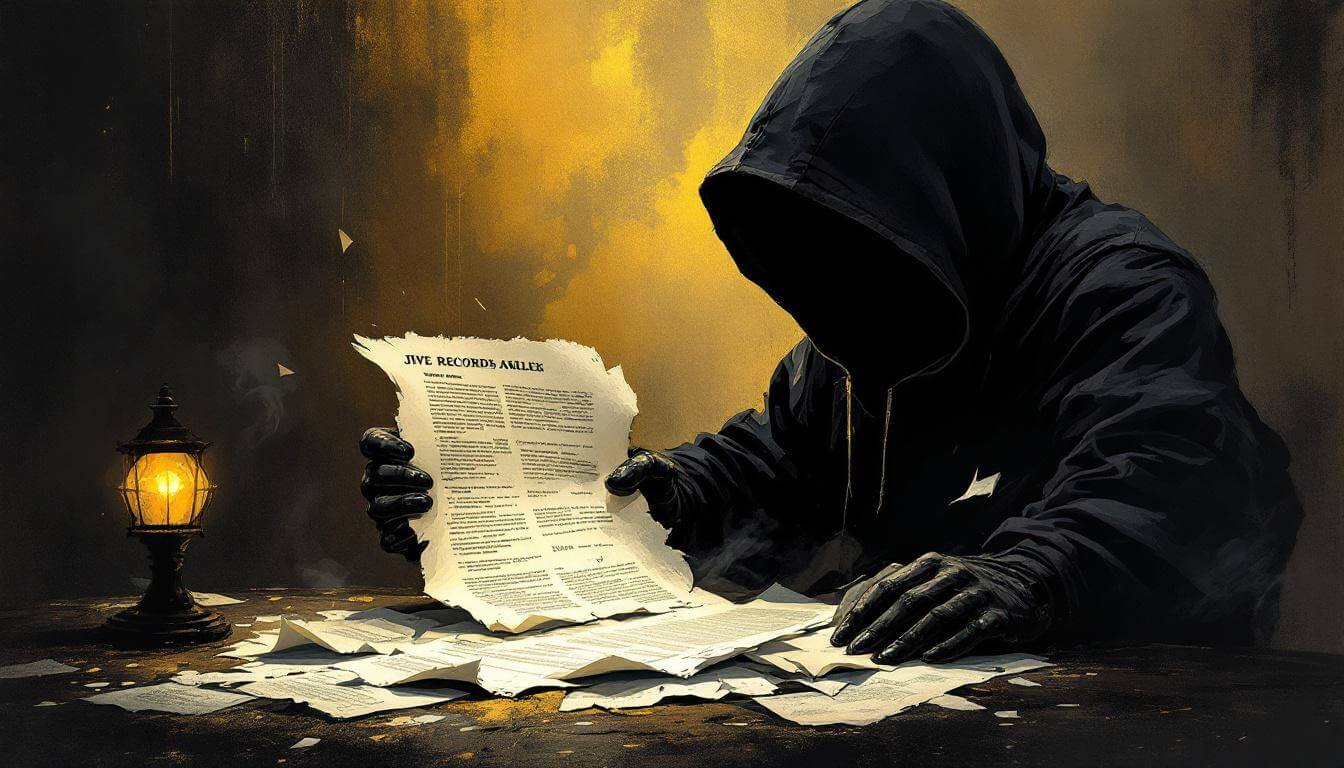
The trigger was the 2004 Sony-BMG merger. Arista Records — the label Clipse signed to under L.A. Reid — was dissolved into Jive Records in the consolidation. The Neptunes’ Star Trak imprint, which Clipse called home, migrated to Interscope. Clipse’s contract, however, did not. They were stranded at Jive while their producers, brand, and entire creative ecosystem moved across town. As Wikipedia’s Hell Hath No Fury entry documents, the duo and the label entered open conflict almost immediately.
They sued. The lawsuit dragged from 2004 into 2006. Pusha T and No Malice — Gene and Terrence Thornton, biological brothers from Virginia Beach — went public in interview after interview, calling out Jive by name, telling fans the album was finished and the label was hostaging it. The fight wasn’t resolved until May 2006, when terms were reached and Jive cleared the album for release. November 28, 2006 — more than four years after Lord Willin’ — Hell Hath No Fury finally arrived. (If you want the wider story of how the Thornton brothers got there, our piece on the Clipse origin story from Virginia Beach traces the years before this label war.)
The fallout was bigger than Clipse. As the Albumism 15-year retrospective by Jesse Ducker documents, Pharrell Williams was so embittered by the Jive war that he reportedly didn’t work with Justin Timberlake — his close collaborator on Justified — for nearly a decade afterward. The label battle didn’t just delay an album; it fractured one of the most successful producer-artist relationships of the 2000s for the better part of ten years. That is the cost the record carries in its DNA.
The Beats That Were Meant for Jay-Z
Here is the production-history detail that nearly every top-ranking article on this album buries or skips entirely: the Hell Hath No Fury beats were not originally for Clipse. Pusha T told Complex — and Albumism’s retrospective preserves the receipt — that Pharrell originally crafted the beat pack for Jay-Z’s Kingdom Come. Jay passed. Clipse inherited the rejected Jay-Z beats. That is the foundation of the entire album.
If you have ever wondered why Hell Hath No Fury sounds so unlike anything else in the 2006 mainstream — sparser, darker, less club-leaning than Lord Willin’, built on synth riffs that feel almost alien — that’s why. Pharrell was writing for a 36-year-old Jay-Z trying to sound regal on what would become a critically maligned comeback album. What landed in Clipse’s hands instead were instrumentals designed for a heavyweight, repurposed for two Virginia Beach brothers with everything to prove and a label that had spent two years trying to bury them.
The Neptunes’ fingerprints are everywhere, but the credit picture is contested. The album is officially listed as produced by The Neptunes — Pharrell Williams and Chad Hugo. Pusha T has since claimed Pharrell produced the record alone. Pitchfork’s Sean Fennessey, in his contemporaneous 9.1 review, openly speculated that Chad Hugo’s signature dark, sparse, minimalist palette had a heavy hand in the final sound. Listen to “Wamp Wamp (What It Do),” which The Guardian’s Alexis Petridis described as dispensing “with drums in favor of the clatter of metal hitting metal,” and Hugo’s compositional fingerprint feels obvious. The truth is probably somewhere in between — but the contested credit itself is part of why the album feels stranger than its peers.
The recording itself happened at Hovercraft Studios in Virginia Beach, the Neptunes’ home base — a detail almost no SERP result names. Anthony Fantano’s classic theneedledrop review notes that the Neptunes’ palette on Hell Hath No Fury — the one-finger synth riffs, the eerie pocket-of-silence beats — predicted Tyler the Creator’s Wolf and Flower Boy-era production palette by roughly seven years. That isn’t a stretch. Listen to “Ride Around Shining” or “Ain’t Cha” against anything off Tyler’s Flower Boy bridge and the lineage is clear.
Track-by-Track: How Clipse Hell Hath No Fury Actually Plays
Twelve tracks. Forty-eight minutes and forty-one seconds. As Petridis put it in The Guardian, “half-an-hour shorter than your average hip-hop album” — and that brevity is a deliberate distillation choice, not a budget cut. Wikipedia, AllMusic, and the various track listings give you the cut order. None of them weave the production details, the lyrical receipts, and the cultural payoff together. Here is that synthesis.
“We Got It For Cheap (Intro)” opens the record with a Re-Up Gang declaration of war, Mr. Lee’s “Pump Up the Jam”-adjacent groove flipped into something menacing. This is where No Malice drops the line that Pitchfork singled out two decades ago: “Grandma, look at me, I’m turnin’ the other cheek.” The Christian-imagery thread that runs through both brothers’ careers is announced in the first verse. There is no warm-up.
“Momma I’m So Sorry” is the apology that doubles as a confession. The chorus contains the lyric Petridis isolated in The Guardian: “I’m so sorry I’m so obnoxious / my only accomplice is my conscience.” If you want a single bar that explains why this record is a “crime rapper with remorse” album rather than a coke-rap victory lap, that’s it.
“Mr. Me Too” featuring Pharrell — the lead single, released May 23, 2006, peaked at #65 on the Billboard Hot R&B/Hip-Hop Songs chart. Slim Thug famously got dropped from a verse in disputed circumstances. The track is one of the album’s most accessible cuts and was the proof of concept that Clipse could still sell singles after four years of silence.
“Wamp Wamp (What It Do)” featuring Slim Thug — second single, released October 31, 2006, charted at #96. It contains the Petridis-quoted “Pyrex is Jewish” line and the “Bitch, I’m trill” hook on its companion track. The instrumental, as noted, is essentially percussion built from metal and air.
“Ride Around Shining” is the inversion of stunt rap — a flex song built on the eeriest one-finger synth on the record, with Pusha rhyming about Louis Vuitton sunglasses (“Louis V Millionaires to kill the glare”) over a beat that sounds like dread. Pitchfork’s Fennessey isolated this exact bar in his 2006 review.
“Dirty Money” is the closest thing to a sequel to Lord Willin’-era Clipse — direct, percussive, brick-heavy.
“Hello New World” is one of the great pieces of hip-hop self-mythologization of the era — the Re-Up Gang announcing themselves as a movement, not just a duo. Sandman and AB-Liva, the Philadelphia members of Re-Up Gang who came up alongside Clipse on the We Got It 4 Cheap Vol. 1 and Vol. 2 mixtapes (2004-2005), are central to the song’s stakes.
“Chinese New Year” is the album’s most experimental cut — sparse Eastern-tinged production, deliberately disorienting structure.
“Keys Open Doors” is the bar that became a hip-hop tattoo. The double meaning is the entire thesis of the record in three words.
“Trill” features Bun B and Pharrell — the chorus is the Petridis-isolated “Bitch, I’m trill” declaration, a UGK-Clipse summit on a beat that sounds like a metal door slamming.
“Ain’t Cha” is one of the album’s most memorable hooks — Pharrell’s vocal layered over a beat that feels half-finished and is more powerful for it.
“Nightmares” closes the record — the album’s only ballad, featuring Bilal, identified in Pitchfork’s review as “the only ballad” on a record that otherwise refuses tenderness. After 47 minutes of clenched-jaw rhyming, Bilal’s vocal is the catharsis. The album ends not in triumph but in exhaustion.
Twelve tracks. Forty-nine minutes. As Pitchfork’s Julianne Shepherd wrote in her pre-release Interrobang column, the record functions as “a full-spectrum view of an internal landscape metaphor-ized as a drug-dealer’s epic tale.” Anyone who hears it as just crack rap is missing the layered self-knowledge that runs underneath every line.
Why It’s a “Crime Rapper With Remorse” Masterpiece
Albumism’s Jesse Ducker placed Clipse inside a specific lineage in his 15-year retrospective: Ice-T to Scarface to Clipse — the rappers who built careers documenting the drug economy and refused to pretend it was painless. Hell Hath No Fury is the platonic ideal of that lineage. It is, as Pitchfork’s Fennessey crystallized in his contemporaneous review, an album about “the aftershock of a coke sale-infused existence.” Not the brick. The dread that comes after.
The Christian imagery is what separates it from competitors in the genre. The thread starts on the Lord Willin’ cover — which, as The Guardian noted, depicted the Thornton brothers chauffeuring Jesus through the ghetto — and runs straight through Hell Hath No Fury’s Maya Angelou allusion on “We Got It For Cheap (the mixtape track)”: “Like tryna fly with a clip in your wings / and that’s exactly why the caged bird sings.” Pitchfork’s Interrobang column preserved that bar, and it is one of the most-cited lyrics in either brother’s catalog.
There is also the self-mythologization: Pusha T branded himself the “Young Black Socrates” on this album. Shepherd’s Pitchfork column singled out that line in 2006 and it has aged better than almost any other rapper’s self-coronation from the era. Pusha was twenty-nine. He was earning the title in real time.
Pitchfork’s Fennessey reached for a comparison framework that nobody had used before for Clipse: this duo, he wrote, synthesized EPMD’s playfulness, OutKast’s experimentalism, and Mobb Deep’s rancor — a combination no one else had attempted. That framing remains the best critical handle on what makes Hell Hath No Fury feel different from every other 2006 release. It refuses to be just one thing. (For more on the long arc of brother dynamics inside the duo, our explainer on whether Pusha T and Malice are biological brothers covers the family context that gives the Christian-guilt thread its real weight.)
The album is short — twelve tracks, forty-nine minutes — and that brevity is the point. Twenty years later, the production budget for hip-hop classics has tripled and the run times have ballooned. Hell Hath No Fury says what it has to say and ends. There is no skit fat, no bonus-track bloat. As The Guardian observed, “half-an-hour shorter than your average hip-hop album” — and listening to it back-to-back with a 75-minute 2006 contemporary like Kingdom Come (the very album whose rejected beats it inherited) is a study in the discipline of distillation.
The Reckoning the Album Foretold
Three years after Hell Hath No Fury arrived, the world the album described as memory caught up to the people who lived it. Anthony Gonzalez — Clipse’s longtime manager and a Re-Up Gang fixture — was sentenced to 32 years in federal prison for running a $10 million drug-trafficking ring out of Virginia Beach and Norfolk. Anthony Fantano’s theneedledrop review, drawing on a Pusha T VladTV interview and a No Malice HipHopDX interview, documents that nine of Pusha’s friends were rounded up for conspiracy in the same federal case. Wikipedia barely touches this. Pitchfork doesn’t mention it. It is the single most load-bearing piece of context for understanding why the duo went on hiatus after 2009’s Til the Casket Drops and why the brothers’ careers split in opposite directions.
Hell Hath No Fury, in retrospect, was a premonition. The album’s tone — the Christian guilt, the apology choruses, the Maya Angelou caged-bird allusion, the explicit “my only accomplice is my conscience” line on “Momma I’m So Sorry” — reads like a record made by men who knew the bill was coming. By 2009, when Til the Casket Drops dropped, the federal case was closing. Months after that record’s release, the duo effectively dissolved. No Malice changed his name from Malice, found Christianity in earnest, and exited the lifestyle the brothers had spent a decade documenting. (His complete arc — including the years between Hell Hath No Fury and the reunion — is the focus of our deep dive on No Malice’s faith-driven post-Clipse years.) Pusha kept rapping, signed to G.O.O.D. Music, and built a solo catalog that would eventually include Daytona — the 2018 album that, in many ways, finished the sentence Hell Hath No Fury started.
The throughline matters: every theme of the 2025 Clipse reunion was already encoded in this 2006 album. Brotherhood under federal pressure. Christian guilt versus drug-economy honesty. Two men who survived an industry that tried to bury them and a federal indictment that took their friends. Hell Hath No Fury isn’t just the Clipse album most worth revisiting; it’s the one that explains why the reunion exists at all.
Where Clipse Hell Hath No Fury Sits in the Catalog and in Hip-Hop History
Among hardcore Clipse listeners — and we are putting our chip on the table here — Hell Hath No Fury is the duo’s masterpiece. Above Lord Willin’. Above Til the Casket Drops. Even, in our reading, edging out the 2025 reunion Let God Sort Em Out. The argument is structural: Lord Willin’ is the breakthrough, full of singles and big-tent moments but uneven on the album cuts. Til the Casket Drops is the post-collapse album, recorded under the federal cloud, audibly distracted in places. Hell Hath No Fury is the only Clipse album where every cut carries the weight of the whole. There are no skips.
The numbers back the case. AlbumOfTheYear aggregates a 8.7 critic score and an 88 user score — both of which place the record in the top decile of any hip-hop album the platform tracks. The reader-vs.-critic alignment is rare for a hip-hop record at that scoring floor. Pitchfork gave it 9.1. Rolling Stone, NME, Spin, and The Source all returned scores in the same neighborhood. It debuted at #14 on the Billboard 200 with 78,000 first-week copies sold — modest commercial numbers for a sophomore from a duo with a hit single, but the four-year delay and the Jive war suppressed the marketing rollout. Critically, it landed in the top ten of nearly every major outlet’s 2006 year-end list.
The critical aging curve has been kind. Most 2006 critic darlings have lost cultural altitude in twenty years. Hell Hath No Fury has gained it. Anthony Fantano’s framing of the production lineage — that Pharrell’s HHNF beats predicted Tyler the Creator’s Wolf and Flower Boy-era palette by seven years — is part of that altitude gain. Producers and rappers in 2026 still cite this album’s beat selection as a lodestar for how to make sparse minimalism sound menacing rather than empty. (For a broader survey of where the album sits in the duo’s full body of work, our complete guide to the Clipse members and discography has the catalog-level context.)
If you are entering Clipse for the first time in 2026 — likely because you came in via the reunion — start here. Lord Willin’ will tell you the singles. Til the Casket Drops will tell you the breaking. Hell Hath No Fury tells you the whole story.
From 2006 to 2026: How Hell Hath No Fury Set Up Let God Sort Em Out
The Clipse reunion that arrived in 2025 — Let God Sort Em Out, the album that bears the phrase the duo chose to put on every reunion-era T-shirt and hoodie they sold — is, in the most literal sense, the sequel Hell Hath No Fury was always pointing toward. Every dynamic the new record now navigates was already encoded in 2006: the brotherhood, the faith, the label politics, the drug-economy reckoning. The reunion isn’t a reinvention. It is a continuation.
Listen to Let God Sort Em Out with Hell Hath No Fury fresh in your ears and the lineage is unmistakable. The same controlled fury. The same Christian-imagery scaffolding. The same Pusha T precision and No Malice gravity. The Pharrell-Hugo production palette has aged, refined, gotten even sparser, but the DNA is identical. There is a reason both brothers spent the 2025 press run repeatedly invoking 2006 — because they know, and the audience knows, that Hell Hath No Fury is the spine the reunion is built on. (For the full guide to the 2025 Clipse album Let God Sort Em Out, including the rollout, the singles, and the Pusha-Malice creative process for the first time in 16 years, we have a separate deep dive.)
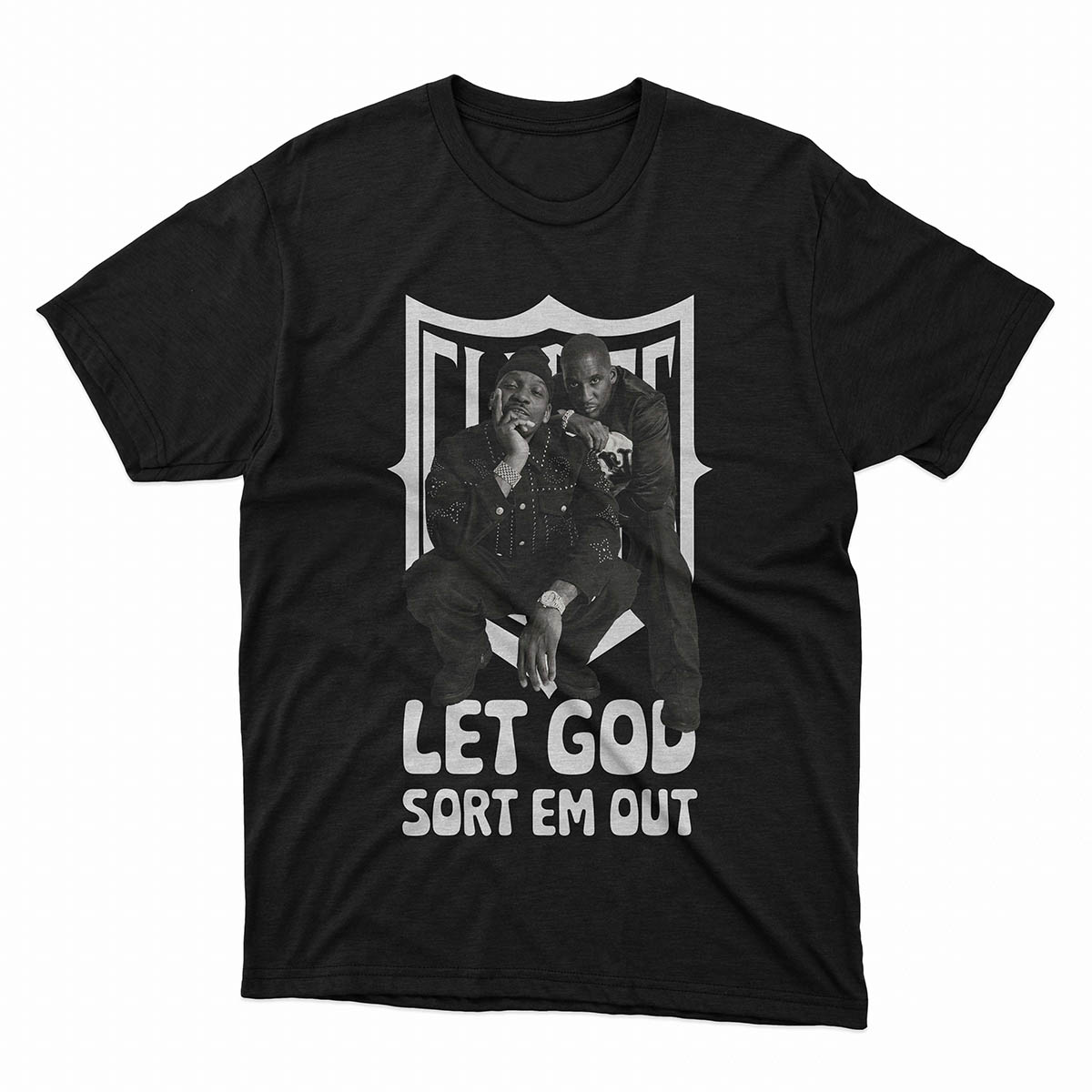
If 2006’s Hell Hath No Fury is the record where Clipse’s life caught up to their lyrics, 2025’s Let God Sort Em Out is the record where the brothers finally got to set the terms — no Jive label war, no manager indictment looming, just two grown men picking up the conversation they paused in 2009. That sense of reclaimed agency is what the reunion era is selling, and it is the reason fans are repping the album name on everything from posters to our Clipse Let God Sort Em Out tee — the design that puts the album phrase on a black premium-cotton shirt for the listeners who lived the wait.
Rep the Clipse Reunion
Show love for Pusha T and No Malice’s first album as a duo since Til the Casket Drops. Premium black tee, fan-art design, sizes XS to 3XL.
Frequently Asked Questions
When did Clipse release Hell Hath No Fury?
Hell Hath No Fury was released on November 28, 2006, more than four years after their debut Lord Willin’. Recording began in late 2003 but stalled for years due to label drama with Jive Records — the duo eventually had to sue Jive to be cleared for release, and the fight wasn’t resolved until May 2006.
Who produced Hell Hath No Fury?
The album is officially credited to The Neptunes (Pharrell Williams and Chad Hugo). Pusha T later told Complex that Pharrell produced the album alone. Pitchfork’s Sean Fennessey, in his contemporaneous review, speculated that Chad Hugo’s signature darker, sparser palette had a heavy hand in the final sound. The truth likely sits somewhere between the official credits and Pusha’s recollection.
What song made Clipse famous?
“Grindin'” — the lead single from their 2002 debut Lord Willin’ — was the song that broke Clipse to a national audience. By the time Hell Hath No Fury arrived in 2006, the lead single “Mr. Me Too” peaked at #65 on the Billboard Hot R&B/Hip-Hop Songs chart.
Did Pharrell produce all of Hell Hath No Fury?
Officially the album is credited to The Neptunes (Pharrell + Chad Hugo). Pusha T has since claimed Pharrell produced it solo. Either way, the production departs from Lord Willin’s brighter, club-leaning beats — Hell Hath No Fury is sparser, darker, more experimental, and a likely beneficiary of Hugo’s well-documented preference for minimalist arrangement.
Was Pharrell ever in Clipse?
No. Pharrell Williams is not a member of Clipse. The duo is Gene “No Malice” Thornton and Terrence “Pusha T” Thornton — biological brothers from Virginia Beach. Pharrell knew the brothers from their pre-rap days and produced their early records, but he was always a producer-collaborator, not a Clipse member.
Why did Hell Hath No Fury take four years to release?
The album was halted in 2004 when Sony Music Entertainment merged with BMG and dissolved Arista Records (Clipse’s label) into Jive Records. The Neptunes’ Star Trak imprint moved to Interscope, but Clipse’s contract kept them at Jive. Clipse sued Jive to be released; the legal fight wasn’t resolved until May 2006, with the album finally hitting stores that November.
What was Hell Hath No Fury’s first-week sales and chart position?
Hell Hath No Fury debuted at #14 on the Billboard 200 with 78,000 copies sold in its first week. Critically it landed at the top of nearly every 2006 year-end list — Pitchfork gave it a 9.1, and the album’s 88 user score on Album of the Year places it in the top decile of any hip-hop record the platform tracks.
Where can I buy Hell Hath No Fury on vinyl?
Hell Hath No Fury has been pressed on vinyl multiple times since 2006, including a Light In The Attic 2021 reissue and a current Sony Music vinyl edition. Discogs lists CD, 2xLP, and various international and reissue pressings — the 2xLP reissues remain the audiophile pick.

🎧 Never Miss a Drop
Exclusive product releases, hip-hop deep dives, and member-only discounts. Straight to your inbox.
Free forever. No spam. Unsubscribe anytime.
Get the Culture, Delivered
Deep dives into hip-hop history, exclusive product drops, and discounts sent straight to your inbox. No spam, just culture.
Join 2,000+ hip-hop heads already in the loop. Unsubscribe anytime.