Ghostface Killah Fishscale: The 2006 Wu-Tang Solo Masterpiece That Saved Pretty Toney’s Cinema
Ghostface Killah Fishscale is the album that should not have worked. It dropped on March 28, 2006 — a full decade into Tony Starks’ solo run, three years after the muddled Bulletproof Wallets, and at the exact moment most of the rap press had quietly written Wu-Tang off as a closed chapter. Instead, Fishscale turned into the most acclaimed solo Wu album of the 2000s, the one that put DOOM, Pete Rock, J Dilla and Just Blaze on the same tape, and the one that proved Ghostface was already operating in a different vocabulary from his peers. Two decades later, it is still the album fans cite when they argue Ghostface is the most cinematic rapper alive.
This is the long version of why. We are going to walk through the resurrection arc that led up to Fishscale, the producer cast that built its sound, the Shakey Dog opening that rewired what a rap song could do, the half-rumored DOOM/Ghost collaboration that hides inside the tracklist, where the album sits in the Wu-Tang solo canon, and how to dress the era in 2026 without looking like a costume. If you only know Ghostface from a few Wu hooks, this is the post that flips the switch.
Fishscale Was Ghostface’s Resurrection Tape, Not a Reset Button
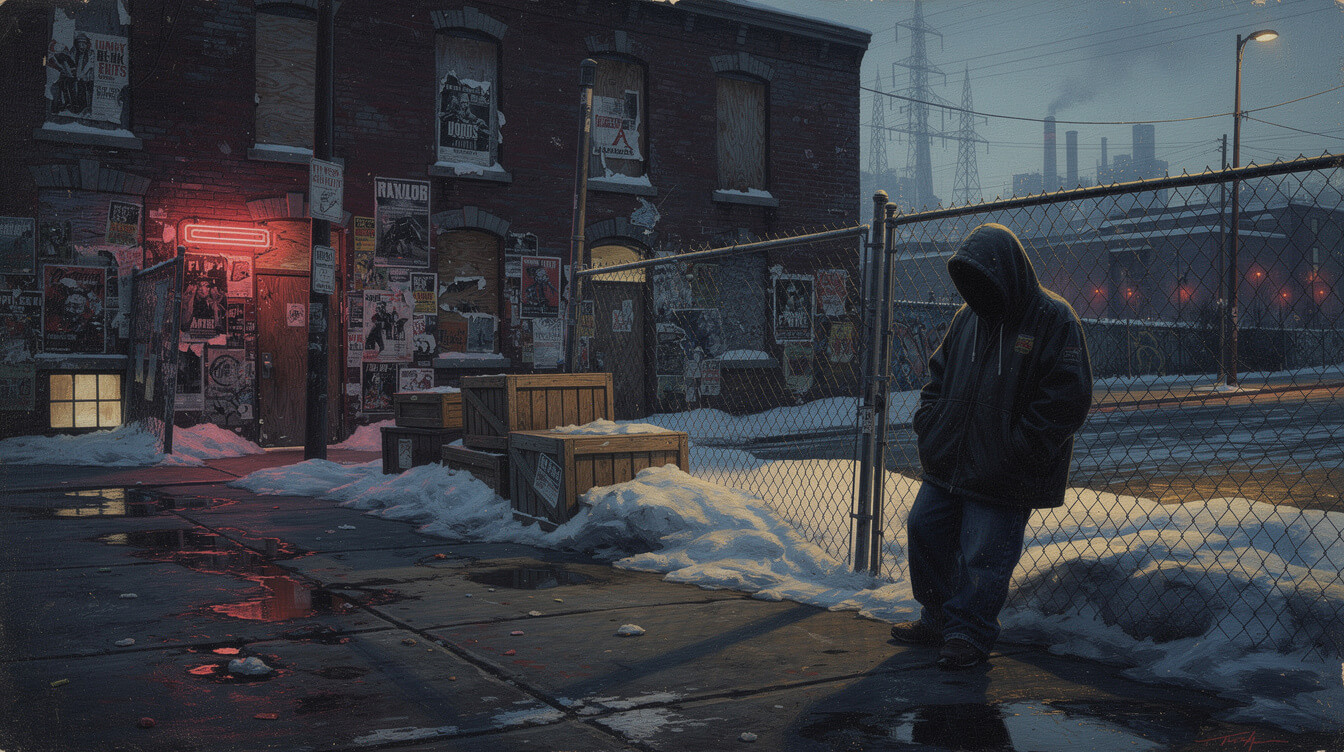
To understand what Ghostface Killah Fishscale meant in 2006, you have to understand the half-decade of doubt that came before it. By the time the album landed, the Wu-Tang Clan had already lost Ol’ Dirty Bastard (November 2004), the group’s last collective LP The W was six years in the rearview, and the second-generation solo records were mostly underperforming. RZA had moved deep into film scoring — the Kill Bill work was eating his calendar — and the brand felt fragile in a way it had never felt during the late-’90s arms-race era.
Ghost’s own catalogue mirrored that wobble. Bulletproof Wallets (2001) had been an A&R disaster: Sony refused to clear the original samples, two of the strongest beats had to be swapped, and the final tracklist limped. He answered with The Pretty Toney Album in 2004, a soul-flip statement piece that resurrected his critical standing but commercially undersold. Both records suggested a rapper still capable of holy-hour verses but trapped between major-label friction and a shifting market. The whisper around Pretty Toney was that Ghostface was a five-mic emcee in a four-star industry, and that the next album was going to define whether he could still convert critical love into a real cultural moment.
Then Def Jam happened. Jay-Z, freshly anointed as Def Jam president in late 2004, signed Ghost in mid-2005 and gave him exactly what he had not been given in years: a clean A&R lane, sample-clearance muscle, and a release date that felt event-coded. The label paired him with veteran producers, sent him into the studio with full creative authority, and let the album sprawl to twenty-four tracks. The marketing rollout — the cover art of a kilo brick wrapped in scotch tape, the Be Easy single dropped quietly in early 2006, the album title itself slang for the purest grade of cocaine — was unambiguous: this was not another Wu-Tang holding pattern. This was a deliberate, scope-maxxed solo return.
When Fishscale opened at #4 on the Billboard 200 the week of release — Ghostface’s highest-charting LP — the read inside the Wu camp was instant: the resurrection was real, the format still worked, and the bar for every Wu solo project that followed had just been raised. Within six months, Raekwon was back in the booth recording what would become Only Built 4 Cuban Linx II, and the entire late-2000s Wu renaissance traces a straight line back to Fishscale‘s charting week.
The Production Cast: When DOOM, Pete Rock, J Dilla and Just Blaze Met on the Same Tape
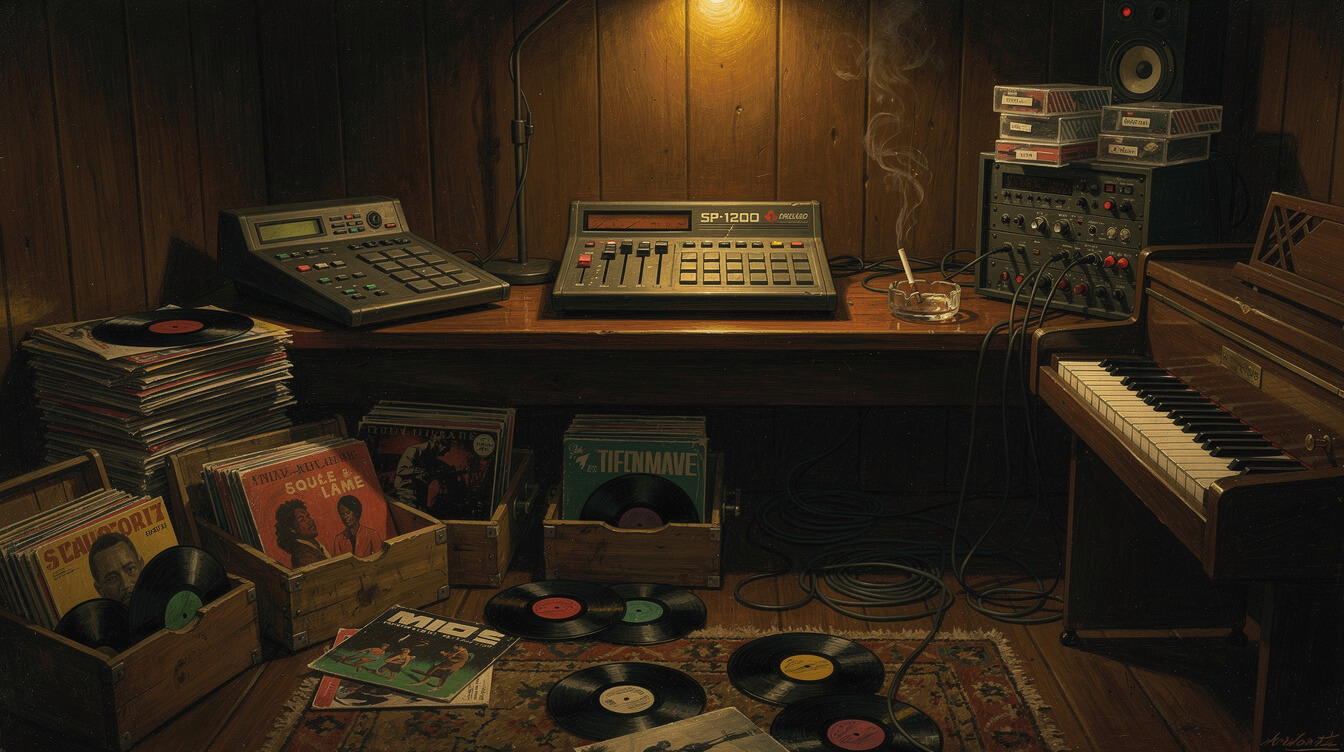
The production credits on Fishscale read like a fantasy-league draft of mid-2000s underground hip-hop. Ghost did not stack the album with one in-house producer or chase whatever was charting that quarter. He pulled the best beat-makers in the country into one room and let the album breathe across their styles. The result is one of the most cohesive multi-producer rap albums of the decade — every track sounds like Fishscale, no track sounds the same.
The headline get is MF DOOM, who handled four full beats: “9 Milli Bros.” (a one-off Wu-Tang group cut that may be the closest thing to a Clan posse track on a solo album from this era), “Jellyfish,” “Underwater,” and “The Champ” (released earlier on the Special Herbs series as “Charnel Sherbet”). DOOM’s contribution was so substantial that fans and journalists immediately started asking the obvious question — was Ghostface secretly recording a full Doomstarks album on the side? — and the rumor mill has not fully died down since. We will return to that thread in a minute.
Pete Rock produced “Be Easy,” the lead single, which felt deliberately chosen as the album’s calling card: a horn-laced soul flip in the classic Mt. Vernon style that signaled to old-head fans that Ghost was working with the architects, not the imitators. J Dilla handed Ghost “Beauty Jackson” and “Whip You with a Strap” — the latter a flip of Luther Ingram’s “To the Other Man” recorded in the same Detroit sessions that produced Dilla’s Donuts, released three days after Dilla’s death in February 2006. Fishscale carries one of Dilla’s final two beats placed on a major rap release in his lifetime, and the song hits differently knowing it.
Just Blaze turned in “The Champ,” using the Coffey & Cleethorpe break to score what is essentially a four-minute rage epic over a chopped-up Rocky-soundtrack stomp. Lewis Parker, the London-based crate-digger, produced the seven-minute “Underwater,” a fully cinematic underwater dream sequence with no chorus that nobody else on the album could have made work. Hi-Tek, Anthony Acid (the production duo behind much of Pretty Toney), and Tone Mason filled in the rest. There is no filler beat on this album. Every track was given to a producer whose specific style amplified the lyric — a level of production curation rare on any rap album from any era.
Track-by-Track: The Storytelling Apex of Pretty Toney
Of the twenty-four tracks on the standard Fishscale tracklist (the deluxe version added more), at least eight belong in the all-time Ghostface conversation, and the album as a whole functions as a single feature-length film with intermissions. The narrative density per minute is what most listeners remember years later — not specific punchlines, but specific scenes.
“Shakey Dog” (track 2) is the album’s overture and we are giving it its own section below. “Kilo” (track 3, with Raekwon) is a back-and-forth ode to the album’s titular product that quietly samples the children’s number-pronunciation song from the 1969 record Numero Magico — it should not work, it definitely works. “The Champ” (track 4) is Ghost’s most unfiltered chest-thump, with Just Blaze’s beat hammering under what is essentially three minutes of victory-lap shouting that doubles as a state-of-the-Wu address.
“R.A.G.U.” with Raekwon (track 11) flipped a Connie Stevens loop into one of the catchiest pure-rap singles of the year, with a Bert Sesame Street nod buried in the hook that became its own meme by the time the music video dropped. “Whip You with a Strap” (track 13) — the Dilla beat — is a single first-person childhood memoir of his mother’s discipline that doubles as a love letter, three minutes that genuinely reframes the whole album’s project: this is what cinematic rap actually means, not just shootouts in stairwells but full emotional spectrum.
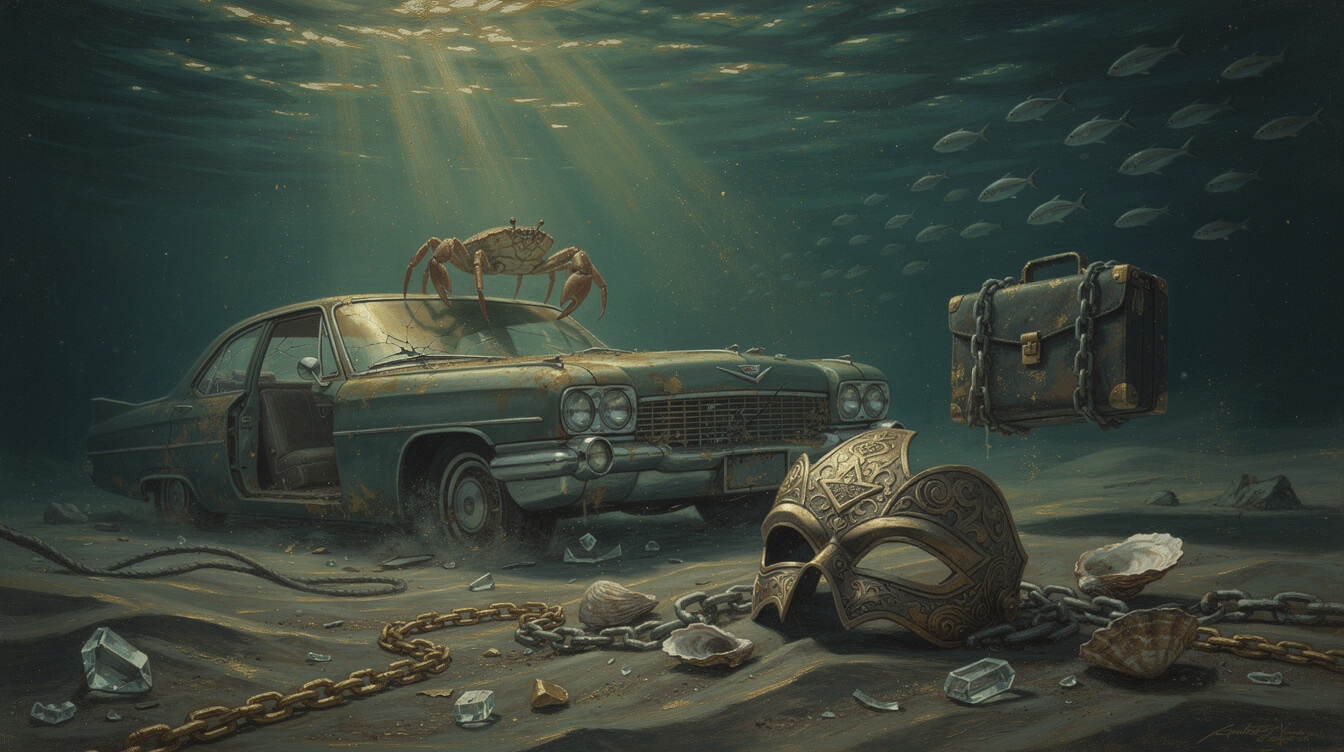
“Underwater” (track 16) is the seven-minute Lewis Parker dream-piece in which Ghostface narrates a literal underwater descent — mermaids, SpongeBob nods, a sunken Cadillac, the works — over a beat that builds and never resolves. It is the strangest mainstream rap song of 2006 and it is also a perfect microcosm of the album’s range. “Big Girl” (track 18) is a soft-soul cautionary love letter to a teenage daughter that finishes the album’s emotional arc the way Donuts closes Dilla’s last record — with grown-up grief instead of stunting. The closing run of Fishscale — “Underwater” into “Jellyfish” into “Big Girl” — is one of the most underrated 20-minute stretches in Wu solo history.
“Shakey Dog” Is the Cinematic Masterclass That Set the Tone
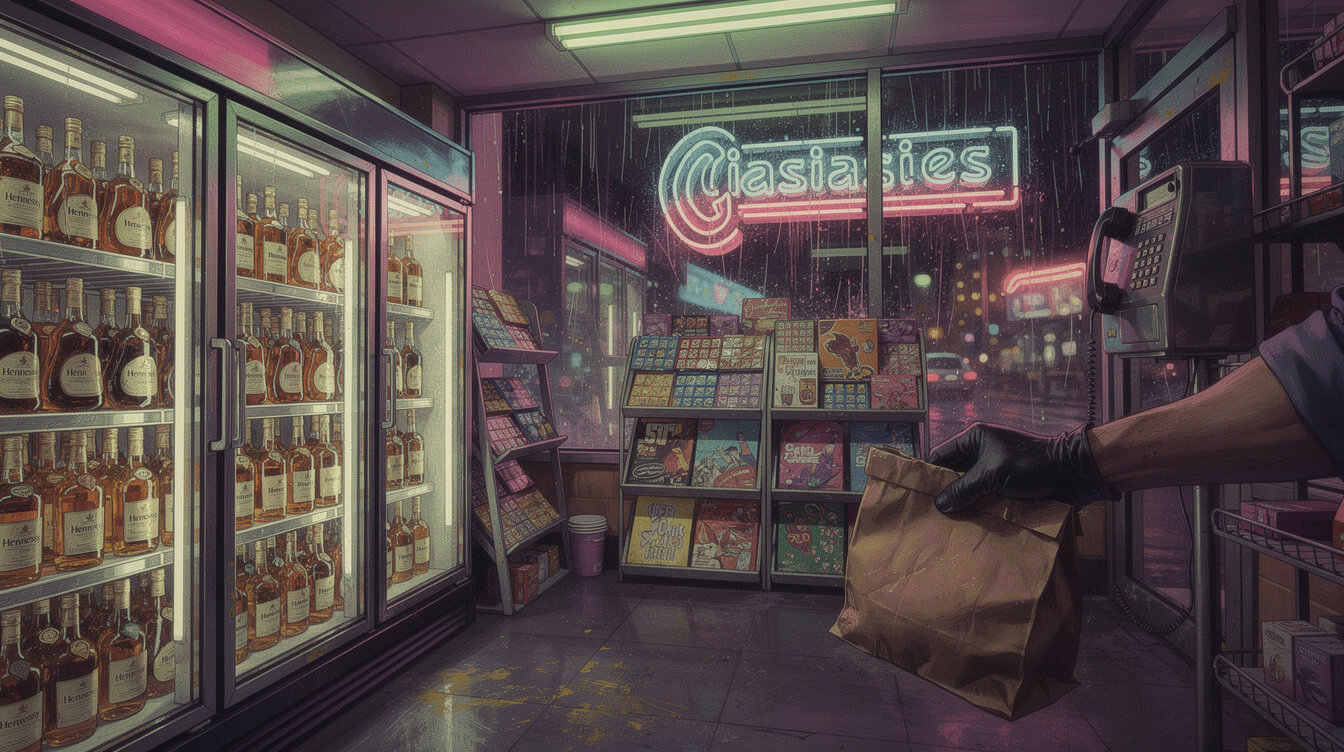
“Shakey Dog” is the second track on the album and the only thing it owes to convention is a beat. There is no chorus, no second verse from a feature artist, no hook to chant. Instead, Ghostface spends four full minutes narrating, in escalating real-time first-person, a botched apartment robbery alongside his partner Frank — a brown paper bag in his pocket, a glock with the green dot, a chain-link gate that opens, the smell of a kitchen, the sound of a Spanish woman screaming “aieee, papi!“, a dog named Roxy chained behind a door, and the cinematic freeze-frame of Ghost and Frank pulling guns on a coke deal that has just gone sideways. The song ends mid-sentence. The next song picks up the story.
What “Shakey Dog” did, structurally, was move rap storytelling from the omniscient third-person of “I Gave You Power” or the polished-script feel of “Manifest” into something closer to a Scorsese opening cold-open — the listener does not get the establishing shot, they just get dropped inside the doorway. Every detail is sensory. Every name is specific. The track is so visually written that it spawned an entire Instagram-era subculture of fan-made one-shot animations and storyboard breakdowns, and it is regularly cited in MFA-level rap criticism as the moment Ghostface fully separated from his peers as a writer.
This is the moment to mention that Ghostface’s late-’90s and early-2000s catalog set up exactly the kind of detail-density “Shakey Dog” deployed. If you want the run-up — and the merch that goes with it — our Ghostface Killah Supreme Clientele tee nods at the 2000 album that started this cinematic mode and made Fishscale possible six years later. Supreme Clientele is the rosetta stone for Pretty Toney’s writing voice; Fishscale is what happens when that voice gets the budget and the producers to match.
The kicker on “Shakey Dog” is that the heist itself never resolves — fans waited four years for the sequel, “Shakey Dog Starring Lolita,” to appear on 2010’s Apollo Kids, and that song delivers the second half of the same evening. The fact that Ghost would let a story dangle for four real years across two separate albums is the single best illustration of how seriously he takes the cinematic-album frame.
The DOOM Collaboration That Almost Was a Full Album
The single most replayed alternate-history conversation in mid-2000s underground rap is “what happened to Doomstarks.” The premise: somewhere between 2005 and 2007, Ghostface and MF DOOM were openly talking about a full collaboration LP — the working title was Swift & Changeable, and DOOM’s four beats on Fishscale were widely understood as a teaser EP for a record that was coming. Ghost gave interviews. DOOM gave interviews. The project even made it to a tentative 2010 Nature Sounds release calendar.
It never came out. The exact reasons are still murky — most sources land somewhere between DOOM’s well-documented retreat from the industry after the 2007 imposter-DOOM tour controversies, the legal mess around his sample clearances, and the simple gravitational difficulty of getting two perfectionist writers on opposite continents (DOOM was UK-based by then) into the same booth on the same week. Three Doomstarks tracks did surface over the decade — “Angeluz,” “Victory Laps,” “Lively Hood” — but the full album never landed. DOOM passed away in October 2020, and with him went any chance of the record being completed in the form it was promised.
What survives are the four DOOM beats on Fishscale and the Doomstarks scraps, and they are enough to make the rumored album one of the most-mourned never-released projects in rap. The Wu-Tang and DOOM cosmologies were always quietly aligned — both built on chess metaphors, cartoon iconography, comic-book panel storytelling, and the elevation of producer-as-architect — and the four tracks where they explicitly meet on Fishscale remain the deepest evidence of what a full project would have sounded like. “9 Milli Bros.” in particular, with every Wu member rotating through the booth over a DOOM loop, is the lost holy-grail Wu posse cut.
If you want the cultural through-line, Fishscale is also the Wu album that most clearly bridges the Clan’s mid-’90s NY-aesthetic and the underground/abstract scene DOOM was running. For a deep retrospective on the parent album that defined this lineage, our complete decode of Ghostface Killah’s Ironman covers the 1996 debut that made Pretty Toney a solo voice in the first place. Read those two pieces together and you have the full ten-year arc.
Where Fishscale Sits in the Wu-Tang Solo Canon
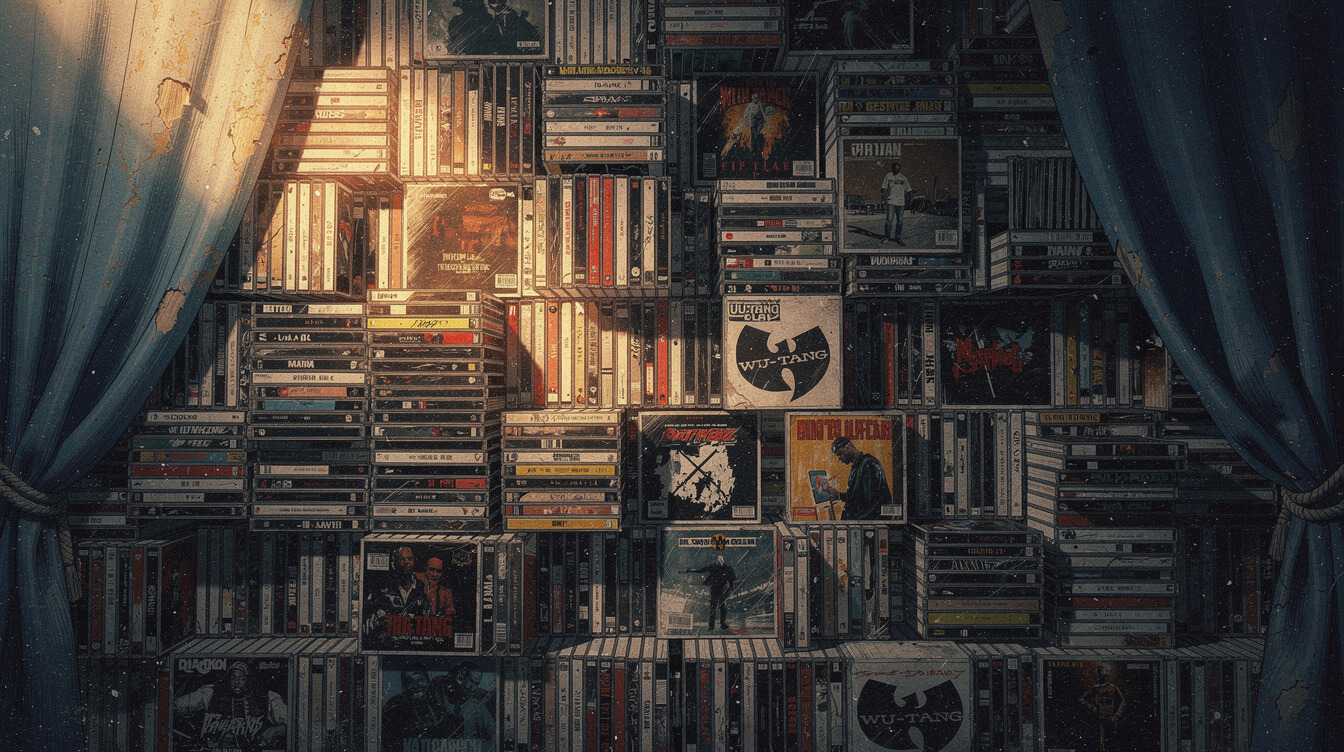
Ghostface has released twelve solo studio albums between 1996 and 2024. Sorting them into a critical hierarchy is a fan tradition that gets argued out in barbershops, vinyl forums and Reddit threads every year. The consensus top tier, in approximate order, is: Supreme Clientele (2000), Fishscale (2006), Ironman (1996), and Apollo Kids (2010). Different generations of fans flip the top two depending on whether they were old enough to buy Supreme Clientele on release week.
The case for Fishscale at #1 — and there is a real one — rests on four pillars. First, the production cast is the most diverse and the most successful: no other Ghost album puts DOOM, Dilla, Pete Rock, Just Blaze and Lewis Parker on one tracklist and makes it cohere. Second, the writing is denser than Supreme Clientele‘s and more sustained than Ironman‘s — “Shakey Dog,” “Whip You with a Strap” and “Underwater” alone deliver three different storytelling modes that no other rapper had attempted on a single major-label record. Third, the album’s commercial debut at #4 on the Billboard 200 made it the highest-charting Ghostface solo project, full stop. Fourth, the contextual weight — released in the same window as Dilla’s death, the post-ODB Wu rebuild, and the broader major-label retreat from rappers’ rap — gives it a cultural gravity the earlier work did not have to carry.
The counterargument, equally legitimate, is that Supreme Clientele invented the Pretty Toney voice and Fishscale only perfected what that voice could do at scale. Both readings are right. What is settled, in 2026, is that Fishscale is the album in the Wu solo discography that most directly anticipates the cinematic, producer-curated, narrative-dense rap that defined the late 2010s — Roc Marciano, Westside Gunn, Boldy James, Ka, and the entire Griselda axis owe more to “Shakey Dog” and “Underwater” than they owe to almost any other single rap album. Fishscale aged forward.
For the full Wu-solo context, our deep dives on Method Man’s Tical, the 36 Chambers album that started it all, and Inspectah Deck’s Uncontrolled Substance map the Clan’s broader solo lineage that Fishscale answered to.
Frequently Asked Questions About Fishscale
When did Ghostface Killah’s Fishscale come out?
March 28, 2006 on Def Jam, his sixth solo studio album. It was his first release under the Def Jam imprint after leaving Epic/Sony, and his first with full A&R support from a label president (Jay-Z) who personally championed the signing.
What does “Fishscale” mean as the album title?
“Fishscale” is street slang for the highest-grade cocaine, named for the iridescent flake the purest product produces. The album cover — a brick wrapped in scotch tape — leans directly into the metaphor. Ghost framed the entire record as the audio equivalent of a top-tier product cut from the best raw material, with the producers playing the role of chemists.
How many MF DOOM beats are on Fishscale?
Four full DOOM productions: “9 Milli Bros.,” “Jellyfish,” “Underwater,” and “The Champ” (released previously as the instrumental “Charnel Sherbet” on Special Herbs Vol. 6). DOOM also has a small co-production credit on a deluxe-edition bonus cut depending on the pressing.
Why is “Shakey Dog” considered so important?
It is widely cited as the modern apex of first-person cinematic rap storytelling. Four minutes, no chorus, real-time narration of a botched apartment robbery, sensory-saturated detail, and an unresolved ending — it set the template for the storytelling-rap revival that dominated underground hip-hop through the late 2010s and early 2020s.
What was Doomstarks and did it ever come out?
Doomstarks was the in-progress Ghostface x MF DOOM collaboration album, working title Swift & Changeable, repeatedly teased between 2005 and 2014. Three songs surfaced — “Angeluz,” “Victory Laps,” “Lively Hood” — but the full LP never materialized and is now permanently unfinished following DOOM’s death in 2020.
Where does Fishscale rank in Ghostface’s discography?
It is almost universally placed in his top three solo albums alongside Supreme Clientele (2000) and Ironman (1996). Depending on the critic, it is the #1 or #2 record in his catalog; almost no informed ranking puts it lower than #3.
Wear the Era: How to Style Pretty Toney Energy in 2026
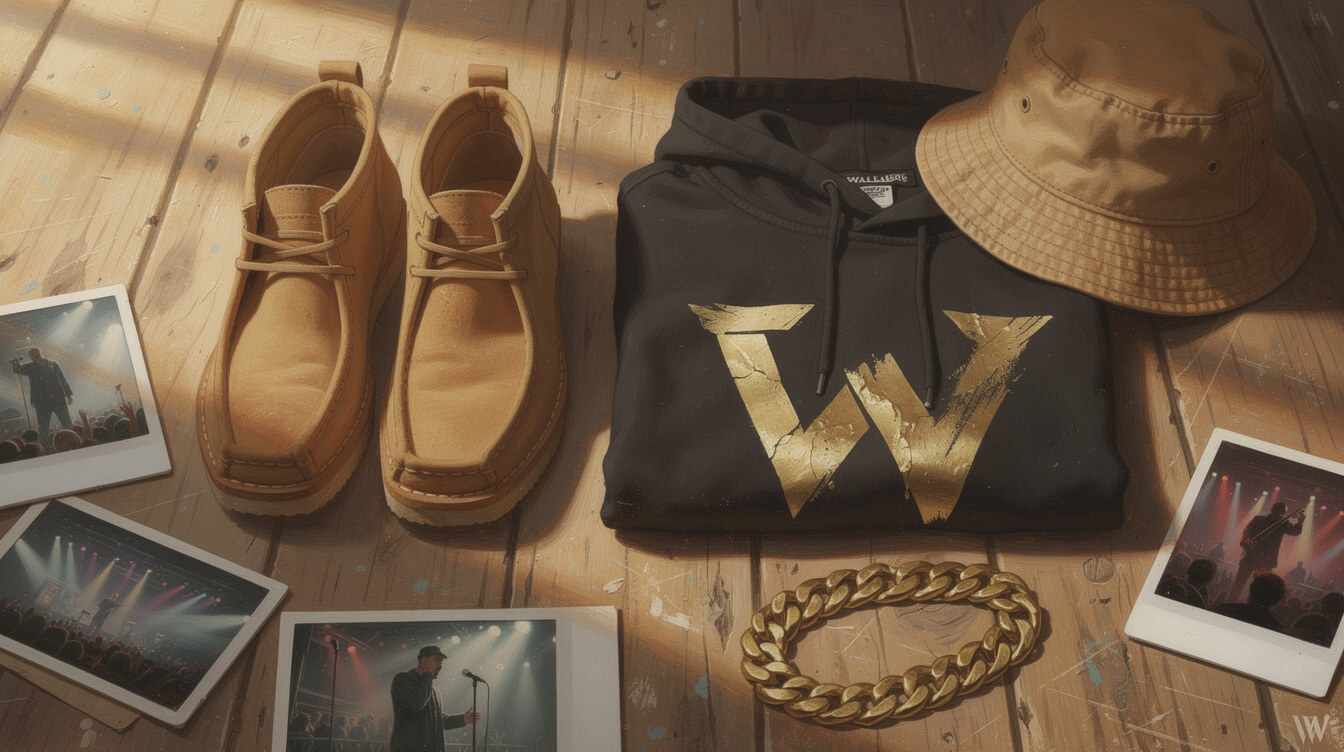
The visual language of mid-2000s Wu-Tang is back in active rotation in 2026 streetwear — the oversized hoodie silhouette, the visible gold Cuban link, the cream Wallabees, the Polo bear, the desert-camo cargo pant. What separates a fan styling the era well from a costume is the same thing that separates Fishscale from a generic 2006 rap record: specificity. Ghostface in 2006 was wearing custom Iceberg knits, a working Versace robe over a Polo shirt, and a 40-pound gold eagle bracelet on his wrist. The point was never to dress like everyone else — it was to dress like a character.
The translation in 2026 is to pick one anchor piece and let it carry the whole fit. A vintage-cut heavyweight Wu hoodie, an album-specific Ghostface tee, a clean canvas bucket hat — any one of those gives the look its center of gravity, and the rest of the outfit can be quiet around it. The other 2006 cue worth stealing is the layering — a long-sleeve tee under a short-sleeve graphic tee under an open hoodie, which sounds chaotic on paper and looks effortless on Brooklyn sidewalks.
The closing thought on Fishscale is the same closing thought as on the album itself: this record is not nostalgia. It is a working blueprint that the 2020s underground is still building from. Hearing it now, with twenty years of distance, you can map the lineage of every cinematic-rap album that came after — from Roc Marciano’s Marcberg to Boldy James’s The Versace Tape to anything Westside Gunn has put out in the Griselda era. The blueprint was written in Staten Island. The classroom is still open. Get into the album, then come back and see what the catalog is doing with it.
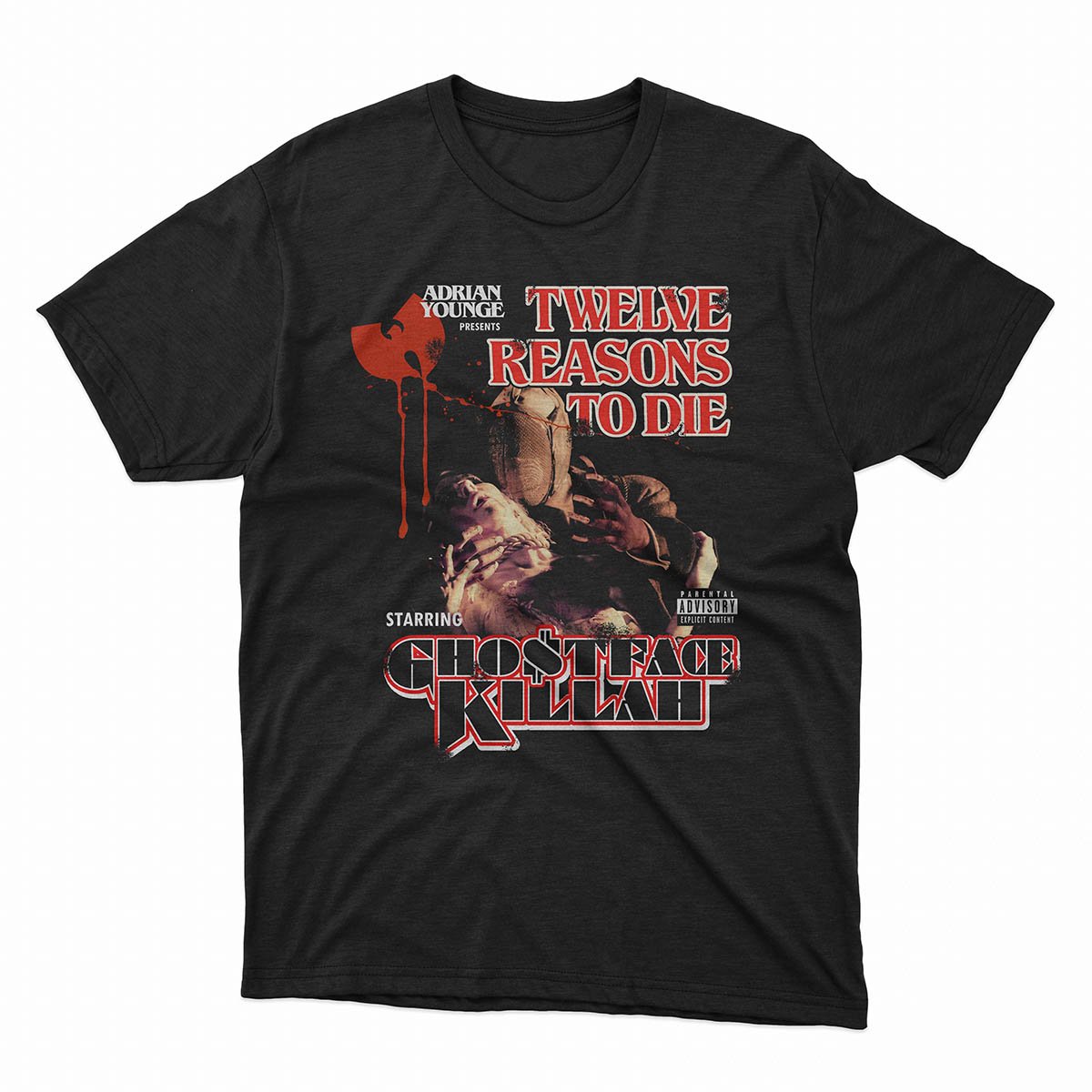
Pretty Toney Energy, Custom Cut
If Fishscale hit you the right way, the Twelve Reasons to Die era is the natural next stop in the Ghostface canon. Limited drop, heavyweight cotton, cinematic Ghost iconography. Wear the catalog, not just the merch.
Hip-Hop Deep Dives, Weekly. No Filler.
Album decodes, era retrospectives, and culture jewels in your inbox every week. Plus first looks at every new Custom Creative drop before they hit the site.

🎧 Never Miss a Drop
Exclusive product releases, hip-hop deep dives, and member-only discounts. Straight to your inbox.
Free forever. No spam. Unsubscribe anytime.
Get the Culture, Delivered
Deep dives into hip-hop history, exclusive product drops, and discounts sent straight to your inbox. No spam, just culture.
Join 2,000+ hip-hop heads already in the loop. Unsubscribe anytime.