Master P Movies: The No Limit Films Playbook From I’m Bout It to 2026
Type master p movies into Google in 2026 and you get exactly what the SERP has been serving for a decade: Wikipedia’s filmography table, an IMDb credit index, TVGuide’s bare title list, and — the newest wrinkle — a Rotten Tomatoes celebrity page and an Instagram teaser reel for a Master P biopic that’s suddenly on everyone’s timeline. What you don’t get, on any of those pages, is anybody actually telling you what these movies are. Not the plots. Not the cultural context. Not the business logic. Not the reason a New Orleans rapper who founded a record label ended up with more than 30 film credits and, arguably, invented the direct-to-video empire model that every hip-hop mogul has copied since.
That’s the gap we’re closing. This is the definitive breakdown of Percy Robert Miller’s film catalog — every era, every playbook move, and every title ranked by cultural weight rather than IMDb star rating. We’re framing the 30+ Master P movies not as an actor’s résumé but as a deliberate direct-to-video empire — the same vertical integration strategy that later inspired Nick Cannon’s Wild ‘N Out spinoffs, Kevin Hart’s Hartbeat Productions, and Tyler Perry’s Studios in Atlanta. Master P got there first, and he did it with VHS tapes moved out the back of tour buses.
The Origin: I’m Bout It (1997) — The Direct-to-Video Empire’s Template

Every Master P movie conversation starts with I’m Bout It. 1997. Direct-to-video. Semi-autobiographical. Master P as Perry McKnight — himself, essentially — moving through New Orleans’s Calliope Projects, dealing, losing his brother Kevin Miller to street violence, and eventually pivoting into the record business. The film was co-directed by Master P and executive-produced under No Limit Films, a subsidiary he’d essentially built to house one project and ended up running as a full studio for two decades.
The distribution move is what matters. Master P didn’t try for theatrical. He shot the film for well under a million, printed VHS copies through No Limit’s existing music-distribution pipeline (Priority Records was handling No Limit’s audio at the time), and sold the tape at the same retail outlets that were already stocking his rap catalog. Sound Warehouse. Camelot. Blockbuster. Independent Black-owned record shops in the South. The film moved 200,000+ VHS units in its first year — numbers most direct-to-video releases never touch — because he’d solved the distribution problem before he even wrote the script.
I’m Bout It also seeded the No Limit Films aesthetic that persists across the whole catalog: hand-held camera work, real-location New Orleans shooting, an in-house cast that overlapped with the No Limit music roster (Silkk the Shocker, C-Murder, Mia X, Fiend, and Master P himself all appear on-screen), and an original soundtrack that doubled as the label’s next commercial release. The soundtrack outsold the film — a pattern that would repeat on every No Limit Films project through 2003. The movie was, functionally, promotional infrastructure for the album. Which was itself promotional infrastructure for the tour. Which sold merch. Which sold the next album. Vertical integration.
1998: The Theatrical Year — I Got the Hook Up and The Players Club
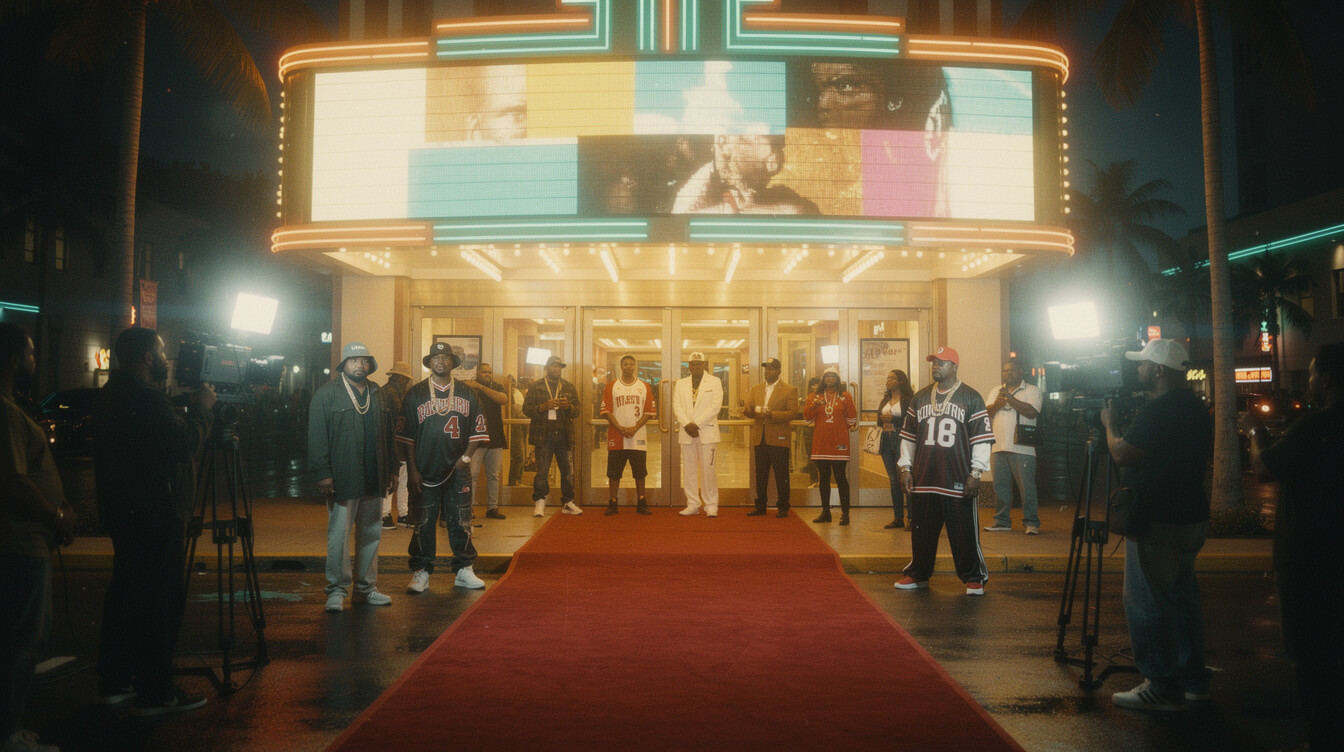
1998 is the year Master P collided with real Hollywood. Two theatrical releases, back-to-back, both featuring him in visible roles, both connected to the No Limit ecosystem. The bigger of the two — culturally and commercially — was I Got the Hook Up, released May 1998 via Dimension Films. Master P starred, produced, and financed. The premise was small (two hustlers in New Orleans get their hands on a truckload of stolen cell phones), but the execution was pure No Limit: an ensemble cast pulled from the label, an OST that hit #3 on the Billboard 200, and a marketing rollout that leveraged Master P’s touring schedule to move theater tickets in secondary Southern markets that studios usually ignored. It grossed over $10 million theatrically on a reported $3-4M budget — a ratio Hollywood dreams about.
The other 1998 title, The Players Club, was Ice Cube’s directorial debut and the moment Cube and Master P — two Black rap-mogul filmmakers running parallel empires — briefly overlapped. Master P’s role was small (billed as “Guy”), essentially a cultural cameo. But the on-screen handshake between the two men signaled something bigger to anyone paying attention: the Cube playbook (rapper-owned production company, culturally specific stories, distributed through a major with real prints-and-ads budget) and the Master P playbook (rapper-owned distribution, direct-to-video-first, own the master) were the two dominant models for hip-hop filmmaking in that decade. Cube went theatrical. Master P went volume. Both worked.
The under-appreciated 1998 title in the catalog is MP da Last Don — a direct-to-video film released as a companion piece to the double album of the same name (which hit #1 on the Billboard 200 and moved 4 million units). The film was a straight-to-cassette hustle, but its existence proves the point: by 1998, every No Limit music release had a film component in development, and the film was there to promote the album as much as the album promoted the film.
The Assembly Line: 20+ Direct-to-Video Titles (1998–2010)

Between 1998 and 2010, Master P appears in — and typically produces or executive-produces — more than 20 direct-to-video films. This is the volume phase. The empire phase. Titles include Hot Boyz (1999), Foolish (1999, with Comedy View’s Eddie Griffin and Andrew Dice Clay in supporting roles), No Tomorrow (1999), Lockdown (2000), Bad Bizness (2003), Still Bout It (2004, the semi-sequel), Decisions (2004), Repos (2006), God’s Gift (2006), Don’t Be Scared (2006), Black Supaman (2007), Internet Dating (2008), and The Mail Man (2009).
Here’s the framing most cultural writing misses: this wasn’t a career decline. This was a business. Each of these films was built to a target margin — cost $200K to $1M to produce, moved 100K–300K VHS or DVD units at $8-15 wholesale, cleared six figures net. Aggregate across 20+ titles and you have a $30M+ direct-to-video franchise operating on Southern street distribution rails. Master P’s direct-to-video slate funded No Limit Films the same way the record catalog funded No Limit Records: recurring cash flow from a catalog that hit consistent unit numbers without needing a hit.
The template for a No Limit Films direct-to-video release, replicated across every title in this era: 90-minute runtime, small budget, ensemble cast pulled from the No Limit and TRU rosters, gritty Southern-street or hood-crime plot, guest cameos from mainstream stars (Snoop Dogg, Ice-T, and Bishop Don “Magic” Juan all show up across the catalog), original score by Beats by the Pound or KLC, and — always — a soundtrack cassette or CD released simultaneously with theatrical marketing dollars behind it. The album was the profit engine. The movie was the marketing.
The Stealth Crossover: Mainstream Hollywood 2000–2003

While the No Limit assembly line was running at full volume, Master P was also quietly logging supporting roles in real mainstream Hollywood productions. This is the era most casual observers miss. In Gone in 60 Seconds (2000) — the Nicolas Cage / Angelina Jolie car-heist blockbuster that grossed $237M worldwide — Master P plays Johnnie “Johnnie B,” one of Cage’s crew members. Small role, but he’s in the movie, on-screen with A-list talent, in a Jerry Bruckheimer production. That’s a real credit.
The prestige crossover: Undisputed (2002), Walter Hill’s prison-boxing film starring Wesley Snipes and Ving Rhames. Master P plays “Gat Boyz Rapper 1” — a nothing role, on paper, but the movie is a Walter Hill picture and being on a Walter Hill set is a meaningful thing for any actor’s résumé. That same year, Dark Blue — Ron Shelton’s LAPD Rampart drama starring Kurt Russell and Scott Speedman — cast Master P as “Maniac.” Hollywood Homicide (2003), the Harrison Ford / Josh Hartnett buddy-cop picture directed by Ron Shelton, gave him the credited role of Julius Armas. And Scary Movie 3 (2003) — the David Zucker parody smash — had him playing himself.
The pattern here is a Hollywood career being run in parallel to the No Limit empire, without either side interfering with the other. Master P was collecting mainstream studio credits at a rate most independent filmmakers dream about, while simultaneously producing and starring in his own direct-to-video franchise. That’s the vertical stack: mainstream visibility from the studio credits feeds direct-to-video sales, direct-to-video revenue funds independent production, independent production feeds back into the music catalog, music catalog cycles back into touring and merch. Every piece is a lead generator for every other piece.
For a deeper look at how the No Limit music side of this vertical stack was engineered, our companion piece — Master P Songs, Ranked by the No Limit Business Move Behind Each Hit — walks through the same playbook from the record-catalog angle. Read together, they tell the whole story.
The Revival Era: I Got the Hook Up 2 and the 2020s Reboot
After a quieter mid-2010s stretch — Master P shifted focus to sports business (No Limit Sports Management) and consumer packaged goods (the Rap Snacks line, Uncle P’s Louisiana Seasoned Rice) — the film catalog got a formal revival in 2019 with I Got the Hook Up 2. Twenty-one years after the original, Master P and Michael Blackson reprised the leads, with new supporting turns from A. J. Johnson and Jeremy Meeks. The film released theatrically and immediately to streaming (a hybrid model that would’ve been impossible in 1998) and hit the top 10 on multiple streaming rental charts.
What matters about I Got the Hook Up 2 isn’t the box office. It’s the proof-of-concept: the direct-to-video empire model translates cleanly to streaming. The economics are actually better. No pressed physical inventory. No returns from Blockbuster. No shipping. Direct-to-consumer digital delivery on Amazon Prime Video, VUDU, iTunes, Google Play — the same distribution rails that TikTok tour merchandise runs on. Master P was 20 years early on a model that streaming eventually normalized.
The catalog kept ticking through the early 2020s with smaller titles — Never Heard (2018), Never and Again (2021), The Christmas Dance (2021), #Unknown (2021) — a mix of family films, faith-based drama, and thriller. Then, in 2026, the biggest catalog news in years: Master P is credited as Rex Allen in the racing drama Short Track Saturday Night, a mainstream theatrical release that put him back on a real Hollywood screen for the first time since Killing Hasselhoff (2017). And the biopic — teased on Master P’s Instagram earlier this month, reported by multiple hip-hop outlets — is set to close the vertical stack: the man who spent 30 years building a film empire around his own life story is finally letting somebody else tell it.
The No Limit Films Playbook: What Every Rap Mogul Copied
Here’s the framework, distilled from three decades of Master P’s film output. It’s the same playbook Nick Cannon runs at Wild ‘N Out, the same playbook Kevin Hart runs at Hartbeat, the same playbook 50 Cent runs at G-Unit Films & Television. Master P didn’t invent all the pieces, but he was the first hip-hop mogul to assemble them into a repeatable system. The system has five moves:
Move one: own the master. Every No Limit Films release is owned outright by the company. No studio distribution deal that dilutes the back-end. No “first look” arrangement that gives a major right of refusal. Master P wrote checks, kept the negatives, and controlled the release. That’s why the catalog is still generating revenue in 2026 — nothing has ever reverted to a studio.
Move two: solve distribution before you write the script. Master P had a music-distribution relationship with Priority Records (later Universal via Universal Music Group’s acquisition) that already put No Limit product on retail shelves in 50,000+ locations. VHS tapes went into the same shipments as CDs. Zero incremental distribution cost. If you’re a rapper thinking about a film company today, this is the question: who’s already shipping your merchandise, and can you piggyback?
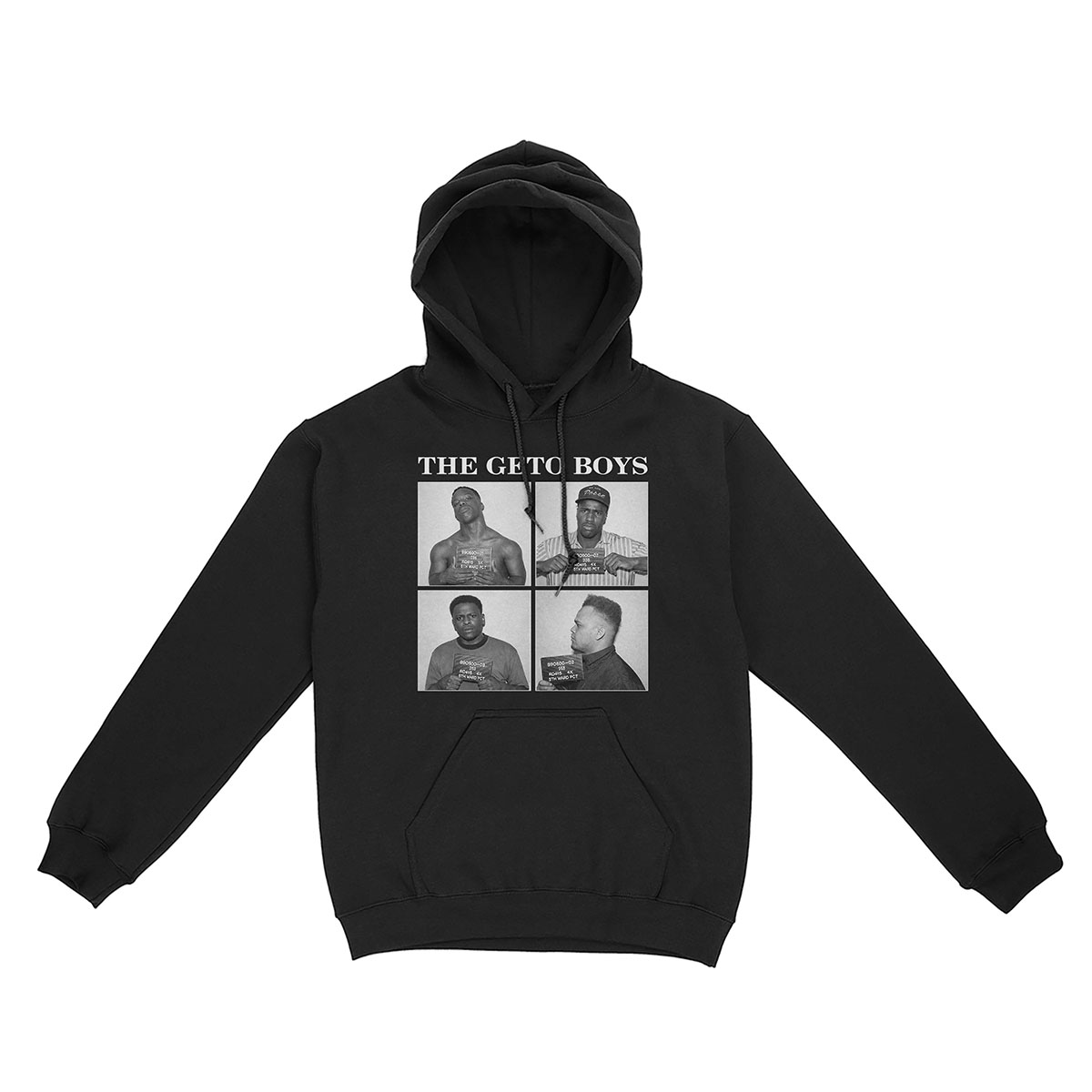
Move three: cast from your existing ecosystem. Every No Limit Films title stars No Limit artists, features No Limit soundtracks, and promotes the next No Limit release. Silkk the Shocker, C-Murder, Mia X, Fiend, Mystikal — the film catalog is essentially a second-tier promotional platform for the record catalog. Cast costs are low because the “actors” are already on your payroll. If you’re wearing a Geto Boys “City Under Siege” hoodie, you already understand the aesthetic: Rap-A-Lot Records and No Limit ran adjacent versions of the same self-contained Southern rap ecosystem in the early ’90s, with the label functioning as both a music brand and a talent stable that could staff other ventures. Master P just extended it into film.
Southern Rap’s Blueprint Era — Wear It
Before No Limit ran New Orleans, Rap-A-Lot ran Houston. The Geto Boys’ “City Under Siege” is the Southern rap album that opened every door Master P walked through. Premium heavy-blend hoodie, halftone-print artwork.
Move four: soundtrack is the profit engine. Every No Limit Films release has an OST that hits at least gold. The film markets the soundtrack. The soundtrack outsells the film by 4-8x. This is the move most modern rap moguls have retreated from — streaming economics have gutted the album-as-profit-engine model. But 50 Cent’s Power soundtrack strategy, DJ Khaled’s endless film-adjacent album drops, and every Migos-era Atlanta trap film project is a downstream evolution of this move.
Move five: crossover for prestige, direct-to-video for cash. The mainstream credits — Gone in 60 Seconds, Undisputed, Dark Blue, Hollywood Homicide, Scary Movie 3, and now Short Track Saturday Night — aren’t paying the bills. They’re prestige signals that increase the direct-to-video catalog’s cultural value. When your streaming-service catalog page shows both an appearance in a Harrison Ford picture and 20 direct-to-video titles you produced yourself, the direct-to-video titles get a legitimacy halo. Ice Cube runs the same play. So does 50 Cent. So does Ludacris. Master P did it first.
The Master P Movies Ranking: 10 Titles That Define the Catalog
Ranked by cultural weight, business impact, and craft — not by IMDb star rating, which measures nothing. This is the shortlist that matters if you’re building a Master P movies watch order.
- I’m Bout It (1997) — The origin. The template. The direct-to-video empire’s foundation stone. If you watch one Master P movie, watch this one first.
- I Got the Hook Up (1998) — The theatrical breakthrough. $10M+ box office on a $3M budget. Proof the No Limit playbook translates to real theatrical distribution.
- MP da Last Don (1998) — The film that proved the album-plus-movie bundle worked as a business unit. Direct-to-video companion to a #1 Billboard record.
- Gone in 60 Seconds (2000) — Not a Master P movie in the star sense, but the mainstream Hollywood credit that opened the door to every subsequent studio role.
- Undisputed (2002) — Walter Hill on the director’s chair. The prestige-credit peak. Small part, big résumé line.
- Hollywood Homicide (2003) — Harrison Ford. Ron Shelton. Studio comedy budget. The full crossover arrival.
- Dark Blue (2003) — Kurt Russell in a Ron Shelton LAPD drama. Prestige credit that surprised critics.
- Still Bout It (2004) — The direct-to-video sequel that proved the format could be extended into a franchise, not just one-off catalog fillers.
- I Got the Hook Up 2 (2019) — The revival. The proof the No Limit Films model translates cleanly to streaming distribution.
- Short Track Saturday Night (2026) — The current chapter. Mainstream theatrical Master P for the first time in nearly a decade, running parallel to the biopic in development.
Notice what’s not on the ranked list: the 15+ direct-to-video mid-catalog titles that make up the bulk of the filmography. Those aren’t the point. Those are the volume. The volume is what pays for the prestige, and the prestige is what makes the volume marketable. That’s the No Limit Films playbook in one sentence.
Frequently Asked Questions About Master P’s Movies
How many movies has Master P made?
Master P’s filmography exceeds 30 titles as actor, producer, and/or director since 1997’s I’m Bout It. Most were released direct-to-video through No Limit Films. The exact count varies depending on how you count executive-producer credits, short films, and TV movies — but 30+ is the safe floor for major titles. IMDb credits closer to 45 across film + TV.
What is Master P’s most famous movie?
I’m Bout It (1997) is the cultural anchor. Semi-autobiographical, direct-to-video, and the template for the entire No Limit Films catalog. I Got the Hook Up (1998) is the theatrical peak — Dimension Films distributed, ~$10M box office, top-of-the-charts soundtrack. If you’re being asked to name one, name I’m Bout It for cultural weight and I Got the Hook Up for commercial peak.
Is Master P still making movies in 2026?
Yes. In 2026 he’s credited as Rex Allen in the racing drama Short Track Saturday Night, his first mainstream theatrical role in nearly a decade. And a Master P biopic — teased on his Instagram this month — is in early development. The No Limit Films model has been formally revived for streaming-era releases since I Got the Hook Up 2 (2019).
Did Master P’s movies make money?
Yes, on a per-title margin basis. The direct-to-video model was designed for cash flow, not box office. Individual titles moved 100,000–300,000 VHS units at the catalog peak, at $8-15 wholesale — six-figure net per film on sub-$1M budgets. I Got the Hook Up grossed $10M+ theatrically on a $3-4M budget. Aggregate across 20+ titles and the No Limit Films catalog is a $30M+ franchise operating on Southern-street distribution rails. The soundtracks, released simultaneously, typically outsold the films by a factor of 4-8x — the OST was always the real profit engine.
Did Master P direct any of his own movies?
Yes — Master P has directing credits on several No Limit Films releases including I’m Bout It (co-directed), and executive-producer or full-producer credits on essentially every No Limit Films title from 1997 through 2010. He’s not a career director in the auteur sense, but he’s a career film producer — arguably his most sustained non-music role.
How does Master P’s film career compare to Ice Cube’s?
They ran parallel rapper-mogul-filmmaker empires with opposite strategies. Cube went theatrical-first (Friday, Barbershop, Are We There Yet) with prints-and-ads budget from a major. Master P went direct-to-video-first (I’m Bout It, MP da Last Don, Still Bout It) with owned distribution through his music-retail relationships. Cube built a rapper-owned studio (Cube Vision). Master P built a rapper-owned direct-to-consumer distribution empire (No Limit Films). Both playbooks worked. Both are studied. Only Master P’s model translates cleanly to the streaming era.
Final Thoughts: Why Master P’s Movies Are Actually a Business School Case Study
The takeaway isn’t that Master P is an underrated actor. He’d tell you himself — he wasn’t trying to win an Oscar. The takeaway is that Master P didn’t make 30+ movies to become a film star. He built No Limit Films as a distribution moat around the No Limit music catalog, and the 2026 biopic is the last piece of that vertical stack coming online. The music sold the movies. The movies sold the merch. The merch sold the tour. The tour sold the next album. And every piece of it — the label, the film company, the merch line, the touring operation — was owned outright by one man from Calliope Projects, New Orleans.
Every hip-hop mogul who’s built a vertical-integration business since 2000 — Puffy, Jay-Z, 50 Cent, Nick Cannon, Kevin Hart, Master P’s own son Romeo Miller, Rick Ross with his Wingstop-plus-media stack — owes a chapter to the No Limit Films playbook. Some of them will admit it. Master P got there first with a VHS tape, a music-distribution relationship, and an eye for the margin. The movies are the receipts.
If the visual history of Southern rap and West Coast gangsta cinema is your entry point, our companion piece on Master P’s music catalog covers the label-side receipts. And for the visual language of the era — the tank tops, the halftone album covers, the gold-and-purple palette No Limit made canonical — Ice Cube’s AmeriKKKa’s Most Wanted tee and the Geto Boys hoodie above are the two closest cultural cousins we carry.
Get the Culture, Not the Recap
We write about hip-hop like people who lived it — album lore, business receipts, and product drops tied to the moments that mattered. Free. One email. No filler.

🎧 Never Miss a Drop
Exclusive product releases, hip-hop deep dives, and member-only discounts. Straight to your inbox.
Free forever. No spam. Unsubscribe anytime.
Get the Culture, Delivered
Deep dives into hip-hop history, exclusive product drops, and discounts sent straight to your inbox. No spam, just culture.
Join 2,000+ hip-hop heads already in the loop. Unsubscribe anytime.