Mobb Deep Members: The Complete Guide to Havoc, Prodigy, and the Queensbridge Duo That Defined East Coast Hardcore
Ask ten hip-hop heads to name the Mobb Deep members and you’ll get the same two names back: Havoc and Prodigy. That’s the correct answer — but it’s also the beginning of a much longer story. Because the two teenagers who met in a Manhattan art-school hallway in 1990 didn’t just form a duo. They built an entire Queensbridge sound, ran an extended family called the Infamous Mobb, ghost-produced for half of G-Unit, survived a Tupac diss and a Jay-Z shot to the ribs, and left behind a discography that still sounds like the paranoia moving under the F train tonight. Here’s the definitive rundown of every Mobb Deep member — the two names on the album spine, the crew that stood behind them, and what the group actually is now that Prodigy is gone.
Who Are the Mobb Deep Members? The Short Answer, Then the Long One
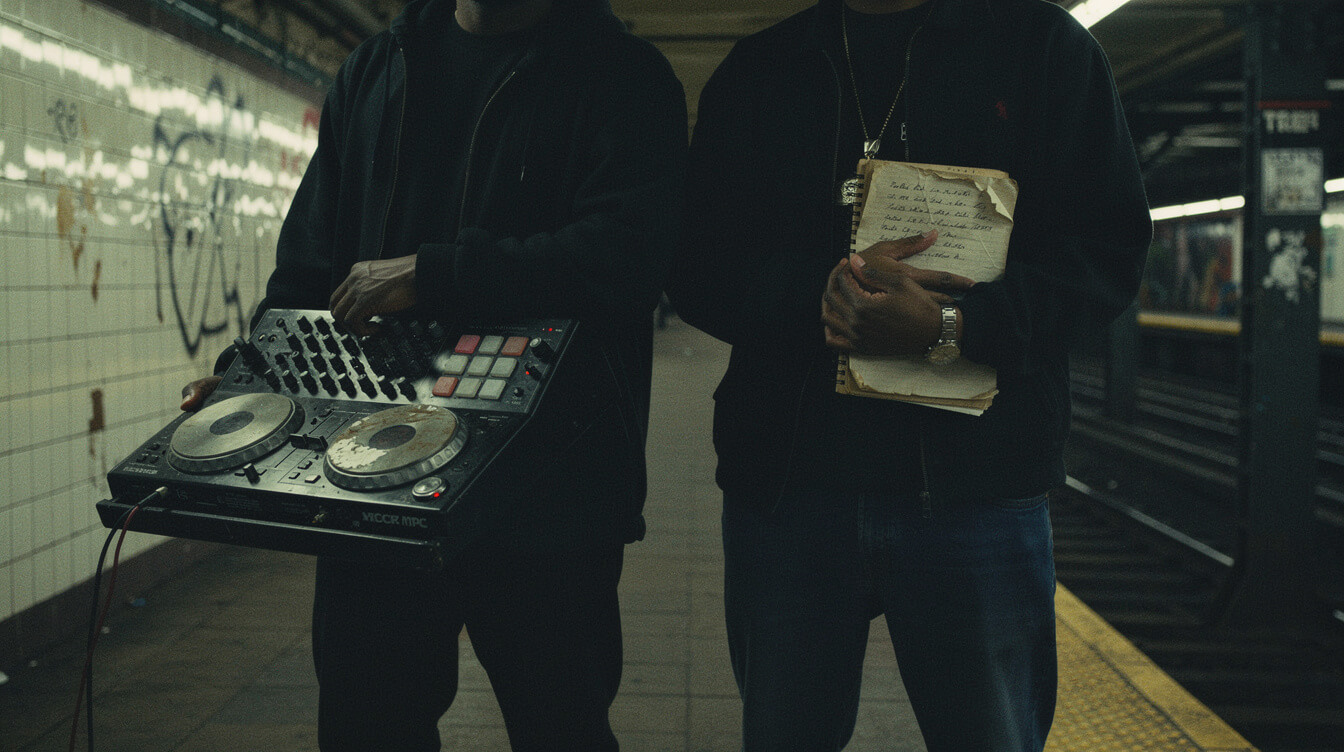
Officially, Mobb Deep is a two-man duo consisting of Havoc (Kejuan Muchita, born May 21, 1974) and Prodigy (Albert Johnson, November 2, 1974 – June 20, 2017). Both men are credited as rappers, songwriters, and — critically — record producers. Havoc is the primary in-house producer; Prodigy also produced, though far less often, and the two share writing credit on virtually every song under the Mobb Deep name. They formed in Queens, New York in 1990 and released records under the group name from Juvenile Hell (1993) through The Infamous Mobb Deep (2014), with a posthumous chapter, the 2025 album Infinite, arriving eight years after Prodigy’s death.
That’s the two-line Wikipedia answer. The longer answer is that Mobb Deep never quite functioned like a duo. From the middle of The Infamous onward there was always a third voice in the room — sometimes Big Noyd on the mic, sometimes Q-Tip in the mix, sometimes the affiliate roster known as the Infamous Mobb standing behind the door on every hook. The group’s official membership never expanded past Havoc and Prodigy. Its working circle was always at least half a dozen deep.
The two-line credit box
- Havoc — MC, producer, engineer. Real name Kejuan Muchita. From the 41st Street side of Queensbridge Houses. Handles the beats.
- Prodigy — MC, occasional producer, primary lyricist for the darkest verses in the catalog. Real name Albert Johnson. From Hempstead, Long Island, but adopted by Queensbridge on arrival.
Everyone else — Big Noyd, Godfather Pt. III, Ty Nitty, Twin Gambino, Cormega for one hot minute, the whole Infamous Mobb roster — is family, feature, or friend of the group. Never a formal member. But if you’re going to talk about Mobb Deep like a hip-hop head instead of a casual, the extended family is where the story lives.
Havoc: The Producer Who Made Queensbridge Sound Like a Haunted Movie
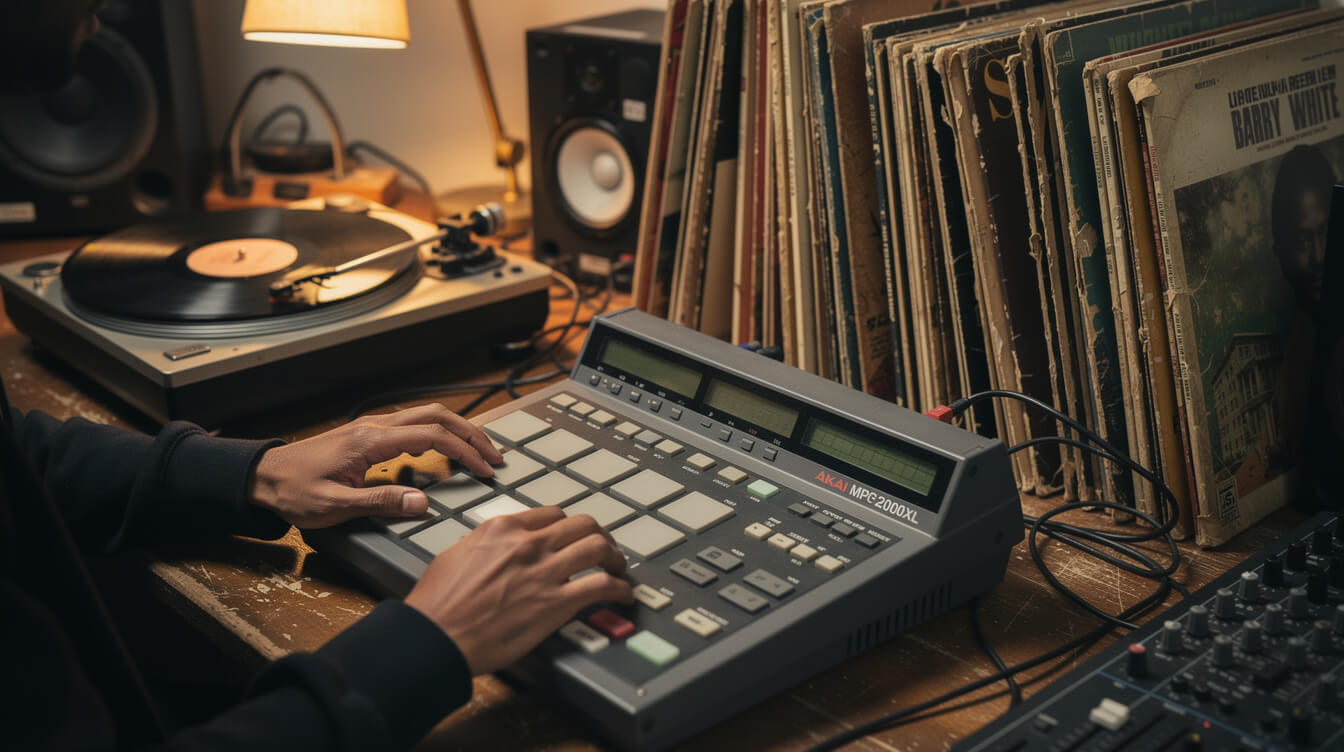
Havoc is the reason Mobb Deep sounds the way it does. Not just because he produced The Infamous, Hell on Earth, and Murda Muzik almost entirely on his own — though that alone would be a career — but because he heard the neighborhood in a way no one else did. His dad was a DJ. In one Red Bull Music Academy interview he described falling asleep as a kid to banging music from the living room. That’s where the sample habit started, before he ever touched an Akai MPC.
Sonically, Havoc’s fingerprint on the Mobb Deep catalog is a small set of tools used with obsessive precision: an Akai MPC-2000XL, a filtered jazz-vocal or soul loop chopped to the point of abstraction, a subterranean 808 hit, and drums that walk with a slight limp. Herbie Hancock’s “Jessica” got filtered into “Shook Ones Pt. II.” Al Green ran under “Give Up the Goods.” Barry White fingerprints show up all over Hell on Earth. Havoc doesn’t sample famous flips the way DJ Premier does or the way J Dilla did — he samples ghost notes and mood, leaving the melody as a mist rather than a hook.
Havoc as an MC (the underrated half of the equation)
Because Prodigy’s voice cuts through so hard, Havoc’s rapping tends to get downgraded to “the other verse.” That’s wrong. Havoc is a technically sharp writer who leans into imagery and pacing — his verses on “Survival of the Fittest,” “Trife Life,” and the entire second half of Murda Muzik hold weight against anyone from the era. He also handled almost all of the group’s hook writing, which is why Mobb Deep choruses always feel structurally anchored even when the beat is deliberately unstable. For a deeper look at Havoc’s beat-making DNA and post-Prodigy work, we did a full producer profile in our piece on Havoc: the producer-rapper who made Queensbridge sound like a haunted movie.
Prodigy: The Voice That Made Queensbridge Paranoia Universal
Prodigy — Albert “P” Johnson — was the writer who took the raw menace of Queensbridge and turned it into film noir. He wrote from a first-person unstable-narrator perspective decades before that phrase became a critical cliché, and he did it in a voice that sounded like it had already survived what it was warning you about. On The Infamous he was barely 20 years old. His verse on “Shook Ones Pt. II” — the “there’s a war goin’ on outside no man is safe from” verse — is one of the most quoted first verses in hip-hop history.
Prodigy’s family history explains part of the depth. His grandfather was Budd Johnson, a bebop-era jazz saxophonist who played with Duke Ellington, Count Basie, and Dizzy Gillespie. His grandmother was one of the first Cotton Club dancers in Harlem and later founded the Bernice Johnson Cultural Arts Center in Queens. Prodigy grew up in a family where music was serious work, and it shows in his cadence — he treats phrasing the way a horn player treats breath.
Prodigy’s sickle-cell disease was not a footnote
Prodigy lived with sickle-cell disease his entire life. It shaped his writing (see the pain-management imagery threaded through H.N.I.C. and Return of the Mac), it shaped how often he could tour, and it eventually contributed to his death. On June 20, 2017, while hospitalized in Las Vegas for a sickle-cell crisis, Prodigy died after choking on a piece of food. He was 42. His solo catalog — H.N.I.C. (2000), Return of the Mac (2007, produced entirely by The Alchemist), Albert Einstein (2013, also with Alchemist), and the two Hegelian Dialectic volumes — is nearly as deep as the Mobb Deep discography itself.
How the Two Members Met: The High School of Art and Design Origin Story
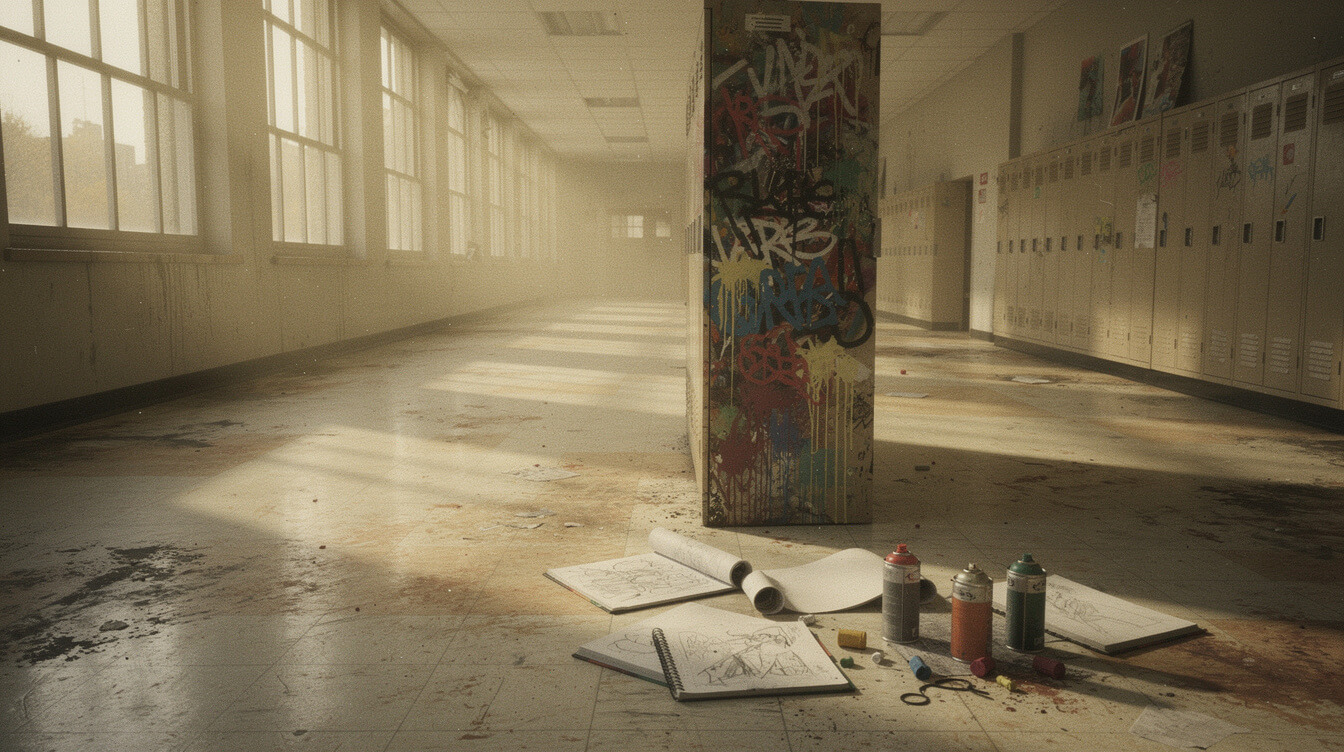
Here is the small, specific fact that most one-paragraph biographies leave out: Havoc and Prodigy met at the High School of Art and Design in Manhattan. Not a music school — a visual-arts high school on East 57th Street whose alumni include Calvin Klein, Marc Jacobs, Amy Heckerling, filmmaker Robert Rodriguez, and graffiti legends Lee Quiñones and Fab Five Freddy. Havoc walked in as a working graffiti writer from Queensbridge. Prodigy walked in as a kid from Hempstead who had grown up around jazz records but was already carrying lyric notebooks.
Their first move together was to get on the 7 train to Coney Island every day after school to rent studio time at the only room they could afford in Brooklyn. They pressed cassette demos and stood outside record labels handing them to anyone who would stop. According to Prodigy, the only artist who ever actually stopped was Q-Tip, who introduced them to Chris Lighty inside the Rush Associated Labels/Def Jam building the same day. That single introduction unlocked the label ecosystem that eventually landed them on 4th & B’way Records for their 1993 debut Juvenile Hell — produced in part by DJ Premier and Large Professor — and then, after 4th & B’way dropped them, on Loud Records for The Infamous.
If you’re a fan of the Queensbridge-into-fashion pipeline that Mobb Deep helped define, our Mobb Deep “The Infamous” T-Shirt is the version of the album jacket you actually want on your body — screenprinted with the same washed-out palette the original 1995 CD case pulled.
The Infamous Mobb: Every Extended-Family Member Worth Naming
The nickname “Infamous Mobb Deep” comes, per Prodigy, from a Queensbridge Golden Gloves boxer named Yamit who had the words The Most Infamous tattooed on his biceps and lived on Havoc’s block. Yamit re-christened the duo, and the nickname bled outward into a full affiliate crew. Here’s who you actually hear on the records:
- Big Noyd (Rapper Noyd) — the closest thing Mobb Deep ever had to a third member. He’s on “Give Up the Goods (Just Step)” from The Infamous, he ghosts through Hell on Earth, he shows up on “Where Ya Heart At” from Murda Muzik, and he’s still on the 2025 posthumous Infinite album. If you counted studio appearances alone, Big Noyd would be a founding member. He’s an affiliate on paper only.
- Godfather Pt. III — the third mic on the actual crew Infamous Mobb (the group), a separate act that released their debut Blood Thicker Than Water Vol. 1 in 2002 on Loud/RCA. Godfather Pt. III raps in a lower, more grounded register than Prodigy and often serves as the harmonic counterweight on Infamous Mobb tracks.
- Twin Gambino — the other Infamous Mobb rapper, brother-figure to Godfather Pt. III on the mic. Heard on posse cuts from the Murda Muzik-era mixtape circuit.
- Ty Nitty — the fourth Infamous Mobb voice, Queensbridge native, deep-voiced, largely known for his features across the Mobb-adjacent tape run and the Reality Rap mixtapes.
- Cormega — briefly, and famously, almost-a-member. Cormega came out of Queensbridge alongside Nas and was floated as a third Mobb Deep MC in the mid-90s. It didn’t happen; the falling-out is documented across a decade of interviews and diss records. He remains a Queensbridge peer, never an official member.
- Alchemist — not a rapper, but if you count producers who shaped Prodigy’s solo sound, Alchemist is the third Mobb Deep member. He produced Return of the Mac (2007) and Albert Einstein (2013) top to bottom.
- Q-Tip — produced/mixed portions of The Infamous uncredited on the original run, and remained a lifelong mentor. Q-Tip is the reason the group has a career.
Recognize the pattern: Mobb Deep, on paper, is two people. In practice, it’s a Queensbridge production collective with two names on the outside.
Every Label the Members Signed To — 4th & B’way, Loud, Jive, G-Unit, Infamous
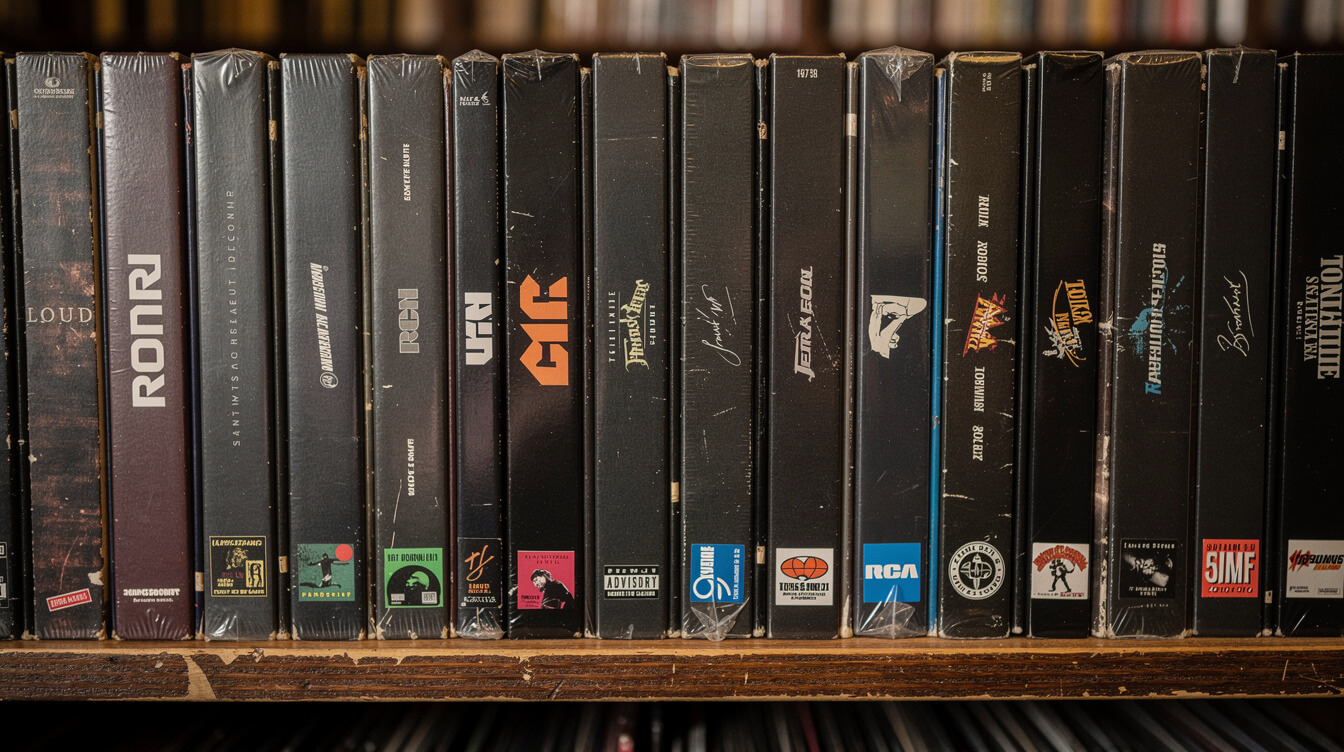
Membership is one lens. Business history is another, and for Mobb Deep the two are inseparable — the roster stayed constant while the label logo on the back of every album cover kept changing. Here’s the full label timeline, condensed:
- 4th & B’way Records / Island — released Juvenile Hell in 1993 and immediately dropped the duo. The record’s DJ Premier and Large Professor beats are the reason it survives on collectors’ shelves at all.
- Loud Records / RCA — the classic era. Home for The Infamous (1995), Hell on Earth (1996), and Murda Muzik (1999). Loud was where Wu-Tang, Big Pun, Xzibit, and Mobb Deep all lived at the same time; Steve Rifkind and Matty C’s ear defined the East Coast underground going commercial.
- Columbia — released Infamy (2001), the album that answered Jay-Z’s “Takeover” without saying his name outright (“Burn,” “Crawlin'”). This is also the album where Havoc’s sample palette starts stretching outward toward stranger textures.
- Jive Records — released Amerikaz Nightmare in 2004. Sold poorly. The group parted ways with Jive shortly after. As a result of subsequent label mergers, every Mobb Deep studio album from 1995 through 2004 is now owned by Sony Music Entertainment.
- G-Unit Records / Interscope — signed in June 2005, at 50 Cent’s personal invitation. Released Blood Money in 2006 with guest verses from 50, Lloyd Banks, Tony Yayo, Young Buck, Mary J. Blige, and Nate Dogg. In 2006 Mobb Deep also became the first American hip-hop duo to perform in India, via VH1’s Hip Hop Hustle. Released from the G-Unit contract in late 2009.
- Infamous Records / Independent — final active-era chapter. Released The Infamous Mobb Deep in 2014 as a self-owned project.
- Mass Appeal — released the posthumous Infinite in October 2025, curated with Havoc’s involvement, guests including Nas, Clipse, Raekwon, Ghostface Killah, Big Noyd, Jorja Smith, and H.E.R.
If you’re building a physical shelf for East Coast ’90s hip-hop, Mobb Deep sits next to Wu-Tang, Nas, and Biggie — and their era-defining catalog deserves a physical anchor on the wall. Below is the item most Queensbridge fans build the shelf around.
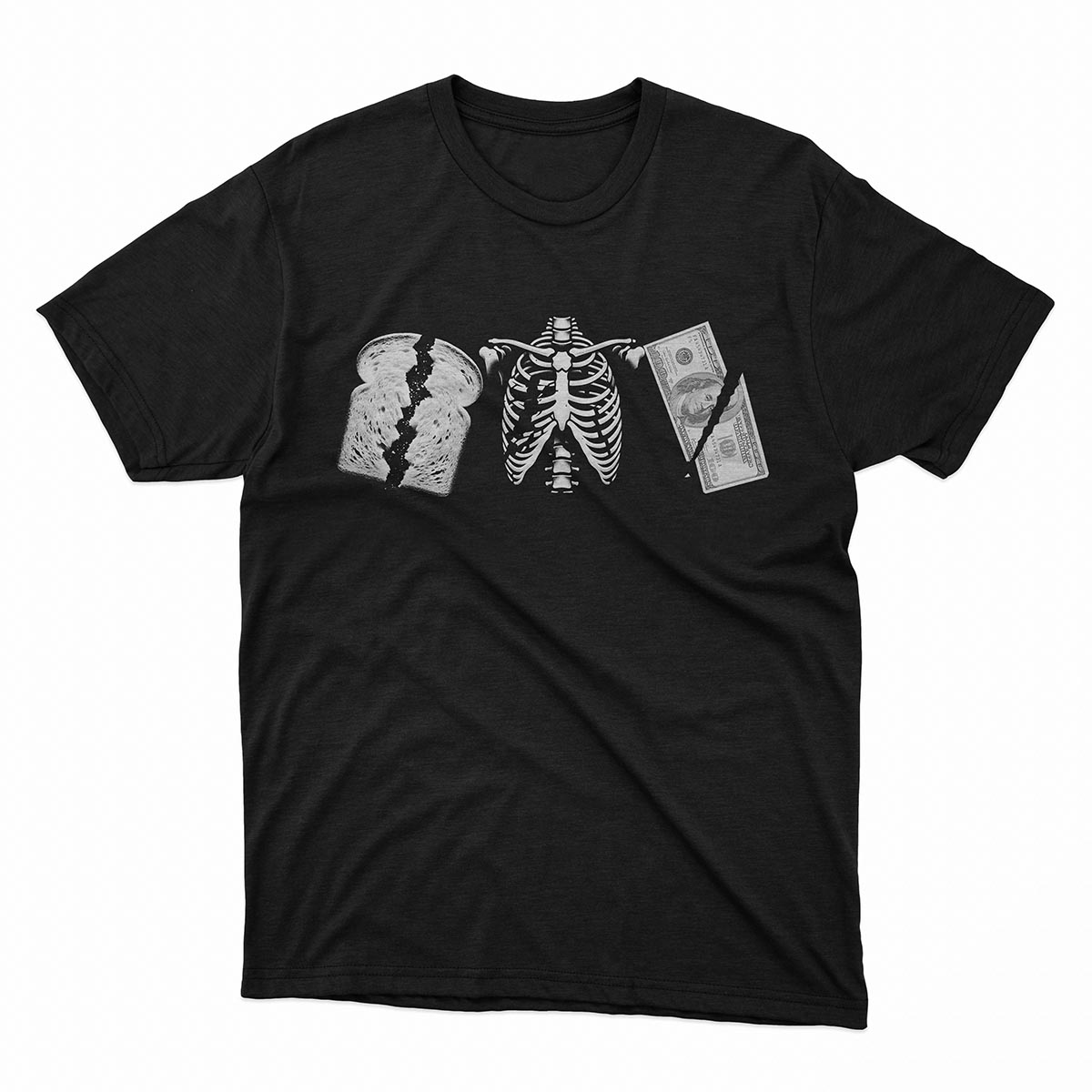
Rep the Queensbridge Gospel
Prodigy’s H.N.I.C.-era Keep It Thoro fan-art tee — the “Break Bread, Ribs, Hundred Dollar Bills” verse quote screenprinted in the same washed palette as the original 12″. For the heads who quote the line without needing the beat to drop first.
After Prodigy: What Mobb Deep Is Now, and the 2025 Infinite Album

Prodigy’s death in June 2017 ended Mobb Deep as an active duo. It did not end Mobb Deep as an idea. In the eight years since, Havoc has performed under the group’s name at festivals, curated official-catalog re-releases, and — most significantly — helmed the posthumous Infinite, released October 10, 2025, on Mass Appeal. Infinite is built around unreleased Prodigy vocals from the late-2000s and early-2010s vault, sequenced against new Havoc production and guest verses from Nas, Clipse, Raekwon, Ghostface Killah, Big Noyd, Jorja Smith, and H.E.R.
The album is being treated by the group’s estate and by critics as the true final Mobb Deep record. Whether Havoc continues to perform under the group name after Infinite‘s promotional cycle wraps is genuinely uncertain. His own solo work continues in parallel — the 2022 collaboration with Nyce da Future and steady production placements for The Alchemist, Roc Marciano, and Griselda-adjacent artists suggest a post-Mobb Deep career that never had to slow down. What has definitely ended is Mobb Deep as a two-person act writing new songs together in a room. There is no third member coming. There never was going to be.
Prodigy’s estate and the vault
Prodigy’s family, primarily his widow Kiki, controls his estate and the unreleased archive. Multiple posthumous releases have surfaced: The Hegelian Dialectic 2: The Book of Heroine (2022), sporadic feature verses, and now the Infinite vocals. The vault is understood to be deep but finite, and the family has been deliberate about what gets released. Expect trickle-drops rather than annual albums.
Mobb Deep Members FAQ
Are all Mobb Deep members still alive?
No. Prodigy (Albert Johnson) died on June 20, 2017 at age 42 in Las Vegas after choking during a hospital stay for a sickle-cell disease crisis. Havoc (Kejuan Muchita) is alive and active.
How many members did Mobb Deep have?
Officially, two: Havoc and Prodigy. There were never any other credited members of the group Mobb Deep itself. The affiliated crew known as Infamous Mobb — Godfather Pt. III, Twin Gambino, Ty Nitty — is a separate act that recorded on the same labels and featured on Mobb Deep records but did not share the Mobb Deep name.
Is Big Noyd a member of Mobb Deep?
No, though the confusion is understandable. Big Noyd (Rapper Noyd) has appeared on more Mobb Deep records than any other guest artist across three decades. He is an affiliate, not a member. On paper, Mobb Deep remained a two-man group for its entire run.
Was Cormega ever in Mobb Deep?
No. Cormega, a Queensbridge peer of Havoc, Prodigy, and Nas, was briefly floated as a potential third Mobb Deep MC in the mid-1990s but was never added to the lineup. The situation triggered a well-documented falling-out between Cormega and Nas that spilled into diss records and interviews for years.
Where are Havoc and Prodigy from?
Havoc grew up in the Queensbridge Houses in Long Island City, Queens — the same six-superblock complex that produced Marley Marl, Nas, Roxanne Shanté, MC Shan, Cormega, and Tragedy Khadafi. Prodigy grew up in Hempstead on Long Island but attached himself to Queensbridge once the duo formed and is claimed by the neighborhood on every record he made.
What high school did Havoc and Prodigy attend?
The High School of Art and Design in Manhattan, a visual-arts specialty school on East 57th Street. They met there in the late 1980s. Alumni include Calvin Klein, Marc Jacobs, filmmaker Robert Rodriguez, and graffiti legends Lee Quiñones and Fab Five Freddy.
How did Mobb Deep get signed?
By handing a cassette to Q-Tip of A Tribe Called Quest outside a Manhattan record label building. Q-Tip walked them into the Rush Associated Labels/Def Jam office and introduced them to Chris Lighty on the spot. That introduction led to their 1993 deal with 4th & B’way Records for the Juvenile Hell debut.
Who produced Mobb Deep’s music?
Almost entirely Havoc. He produced the vast majority of The Infamous, Hell on Earth, and Murda Muzik, plus most of the group’s later output. Notable outside producers on the catalog include Q-Tip (uncredited on parts of The Infamous), DJ Premier and Large Professor (Juvenile Hell), and later on The Alchemist, Just Blaze, and Kanye West on the Columbia and G-Unit-era records.
What is the “Dunn language” Mobb Deep are credited with popularizing?
A slang system the crew developed as their own version of pig Latin. Per Prodigy’s own account, the substitution of “dunn” for “son” originated with a friend named Bumpy who had a lisp — every time he tried to say “son” it came out “dunn.” The group adopted it and expanded it into a fuller coded vocabulary. It first showed up on record on the 1999 single “Quiet Storm.”
Final Thoughts: Two Names on the Cover, a Whole Neighborhood Inside
The list of official Mobb Deep members is short — Havoc and Prodigy, full stop. The list of people who made Mobb Deep what it became is much longer, and it runs through every Queensbridge courtyard, every Loud Records A&R meeting, every Q-Tip hallway introduction, every Big Noyd hook, every Alchemist beat CD passed to Prodigy in his last decade. That’s the honest membership. If your relationship with the group ends at “Havoc and Prodigy, they did Shook Ones,” you’re carrying the correct answer for a Wikipedia infobox and the wrong answer for a group that spent thirty-five years turning a specific block of Queens into an entire hip-hop cosmology. Now you know the whole roster. Play The Infamous tonight with a different set of ears.
For adjacent Queensbridge and East Coast reading, we’ve also mapped Havoc’s post-Prodigy production run, the Long Island roots of Eric B. & Rakim, and the Roc-A-Fella / Bad Boy / Mobb Deep New York power triangle of 2001.

Stay in the Culture
Deep-dive artist retrospectives, unreleased-vault sample maps, and drop alerts on limited fan-art tees and neon signs. No filler, no corporate spam — just the culture, in your inbox.

🎧 Never Miss a Drop
Exclusive product releases, hip-hop deep dives, and member-only discounts. Straight to your inbox.
Free forever. No spam. Unsubscribe anytime.
Get the Culture, Delivered
Deep dives into hip-hop history, exclusive product drops, and discounts sent straight to your inbox. No spam, just culture.
Join 2,000+ hip-hop heads already in the loop. Unsubscribe anytime.