Griselda Records: Inside the Buffalo Boom Bap Blueprint That Rebuilt Underground Hip-Hop (2026 Complete Guide)
In 2012, three cousins from a broken Rust Belt city started a hip-hop label out of a clothing line — and quietly rebuilt the blueprint for underground rap in the process. Griselda Records is what happens when Buffalo, boom bap, and a merch-first business model collide: a 2012-founded Buffalo, NY indie label that grew from Westside Gunn’s 17-minute Hitler Wears Hermes EP into the most influential underground hip-hop institution of the last decade.
Below is the full 2026 guide to Griselda Records: how three cousins from Buffalo built it, the producers who gave it a sound (Daringer, Beat Butcha, The Alchemist), the Roc Marci aesthetic lineage that predicted it, the Fashion Rebels merch empire that funded it, the essential discography, and the exact template every post-2015 underground label quietly copied. If you came here for a Wikipedia table, close the tab. If you came here to understand why Griselda actually matters — keep reading.
What Is Griselda Records: The Buffalo Label That Rebuilt Underground Hip-Hop

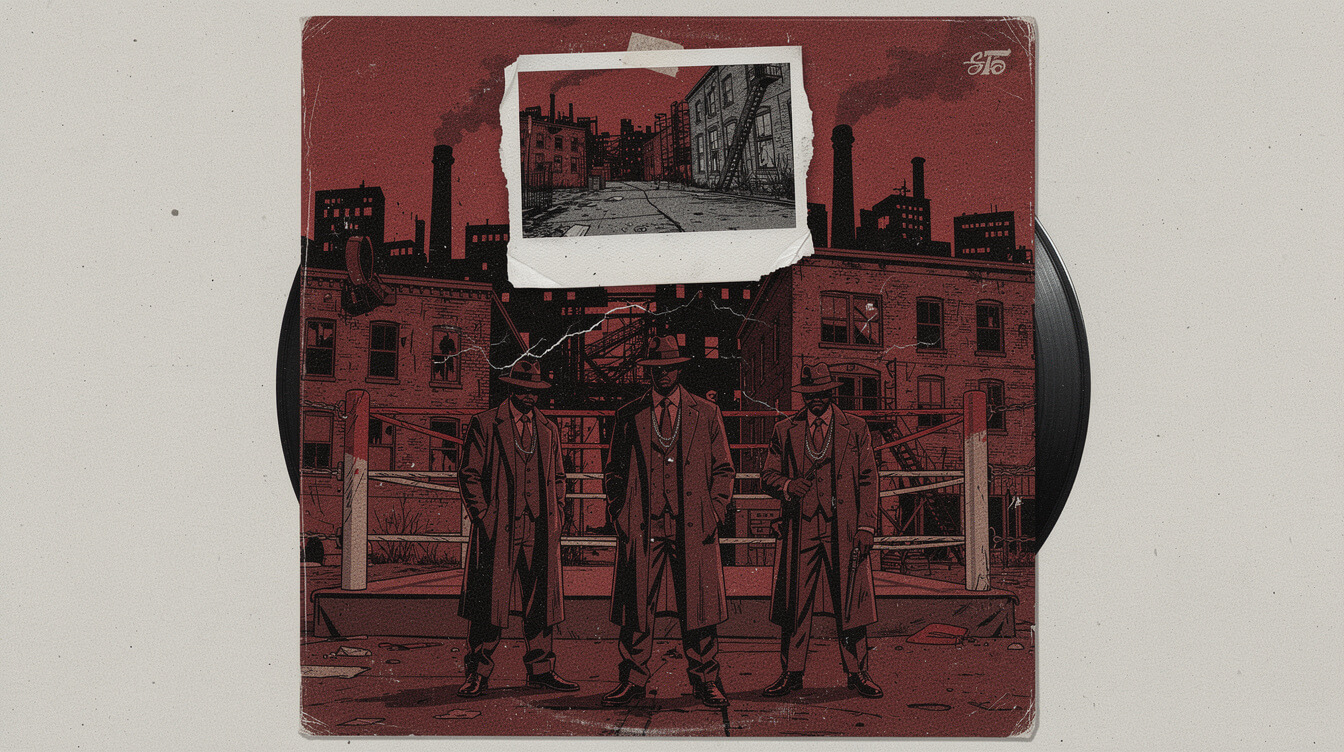
Griselda Records — officially Griselda x Fashion Rebels, or GXFR — is an American independent hip-hop label founded in 2012 in Buffalo, New York by Westside Gunn (Alvin Worthy), his half-brother Conway the Machine (Demond Price), and Haitian-American MC Mach-Hommy. Benny the Butcher (Jeremie Pennick) — Westside Gunn’s cousin — joined shortly after as the third flagship rapper. In-house producer Daringer filled out the core roster and gave the label its dusty, sample-shredded signature sound.
The name comes from Griselda Blanco, the Colombian drug matriarch known as “La Madrina” of the 1980s Miami cocaine trade — a signal from the jump about the mafioso street iconography the label would run with. But the more important context is geographic. Griselda didn’t come out of New York City, or Atlanta, or LA. It came out of Buffalo — a dying Rust Belt city with no hip-hop scene, no A&R infrastructure, no major-label proximity, and a per-capita poverty rate that had been climbing for forty years. That absence is the whole story.
If you’re from a city with a scene, you can chase it. You can hustle at open mics, get featured on regional radio, build a following through the local ecosystem. Buffalo had none of that. So Griselda had to build the ecosystem itself — first as a limited-run vinyl operation through London label Daupe! (releases that sold out in minutes), then as a merch line, then as a music label, then as a Roc Nation management client, then as a Shady Records distribution partner. Every step was earned outside the traditional pipeline. That’s what made the aesthetic — grimy, unhurried, allergic to commercial gloss — feel authentic instead of performative. There was no gloss available.
The Three Cousins: Westside Gunn, Conway the Machine, and Benny the Butcher
The origin story is a boxing-and-brotherhood tragedy: in 2012, Conway was shot in the head and neck in a Buffalo street incident that left him with partial facial paralysis. His rap career, which had barely started, was suddenly in question. Westside Gunn — who was already running Griselda as a clothing brand while managing Conway’s music — pivoted the entire operation around his half-brother’s recovery. He released the 17-minute Hitler Wears Hermes EP that October, effectively founding Griselda Records as a music label to give Conway (and himself) a platform that didn’t require radio play, industry favors, or a healthy face for a video shoot.
Benny the Butcher, Westside Gunn’s cousin, entered the fold from a different lane. Benny had been rapping since the early 2000s and running his own Black Soprano Family imprint. He brought the coldest technical writing of the three: dense, economical, plug-life storytelling delivered in the flat Buffalo cadence that would become the label’s rhythmic fingerprint.
The three-cousin structure isn’t just marketing. It shows up in the music constantly — group tapes like Don’t Get Scared Now (2016) and WWCD (2019), guest verses trading positions on nearly every solo project, shared visual identity across cover art. It also shows up in the business: Benny’s BSF, Conway’s Drumwork, and Westside Gunn’s Griselda-proper operate as three related imprints under the same roof, letting each cousin build his own artist roster without central-label friction. It’s the rap-label version of a family-owned restaurant group — everyone under one name, everyone with their own kitchen.
The Sound: Daringer, Beat Butcha, and Alchemist — The Producers Who Built Griselda’s Boom Bap
A Griselda beat is instantly identifiable: a two-to-four-bar sample loop, usually from an obscure 60s or 70s soul, jazz, or spy-thriller soundtrack; drums that sound like they were recorded through a broken tape deck; almost no low-end sub bass; no hook; no bridge; nothing that isn’t strictly necessary. The template comes from house producer Daringer, a Buffalo-native beatmaker who has produced across the vast majority of Westside Gunn, Conway, and Benny’s catalogs since the very first Hitler Wears Hermes.
Daringer’s crackling drum programming and sample-collage approach owes as much to the RZA’s 36 Chambers chop-and-loop discipline as it does to J Dilla’s flip-in-place instincts. But the innovation is what Daringer doesn’t do: he refuses to add. No sub-bass sweetener. No hi-hat rolls. No transitions. A Daringer beat gets set up, plays for two minutes, and gets out of the way. This is the boom bap philosophy stripped down to its architectural bones. It’s also the reason Griselda tapes reward repeated listening — the beats are so lean that the raps have room to breathe, and every ad-lib registers as a compositional choice.
The other essential Griselda producers: Beat Butcha (a UK producer who’s laced deep cuts across the Benny catalog), Camoflauge Monk (fellow Buffalo native and Daringer collaborator), Denny LaFlare, and Conductor Williams (whose “conductor we have a problem” tag has become one of the most recognizable producer signatures in modern rap). Then there’s The Alchemist — not officially in-house, but so frequently deployed as a Griselda collaborator that he might as well be. Conway the Machine’s Lulu (2020) is an Alchemist EP top-to-bottom, and Al’s fingerprints are all over the extended Griselda universe.
If you want to trace the boom bap production DNA that led to Griselda, start upstream at Gang Starr. DJ Premier’s chop philosophy on Gang Starr’s Hard to Earn is arguably the direct ancestor of what Daringer does now — same reverence for the sample, same discipline about drum programming, same refusal to sweeten. Also upstream: Havoc’s SP-1200 discipline on The Infamous — we broke down how that record’s dust and grit set the template for everything after it in our Mobb Deep The Infamous at 30 retrospective. Griselda didn’t invent this sound. It just proved, thirty years after Hard to Earn and The Infamous dropped, that it still worked.
The Roc Marci Blueprint: Griselda’s Underground Predecessor and Aesthetic Godfather
You can’t understand Griselda without understanding Roc Marciano. In May 2010, the Hempstead, Long Island MC released Marcberg, a self-produced solo debut that felt like it had been beamed in from a parallel timeline — one where hip-hop had ignored Auto-Tune, ignored trap 808s, ignored radio-ready hooks, and just kept building on the mid-90s East Coast template until it had evolved into something new. Marcberg was short (fifteen tracks in under fifty minutes), sample-heavy, almost hookless, and delivered in Roc’s now-signature under-his-breath conversational flow. It was also almost impossible to buy — limited pressings, no major distribution, cult-word-of-mouth only.
Every stylistic choice Griselda would later make was in that record. The short album length. The refusal of hooks. The mafioso lyricism. The physical-media scarcity as marketing. The unhurried, actorly delivery. Roc Marciano is on record about the influence going both ways — he’s collaborated with Westside Gunn, Conway, and Benny across various projects — but the aesthetic lineage runs Marciano → Griselda. Roc built the prototype. Griselda scaled it into a movement.
What Griselda added was volume. Roc Marciano was and still is a solo operator — an auteur label of one. Griselda took the same aesthetic and ran it as a factory: multiple flagship artists, dozens of releases per year, in-house producer, sister imprints, merch drops, tour packages. If Roc’s Marcberg was proof of concept that this style could exist in the market, Griselda’s Hitler Wears Hermes series — nine tapes and counting — was proof of concept that it could dominate the market. The rest of the underground boom bap revival of the late 2010s (Mach-Hommy’s solo run, Roc Marci’s own catalog re-expansion, Ka’s untouchable late-career output, the entire Buffalo-adjacent scene of Rome Streetz and Stove God Cooks and Boldy James) is downstream of both records. Freddie Gibbs — a longtime Alchemist collaborator who lives in the same aesthetic universe — is the clearest bridge between the Roc Marci lineage and the Griselda world; we broke down where his catalog fits in our Freddie Gibbs 2026 tour retrospective.
Fashion Rebels and Griselda x Nike: The Merch Empire That Funded the Label
Here’s the part every music-focused write-up misses: Griselda started as a clothing brand. Before Conway got shot, before Hitler Wears Hermes, before Daringer was in-house, Westside Gunn was running Fashion Rebels as a streetwear line and using it to fund studio time. When the label pivoted to music in 2012, the merch operation didn’t get retired — it got promoted. The label’s official name is Griselda x Fashion Rebels (hence GXFR), and every album cycle since has doubled as a capsule drop. Album art gets tees. Character motifs (Hermes gear, Chef Trap Sessions branding, boxing iconography) get hats and hoodies. Tour dates get one-off event merch that sells out in days and disappears from the catalog forever.
The financial logic is brutally efficient: a limited-run boom bap tape sold on Bandcamp for $10 might move 5,000 copies. That’s $50,000 gross. A $75 hoodie tied to that tape’s cover art might move 800 copies at $60 margin apiece. That’s $48,000 gross on top — from the same fan, the same release, the same marketing spend. Griselda figured out early that if you can’t (or don’t want to) pursue radio-play economics, merch isn’t a nice-to-have. It’s the primary revenue line, and the music becomes the marketing vehicle for the drops.
The strategy hit its widest audience with the Griselda x Nike SB Dunk Low collaboration — a limited-run sneaker released with New York boutique Extra Butter, wrapped in Griselda’s boxing-and-mafia visual identity. It sold out instantly, resold at 5-10x retail, and put GxFR in front of a streetwear-first audience that might never have discovered the music otherwise. It’s the same play Wu-Wear ran in 1995 with the Wu-Tang Clan, and it points at a much longer lineage. Wu-Wear → FUBU → Rocawear → Sean John → Ecko → BAPE → Supreme x whoever → GxFR. Rap merch as a co-equal business to rap music is not new. Griselda just did it in an era where most indie labels had forgotten that lesson entirely.
The cultural lineage matters: the Wu template of album-cycle-as-merch-cycle is why an aesthetic project like Griselda works. If you want to trace it, start with the source material — a piece like the Enter The Wu-Tang 36 Chambers Hoodie sits in exactly the same tradition: album art as identity, worn on the body, sold direct-to-fan without a major-label markup in the middle. We went deep on the whole Wu-Wear apparatus and how it seeded the modern indie hip-hop merch economy in our Wu-Tang Clan merch guide — required reading if you want the direct lineage from 1995 Wu-Wear to 2026 Fashion Rebels.
The Griselda Discography: 15 Essential Releases
The full Griselda catalog is enormous — Wikipedia’s Griselda Records discography table runs longer than most rap labels’ entire history. What follows is the essential entry-point list. If you’re new to the catalog, start here in this order.
- Westside Gunn — Hitler Wears Hermes (Oct 26, 2012) — The 17-minute EP that started the whole thing. Founding document. Daringer beats already in place. Everything the label would become is in these seven tracks.
- Westside Gunn — Flygod (Mar 11, 2016, w/ Empire) — First proper Griselda-era LP. Where the aesthetic locks in. Establishes the Flygod persona that Gunn has been iterating on ever since.
- Griselda — Don’t Get Scared Now (May 13, 2016) — The first Griselda-as-collective EP. Gunn + Conway + Benny trading verses on Daringer production.
- Conway the Machine — Reject 2 (Oct 30, 2015) — Conway’s breakthrough mixtape. Post-shooting comeback record. Cold delivery, plug-life storytelling.
- Westside Gunn — Supreme Blientele (Jun 22, 2018, w/ Empire) — The peak of Gunn’s mid-period. Hermes wrestling-and-luxury lyrical universe fully realized.
- Benny the Butcher — Tana Talk 3 (Nov 23, 2018) — Benny’s mainstream breakout. The album that made “the plug” a Griselda aesthetic keyword.
- Benny the Butcher — The Plugs I Met (Jun 21, 2019) — Short EP with production from Daringer and The Alchemist. Every track is a highlight.
- Griselda — WWCD (Nov 29, 2019, w/ Shady/Interscope) — The collective debut album. Shady Records distribution deal made real. Eminem executive-produced.
- Westside Gunn — Pray for Paris (Apr 17, 2020) — Widely considered Gunn’s best solo album. Pandemic-era masterpiece. Art-world references over street-life ones. Tyler the Creator, Freddie Gibbs, Wale features.
- Conway the Machine & The Alchemist — Lulu (Mar 30, 2020) — The Alchemist-produced Conway EP. Seven tracks, no filler. The kind of record that ends up in year-end lists that don’t usually include Griselda releases.
- Boldy James — The Versace Tape (Aug 14, 2020) — Detroit’s Boldy James’s first Griselda release. Established him as one of the most technically consistent rappers alive.
- Benny the Butcher — Burden of Proof (Oct 16, 2020) — Hit-Boy production top-to-bottom. Griselda scaled up to major-producer sonics without losing the aesthetic.
- Mach-Hommy — Pray for Haiti (May 21, 2021) — Founding member Mach-Hommy’s return to a Griselda release after years off the label. Executive-produced by Westside Gunn.
- Conway the Machine — God Don’t Make Mistakes (Feb 25, 2022) — Conway’s Shady-Interscope major-label debut. Ends his Shady era on a high.
- Rome Streetz — Kiss the Ring (Sep 30, 2022) — The Rome Streetz signing paying off. Post-2020 Griselda’s most consistent new signee’s flagship record.
If you want the deep cuts — the Alchemist collabs, the Boldy James run, the newer Rome Streetz and Armani Caesar and Stove God Cooks releases — dig from there. The catalog rewards spelunking.
Shop the Boom Bap Aesthetic
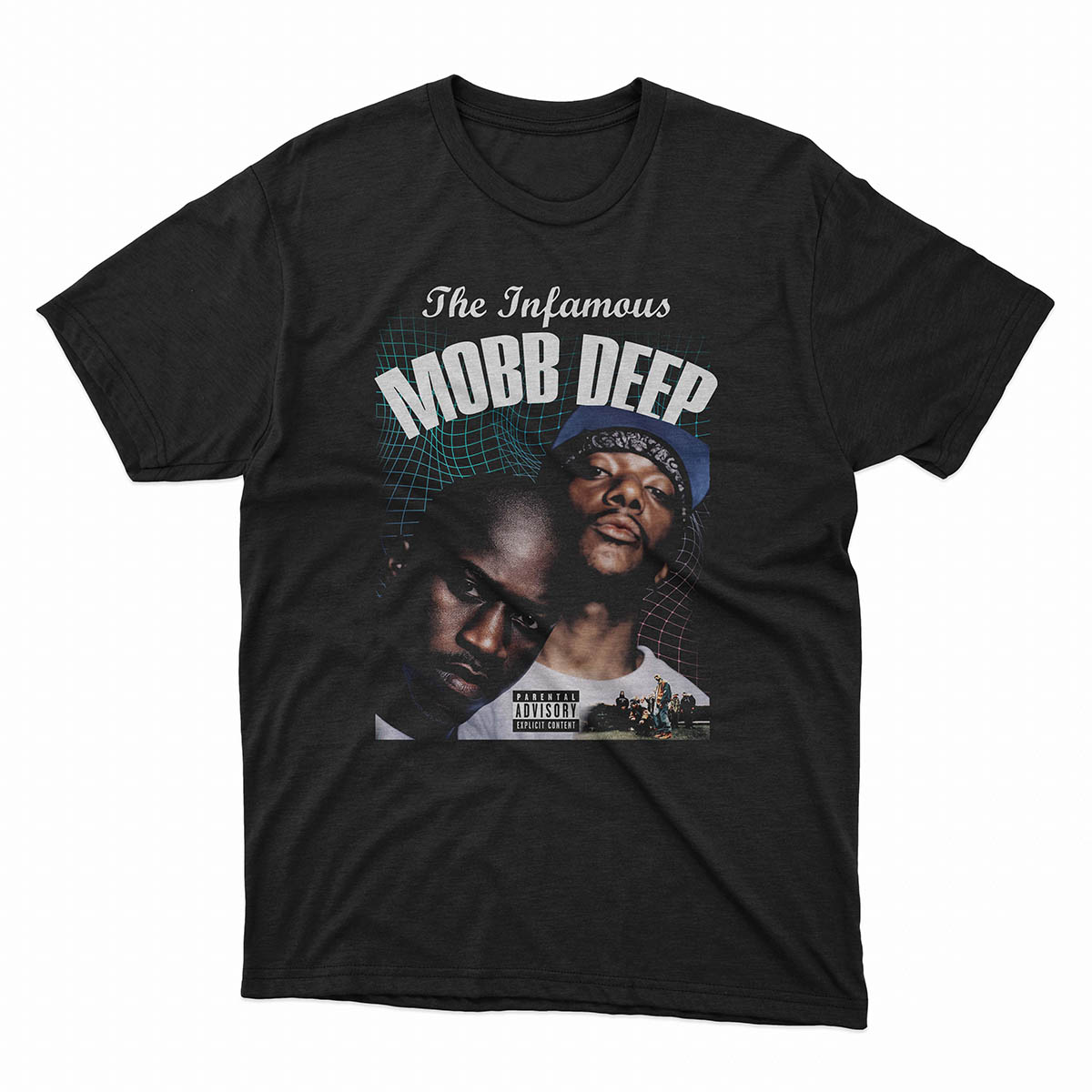
Every Griselda beat traces back to Havoc’s dusty loops on Mobb Deep’s The Infamous (1995). Wear the source material — Queensbridge-cold, boom-bap-perfect, and the aesthetic north star for everything Daringer has ever chopped.
Griselda’s Legacy: What Every Post-2015 Underground Label Ripped Off
Ten years after Hitler Wears Hermes, the Griselda template is everywhere. If you’re an indie hip-hop label operating in 2026 and you’re doing any of the following, you’re running Griselda’s playbook — knowingly or not:
- Short albums. Twenty minutes, no skips, no filler. Every Griselda release runs under forty minutes; most run under thirty. The industry once treated a fifteen-track LP as the default. Post-Griselda, the tape is the default and the LP is the exception.
- No radio strategy. Griselda doesn’t service radio, doesn’t chase Spotify editorial, doesn’t cut singles for TikTok. Distribution is Bandcamp, streaming, physical, and merch bundles — direct-to-fan, always. This is now the default indie playbook.
- Merch as primary revenue. Fashion Rebels showed the model. Now every underground label with any real fanbase runs capsule drops tied to album cycles. If they don’t, they’re leaving 30-60% of revenue on the table and probably folding within two years.
- In-house production signature. Daringer is not a hired gun; he’s the label’s sonic identity. This forced every serious indie label after 2018 to develop a house producer — a Daringer of their own — because that’s how you get a coherent catalog sound without spending fortunes on outside beats.
- Family / crew nucleus. The three-cousin structure gave Griselda a story that felt inevitable rather than manufactured. Post-2020 indie labels increasingly organize as “family” units (see: Griselda-adjacent operations, various Alchemist-orbit projects, Mach-Hommy’s own imprint work) rather than as label-as-A&R shops.
The influence extends past hip-hop’s underground economy. Griselda’s aesthetic — mafioso-era street iconography, boxing motifs, deep-cut sample-based production, curated capsule drops, art-world references at the peak-Gunn level (Pray for Paris, And Then You Pray for Me) — has become a stylistic dialect that streetwear brands, indie fashion houses, and even coffee-and-vinyl third-place lifestyle brands sample from. If your neighborhood has a “streetwear boutique with a hip-hop section and a curated record wall,” they are, in some diluted form, selling you Griselda’s world.
The direct musical lineage is longer than one post can trace. But if you want the shortest possible list of who owes Griselda the most: Roc Marciano’s post-2015 catalog expansion; the entire Buffalo-adjacent scene (Boldy James, Stove God Cooks, Rome Streetz, Che Noir); the Alchemist’s late-career reinvention as a boom-bap patron saint; and the whole underground boom-bap revival aesthetic that runs from Ka to Navy Blue to MIKE. None of those artists needed Griselda to exist — but their careers played out in a market Griselda had already built.
The underground boom-bap heritage that made Griselda possible is a lineage worth wearing. If you want a piece of it in your closet, our Freestyle Fellowship Innercity Griots Hoodie reps the West Coast underground godfathers who — along with Roc Marci and the pre-Griselda East Coast independents — kept the sample-based boom-bap discipline alive when everyone else had moved on.
Frequently Asked Questions
Who founded Griselda Records?
Griselda Records was founded in 2012 in Buffalo, New York, by Westside Gunn (Alvin Worthy), Conway the Machine (Demond Price), and Mach-Hommy. Benny the Butcher joined shortly after as the third flagship rapper. Westside Gunn is the label’s de facto leader and creative director.
Are Westside Gunn, Conway, and Benny actually related?
Yes. Westside Gunn and Conway the Machine are half-brothers. Benny the Butcher is their cousin. The three-cousin core is not marketing — it’s the actual family structure the label was built around.
Who produces most Griselda albums?
Daringer is the in-house head producer and has beats on the vast majority of Westside Gunn, Conway, and Benny releases going back to 2012’s Hitler Wears Hermes. Beat Butcha, Camoflauge Monk, Denny LaFlare, and Conductor Williams round out the in-house team. The Alchemist is a frequent outside collaborator — Conway’s Lulu (2020) is an all-Alchemist EP.
What is Fashion Rebels?
Fashion Rebels is Griselda’s clothing line, and it actually predates the music label. Westside Gunn was running Fashion Rebels as a streetwear brand before Griselda Records officially launched in 2012 — the label’s full name is Griselda x Fashion Rebels (GxFR). Every Griselda album cycle doubles as a capsule merch drop, and the merch line has always been a co-equal revenue stream to the music.
Is Roc Marciano on Griselda Records?
No. Roc Marciano is not signed to Griselda and runs his own operation, but he’s the aesthetic godfather of the Griselda sound. His 2010 self-produced solo debut Marcberg established the sample-heavy, hookless, short-album, mafioso-lyricism template that Griselda later scaled into a full label operation. He has collaborated with Griselda artists frequently.
What is the best Griselda album to start with?
For solo work, start with Westside Gunn’s Pray for Paris (2020) — widely considered the peak of the Gunn catalog — or Benny the Butcher’s Tana Talk 3 (2018), which is Benny’s cleanest listen top-to-bottom. For the collective sound, start with WWCD (2019) or the Don’t Get Scared Now EP (2016). For pure boom-bap production, go straight to Conway the Machine & The Alchemist’s Lulu (2020).
Final Thoughts: The Griselda Blueprint Is Now Just the Blueprint
Griselda Records is what happens when the music industry gives up on a city and the city builds its own industry instead. Three cousins from Buffalo — one of them shot in the head at the launch point of the whole operation — took a defunct clothing brand, a self-produced 17-minute EP, and a British vinyl label’s limited-run pressing deal, and turned it into the most influential underground rap institution of the 2010s and 2020s.
The blueprint they wrote — short albums, in-house production, merch as the primary revenue engine, family/crew as the organizing unit, sample-based boom bap as the sonic default, direct-to-fan distribution — is now the operating manual for basically every indie hip-hop label with an actual following. Ten years after Hitler Wears Hermes, it’s not the Griselda blueprint anymore. It’s just the blueprint. That’s about as clean a legacy as any indie label in hip-hop history can claim.
Buffalo is on the map now. Boom bap didn’t need saving, but it got scaled. And the merch table is doing more numbers than the record deal ever will. That’s the Griselda story — and if you’re paying attention, it’s the story of where independent hip-hop is heading next.
Get the Culture in Your Inbox
Weekly hip-hop deep dives, boom-bap archaeology, and first-drop access to every new Custom Creative capsule. No filler, no fluff — just the culture.

🎧 Never Miss a Drop
Exclusive product releases, hip-hop deep dives, and member-only discounts. Straight to your inbox.
Free forever. No spam. Unsubscribe anytime.
Get the Culture, Delivered
Deep dives into hip-hop history, exclusive product drops, and discounts sent straight to your inbox. No spam, just culture.
Join 2,000+ hip-hop heads already in the loop. Unsubscribe anytime.