Mobb Deep’s The Infamous at 30: How Havoc’s SP-1200 and Prodigy’s Notepad Made Queensbridge’s Darkest Masterpiece
When Mobb Deep dropped The Infamous on April 25, 1995, Queensbridge answered a question Nas had asked a year earlier. Illmatic proved that a single MC from the biggest housing project in the country could rewire what an East Coast album sounded like. The Infamous proved that the sound had a shadow — colder, more paranoid, cut from the same brick but shot after dark. This is a Mobb Deep Infamous retrospective for people who already know the album by heart and want to hear what happened behind the boards, inside the notepad, and around the studio door in that eighteen-month window when Havoc and Prodigy went from teenage curiosities on a shelved 4th & B’way debut to the architects of the darkest masterpiece the East Coast produced in the ’90s.
Thirty years on, “Shook Ones Pt. II” is still the beat you use to test a subwoofer. The album has moved past nostalgia into permanent rotation, and the reason isn’t mystique — it’s craft. Every element on The Infamous was chosen. Every sample was flipped for a reason. Every guest verse landed exactly where the sequencing needed a jolt. What follows is a deep-dive into the machinery: the borough that made it, the sampler that shaped it, the notepad that wrote it, the tracks that lived past it, and the merch-culture ecosystem that still keeps its logo alive in 2026.
Queensbridge 1995: How Nas’s Shadow Set the Stage for The Infamous
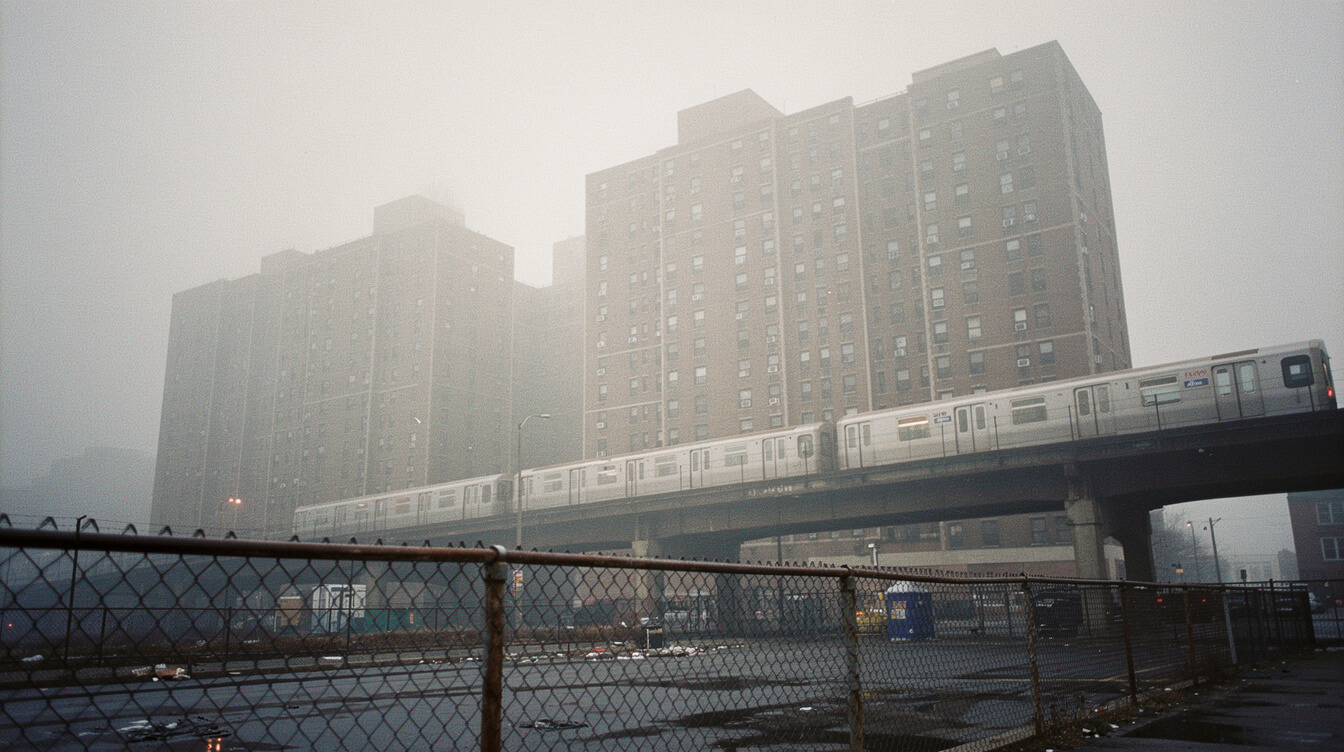
You cannot talk about The Infamous without talking about Queensbridge, and you cannot talk about Queensbridge in 1994-95 without acknowledging what Nas had just done. Illmatic hit shelves April 19, 1994. Ten cuts, no fat, every producer on the A-list (Large Professor, Q-Tip, Pete Rock, DJ Premier, L.E.S.). It didn’t just introduce Nasir Jones — it converted Queensbridge from a rap footnote (MC Shan’s “The Bridge” beef with KRS-One notwithstanding) into a certified capital of East Coast lyricism.
For Havoc (Kejuan Muchita) and Prodigy (Albert Johnson), Illmatic was both inspiration and pressure. The pair had already released Juvenile Hell in April 1993 on 4th & B’way, a debut that flopped commercially and got them dropped inside a year. They were nineteen and twenty by the time The Infamous sessions began, working out of Havoc’s mother’s Queensbridge apartment, still processing what Nas had proven possible. Juvenile Hell is a document of teenagers imitating what they thought rap should sound like. The Infamous is a document of adults writing what their block actually was. That is the leap.
The Queensbridge context matters because the album’s paranoia is not a stylistic pose. Prodigy grew up with sickle-cell anemia in an environment that treated weakness as invitation. Havoc’s family lived on the same seventh-floor unit that would later be photographed for the album’s back cover. When Prodigy writes “there’s a war going on outside no man is safe from,” the reporting is first-hand. For the full Queensbridge lineage — from Marley Marl and MC Shan through Nas, Mobb Deep, and later Nature and Cormega — our complete guide to Mobb Deep’s members and the Queensbridge crew maps every connection.
Havoc’s Production Journey: The SP-1200, Q-Tip, and the Sound of the Bridge
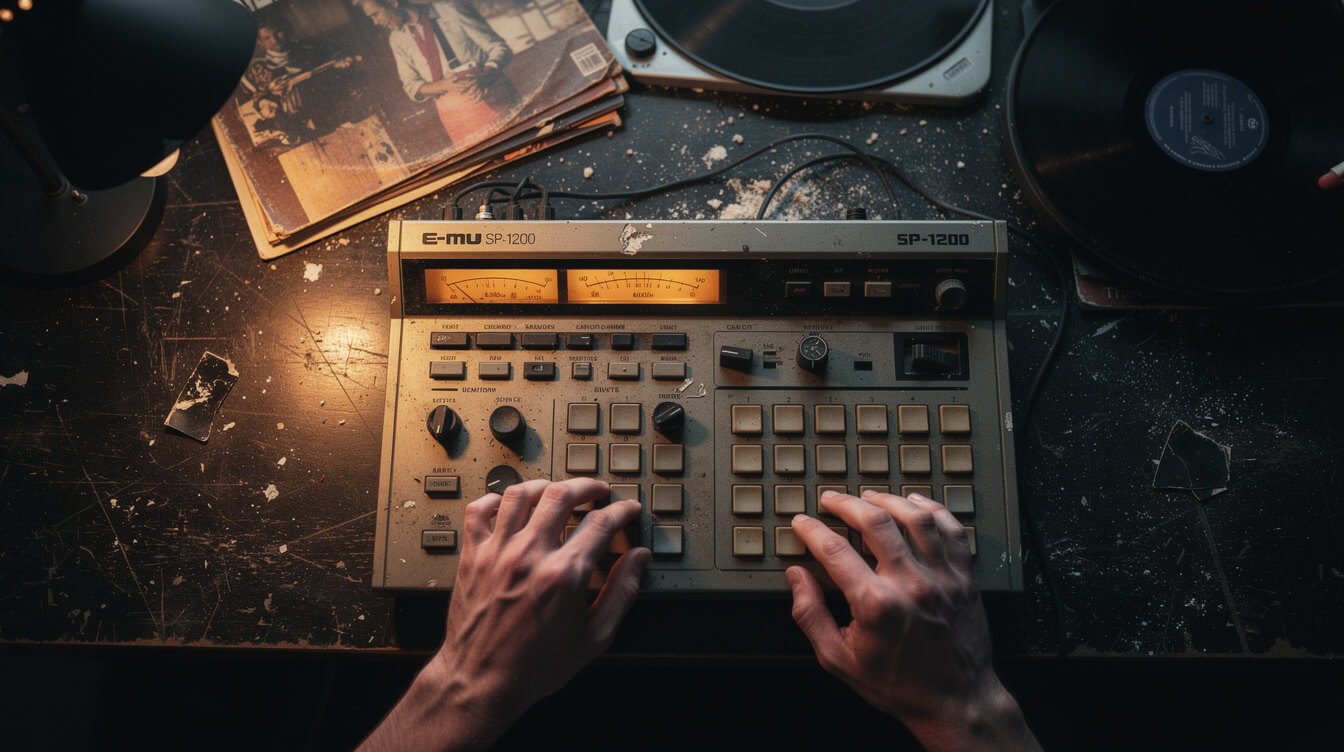
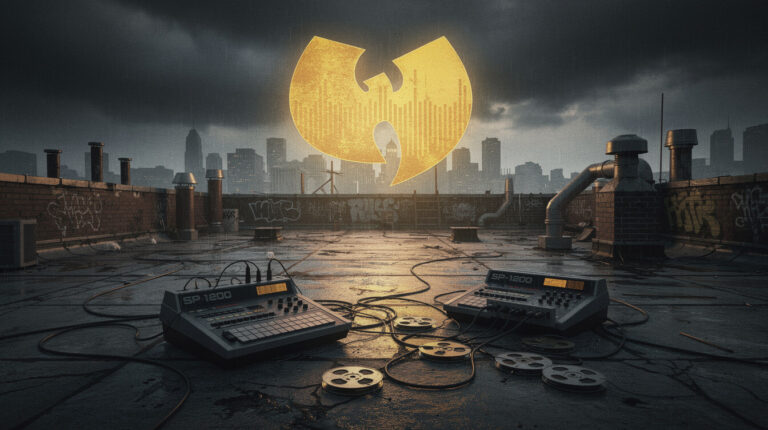
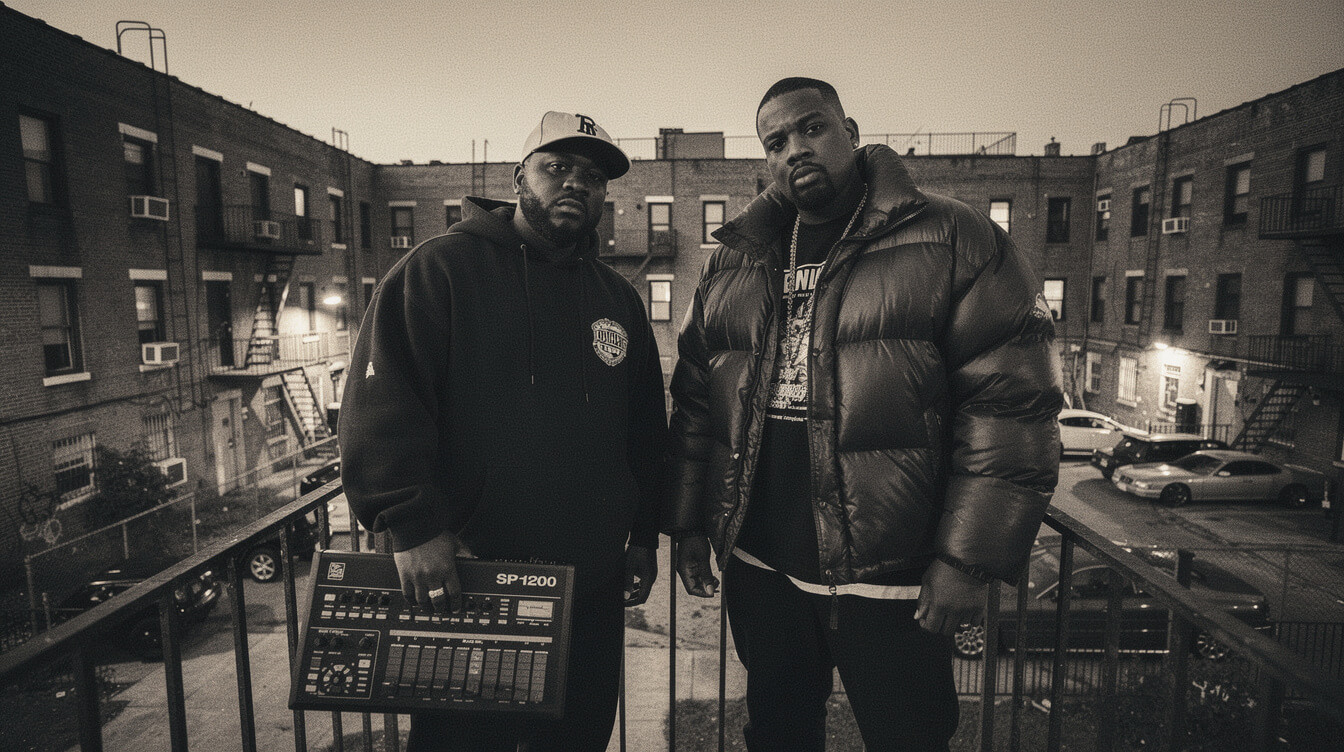
Every conversation about The Infamous production circles back to the E-mu SP-1200. Released in 1987 at $2,600 (roughly $6,700 in 2026 dollars), the SP-1200 gave you a 12-bit sampler with eight audio outputs, a built-in sequencer, and a maximum sample time of 10 seconds at 26.04 kHz. That last number is not a limitation — it is the sound. The SP-1200’s aliasing, its low sample rate, its aggressive quantization grid: those are the reasons a Havoc drum sounds like a Havoc drum. Pete Rock, DJ Premier, Large Professor, Diamond D — the whole New York producer pantheon — all built their signature textures on the same 12-bit ceiling.
What separates Havoc from that pantheon is arrangement. Compare his beats to Premier’s on the same album: Preem produced “Just Step Prelude,” but Havoc’s “Survival of the Fittest” runs on the same equipment and lands harder because of loop selection and drum layering. Havoc kept his samples murky — often a single detuned Rhodes chord or an obscure horn stab pushed to the mid-frequency floor — then piled the drums on top with almost no compression. The result is claustrophobic. There is no air in a Havoc mix, and that is the point.
The pivot moment in the album’s production history is Q-Tip’s involvement. According to Havoc’s own retelling (across multiple documentary interviews and the album’s Producer-Rapper Havoc profile we published earlier this month), Q-Tip stopped by the studio while they were working on “Shook Ones Pt. II” and suggested slowing the tempo and reworking the drums. Havoc credits him for co-arranging what became the album’s signature record. Tip is not always listed in the credits, but his fingerprints on the sequencing and arrangement of at least three cuts are widely accepted among heads. If you want to hear what a Havoc beat sounds like when Tip is not in the room, compare “Q.U. — Hectic” (raw Havoc, no A Tribe Called Quest chaperone) to “Shook Ones Pt. II” — same sampler, same rapper, different arrangement discipline.
For a comparative production study of Havoc’s contemporaries working the same 12-bit tools, our breakdown of Pete Rock & CL Smooth’s Mecca and the Soul Brother unpacks how the same era produced two opposite sonic philosophies from the same hardware.
Prodigy’s Writing Evolution: From Juvenile Hell Kid to Infamous Poet
Prodigy on Juvenile Hell is a competent teenager writing over adult beats. Prodigy on The Infamous is arguably the single most quotable rapper in East Coast hip-hop history for a two-year window. The gap between those two Prodigies is where the album lives.
The technical change is compression. Where Juvenile Hell-era Prodigy stacks syllables and reaches for punchlines, Infamous-era Prodigy strips his lines back to blunt declarative units — subject, verb, threat — and lets the beat carry the second half of the couplet. “Rock you in your face, stab your brain with your nose bone.” No adjectives. No qualifiers. The image is the whole line. This is why heads memorize Prodigy verses the way they memorize hooks: the lines are hook-shaped.
The second change is subject-matter discipline. Prodigy in 1993 wrote about generic street posturing. Prodigy in 1995 wrote specifically about a Queensbridge floor plan. “Right through your temple” is a threat that only lands if the reader believes the writer has been in that hallway. Every image on The Infamous is loaded with location — a stairwell, a fire escape, a bench, a bodega — and the specificity is what gives the paranoia its weight. When he writes “there’s a war going on outside,” you can see the block from his window.
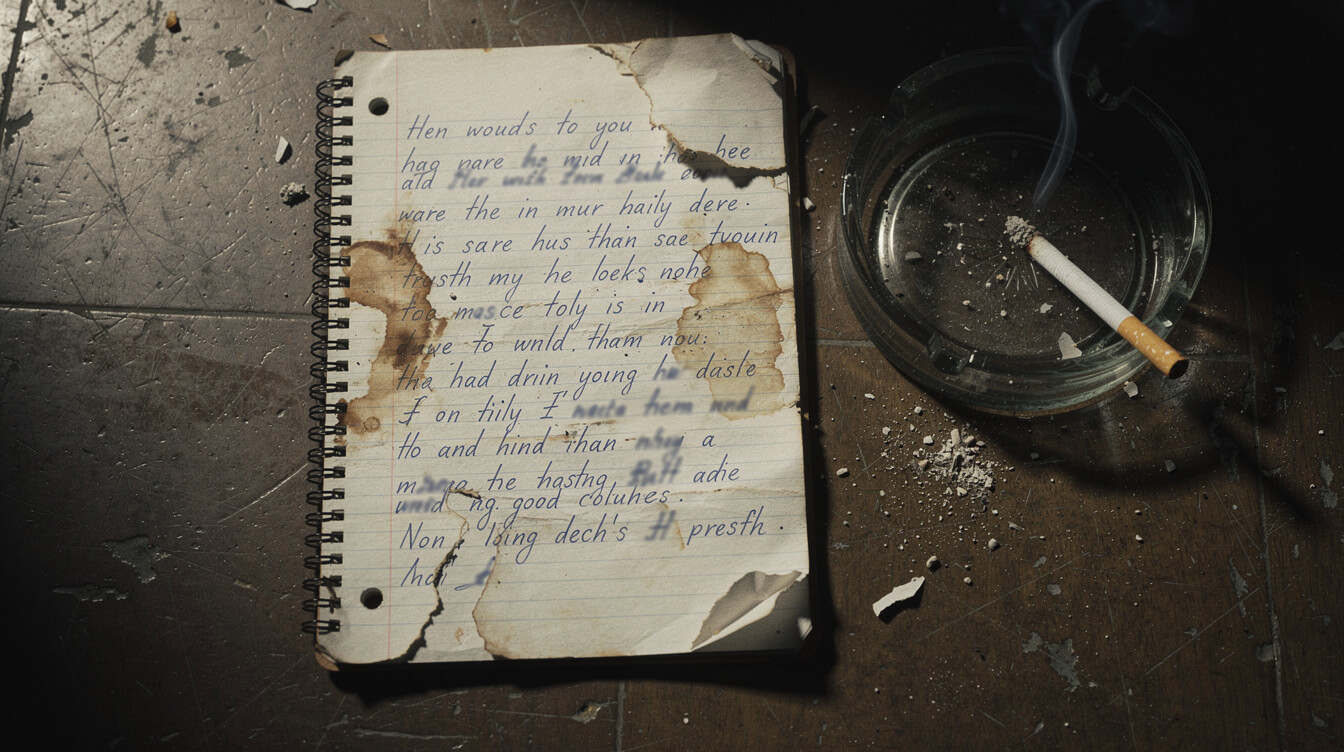
Prodigy would later publish two memoirs (My Infamous Life, 2011; Commissary Kitchen, 2016) and an unfinished manuscript that surfaced after his June 20, 2017 passing. All three confirm what The Infamous already suggested: he was a writer’s writer. He drafted on legal pads, revised aggressively, and treated a sixteen-bar verse the way a short-story writer treats a paragraph. For a full accounting of his career and the tribute the culture paid on the ninth anniversary of his death, see our Prodigy memorial retrospective.
Track-by-Track for Heads: The Six Cuts That Built The Infamous
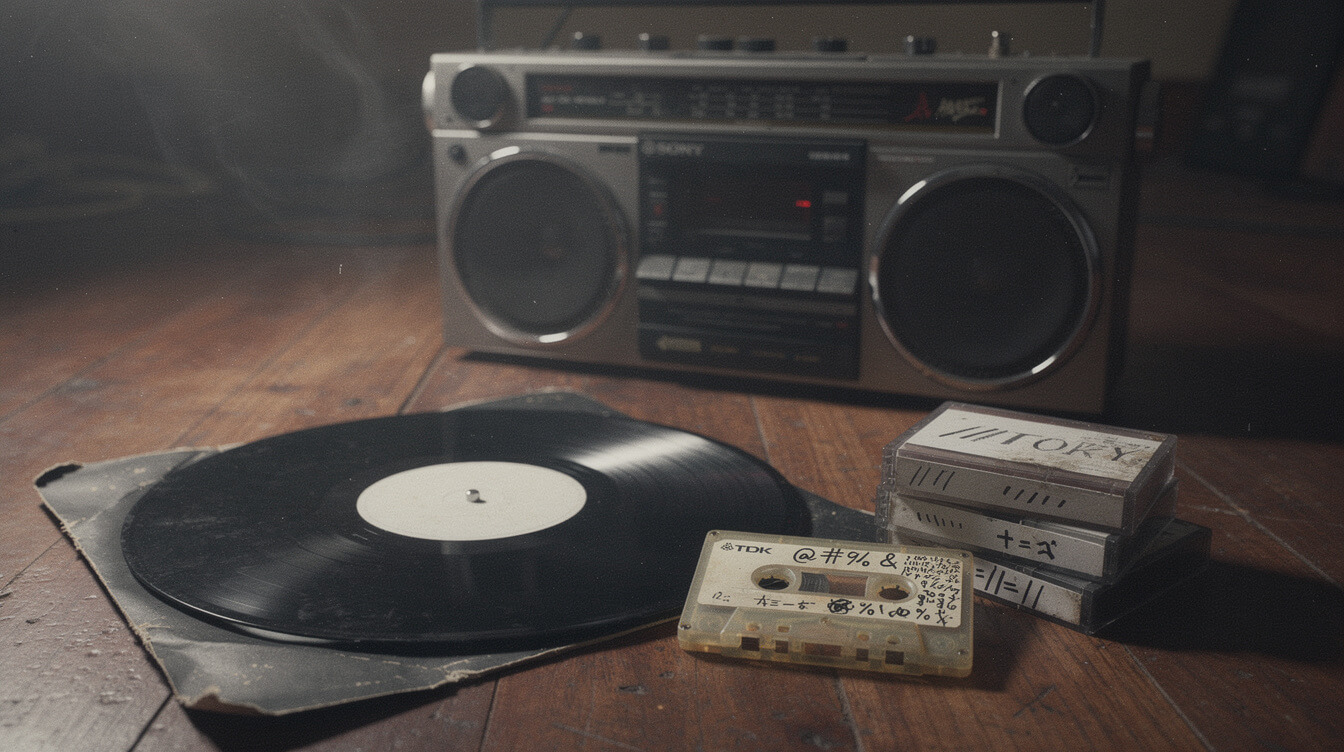
The album has sixteen tracks. Six of them do the load-bearing work. Here is the head-level breakdown.
“Shook Ones Pt. II” — the crown jewel. Havoc pitched down a two-note piano loop (from Herbie Hancock’s “Jessica”), layered a filtered Daly-Wilson Big Band horn stab (from “Kitty With the Bent Frame”) for the bridge, and let Q-Tip help him seat the drums where they hit hardest. Prodigy’s opening — “I got you stuck off the realness” — is one of the ten most-quoted couplets in hip-hop history. Battle rappers, R&B remixes, freestyle cyphers, Eminem’s own “8 Mile” climax freestyle: everyone borrows this beat.
“Survival of the Fittest” — Havoc built the beat around a haunting flute-and-piano loop from Al Green’s “Gotta Find a New World,” then dropped an extra measure of dead air into the intro to let the tension breathe. Prodigy’s opening bar (“There’s a war going on outside no man is safe from”) became the album’s thesis statement. Sampled or interpolated in dozens of later records — including Timbaland productions and multiple UK grime tracks.
“Eye for an Eye (Your Beef Is Mines)” — the guest-verse summit. Havoc built the beat off Al Green again (“For the Good Times”) but the reason this track is legend is the roster: Nas and Raekwon both appear, and both deliver top-five verses from their respective 1995 output. Rae’s verse arguably contains the darkest Wu bar of the entire year. If you want a companion study of what Raekwon was writing in the same window, our Ghostface Killah discography ranking puts the Rae-Ghost partnership in context (Only Built 4 Cuban Linx dropped four months after The Infamous).
“Q.U. — Hectic” — pure Havoc, no chaperone. The most Queensbridge-specific record on the album. The Q.U. abbreviation (Queensbridge) is intentional exclusion: if you know the borough, you’re in; if you don’t, you’re not the intended audience. This is the track that established Mobb Deep’s neighborhood-first ethic that the rest of the East Coast underground would follow for the next decade.
“Trife Life” — the narrative-mode Prodigy verse that most previews his later solo work. Two-minute story arc, no punchlines, no hook flexing — just a moment-by-moment scene. Havoc’s beat sits back and lets the words do the work. If you want to hear the DNA of every subsequent New York street-narrative record — Roc Marciano, Ka, Griselda — start here.
“Cradle to the Grave” — the album’s most underrated deep cut. The Havoc drums here are among his crispest; the sample is a slowed vocal from The Delfonics. Prodigy delivers what may be the album’s most concise autobiographical verse. The reason this track doesn’t get the “Shook Ones” recognition is that it never had a video — it lived on the album, not the airwaves.
The Cover Art and Packaging: What the Black-and-White Photography Said About the Sound
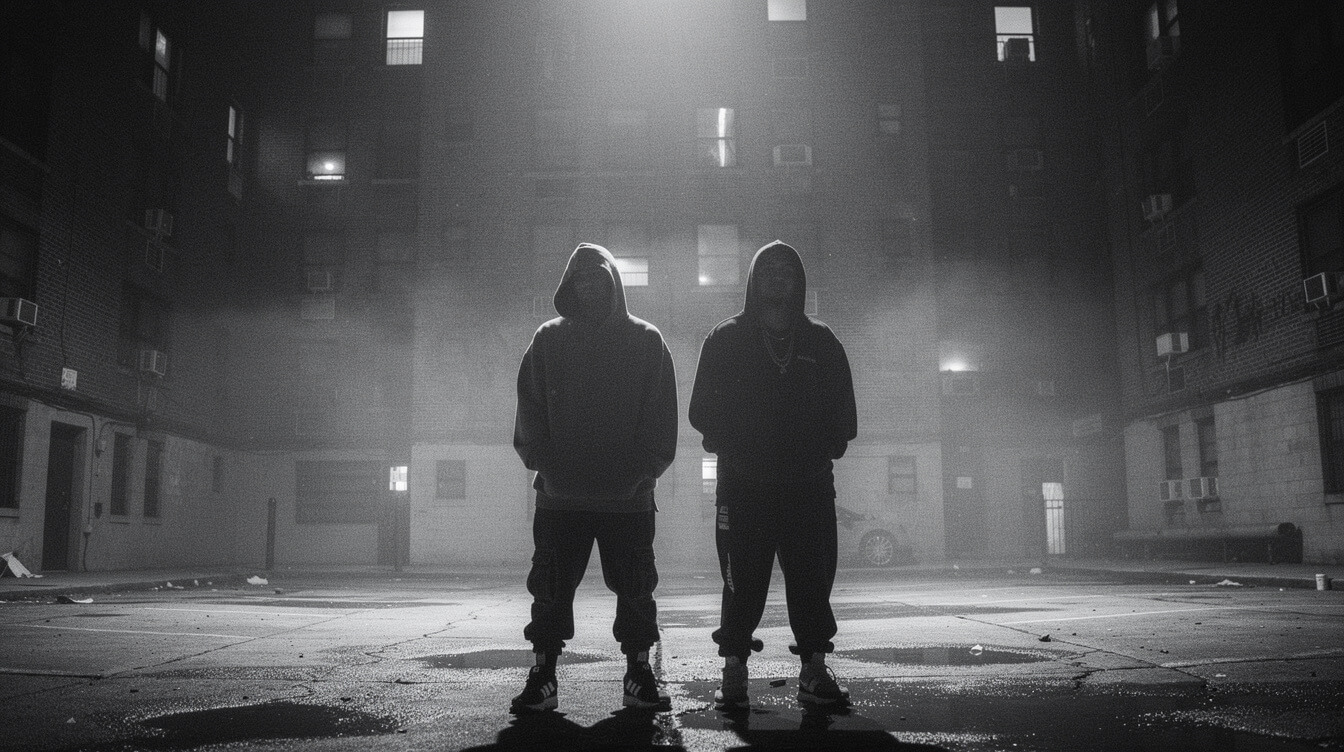
The cover — a black-and-white photograph of Havoc and Prodigy against a stairwell, faces half-shadowed, no logo, minimal typography — was shot by photographer Danny Clinch, who would later become one of the most in-demand music photographers of the ’00s (Bruce Springsteen, Pearl Jam). Clinch shot the session on a Leica with Tri-X 400 film, pushed one stop for the extra grain. Everything about the packaging was designed to communicate what the music sounded like before you pressed play: cold, grainy, uncomfortably close.
Loud Records art director Dave Bett kept the type treatment minimal — a Franklin Gothic condensed title, no ornament, no color accent. Compare this to what Def Jam and Bad Boy were doing in the same window (glossy full-color, name-brand fashion, hip-hop-as-lifestyle) and you can see Loud making an aesthetic bet on the album that its audience would treat as identity. The bet paid off. The cover is now shorthand for ’90s East Coast rap in its entirety — a visual reference point that gets re-photographed, re-illustrated, and printed onto merch every year without pause.
The back cover — the same photo session, this time with Havoc and Prodigy on a Queensbridge fire-escape — is the one that gets replicated on tour posters, tribute prints, and the tee catalog itself. If you want to own the aesthetic beyond the album, our Mobb Deep The Infamous T-Shirt lifts the cover-era typography and photography onto a boutique-weight blank without cheapening either.
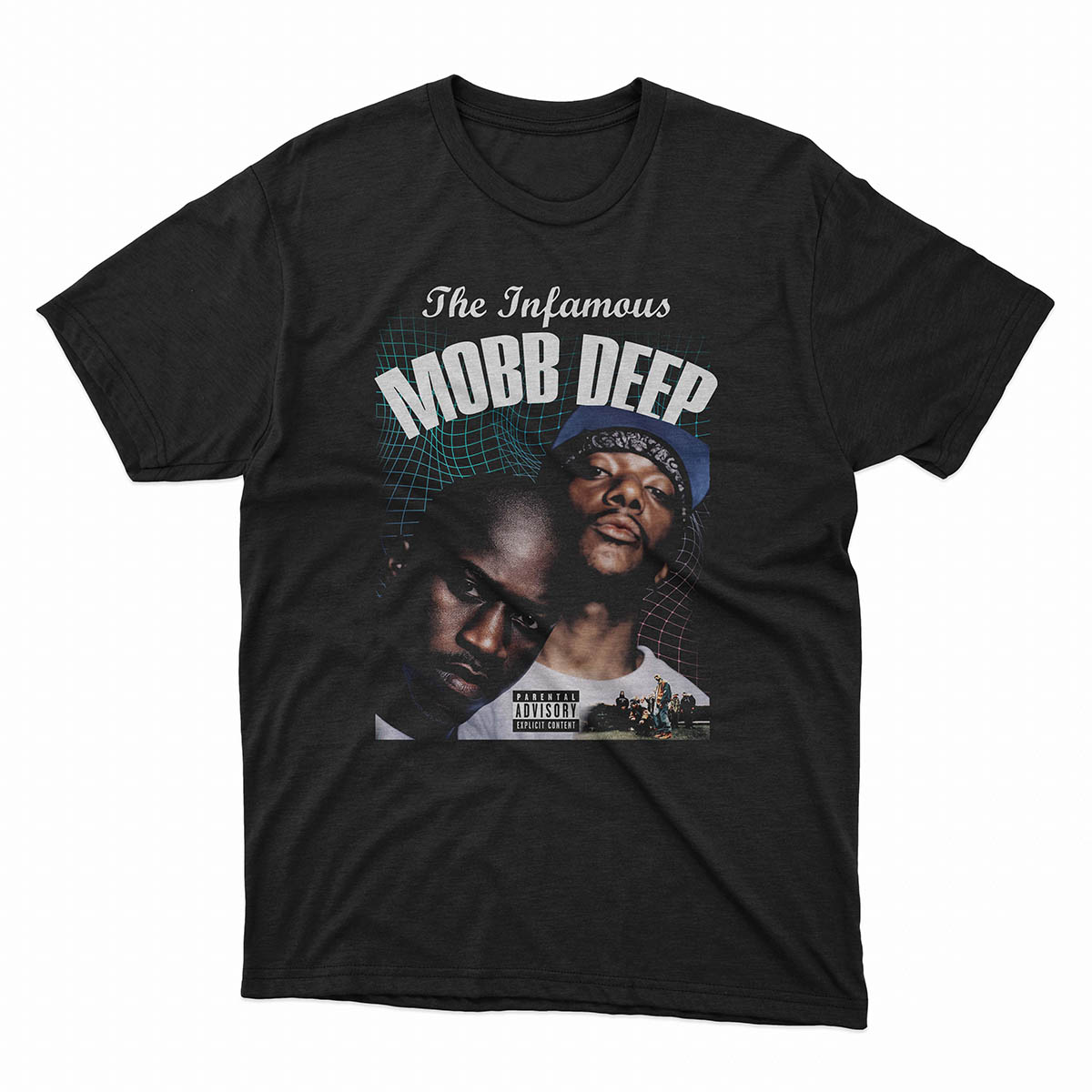
Wear the ’95 Queensbridge Blueprint
Our Mobb Deep The Infamous tee lifts the album’s cover-era photography and typography onto a boutique-weight blank. Sizes S–3XL, printed to last. Ship it to whoever still runs “Shook Ones Pt. II” on their morning commute.
Legacy: “Shook Ones Pt. II” as the Most Sampled Instrumental in Rap History
Thirty years later, the numbers still shock. The Infamous was certified Gold by the RIAA on August 8, 1995 — three-and-a-half months after release — and Platinum on August 12, 1996. “Shook Ones Pt. II” peaked at #59 on the Billboard Hot 100 and #4 on the Hot Rap Singles chart. Those chart positions understate the impact: the record moved through college radio, underground mixtapes, and the East Coast freestyle circuit in a way that made it inescapable regardless of where it charted.
The freestyle legacy is where “Shook Ones Pt. II” transcends any chart data. Every high-profile MC of the late ’90s and 2000s — Nas, Jay-Z, DMX, 50 Cent, Eminem — has an on-record freestyle over the beat. Eminem’s 8 Mile climactic battle scene is scored to it. The instrumental is used in the intro of the Grand Theft Auto III radio station Game FM. It’s the reference beat that battle rappers still use for tempo-testing new material. No other single instrumental has that kind of secondary cultural circulation.
Prodigy’s death on June 20, 2017 at age 42 (sickle-cell complications, following a Las Vegas hospitalization) put the album into permanent-retrospective mode. Havoc has continued to work — producing for Alchemist, Nas, and Eminem’s Music to Be Murdered By, releasing solo material, and touring under the Mobb Deep name at select boutique festivals. The Queensbridge lineage has continued through Nature, Cormega, Tragedy Khadafi, and the newer generation of QB writers who all cite The Infamous as the foundational text.
For contemporary context on what the East Coast was building simultaneously — the Wu-Tang second-album push that would culminate in Wu-Tang Forever two years later — our Wu-Tang Forever at 29 retrospective maps how the same 1995 New York scene fragmented into distinct production philosophies. Bomb Squad-style dense collage on the Public Enemy side (see our “Can’t Truss It” production breakdown), Golden Era boom-bap on the Rakim side (our Eric B & Rakim retrospective), and Havoc’s own claustrophobic minimalism on Mobb Deep’s side. Three different answers to the same question: what does a New York record sound like in 1995?
Owning the Era: How to Collect Mobb Deep, Queensbridge, and ’95 East Coast Merch
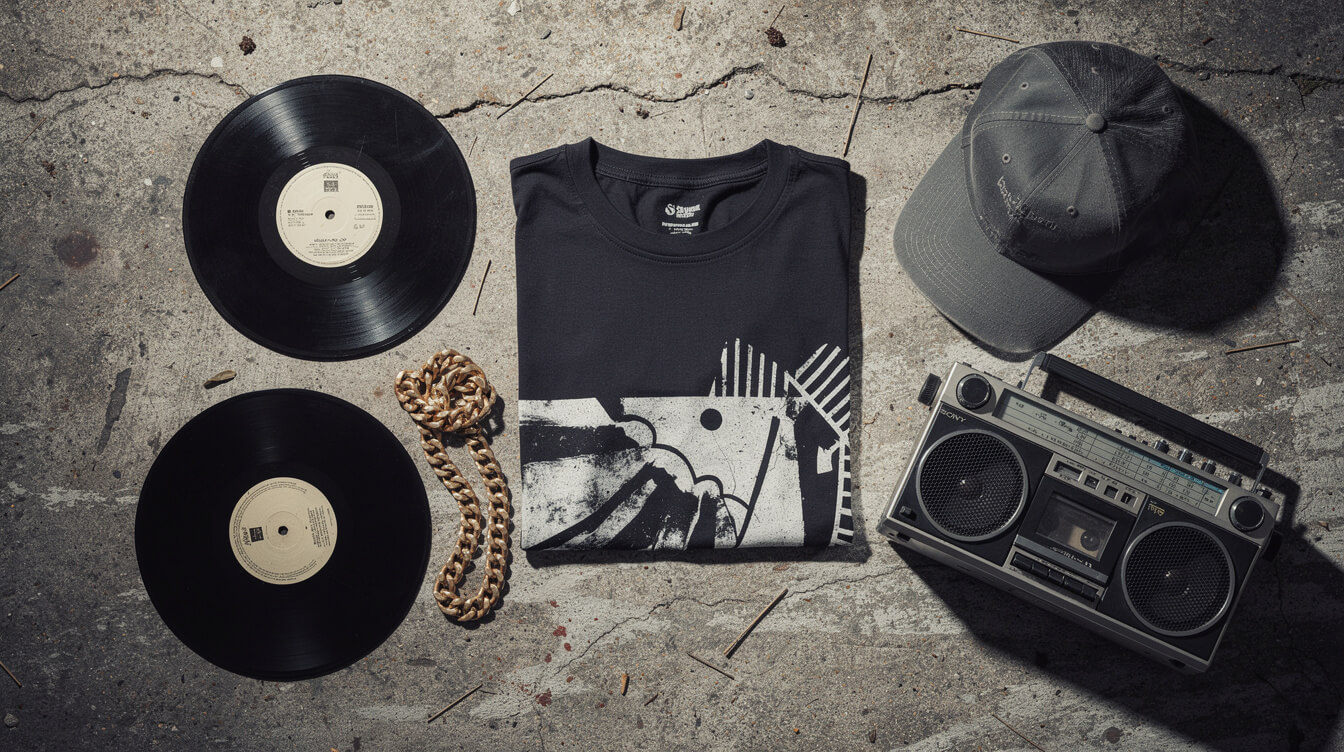
The Mobb Deep merch market is one of the sneakier collector categories in hip-hop. Original 1995 Loud Records promo tees rarely surface at auction, and when they do, hammer prices have crossed $400 in the past eighteen months. Original vinyl pressings of The Infamous on Loud/RCA (1995) with the intact hype sticker are trending near $180 on Discogs. The 2016 Get On Down 2xLP reissue is your realistic entry point at $30-40 sealed.
For wearable pieces, the collector rule is: cover-era typography, boutique-weight blank, correct color palette (black, graphite, oxblood — the album’s actual visual vocabulary). Neon tees with cartoon renderings of the duo miss the entire point. Our own Mobb Deep The Infamous tee was designed with this bar in mind: photograph-driven front print, minimal type, correct blank weight, printed to hold shape past its first wash cycle. It pairs naturally with a Nas Illmatic tee (we run that one too) for the full 1994-95 Queensbridge diptych.
Beyond apparel, the collector-adjacent categories worth watching are hip-hop wall art (custom prints of the cover, the fire-escape back cover, and the Loud Records logo), Queensbridge-specific streetwear from independent NYC artists, and the emerging category of hip-hop custom LED neon signs. The album’s aesthetic — black, gold, minimalist — translates directly into neon signage for record stores, hip-hop bars, and home listening rooms. Custom Creative can build a custom hip-hop-themed LED neon on request; the same production line handles Wu-Tang, Nas, and Golden Era one-offs.
Frequently Asked Questions About The Infamous
When was Mobb Deep’s The Infamous released?
The Infamous was released April 25, 1995 on Loud Records. It was the group’s second studio album, following the commercially unsuccessful Juvenile Hell (1993) on 4th & B’way. The album was certified Gold on August 8, 1995 and Platinum on August 12, 1996.
Who produced The Infamous?
Havoc produced the majority of the album, including “Survival of the Fittest,” “Q.U. — Hectic,” “Give Up the Goods (Just Step 2),” and both parts of “Shook Ones.” Additional production credits go to DJ Premier (“Just Step Prelude”), The Abstract (Q-Tip, credited on select tracks and widely acknowledged as an uncredited co-arranger on “Shook Ones Pt. II”), and Schott Free.
Did Q-Tip produce “Shook Ones Pt. II”?
Q-Tip did not receive a full production credit on “Shook Ones Pt. II” — Havoc is the credited producer. However, Havoc has repeatedly confirmed in interviews that Q-Tip was in the studio during the session, contributed arrangement suggestions (including the tempo adjustment and drum programming refinement), and shaped the record’s final structure. The consensus among heads is that Tip functioned as an uncredited executive producer on multiple album cuts.
Is The Infamous the best Mobb Deep album?
Critical consensus places The Infamous as Mobb Deep’s peak, with Hell on Earth (1996) as the immediate follow-up that maintains the aesthetic and adds compositional maturity. Murda Muzik (1999) is the commercial peak (double-platinum) but represents a stylistic broadening rather than a refinement of the Infamous sound. For most heads, The Infamous is the definitive Mobb Deep album because it is the moment when Havoc’s production and Prodigy’s writing achieved lockstep for the first time.
What samples are on The Infamous?
Notable samples include Herbie Hancock’s “Jessica” (piano loop, “Shook Ones Pt. II”), the Daly-Wilson Big Band’s “Kitty With the Bent Frame” (horn stab, “Shook Ones Pt. II” bridge), Al Green’s “Gotta Find a New World” (flute-and-piano loop, “Survival of the Fittest”), Al Green’s “For the Good Times” (“Eye for an Eye”), Barry White’s “I’m Gonna Love You Just a Little More Baby” (interpolated), and The Delfonics (“Cradle to the Grave”). Havoc’s sample selection was consistently soul, jazz, and R&B — no rock samples, no obvious loops.
What is Mobb Deep’s best song?
“Shook Ones Pt. II” is the canonical answer and the correct one — no other Mobb Deep record has the same cultural half-life, sample legacy, or freestyle circulation. Runners-up include “Survival of the Fittest,” “Quiet Storm” (from Murda Muzik, 1999), “Temperature’s Rising,” and “Hell on Earth (Front Lines).” The gap between “Shook Ones Pt. II” and everything else is a testament to how singularly perfect that single record is.
Final Thoughts: Why The Infamous Still Sits Atop the East Coast ’95 Canon
Thirty years after release, the mark of a great album is that it stops being nostalgia and starts being canon. The Infamous made that transition years ago. It is now taught in music school syllabi (Berklee’s hip-hop production program uses “Shook Ones Pt. II” as its sample-flip case study), analyzed in academic hip-hop journals, and cited by contemporary producers — Alchemist, The Bomb Squad’s Hank Shocklee, Havoc’s own students — as the technical high-water mark of the SP-1200 era.
What makes it hold is craft. Every choice was deliberate — the sampler, the tempo, the arrangement, the typography, the photography, the sequencing of the guest verses, the Queensbridge locational specificity in Prodigy’s writing. Havoc and Prodigy were twenty and twenty-one when they finished the album. They had one previous flop on their record, no major-label safety net, and a mother’s apartment for a studio. What they made in that room, in eighteen months, is one of the ten most important East Coast rap albums ever pressed. The Mobb Deep Infamous legacy is not a nostalgia trip. It’s a case study in what happens when two writers commit to their block and their equipment without compromise.
If you’re building your Queensbridge listening room, wearing the era, or introducing a younger head to the record for the first time — welcome to the deep end. The album rewards every re-listen with a new production detail, a new lyrical inversion, a new sample credit that opens onto another rabbit hole. Thirty years in, it hasn’t stopped teaching.
Get the Deep Dives in Your Inbox
Weekly Golden Era retrospectives, Queensbridge deep cuts, Wu-Tang production breakdowns, and early-access to every new drop from the Custom Creative catalog. No hype-beast noise — just receipts.
Stay creative — The Custom Creative Team

🎧 Never Miss a Drop
Exclusive product releases, hip-hop deep dives, and member-only discounts. Straight to your inbox.
Free forever. No spam. Unsubscribe anytime.
Get the Culture, Delivered
Deep dives into hip-hop history, exclusive product drops, and discounts sent straight to your inbox. No spam, just culture.
Join 2,000+ hip-hop heads already in the loop. Unsubscribe anytime.