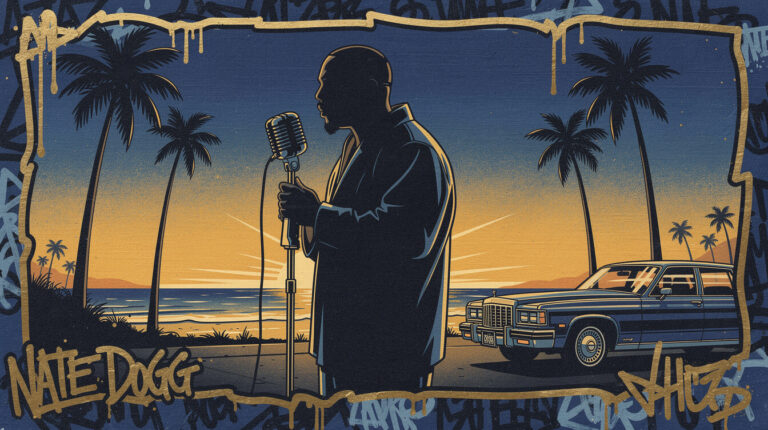
Havoc: The Producer-Rapper Who Made Queensbridge Sound Like a Haunted Movie
Havoc is one of the ten most influential producers of the mid-’90s East Coast era, and almost nobody talks about him that way. Every dusty piano loop, every sub-100-BPM head-nod drum pattern, every minor-key horn stab that made rap sound like a black-and-white surveillance tape after 1995 has some Havoc DNA in it. The Infamous is his masterpiece. Hell on Earth is the darker refinement. Murda Muzik is the peak of the signature. And Prodigy — as brilliant as he was — was the voice. Havoc built the room the voice haunted.
This is the piece the SERP doesn’t have. Wikipedia gives you the bio. His Instagram gives you the man. This gives you the producer — how he made Queensbridge sound like a haunted movie, who wrote what, which samples got flipped, and where his fingerprints live outside the Mobb Deep catalog. Pull up a chair. We’re going to unpack the whole thing.
Kejuan Muchita of Queensbridge: The Havoc Origin Nobody Tells

Kejuan Muchita was born May 21, 1974, and raised in the Queensbridge Houses in Long Island City — the same 96-building superblock that produced Nas, Marley Marl, MC Shan, Roxanne Shanté, Cormega, Tragedy Khadafi, and half the DNA of New York rap. By the time he was in his early teens the Bridge already had a mythos: the Juice Crew had branded it the birthplace, KRS-One had answered with “The Bridge Is Over,” and every kid coming up in those brick towers understood that if you were going to rap, you were going to rap under the weight of that history.
He met Albert Johnson — the future Prodigy — at the High School of Art & Design in Manhattan around 1990. Havoc was the kid from Queensbridge; Prodigy was the LeFrak City kid whose grandfather founded the Jazz Art Society and whose mother was one of The Crystals. They bonded on the train ride home and started rhyming together. Their first name as a duo was Poetical Prophets, and they were teenagers when they got their first hip-hop press: a “Unsigned Hype” nod in The Source in 1991.
By 1993 they had a deal with 4th & B’way Records and a debut album called Juvenile Hell. It flopped. Commercially, critically, everywhere. The rhymes were still juvenile, the beats were still borrowed — DJ Premier and Large Professor produced two tracks each, and Havoc’s own beats hadn’t found the sound yet. The label dropped them almost immediately. Most groups don’t survive that. Havoc and Prodigy went back to Queensbridge, back to the drawing board, and Havoc — self-taught, obsessed, with a used sampler and a stack of his mother’s records — started building what would become the sound.
The unsentimental version of the origin: Havoc did not become Havoc because of a mentor or a school. He became Havoc because Juvenile Hell failed and he refused to let it be the last word.
Havoc vs Prodigy: Who Made the Beats, Who Wrote the Verses (Credit Split Explained)
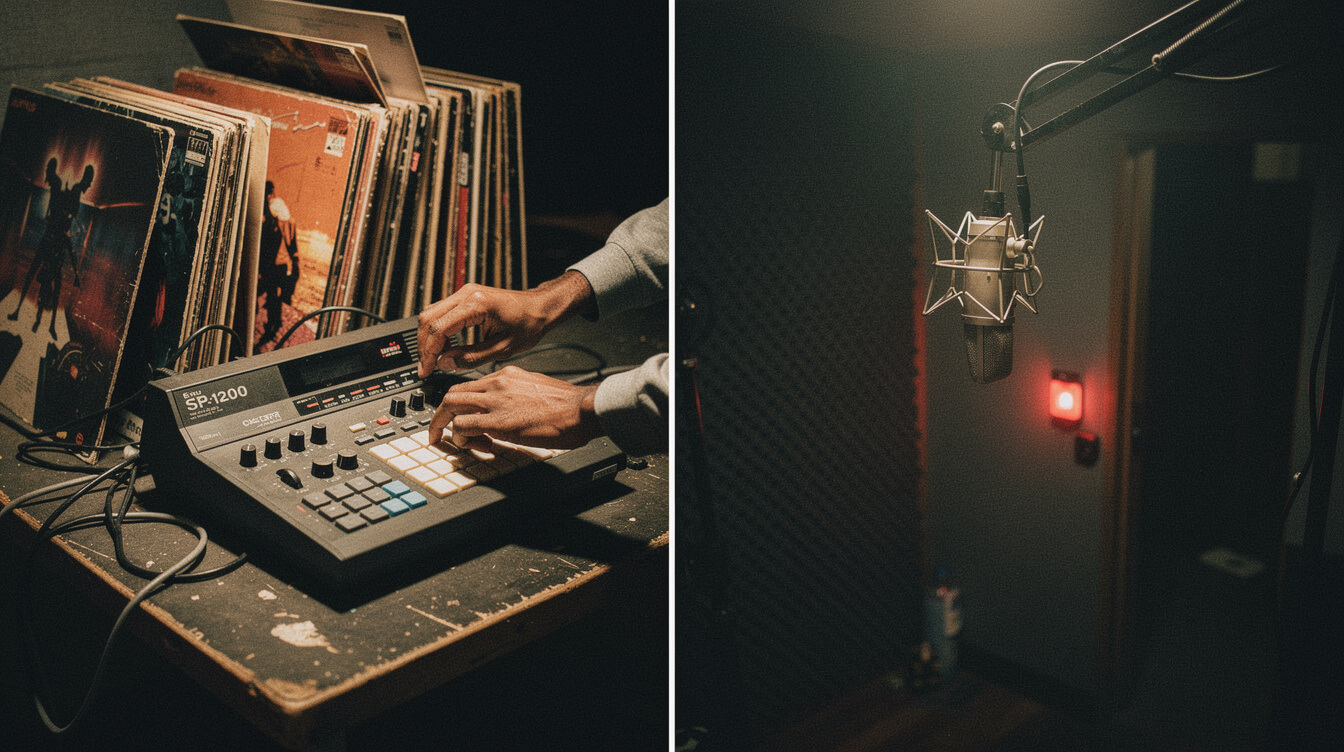
This is the question the search bar keeps whispering and the top results refuse to answer clearly, so here’s the plain read:
The beats. Havoc produced the overwhelming majority of Mobb Deep’s catalog — call it roughly eighty percent across the group’s discography. The Infamous, Hell on Earth, Murda Muzik, Infamy, Amerikaz Nightmare, Blood Money: Havoc’s name is on the lion’s share of the beats. Q-Tip has a co-production role on The Infamous (uncredited on the original release, later acknowledged) that shaped the mix and sequencing. The Alchemist, Rockwilder, EZ Elpee, Scott Storch and a handful of others contributed one-off beats. But the aesthetic — the dusty piano loops, the sub-bass room tone, the drums that sit two clicks behind the beat — that’s Havoc’s.
The rhymes. Both members wrote their own verses. Prodigy was the star writer, the mystic-cinematic pen that gave us “there’s a war going on outside no man is safe from” and “I got you stuck off the realness.” Havoc was the underrated writer — flatter delivery on purpose, but the imagery is his own and the hooks were often his. Listen to “Survival of the Fittest,” “Give Up the Goods,” or “Quiet Storm” — those hooks are Havoc’s writing and Havoc’s voice sitting in the pocket of his own beats.
The hooks and the tone. Havoc wrote and sang most of the group’s hook melodies. If a Mobb Deep song has a haunted, half-sung refrain doubled at a lower octave, that’s Havoc.
The corrective the SERP won’t give you: the reason Mobb Deep sounds like Mobb Deep is Havoc. Prodigy could have rhymed over any producer’s beats and been great. He couldn’t have sounded like this without Havoc’s room, Havoc’s drums, and Havoc’s ear for the specific frequency of dread. The group was a partnership. The signature was one man.
The Infamous (1995): The Beat-by-Beat Production Breakdown
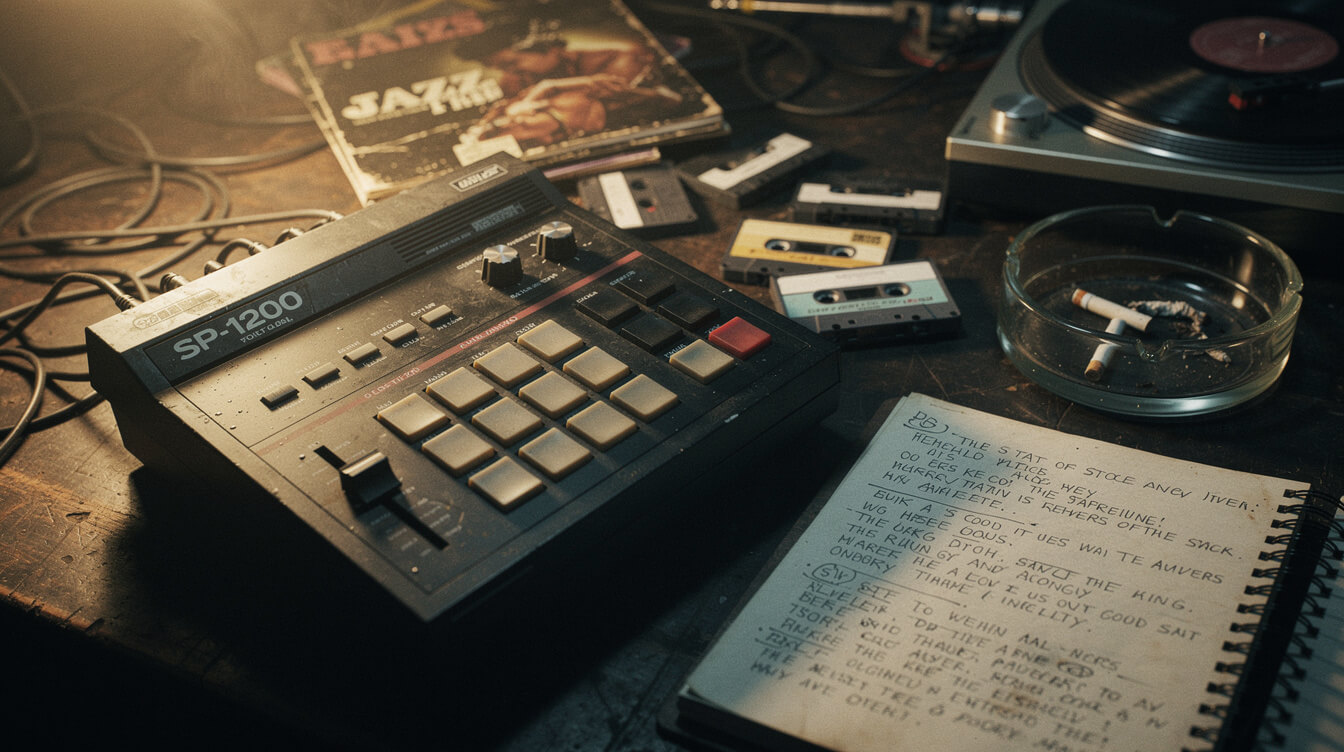
Released April 25, 1995, on Loud Records, The Infamous is not a good album. Good is what you say when you can’t think of a better word. The Infamous is a document — a fifteen-track surveillance tape of a specific corner of Queens in a specific winter, rendered in a specific frequency of sample-based dread that had never quite existed before. Every beat on it is doing work. Almost every beat on it is Havoc’s.
The one that changed rap: “Shook Ones, Pt. II.” Havoc chopped a haunting fragment from Herbie Hancock’s “Jessica” — pitched down and looped so that the piano sounds like it’s crying through a wall — and layered a horn stab lifted from Quincy Jones’s “Kitty With the Bent Frame.” The drums are that dry SP-1200 kick-snare-kick-snare that hits at 92 BPM and doesn’t move an inch. If you want to hear the moment East Coast production locked into its post-boom-bap identity, cue that intro. Everything after 1995 references that sound whether the producer knows it or not.
“Survival of the Fittest” is Havoc flipping a Barry Harris piano figure into a two-bar loop that sounds like a music box winding down in an empty apartment. “Eye for an Eye” pulls Al Green’s “Trouble No More” into a beat that features Nas and Raekwon on the same track — a summit meeting Havoc scored. “Give Up the Goods” hands the mic to Big Noyd over a beat that hangs on a single stalking bass note. “Temperature’s Rising,” “Cradle to the Grave,” “Q.U. — Hectic“: every track is a small experiment in how much space you can leave in a beat before the tension collapses.
The uncredited co-producer whose fingerprints are on the album is Q-Tip, who by his own account and Havoc’s helped shape the mix and the sequencing during the mixing sessions. That help was material — the album’s finished sound owes something to Tip’s ear. But the beats themselves, the choices of samples and drums and space, are Havoc’s. Q-Tip added polish to an aesthetic Havoc had already invented.
Hell on Earth (1996) & Murda Muzik (1999): Darkening the Signature Sound
If The Infamous was the invention, Hell on Earth (November 1996) was the refinement. Havoc took the same aesthetic — dusty piano, subterranean bass, drums like heavy footsteps — and pushed everything toward the minor key. The album’s title track opens with a horn line that sounds like a funeral procession. “Drop a Gem on ‘Em,” recorded before the news of Tupac’s death broke and pulled from radio afterwards, is one of the most emotionally weighted beats in the catalog: skeletal, cold, unresolved. “Front Lines (Hell on Earth)” is Havoc at his most orchestral, layering strings under a beat that still refuses to swing. “G.O.D. Pt. III” plays like a monk chant looped and dropped into a subway tunnel.
Where The Infamous still occasionally lets sunlight in — a soul sample, a warm bass note — Hell on Earth closes the blinds. This is where the Mobb Deep sound gets truly gothic, and this is where Havoc’s ear for what a beat should not do becomes as important as what it does. No unnecessary drum fills. No hook that doesn’t need to be there. No sample that isn’t earning its place.
Murda Muzik (August 1999) is the peak of the signature — the album where every technique Havoc had developed since 1993 arrives fully realized. “Quiet Storm,” the album’s centerpiece, is built on a two-bar keyboard riff so simple it feels inevitable, and the Lil’ Kim remix that followed pushed the record to platinum. “It’s Mine” pairs Havoc with Nas over a beat that finally lets a Queensbridge summit breathe. “Streets Raised Me,” “Adrenaline,” “The Realest” — the whole tracklist runs on the same dark clarity that defined Hell on Earth, only bigger, cleaner, and more confident.
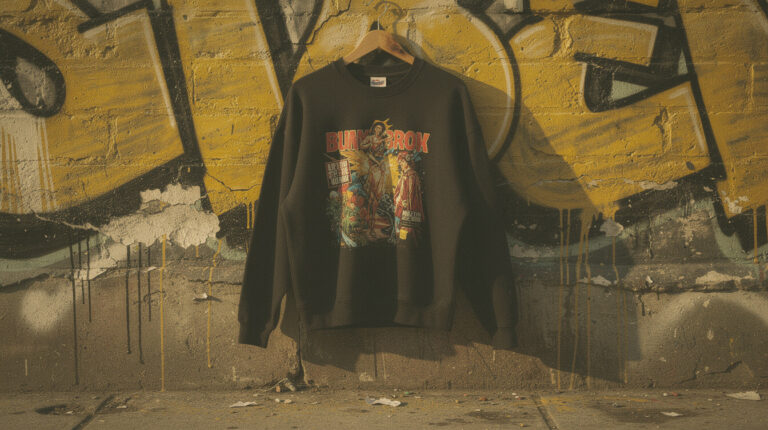
These two albums, taken together, are the Mobb Deep sonic universe as a finished object. If you’re new to the discography, they’re where you meet the producer who made all of it possible. If you want to wear the era on your chest, the Classic Mobb Deep tee pulls from the Hell on Earth cover art — the coldest visual in the catalog.
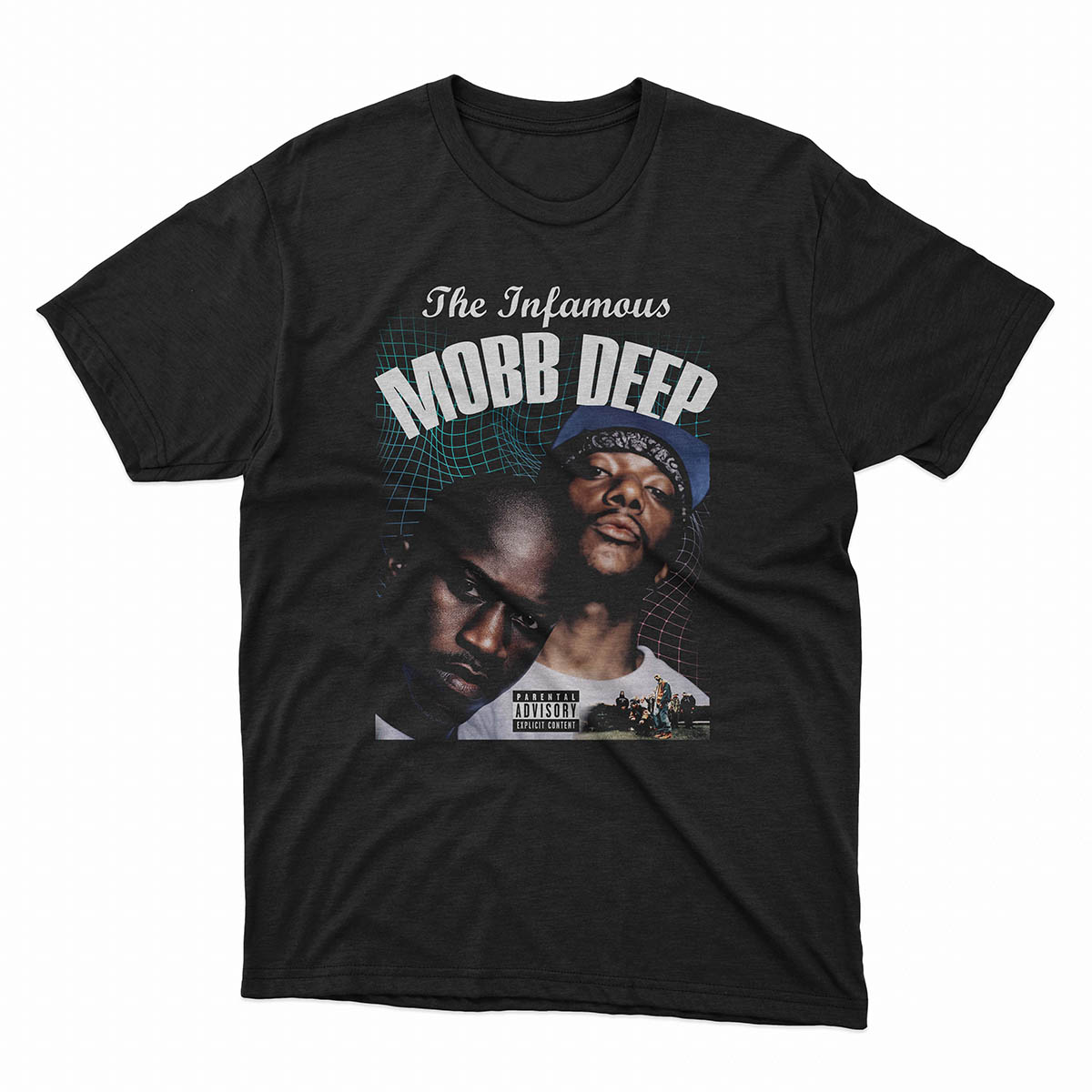
Rep the Album That Changed Everything
The Infamous cover art on a soft, heavyweight tee. If Havoc’s production made 1995 sound the way it does, this is the shirt that puts you in the room.
The Samples Havoc Flipped: Herbie Hancock, Al Green, and the Dusty Jazz Cabinet
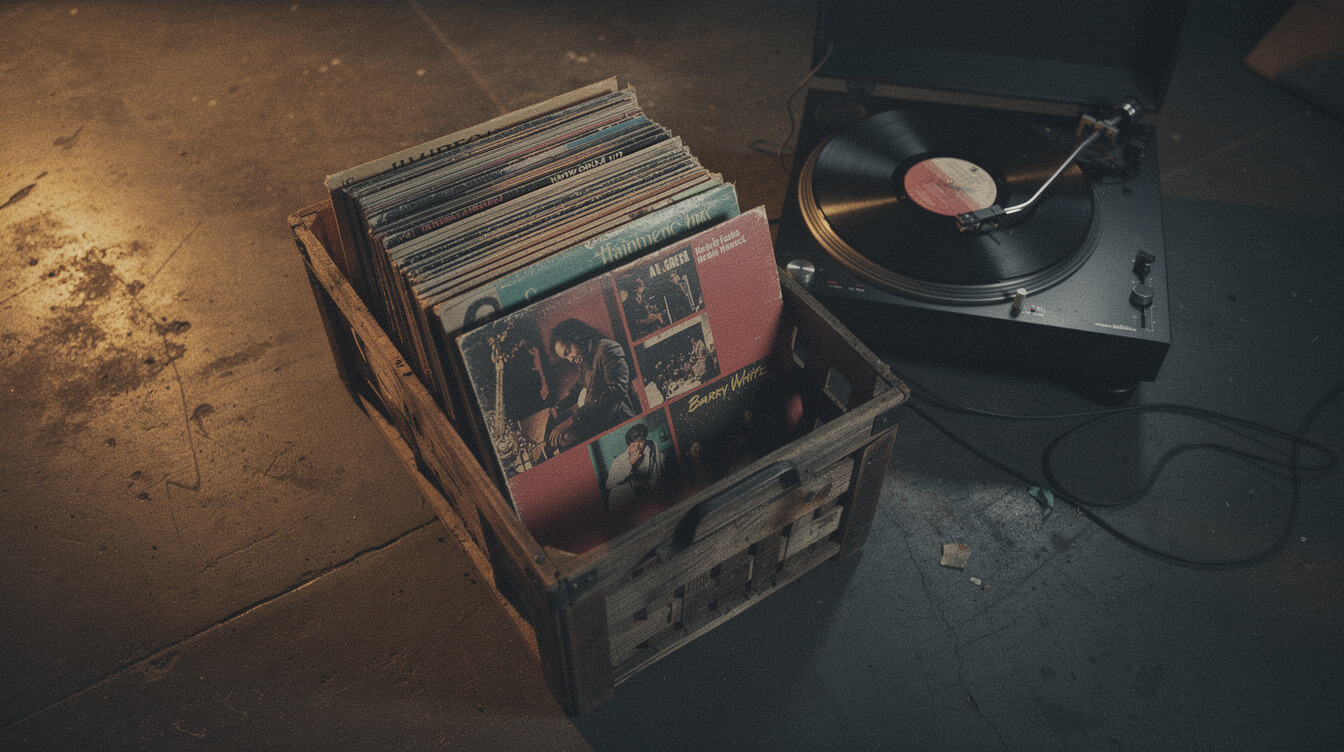
Havoc’s sample library is a working thesis: if you want to build dread, don’t sample dread — sample warmth, then twist it. His records don’t lean on obvious cinematic minor-key sources. They lean on jazz, soul, and R&B originals that were, in context, warm, hopeful, or sentimental — and then Havoc pitches them down, loops the saddest two bars, strips out the rhythm section, and drops his own drums under it. That inversion is the whole trick.
Herbie Hancock’s “Jessica” is the canonical example. In the original, “Jessica” is a delicate solo piano ballad Hancock recorded for his 1969 album Fat Albert Rotunda — sweet, wistful, faintly melancholic. Havoc grabbed a two-bar phrase, pitched it down, looped it into a knot, and turned it into the intro to “Shook Ones, Pt. II.” The source is a lullaby. The flip is a threat.
Al Green’s “Trouble No More” — from the 1972 album I’m Still In Love With You — is a bright, church-inflected soul cut about leaving hardship behind. Havoc’s flip on “Eye for an Eye” pulls the horns out of context, strips the vocals, drops it against a drum pattern that doesn’t swing, and reroutes the whole feeling. Where Green was walking toward the light, Havoc walks the same figure into the dark.
The pattern repeats across the catalog. Barry Harris piano figures (“Survival of the Fittest”). Jean-Luc Ponty fusion (“Q.U. — Hectic”). Quincy Jones film cues. Esther Phillips. The occasional Barry White low-end. Even Barry Manilow — yes, that Barry Manilow — has shown up in the Mobb Deep production universe more than once, because Havoc will steal a melancholic four-bar phrase from anywhere it exists.
The lesson for anyone trying to understand Havoc’s ear: he is not a crate-digger looking for cool records. He is a music listener with the discipline to hear the two most useful bars in a three-minute song and the taste to strip everything else away. Most producers pile things on. Havoc’s genius is that he takes things off.
Havoc’s Outside Production: Biggie, Nas, 50 Cent, and the G-Unit Years
The Mobb Deep discography is where Havoc lives. But his fingerprints are on some of the most consequential East Coast records outside it, and the SERP won’t walk you through them. Here’s the shortlist that matters.
The Notorious B.I.G. — “Last Day” (Life After Death, 1997). Havoc co-produced (with Nashiem Myrick) one of the most overlooked tracks on the double album that came out sixteen days after Big died. “Last Day” features The Lox and lives in that same Mobb Deep half-lit corridor — proof that Puff Daddy’s Bad Boy could bend toward Queensbridge when the song demanded it. If you’re revisiting the Big catalog, our full Notorious B.I.G. songs breakdown puts “Last Day” in the context of the whole discography.
Nas — “Destroy & Rebuild” (Stillmatic, 2001). Recorded at the height of the Nas–Jay-Z beef, Havoc gave Nas one of the coldest beats on Stillmatic and Nas used it to shred half the East Coast. That the beat came from another Queensbridge son — while Nas was reminding the world where he was from — is the kind of narrative loop only hip-hop pulls off. (For the other side of that beef and how the era was won, our Blueprint at 25 breakdown reads the Jay-Z half of the fight.)
50 Cent & G-Unit. When Mobb Deep signed to G-Unit in 2005 for the Blood Money album, Havoc became an in-house producer for the whole G-Unit universe — cutting tracks for 50, Lloyd Banks, Young Buck, and Tony Yayo across the mid-2000s mixtape era. His G-Unit-era beats are less catalogued than his ’90s work because a lot of them lived on mixtapes and DJ-hosted street albums that never got clean release listings. Dig the mixtape era and Havoc’s name comes up over and over.
Jadakiss and the extended LOX universe. When The Lox needed a beat that felt like a Queensbridge alley in February, they went to Havoc. He’s cut records for Jadakiss, Styles P, and Sheek Louch across the last two decades — same aesthetic, different pen.
The through-line: Havoc is the go-to when the song needs to sound like a specific kind of cold. Nobody has ever handed him the wrong assignment.
Life After Prodigy (2017–2026): The Solo Records, the DJ Sets, the Legacy
Prodigy died on June 20, 2017, in Las Vegas at age 42. Complications from sickle cell anemia — the same condition he had rapped about with a candor that no other MC in the East Coast pantheon had matched. The loss was seismic for the culture; it was existential for Havoc. Mobb Deep was a partnership that had defined his adult life, and he’d just lost the other half of it. If you want the full retrospective on P’s contribution to the story, our Prodigy nine-years-gone piece breaks it down at length.
What Havoc did next is the answer to who he is when the collaboration is over. He kept working. He released The Silent Partner with The Alchemist in 2016 (before Prodigy passed) — a project that essentially predicted the second act. He put out Extra Curricular in 2018 as a mostly-solo statement. He guested on tracks for younger New York artists. He did DJ sets at hip-hop festivals across the U.S. and Europe. And he became — quietly, without ever calling attention to it — one of the most reliable elder statesmen in a New York rap ecosystem that had lost too many of its central voices too fast.
The Havoc of 2026 is not chasing relevance. He’s tending the archive. He’s remixed songs from The Infamous for the album’s thirtieth anniversary. He’s given interviews about the making of Shook Ones that finally get into the technical decisions. He’s shown up on Griselda records, on Roc Marciano tracks, on projects by the underground East Coast producers who grew up on his catalog and are now, in effect, his cultural descendants.
The legacy is straightforward. Havoc is the man who made half of the definitive New York sound of the 1990s and then, when the collaboration that made it possible ended, chose to keep being useful to the culture that raised him. There is no scandal, no reinvention, no chase. There is only the work.
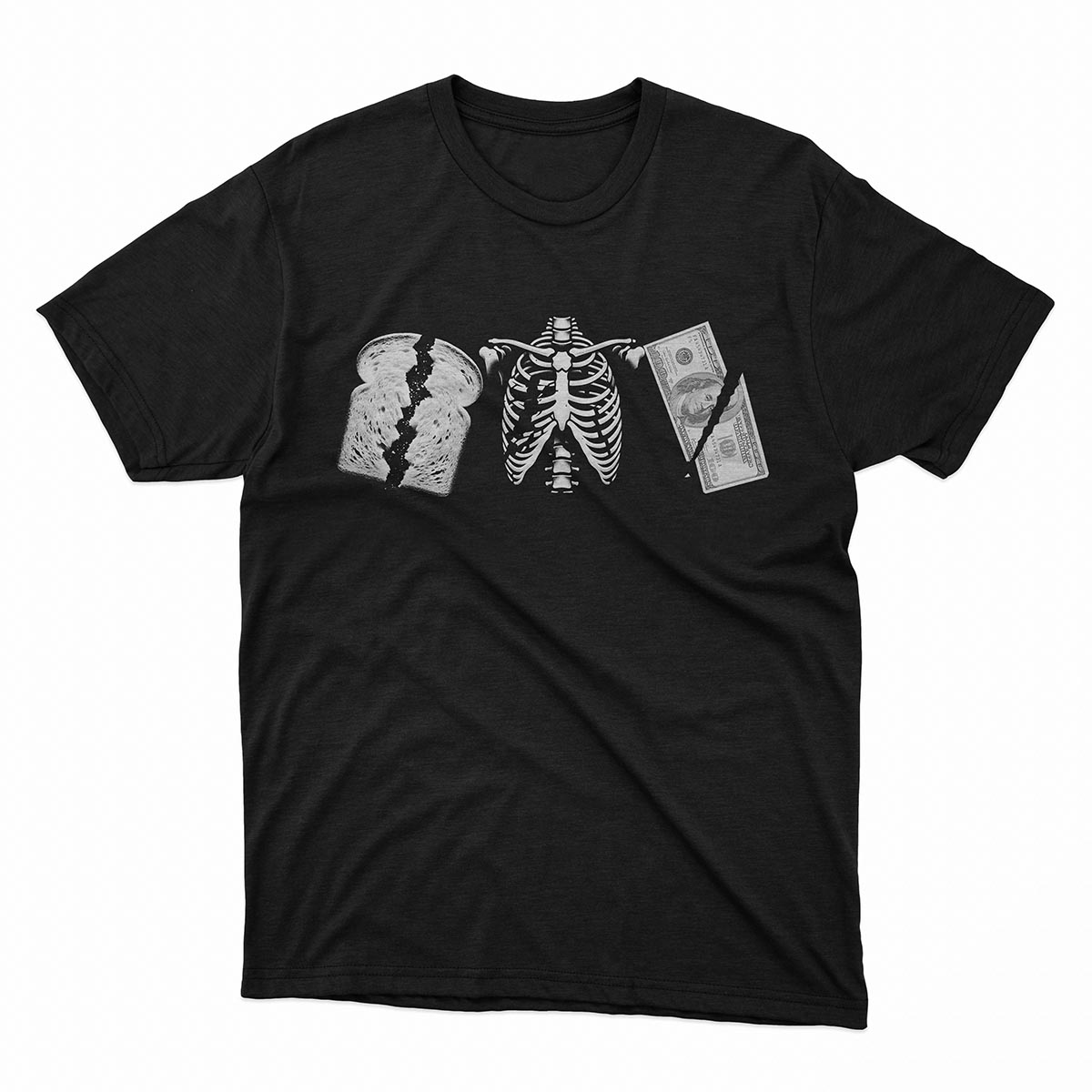
Keep P’s Words on Your Chest
Break Bread, Ribs, Hundred Dollar Bills — the Prodigy lyric fan-art tee. For the ones who understood what P was saying the first time.
Frequently Asked Questions: Havoc and Mobb Deep, Decoded
Did Havoc produce Shook Ones Pt II by himself? Yes. The beat is Havoc’s alone. Q-Tip’s uncredited role on The Infamous was in mixing and sequencing across the album, not in producing the individual beat that became “Shook Ones, Pt. II.”
How many Mobb Deep beats did Havoc produce total? The overwhelming majority — call it roughly eighty percent across the group’s proper studio albums from The Infamous through Blood Money. The remaining twenty percent comes from a rotating cast including The Alchemist, Q-Tip (uncredited/co-production), EZ Elpee, Rockwilder, and Scott Storch.
Is Havoc a member of G-Unit? He was — Mobb Deep signed to G-Unit for the Blood Money album in 2005 and Havoc worked as an in-house producer for the label through the mid-late 2000s. The formal G-Unit affiliation has loosened in the years since, but the working relationships remain.
What’s Havoc’s best solo album? The strongest case is The Silent Partner (2016), his collaborative record with The Alchemist. Two producers with compatible taste making a whole album together, no filler — it’s a masterclass in East Coast sample-based restraint.
Is Havoc still making music in 2026? Yes. He continues to produce, DJ, and appear on projects across the New York underground and the Griselda / Roc Marciano axis of contemporary East Coast rap. He also periodically revisits the Mobb Deep archive for anniversary projects and remixes.
Final Thoughts: The Room the Voice Haunted
The full argument in one line: Prodigy was one of the greatest East Coast MCs of all time, and Havoc built the world that made his voice sound the way it does. That doesn’t diminish P. It clarifies him. The sound was a partnership. The signature was one man’s ear for what a beat should not do.
If you’re new to the catalog, start with The Infamous and work forward through Hell on Earth and Murda Muzik. Then loop back to the outside credits — the Nas record, the Biggie deep cut, the G-Unit-era tracks that never got mainstream attention. What you’ll notice is that the same aesthetic — dusty, minor-key, unhurried, unafraid of silence — shows up wherever Havoc shows up. That consistency across three decades is what a producer’s signature actually looks like.
The next time someone asks you who the ten most influential East Coast hip-hop producers are, put Kejuan Muchita on the list. And if the person asking has never heard the argument before, this is the article to send them. Stay creative.
Deep-Cut Hip-Hop, In Your Inbox
One email a week, no filler: producer breakdowns, catalog deep-dives, and drops from the Custom Creative store. Written for the ones who read the liner notes.

🎧 Never Miss a Drop
Exclusive product releases, hip-hop deep dives, and member-only discounts. Straight to your inbox.
Free forever. No spam. Unsubscribe anytime.
Get the Culture, Delivered
Deep dives into hip-hop history, exclusive product drops, and discounts sent straight to your inbox. No spam, just culture.
Join 2,000+ hip-hop heads already in the loop. Unsubscribe anytime.