New Jill Scott Album ‘To Whom This May Concern’: The 2026 Neo-Soul Reset
The new Jill Scott album, To Whom This May Concern, is the kind of release that reminds you neo-soul was never a phase. It was a way of hearing. And Philadelphia’s most distinct voice just wrote another letter home — one addressed to anyone who’s been listening for twenty-six years, and to anyone just tuning in because the algorithm finally caught up.
What you’re getting on this project isn’t nostalgia bait. It’s not a legacy artist trying to sound “current.” It’s Jill Scott doing what Jill Scott has always done — treating a microphone like a pulpit, the studio like a spoken-word open mic, and the songwriter’s notebook like sacred scripture. If you came in through Golden, or you got dragged deeper by Long Walk, this new Jill Scott album is the same tree, one more ring of growth.
Below we’re breaking down the release — why 2026 has quietly become a neo-soul comeback year, the Philly-scene lineage that runs from Gamble & Huff through the Roots and back out to Solange, and where To Whom This May Concern sits in Jill’s full catalog ladder. No filler. No Wikipedia paraphrase. Just the cultural read.
Why 2026 Is Quietly a Neo-Soul Comeback Year
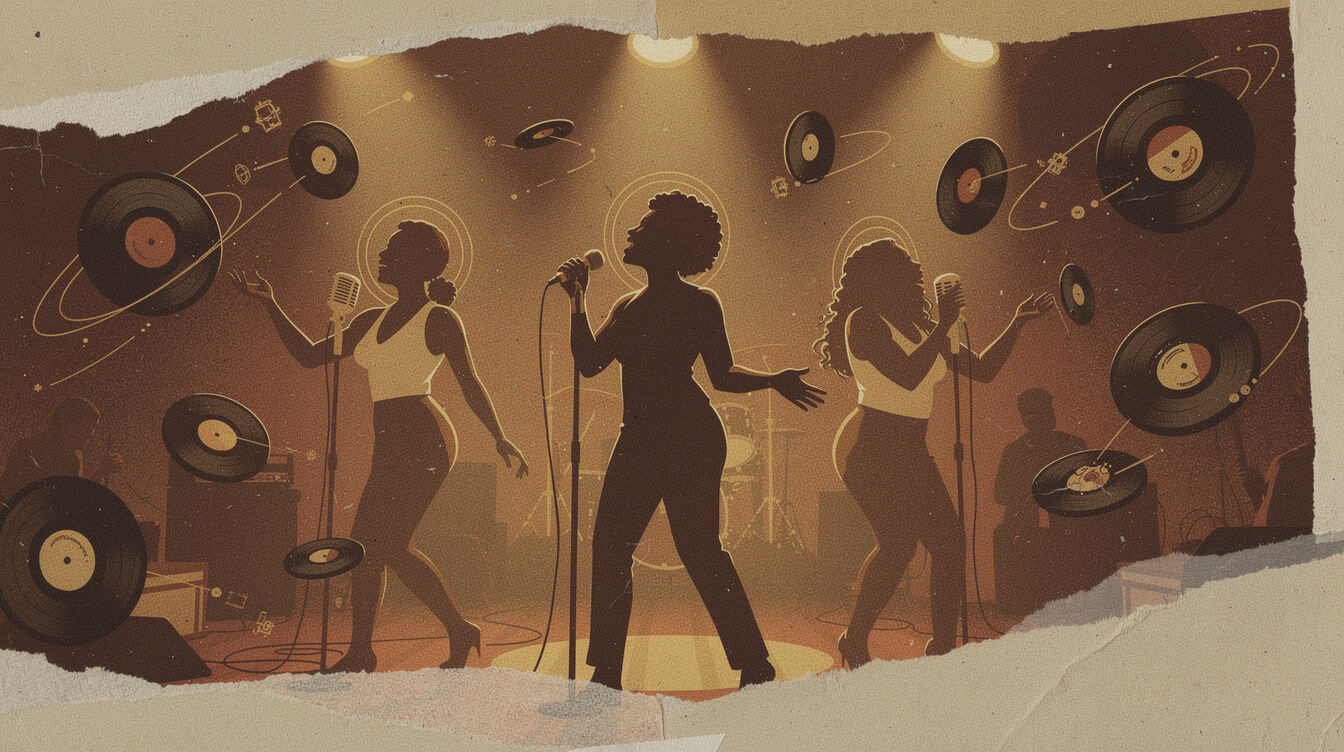
Neo-soul never really died — it just stopped being the center of the conversation. The 2010s belonged to trap, then to melodic drill, then to whatever the streaming algorithm decided constituted a “vibe.” Somewhere between D’Angelo’s Black Messiah in 2014 and now, the veteran neo-soul class went quiet. Not silent. Just off the release calendar.
2026 is the year that changed. Erykah Badu has been working publicly on new material. Musiq Soulchild has been touring the anniversary of his catalog. Kindred the Family Soul is still cutting records the industry doesn’t put on billboards. And now Jill Scott drops the new album — an actual full-length statement, not a single, not a feature, not a compilation.
Why does this matter? Because for a generation of listeners who grew up on The Miseducation of Lauryn Hill, Baduizm, and Who Is Jill Scott? Words and Sounds Vol. 1, this class of artists didn’t just release records — they built a musical philosophy. Live instruments over samples. Songwriter-first arrangements. Vocal performances that could hold a room without Auto-Tune. Faith, sex, politics, and grief treated as legitimate lyrical territory instead of throwaways between the hooks.
When that class goes back into the studio at the same time, it’s not a coincidence. It’s a scene reconvening. And it deserves to be read as such.
To Whom This May Concern: The Release, the Rollout, and the Statement

The album title itself is the tell. To Whom This May Concern is a business-letter opener — the kind of phrasing you use when you don’t know exactly who you’re writing to, but you need whoever picks it up to take it seriously. Jill has always framed her records as address-books. Words and Sounds Vol. 1 was a manifesto. Beautifully Human was a set of love letters. The Light of the Sun was a benediction. This new album is a memo — direct, formal on the outside, unguarded once you open it.
The rollout has been quiet on purpose. There’s a single Instagram post from Jill’s own account announcing the project, a Spotify page with the tracklist, and a Wikipedia stub cataloging the release. What you’re not seeing is the wall-to-wall press push a major label would run for a debut. That’s a choice. It signals that this record is being handed directly to the listeners who were always going to be there — no algorithm-goosing required.
The formal announcement route matters here because it tracks with how the last three Jill Scott projects have entered the world: soft launches, catalog-first, tour dates baked in behind the scenes rather than dominating the marketing. If you were expecting a Beyoncé-scale surprise-drop cinematic universe, that’s not what this is. If you were expecting a songwriter’s record from a songwriter who is now well into her forties and has nothing left to prove, that’s exactly what this is.
What the Album Signals: Jill’s Songwriting Framework, Twenty-Six Years In

Jill Scott has always written from four pillars: the body, the block, the pulpit, and the notebook. Every one of her records touches all four. The body — Crown Royal on Ice, He Loves Me (Lyzel in E Flat), the sexual candor that read as radical in 2000 and reads as adult in 2026. The block — Philadelphia is on every record, whether it’s Golden‘s freedom anthem or the spoken-word interludes that sound like they were recorded on a South Philly porch. The pulpit — she came up through spoken word and church, and the sanctified phrasing has never left. And the notebook — she was a poet before she was a singer, and every hook is still shaped by that page-first discipline.
The signal from this new album is that all four pillars are still standing. She’s not reinventing herself in the vocabulary of whatever’s on Billboard. She’s not going for the pop crossover. She’s not chasing a Grammy for Best Traditional R&B Performance by leaning nostalgic. She’s writing from where she actually lives, and inviting the rest of us to read over her shoulder.
Which is exactly why To Whom This May Concern should be read as a checkpoint album, not a comeback. She never went anywhere. She just took the time between records that a real songwriter needs to have something worth saying.
The best neo-soul records don’t announce themselves as important. They just outlast the trend cycle by being honest.
Philly Studio Roots: The 2026 Neo-Soul Producer Circle

You cannot talk about a Jill Scott album without talking about Philadelphia. The city’s musical infrastructure — Sigma Sound Studios, the Philadelphia International Records legacy of Kenny Gamble and Leon Huff, the MFSB house band, the Roots’ Illadelph studio ecosystem — is not a backdrop for Jill’s records. It’s the substrate.
Her first album was recorded in Philly. Her early songwriting circle overlapped with the Roots (she famously co-wrote You Got Me with Black Thought before Erykah Badu was tapped to sing the finished version). She came up alongside Musiq Soulchild, Bilal, and the whole Ill Vibe Collective. The Soulquarians — that legendary D’Angelo / Common / Roots / Erykah / Jill / Q-Tip / J Dilla studio circle at Electric Lady in the late ’90s and early 2000s — is not ancient history for Jill. It’s her professional lineage.
The 2026 neo-soul producer circle in Philadelphia looks different than it did in 2000, but the DNA is intact. There are still live-band arrangements coming out of studios in Fishtown and West Philly. There are still songwriter camps where a hook has to work on an acoustic guitar before it goes anywhere near Pro Tools. The album is a product of that ongoing ecosystem — not an artifact of the old one.
If you want to trace the through-line yourself, start with the Fugees’ The Score at 30 for the Lauryn Hill wing of the same era, then run the Roots’ catalog forward from Illadelph Halflife to How I Got Over. The Philly-to-New-York-to-Philly triangle those records draw is the exact triangle that produced this Jill Scott album.
Jill Scott’s Catalog Ladder: Who She Is If You’re New to the Work

If To Whom This May Concern is your first Jill Scott album — and for a whole generation of listeners it will be — here’s the ladder to climb backwards, in the order that will make the most narrative sense:
- Who Is Jill Scott? Words and Sounds Vol. 1 (2000) — The debut. Went triple platinum. Introduced A Long Walk, which is still one of the cleanest, most complete R&B singles of the century. This is the album that made “neo-soul” a category the industry had to reckon with.
- Beautifully Human: Words and Sounds Vol. 2 (2004) — The record that gave us Golden, which is arguably the closest thing neo-soul ever had to a universal freedom anthem. If you only know one Jill Scott song, this is probably it. We did a full song-meaning read on Golden that goes deep on why the track still hits twenty-two years later.
- The Real Thing: Words and Sounds Vol. 3 (2007) — The album where she started experimenting outside the neo-soul frame — jazz standards, harder R&B textures, more overtly political content. Underrated on release, aging well.
- The Light of the Sun (2011) — Debuted at #1 on the Billboard 200. The album that proved she could go a decade between studio-brand statements and still command the top of the chart on release week.
- Woman (2015) — Grown-woman R&B. The record where you could hear her writing for herself as a mother, a survivor, and a professional in her forties.
For a broader entry point, we put together a ranked deep-dive on the 15 best Jill Scott songs — start there if you want the greatest-hits map before you commit to a full-album listen.
The Long Walk Legacy: How Jill’s Songwriting Still Shapes R&B
Every generation of R&B has a template artist — someone the younger writers quote structurally, even if they’d never namecheck the reference. In the 2000s that was Lauryn. In the 2010s that was Frank Ocean. And running quietly through both of those eras is Jill Scott.
Listen to Ari Lennox’s Shea Butter Baby and try to un-hear the Jill Scott vocal placement. Listen to H.E.R.’s early EPs, before the pop era, and count the number of times she stretches a syllable across four bars the way Jill stretched them on Slowly Surely. Listen to Solange’s A Seat at the Table and note the spoken-word interludes — a Jill Scott move that predates A Seat at the Table by more than a decade. Listen to SZA’s willingness to write conversational verses that don’t rhyme cleanly, and hear the poet-first discipline that Jill was already using in 2000.
The through-line is a specific songwriting move: write the verse like you’re talking, then find the melody hidden inside the natural speech pattern. Lauryn did it. Jill did it. And now a whole generation of R&B writers who came up on that model does it as default. The reason this new Jill Scott album matters is not just that Jill is back on the shelf — it’s that Jill’s toolkit is now foundational to how contemporary R&B gets written. Watching her use it again, in 2026, is a masterclass on why it worked in the first place.
If you want a shorthand test for whether an R&B record owes Jill a royalty check, run this checklist: Is the verse conversational? Do the melodies land on off-beats? Is there at least one spoken-word breath in the arrangement? Does the singer treat the studio like a live room? If yes to three of four, the artist studied Jill. Even if they don’t know it.
Where To Whom This May Concern Fits in the Neo-Soul Lineage
Neo-soul is best understood as a chain, not a genre. Here is the chain, drawn tight, so you can see exactly where this album lives:
- Curtis Mayfield / Marvin Gaye / Stevie Wonder / Al Green (late ’60s–’70s) — the songwriter-soul ancestors. Live band, spiritual content, political honesty, songwriter-first arrangement.
- Prince (late ’70s–’80s) — the polymath bridge. Proved a singular writer/producer could carry an entire aesthetic.
- Meshell Ndegeocello / Baduizm / Brown Sugar / The Miseducation of Lauryn Hill (1993–1998) — the formal neo-soul first wave. Rap-adjacent, jazz-informed, self-produced or produced within a closed circle of trusted collaborators.
- Jill Scott Words and Sounds Vol. 1 / D’Angelo Voodoo / Musiq Soulchild Aijuswanaseing / Common Like Water for Chocolate (1999–2000) — the Soulquarians-era wave. Live-band production, cross-city collaboration, poetry lineage, Philadelphia + NYC + ATL triangle.
- Solange A Seat at the Table / Frank Ocean Blonde / Anderson .Paak Malibu (2016) — the second wave. Softer edges, streaming-native release strategies, but same songwriter-first DNA.
- Ari Lennox / H.E.R. / SZA / Cleo Sol / Tems (2019–2024) — the contemporary wave. Full ownership of the template. TikTok-viral but structurally still descended from the 2000 Jill Scott / D’Angelo model.
- 2026 veteran class: Jill Scott To Whom This May Concern, plus reported new work from Erykah Badu, Musiq Soulchild, Kindred the Family Soul — the checkpoint. The original wave returning to say: the template still works, the genre isn’t a nostalgia object, and there is still no substitute for a songwriter’s record.
Read the chain in that order and you can hear what’s non-negotiable about neo-soul: it’s writer-led music, made by people who consider themselves poets first, produced by circles rather than solo geniuses. The new Jill Scott album isn’t a departure from that chain. It’s the newest link.
If you like your R&B and hip-hop history worn on your chest, our Roots Illadelph Halflife T-Shirt is the most direct wearable co-sign we make for this whole Philadelphia lineage — same city, same era, same circle Jill came up in.

Wear the Philly Sound: The Roots Rising Down Hoodie
Same Philadelphia circle Jill came up in. Heavyweight hoodie, printed on demand, ships worldwide. The Roots’ Rising Down era on your chest — for the days you’re pulling the whole neo-soul lineage into your rotation.
Live Show Expectations If To Whom This May Concern Turns Into a Tour
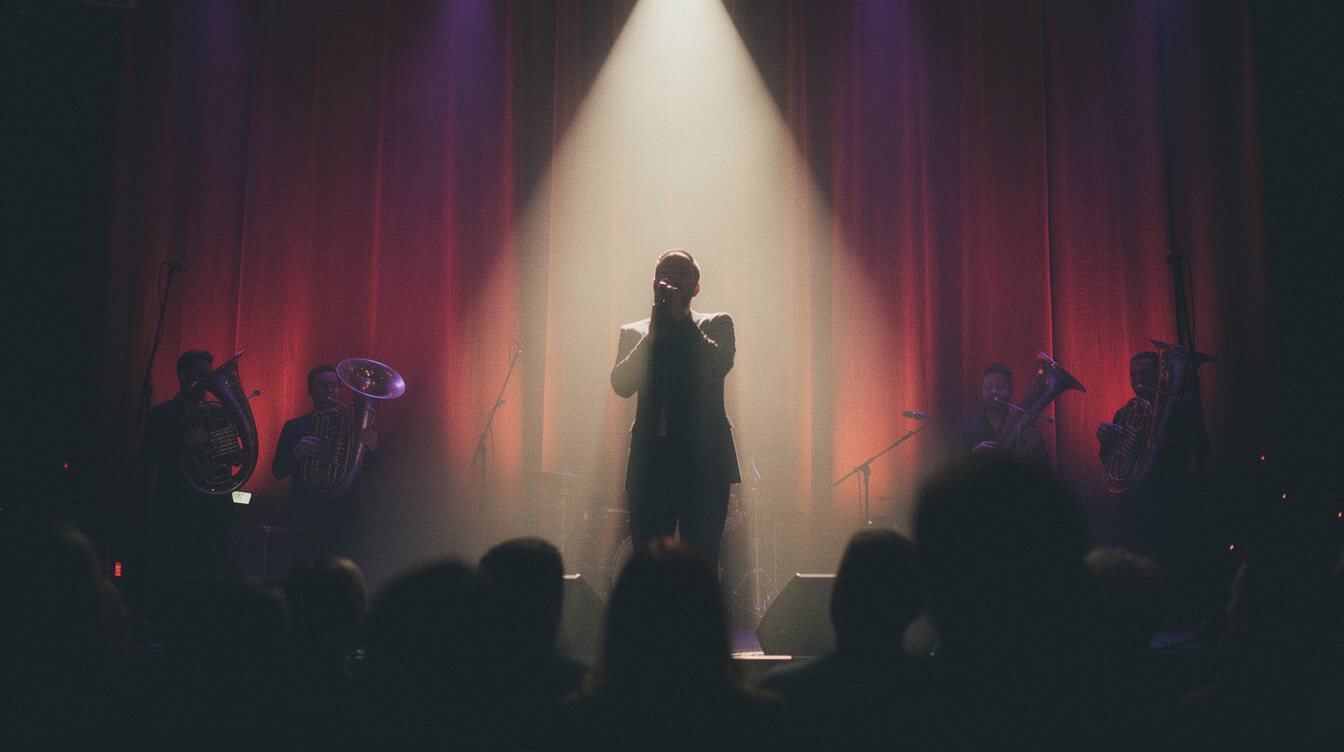
Anyone who has seen Jill Scott live already knows this section could be its own essay. She is, straightforwardly, one of the great live vocalists of her generation — full stop, no genre qualifier. What that means practically, if this album turns into a tour, is that you should expect:
- A full band, not tracks. Jill’s touring bands have always included a real horn section, keys, drums, bass, and background vocalists who can carry choir-level harmony on top of her lead. This is a live-music proposition, not a playback show.
- Spoken-word interludes between songs. She never left the open-mic circuit spiritually, and her live shows still reflect that. Expect at least one poem inside the set, sometimes two.
- Deep catalog cuts. Jill has never been a “greatest hits” tourer. She’ll pull album cuts from The Real Thing or The Light of the Sun that most casual fans won’t recognize and dare you not to know them by the second chorus.
- Extended runs on the closers. He Loves Me (Lyzel in E Flat) is famously stretched live — she’ll take a five-minute studio track to twelve minutes on stage without a single beat of it feeling padded. The new album’s ballads will likely get the same treatment.
- Intimate venue preference. Jill trends toward theaters and jazz-adjacent rooms rather than arenas. If the tour follows that pattern, expect 2,000–5,000 capacity venues where the room can actually hear her.
The tour, if it happens, will be one of the harder tickets in R&B this cycle. Track her official channels for onsale dates. Presales for artists at her level usually hit two to three weeks before general public.
Frequently Asked Questions About the New Jill Scott Album
What is the name of the new Jill Scott album? The project is titled To Whom This May Concern. The tracklist is available on the album’s official streaming pages.
Is it a full studio album or an EP? A full-length studio project — the format-of-record continuation of the Words and Sounds / Woman catalog trajectory, not a short-form or side release.
How is To Whom This May Concern different from The Light of the Sun or Woman? It’s her most direct-address record — the title itself signals a letter, and the framing throughout is more conversational than the more overtly composed Light of the Sun. It’s a checkpoint statement in her catalog, not a sonic reinvention.
Is Jill Scott still based in Philadelphia? Yes. She has stayed publicly connected to the city her entire career, and her studio ecosystem remains Philly-first.
Should I listen to her earlier records first, or start here? Both are legitimate entry points. If you want the historical context, start with Who Is Jill Scott? Words and Sounds Vol. 1 (2000) and work forward. If you want to hear where she is right now as an artist, To Whom This May Concern stands on its own — she’s a mature-voice songwriter whose current work doesn’t require the back catalog to make sense.
Where does neo-soul stand as a genre in 2026? Alive and back on the release calendar. See the neo-soul lineage section above — the veteran class is putting new records out, and the contemporary R&B writers who studied them are keeping the template current. It’s not a nostalgia genre; it’s a working tradition.
Final Thoughts: The New Jill Scott Album Is Proof the Tradition Is Still Working
Here is the shortest version of the read: the new Jill Scott album isn’t a comeback, because Jill Scott is not somebody who left. She is a working songwriter with a distinct point of view and a live instrument in her throat. She has released records at her own pace, on her own timing, for twenty-six years. This is the newest one. Play it the way you would play any letter mailed to you personally by someone whose writing you already trust — slowly, more than once, with your headphones on.
To Whom This May Concern isn’t going to shift the algorithm. It doesn’t need to. Its job is to prove the Philly neo-soul tradition is still a living tradition, and it does that job the same way Jill Scott has been doing it since 2000 — by being honest, on beat, and unbothered.
Play it loud. Read the lyrics. Then go back and hear the whole catalog with 2026 ears. You’ll notice things about Golden and A Long Walk you missed the first time. That’s how a good letter works — it makes you re-read the earlier ones.
Stay creative — the Custom Creative team.
Get the Culture Straight to Your Inbox
Album breakdowns, artist deep-dives, and Custom Creative drops built for hip-hop and neo-soul heads. Signal only. No filler.

🎧 Never Miss a Drop
Exclusive product releases, hip-hop deep dives, and member-only discounts. Straight to your inbox.
Free forever. No spam. Unsubscribe anytime.
Get the Culture, Delivered
Deep dives into hip-hop history, exclusive product drops, and discounts sent straight to your inbox. No spam, just culture.
Join 2,000+ hip-hop heads already in the loop. Unsubscribe anytime.