DJ Screw: How a Houston DJ Slowed Hip-Hop Down and Rewired the Sound of the South
Play a Houston rap record at normal speed and you hear a song. Play it the way DJ Screw did, pitched way down and stretched out, with a line doubled back on itself so you catch every syllable, and you hear a city. Robert Earl Davis Jr. sold his music out of his house, rarely gave interviews and died at 29. He still built a sound that runs from South Houston bedroom tapes to Travis Scott’s Astroworld, Drake’s mixtape era and the “slowed + reverb” uploads on your phone. This is the full story: who DJ Screw was, how chopped and screwed actually works, the cassette economy he ran out of a house on Greenstone Street, the Screwed Up Click, and the long line of artists who still answer to the Originator.
Quick receipts before we get into it. Everything below is cross-checked against at least two sources: Wikipedia, the Houston Chronicle, the University of Houston’s own archive reporting, Red Bull Music Academy’s long feature, Discogs/MusicBrainz release data, and on-record interviews. Where the sources disagree, we tell you that instead of picking a number and pretending.
Who Was DJ Screw? From Smithville to South Houston
DJ Screw was born Robert Earl Davis Jr. on July 20, 1971, in Smithville, Texas, a small town in Central Texas. His childhood moved around: Smithville, Houston, back to Smithville, and eventually Houston for good, where he went to live with his father. Houston’s South Side became home base, and the South Side became his whole sound.
Where the name came from
The name comes from something petty, which fits. As a young DJ, Davis had a habit of taking a screw to records he didn’t like and scratching them up so nobody could play them again. His friend Trey Adkins clowned him for it with “Who do you think you are, DJ Screw?” The name stuck. Screw returned the favor by naming Adkins “Shorty Mac.” Two kids roasting each other in a bedroom gave hip-hop one of its most important names.
The $10 accident that started everything
Screw was already slowing records down in 1990. The story Houston tells, backed by both Wikipedia and RBMA’s reporting, is that a friend named Toe heard one of his slowed-down mixes and paid him $10 to make him a tape of it. Screw reportedly thought the request was crazy. He made the tape anyway. By late 1991 into 1992, the slowed mixes weren’t a side experiment anymore. They were the main thing he did.
Look at the timing. In 1990–92, the rest of rap was getting faster and busier. Bomb Squad noise, new jack swing tempos, East Coast lyricists racing to fit more syllables in a bar. A kid in South Houston went the other way: slow it down until every word lands. It wasn’t a gimmick. It was a different idea of what a rap record is for.
The Originator
Houston calls him “the Originator,” and the University of Houston, which now holds his archive, uses the same word. It’s earned. Other DJs slowed records before and after him. What Screw did was turn the slowdown into a full language, with its own technique, its own distribution network, its own roster of rappers and its own culture of cars and corners. For background on the Houston label world that ran alongside him, read our deep dive on how J. Prince built Rap-A-Lot Records from a Houston car lot.
How Chopped and Screwed Actually Works
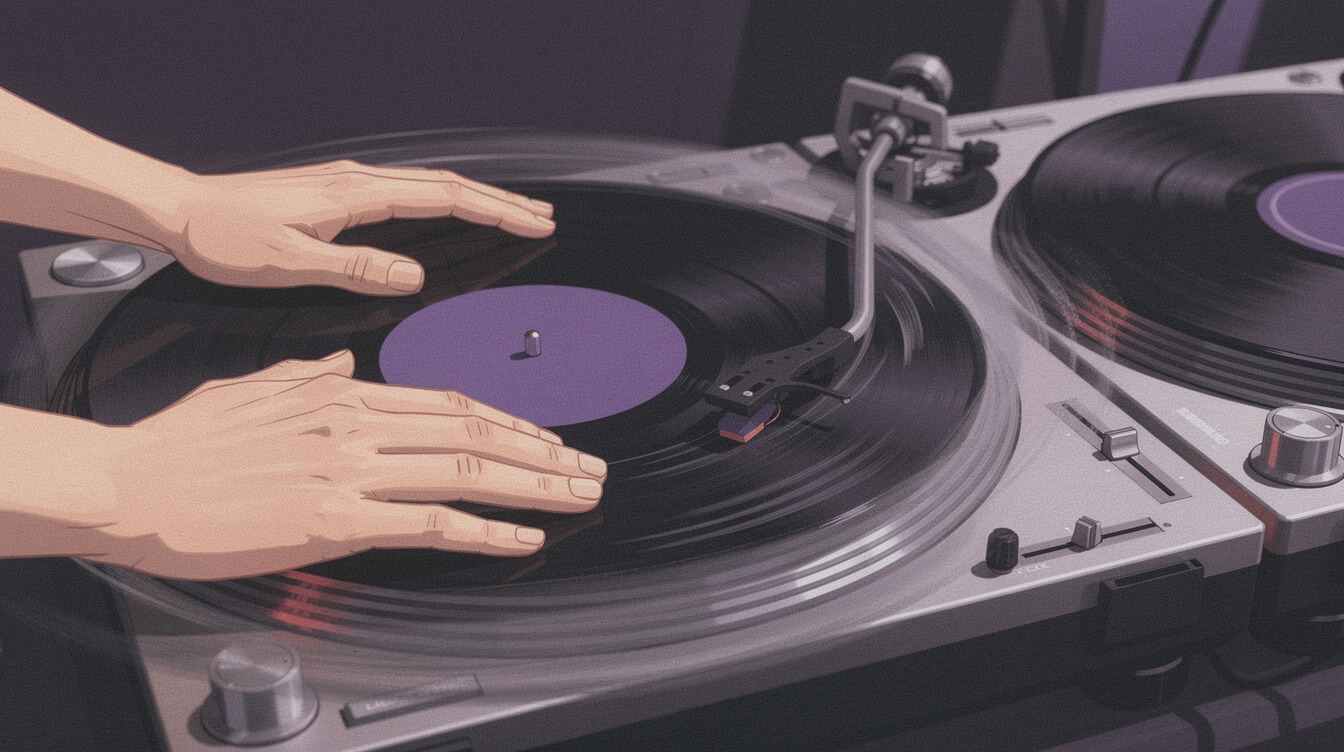
Most write-ups say “he slowed songs down” and stop there. That’s like saying DJ Premier “used samples.” The craft is in the details, so here’s what’s actually going on in a Screw tape.
The “screw”: dropping the pitch
The first move is the slowdown. Screw used turntable pitch control to drag a record well below its normal speed. Because this is analog vinyl, not a modern time-stretch plugin, dropping the speed also drops the pitch. Voices go deep and syrupy, kick drums turn into slow thuds, and hi-hats smear. The Bitter Southerner‘s Charlie Braxton gives the best quick description: imagine playing a 45 at 33⅓, then add cutting and repetition. Once you hear it, a vocal at its original speed can start to sound thin.
The “chop”: two copies of the same record
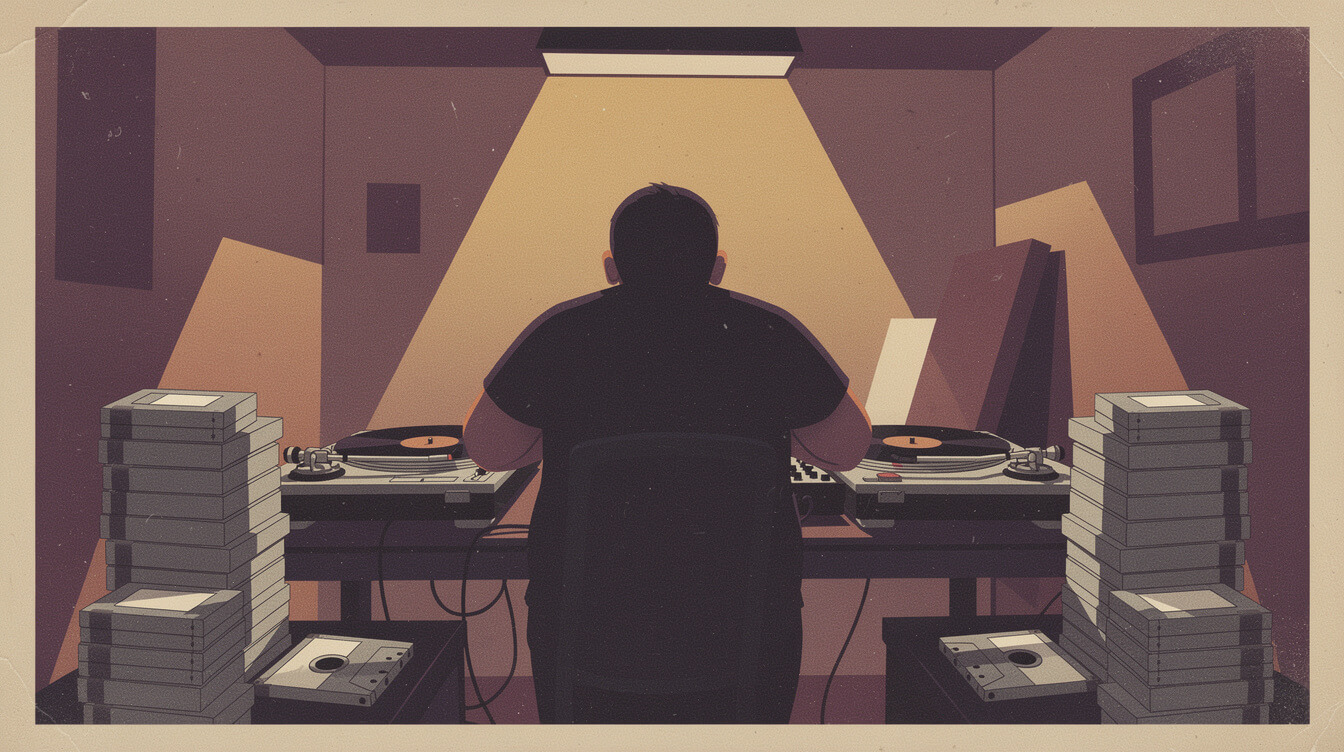
The second move is the one people miss. Screw ran two copies of the same record on two turntables, one a beat behind the other, and cut back and forth between them. That lets him:
- Repeat a phrase right after it lands, so a punchline hits twice
- Stutter a word rhythmically, like a drum fill made of a rapper’s voice
- Extend a groove past where the song originally ended
- Add scratches and backspins as punctuation
RBMA’s reporting adds one more detail: the mixes went down to tape through a four-track’s pitch control. No computers, no software. Everything you hear on a classic Screw tape was done live with hands, faders and timing.
Why the slowdown changes how you hear a verse
This is the part that matters for heads. At normal speed you hear a verse as one stream. Slowed down, you hear the writing: internal rhymes, breath control, the way a rapper bends a vowel. Paul Wall said it in a University of Houston interview: Screw “would just slow down the tempo of everything. It would just take you to a place where it would just put you in a trance.” Screw described his own approach in 1999 as letting “my fingers do the talking.”
“Screwed and chopped” or “chopped and screwed”?
Both phrases are out there, and Houston old-heads will argue about it. The safest version of the history: in Screw’s lifetime, people mostly just called them Screw tapes. The genre names came as the style spread, especially through north-side DJs like Michael “5000” Watts, who always credited Screw as the source. Today “chopped and screwed” is what Google and the record industry use, which is why it’s the term you see on deluxe album editions. If you want to sound like you know, call it what Houston called it: a Screw tape.
The Screw Tapes: A Cash Economy Built on Cassettes
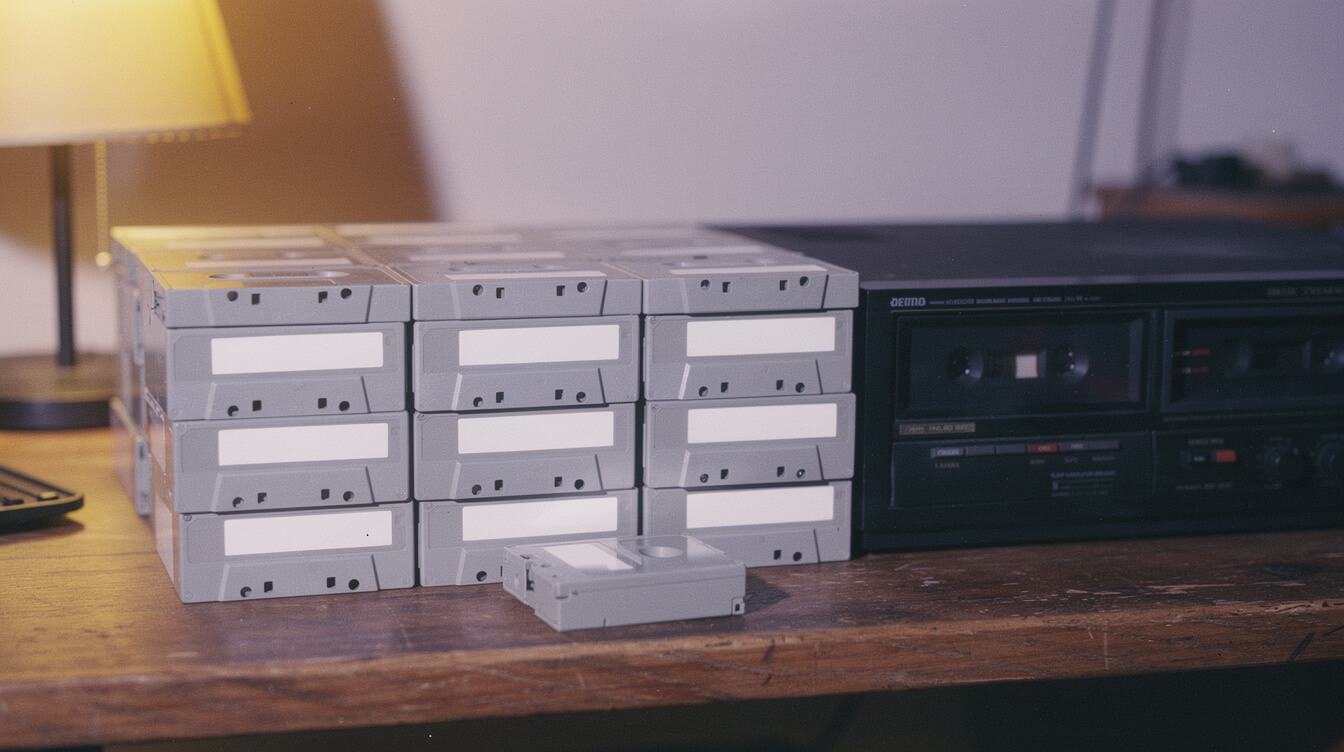
Before streaming, before DatPiff, before anyone “dropped a tape” online, DJ Screw ran one of the most effective independent music businesses in America, and he did it out of a house.
Greenstone Street
The house was on Greenstone Street in South Houston, near Gulfgate. The mixing happened in a back room people called the “wood room.” The University of Houston describes what the block looked like in the mid-to-late ’90s: cars lined up for blocks, many of them slabs, all waiting to buy a homemade cassette. No label, no distributor, no ads. Just a line of cars outside a house.
The price list
The base price was $10 a tape, confirmed by RBMA and by Bun B. Custom orders cost more. Lil’ Keke explained it to the Bitter Southerner: “You used to go to Screw and give him a list of songs that you wanted, pay him $15 and he’d put all the songs you wanted on there.” Then Screw would scratch it up, add his touch, and that custom tape could end up being sold to the whole city. Keke’s own estimate was “a thousand tapes a week at $10 a pop.”
Bigger numbers float around too. The University of Houston cites estimates of $15,000 a day and 10,000–15,000 copies in a single day at the peak, and the Houston Chronicle says Screw “was said to” move 15,000 tapes in a day at car shows. Treat those as legend-tier estimates, not audited sales. The point holds either way: a cash business, outside the industry, at a scale most indie labels never reached.
How many Screw tapes are there?
Nobody agrees, and that’s part of the mythology. The Houston Chronicle, the University of Houston and RBMA all say “more than 300.” Wikipedia says “over 350.” One collector count, cited by POW magazine, puts the numbered catalog at about 293. Rumors of “thousands” circulate, but even RBMA labels those speculation. The honest answer is 300-plus original Screw tapes, plus countless bootleg dubs. The numbered series is known as the Diary of the Originator chapters.
Collecting them like trading cards
Paul Wall’s description of Screw-tape culture to the University of Houston is the best one we’ve found: “When you got a new Screw tape … you’d come share it with everyone and say ‘Hey! Have you heard the new one?’ … It would be like collecting basketball cards, baseball cards.” A Screw tape carried status. Having the one where Fat Pat said something crazy, or the one with your neighborhood’s rappers on it, was social currency across Houston.
From the house to the shop
In 1998 Screw opened Screwed Up Records & Tapes at 7717 Cullen Blvd., which moved the business out of the house and into a real storefront. The shop outlived him. Today it operates at 3538 W. Fuqua St., where Screw’s cousin Big Bubb helps run it. People still come from all over the world. As the shop’s Big A told UH, some visitors “don’t even speak English, but they can say DJ Screw.”
Screw on record: the official releases
Alongside the street tapes, Screw put out official releases, most notably the 3 ‘N the Mornin’ series on Houston’s Bigtyme Recordz. 3 ‘N the Mornin’ (Part Two) is a mid-’90s landmark. Sources split on whether it came out in 1995 or 1996, and the Houston Press ranked it among the best Houston rap albums ever. It’s also where Lil’ Keke’s “Pimp tha Pen” lives, and that verse comes back later in this story.
The Screwed Up Click: Who Was on the Tapes
A Screw tape wasn’t just slowed-down records. Between songs, local rappers came through the house and freestyled live over instrumentals while Screw recorded. That rotating crew became the Screwed Up Click, or S.U.C. Getting on a Screw tape made you famous in Houston before any label knew your name.
The core roster
These names are confirmed as S.U.C. members by at least two sources (Wikipedia, RBMA and the Houston Chronicle):
- Fat Pat: a larger-than-life presence on the early tapes
- Big Hawk (also known as H.A.W.K.): Fat Pat’s older brother, one of the steadiest voices in the Click
- Big Moe: the singing rapper whose City of Syrup (2000) and “Barre Baby” became Houston staples
- Lil’ Keke: “Pimp tha Pen,” and later solo records like Don’t Mess wit Texas
- E.S.G.: the man behind “Swangin’ and Bangin’,” the anthem of slab culture
- Big Pokey, Yungstar, Z-Ro and the Botany Boyz
- Lil’ O and Al-D, both named by the Chronicle among the original Click
Lil’ Flip came in later. Screw named him “The Freestyle King,” and he went on to platinum sales. Trae tha Truth is also linked to the late-era Click, though some member lists leave him off. A wider ring of “Screwed Up Affiliated” artists included Devin the Dude, K-Rino and others.
“At Screw’s house there was no beef”
Will-Lean, one of the first freestylers recorded on a Screw tape, told the University of Houston: “If you had a beef with someone on the street, at Screw’s house there was no beef. Screw brought everybody together, and he gave everyone careers to this day.” Houston in the ’90s had real neighborhood lines (Lil’ Keke name-checks Fifth Ward, Third Ward, Botany and Dead End), and the Screw house was neutral ground where all of them got on the same tape.
June 27: the tape that became a holiday
The most famous Screw tape session happened on June 27, 1996, recorded for the birthday of a S.U.C. affiliate named DeMo. The roughly half-hour “June 27th” freestyle features Big Moe, Big Pokey, Yungstar and others trading freestyles over Screw’s slowed-down beats. It’s widely called the definitive Screw tape. Houston now celebrates June 27 as DJ Screw Day, an unofficial holiday that the Houston Chronicle covers every year. One correction worth knowing: some outlets say June 27 is Screw’s birthday. It isn’t. He was born July 20. The date belongs to that session.
A roster marked by loss
The S.U.C. story carries a lot of grief, and it should be told straight. Fat Pat was shot and killed on February 3, 1998, at 27. His brother Big Hawk was shot and killed on May 1, 2006. Both cases are still unsolved. Big Moe died on October 14, 2007, at 33, a week after a heart attack. Screw himself died in 2000. One more name connects the tapes to recent history: George Floyd rapped on Screw tapes in the late ’90s as “Big Floyd,” as both The Fader and the Star Tribune documented in 2020.
The UGK connection: Chapter 182
Were UGK really on Screw tapes? Yes. Diary of the Originator: Chapter 182 is titled “Ridin’ Dirty” and dates to 1996, documented by Discogs and by POW magazine’s history of UGK and Screw. Bun B has said that UGK’s Ridin’ Dirty album was meant to feel like a DJ Screw tape without actually being screwed. That’s why the album plays like a slow cruise through Port Arthur and Houston instead of a collection of singles. Complex and POW also both report that Pimp C, Big Hawk and Screw once ended up in Harris County jail together, which is about as Houston as a story gets.
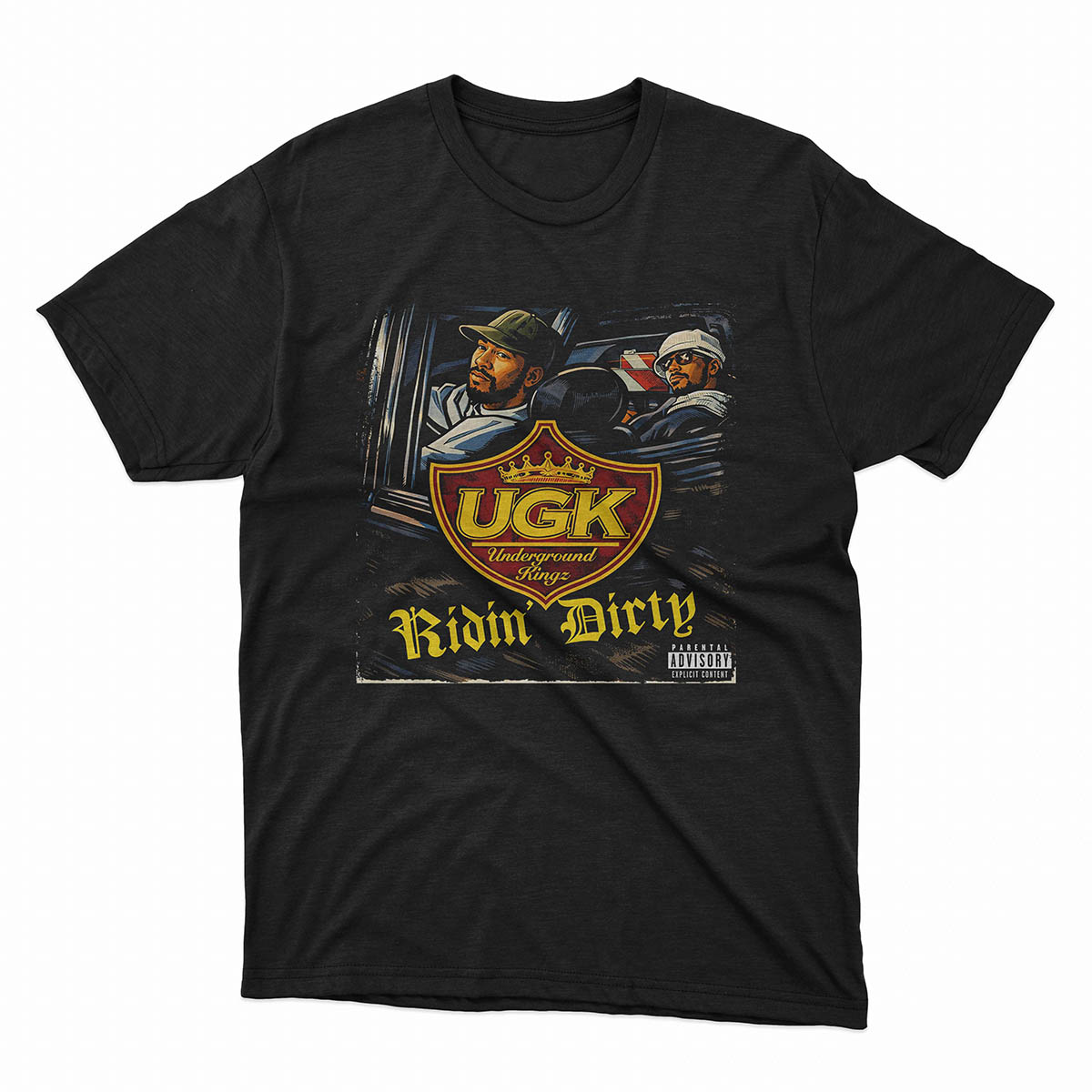
The Album Built to Feel Like a Screw Tape
Bun B said UGK made Ridin’ Dirty to ride like a Screw tape without the screw. We made the UGK Ridin’ Dirty T-Shirt for anyone who knows that album is meant to be heard at slab speed.
November 2000 and the Long Afterlife of DJ Screw
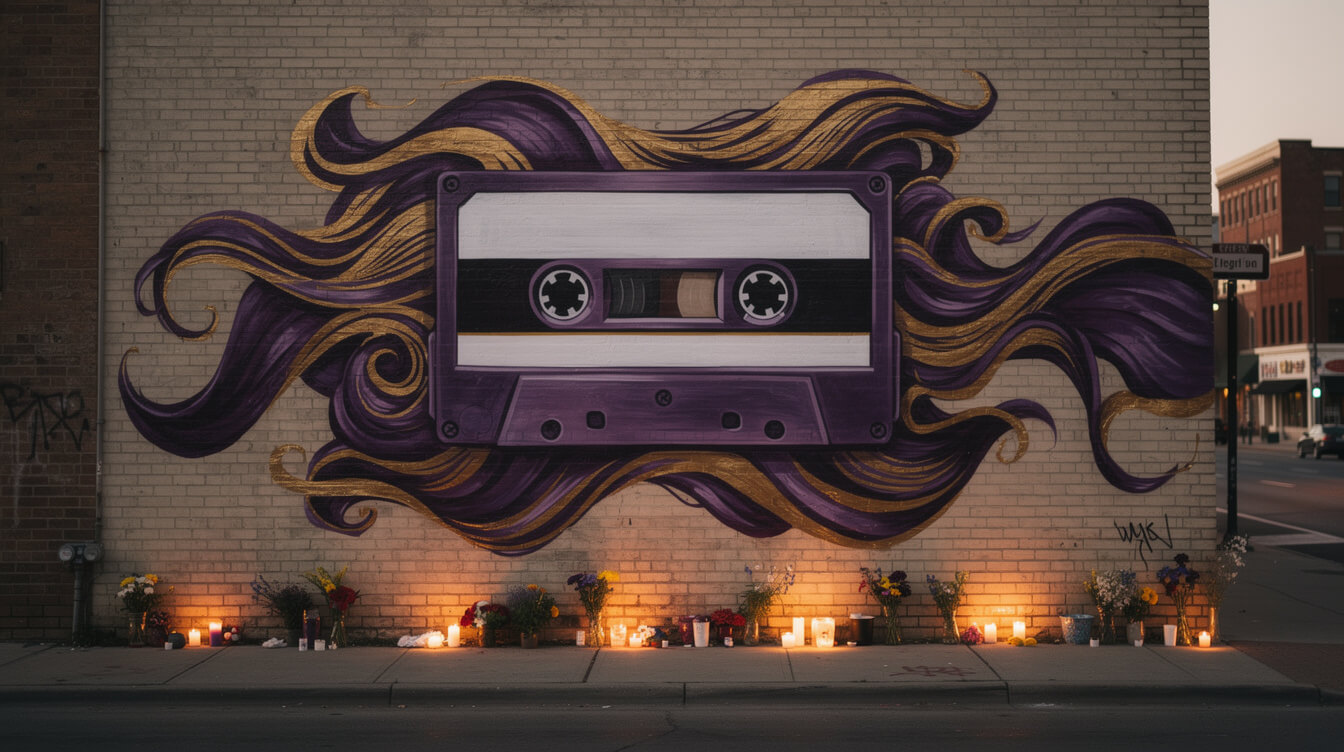
DJ Screw died on November 16, 2000, at his Houston recording studio. He was 29. Early reports called it a heart attack. The Harris County Medical Examiner’s finding, as reported by the University of Houston, was a “codeine overdose with mixed drug intoxication.” Other drugs were also found in his system.
Telling the lean part honestly
You can’t tell this story without lean, the codeine-promethazine cough syrup mixed with soda that S.U.C. lyrics referenced constantly. You also shouldn’t romanticize it. The syrup took Screw, and it shadows other parts of the S.U.C. story too. UH professor John Chiles makes the better point: Screw’s slowed style “is often associated with ‘syrup culture,'” but it “also represented deeper aspects of the slower, laid-back Southern culture.” The music is about Houston’s pace, heat and car culture. It doesn’t need a drug to make sense, and plenty of the people who love it never touched one.
The archive: Screw in the library
One of the most underrated parts of the Screw legacy: the University of Houston Libraries acquired his collection in 2011, much of it donated by his father. It includes his personal vinyl (counts run from over 1,000 to about 1,500 records, depending on the source), handwritten set lists, childhood photos, original audio gear and, of course, Screw tapes. UH ran an exhibit, “DJ Screw and the Rise of Houston Hip Hop,” in 2012. UH hip-hop archivist Julie Grob says the DJ Screw papers “get requested more than any other collection in the archives.” A Houston rap DJ’s crates are the most-pulled collection at a major research library.
The book and the tributes
In 2022, the University of Texas Press published Lance Scott Walker’s biography DJ Screw: A Life in Slow Revolution, the first full-length book on him. Houston also stages a yearly Screwfest and other DJ Screw Day events, with S.U.C. members like Lil’ Keke, Lil’ Flip, Z-Ro and E.S.G. performing. The record store still sells tapes. The tapes still get dubbed. For a culture that was never written down by the industry, that’s a lot of afterlife.
Why the influence spread after he was gone
Screw’s sound was mostly regional at the time of his death, and that’s what makes the next quarter-century remarkable. People were driving in from as far as Mississippi to buy tapes by the mid-’90s, according to the Bitter Southerner. Meanwhile, Southern rap was breaking nationally: OutKast, UGK and the Memphis wave (see our breakdown of Three 6 Mafia’s six members and their own syrup-soaked catalog). When the industry finally looked South, Screw’s language was already built and waiting.
From “Still Tippin'” to Slowed + Reverb: DJ Screw’s Lineage
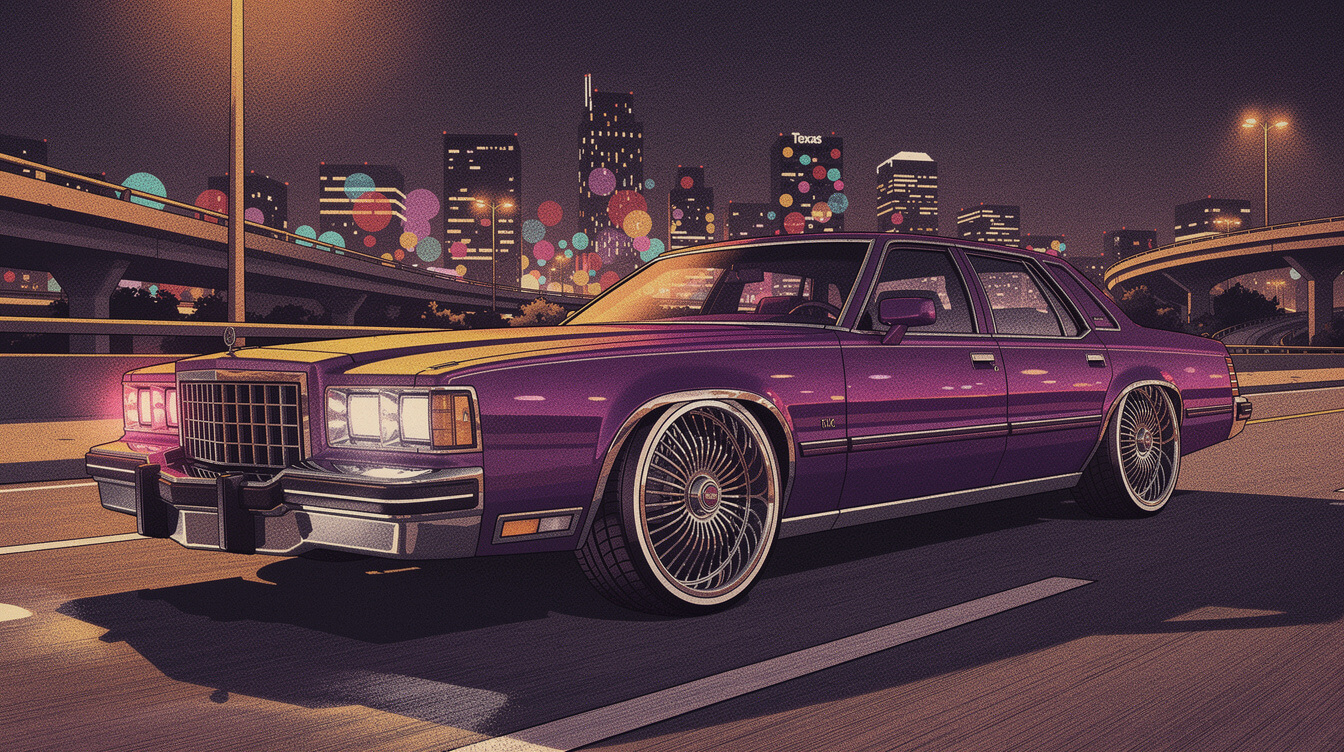
The DJ Screw lineage runs through at least four eras, and each one has receipts.
Era 1: Swishahouse and the north side
While the S.U.C. ran the South Side, the north side built its own machine. Swishahouse was founded in Houston in 1997 by Michael “5000” Watts and OG Ron C, two DJs who took the slowed-and-chopped approach and made it their own. The Bitter Southerner reports that a spin on a Watts or OG Ron C tape in the early 2000s could move an artist’s sales noticeably in the Texas and Louisiana markets. Watts always credited Screw as the originator and described screw music as “its own category of music … just like rock, pop, or reggae.” Michael “5000” Watts died on January 30, 2026, at 52.
Era 2: 2005, when Houston took over the charts
The national breakthrough came through Swishahouse. Mike Jones’ “Still Tippin'” first appeared on a Swishahouse compilation, The Day Hell Broke Loose 2, in 2003. The original version included Chamillionaire. After he and Jones split, Paul Wall took the verse for the hit version. The single went national in late 2004, landed on Who Is Mike Jones? in 2005, peaked at No. 60 on the Hot 100 and went 2× Platinum. That September, Paul Wall’s The Peoples Champ debuted at No. 1 on the Billboard 200. Houston’s slab culture, candy paint, grills and screwed versions were suddenly on MTV. If you want the Northside Boss Hogg Outlaw side of that wave, read our Today in Hip-Hop piece on Slim Thug’s Already Platinum.
Era 3: Drake, A$AP Rocky and Travis Scott
The next generation grew up on Screw and said so on record:
- Drake – “November 18th” (So Far Gone, 2009): a slowed, screwed-mood record that borrows a line from Lil’ Keke’s “Pimp tha Pen.” Keke said in 2022 that Drake paid him for the line and still pays royalties, as reported by Complex and HotNewHipHop. That’s a Toronto rapper clearing a Screw-tape freestyle.
- A$AP Rocky: the Houston Chronicle names him alongside Drake as an artist whose 2010s sound was shaped by Screw.
- Travis Scott – “R.I.P. Screw” (Astroworld, 2018, featuring Swae Lee): a direct tribute from Houston’s biggest modern star, closing with audio from a 1998 ABC News report on Screw. A lot of sites list it as a Rodeo track. It’s on Astroworld. If Travis is your entry point, our Travis Scott merch guide covers the visual side of that era.
Era 4: Moonlight, and slowed + reverb
The influence even reached the Oscars. Barry Jenkins, director of the Best Picture winner Moonlight, boosted a chopped and screwed version of the film’s soundtrack, as NPR reported in 2017 and the Houston Chronicle later noted. Then came the internet era. In 2017, a Houston producer named Slater, who grew up on DJ Screw, posted a slowed-down remix of Lil Uzi Vert’s “20 Minutes” over a looping image and hit a million views in about two months. That started the “slowed + reverb” wave that now fills YouTube and TikTok. Slater himself drew the line between imitation and the source, telling Pitchfork that “the chops are sacred to the culture.” Slowing is easy. Chopping is the skill.
What gets lost in the copies
Here’s the CC take. Slowed + reverb takes Screw’s tempo and drops his hands. A real Screw tape was a performance: chosen records, live chops, a doubled punchline, a freestyle from your neighborhood’s best rapper, all done in one pass to cassette. The algorithm-era version is a filter. It’s fine, it’s fun, and it exists because of him, but if you’ve only heard the filter, go find 3 ‘N the Mornin’ (Part Two) or the “June 27th” freestyle and hear what a human doing it sounds like.
Wearing Houston: Slabs, Cassettes and the Visual Language of Screw
Screw music has its own visual world, and it’s as recognizable as Wu-Tang yellow or Death Row black.
The slab
“Slab” stands for slow, loud and bangin’. It’s an older American sedan with candy paint, a trunk built to knock, and “swangas” or “elbows”: 30-spoke wire rims that poke far out from the wheel wells, also called 83s and 84s. Mike Jones’ “tippin’ on 4s, wrapped in 4 Vogues” refers to those rims on Vogue tires. The University of Houston describes the line of cars outside Screw’s house as mostly slabs, which makes sense. Screw tapes and slabs grew up together. A slowed tape is made for a slow cruise down MLK or the 610 Loop.
The cassette
The tape itself is iconic. A plain cassette is as much a symbol of Screw as any photo of him. He rarely did interviews and wasn’t often photographed, so the tape is the face. That’s why so much Screw-inspired art leans on the cassette shape, the purple palette and slab silhouettes instead of portraits.
How to wear the lineage
We don’t sell DJ Screw merch. Out of respect for his estate and the shop on Fuqua that still carries the real thing, we’d point you there first. What we do make is apparel for the records that lived inside his world. Our UGK Ridin Dirty Hoodie carries the album that Bun B said was built to feel like a Screw tape. Wear it on a cold Houston night with the windows down and Chapter 182 playing. For the wider Houston story, our profile of Scarface, the Geto Boys frontman who wrote the Southern rap rulebook pairs well, and our history of rap tees from Run-DMC to the bootleg grail hunt explains why the regional stuff always ends up being the most collectible.
DJ Screw FAQ
Who invented chopped and screwed?
DJ Screw (Robert Earl Davis Jr.) of Houston is credited as the originator of the style. He started making slowed-down mixtapes in 1990 and built the “chopped” technique (cutting between two copies of the same record) into his sound in the early ’90s. Michael “5000” Watts and OG Ron C of Swishahouse helped spread it, and both have credited Screw as the source.
What is DJ Screw Day, and why June 27?
DJ Screw Day is celebrated in Houston every June 27. It isn’t his birthday (that’s July 20). It marks the famous “June 27th” freestyle tape, recorded on June 27, 1996, for S.U.C. affiliate DeMo’s birthday, with Big Moe, Big Pokey, Yungstar and others. It’s an unofficial holiday with concerts and tributes across the city.
How did DJ Screw die?
DJ Screw died on November 16, 2000, at 29, at his Houston studio. The medical examiner ruled it a codeine overdose with mixed drug intoxication.
How many Screw tapes did DJ Screw make?
More than 300 original tapes, per the Houston Chronicle, the University of Houston and RBMA. Wikipedia says over 350, and one collector count says about 293. Bootleg dubs push the number of copies in circulation far higher.
Who was in the Screwed Up Click?
Core members included Fat Pat, Big Hawk, Big Moe, Lil’ Keke, E.S.G., Big Pokey, Yungstar, Z-Ro, the Botany Boyz, Lil’ O and Al-D, with Lil’ Flip and Trae tha Truth joining later.
Is Screwed Up Records & Tapes still open?
Yes. The original shop opened in 1998 at 7717 Cullen Blvd. It now operates at 3538 W. Fuqua St. in Houston, still selling Screw tapes, CDs and merch.
What is the best DJ Screw tape to start with?
Start with 3 ‘N the Mornin’ (Part Two), the official Bigtyme release with Lil’ Keke’s “Pimp tha Pen.” Then go to the “June 27th” freestyle for the full S.U.C. experience, and Chapter 182 “Ridin’ Dirty” for the UGK connection.
Final Thoughts: Slow Down and Hear It
DJ Screw’s whole argument was patience. In an era that wanted rap faster, louder and more polished, he slowed it down until you could hear the writing, the city and the people in the room. He sold it from his house for ten dollars. He gave a generation of South Houston rappers their first audience and a neutral room to share. He died at 29, and his sound ended up on platinum albums, in an Oscar winner’s score and on millions of phones that never saw a cassette.
The best way to honor that isn’t a playlist with a reverb filter. Find a real Screw tape, ride somewhere slow, and let a verse come back around a second time. A quarter-century later, the Originator is still teaching hip-hop to listen.
Stay creative — The Custom Creative Team
Get the Culture in Your Inbox
Catalog deep dives, credit receipts, anniversaries and first dibs on new drops. No spam, just hip-hop.

🎧 Never Miss a Drop
Exclusive product releases, hip-hop deep dives, and member-only discounts. Straight to your inbox.
Free forever. No spam. Unsubscribe anytime.
Get the Culture, Delivered
Deep dives into hip-hop history, exclusive product drops, and discounts sent straight to your inbox. No spam, just culture.
Join 2,000+ hip-hop heads already in the loop. Unsubscribe anytime.