Scarface the Rapper at 55: The Complete Story of the Geto Boys Frontman Who Wrote the Southern Rap Rulebook
Ask any rapper who came up in the South about the scarface rapper and you get the same reverent pause. UGK named him. T.I. named him. Kendrick Lamar has quoted him on record. Jay-Z asked him to guest on The Blueprint era. Scarface — born Brad Terrence Jordan in Houston, Texas on November 9, 1970 — is the closest thing hip-hop has to a Southern founding father who never left. Six solo classics, one book, one mayoral run, and a critical consensus that he might be the best pure writer the region ever produced.
The SERP for his name gives you Wikipedia dates and a Spotify page. That is not the story. What follows is the arc: from the Fifth Ward and a psychiatric ward at age 14, through the Rap-A-Lot Records machine and the Geto Boys reformation of 1989, into six solo albums that taught every Southern rapper after him how to put depression, faith, and paranoia on wax without losing the streets. This is the definitive guide to the scarface rapper — his life, his catalog, his politics, and the lineage he built.

Fifth Ward Houston: The Brad Jordan Origin Nobody Tells
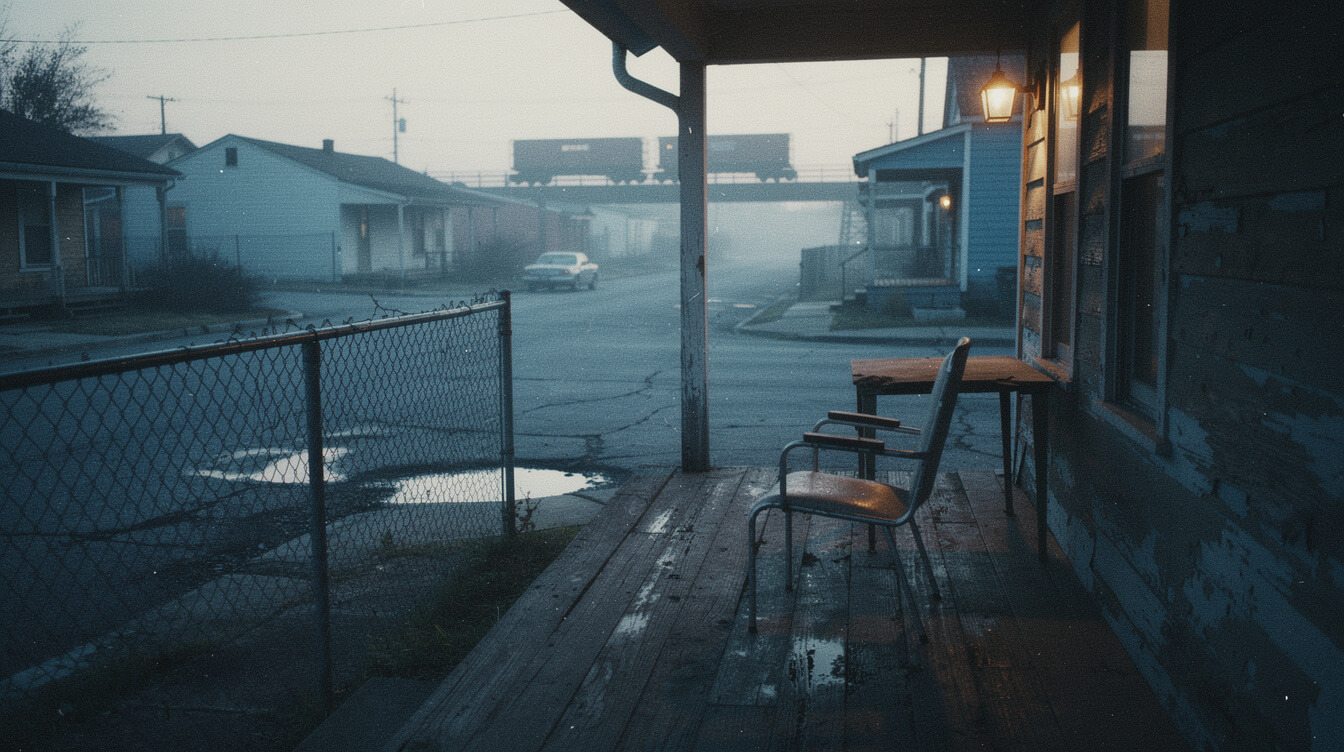
Every Scarface interview eventually circles back to a single detail: at 14 years old, Brad Jordan tried to take his own life and spent time in a psychiatric ward. He has said, plainly and often, that the therapy sessions in that ward shaped the introspective writing voice he would later adopt as a rapper. Almost nothing in the hip-hop canon compares. Everyone else wrote from the block. Face wrote from the block and the couch.
He attended Woodson Middle School on the South Side of Houston, dropped out of high school, and worked as a street-level drug dealer before the music found him. Fifth Ward and South Park in the 1980s were not the mythologized Houston of chopped-and-screwed nostalgia — they were a hard, hot, working-class city with a Black population being squeezed by the crack economy and a police force that ran the neighborhoods like an occupying army. That is the Houston that raised him, and every Face verse for the next 35 years carried the temperature of it.
Before he was Scarface, he was DJ Akshen — a backronym for “All Krazy Shit Has Ended Now,” pronounced “Action” — recording and deejaying for Lil’ Troy’s Short Stop, a small local Houston label. The Akshen 12″ “Scarface / Another Head Put To Rest” dropped in 1989, written by Chris “Mr. 3-2” Barriere and produced by Def Jam Blaster and Bruce “Grim” Rhodes. The single took its title from Brian De Palma’s 1983 Scarface — the Tony Montana obsession was already there — and it caught the ear of the one man in Houston who had a machine ready to press it up in bulk.
Joining the Geto Boys: DJ Ready Red, Bushwick Bill, Willie D and the Rap-A-Lot Machine

James Prince and his Rap-A-Lot Records had launched the Geto Boys in 1986, and by 1988 the lineup had already turned over once. When Prince rebuilt the group in 1989, he pulled Scarface off the Short Stop roster to join Bushwick Bill, Willie D, and DJ Ready Red. That configuration — Face’s writer’s-block sadness, Bill’s carnival menace, Willie D’s straight-ahead gangsta reportage — is the classic Geto Boys the world remembers. It debuted on Grip It! On That Other Level (1989), the first Geto Boys album to make national noise.
Radio would not play them. MTV would not touch them. That did not matter. Grip It! and its Rick Rubin-remixed follow-up The Geto Boys (1990) built a national gangsta rap audience for a Southern group at a moment when the coastal press had already decided the genre lived in Compton and Queensbridge. The 1991 album We Can’t Be Stopped, with its notorious hospital-bed cover art shot in the aftermath of Bill’s shooting, produced “Mind Playing Tricks on Me” — a Face-written, Face-anchored anxiety anthem that NPR would later single out as the record that gave American hip-hop a permanent language for depression.
Rap-A-Lot’s real innovation was distribution. James Prince set up his own trucking and warehousing so that a Houston group could get shelf space in Southern mom-and-pop record stores that no coastal major label bothered with. That infrastructure is why the Geto Boys sold platinum-plus while the coastal press was still asking whether Southern rap counted. If you want to trace how Master P’s No Limit and Cash Money’s later dominance became possible, start with Rap-A-Lot’s blueprint. Our long-read on the No Limit Films playbook covers the next chapter of that Southern-independent story.
Mr. Scarface Is Back (1991) & The World Is Yours (1993): The Solo Blueprint
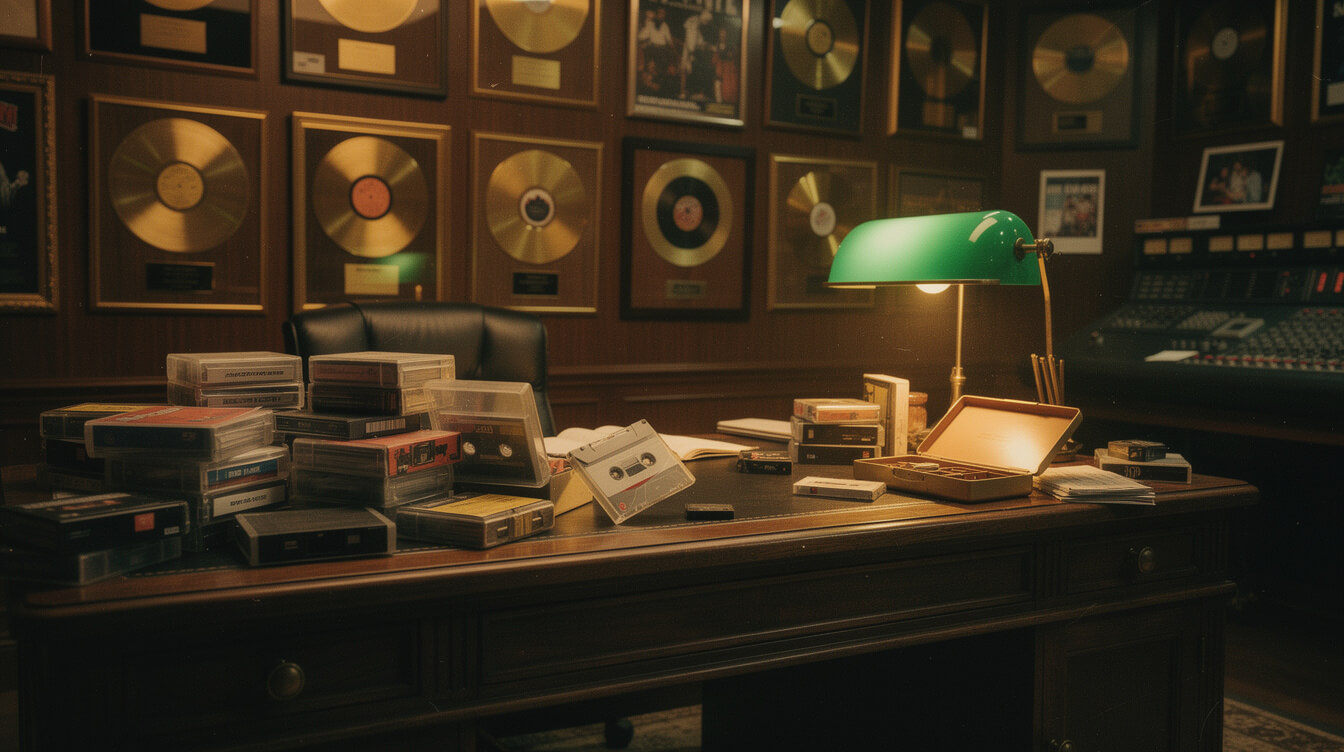
Mr. Scarface Is Back arrived in October 1991 on Rap-A-Lot / Priority — the first Scarface solo album, released while We Can’t Be Stopped was still on the charts as a group project. The record went gold, peaked at #23 on the Billboard 200, and immediately made clear that the group’s writer’s-block anchor could carry a full LP by himself. “Money and the Power,” “A Minute to Pray and a Second to Die,” and the title track set the template: cinematic first-person, Tony Montana as literary reference point, and production (Mike Dean and John Bido doing much of the heavy lifting) that leaned dark, live-instrument, and unrushed. Radio still would not play him. He sold anyway.
Then The World Is Yours (August 1993) went platinum and peaked at #7 on the Billboard 200 — Face’s first top-ten album and the moment the industry stopped treating him as a Geto Boys sideman. The record’s Tony Montana thesis, laid out in cuts like “Now I Feel Ya” and the title track, was not a costume — it was Face’s way of making a Southern Black man’s ambition, paranoia, and appetite for revenge speak in a movie-scale vocabulary. Southern hip-hop had not sounded like that before. Everything from UGK’s Ridin’ Dirty to 8Ball & MJG to early T.I. carries fingerprints from this era of Face’s writing.
The Diary (1994): The Southern Rap Rulebook — I Seen a Man Die

If you can only put one Scarface record in the crate, put The Diary. Released October 18, 1994 on Rap-A-Lot / Noo Trybe, it clocked 42 minutes across 12 tracks and went platinum before radio even acknowledged it existed. Every serious Southern rapper who came after him has quoted from it, sampled from it, or rewritten pieces of it. Rolling Stone‘s eventual “500 Greatest Albums of All Time” placement was 25 years late but the streets never needed the certification.
The record is anchored by two tracks that reshaped what a rap album could be about. “I Seen a Man Die” is a first-person narrative from a man just released from prison who watches a friend get shot on the block before the day ends — Face wrote the eulogy and the crime scene in the same verse, the introspection and the reportage collapsed into one voice. “Never Seen a Man Cry” — sometimes titled “Never Seen a Man Die” on later pressings — is the internal monologue of a man attending a funeral of someone he grew up with, wrestling with what it means to survive the neighborhood he built himself in. There is no bravado in either of them. There is barely a hook. They are essays with drum machines.
“It’s one thing for someone to rap and paint you a picture that you see; it’s another one for a rapper to rap and you feel it.” — Charlie Braxton, music historian, on Scarface.
Around The Diary the Scarface method solidifies: Mike Dean production, live bass, ride-cymbal warmth, no shouted hooks, verses that read like a diary because they are one. Compare it to what was ranking on Billboard in Q4 1994 — Bone Thugs’ Creepin on ah Come Up, Warren G’s Regulate, Method Man’s Tical — and the closest tonal cousin is Illmatic. That is not a Southern rap sentence a lot of critics were willing to write in 1994. It is one you have to write in 2026.
The Fix (2002): Kanye West, Nas, Beanie Sigel — The Comeback Album That Rewrote Southern Rap

By 2000 Face had already collected the trophy nobody expected — Source Awards Lyricist of the Year 2001, on the strength of The Last of a Dying Breed (2000). That win mattered because The Source, in 2001, still functioned as the industry’s coastal-guarded taste-making bible. Naming a Houston rapper Lyricist of the Year over Jay-Z and Nas was a category-error that acknowledged Face had been quietly out-writing most of the field for a decade.
The Fix arrived August 6, 2002 — release-day exactly 24 years ago as of this writing — and it detonated. Def Jam South, where Scarface was now president, put the marketing weight behind it. The production credits alone reset the room: Kanye West (still an unknown Chicago producer before The College Dropout) laced “Guess Who’s Back” with a soul-sample chop that would become his entire signature; The Neptunes and Nottz filled out the boards. The guest features read like a summit: Nas on “In Between Us,” Jay-Z and Beanie Sigel on “Guess Who’s Back,” Faith Evans on “In Cold Blood,” Kelly Price on the mercy-request “On My Block.”
The critical response was near-unanimous — Vibe called it a Southern rap masterpiece, Rolling Stone gave it four stars, and it debuted at #4 on the Billboard 200. Face’s own read on the record was quiet: he told MTV in 2002 that after The Diary and The Fix he had said everything he needed to say and would probably retire. He didn’t. But The Fix did what almost no rap album released after the Napster era managed to do — it made a critical and commercial case that a Southern veteran could sit at the head of the table without asking permission.
Politics, the Kidney Transplant & the Diary of a Madman Memoir

The 2010s were not kind. Face served time in 2010–2011 for unpaid child support in four cases; The Habit, the album he was recording with John Legend and Drake features and an Eminem production, was shelved indefinitely and remains unreleased as of 2026. His comeback record Deeply Rooted (September 2015) reset the artistic clock — a stripped-back, spiritually-oriented album that critics almost universally described as his sharpest writing in a decade — and the same year he collected the I Am Hip Hop award at the 2015 BET Hip Hop Awards, hip-hop’s lifetime-achievement tribute.
April 21, 2015 brought Diary of a Madman, his memoir with Benjamin Meadows-Ingram (Dey Street / HarperCollins). The book covers what the songs never quite could: the psychiatric ward at 14, the Rap-A-Lot signing, the Def Jam South presidency, the falling out with Willie D, and the private religious life. It reads like his verses do — direct, no filler, occasionally devastating.
On June 10, 2019, one day after Bushwick Bill’s death, Face announced his campaign for Houston City Council District D. His platform: “putting the neighbor back in the hood” — the motto of Positive Purpose Movement, the education-and-empowerment nonprofit he founded to work with Houston-area schools. He was quoted in The Washington Post saying “Scarface is dead” — meaning the persona, not the man. He finished the primary strong enough to force a runoff, and was defeated by former educator Carolyn Evans-Shabazz on December 15, 2019. He kept the nonprofit running.
In March 2020 he tested positive for COVID-19; the virus attacked his kidneys, put him on dialysis, and on September 14, 2021, his son donated a kidney and Face received a transplant. He has spoken publicly and often since about kidney health, Black organ-donation disparities, and the private cost of being a public artist. He converted to Islam in 2006; his post-transplant interviews frame the faith as the ballast that kept him working through the health crisis. The rebuilt Geto Boys (Face, Willie D, and Bill’s estate) staged a farewell tour in 2020 that COVID interrupted; a reformation project has been rumored in Houston music circles since 2023 but nothing has surfaced on wax.
Scarface’s Legacy in Modern Southern Hip-Hop: UGK, Outkast, T.I., Kendrick, JID

You can trace almost every consequential Southern rapper of the last 25 years back to something Face did first. Pimp C and Bun B of UGK have both said on record that Scarface was the reason a Port Arthur rapper could imagine writing about grown-man ambivalence instead of just party-rap; Face produced three tracks on UGK’s 2007 Underground Kingz double album, closing that loop personally. Our companion piece on Slim Thug’s Already Platinum era lays out how the Houston lineage kept moving after Face opened the door.
Outkast’s André 3000 has cited Face’s writing as a permission slip for his own more introspective turn on Aquemini and Stankonia. T.I., in his King and T.I. vs. T.I.P. era, essentially cast himself as the Atlanta grandson of the Scarface template — narrative first person, cinematic references, the internal ambivalence framed as strength rather than weakness. Kendrick Lamar quoted the “I Seen a Man Die” moral universe explicitly on good kid, m.A.A.d city. JID — one of the sharpest lyricists of the current Dreamville generation — has named Face in interviews as a reason he writes as densely as he does.

Face was inducted into the Houston Chronicle’s Southern hip-hop canon long before the coastal press caught up. The 2024 Rolling Stone “Greatest Rappers of All Time” list placed him inside the top 40, above several coastal contemporaries who were still headlining major-label rollouts while Face was making his best records on an independent Houston label. The Ringer, Pitchfork, and Complex have all published “Scarface is the greatest Southern rapper ever” essays in the last five years. That consensus is not new. The pieces are just finally catching up to what UGK, Big K.R.I.T., Killer Mike, and Kendrick have been saying on wax for two decades.
Frequently Asked Questions About the Scarface Rapper
What is the scarface rapper’s real name? Brad Terrence Jordan, born November 9, 1970, in Houston, Texas. He turns 56 in November 2026.
Is Scarface still a member of the Geto Boys? Yes — Scarface is the only Geto Boys member who has remained with the group since the 1989 lineup revamp. The classic trio (Face, Willie D, Bushwick Bill) reunited multiple times before Bushwick Bill’s death in June 2019. A rebuilt-lineup farewell tour was announced in 2020 but curtailed by the COVID pandemic.
What is Scarface’s best album? Critical consensus points to The Diary (1994) as his single greatest work, though The Fix (2002) has an argument as his most fully realized studio record. Diehards will fight you for The Untouchable (1997) or The Last of a Dying Breed (2000). Start with The Diary. Then work chronologically.
Did Scarface really run for office? Yes. In 2019 he ran for Houston City Council District D and made it to a December 15, 2019 runoff, losing to former educator Carolyn Evans-Shabazz. He continues to lead the Positive Purpose Movement nonprofit he founded.
What is Scarface’s kidney story? In March 2020 he was hospitalized with COVID-19; the virus damaged his renal system to the point of requiring dialysis. On September 14, 2021, he received a kidney transplant from his son. He has since become a vocal advocate for organ donation, particularly in the Black community.
Who did Scarface sign to Def Jam South? As president of Def Jam South from 2000 to 2005, Scarface’s most consequential signing was Ludacris — a bet that reset Atlanta rap’s commercial ceiling for the entire 2000s.
Final Thoughts: Why Scarface Still Matters in 2026
The scarface rapper is one of a handful of American musicians whose reputation gets denser, not thinner, with time. He does not tour on nostalgia. He does not do the podcast circuit for clicks. He has, at various points in the last decade, quietly disappeared from public life for a year at a time and returned with an interview so plainly reasoned that it makes half of what is trending on rap Twitter look silly. What makes him permanent is the same thing that made him inevitable in 1991: he writes about ambivalence and grief with the same technical care that most rappers reserve for punchlines. Nobody else in the culture has kept doing that, at that level, for 35 years.
If you are new to him, start with The Diary, then The Fix, then The Last of a Dying Breed, then Mr. Scarface Is Back. Read Diary of a Madman when you want the connective tissue between the records. Watch his 2015 BET I Am Hip Hop acceptance speech when you want to hear what a rapper who has nothing left to prove sounds like. And if you already know him, keep saying the name — because every year a new generation of listeners discovers Southern rap from the sample-and-stream end of it, and the writer who taught the whole region how to hold sadness and menace in the same bar still needs the credit.
Wear the Rap-A-Lot Era
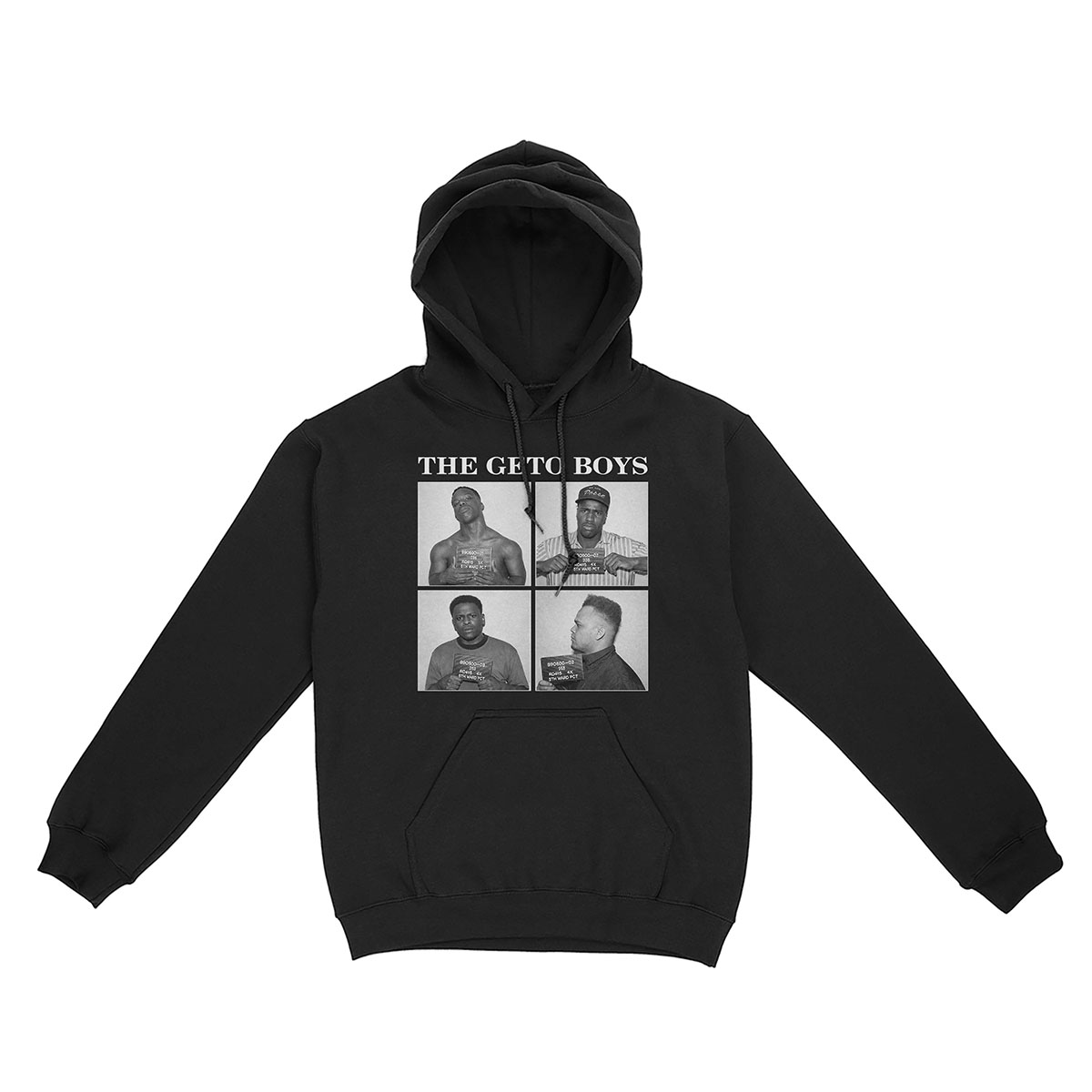
The Geto Boys City Under Siege hoodie is a Houston-heritage pull for anyone who came up on Face, Bushwick Bill, and Willie D. Heavyweight cotton fleece, printed to last, shipped from our shop.
Long-Reads Like This, In Your Inbox
Get weekly hip-hop deep dives, artist retrospectives, and first-look drops on Custom Creative merch. No corporate list-nonsense. Just the culture.

🎧 Never Miss a Drop
Exclusive product releases, hip-hop deep dives, and member-only discounts. Straight to your inbox.
Free forever. No spam. Unsubscribe anytime.

Get the Culture, Delivered
Deep dives into hip-hop history, exclusive product drops, and discounts sent straight to your inbox. No spam, just culture.
Join 2,000+ hip-hop heads already in the loop. Unsubscribe anytime.