Rap-A-Lot Records: How J. Prince Built the Independent Southern Rap Blueprint From a Houston Car Lot
Before Houston had a skyline full of platinum plaques, it had a guy selling exotic used cars on consignment. Rap-A-Lot Records started there, on a stretch of Shepherd in Houston lined with car lots, because James “J. Prince” Smith wanted to keep his little brother off the streets. Four decades later, Rap-A-Lot Records is the label that put Southern hardcore rap on the national map, gave the world the Geto Boys and Scarface, and drew up the independent playbook that No Limit, Cash Money and Suave House would follow to empire. This is the full story: the car lot, the lineup purges, the distribution fight that turned a Houston indie into a national headline, the deep bench, and why the label is still standing at 40.
Most of what ranks for this label online is a streaming playlist, a roster scrape or a vinyl storefront. What follows is the business story, told with receipts, much of it in J. Prince’s own words from his 2012 sit-down with NPR.
From a Car Lot on Shepherd: How Rap-A-Lot Records Started
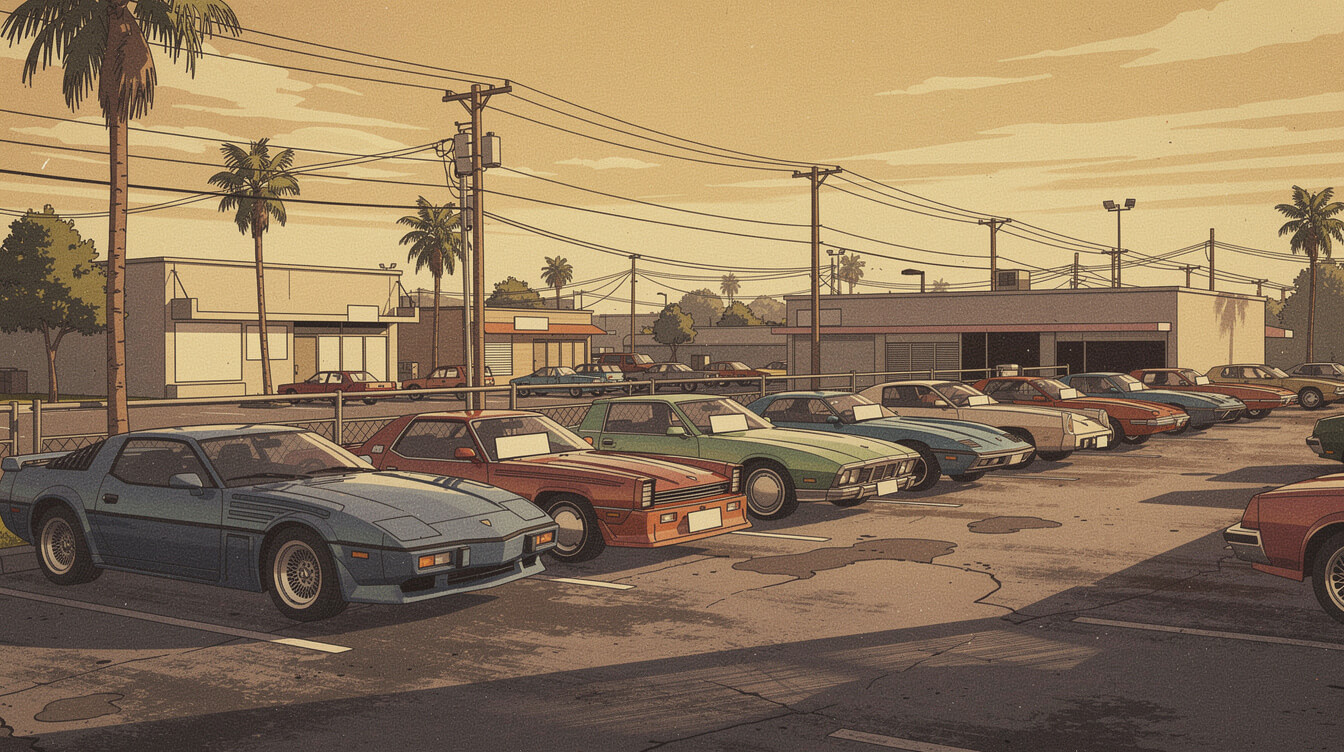
J. Prince grew up in Houston’s Fifth Ward, and he has never been shy about what drove him. “I grew up where poverty was a serious burden on my family,” he told NPR’s Andrew Noz in 2012. “I wanted to break that poverty curse.” By his early twenties he was on Shepherd, a Houston street he described as “full of car lots”, moving used exotics that friends and athletes let him sell on consignment and clearing five or ten grand a car. Houstonia’s profile of Prince puts the operation in an abandoned building he bought on Shepherd and turned into Smith Auto Sales, with the label getting started upstairs on the second floor.
Sir Rap-A-Lot and the deal that started it all
The label is literally named after a person. Prince’s younger brother, Thelton, rapped as Sir Rap-A-Lot, and the company began as a way out for him. “I actually started the company for him because I didn’t want my brother on the streets, hustling in the jungle that we were living in at the time,” Prince said. He made the same offer to a couple of other teenagers who had stopped going to school: go back to class, and he’d back them in rap. That’s a record label founded on a truancy deal, and it tells you everything about how Prince operated. Every move was leverage.
1986 or 1987? Settling the founding date
Sources disagree on the year. NPR’s 2012 anniversary piece dated the label to 1987, and even Wikipedia gives both 1986 and 1987 in different sentences. The label settles it itself: Rap-A-Lot treats 1986 as year one, which is why it launched its 40th-anniversary campaign in April 2026. The first Ghetto Boys single, “Car Freak”, is dated 1986 as well. Call it the mid-’80s, and know that the people who own the masters say 1986.
The Def Jam inspiration, with no Def Jam map
Prince has always named Russell Simmons and Def Jam as the model. The catch was that nobody in New York was handing a Fifth Ward car dealer a blueprint. “Being from the South I was totally isolated from getting wisdom from those guys,” he told NPR, adding that some industry people he asked for advice “gave me the wrong information to try to get rid of me.” He also said East Coast labels had DJs and their own people “controlling the airwaves” in Houston. He read the industry the way he read the streets, as a turf game, and decided the South needed its own turf. With engineer Cliff Blodget running the boards in the early years, Rap-A-Lot set out to build it.
The Geto Boys: The Group Rap-A-Lot Records Built, Then Rebuilt
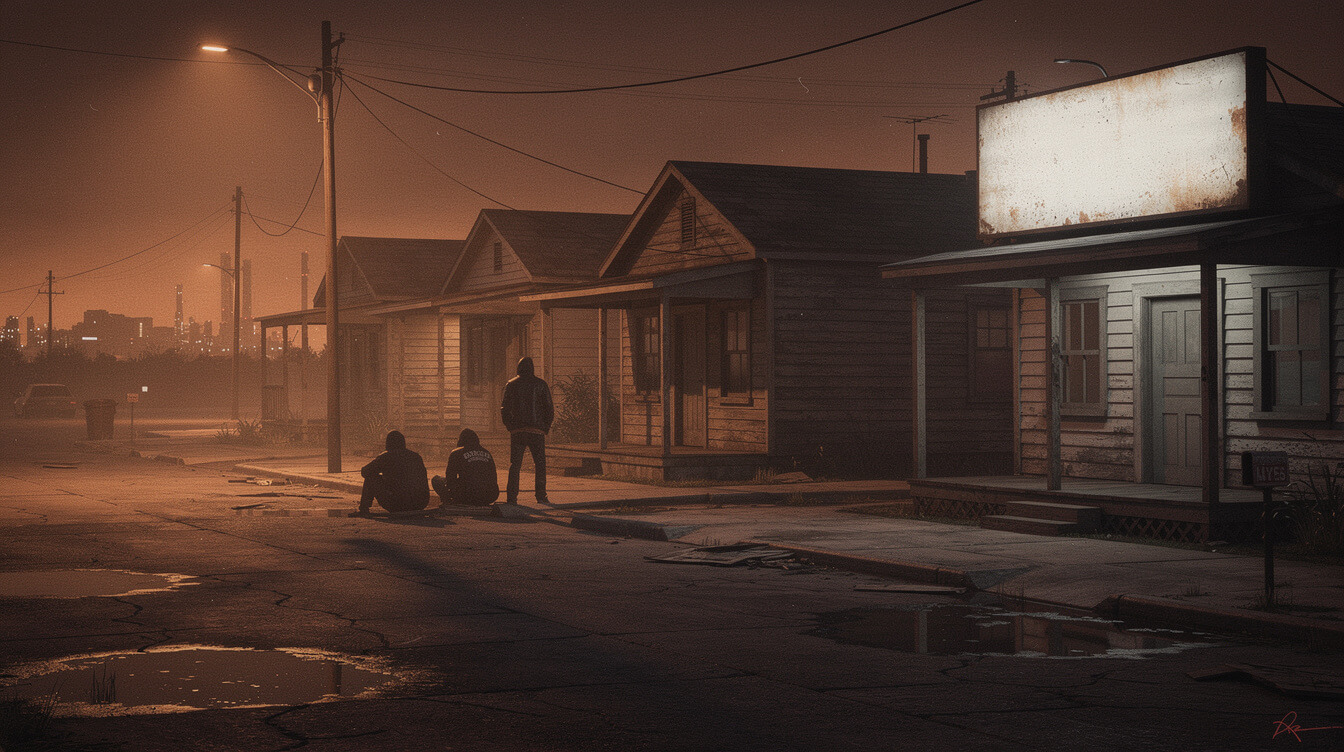
Prince’s first big creative decision wasn’t an artist. It was a name. “I fell in love with the name first,” he said of the Ghetto Boys. “There were ghettos all over the world and I thought that it was a name that I could replenish over and over again if I wanted to.” That’s exactly what he did. The Geto Boys are best understood as a franchise Prince kept recasting until the chemistry clicked.
Lineup one, two and three
The first Ghetto Boys were teenagers: Raheem, Sire Jukebox and Sir Rap-A-Lot himself. They cut “Car Freak” in 1986. By the 1988 debut album Making Trouble, the roster had turned over to Prince Johnny C, Sire Jukebox, DJ Ready Red and a dancer then called Little Billy, later Bushwick Bill. Those early records leaned on the Run-DMC template, and Prince admits he let the members write their own way because he was “in another business trying to make money.”
Then he went all in. “I had invested so much money into the group I came to a stage where I said, ‘This is my last piece of money and I’mma do this my way,'” he told NPR. The original members thought the subject matter he wanted was “too deep”, so he cleared the room. In came two rappers from outside the circle: a young Houston MC named Brad Jordan, soon to be Scarface, and Willie D. Bushwick Bill moved from dancer to rapper, and the classic three-man lineup debuted on 1989’s Grip It! On That Other Level. Somewhere along the way “Ghetto” lost its “h” and became “Geto”.
Replacing your own brother
The cost was personal. Making the new lineup work meant moving Sir Rap-A-Lot aside for Scarface. “I don’t think my brother liked it. A lot of my family members didn’t like it,” Prince said. “A lot of them didn’t understand it until I bought them houses and cars later … I was a genius then.” It’s one of the most candid lines any label founder has given about the gap between family and business, and the label’s whole history is written in that gap.
Why the Geto Boys mattered
Prince described their dark, explicit material as a mirror held up to Fifth Ward, “things that we had lived through in our surroundings.” Critics have pointed to the same quality. NPR’s Noz argued that the best street rap of that era took “deeply emotional looks at the criminal cultures and ghettos of America while explicitly indicting the systems that created them,” and named Rap-A-Lot as the label that best embodied it. If you want that era on your chest, our Geto Boys City Under Siege T-Shirt carries the Fifth Ward grit without a tour-bootleg print job.
The Geffen Fight and the Distribution Model That Kept Rap-A-Lot Independent
Here’s where Rap-A-Lot stops being a regional story and becomes a business-school case. Prince’s first big deal wasn’t a buyout. It was a distribution partnership with someone he respected.
Rick Rubin, Def American and the album Geffen wouldn’t touch
“My first move was with Rick Rubin,” Prince told NPR, “because of the respect I had for him being one of the creators of Def Jam.” Rubin’s Def American label was distributed by Geffen at the time, and Prince wanted that machine behind his group. Rubin remixed and re-recorded material from Grip It! into a new self-titled album, The Geto Boys (1990). Then Geffen refused to distribute it. The New York Times covered the pullout in August 1990, and the album’s manufacturer also declined to press it. David Geffen’s stated objection, repeated to NPR two decades later, was the album’s lyrics about violence against women. Prince called it a double standard, pointing to rock acts on the same company with material he considered just as extreme.
The fallout reshaped more than one label. Def American’s deal with Geffen ended, and The Geto Boys came out through Warner Bros. that fall. Prince says the record was essentially the album he had already sold independently plus four new songs. By his own count, the Warner version moved about another half-million copies. Just as important, he says he then talked Rubin into letting the group go.
Priority and the release-volume formula
The next deal is the one that built the model. In 1991 Prince signed with Priority Records, which he described as “an established independent with a major distribution deal” with people who “knew how to work the records properly at retail.” The first big result was the Geto Boys’ We Can’t Be Stopped (July 1991), which reached No. 24 on the Billboard 200 and went platinum in early 1992. Its single, “Mind Playing Tricks on Me”, climbed to No. 23 on the Hot 100, the group’s highest-charting single and still one of the defining songs to come out of the South.
Then Prince changed the math. “I started releasing a crazy amount of records a year,” he said. “That was foreign land to a lot of the labels.” The release list backs him up: in 1992 alone, Rap-A-Lot put out records from Ganksta N-I-P, Seagram, Too Much Trouble, Bushwick Bill, Willie D, Raheem and more.
Ownership in Houston, muscle from the majors
The structure is the real jewel. For two decades Rap-A-Lot kept ownership at home and rented major-label distribution: Priority from 1991 into the mid-’90s, then Noo Trybe/Virgin, then Virgin through the early 2000s, then Asylum in a 2005 deal that also brought in Houston’s Swisha House and Memphis’s Hypnotize Minds, then Universal’s Fontana around 2010. NPR summed it up as a business model that “both circumvented those corporations and used their muscle to his advantage.” Being independent was never romantic. Prince remembered distributors who would sell his records and then make collecting the money a fight. “So I was glad to graduate from that independent world,” he said. In practice, he graduated to a smarter kind of independence.
The Scarface Era: Rap-A-Lot Records’ Solo Catalog

If the Geto Boys were the franchise, Scarface was the franchise player. We covered his life and full career in Scarface the Rapper at 55. Here’s what his solo run meant to the label’s balance sheet and reputation.
Mr. Scarface Is Back to The Diary
His solo debut, Mr. Scarface Is Back, landed in October 1991 on Rap-A-Lot/Priority, the same year as We Can’t Be Stopped. A Geto Boys member having a group album and a solo album in the same year is the release-volume formula at work. The World Is Yours followed in 1993. Then, in October 1994, came The Diary, the album many heads rank as his best. Its bleak centerpiece, “I Seen a Man Die”, was one of the tracks NPR chose for its Rap-A-Lot retrospective. In 2026 the label picked The Diary to open its 40th-anniversary vinyl campaign. Choosing that album as the first reissue says a lot.
The Untouchable goes No. 1
The commercial peak came on March 11, 1997. The Untouchable debuted at No. 1 on the Billboard 200, Scarface’s only chart-topping album, and was certified platinum that May. A grown, introspective Houston rapper on an independent label with a major distribution deal had the No. 1 album in America. My Homies, a double album, followed in 1998 and also went platinum. The Last of a Dying Breed (2000) earned him Lyricist of the Year at the 2001 Source Hip-Hop Music Awards. Getty’s photo from that night shows J. Prince on stage behind him.
The Fix is not a Rap-A-Lot album
This trips up a lot of catalog lists. The Fix (2002) came out on Def Jam South, the imprint Scarface himself ran in the early 2000s, with J. Prince credited behind the scenes. It’s a classic, but it isn’t a Rap-A-Lot release. Face came back to the label later for My Homies Part 2 (2006), Made (2007) and Emeritus (2008). That loyalty is the clearest proof the relationship ran deeper than a contract.
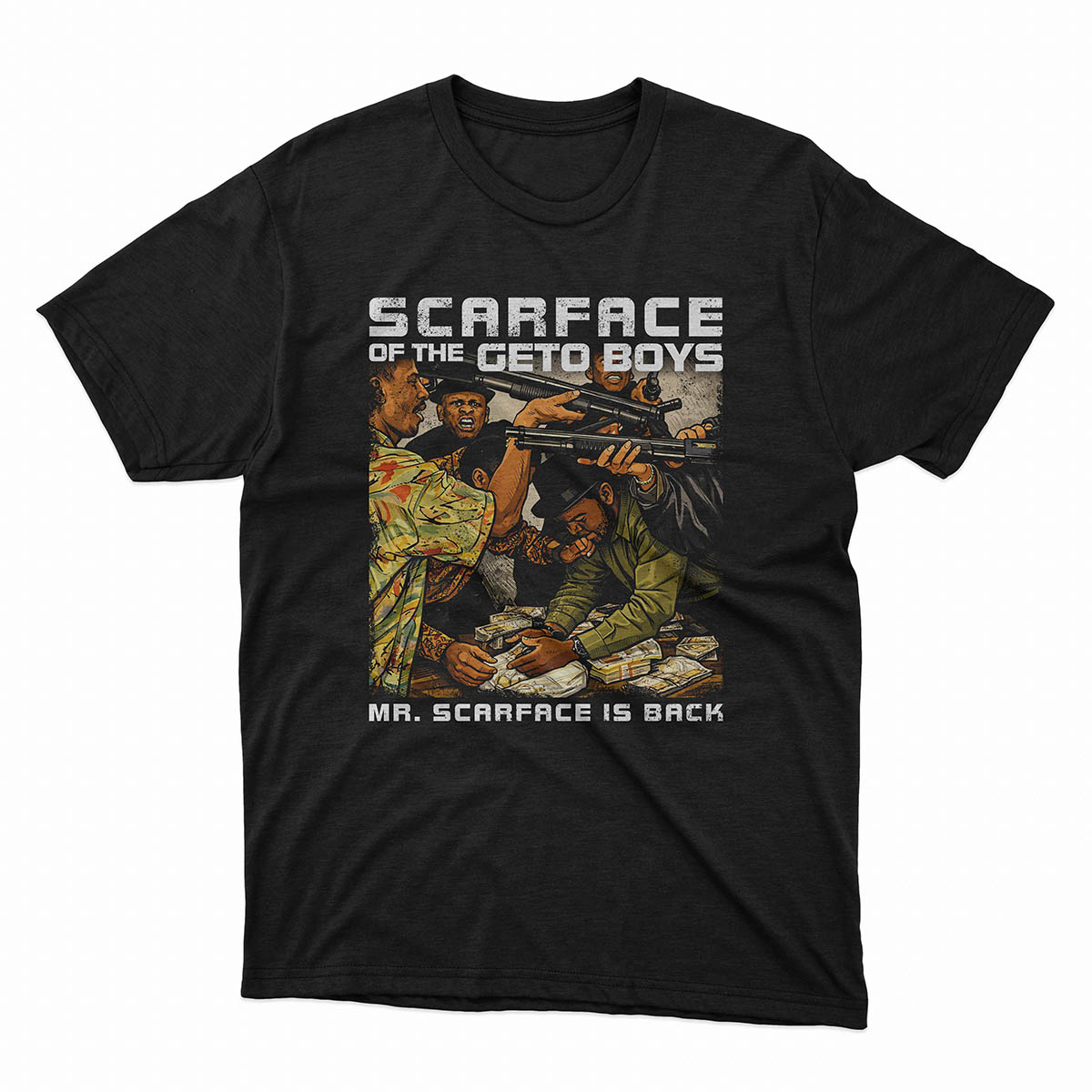
To rep the record that started the solo run, the Scarface Mr. Scarface Is Back T-Shirt puts the 1991 debut front and center.
Rep the Solo Debut That Started the Run
October 1991, Rap-A-Lot/Priority, same year as We Can’t Be Stopped. The Scarface Mr. Scarface Is Back T-Shirt honors the record that turned a Geto Boy into Houston’s most respected solo voice.
The Deep Bench: Devin the Dude, Z-Ro, Bun B, Pimp C and More

“It was like flies coming to honey,” Prince said of the demos that poured in once the label got hot, and the phrase became the title of NPR’s piece. The catalog reads like an underground Texas encyclopedia, with a few out-of-state surprises.
The ’90s run: Fifth Ward and beyond
The first-wave roster went well beyond the Geto Boys: Ganksta N-I-P’s The South Park Psycho (1992), Seagram’s The Dark Roads (1992), the 5th Ward Boyz’s Ghetto Dope (1993) and Big Mike’s Somethin’ Serious (1994). Scarface’s Facemob dropped The Other Side of the Law in 1996. Rap-A-Lot also reached outside Texas. Chicago’s Do or Die released Picture This (1996) through Rap-A-Lot, and the Bay Area’s Yukmouth released his double-disc debut Thugged Out: The Albulation there in 1998.
Devin the Dude and the Odd Squad
Ask Prince which Rap-A-Lot record got slept on and he answers immediately: “The Odd Squad. The Odd Squad was a group before their time.” Their 1994 album Fadanuf Fa Erybody!! introduced Devin the Dude, who went solo with The Dude (1998) and stayed for Just Tryin’ ta Live (2002), To tha X-Treme (2004) and Waitin’ to Inhale (2007). NPR called him “the hilariously introverted stoner”. To a generation of MCs he’s the definitive rapper’s rapper.
Z-Ro, the Houston loner
Z-Ro arrived with The Life of Joseph W. McVey in 2004, followed by Let the Truth Be Told (2005) and I’m Still Livin’ (2006), released while he was incarcerated. That’s the “tragically introverted loner” half of NPR’s pairing, and his Rap-A-Lot run lasted into the early 2010s. His harmonized, wounded delivery is now a whole Houston subgenre’s DNA.
UGK’s solo era, with an accurate label note
UGK the group belonged to Jive, which is why our UGK Ridin’ Dirty T-Shirt belongs to a different label story. The solo albums were Rap-A-Lot, through the Asylum deal. Bun B’s Trill landed in October 2005 with the posse cut “Get Throwed”, featuring Pimp C, Young Jeezy, Jay-Z and Z-Ro. Pimp C’s Pimpalation followed in July 2006, and Bun’s II Trill in 2008. NPR ran a 2006 photo of Prince standing with Pimp C, a reminder that the label was home base for Port Arthur’s finest during one of Southern rap’s biggest commercial peaks.
The Blueprint: How Rap-A-Lot Records Shaped No Limit, Cash Money and Suave House
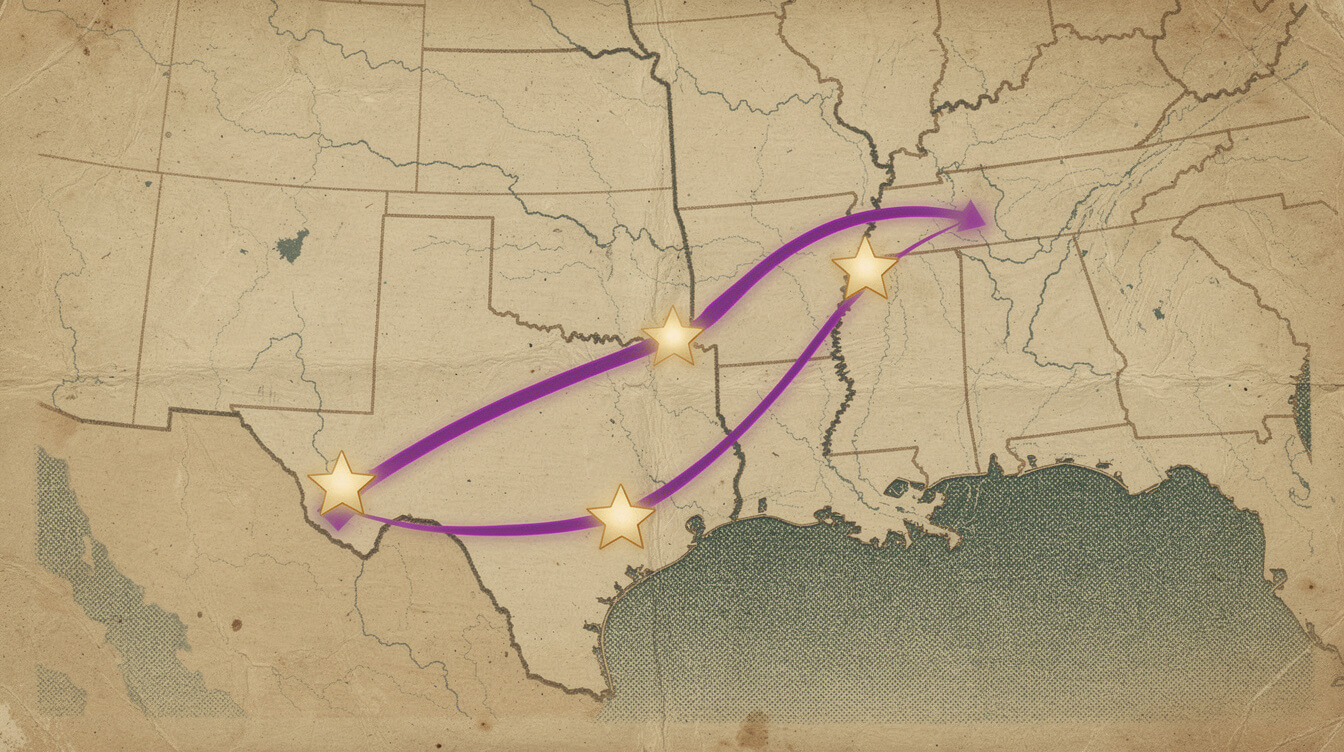
NPR’s thesis line is short: “Late ’90s Southern rap empires like Suave House, No Limit and Cash Money followed his blueprint to mainstream fame.” Prince’s version names names: the release-volume formula is “the formula that all my good friends from Master P to Cash Money to Tony Draper, all of these guys followed and successfully was doing.” Tony Draper ran Houston’s Suave House, home to 8Ball & MJG.
The four pillars of the playbook
- Own the masters, rent the pipeline. Prince kept Rap-A-Lot Houston-owned while using Priority’s and later Virgin’s retail muscle. Master P’s No Limit ran its own distribution deal through Priority. Cash Money’s 1998 Universal deal is the same shape at a bigger scale.
- Flood the zone. Release so many records that your label becomes the regional sound. Rap-A-Lot did it in Houston in the early ’90s. No Limit did it nationally later in the decade.
- Build a franchise, not just an act. The Geto Boys were a name Prince could “replenish”, and the solo spinoffs (Scarface, Willie D, Bushwick Bill) fed the catalog. No Limit’s family of solo albums and Cash Money’s Hot Boys spinoffs ran the same play.
- Manage everything. Prince told NPR he ran a 360-style operation, managing and running the label at once, long before majors made 360 deals standard. “They told me I was wrong,” he said, “and now they’re trying to survive with that same contract.”
Where the lines connect
The ties are personal, not just theoretical. By 2012 Juvenile, Cash Money’s biggest early solo star, was recording for Rap-A-Lot. Rejuvenation (2012) and The Fundamentals (2014) came out on the label. For the No Limit side of the story, see our breakdowns of Master P songs and the business move behind each hit and the No Limit films playbook. For the head-to-head, revisit the Cash Money vs. No Limit Verzuz. Prince’s blunt 2012 view of whether anyone could repeat it? “Well … no not really.”
Rap-A-Lot Records Today: Jas Prince, Drake and the 40th Anniversary
The label’s modern chapter runs through the family, a book and a vault.
The Drake connection
Rap-A-Lot’s most famous modern footnote isn’t a Rap-A-Lot artist at all. J. Prince’s son Jas Prince found a young Toronto rapper named Drake on MySpace and played his music for Lil Wayne in a car in Houston. In Jas’s telling to The Fader, Drake was flown to Houston the next day. Accounts put the meeting around 2007–08, and Drake signed to Young Money in 2009. The Prince family’s role as early mentors is well documented. Drake wrote the foreword to J. Prince’s 2018 memoir, The Art & Science of Respect.
From the 25th to the 40th
For the 25th anniversary, the label released a box set with a documentary DVD, two discs of greatest hits and a tribute disc of covers by Lil Wayne, Rick Ross, T.I. and others. The 40th is a full campaign. On April 27, 2026, Rap-A-Lot announced a yearlong celebration, as reported by Billboard, opening with vinyl reissues of Scarface’s The Diary (June 19, with a previously unreleased bonus track, “Ease Up Now”) and the Geto Boys’ We Can’t Be Stopped for its 35th (July 10). Reissue partner Get On Down’s anniversary collection has since grown to include Do or Die’s Picture This for its 30th, Bun B’s Trill, Pimp C’s Pimpalation and Scarface’s NPR Tiny Desk set on wax, cassette and CD.
Rap-A-Lot Records FAQ
Is Rap-A-Lot Records still in business?
Yes. Rap-A-Lot is active in 2026 and running a yearlong 40th-anniversary campaign of catalog reissues that launched on April 27, 2026.
Who owns Rap-A-Lot Records?
Founder James “J. Prince” Smith still leads the label he started in Houston in the mid-’80s.
Who has been signed to Rap-A-Lot?
The core legacy roster includes the Geto Boys, Scarface, Willie D, Bushwick Bill, Devin the Dude and the Odd Squad, Z-Ro, Bun B and Pimp C (as solo artists), Big Mike, Ganksta N-I-P, the 5th Ward Boyz, Seagram, Do or Die, Yukmouth, Tela, Trae tha Truth and, later, Juvenile.
What year was Rap-A-Lot Records founded?
The label marks 1986 as its founding year, which is why 2026 is its 40th anniversary. Some earlier coverage, including NPR’s 2012 retrospective, used 1987.
Was UGK on Rap-A-Lot?
Not as a group. UGK’s albums came out on Jive. Bun B’s Trill and II Trill and Pimp C’s Pimpalation were Rap-A-Lot solo releases.
What was Rap-A-Lot’s first big hit?
The breakthrough was the Geto Boys’ “Mind Playing Tricks on Me” (1991), a No. 23 Hot 100 single from the platinum album We Can’t Be Stopped.
Why is Rap-A-Lot called the Southern rap blueprint?
Because it proved a Southern independent could own its catalog, release at high volume and borrow major-label distribution without selling out. Master P’s No Limit, Cash Money and Suave House all ran versions of that model.
Final Word: Respect the Lot
Strip away the mythology and Rap-A-Lot Records comes down to a few hard choices: a brother replaced for the good of the group, a distribution deal walked away from on principle, a release schedule the majors said was crazy, and ownership that never left Houston. Every Southern label that got rich in the late ’90s owes something to a used-car lot on Shepherd. If you want to wear that history, the Geto Boys City Under Siege Hoodie and the Scarface Mr. Scarface Is Back Hoodie are cut for exactly that. Forty years in, the lot is still open.
Get the Culture in Your Inbox
Label histories, liner-note receipts, anniversaries and first dibs on new drops. No spam, just hip-hop.

🎧 Never Miss a Drop
Exclusive product releases, hip-hop deep dives, and member-only discounts. Straight to your inbox.
Free forever. No spam. Unsubscribe anytime.

Get the Culture, Delivered
Deep dives into hip-hop history, exclusive product drops, and discounts sent straight to your inbox. No spam, just culture.
Join 2,000+ hip-hop heads already in the loop. Unsubscribe anytime.