90s Hip-Hop Fashion: The Era-by-Era Blueprint That Built Modern Streetwear
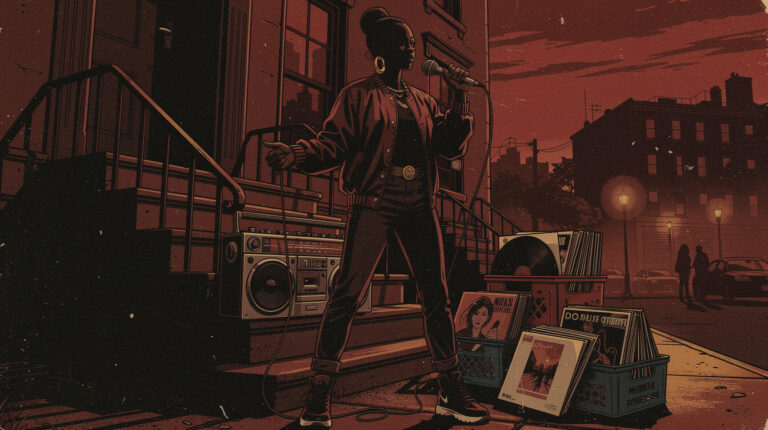
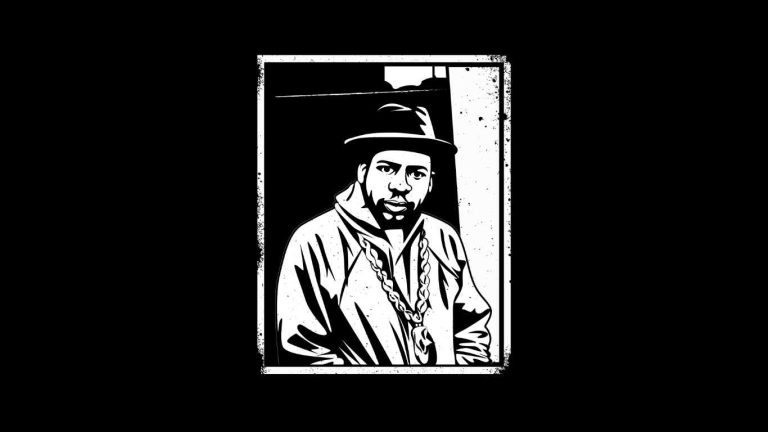
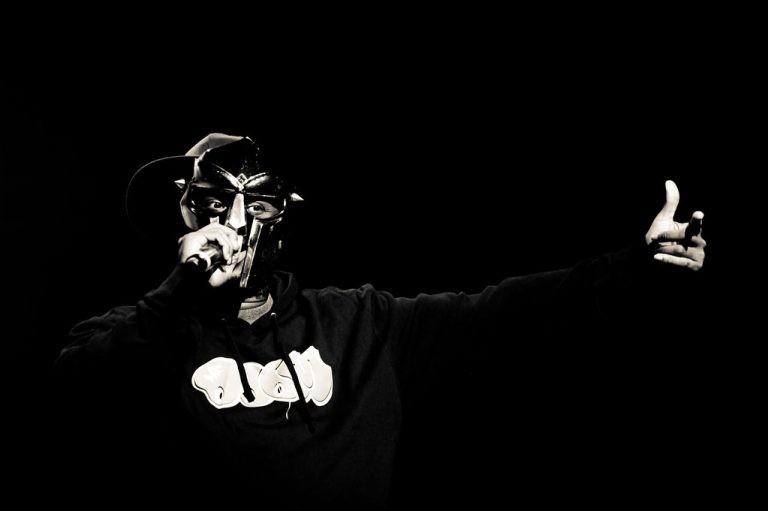
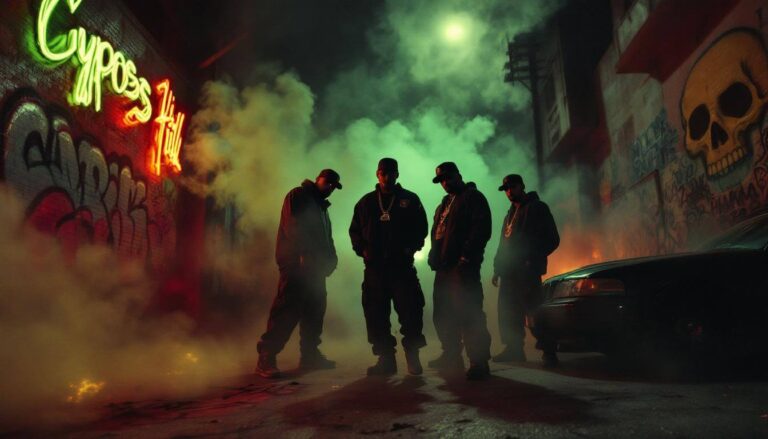
90s hip hop fashion wasn’t a single look — that’s the lie the costume aisle keeps telling. Walk into any Halloween store and you’ll see one “rapper” outfit: backwards cap, gold chain, baggy jeans, maybe a bandana. That’s a cartoon. The real decade was four distinct movements stacked back-to-back, each one rebelling against the one before it. From 1990 to 1999, hip-hop went from Africa medallions to Versace shades to platinum grills in the span of nine years — and every shift was a fight over what the culture was supposed to look like.
This is the era-by-era blueprint. Not the costume cheat sheet, not a Wikipedia summary, not a brand-name listicle. We’re breaking the 90s into its four actual sub-eras, layering the Black-owned brand entrepreneurs who built it underneath, and tracking the crossover moment where street fashion swallowed Fifth Avenue whole. By the end you’ll see why 2026 streetwear — Tyler, Kendrick, Travis, the whole Y2K revival — is just a remix of stuff that was already running before Bad Boy bought a Bentley.
Why 90s Hip-Hop Fashion Was Four Distinct Eras, Not One
The decade had a beat-clock you could read off album drops. 1990: People’s Instinctive Travels and the Paths of Rhythm, 3 Feet High and Rising a year earlier — the Native Tongues set the tone. 1993: Enter the Wu-Tang (36 Chambers) hit, and the aesthetic flipped tactical overnight. 1997: Life After Death dropped two weeks after Biggie was killed, and Bad Boy’s shiny-suit era peaked in mourning. 1999: Tha Block Is Hot, Vol. 3: Life and Times of S. Carter, I Got the Hook-Up — Cash Money, Roc-A-Fella, and No Limit moved hip-hop’s center of gravity south and turned the focus toward throwbacks and platinum.
Each shift was a generational reset. The kids wearing dashikis in 1991 were not the same kids wearing Carhartt in 1994, who were not the same crowd in Coogi by 1996, who were not the audience buying Hardwood Classics throwbacks in 1999. Treating the decade as one closet erases the fights between them — and there were fights. Wu-Tang explicitly rejected the rainbow palette of Native Tongues. Bad Boy explicitly rejected Wu’s grime. Cash Money explicitly rejected Bad Boy’s mafioso polish. The culture was always arguing with itself.
Here’s the structure we’ll use: four eras, each with its sound, its silhouette, its anchor brands, and its anchor records. We’ll cover what the look was, not just what it looks like in vintage photos — meaning the cultural pressure that produced it, and what killed it when the next wave arrived. If you read our eighties hip-hop fashion blueprint, this is the direct sequel: 80s gave us the silhouettes, 90s gave us the empire.
Era One (1990–1992): Native Tongues Bohemian
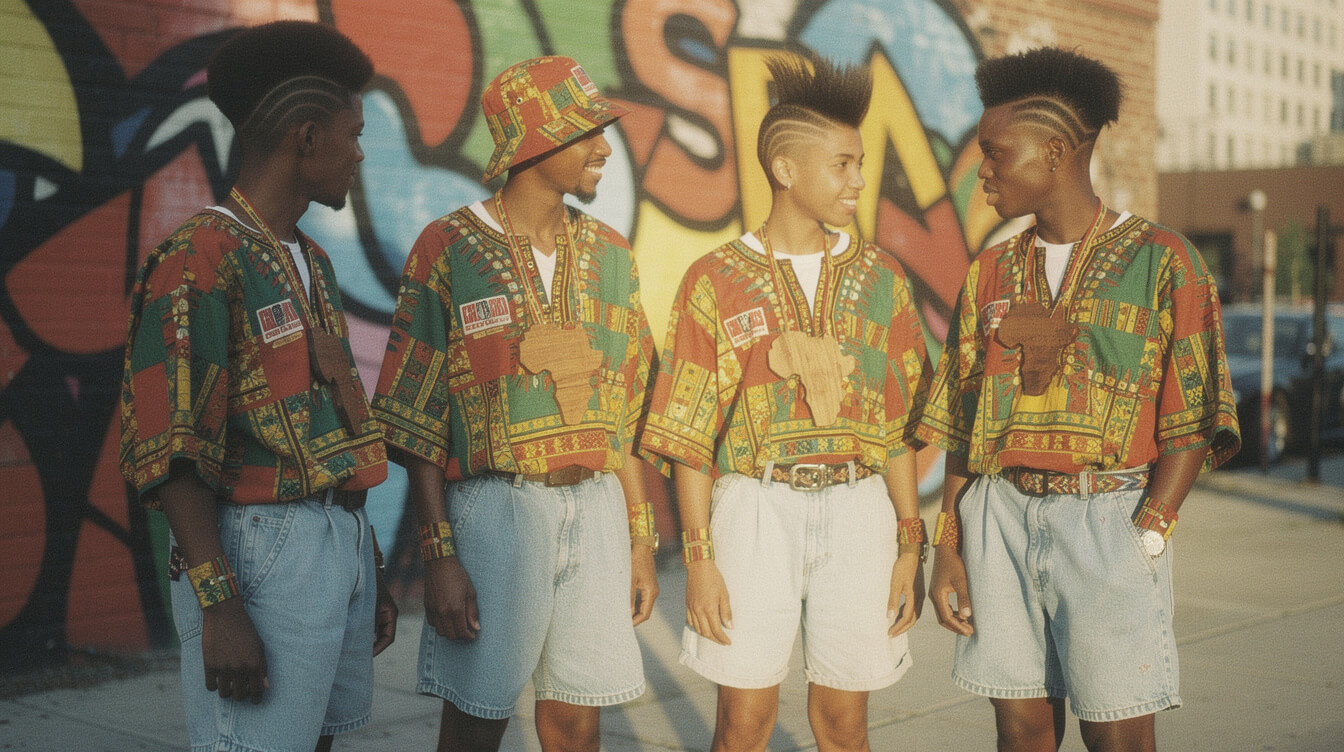
The opening years of the decade belonged to a Brooklyn-Queens-Bronx collective who refused to dress like rappers. The Native Tongues — De La Soul, A Tribe Called Quest, the Jungle Brothers, Queen Latifah, Monie Love, Black Sheep — built an aesthetic out of Afrocentric jewelry, brightly patterned shirts, baggy denim shorts, hi-top fade haircuts, kente cloth accents, round wire-frame glasses, and bucket hats. The look read more art-school than gangster, and that was the point. They were arguing that hip-hop’s reach extended past the corner.
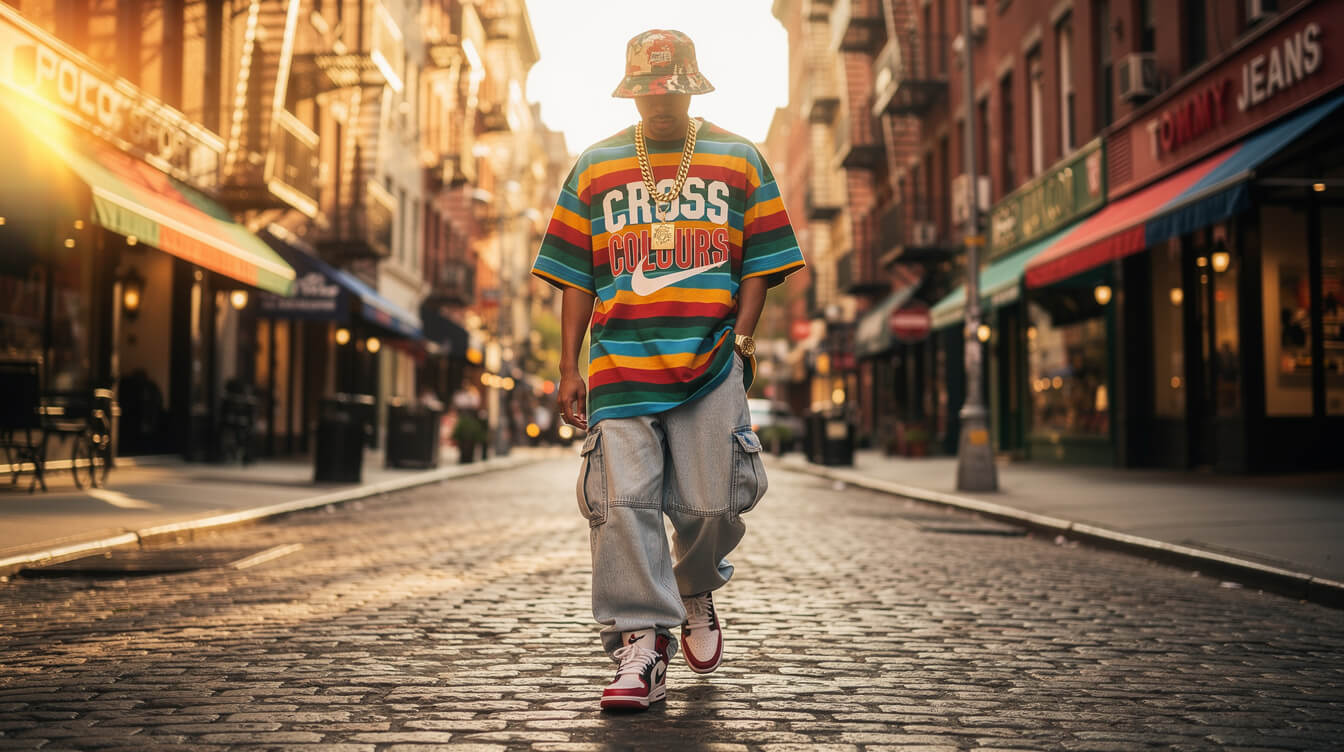
The Africa medallion was the visual signature. Pendants the size of a kid’s fist, carved from wood or stamped from brass, hung from leather cords. Cross Colours — founded in 1989 by Carl Jones and T.J. Walker in Los Angeles — supplied the rainbow palette, with shirts in primary colors stamped “Clothing Without Prejudice.” Karl Kani’s first label run in the same window pushed oversized tees and baggy jeans with the cursive Kani logo embroidered across the chest. Bucket hats from LL Cool J’s Kangol era got picked back up and styled with patterned brims.
The records told you what was being worn. 3 Feet High and Rising (1989) had De La Soul on the cover in daisies, hi-top fades, and bright color blocking — a direct rebuttal to the chain-and-track-suit gangster look that had dominated the back half of the 80s. The Low End Theory (1991) shot Tribe in a single-color leotard against a black background, abstract and design-forward. Queen Latifah’s All Hail the Queen (1989) gave us the African crown, the kente robe, the regal Afrofuturist styling that ran straight through the early 90s.
What killed it: by 1993, the same year Enter the Wu-Tang arrived, the rosy palette started reading naïve in a year when crack-era New York was burying friends every week. The bohemian era didn’t disappear — it migrated to the Soulquarians wave that ran through the late 90s and early 2000s — but as the dominant 90s look, it had a three-year window.
Era Two (1993–1995): Wu-Tang Tactical and the Carhartt Uniform
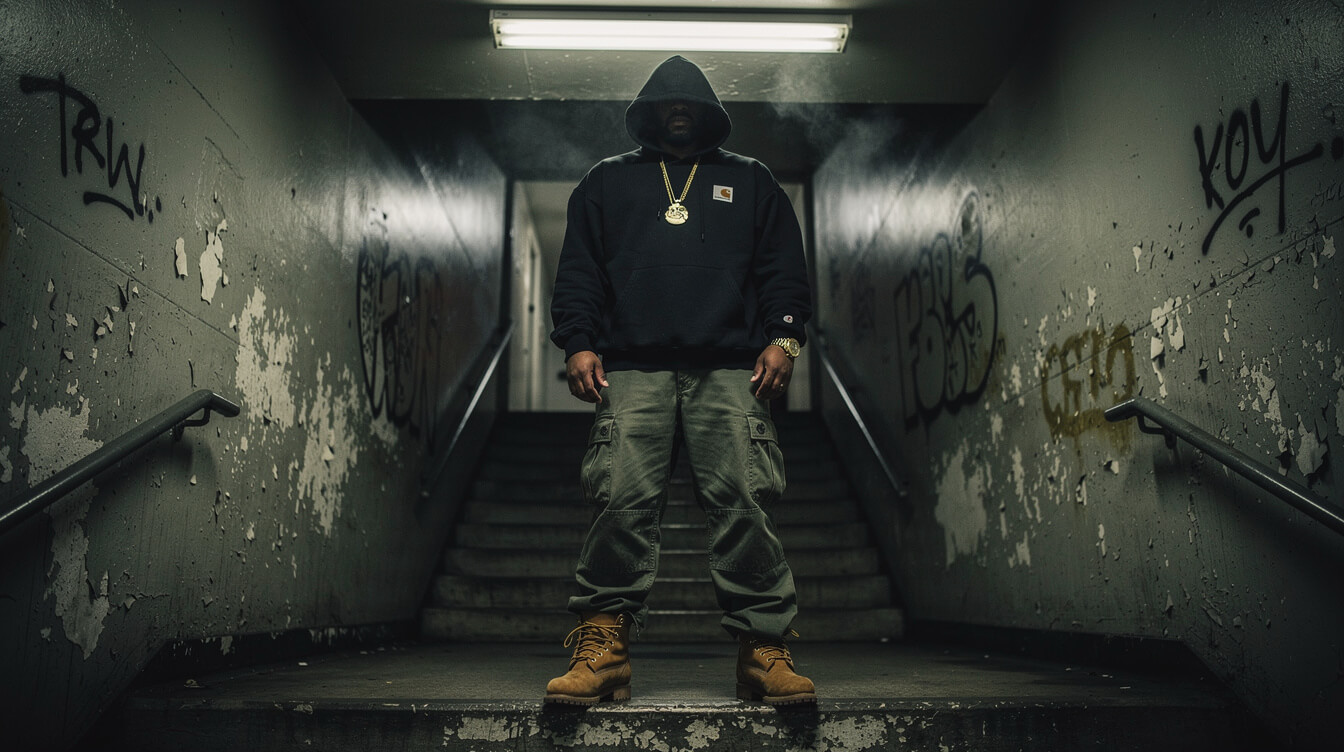
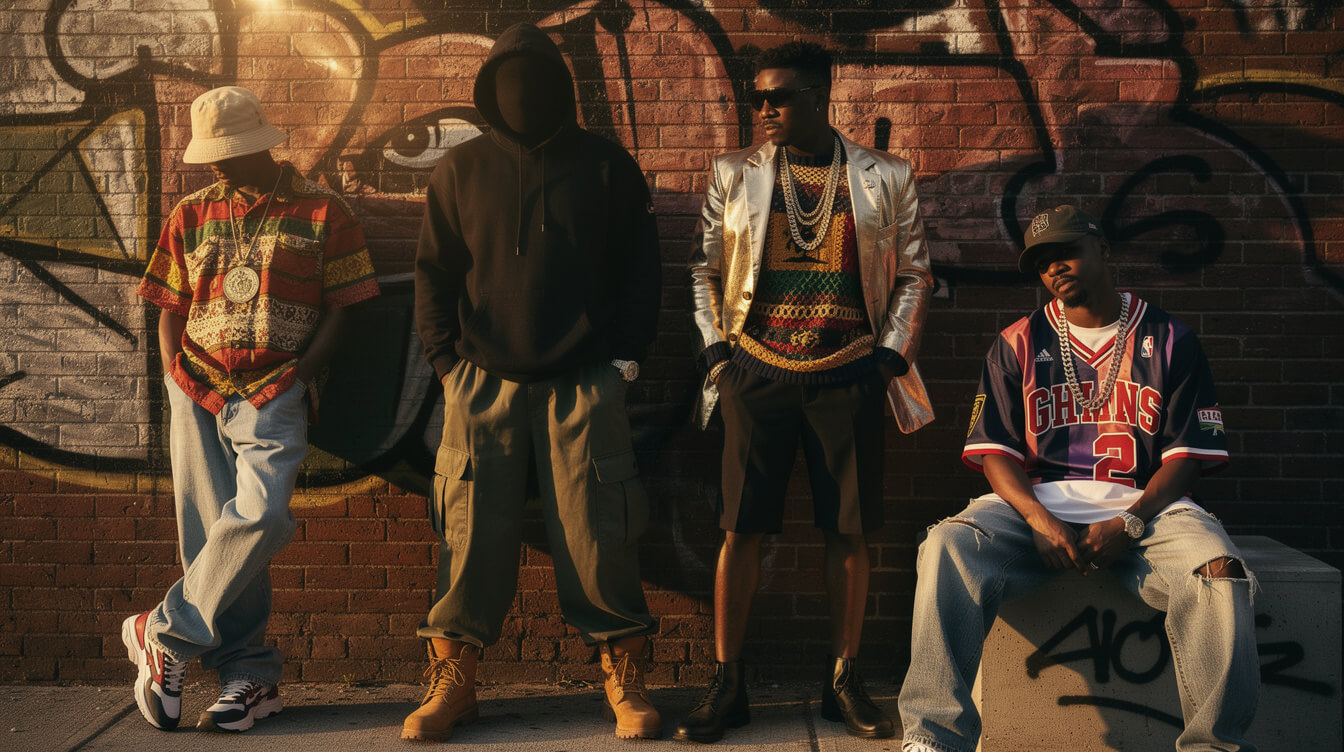
November 9, 1993. Loud Records put out Enter the Wu-Tang (36 Chambers) on a $300 recording budget and the entire visual code of hip-hop changed inside six months. The album cover was nine men in black hoodies and ski masks, photographed in cold blue light. No chains. No grills. No color. The message was: we are working, we are dangerous, we are not here to entertain Manhattan.
The Wu uniform was Carhartt, Champion, Polo Sport, Tommy Hilfiger logo pieces, army surplus, hooded sweatshirts, Timberland boots in wheat or black, and oversized denim. Method Man wore the same boots in three music videos in a row. Raekwon’s signature Polo Bear sweater became a Lo-Lifes signifier — a Brooklyn shoplifting crew dedicated to boosting Polo gear that fed half of mid-90s hip-hop’s wardrobe. Gang Starr, Mobb Deep, Nas, Black Moon, Smif-N-Wessun, M.O.P., Capone-N-Noreaga, Group Home — every East Coast act ran some version of the same template.
Three forces drove the tactical shift. First, weather — New York winters are not bucket-hat weather, and the post-1992 underground was built outdoors, on stoops, in stairwells, in projects without working heat. Second, economics — Carhartt and Champion were workwear sold in hardware stores at hardware prices, accessible to artists who weren’t being paid yet. Third, ideology — coming off the early-90s drug-war crackdowns and the LA riots, the visual rejection of “rainbow positivity” was deliberate. Wu wasn’t going to dress like they were happy.
The accessory was the gold front tooth or the discreet rope chain — not the iced-out medallion, not yet. Sneakers were Timberlands, Air Jordans, Air Force 1s, and the Adidas Stan Smith. Snapbacks were fitted New Era 59FIFTYs in team colors. The whole look telegraphed that the wearer had places to be that did not include a magazine cover. By 1995, every major label A&R was scouting for Wu-adjacent acts and the Carhartt uniform was the de facto rookie outfit at any rap showcase east of Pittsburgh.
Era Three (1996–1997): Bad Boy Luxury — Versace, Coogi, and the Puffy Takeover
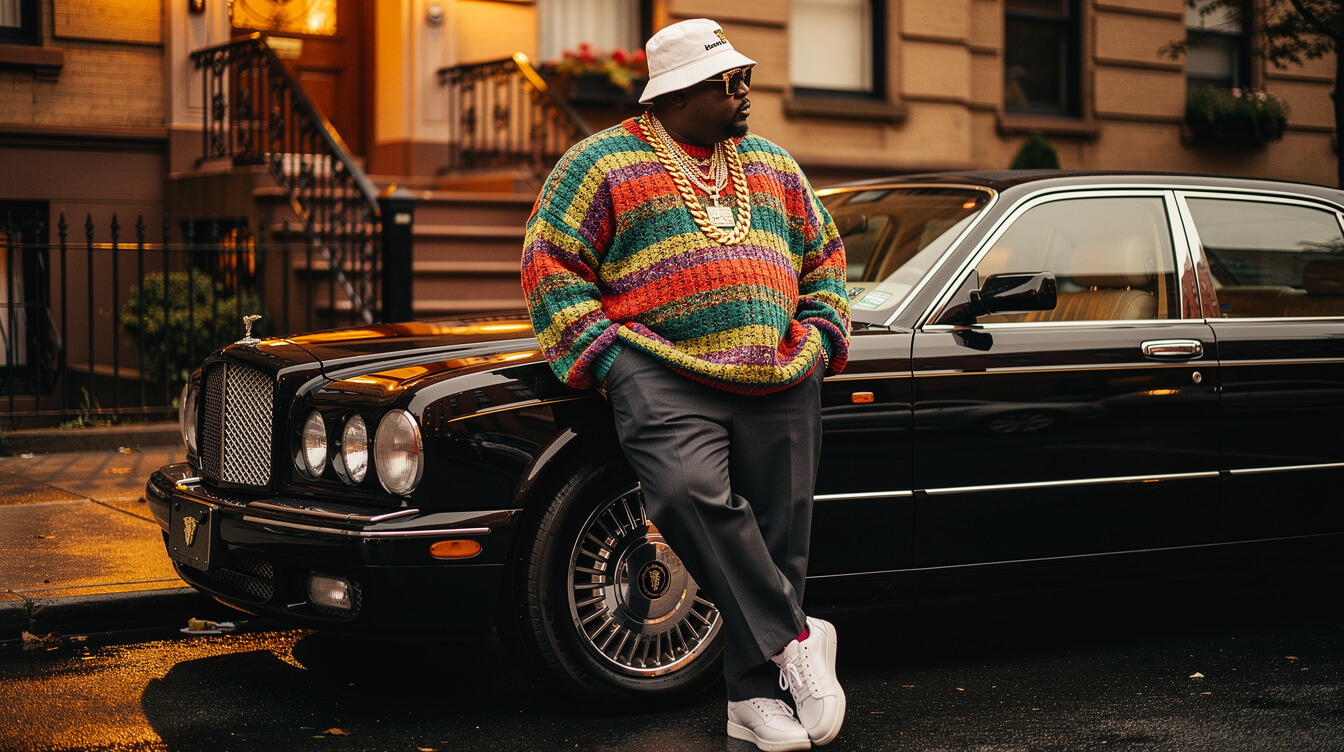
Sean Combs spent 1995 watching the East Coast underground dress like it was apologizing for existing, and decided to do the exact opposite. Bad Boy Records’ 1996–1997 visual program flipped every Wu-era rule. Where Wu was monochrome, Bad Boy was rainbow Coogi. Where Wu was workwear, Bad Boy was Versace silk shirts unbuttoned to the sternum. Where Wu was Timberlands, Bad Boy was patent-leather loafers with no socks. Where Wu hid faces, Bad Boy posed under spotlights.
The anchor records were Notorious B.I.G.’s Life After Death (March 1997, released sixteen days after his murder), Mase’s Harlem World, Puffy’s No Way Out, and Lil’ Kim’s Hard Core. The visuals were unapologetic mafioso fantasy: Bentleys, yachts, champagne sprays, Tom Ford-era Gucci, Versace Medusa-head everything, Cuban-link chains thick as a finger, oversized Coogi sweaters in lurid color combinations, white fur, gold Rolexes. The “shiny suit” became the costume of an entire era — the metallic-fabric three-piece that B.I.G., Puff, and Mase wore in the “Mo Money Mo Problems” video, choreographed in front of green-screen waterfalls.
The look had European fashion-house credibility for the first time. Gianni Versace personally welcomed rappers into his Miami showroom; he was murdered on his front steps in July 1997, and the hip-hop community treated it as a family loss. Coogi — an Australian sweater brand founded in 1969, nearly bankrupt by the early 90s — was financially saved by Biggie name-checking it on “Hypnotize” and “Big Poppa.” Tom Ford’s Gucci revival pulled directly from Harlem’s bootleg-Gucci tracksuit aesthetic that Dapper Dan had been running out of his 125th Street shop since 1982.
What killed it: March 9, 1997. Biggie’s death and the broader retreat from the East–West feud meant the shiny-suit era couldn’t sustain itself without its lead figure. Puff carried it for another year. By 1998 the gold-against-everything aesthetic had migrated south and morphed.
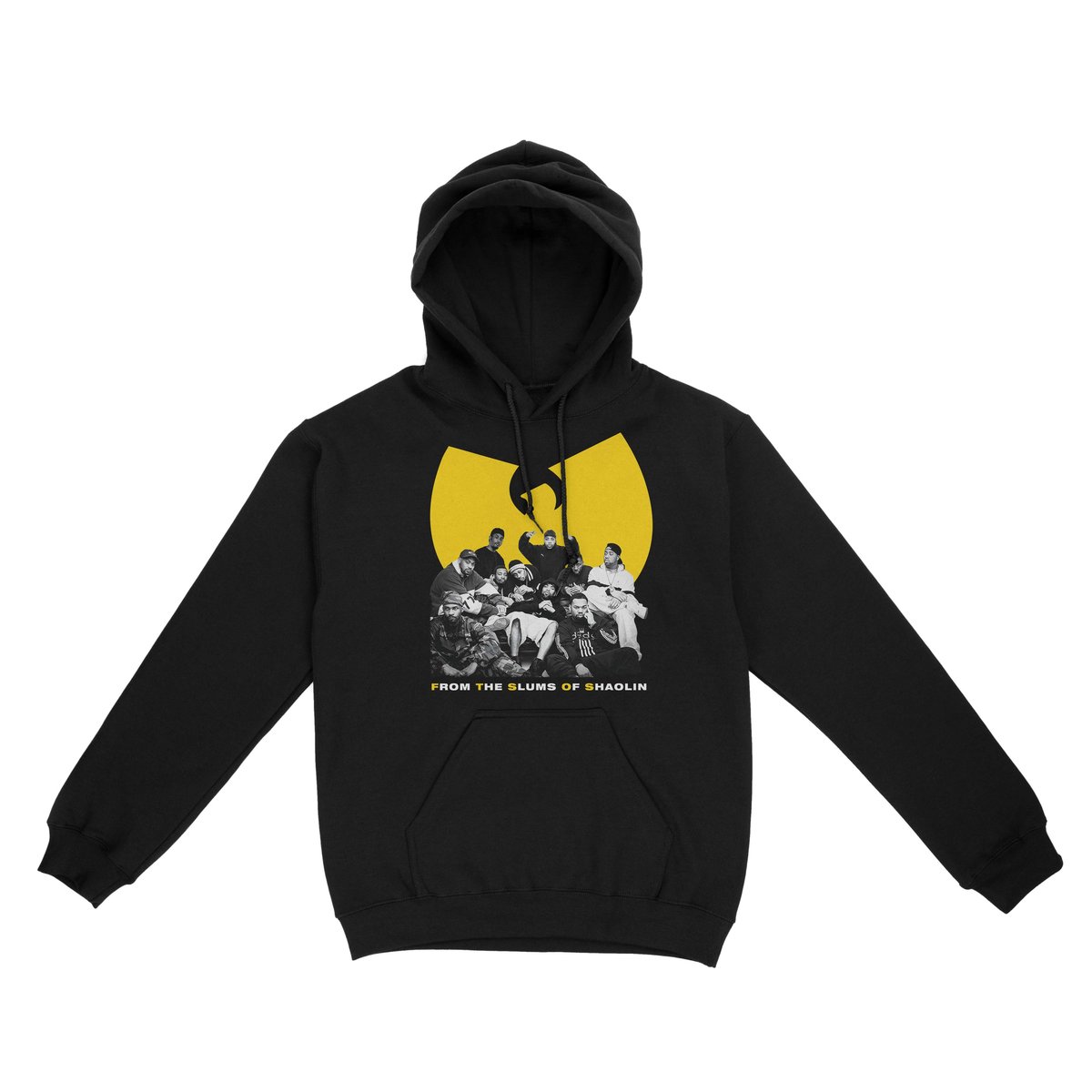
Wear the Tactical Era
The 36 Chambers aesthetic on a heavyweight hoodie. Built for the same weather Method Man was rapping through in 1994 — no Coogi required.
Era Four (1998–1999): Cash Money, Roc-A-Fella, and the Throwback Era
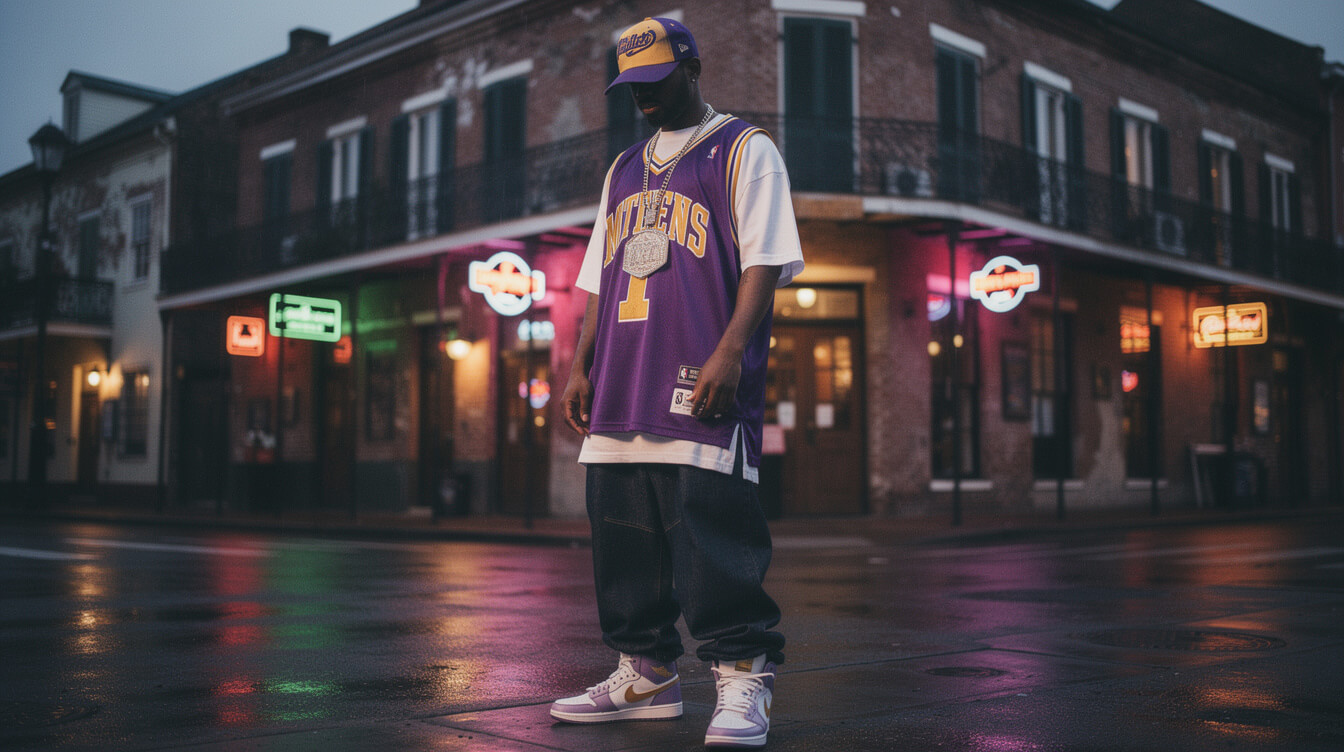
The closing eighteen months of the decade belonged to three labels that flipped the geographic and aesthetic center of hip-hop again. Cash Money out of New Orleans (Juvenile, B.G., Lil Wayne, Turk), No Limit out of Calliope (Master P, Mystikal, Silkk the Shocker, C-Murder), and Roc-A-Fella out of Brooklyn (Jay-Z, Memphis Bleek, Beanie Sigel). Three different cities, one unified visual code: Mitchell & Ness throwback jerseys, plain white tees underneath, baggy denim, baseball caps fitted New Era, Iceberg sweaters and graphic tees, Air Force 1s, and platinum chains layered three or four deep.
The throwback jersey was the period’s signature object. Mitchell & Ness — a Philadelphia uniform company founded in 1904 — licensed vintage pro jerseys (1970s Pittsburgh Steelers, 1980s LA Lakers, 1990 Charlotte Hornets) and sold them at $300–$500 a piece. Jay-Z wore a Reggie Jackson Yankees jersey in the “Hard Knock Life” video and the brand quadrupled in a year. Throwback jerseys had appeared in hip-hop before (LL had a Knicks jersey in the 80s; Kid Capri did the throwback DJ thing), but 1998–1999 industrialized it. By 1999, every video on BET After Dark had at least three throwbacks on screen.
Platinum replaced gold. The Hot Boys’ “Bling Bling” (released February 1999) named the era. The standard kit became: white tee under throwback jersey, Iceberg cartoon-graphic sweatshirt for cooler weather, platinum chain with iced-out medallion (often the artist’s label logo), baseball cap turned sideways or off the head, and either Air Force 1s or Tims. Dirty South artists added Reebok Classics. Grills — gold or platinum dental fronts — were already common in Houston and New Orleans and would explode citywide in 2000–2001.
The records: 400 Degreez (Juvenile, late 1998, 4× platinum), Tha Block Is Hot (Lil Wayne, November 1999, debut album), Vol. 3: Life and Times of S. Carter (Jay-Z, December 1999), Master P’s MP Da Last Don (1998), Mystikal’s Ghetto Fabulous (1998). The South wasn’t waiting for permission from New York anymore — and the fashion followed. By 1999 the dominant 90s aesthetic had a Louisiana area code on its license plate.
The Black-Owned Brand Revolution: FUBU, Cross Colours, Karl Kani, Phat Farm
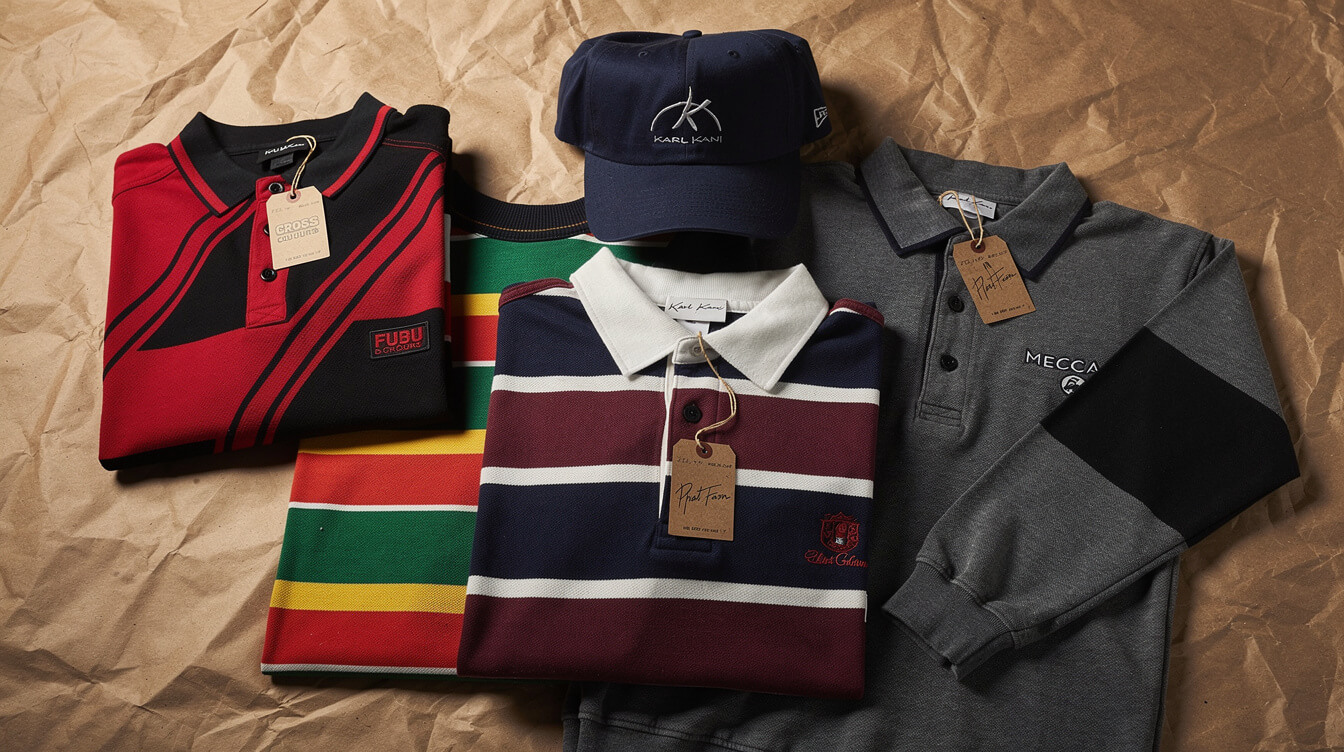
Running underneath all four eras was a story that doesn’t get told in a single timeline anywhere on the internet: the Black entrepreneurs who built hip-hop’s fashion empire from the inside, against an industry that had been profiting off the culture without participating in it. The names: Cross Colours (Carl Jones, T.J. Walker, 1989). Karl Kani (Carl Williams, 1989). FUBU (Daymond John, J. Alexander Martin, Carl Brown, Keith Perrin, 1992). Phat Farm (Russell Simmons, 1992). Mecca USA (Lando Felix, Tony Shellman, 1994). Maurice Malone (Maurice Malone, 1989). Enyce (Tony Shellman and Evan Davis after leaving Mecca, 1996).
The FUBU origin story is the most cited because it’s the cleanest: Daymond John screen-printed the first batch of FUBU shirts in his mother’s Hollis, Queens kitchen in 1992. The acronym — For Us By Us — was the entire pitch. The brand caught fire when LL Cool J wore a FUBU hat in a 1998 Gap television commercial intended to sell Gap khakis, and a single shot of the FUBU logo on national TV reportedly drove the brand past $350 million in annual sales by 1998. Daymond John would later put $30,000 of that capital toward founding what became Shark Tank.
Cross Colours peaked around 1992–1993 at $89 million in sales and inflated into bankruptcy by 1994, a cautionary tale about scaling too fast on retailer credit. Karl Kani rebuilt the brand twice and is still operating in 2026. Phat Farm sold to Kellwood for $140 million in 2004, the year Russell Simmons exited the company. Maurice Malone built the underground “Hip Hop Shop” in Detroit in 1993 — the venue where Eminem’s first battle tapes were recorded — while running his label. Enyce sold to Liz Claiborne for $114 million in 2000.
What the brand-by-brand SERP pages miss is the through-line: a generation of Black designers built a wholesale apparel industry without retail-buyer relationships, without department-store distribution, and without fashion-week access — and the industry that froze them out in 1992 was copying their pattern books by 1996. Tommy Hilfiger’s late-90s urban revival was a direct response to FUBU’s wholesale numbers. Polo Sport’s 1993 launch was a direct response to the Lo-Lifes. Our heritage hip-hop apparel draws from the same well: artist-aligned, culture-first, made by people who lived it.
How 90s Hip-Hop Fashion Crossed Into High Fashion (and Came Back in 2026)
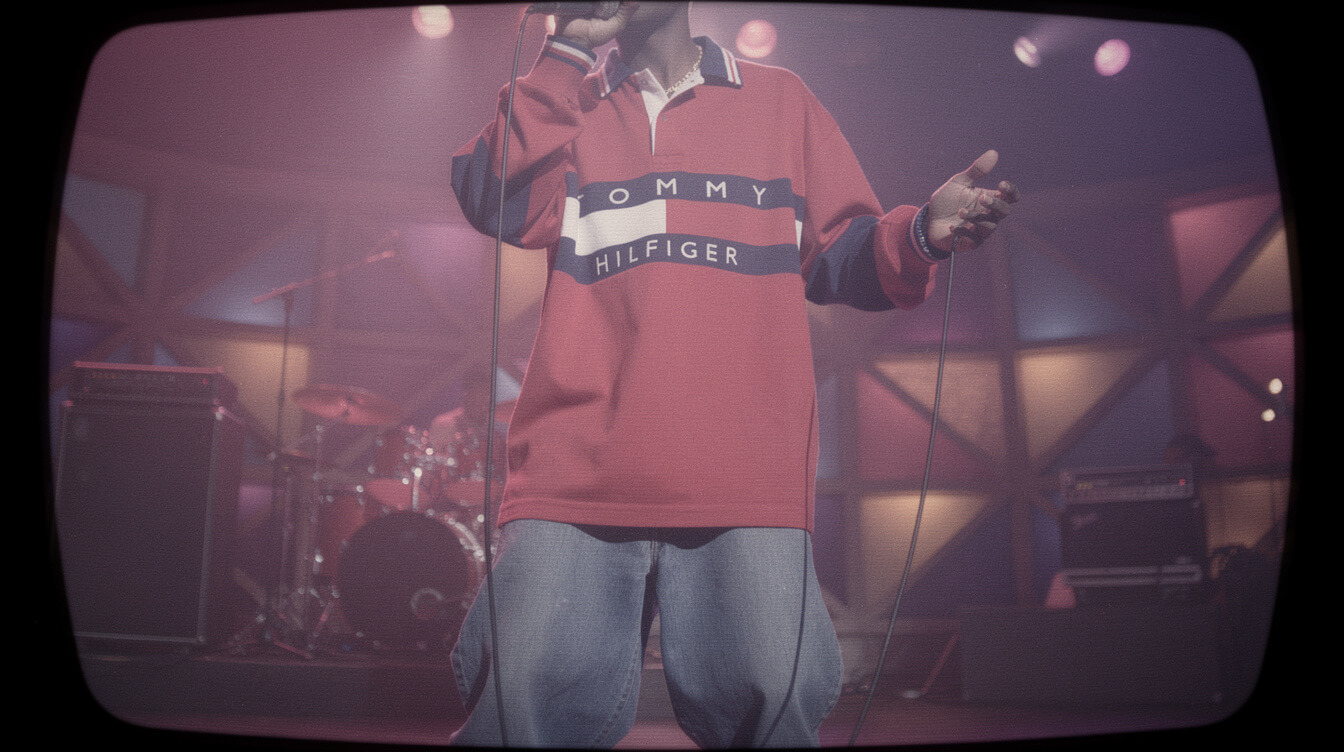
The crossover happened in moments, not a single moment. Three are worth naming. First, March 11, 1994 — Snoop Doggy Dogg performed “Gin and Juice” on Saturday Night Live wearing an enormous Tommy Hilfiger red, white, and blue rugby shirt. Hilfiger had been a struggling mid-tier prep brand. Inside a year, his sales surged from roughly $50 million to over $90 million, and within three years he was a billion-dollar publicly traded company. Hilfiger personally credited hip-hop. The shirt is in the Smithsonian.
Second, the Lo-Lifes — a Brooklyn-based crew of Polo Ralph Lauren shoplifters and stylists founded around 1988 — turned Polo Sport, the Polo Stadium 1992 capsule, and the Polo Snow Beach pullover into hip-hop signifiers across the entire 90s. Raekwon’s Snow Beach jacket on Only Built 4 Cuban Linx (1995) is one of the most influential single garments in streetwear history. Ralph Lauren personally never acknowledged the Lo-Lifes during the 90s; the brand quietly re-released the Snow Beach pullover in 2018 with hip-hop credited explicitly in the press release.
Third, Versace’s mid-90s embrace of hip-hop — Biggie wearing Versace Medusa shades in the Life After Death photoshoot, Tupac shot in Versace silk for the cover of The Source, Naomi Campbell walking Versace runways alongside hip-hop’s tier-one stylists — broke the unwritten rule that European luxury houses didn’t dress American street artists. Tom Ford pulled directly from Dapper Dan’s bootleg-Harlem-Gucci aesthetic when he revived the brand in 1995, then in 2017 Gucci officially collaborated with Dapper Dan, who had been operating in obscurity since the 1992 Fendi lawsuit shut down his original shop.
The 2026 revival is everywhere if you know what to look for. Tyler, the Creator’s recent runs draw from Native Tongues color blocking. Travis Scott’s archive-Polo and archive-Tommy pulls are direct Lo-Lifes references. Kendrick Lamar’s GNX tour styling — oversized white tees, baggy denim, throwback varsity jackets — is Cash Money 1999 with better fabric. Supreme’s box-logo lineage is unthinkable without Cross Colours’ graphic-tee blueprint. The kids buying Wu-Tang T-shirts in 2026 are wearing the same garments their older siblings wore in 1994, reissued.
Frequently Asked Questions About 90s Hip-Hop Fashion
What is 90s hip-hop fashion? 90s hip-hop fashion isn’t a single style — it’s four distinct sub-eras: Native Tongues bohemian (1990–1992), Wu-Tang tactical (1993–1995), Bad Boy luxury (1996–1997), and Cash Money / Roc-A-Fella throwback (1998–1999). Each era had its own silhouette, color palette, and anchor brands, and each one was a direct rejection of the era that came before it.
What were the most influential 90s hip-hop fashion brands? The Black-owned brands that defined the decade were Cross Colours, Karl Kani, FUBU, Phat Farm, Mecca USA, Maurice Malone, and Enyce. The non-Black brands that crossed over because of hip-hop adoption were Tommy Hilfiger, Polo Ralph Lauren (particularly the Polo Sport and Snow Beach lines), Carhartt, Champion, Timberland, Coogi, and Versace.
What did Wu-Tang Clan wear in the 90s? The Wu-Tang aesthetic from 1993–1995 was Carhartt hoodies, army fatigue cargo pants, Champion sweatshirts, Polo Sport gear (often shoplifted by the Lo-Lifes Brooklyn crew), Timberland boots in wheat or black, fitted New Era 59FIFTY caps, and discreet gold rope chains — never the iced-out medallions that came later. The look telegraphed work, not entertainment.
What is the difference between 80s and 90s hip-hop fashion? 80s hip-hop fashion was about silhouettes and accessories — Adidas tracksuits, sheepskin coats, four-finger rings, dookie chains, and Kangol hats. 90s hip-hop fashion split that single template into four distinct movements, layered Afrocentric jewelry over street-luxury labels, and ultimately handed Black-owned wholesale brands their first major retail wins. The full 80s blueprint is covered in our companion eighties hip-hop fashion guide.
Is 90s hip-hop fashion coming back in 2026? Yes — heavily. The Y2K revival cycle that started around 2019 has fully matured. In 2026, Tyler the Creator’s collections pull from Native Tongues color blocking, Travis Scott’s archive runs lean on Polo and Tommy Hilfiger, Kendrick Lamar’s GNX tour styling is a direct Cash Money 1999 reference, and Supreme’s continued dominance is unthinkable without Cross Colours’ original blueprint. Vintage 90s tees, throwback jerseys, and original FUBU pieces are commanding archive prices on resale platforms.
Why the 90s Still Set the Bar
Nine years. Four eras. One culture arguing with itself, building four wardrobes in a row, and laying the foundation for every streetwear movement that followed. The fact that Halloween costume aisles still flatten 90s hip-hop fashion into one bucket-hat-and-chains stereotype tells you more about how the industry consumed the culture than about what the culture actually built. The eras were distinct, the brands were Black-owned, the crossover was hard-fought, and the receipts are sitting in every fashion archive that bothers to look.
If you’re building a 90s-era wardrobe in 2026, the question to ask first is: which year are you reaching for? Native Tongues 1991, Wu-Tang 1994, Bad Boy 1997, and Cash Money 1999 are not interchangeable closets. Pick a coordinate. Build around it. Then watch how fast everyone around you notices the difference between someone who knows the decade and someone who just rented a costume. The culture’s still rewarding that level of specificity — and it always will.
Hip-Hop Heritage, Delivered Weekly
Era-by-era deep dives, drop alerts on new artist apparel, and the cultural receipts nobody else is filing. Subscribe and we’ll send the next blueprint straight to you.

🎧 Never Miss a Drop
Exclusive product releases, hip-hop deep dives, and member-only discounts. Straight to your inbox.
Free forever. No spam. Unsubscribe anytime.
Get the Culture, Delivered
Deep dives into hip-hop history, exclusive product drops, and discounts sent straight to your inbox. No spam, just culture.
Join 2,000+ hip-hop heads already in the loop. Unsubscribe anytime.