The Notorious B.I.G. Songs, Ranked by Sample, Producer, and Guest-Verse Era — All 4 Album Cycles Decoded
Rank Notorious B.I.G. songs honestly and the first thing that falls apart is the myth that his catalog is small. Two solo albums during his life, sure. But run the tape and the man cut close to sixty released songs plus another thirty verifiable guest verses in a 36-month stretch between the “Real Love (Remix)” in the fall of 1992 and “Notorious Thugs” in the winter of 1997 — a discography most rappers spend a decade chasing. This is the honest catalog map: the four Bad Boy album cycles (Ready to Die, Life After Death, Born Again, Duets), the pre-fame guest-verse run that broke him before Ready to Die dropped, and a producer/sample credit ledger nobody kept properly the first time.
What follows isn’t a Wikipedia list re-sorted by streaming counts. It’s what a Ready to Die 30th-anniversary listener actually needs — production credits, sample sources, ghostwriting splits where they exist, and a receipt for which posthumous tracks are canon versus which ones Puff pieced together with a checkbook.
How to Read a Notorious B.I.G. Catalog: Four Cycles + One Guest-Verse Era
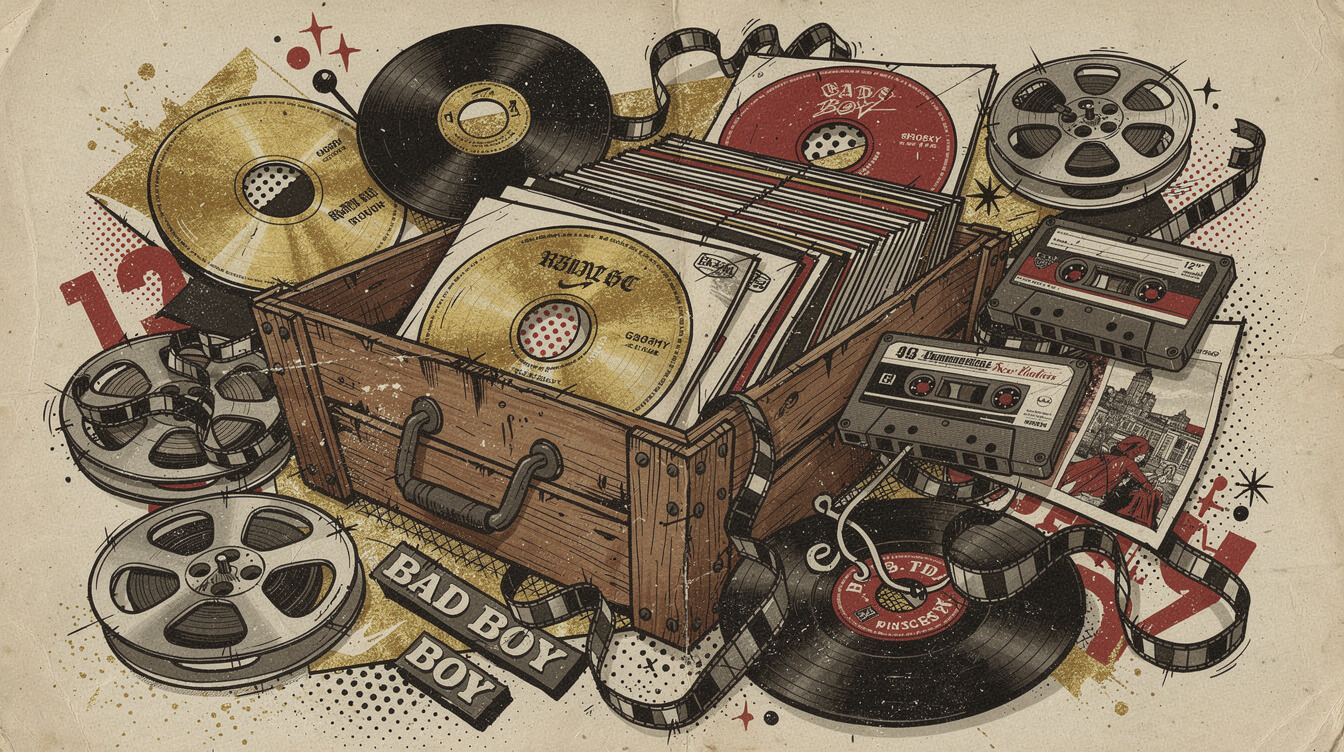
Christopher Wallace released two solo studio albums while he was alive — Ready to Die (September 13, 1994) and Life After Death (March 25, 1997, sixteen days after he was murdered on Wilshire Boulevard). Everything else on the shelf is either a guest verse, a compilation drop, or a posthumous project pieced together after 1997 by Puffy, Faith, Voletta Wallace, and a rotating crew of producers with unreleased vocals in their vaults.
The clean way to read the catalog is four distinct cycles and one pre-fame era that most databases hide inside the Ready to Die block:
- Guest-Verse Era (1992–1994) — Mister Cee tape, Craig Mack “Flava in Ya Ear (Remix),” Mary J. Blige “Real Love (Remix)” and “What’s the 411? (Remix),” Super Cat “Dolly My Baby (Remix),” Heavy D “A Buncha Niggas,” Neneh Cherry “Buddy X,” Total “Can’t You See.” The credit line “Introducing the Notorious B.I.G.” on the Real Love remix is the actual industry debut, not “Juicy.”
- Cycle 1 — Ready to Die (1994) — Bad Boy’s launch record, released the same month Def Jam dropped Nas’s Illmatic re-issue campaign. 17 tracks, five singles, 4× platinum by 1998.
- Cycle 2 — Life After Death (1997) — 24 tracks across two discs, an East-vs-West response record that BIG never lived to promote. Debut at #1 on the Billboard 200, diamond-certified in 2000.
- Cycle 3 — Born Again (1999) — Vocals over new beats. Puff-controlled. Not canon in the way the first two are.
- Cycle 4 — Duets: The Final Chapter (2005) — Same vault vocals, more crossover guests (Bob Marley, Eminem, R. Kelly). Even less canon.
Every one of the following sections lives inside one of those five buckets. That’s the frame. Now the songs.
The 1993–94 Guest-Verse Run That Made B.I.G. Before Ready to Die Dropped
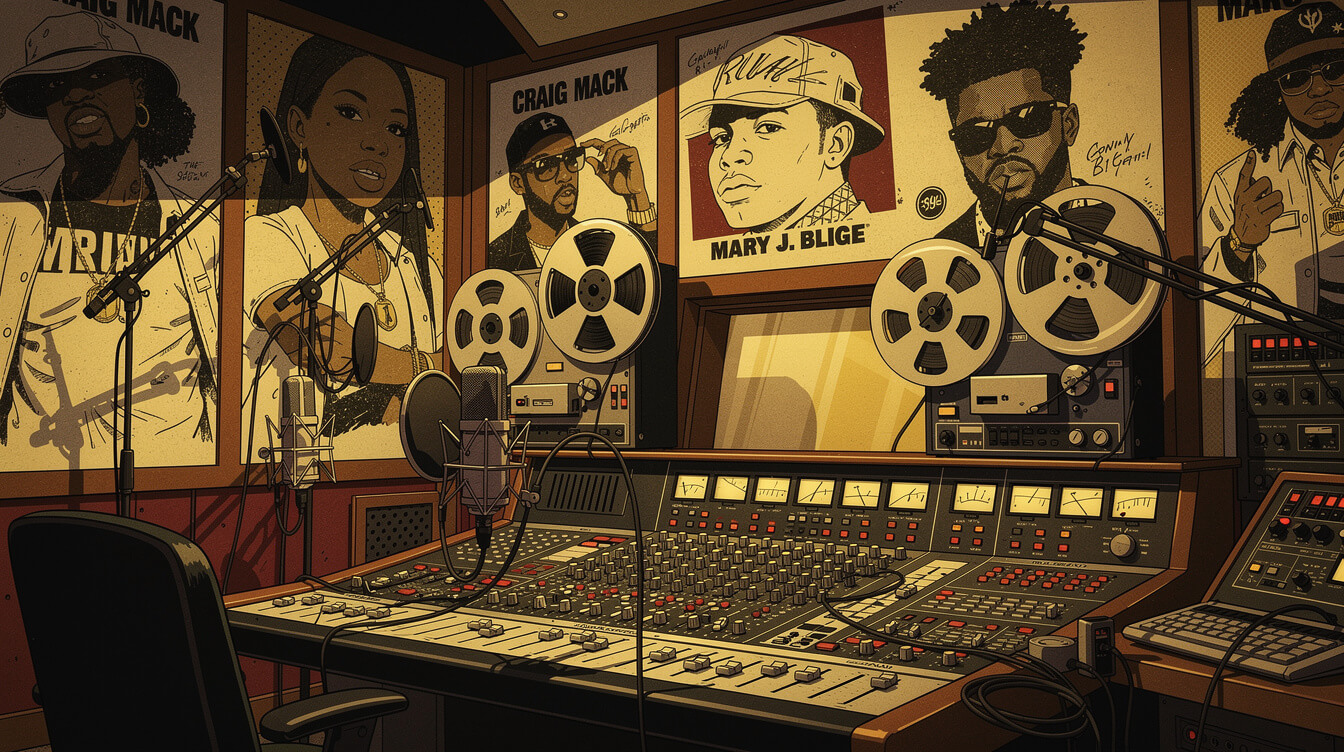
Puff signed BIG to Uptown in 1992 on the strength of a Mister Cee mixtape that landed on Matty C’s “Unsigned Hype” column in The Source (March 1992 issue — one of the most consequential column inches in hip-hop print history). Between then and Ready to Die, Sean Combs put Wallace on every remix Uptown was cutting. Six of those verses are the reason the album eventually shipped 57,000 copies in its first week — the audience was already built.
Mary J. Blige — “Real Love (Remix)” (1992)
Puff paid The Source‘s Matty C for the Unsigned Hype tape, drove it to Andre Harrell at Uptown, and had Wallace on a Blige remix by fall of that same year. The “Introducing the Notorious B.I.G.” credit line is what you’re actually looking at when the record starts. Sixteen bars, all storytelling, on top of Dave Hall’s harder rework of the Betty Wright “Tonight Is the Night” break. This is the origin.
Mary J. Blige — “What’s the 411? (Remix)” (1992)
Same album, same rollout. This one used the Audio Two “Top Billin'” drum program — Wallace referenced the Milk Dee flow from “Top Billin'” as a lifelong influence in the 1995 YO! MTV Raps interview. Callback and homage in the same guest verse.
Super Cat — “Dolly My Baby (Remix)” (1993)
Salaam Remi production, dancehall flip. Puff and BIG both on the record, first pairing on wax. Also features Third Eye’s Prince Trixx and Mad Lion. The whole “Bed-Stuy do or die” mythology gets road-tested here first.
Neneh Cherry — “Buddy X (Falcon & Fabian Remix)” (1993)
UK-side crossover. Wallace’s verse on the remix is the tightest 12 bars nobody talks about — bar for bar it’s arguably better than half of Ready to Die. Sample: Bob James “Nautilus” (which is the same source that Ghostface would flip on “Daytona 500” three years later).
Craig Mack — “Flava in Ya Ear (Remix)” (1994)
Bad Boy Records’ debut single as a label was the original “Flava in Ya Ear.” The remix — with BIG, LL Cool J, Busta Rhymes, and Rampage — is the record that flipped Bad Boy’s roster narrative from “Craig Mack’s label” to “BIG’s label” in exactly 90 days. Easy Mo Bee production, sample of NT’s “Knock ‘Em Out Sugar Ray.” Wallace’s verse (“Niggas is mad I get more butt than ashtrays”) is the moment the industry adjusted the pecking order.
Heavy D — “A Buncha Niggas” (1994)
From Nuttin’ but Love. Also features 3rd Eye, Rob-O, and Guru of Gang Starr. Erick Sermon-adjacent production. BIG’s verse is the punchline factory nobody quotes today because Heavy passed and the album fell out of print.
Ready to Die (1994) — Ranked, With the Mtume / DeBarge / Isley Sample Map
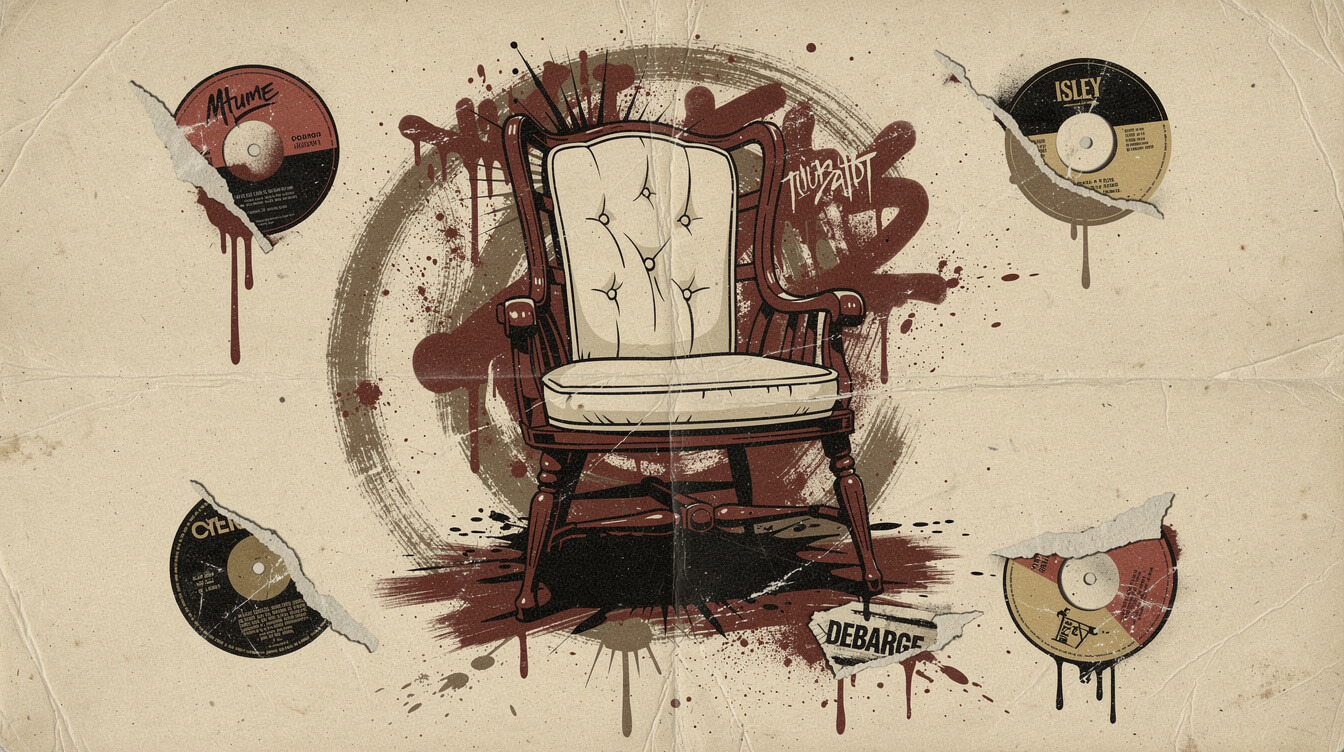
Released September 13, 1994. Executive produced by Sean “Puffy” Combs. 17 tracks (including the intro and outro). Went 4× platinum by 1999 and diamond in 2020. If you want the full pressing-by-pressing collector context, we already broke that down in the Ready to Die Biggie: complete guide to Notorious B.I.G.’s debut album deep dive — this section stays on the song-by-song ranking and sample map.
Ranked, not by chart position, but by songs-that-still-hit hierarchy:
- “Juicy” — Poke of Trackmasters production, Mtume’s “Juicy Fruit” as the entire spine. The Mtume clearance is why James Mtume is technically still cashing checks on the record thirty years later. Original mix used the full James Mtume vocal loop; the released version keeps the bassline only. Poke has said in interviews the whole record was cut in 4 hours.
- “Big Poppa” — Chucky Thompson production, sample of the Isley Brothers “Between the Sheets” (1983). Grammy nomination, Billboard #6. Third single from the album, released January 1995. The Isleys are on the writing credit — Ernie, Marvin, Ronald, O’Kelly, Chris Jasper, Rudolph.
- “Warning” — Easy Mo Bee production, Isaac Hayes “Walk On By” cover sample (the Dionne Warwick composition Hayes stretched to 12 minutes on Hot Buttered Soul). The “who the fuck is this paging me at 5:46 in the morning” cold open is one of the great narrative song intros in rap history.
- “Suicidal Thoughts” — Lord Finesse production, sample of Sylvia Striplin’s “You Can’t Turn Me Away.” Wallace on the phone with Puff, walking through his own funeral. Album closer. Read it back after March 9, 1997.
- “Gimme the Loot” — Easy Mo Bee production, sample of Les McCann “Sometimes I Cry” and Schoolly D “P.S.K. What Does It Mean?” for the vocal chop. BIG plays both characters on the song by pitching his voice up on the second verse — the first widely-copied dual-voice technique in mainstream rap.
- “Things Done Changed” — Darnell Scott and Poke production, sample of Dr. Buzzard’s Original Savannah Band “Sunshower” and Rene & Angela “Imaginary Playmates.” Cold-blooded state-of-the-block record, opens the album (after the intro) so the listener gets the environmental context before “Juicy” flips it.
- “Machine Gun Funk” — Easy Mo Bee production, Buddy Miles “Down by the River” bass sample layered under a Chic Corea Return to Forever loop. The most underrated cut on the record — a Brooklyn head’s favorite.
- “One More Chance / Stay With Me (Remix)” — Trackmasters production, sample of DeBarge “Stay With Me” (1983). Album version was raunchier; the remix cleaned the vocal for radio and became the second-biggest single of 1995 behind “Fantasy” by Mariah Carey. The video with Faith Evans, Mary J. Blige, Zhané, and Aaliyah cost more to shoot than most Bad Boy album budgets that year.
- “Everyday Struggle” — Easy Mo Bee production, sample of Dave Grusin “Either Way” and Trussel “Love Injection.” Middle-of-the-record song that most listeners skip and then quote unprompted a week later.
- “Me & My Bitch” — Easy Mo Bee production. Al Green “Get Back Baby” sample (drum loop). The song’s structural conceit — a rap song about a woman that respects the woman as more than a chorus — was radical in 1994. Faith Evans covered it herself on posthumous compilation duty.
- “Unbelievable” — DJ Premier production. R. Kelly “Your Body’s Callin'” vocal-chop sample for the hook. Premier’s only Ready to Die credit. Album highlight and the record that made every Gang Starr fan pay attention to Bad Boy.
- “The What” (with Method Man) — Easy Mo Bee production. Sample of Dennis Coffey “Ride, Sally, Ride” and Beastie Boys “Pass the Mic” drums. First Wu-Tang / Bad Boy summit on wax. If you followed the Wu-Tang catalog into the same year, we mapped that whole conversation in our Gang Starr “Mass Appeal” boom-bap deep-dive — same production sensibility, opposite label.
The bassline motif nobody points out: Easy Mo Bee cut nine of the seventeen tracks. That’s why Ready to Die feels sonically unified — one producer’s sample crate ran the record, with Poke, Chucky Thompson, DJ Premier, and Lord Finesse dropping in for the singles and the album closer.
Life After Death (1997) — Every Producer Credit, Every Sample, Every Guest
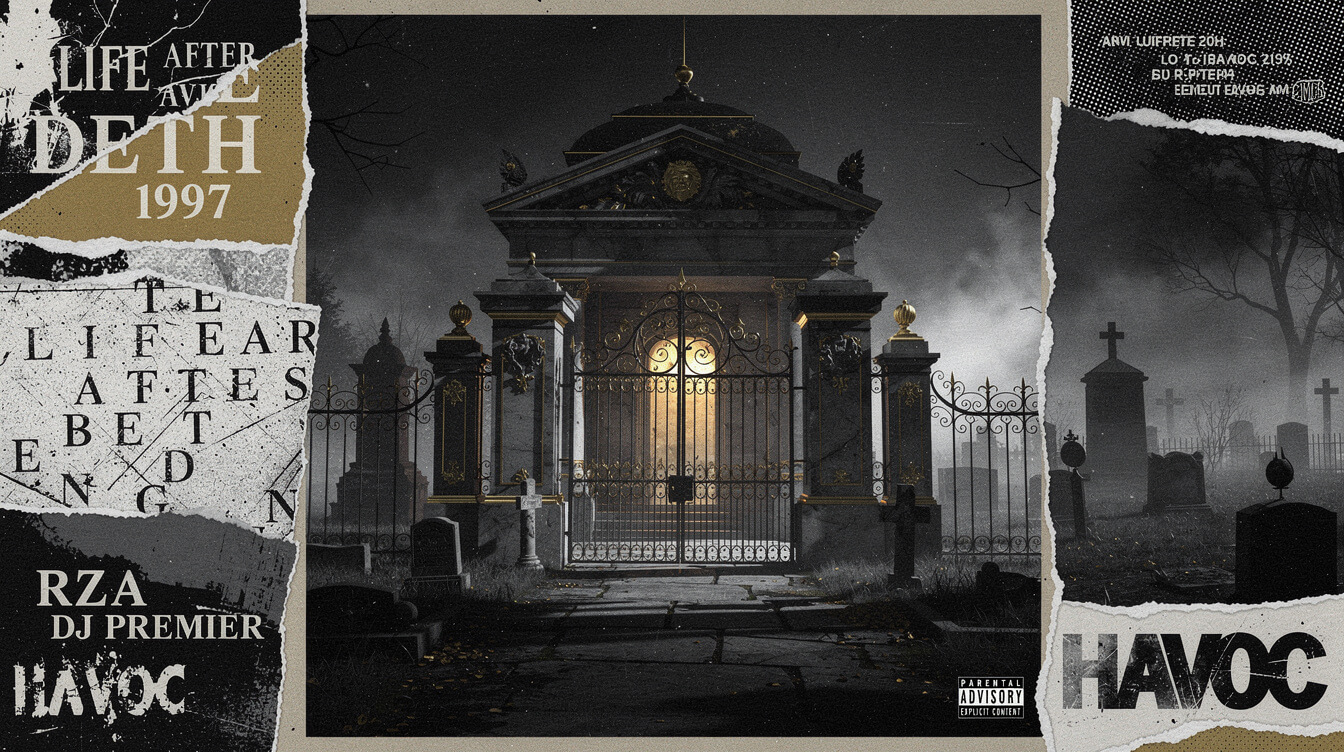
Where Ready to Die is a Brooklyn head’s album, Life After Death is a business record. 24 tracks across two discs, released 16 days after BIG’s murder, executive produced by Puff, and structured to answer every regional rap market at once. Mafioso-rap for the New York columnists (“I Got a Story to Tell”), West Coast détente (“Going Back to Cali”), Southern bounce (“Nasty Boy”), Bad Boy pop crossover (“Hypnotize,” “Mo Money Mo Problems”), and a straight-ahead RZA-produced Wu-Tang summit (“Long Kiss Goodnight” has Wu-adjacent DNA even without RZA on the credit).
The producer split
Puff and Stevie J co-produced eight tracks including “Hypnotize” (Herb Alpert “Rise” bass loop) and “Mo Money Mo Problems” (Diana Ross “I’m Coming Out” flip). Easy Mo Bee is gone from this record — the sonic switch is the whole point. Havoc of Mobb Deep produced “Last Day” (with Wallace playing off Havoc’s own drum program, the same one he used on Hell on Earth‘s “Front Lines”). RZA cut “Long Kiss Goodnight” using a chopped Kool & the Gang “Summer Madness” sample. DJ Premier returned for “Ten Crack Commandments” (built on a Chuck Rio “Les Fleur” flip — the beat is one of Premier’s five best, full stop). Buckwild produced “I Got a Story to Tell” (Al Green’s “Sha-La-La” bass, uncleared for months). Ski Beatz took “Mo Money Mo Problems” from a demo to the final release master. The RZA verse-for-verse similarity to a 36 Chambers session is not accidental — Wallace was open about being a Wu-Tang student.
The guest roster (26 features across the album)
Puff (13 tracks), Ma$e (6), Lil’ Kim (4), R. Kelly, D.M.C., 112, Jay-Z (“I Love the Dough” — Jay’s first pairing with BIG on wax after the Reasonable Doubt-era mixtape circulation), Bone Thugs-n-Harmony (“Notorious Thugs” — the four-Bone verse structure that had Wallace using every syllable of a triplet flow for the first time in his catalog), the LOX (two of them), Too $hort (“The World Is Filled…”), Angela Winbush (uncleared vocal on “Sky’s the Limit”), and Ma$e again on “Mo Money Mo Problems.”
The essential Life After Death rank (top 8)
- “Notorious Thugs” — Stevie J production. Wallace matched Bone Thugs’ triplet flow bar-for-bar on his own verse. The technical peak of the entire catalog.
- “Ten Crack Commandments” — DJ Premier at maximum Premier.
- “Hypnotize” — the crossover single of the year, sample-cleared with Herb Alpert reportedly for six figures.
- “Sky’s the Limit” — Clark Kent production, Bobby Caldwell “My Flame” sample. Kids-in-the-video treatment by Spike Jonze after Wallace’s death. The 112 hook is what makes the song evergreen.
- “Mo Money Mo Problems” — Puff, Ma$e, and Diana Ross on the writing credit.
- “I Got a Story to Tell” — Buckwild production. Al Green sample. BIG telling the John Starks story in the third person, then dropping the whole thing in prose at the end. Slick Rick lineage, direct.
- “Long Kiss Goodnight” — RZA production, subliminal to 2Pac. Released in the wake of Wallace’s death, which made a diss record read like a will.
- “Last Day” — Havoc production, the Lox and BIG together. Ranked below the top 5 but not by much.
If you’re building a listening room to play these records the way they were meant to be heard — vinyl, a Wu-Tang neon on the wall, the artist’s LP jacket in a frame — we made a Wu-Tang Forever LED lighted sign that anchors the room exactly the way “The What” anchored a 1994 Brooklyn producer’s studio.
Posthumous Cycle: Born Again (1999), Duets (2005), and Which Vault Tracks Are Actually Canon
The unpleasant truth about posthumous rap albums is that the artist’s estate makes more money than the artist ever did in life. BIG’s estate has run the same play twice — 1999 and 2005 — and the canon question stops being aesthetic and starts being commercial.
Born Again (1999) — the checkbook record
18 tracks. Puff pulled unreleased vocals from the Life After Death sessions and had new producers cut new beats around them. Some of it works. Most of it doesn’t. The tracks that stand up:
- “Dead Wrong” (with Eminem) — Chucky Thompson production. Eminem is on his second-album ascent and adds a verse that mostly earns its keep. The BIG verse is a Life After Death B-side that should have made the record.
- “Notorious B.I.G.” — Puff produced. Sample of Duran Duran “Notorious.” Lil’ Kim hook. The title track works because the vocals were structured with a hook in mind.
- “Big Booty Hoes” (with Too $hort) — Too $hort brings the mercenary energy needed to hold up half a record. The one Born Again track that gets replayed on any West Coast rotation.
Duets: The Final Chapter (2005) — the R&B crossover play
Same source vocals, bigger name checkbook. Bob Marley is on this record (as an uncleared sample). Eminem returns. Nas (“Living the Life”) shows up. R. Kelly. Snoop Dogg. Faith Evans. The record ships gold but the reviews are polite at best. The tracks that hold up:
- “Nasty Girl” (with Diddy, Nelly, Jagged Edge, Avery Storm) — the international #1. Sample of Diana Ross “I’m Coming Out” flipped a second time. The chart proves the song works commercially even if it doesn’t work critically.
- “Living the Life” (with Nas, Snoop Dogg) — the closest a posthumous record ever came to feeling like a real BIG song. Nas and Snoop actually cross-refer to Wallace’s lines instead of just guesting.
The canon call is straightforward: Ready to Die and Life After Death are the two BIG albums. Everything after 1997 is Puff’s project, and only “Dead Wrong,” “Notorious B.I.G.” (title track), and “Living the Life” earn a permanent spot on a listening rotation.
The Ten B.I.G. Songs Every Hip-Hop Head Owes Themselves in 2026
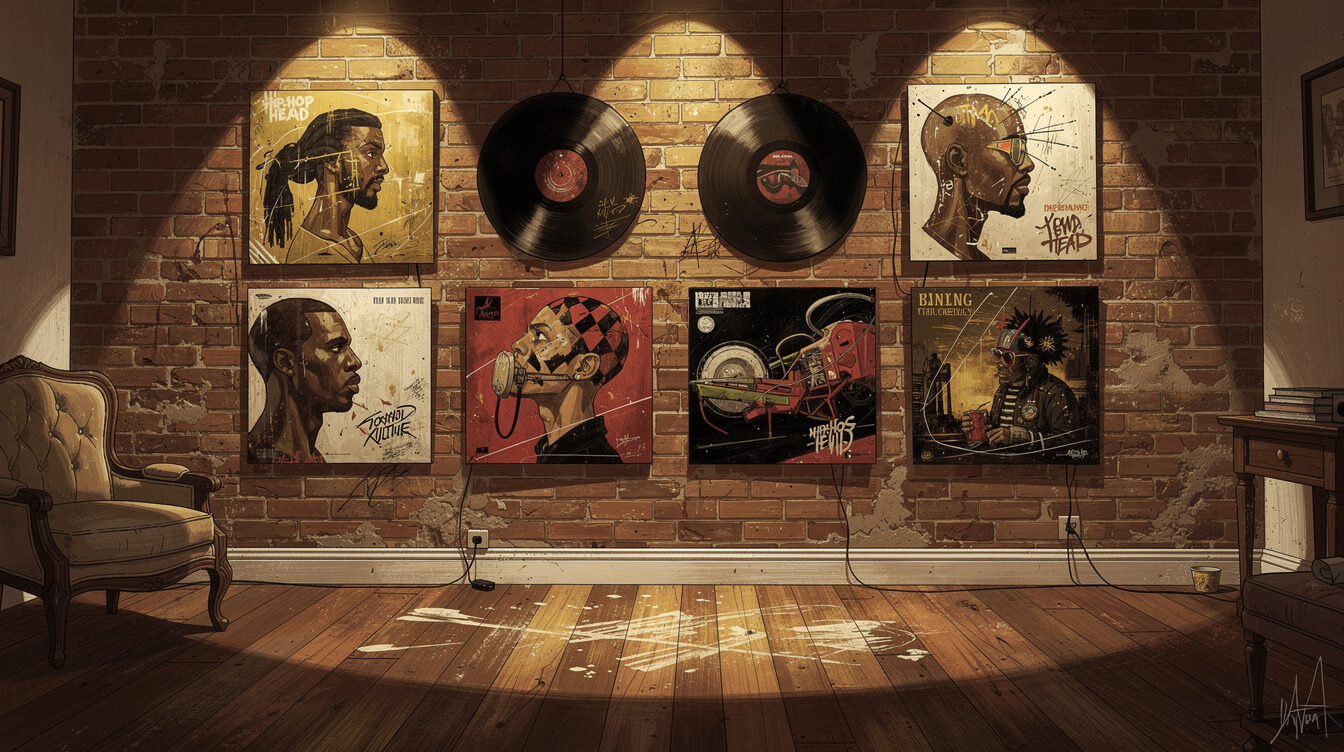
Not the ten most streamed. The ten that a hip-hop head under 30 in 2026 needs to sit with, in order, with the sample sources open on a second screen. Build the room, drop the needle, do the work.
- “Juicy” — start here because you have to. Mtume “Juicy Fruit.” The Rockwilder Poke arrangement. The line “Time to get paid, blow up like the World Trade” reads differently in 2026 than it did in 1994; sit with that.
- “Unbelievable” — DJ Premier at 25. R. Kelly vocal chop. Everything Wallace could do in one verse.
- “Warning” — the storytelling apex of Ready to Die. Isaac Hayes / Bacharach lineage.
- “Real Love (Remix)” — the origin verse. Not on any studio album, only on the Mary J. Blige remix single and the greatest hits.
- “Flava in Ya Ear (Remix)” — the industry-adjusting cameo. Fifth verse, six-minute record, first solo star on the Bad Boy roster after this one drops.
- “Notorious Thugs” — the technical peak. Triplet flow. Bone Thugs cadence. Wallace beating Bone Thugs at their own architecture on a track for his own album.
- “Ten Crack Commandments” — the Premier apex. Wallace turning street cliché into a numbered how-to and building a template thirty artists have copied.
- “Sky’s the Limit” — the vulnerability record. Bobby Caldwell sample. 112 hook. Spike Jonze video shot after the funeral.
- “I Got a Story to Tell” — Slick Rick storytelling lineage delivered in the third person, then flipped to prose. This is the Wallace mission statement disguised as an anecdote.
- “Suicidal Thoughts” — the last song on Ready to Die. Phone call with Puff. Wallace walking through his own funeral. Sylvia Striplin. Recorded in one take, per Lord Finesse’s 2018 Rock the Bells interview. It reads like foreshadowing because the artist put it there deliberately.

Build the Listening Room. Anchor the Wall.
If Ready to Die and Life After Death are on rotation, the wall needs a piece that matches the era. The Wu-Tang Forever LED neon is hand-built, limited edition, and reads the way a 1997 New York producer’s studio was actually lit — warm yellow on brick.
Why the 30-Year Ready to Die Anniversary Reframes the Whole Catalog
September 13, 2024 was Ready to Die’s 30th anniversary. The record still charts. The samples still get flipped by the next generation (Denzel Curry pulled the “Warning” bassline for a 2023 loosie). The songs still teach. What the 30-year mark actually reframes is the scale — 36 months of guest-verse work into a 4× platinum debut into a diamond-certified sophomore, all before the artist turned 25. Nobody has run that catalog arc since. Not J. Cole, not Kendrick, not Drake, not Cole’s biggest year — nobody has stacked that ratio of released songs to cultural impact in a 3-year window in mainstream rap history.
The catalog isn’t small. It was compressed. Sit with that when you build the playlist. Play “Juicy” into “Unbelievable” into “Real Love (Remix)” into “Notorious Thugs” and you will hear an artist who spent 36 months writing at the speed a normal career writes over 10 years. Rank the songs however you want — by chart, by sample, by producer, by guest verse. The catalog holds up under every frame.
Stay creative — The Custom Creative Team.
Get the Culture, Weekly.
Deep-dive breakdowns, anniversary drops, and first looks at new Custom Creative gear. One email a week. Hip-hop heads only.

🎧 Never Miss a Drop
Exclusive product releases, hip-hop deep dives, and member-only discounts. Straight to your inbox.
Free forever. No spam. Unsubscribe anytime.
Get the Culture, Delivered
Deep dives into hip-hop history, exclusive product drops, and discounts sent straight to your inbox. No spam, just culture.
Join 2,000+ hip-hop heads already in the loop. Unsubscribe anytime.