GZA Liquid Swords Album: Why the Chess Master’s Solo Classic Is Still the Wu-Tang Catalog’s Sharpest Blade
The GZA Liquid Swords album dropped November 7, 1995, and hip-hop has never fully caught up. Thirty-one years later, Gary Grice — the Genius, the Chess Master, the architect of Wu-Tang’s most cerebral corner — released what the Chicago Tribune would later call “one of the most substantial lyrical journeys in hip-hop history.” That’s not hyperbole. That’s just the record speaking for itself. If you’re a real hip-hop head and you haven’t sat with Liquid Swords the way it deserves to be sat with — cover to cover, vinyl crackle to outro — this is your invitation.
Because here’s the truth that the internet hasn’t reckoned with yet: no comprehensive deep-read on this album actually exists outside of Reddit threads and Wikipedia footnotes. Zero. In an era where every major hip-hop anniversary gets a retrospective and a 10.0 reassessment, GZA’s masterpiece has been conspicuously left in the cut. That ends today. We’re going track by track, production note by production note, chess move by chess move, through the most intellectually dense solo record in the entire Wu-Tang catalog.
November 7, 1995: Why That Date Still Hits Different for GZA Liquid Swords Album Fans
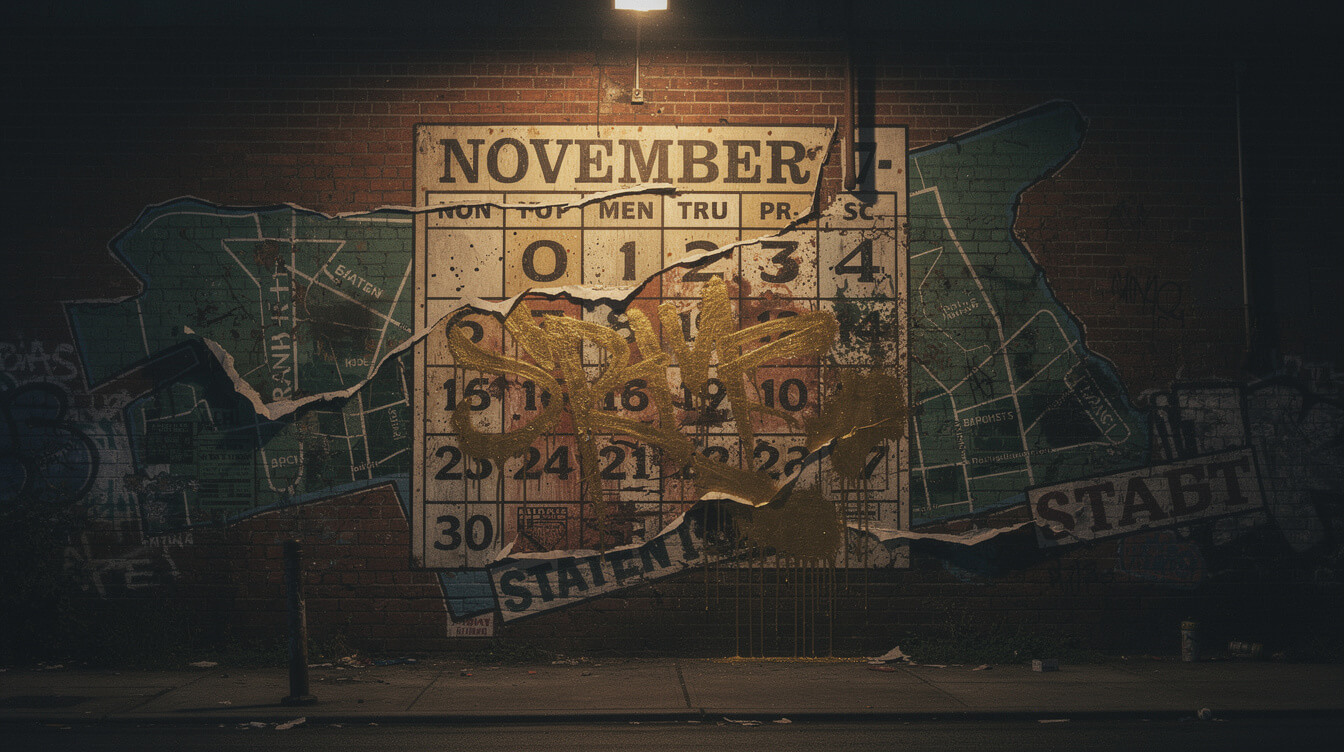
Put that date in context. 1995 was an impossible year for hip-hop. Only Built 4 Cuban Linx… dropped in August — Raekwon and Ghostface painting the most cinematic street narrative the genre had produced. Method Man’s Tical had already landed, ODB’s Return to the 36 Chambers had already landed. The Wu-Tang machine was moving. Then November 7 hit.
GZA — who had already ghostwritten bars for half the Wu catalog, who had been signed to Cold Chillin’ Records and essentially shelved by a label that didn’t understand what it had — stepped up and delivered Liquid Swords. This wasn’t just a comeback. This was a thesis statement. The Genius, vindicated.
The backstory matters: Gary Grice’s first label deal was a disaster. Cold Chillin’/Geffen signed him in 1989, released Words from the Genius in 1991, and then watched it sink with minimal promotion. They had one of hip-hop’s most gifted lyricists and gave him nothing. That scar lives in every bar on Liquid Swords — particularly on “Labels,” one of the most audacious industry critiques ever committed to wax, where GZA rhymes the names of forty-plus record labels in sequence and treats every single one of them like a suspect in a lineup.
By 1995, RZA had restructured the entire Wu-Tang operation as a five-year plan: flood the market, each member signs to a different major label, maintain creative control through Wu-Tang Productions. GZA was now back on Geffen — same label, different terms, different leverage. Liquid Swords was his reclamation project, and it showed in every bar.
The album peaked at number nine on the Billboard 200 and number two on the Top R&B/Hip-Hop Albums chart. The RIAA certified it Platinum — notably, nearly two decades after its release. A record that kept selling because it kept being discovered. That’s not streaming algorithm luck. That’s a classic doing what classics do.
The Chess Master and the Samurai: GZA’s Dual Identity on Liquid Swords
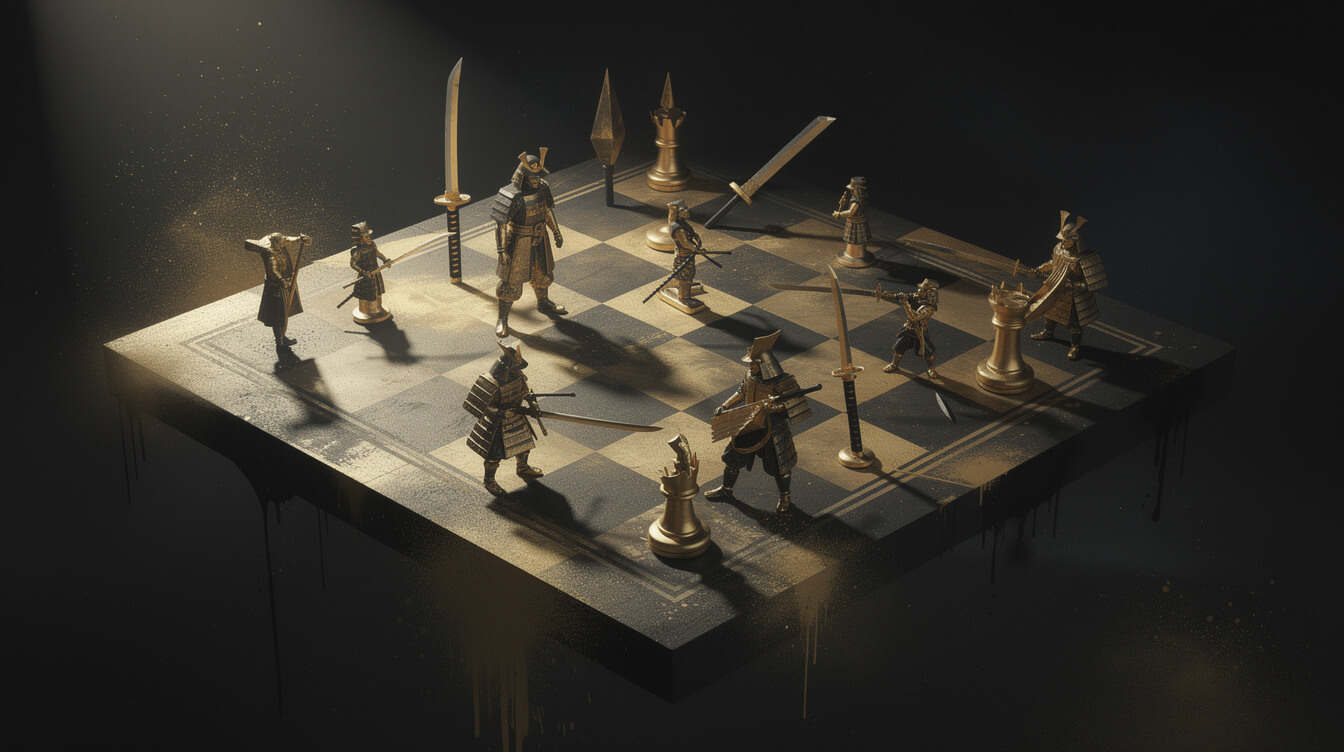
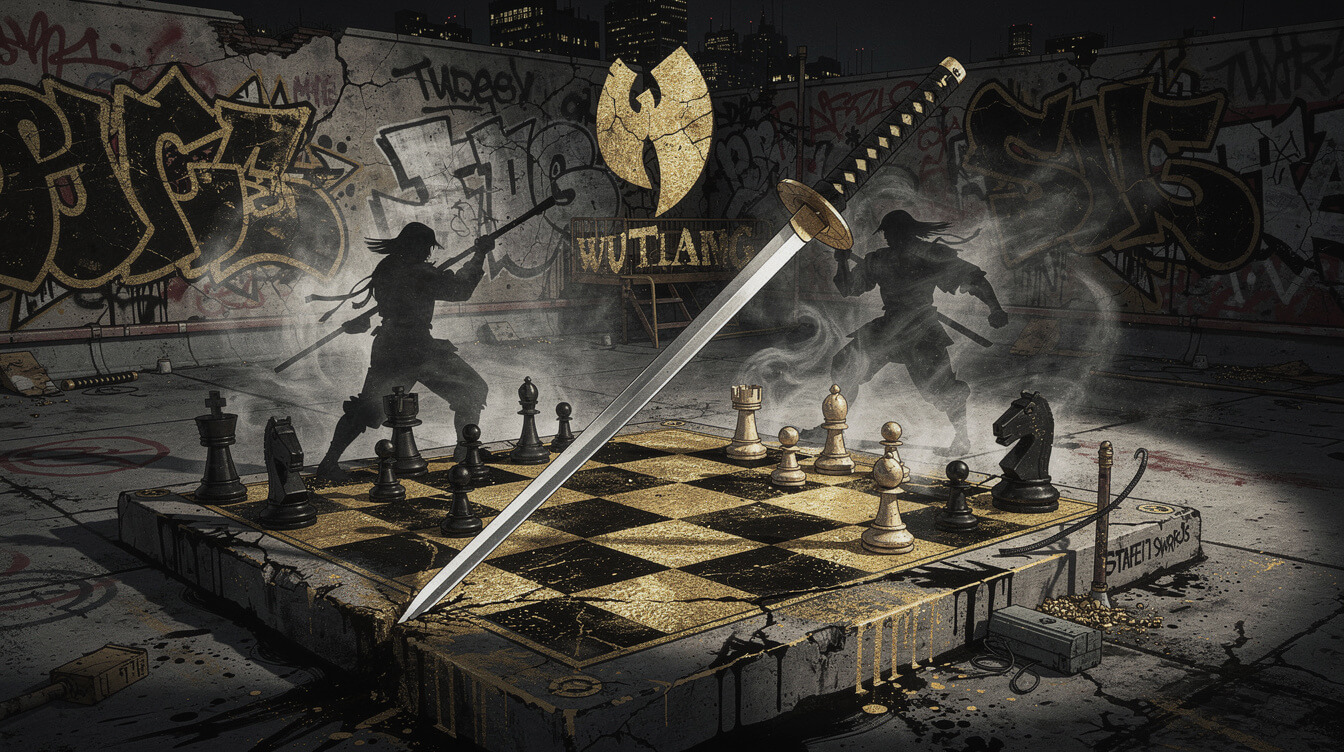
The album’s title is not arbitrary. GZA is a serious chess player — not casual weekend serious, but deep study serious. The chess metaphor threads through his entire artistic identity: calculated moves, sacrifice for position, thinking ten steps ahead while your opponent is still reactive. “The Genius” nickname didn’t come from ego; it came from the way he approached lyricism — as a strategic discipline, not just a performance.
The “Liquid Swords” image brings in the samurai parallel. The album opens with dialogue sampled from Shogun Assassin, the 1980 American re-edit of the Japanese chambara classic. The child narrator’s voice — setting the mythology of a master swordsman, betrayed and hunted, navigating a world hostile to his gift — immediately maps to GZA’s own biography. The betrayal by his first label. The wandering years. The Wu-Tang refuge. The re-emergence.
Liquid Swords is a samurai film in album form — and like the best chambara, it’s not about spectacle. It’s about stillness, precision, the sword that doesn’t need to be drawn because the threat of it is already the argument. Every time GZA starts a verse, you feel that pressure. He’s already moved three pieces before you see the first one.
The chess-and-samurai duality also speaks to GZA’s lyrical approach. He doesn’t rap fast. He doesn’t clutter his verses with easy punchlines. He places his words the way a chess master places pieces — each one weighted, each one creating pressure the opponent has to respond to. On “Liquid Swords” (the title track), his internal rhyme schemes are so dense they don’t announce themselves; they unfold on your fourth or fifth listen, the board’s full geometry only visible once you step back from it.
RZA’s Basement Blueprint: How Liquid Swords Was Made
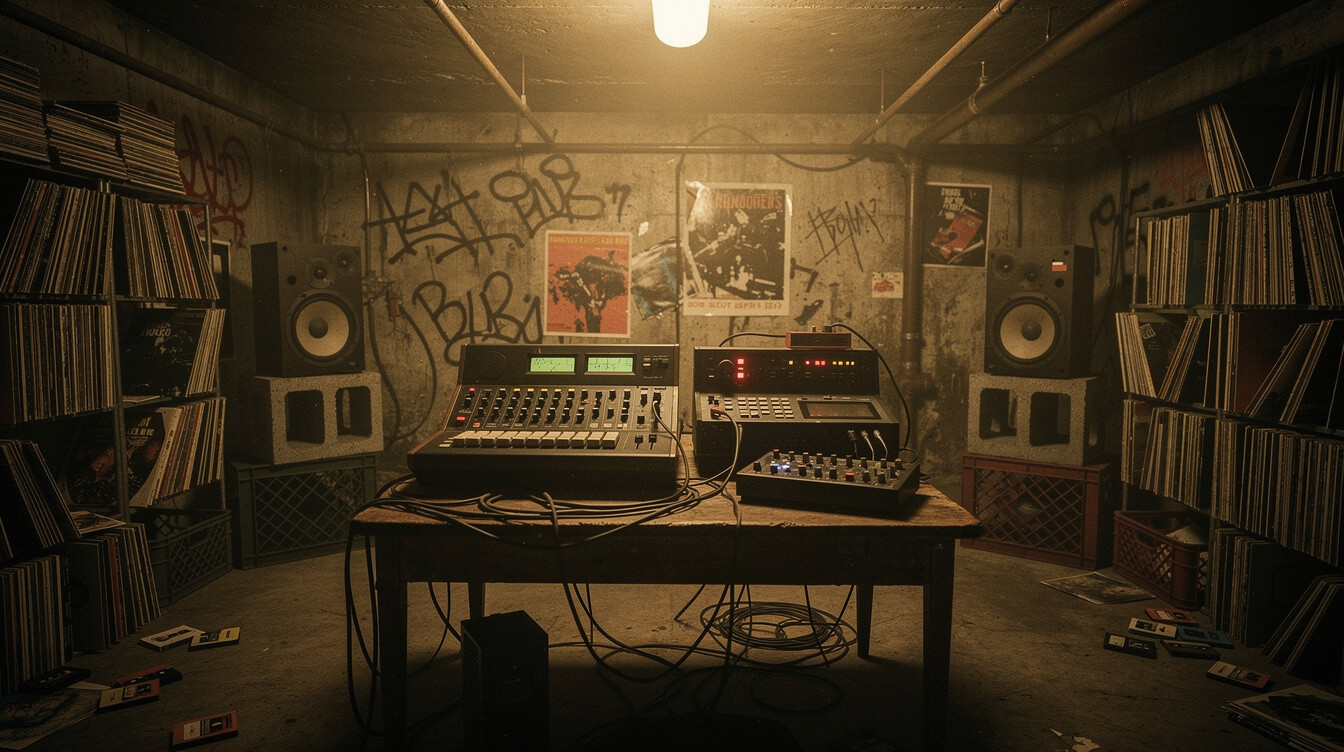
Every great Wu-Tang album has an architectural logic, and that logic lived in one room: RZA’s basement studio in Park Hill, Staten Island. No luxury. No SSL console. No rack of vintage outboard gear. Just a sampler, a drum machine, a crate of records, and a producer who had made a five-year pact to supply beats for the entire Wu-Tang Clan — one album at a time — before the window closed.
By the time Liquid Swords went into recording in mid-1995, RZA had already finished Tical, Return to the 36 Chambers, and was completing Only Built 4 Cuban Linx… simultaneously. He was running on pure momentum — and the beats he made for GZA are the most restrained of the entire 1993-1997 golden period. That restraint is intentional.
RZA understood that GZA’s lyrical density required space. Where Cuban Linx beats are lush and cinematic, dripping with mafioso atmosphere, Liquid Swords beats are skeletal — martial. The drums hit hard and then step back. The samples are short, looped with purpose, chosen for texture rather than melody. The bass sits low and patient. This is production as chess strategy: clear the board, let the Genius move.
The Shogun Assassin dialogue samples scattered throughout the album serve as scene-setters — a samurai film playing on a static-y TV in the background of every track. RZA used film dialogue as a production element throughout the Wu-Tang catalog, but on Liquid Swords it’s more cohesive, more purposeful. The album feels like a film score for a movie that doesn’t exist — but should.
The “4th Chamber” beat is the clearest example: a looping, hypnotic guitar figure over Park Hill drums that creates almost uncomfortable repetition. It shouldn’t work. It locks you in place, forces you to sit with Killah Priest’s verse like you’re being held for questioning. That’s by design. RZA engineering the listener’s patience to match GZA’s delivery.
Track-by-Track: The Cuts That Defined the GZA Liquid Swords Album
You can’t do a full 12-track breakdown in one section, but the cuts that matter deserve their flowers:
“Liquid Swords” (title track): The opener after the Shogun Assassin intro. “I walk the roads like Jesus of Nazareth, I speak the mathematics” — that’s GZA’s mode of address throughout the album. Not ego. Geometry. The beat is one of RZA’s most austere, built on a haunting flute loop that sounds like it was recorded in a chamber with no exits. Single released October 10, 1995 — nearly a month before the album dropped. The market had no idea what was coming.
“Duel of the Iron Mic”: The Wu-Tang summit. Inspectah Deck, Masta Killa, and GZA go three rounds over a single beat. GZA opens with one of the most precision-crafted verses in the full Wu-Tang catalog. The self-mythology is operational here, not performed.
“Cold World”: Featuring Inspectah Deck. The album’s emotional core — a meditation on poverty, violence, and grinding reality in Staten Island. The Rebel INS verse is one of his finest performances anywhere in the catalog. GZA’s verse is economical and devastating. Released as a single November 28, 1995.
“Labels”: An exhibition. GZA spends three verses rhyming record label names into a coherent narrative about the music industry’s predatory relationship with Black artists. Def Jam, MCA, Motown, Capitol — each label becomes a character in the story of exploitation. It shouldn’t work as a rap song. It’s one of the album’s most technically impressive pieces.
“4th Chamber”: Featuring Killah Priest, Ghostface Killah, and RZA. Killah Priest at his most incandescent — if you want to understand why he has a cult following that has never diminished, start here. The song sounds like a war council conducted in a cathedral.
“Shadowboxin'”: Method Man brings the fire opposite GZA in what should have been a straightforward banger but is actually a sparring session — two completely different styles in conversation, neither yielding. Released as a double A-side with “4th Chamber” in March 1996, giving the album three months of post-release single momentum.
“B.I.B.L.E. (Basic Instructions Before Leaving Earth)”: Killah Priest closes the album solo — no GZA verse, just a nine-minute exploration of Five-Percenter cosmology, Moorish science, and spiritual accountability. The most unusual closing track on any major hip-hop album from that era. Nobody else would have made that call. Nobody.
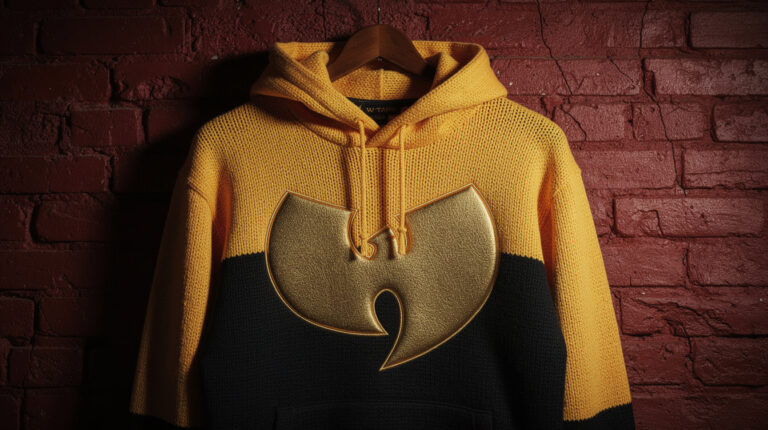
Looking for Wu-Tang music to wear? Our Wu-Tang Clan From the Slums of Shaolin Hoodie pays tribute to the same Park Hill mythology that runs through every track on this album — wear the world GZA rapped from.
Duel of the Iron Mic: The Wu-Tang Summit That Proves GZA’s Position
“Duel of the Iron Mic” deserves its own section because it illustrates something essential about GZA’s role within Wu-Tang. He is the standard. The person every other member is measured against in terms of pure lyrical craft. Not the most charismatic — that’s ODB, obviously. Not the most commercially successful — Method Man. Not the most cinematic storyteller — Raekwon and Ghostface. But the most technically precise. The Genius title is functional, not honorary.
When you put Inspectah Deck, Masta Killa, and GZA on the same track and let them compete, you get a master class in how differently great MCs approach craft. Deck is dense and theatrical, his cadence urgent, his imagery cinematic. Masta Killa is measured, his rhyme patterns deliberate and weighty. GZA operates at a different altitude entirely — his verse proceeds with inevitability, each line the logical conclusion of the one before it. Chess moves that arrive before you saw the setup.
The track’s format — a duel in the classic martial arts sense, combatants going round for round — reflects the album’s core mythology. Hip-hop as chess. Hip-hop as sword fighting. Not violence but contest, skill meeting skill in a structured arena where the best practitioner earns the respect, not just the loudest voice.
This is why Liquid Swords has aged the way it has. It was never about being the biggest or the flashiest. It was about being the most precise. And precision doesn’t expire.

Rep the Wu-Tang Forever Legacy
GZA helped build the Wu-Tang Forever era. This limited edition LED neon sign brings that energy into your space — the same gold-on-black aesthetic that Liquid Swords was built on, now illuminating your wall.
Why Liquid Swords Is Trending Again in 2026 and What It Says About the Culture
Here’s what the algorithm knows that the critics haven’t acknowledged yet: Liquid Swords is back. Redbubble’s hip-hop t-shirt front page featured GZA Liquid Swords gear as a top category in mid-2026, sitting alongside The Roots’ Things Fall Apart, Mobb Deep’s catalog, and Nas’ “World Is Yours” imagery. This is organic cultural demand — not a label reissue campaign, not a streaming playlist push. Real people, in 2026, seeking out a 31-year-old record’s visual iconography and wanting to wear it.
The underground boom-bap revival is real. When trap’s sonic innovations started feeling exhausted, a generation of producers and listeners began excavating the 1994-1998 New York period with fresh ears. GZA was waiting for them. He never chased the zeitgeist; he simply made something dense enough that each decade of listeners finds new chambers inside it.
The academic attention has also grown. GZA’s work with the Science Genius program — bringing rap battles into STEM education — connected his chess-and-science worldview to educational applications, and made him visible to audiences who came to hip-hop through curriculum rather than the streets. The Genius is, in fact, a genius, and 2026 audiences are catching up to what Staten Island knew in 1995.
The 31-year anniversary this November will likely see the vinyl market spike again — Liquid Swords already moved significant numbers on Discogs when the Reddit anniversary discussion thread blew up. The collector market for this record has never cooled. If you want to explore the full Wu-Tang sound and catalog, our comprehensive Wu-Tang merchandise guide covers every official piece of the catalog worth owning in 2026.
And for the full story of the Wu-Tang aesthetic — where the iconic symbol comes from, how a kung-fu bat became hip-hop’s most recognizable logo — check our deep-dive: The Wu-Tang Clan Symbol: How a Kung Fu Bat Became Hip-Hop’s Most Powerful Logo.
Frequently Asked Questions: GZA Liquid Swords Album
When was GZA Liquid Swords released?
November 7, 1995, on Geffen Records. It was GZA’s second solo studio album, following Words from the Genius from 1991.
Who produced Liquid Swords?
RZA produced the entire album at his basement studio in Park Hill, Staten Island. This was part of RZA’s self-imposed five-year plan to produce every Wu-Tang solo record before stepping back from production.
How did Liquid Swords chart?
It peaked at #9 on the Billboard 200 and #2 on the Top R&B/Hip-Hop Albums chart. The RIAA certified it Platinum — notably, nearly two decades after its release, testament to the album’s sustained commercial life across generations.
What does “Liquid Swords” mean?
GZA used the phrase to describe the double-edged nature of words — language as a weapon that cuts both ways, requires precision to wield, and retains its damage long after contact. Combined with the samurai imagery from Shogun Assassin and GZA’s chess metaphor, it captures his entire artistic philosophy: movement is consequential, words are weapons, intelligence is the discipline.
Is Liquid Swords considered a classic?
Unambiguously. The Chicago Tribune called it “one of the most substantial lyrical journeys in hip-hop history.” It appears on virtually every credible “greatest hip-hop albums” list. The question isn’t whether it’s a classic; the question is why it hasn’t gotten the full editorial treatment it deserves. Until now.
What Shogun Assassin samples appear on the album?
The intro and several interlude sequences sample dialogue from Shogun Assassin (1980), an American re-edit of two Japanese Baby Cart films. The narrating child’s voice sets the album’s samurai mythology: a master in exile, a son bearing witness, vengeance as art form.
Who appears on the GZA Liquid Swords album?
All eight other Wu-Tang members appear, plus Wu-Tang affiliate Killah Priest. Key features: Method Man (“Shadowboxin'”), Inspectah Deck (“Cold World,” “Duel of the Iron Mic”), Masta Killa (“Duel of the Iron Mic”), Ghostface Killah and RZA (“4th Chamber”), and Killah Priest who closes the album solo on “B.I.B.L.E.”
Final Thoughts: The Album That Made You Listen Different
Thirty-one years in, the GZA Liquid Swords album doesn’t ask for your respect. It already earned it. What it asks for is your attention — the kind you give to a chess board, not a slot machine. The kind you give to a samurai film where every cut is intentional, every moment of stillness contains more information than the movement around it.
Hip-hop produces entertainers constantly. Geniuses — people who fundamentally advance what the art form can hold — are rare. GZA is one. Liquid Swords is the proof. And if you slept on it, or if you’ve been giving it casual playlist plays without sitting in it the way it deserves, November 2026 — the 31st anniversary — is the right time to correct that.
The Chess Master is patient. The board stays set. The sword stays liquid. Come correct.
Want to celebrate the GZA legacy every day? Our GZA at 60 profile covers the Genius’s full career, from the Cold Chillin’ era to where he stands today.
Stay creative — The Custom Creative Team
Stay Connected to the Culture
Deep-dives, anniversary drops, exclusive product releases. Hip-hop content delivered to real heads — no filler, no algorithm games.

🎧 Never Miss a Drop
Exclusive product releases, hip-hop deep dives, and member-only discounts. Straight to your inbox.
Free forever. No spam. Unsubscribe anytime.
Get the Culture, Delivered
Deep dives into hip-hop history, exclusive product drops, and discounts sent straight to your inbox. No spam, just culture.
Join 2,000+ hip-hop heads already in the loop. Unsubscribe anytime.