The Roots’ The Seed (2.0): How a Live Band Out-Grooved the Sampler Era
In the spring of 2003, a Roots single climbed to No. 2 in Denmark, went Gold in New Zealand, and landed Robert Christgau’s verdict that it was “2002’s freshest roots rock track and jammingest avant rap track” — all while most of America barely noticed. The Roots’ “The Seed (2.0)”, a hybrid of distorted guitar, psychedelic soul, and rap-rock swagger, is the rare hip-hop song that critics kept calling a rock song. That confusion is the point. Drummer-producer Questlove and a guitarist named Cody ChesnuTT built a record that argued, loudly, that a live band could out-groove a sampler — and 20-plus years later, that argument reads like a prophecy.
This is the story of how a cover of an obscure 2002 lo-fi record became The Roots’ defining statement, why Jeff Vrabel of Billboard heard “Prince-styled keyboards” where most people heard a rap song, and why the gap between The Roots and literally everyone else in hip-hop has only widened since.
The Seed (2.0): The Unlikely Hit That Almost Wasn’t a Roots Song
A Cover of a Cover — Cody ChesnuTT’s Original
“The Seed (2.0)” is, technically, a Roots song The Roots didn’t write from scratch. It’s credited as an “uptempo retooling” of a song called “The Seed,” which Cody ChesnuTT had buried on his self-released, 36-track, lo-fi bedroom opus The Headphone Masterpiece (2002) — an album almost nobody outside of a small circle of soul obsessives had heard. The Roots found it, slowed-walked it through a full-band arrangement, and turned a home-recorded curiosity into the second single off their fifth album, Phrenology (2002).
Recorded in 2001, Released Into a Different Hip-Hop World
The track was recorded in November 2001 and released as a single on March 31, 2003, on MCA, credited to Black Thought (Tariq Trotter) and Cody ChesnuTT (listed under his legal name, Antonious Bernard Thomas) as songwriters, with Questlove and ChesnuTT sharing production. At 4:27, it’s longer than most rap radio singles of the era, and it doesn’t rap for the first verse — it just plays, guitar-first, like a lost Funkadelic b-side. That’s not an accident. In the same era that produced 50 Cent’s “In Da Club” and Lil Jon’s crunk explosion, The Roots released a song built around a live rock riff and called it a single. The gamble paid off everywhere except the one chart that would have made it a “hit” by American radio standards — it never cracked the Billboard Hot 100, but it hit No. 2 in Denmark, No. 5 in Finland, No. 22 in Switzerland, and No. 33 on the UK Singles Chart, with Top 40 showings in Germany (No. 67) and Australia (No. 78), going Gold in both Denmark (45,000 units) and New Zealand (15,000 units).
A Video Award Nod That Confirmed the Crossover
The song’s music video — which features ChesnuTT front and center on guitar — got heavy rotation on MTV and BET and earned a nomination for the MTV2 Award at the 2003 MTV Video Music Awards. Wikipedia’s own genre tag for the track lists rock, hip-hop, psychedelic soul, roots rock, avant rap, dirty rap, and rap rock simultaneously — seven genre tags for one four-and-a-half-minute song, which is its own kind of proof that nobody, including the people cataloging it, could cleanly file “The Seed (2.0)” under hip-hop alone.
Cody ChesnuTT’s Guest Verse and the Neo-Soul/Rock Handoff
Who Cody ChesnuTT Actually Was in 2003
Cody ChesnuTT wasn’t a rapper, a singer with a deal, or anyone with an industry profile when The Roots pulled “The Seed” off his record. Born Antonious Thomas in 1968, he’d relocated to Los Angeles years earlier and, improbably, written and produced five songs for the R&B group Six Feet Deep at Death Row Records — a strange footnote for a guy who’d end up defining a rock-soul sound. His own band, The Crosswalk, got a brief deal with Hollywood Records and then got dropped. After that collapse, ChesnuTT bought a 4-track cassette recorder, set up what he called “The Sonic Promiseland” in his bedroom, and recorded all 36 tracks of The Headphone Masterpiece completely alone — distortion, hiss, and all. That’s the version The Roots fell in love with: unpolished, loud, unmistakably a rock record wearing soul clothes. By featuring him on guitar and lead vocal on “The Seed (2.0),” The Roots did something almost no rap group was doing in 2002 — they gave a dropped, unsigned rock-soul outsider the loudest guest spot of their career to date, and let him sound exactly as raw as he did on his own record.
The Hook That Crossed Genre Lines Without Apologizing
Critics scrambled to categorize it. Brett Berliner at Stylus Magazine called it “a rock song, featuring a little bit of funk and just a very little bit of hip-hop” and still named it the best track on Phrenology. Pitchfork’s Sam Chennault called it an “orgiastic garage funk number” and the album’s “most immediately satisfying track,” later ranking it No. 330 on Pitchfork’s “Top 500 Tracks of the 2000s.” The A.V. Club‘s Stephen Thompson put it at No. 9 on his songs-of-the-year list, and the Associated Press’s Jake Coyle flatly called it “one of the best rock songs of the decade.” Nobody was calling it the best rap song of the decade. That’s the handoff: a hip-hop group made a record so convincingly live-band that the culture writers covering it filed it under rock without a second thought.
ChesnuTT rode that momentum for exactly as long as it lasted. He was nominated for the Shortlist Music Prize in October 2003 and performed at the ceremony at LA’s Wiltern Theatre, then appeared in Dave Chappelle’s 2006 documentary Block Party (filmed in September 2004). He never had another moment that big — but one guest vocal, on one Roots single, is the reason a bedroom four-track recording from an unsigned, dropped Atlanta musician ended up on a Pitchfork decade-defining list at all.
Live Band vs. Sampler: The Roots’ Case for Real Instruments in Hip-Hop
Questlove’s Production Choice Was the Argument
By 2002, the MPC and the sampler had already won hip-hop’s production war — Dr. Dre, the Neptunes, and Timbaland were building entire chart empires on drum machines and chopped loops. The Roots had spent their whole career as the outlier: a full band (drums, bass, keys, guitar, MC) playing what other groups were sampling. Questlove didn’t just drum on “The Seed (2.0)” — he and ChesnuTT co-produced it as a live take, letting the guitar, bass, and drums breathe and bend in ways a loop-locked sample grid can’t. The Guardian‘s Alexis Petridis described the whole of Phrenology as “distorted rock, hip-hop and psychedelic soul,” and that genre-blur wasn’t a happy accident — it was Questlove using a live band to do things a sample simply can’t: push the tempo in real time, let a chord ring out past the bar line, let ChesnuTT’s vocal crack instead of auto-tuning it flat.
Why the Critics Kept Reaching for “Rock,” Not “Rap”
Jeff Vrabel’s Billboard review called it “a genre-bending mix of rock guitars and Prince-styled keyboards and drums” — Prince being the obvious reference point for a one-man-band aesthetic built on live funk chops, not samples of other people’s funk records. That’s the real flex buried in “The Seed (2.0)”: most rap producers were sampling 1970s funk and soul for texture. The Roots just hired a guy who could play it live and let him play it loud, undercutting the entire sample-clearance economy the genre had built itself around.
From Okayplayer to the Tonight Show: How This Era Built an Institution
The Philadelphia Soulquarians Scene
“The Seed (2.0)” didn’t happen in a vacuum — it came out of the Soulquarians, the loose Philadelphia-and-New-York collective of Questlove, D’Angelo, Erykah Badu, J Dilla, Common, and Mos Def that spent the late ’90s and early 2000s treating live instrumentation as a competitive advantage, not a limitation. If you want the fuller arc of that scene’s neo-soul half, our deep dive on Erykah Badu’s Baduizm at 29 traces the same live-band-first philosophy from the other end of the Soulquarians orbit. The Roots were the hip-hop anchor of that whole movement, and “The Seed (2.0)” is the moment their core idea — a rap group that plays instead of loops — got its biggest commercial test.
House Band Residency, 2009 to Now
That credibility didn’t stay underground. In 2009, The Roots became the house band for Late Night with Jimmy Fallon, a gig they held until 2014, when they moved with Fallon to The Tonight Show Starring Jimmy Fallon — a role they still hold today. It’s worth sitting with how unlikely that is: a group that built its reputation on being too musically dense for radio ended up as the most-seen live band in American television, nightly, for over 15 years. None of that happens without “The Seed (2.0)” first proving, in front of critics and chart compilers in six countries, that a hip-hop band playing real instruments wasn’t a novelty act. For the fuller cast of who’s actually in that band now versus who recorded Phrenology, The Roots Members Explained breaks down the full roster, then and now.
If that live-band-over-everything instinct is the part of The Roots you connect with, our The Roots How I Got Over Hoodie pulls from the same post-Phrenology era of the band’s catalog — built for people who’d rather talk about Questlove’s drum tone than anyone’s mixtape numbers.
The Sound That Anticipated Today’s Live-Band Rap Revival
A Song Covered by a Punk Band, an Italian Soul Star, and a Jazz Singer
Genre crossover proved to be “The Seed (2.0)”‘s longest legacy. American rock band Person L covered it for the Fearless Records compilation Punk Goes Crunk in 2008. Italian soul singer Zucchero Fornaciari borrowed its style and arrangement — without a direct cover — for “Un kilo” off his 2006 album Fly. And in 2021, jazz vocalist Kurt Elling covered it on his album Superblue with guitarist Charlie Hunter, nearly two decades after the original. A song gets covered by a punk band, a jazz singer, and an Italian pop star only if the arrangement underneath the rap verses was strong enough to survive total genre transplant — which is exactly what a sample-based beat usually can’t do.
Hearing the Through-Line to Today’s Rap
You can hear “The Seed (2.0)”‘s DNA in the live-band-first rap and R&B that’s dominated the last decade — Anderson .Paak building his entire catalog around a drummer’s pocket, Kendrick Lamar touring To Pimp a Butterfly with a full jazz band instead of a DJ, D Smoke and Thundercat treating the bassline as the lead instrument. None of those artists need to have heard “The Seed (2.0)” specifically to be working in the lane it staked out first in mainstream hip-hop: real musicians, playing in real time, inside a rap song. The Roots didn’t invent live-band hip-hop — but they proved, chart position and Gold certifications in hand, that it could sell.
Where It Sits in the Phrenology Catalog, Next to Things Fall Apart
Following a Grammy-Winning Album Was No Small Task
Phrenology had to follow 1999’s Things Fall Apart, the album that turned The Roots into Grammy winners — “You Got Me,” featuring Erykah Badu, won Best Rap Performance by a Duo or Group at the 42nd Grammy Awards and peaked at No. 39 on the Hot 100, while Things Fall Apart itself earned a Best Rap Album nomination. “The Seed (2.0)” was The Roots answering the “how do you top a Grammy” question by refusing to repeat the formula — instead of chasing another Badu-featuring neo-soul single, they went harder into live-rock territory with a total unknown on lead vocal. That’s a genuinely bold sequencing decision for a group that had just tasted its biggest commercial validation.
How It Reads Decades Later
Rolling Stone eventually ranked “The Seed (2.0)” the 43rd best song of its decade. Combined with Pitchfork’s No. 330 (out of 500) and the two Gold certifications, the song occupies a strange, specific space in hip-hop criticism: a near-unanimous critical favorite that most casual hip-hop listeners in the U.S. still associate with “that Roots song that sounds like a rock song” rather than naming it outright. If you’re building out a Roots discography from the catalog side rather than the chart side, pairing this one with The Roots Illadelph Halflife Hoodie covers the other end of their ’90s-to-2000s evolution — from boom-bap purists to the live-band rock-soul hybrid “The Seed (2.0)” cemented.
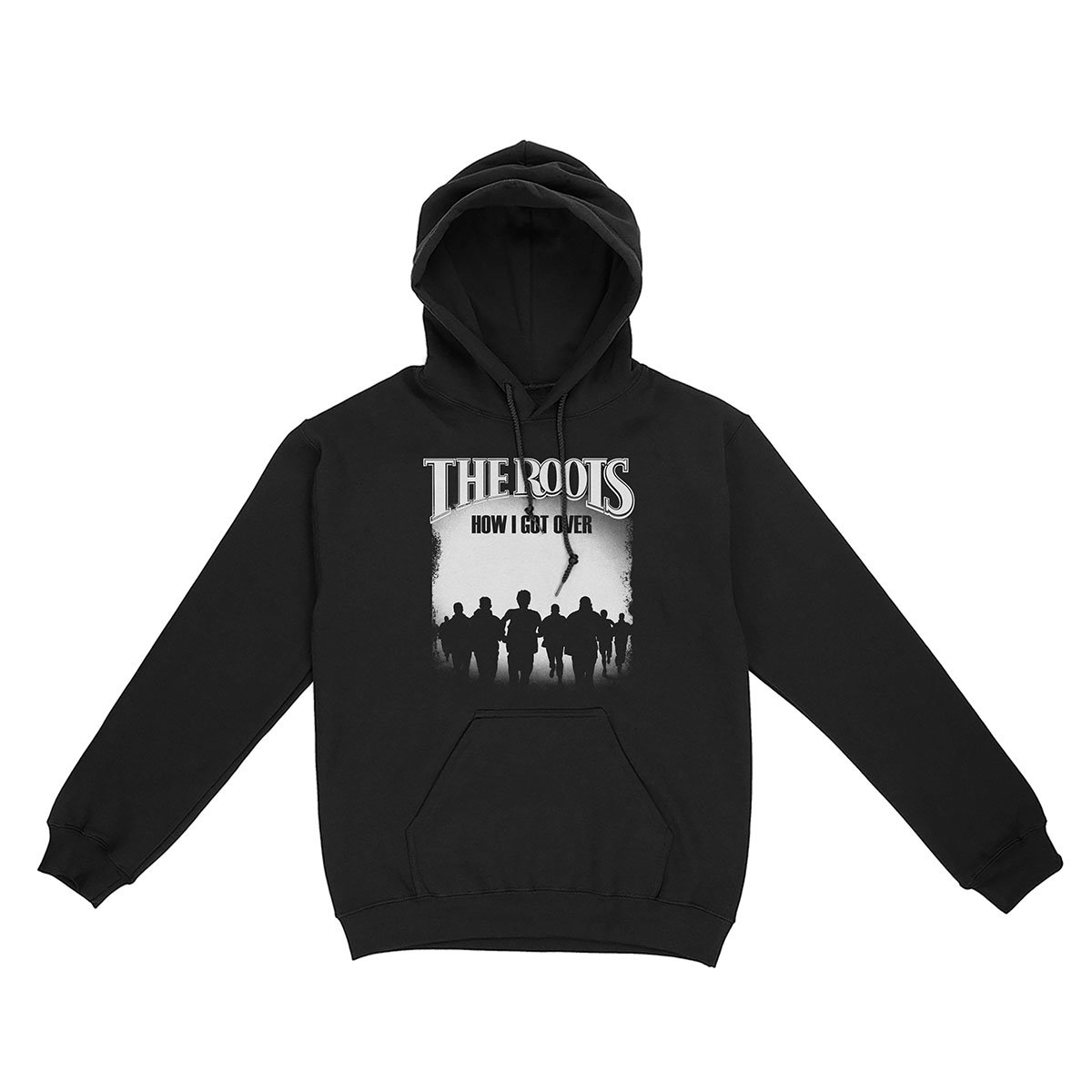
The Roots How I Got Over Hoodie
Built for the live-band-over-everything crowd — the same instinct that made “The Seed (2.0)” a classic, now on a hoodie.
Frequently Asked Questions About The Seed (2.0)
Is “The Seed (2.0)” a cover song?
It’s a reworked version of Cody ChesnuTT’s own lo-fi original “The Seed,” off his 2002 self-released album The Headphone Masterpiece. The Roots built a full-band arrangement around it and released it as “The Seed (2.0)” on their album Phrenology.
Did “The Seed (2.0)” chart in the US?
It never reached the Billboard Hot 100. Its real chart success was international — No. 2 in Denmark, No. 5 in Finland, No. 22 in Switzerland, No. 33 on the UK Singles Chart, and Top 40 showings in the Netherlands and Germany, with Gold certifications in Denmark and New Zealand.
What album is “The Seed (2.0)” from?
Phrenology (2002), The Roots’ fifth studio album and the follow-up to the Grammy-winning Things Fall Apart (1999).
Who produced “The Seed (2.0)”?
Questlove and Cody ChesnuTT co-produced the track. Black Thought (Tariq Trotter) and ChesnuTT (credited under his legal name, Antonious Bernard Thomas) share the songwriting credit.
Has anyone else covered “The Seed (2.0)”?
Yes — three very different artists, decades apart: rock band Person L (2008, for the compilation Punk Goes Crunk), Italian soul artist Zucchero Fornaciari (stylistically, on 2006’s “Un kilo”), and jazz singer Kurt Elling with guitarist Charlie Hunter (2021, on Superblue).
What genre is “The Seed (2.0)”?
Officially, all of them at once — it’s tagged rock, hip-hop, psychedelic soul, roots rock, avant rap, dirty rap, and rap rock. Critics at the time leaned toward calling it a rock song with hip-hop and funk inside it, not the other way around.
Did Cody ChesnuTT have other hits?
No — “The Seed (2.0)” remains his closest brush with mainstream visibility. He was nominated for the Shortlist Music Prize in 2003, appeared in Dave Chappelle’s Block Party documentary in 2006, and released an EP, Black Skin No Value, in 2010, but never repeated the crossover scale of the Roots collaboration.
Final Thoughts: The Sampler Won the Decade, But This Song Won the Argument
“The Seed (2.0)” never had to beat the drum machine commercially — Dre, the Neptunes, and Timbaland were never losing that fight in 2003. What it did instead was prove, with Gold plaques from two different countries and a critical consensus that still holds two decades later, that a hip-hop group playing real instruments in real time wasn’t a limitation or a gimmick. It was just a different, harder way to make the same point a sample makes — and sometimes a better one. The Roots spent the next twenty years turning that proof into a nightly TV institution. Cody ChesnuTT, the unknown who wrote the original, got a Grammy-nominated album’s biggest single out of a song he recorded alone on a four-track. Nobody planned that trade. It just happened to be the right song at the right studio session.
Stay creative — The Custom Creative Team
The Culture, Delivered Weekly
Deep catalog breakdowns, new drops, and the stories behind the merch — straight to your inbox.

🎧 Never Miss a Drop
Exclusive product releases, hip-hop deep dives, and member-only discounts. Straight to your inbox.
Free forever. No spam. Unsubscribe anytime.
Get the Culture, Delivered
Deep dives into hip-hop history, exclusive product drops, and discounts sent straight to your inbox. No spam, just culture.
Join 2,000+ hip-hop heads already in the loop. Unsubscribe anytime.