Eric B & Rakim Paid in Full: The 1987 Album, Decoded
July 7, 1987. A duo with one twelve-inch, a borrowed home studio in Queens, and a head full of jazz phrasing dropped the album that quietly rewrote what a rap record could be. Eric B & Rakim Paid in Full didn’t kick the door in — it walked through it calm, hands at its sides, and left every MC in the building reading their own rhymes back like first drafts.
What follows isn’t another reverent recap. Every blog from uDiscover to Wikipedia can tell you it dropped on 4th & B’way, peaked at No. 58 on the Billboard 200, and went platinum eight years late. We’re after the parts the SERP keeps missing: who actually built this record, why a one-verse title track was the most radical move of the year, how a song literally about chasing money sat on the fault line of hip-hop’s sampling-rights crisis, and whether the album still holds up almost forty years later. Receipts only. No fan-fic.
Eric B & Rakim Paid in Full: The Facts (July 7, 1987)
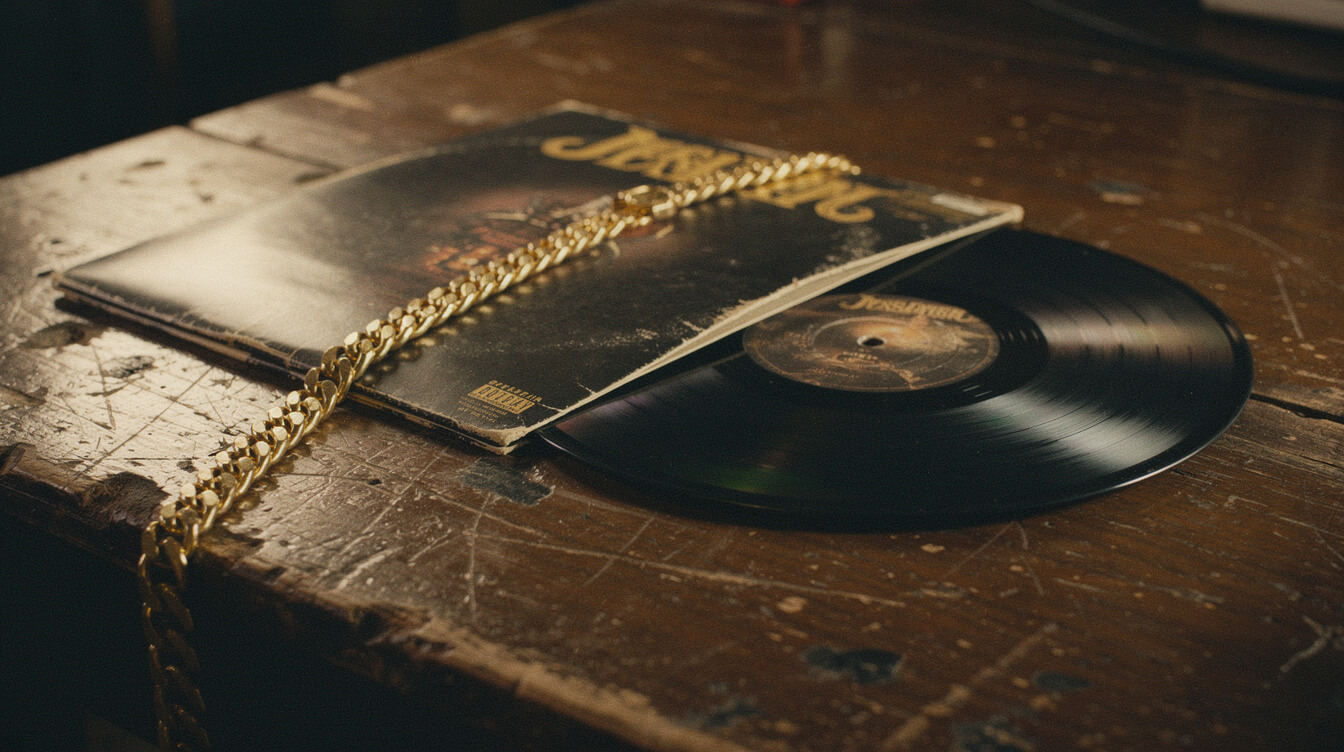
Released July 7, 1987 on 4th & B’way Records — an Island Records subsidiary — Paid in Full was Eric B. & Rakim’s debut studio album. Recording started in 1986 and wrapped in early ’87, split between Marley Marl’s home setup and Power Play Studios. (Wikipedia’s album page cites Power Play in Queens; the page on the title track lists a Manhattan address — a low-stakes inconsistency that flags how thin the documented production paper trail actually is.)
The tracklist runs ten tracks deep: “I Ain’t No Joke,” “Eric B. Is on the Cut,” “My Melody,” “I Know You Got Soul,” “Move the Crowd,” “Paid in Full,” “As the Rhyme Goes On,” “Chinese Arithmetic,” “Eric B. Is President,” and “Extended Beat.” Five of those were released as singles — though some sources list four; Wikipedia’s infobox is the most generous count. The 12-inch of “Eric B. Is President” b/w “My Melody,” released in 1986 before the LP, is what got Island interested in the first place.
Chart performance was steady, never spectacular: No. 58 on the Billboard 200, No. 8 on the R&B/Hip-Hop chart. The RIAA didn’t certify it Platinum until 1995 — almost eight years after release. That gap is the tell. Paid in Full isn’t an album that exploded; it’s an album that won by attrition, picked up by a new MC every year until it became unavoidable. Rolling Stone placed it at No. 61 on its 2020 “500 Greatest Albums of All Time.” That ranking is the receipt for a slow-burn classic, not an instant smash.
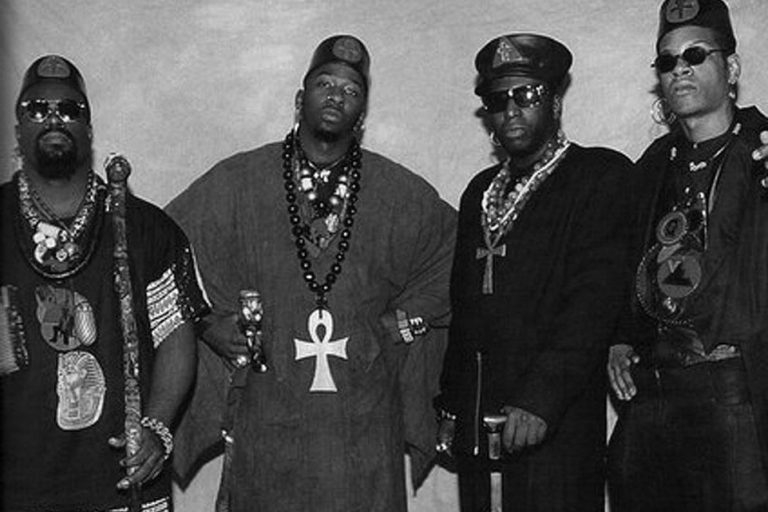
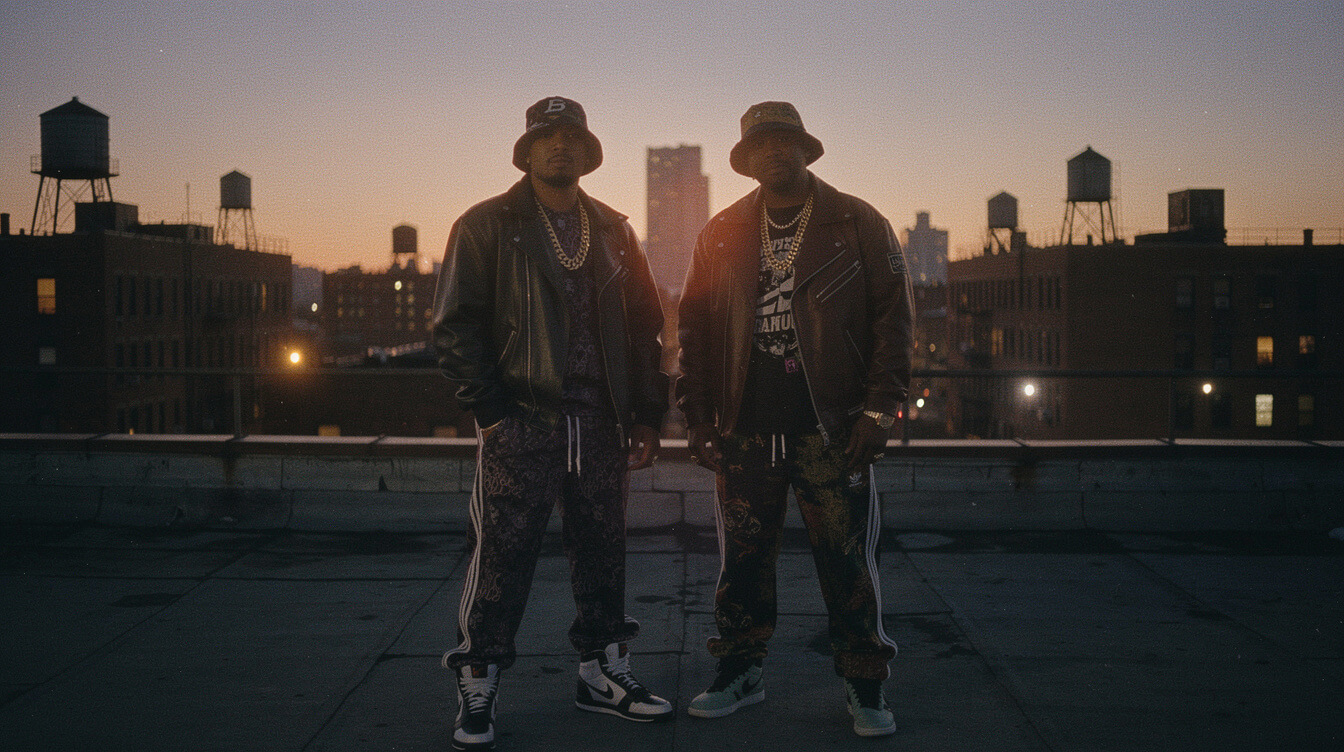
Cover art belongs to that early Slick Rick / Dapper Dan school: gold chains, Gucci-print backdrop, the duo posed unsmiling — a visual language that’s become so canonical it’s hard to remember it was wildly current in 1987, not retro. The shot was lifted directly out of the Dapper Dan boutique aesthetic running uptown at the time. Dap was literally screen-printing luxury logos onto leather jackets and tracksuits on 125th Street, and his clients were the entire first wave of rap royalty. The cover wasn’t a costume; it was a uniform photographed on a Tuesday.
Worth noting for the catalog completists: this LP is the only Eric B. & Rakim album recorded with the duo as relative unknowns. Their next three — Follow the Leader (1988), Let the Rhythm Hit ‘Em (1990), and Don’t Sweat the Technique (1992) — were all major-label MCA releases with bigger budgets, denser production credits, and a public who was waiting for every drop. Our complete guide to Rakim’s discography walks the chronology album by album. Paid in Full is the only record where you can still hear two artists figuring out what they were going to be.
Who Actually Built Eric B & Rakim Paid in Full? The Authorship Debate
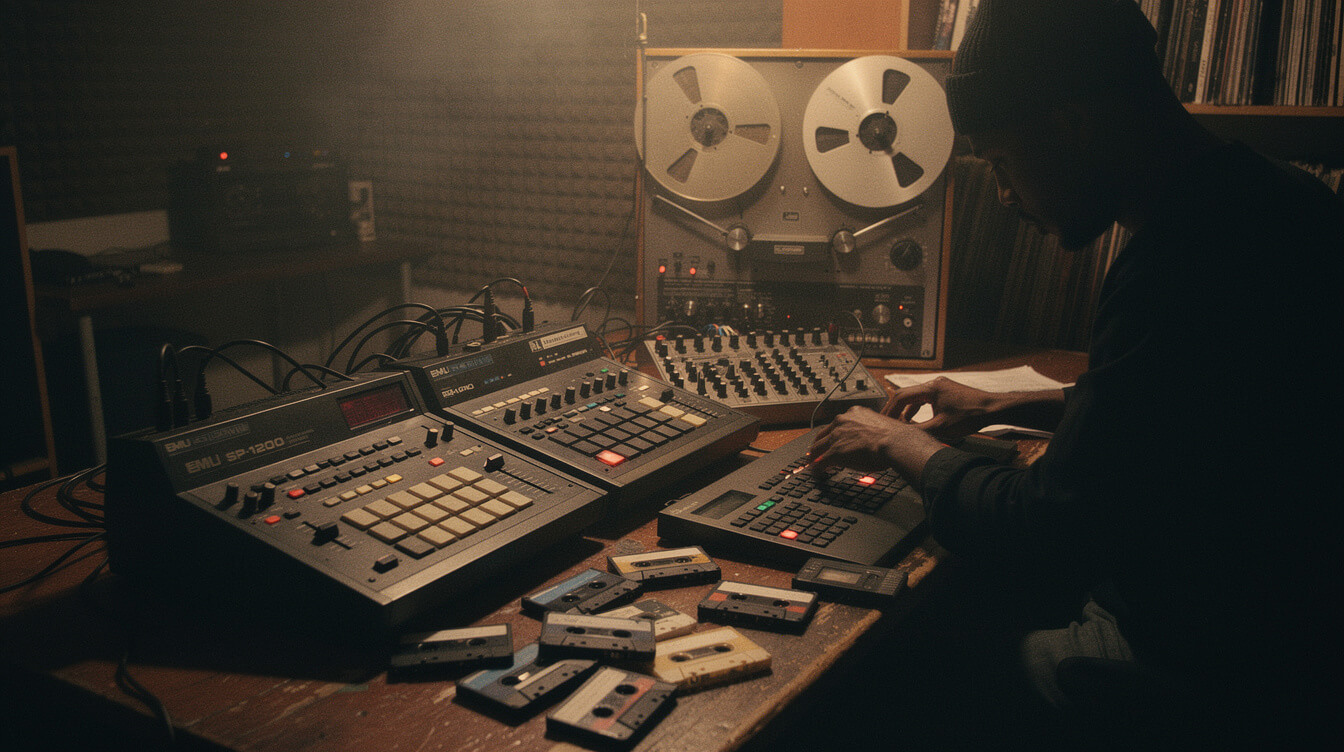
This is where the SERP goes quiet. Official production credit on every pressing reads “Eric B. & Rakim.” That’s the legal answer. The real answer is fuzzier — and more interesting.
uDiscover‘s retrospective on the album notes plainly that the early singles were “synthesized by Marley Marl from Eric B.’s ideas.” The album was tracked at Marley’s home studio. Marley Marl handled the single remixes that pushed the duo into wider rotation. He is everywhere on this record’s DNA without his name on the spine. A producer-breakdown video, Deconstructing Hip Hop: Remaking “Paid in Full,” goes further — its host flags a persistent rumor that Marley was effectively the uncredited producer on the LP itself, with Patrick Adams engineering. That’s a single-source claim; we’re flagging it, not asserting it.
What’s documented and uncontested: Patrick Adams — a disco-and-soul veteran whose résumé reads like a textbook in funk engineering — gave the album its strange sonic cohesion. uDiscover‘s words. The album is mixed with a restraint and warmth that doesn’t sound like a kid’s first record because, in important ways, it wasn’t. Adams’s hands are on the faders.
So the honest version reads like this: Eric B. brought the records, the ear, and the cut-up sensibility from his radio-DJ background. Rakim brought the pen. Marley Marl — depending on which producer-historian you trust — was either a heavy collaborator who never got the credit or the actual co-architect of the sound. Patrick Adams was the engineering glue. The duo got the cover and the publishing. Everyone else got citations in podcasts.
Why does it matter who built it? Because the next thirty-five years of rap producers, from the RZA to DJ Premier and Pete Rock, all studied this album as though it were a single sealed object dropped from the sky by Eric B. and Rakim alone. The actual lesson — that a great rap record is usually four or five people deep in the credits — has been mostly buried.
The “One Verse” Marvel: Why Less Was the Most Radical Move in 1987

The title track is sixteen bars. One verse. Autobiographical. No hook structure in the traditional sense. Rakim raps, the loop loops, the verse ends, and the song is over.
It’s so seamless that even people who lived inside this record for years missed it. West Coast rapper Big Tray Deee, in a track-by-track BEST ALBUMS breakdown, admits on camera that he played “Paid in Full” hundreds of times before he clocked there was only one verse. He thought he was zoning out and missing parts. He wasn’t. There were no parts to miss.
Now look at what was on radio in summer 1987: Run-DMC and LL Cool J yelling at full volume, Public Enemy weaponizing density, the Beastie Boys screaming over Slayer samples. Maximalism was the genre’s default setting. Loud, fast, layered. And here come these two from Long Island with an autobiographical hustle narrative — “Thinkin’ of a master plan / ‘Cuz ain’t nothin’ but sweat inside my hand” — delivered conversationally over a bassline lifted from Dennis Edwards and a drum break from a 1974 record almost nobody outside crate-digger circles had heard.
The artistic statement is the brevity. If your verse is dense enough, technical enough, autobiographical enough, you don’t need a second one. You don’t need a hook the listener can pump their fist to. The verse is the song. That’s an argument almost nobody else in commercial rap was making in 1987.
Then Coldcut grabbed the same song and made the opposite argument. The UK duo’s 1987 “Seven Minutes of Madness” remix is exactly what it sounds like: seven minutes, dozens of samples, Israeli singer Ofra Haza’s “Im Nin’alu” pitched and chopped into the spine, movie dialogue, scratch breaks, the works. Coldcut said: this song needs everything. Eric B. and Rakim said: this song needs nothing else. Two opposed theories of the same record, both correct, both released in the same calendar year. The Coldcut remix was an international hit and helped launch Ofra Haza’s global career. The original verse won the long game.
The Samples, the Crates, and the Lawsuit That Reshaped Hip-Hop
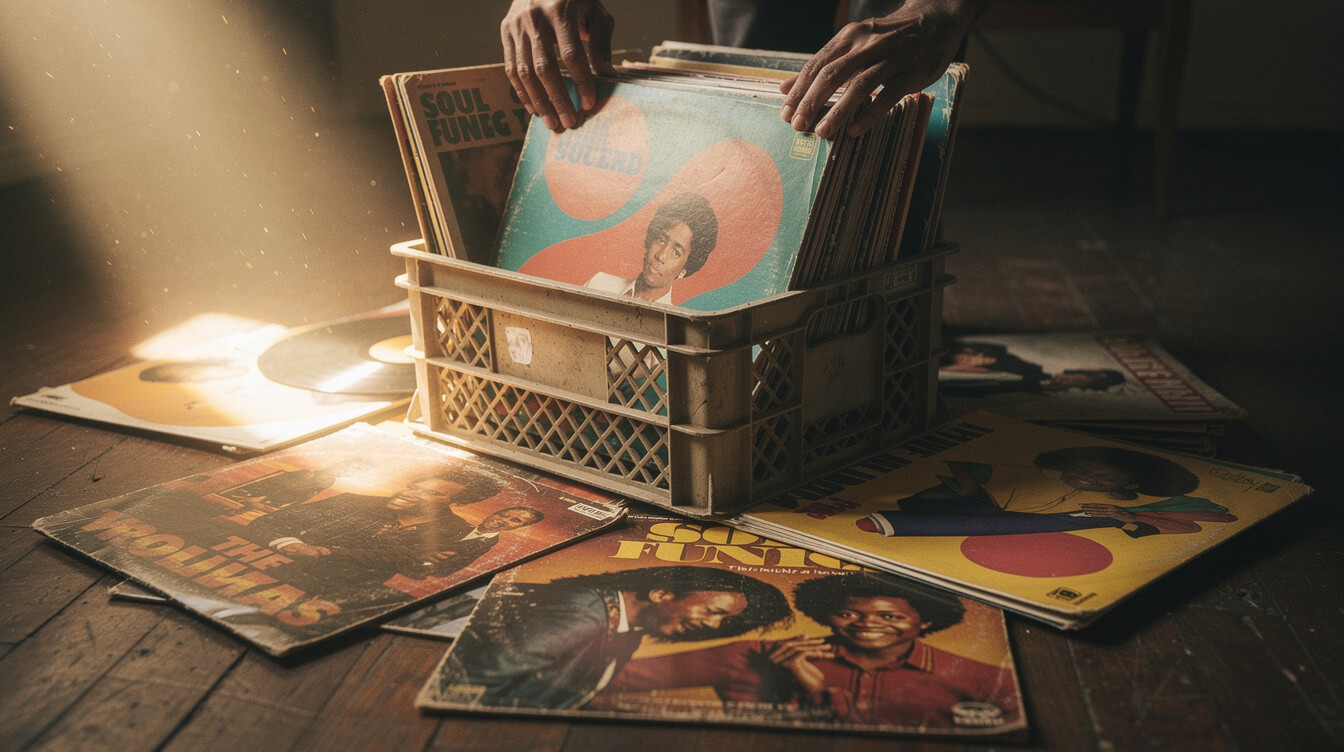
Let’s get the receipts straight. The drum break on “Paid in Full” is “Ashley’s Roachclip” by The Soul Searchers, a 1974 funk record on Sussex. The bassline traces to “Don’t Look Any Further” by Dennis Edwards featuring Siedah Garrett, 1984. Eric B.’s scratched vocal hook — “this stuff is really fresh” — comes from “Change the Beat” by Beside, a 1982 record that’s also the source of the most-sampled vocal phrase in hip-hop history. The Coldcut remix layered Ofra Haza’s “Im Nin’alu” on top of all of it, after Coldcut’s Jonathan More reportedly stumbled on Haza’s record by chance and realized it synced — pitched down — with the Roachclip drums.
The Deconstructing Hip Hop producer who broke the track down argues the Dennis Edwards bassline on the album cut was replayed on a synth rather than sampled cleanly off vinyl. That’s a single-source claim from one video host, so frame it as a debated production detail, not gospel. But it would explain why the bassline sits in the mix with a clarity that doesn’t quite match a needle-dropped sample.
Here’s the part the SERP keeps missing entirely. The album’s title is a hustle phrase — “get paid in full,” meaning collect what’s owed, settle the debt. The duo’s earlier single “Eric B. Is President” sampled James Brown, and James Brown’s catalog became one of the most litigated patches of ground in early hip-hop. A song about chasing money, built from uncleared records, sitting on the same shelf as the lawsuits that forced the entire industry to start clearing samples by the early ’90s. That’s not a coincidence. The album is a snapshot of the brief window where you could build a classic from someone else’s records without writing a check — and the title is, in retrospect, doing double duty as a thesis statement and a premonition.
For a deeper map of which samples Rakim and Eric B. used across their full catalog, our complete guide to Eric B. and Rakim songs breaks down the credits track by track.
Rakim’s Calm Voice as Revolution: Jazz Phrasing, Internal Rhyme, and Writerly Style

You hear it the second Rakim opens his mouth on “I Ain’t No Joke.” The cadence is conversational. The voice is low. The breath control is absurd — full multi-clause sentences land between inhales like he’s not even trying. And the rhymes don’t just sit at the end of bars; they’re laced through every other syllable of every line. That’s eric b & rakim paid in full‘s most copied innovation, the one every MC who came after had to either adopt or actively reject.
Where did that voice come from? Rakim has been blunt about it in interviews. His uncle was a jazz musician. The phrasing models he studied — by his own account, in a primary-source interview shot for an MTV-era oral history — were Thelonious Monk and John Coltrane. He wasn’t trying to sound like another rapper. He was trying to sound like a horn solo. The result is hip-hop’s first true writerly MC: rhymes composed on paper, edited like prose, then performed without theatrics because the writing carries the weight.
Rakim has also said, in that same interview, that he wrote a lot of the early rhymes with MTV music-video visuals already playing in his head. He could see what the imagery would be while the verses were still on the page. That’s not how a freestyle rapper writes. That’s how an album-oriented composer writes. In 1986, almost nobody in commercial rap was thinking that way.
And the pressure was real. Rakim has talked about every studio session being “a challenge against myself,” with Kool G Rap and Big Daddy Kane breathing down his neck. The Bridge Wars were running concurrent. Run-DMC was selling more records. LL Cool J had teen-idol energy. Rakim’s response — quieter, denser, more controlled — was a stylistic rebellion against the entire room. Rakim’s full songwriting catalog tracks how this approach evolved across the next decade.
Paid in Full opened the door; Follow the Leader is what they built once the whole world was watching — and our Eric B and Rakim Follow The Leader Hoodie reps exactly that chapter of the catalog. The 1988 follow-up doubled down on the writerly approach: denser metaphors, harder loops, Rakim teaching himself by Album Two what most MCs spend a career trying to get to.
Does Paid in Full Still Hold Up?

Most retrospectives treat this question as unaskable. The album is canon, the discussion is closed, move along. We’re going to ask it anyway, because the answer is more interesting than the consensus.
What ages: a couple of the beats. “Chinese Arithmetic” is mostly Eric B. as DJ piece without much Rakim, and it sounds exactly like a 1987 instrumental — fine, period-correct, not the song you cue up today. “Extended Beat” is essentially a longer version of an album cut. The non-singles pad out a record that, in 2026 streaming reality, would probably be a tight seven-track EP.
What doesn’t age, at all: every verse Rakim wrote on this LP. Listen to “I Ain’t No Joke,” “My Melody,” “I Know You Got Soul,” “Move the Crowd,” and the title track back to back. The breath control alone would make a hundred current-decade rappers reconsider their craft. The internal rhyme schemes still feel modern. The autobiographical mode he opened up — calm, first-person, technical — is now the dominant register for most album-oriented hip-hop in 2026. He invented the room everyone’s currently sitting in.
The Top 5 Rap Album? review that argued the beats aged unevenly versus the pen has a point. The production is built for vinyl, for cassette, for radio with bass-heavy car systems. On crisp digital playback it can sound thin, and the drum mixing — particularly on “Chinese Arithmetic” — would be considered demo-quality by 2026 standards. That’s a real critique. It also doesn’t matter, because nobody listens to Paid in Full for the snare snap. They listen for the writing. And the writing has not aged a day.
If you came up through any era after this one — golden age, boom-bap, conscious rap, the underground revival, the current crop of writerly MCs trying to make album statements again — you’re a descendant of this record whether you know it or not.
Frequently Asked Questions About Paid in Full
When did Eric B. & Rakim’s Paid in Full come out?
July 7, 1987, on 4th & B’way Records, an Island Records subsidiary. It was the duo’s debut studio album, recorded across 1986–87 between Marley Marl’s home studio and Power Play Studios in New York.
Is the song “Paid in Full” really only one verse?
Yes. The title track is a single autobiographical verse — no hook structure, no second verse. It’s so seamlessly constructed that even longtime listeners (rapper Big Tray Deee among them) have admitted on camera to playing it dozens of times before realizing it.
What songs are sampled in “Paid in Full”?
The drum loop comes from “Ashley’s Roachclip” by The Soul Searchers (1974); the bassline traces to “Don’t Look Any Further” by Dennis Edwards with Siedah Garrett (1984); and Eric B. scratches “this stuff is really fresh” from “Change the Beat.” The famous Coldcut “Seven Minutes of Madness” remix layered in Israeli singer Ofra Haza’s “Im Nin’alu.”
Who actually produced Paid in Full?
Production is officially credited to Eric B. & Rakim, with Marley Marl handling the single remixes and Patrick Adams engineering. Marley Marl’s exact hand in the album’s sound has been debated for decades — we weighed the evidence in the section above rather than picking a tidy answer.
Did Paid in Full go platinum?
Yes. The RIAA certified it Platinum in 1995 (1,000,000+ units sold), even though it only peaked at No. 58 on the Billboard 200 — a slow-burn classic, not an instant chart smash.
Why is Paid in Full considered so important?
Rakim’s writerly, internal-rhyme-heavy, jazz-phrased style raised the technical ceiling for every MC who followed, and Eric B.’s sample-built production became a template for golden-age hip-hop. Rolling Stone ranked the album No. 61 on its 2020 “500 Greatest Albums of All Time.”
What is the Coldcut “Seven Minutes of Madness” remix?
A selective remix by UK duo Coldcut that rebuilt the title track around Ofra Haza’s vocal and assorted movie and spoken-word samples. It became one of the first commercially successful remixes in pop history and an international hit, and helped launch Haza’s global profile.
Why did Eric B. and Rakim break up?
That’s its own long story — we cover it in depth in our companion piece on what happened to Eric B. and Rakim.
Final Thoughts: The Album That Reset Hip-Hop Without Raising Its Voice
Almost forty years on, the most radical thing about Paid in Full is still that it didn’t sound radical. No yelling. No shock samples. No production stunts. A teenager from Long Island wrote rhymes the way a horn player phrases a solo, an older DJ from Queens cut up records he loved, a couple of uncredited hands in the engineering booth made it cohere, and the four corners of mainstream rap shifted underneath everyone’s feet without a press release.
That’s the real reason it became the record every MC studies. Not because it was the loudest argument in 1987, but because it was the quietest, and quietness in a year of yelling reads — in retrospect — as confidence. The whole album is a single calm voice saying: I don’t need to convince you. I just need you to hear this once.
Rakim made you hear it once. Then you played it back. Then you copied it without knowing you were copying it. And here we are.

Rep the Next Chapter — Follow The Leader
Paid in Full opened the door. Follow the Leader is what they built once the whole world was watching. Our Eric B and Rakim Follow The Leader Hoodie reps that exact chapter — black, navy, or chocolate, premium-weight, made for hip-hop heads who know the catalog.
Stay in the Culture — Subscribe
Golden-age deep dives, new product drops, and hip-hop history straight to your inbox. No filler, no corporate noise — just the culture.

🎧 Never Miss a Drop
Exclusive product releases, hip-hop deep dives, and member-only discounts. Straight to your inbox.
Free forever. No spam. Unsubscribe anytime.
Get the Culture, Delivered
Deep dives into hip-hop history, exclusive product drops, and discounts sent straight to your inbox. No spam, just culture.
Join 2,000+ hip-hop heads already in the loop. Unsubscribe anytime.