OutKast ATLiens: The Afrofuturist Pivot Album, Explained
August 27, 1996. OutKast ATLiens dropped, peaked at #2 on the Billboard 200, hit #1 on the R&B/Hip-Hop chart, and within a year went 2x platinum without anybody fully clocking what it actually was. Thirty years on, the discourse still hasn’t caught up. Most ranked-album lists slot it third behind Aquemini and Stankonia. Most retrospectives treat it like a warm-up. They’re wrong.
ATLiens is the album where André Benjamin and Antwan Patton stopped trying to win the South over and started building a parallel universe nobody had asked for. It’s the first afrofuturist hip-hop record — years before the term entered the conversation. It’s the album that proved Southern rap could go cosmic without losing the trunk. And if you care about how OutKast became OutKast — or how Atlanta became the gravitational center of hip-hop — this is the album you need to understand cover to cover.
Here’s the full read on OutKast ATLiens: the title, the cover, the Organized Noize machinery behind it, the track-by-track core, and why thirty years later it’s the most underrated Southern rap LP in the canon.
ATLiens at 30: The Quiet Masterpiece Anniversary
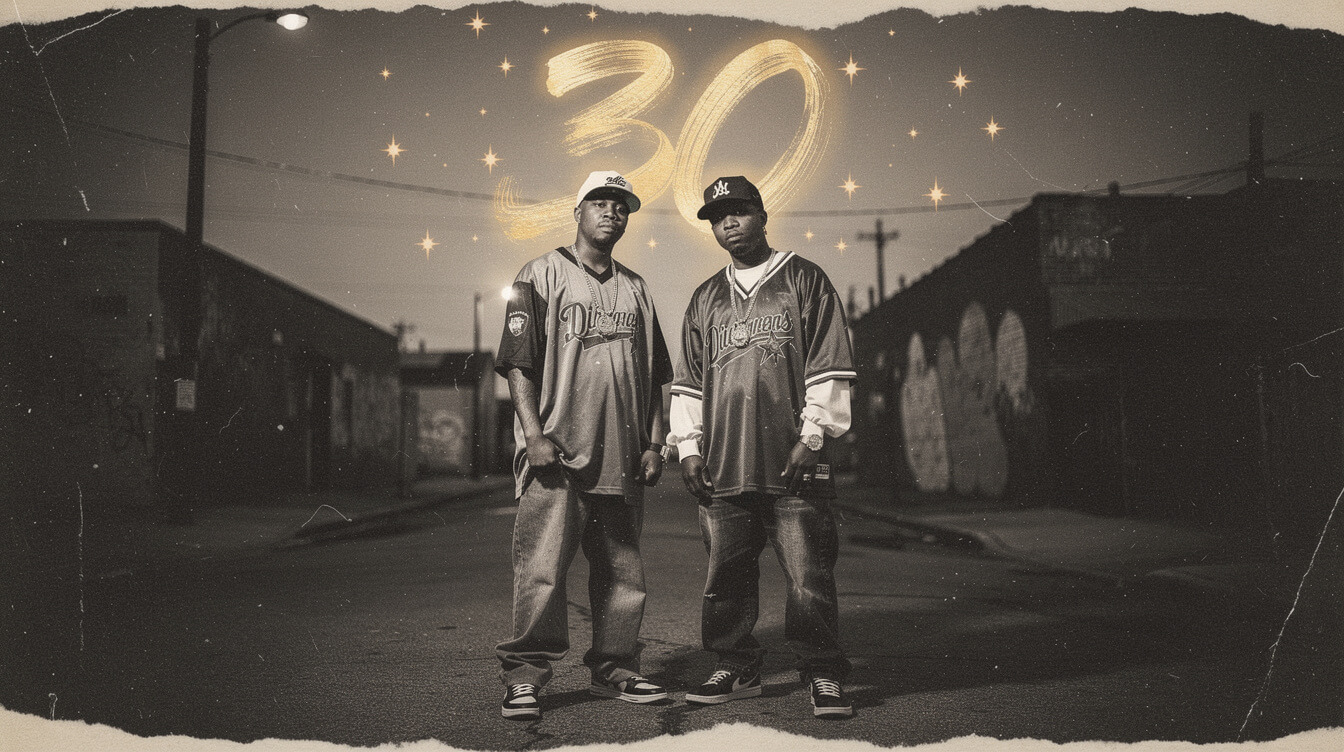
Drop a pin on August 27, 1996. Reasonable Doubt had landed two months earlier (June 25). Tupac’s All Eyez on Me was already a generational lightning rod from February. It Was Written from Nas was a month away. Bone Thugs were running radio off “Tha Crossroads”. The East-versus-West shadow was about to swallow the year. And in that crowded calendar, two 21-year-olds from East Point, Georgia released the album that quietly redrew the map.
ATLiens didn’t get a #1 Billboard debut moment. It went straight to #2 on the 200 (held off by Toni Braxton’s Secrets) and topped the Top R&B/Hip-Hop Albums chart. Within a year it was certified platinum. By 2006 it was 2x platinum, all without a flashy crossover smash. Elevators (Me & You), the lead single, did its work but never became a pop-radio monster. The album kept selling because the album was the message.
Here’s the thing about 2026 — every other 1996 anniversary has gotten its run. Reasonable Doubt got its Yankee Stadium night. All Eyez on Me has had a documentary cycle nearly every other year since Pac died. Nas’s It Was Written at 30 is right behind it. But ATLiens? Crickets. Pitchfork won’t get there. The legacy press treats it as a footnote between Southernplayalisticadillacmuzik and Aquemini. That’s the gap this piece exists to close. If you’ve been sleeping on OutKast’s full discography, ATLiens is the album you have to revisit first.
The Title Explained: ATL Plus Aliens

The title is a portmanteau, but to leave it there is to miss the whole point. ATL + Aliens isn’t a cute wordplay flex. It’s a thesis statement. André and Big Boi were Atlanta to the bone — born there, raised there, recorded there, named themselves after the city’s airport code three years later (André went by the airport for a minute too). But they were also aliens inside their own city. The 1995 Source Awards moment — that “the South got something to say” speech André dropped from a New York stage as the room booed — wasn’t just industry beef. It was the lived reality of being from the wrong region during a coastal civil war. They were Black, Southern, weird, and unwelcome on hip-hop’s prevailing maps.
“Alien” was the right word because Atlanta in the mid-90s was already feeling like the future and nobody in the New York–LA axis would admit it. Freaknik. Outkast. Goodie Mob. Organized Noize. The Dungeon. The city was building something at street level that the gatekeepers wouldn’t see for another five years. André and Big put that loneliness in the title.
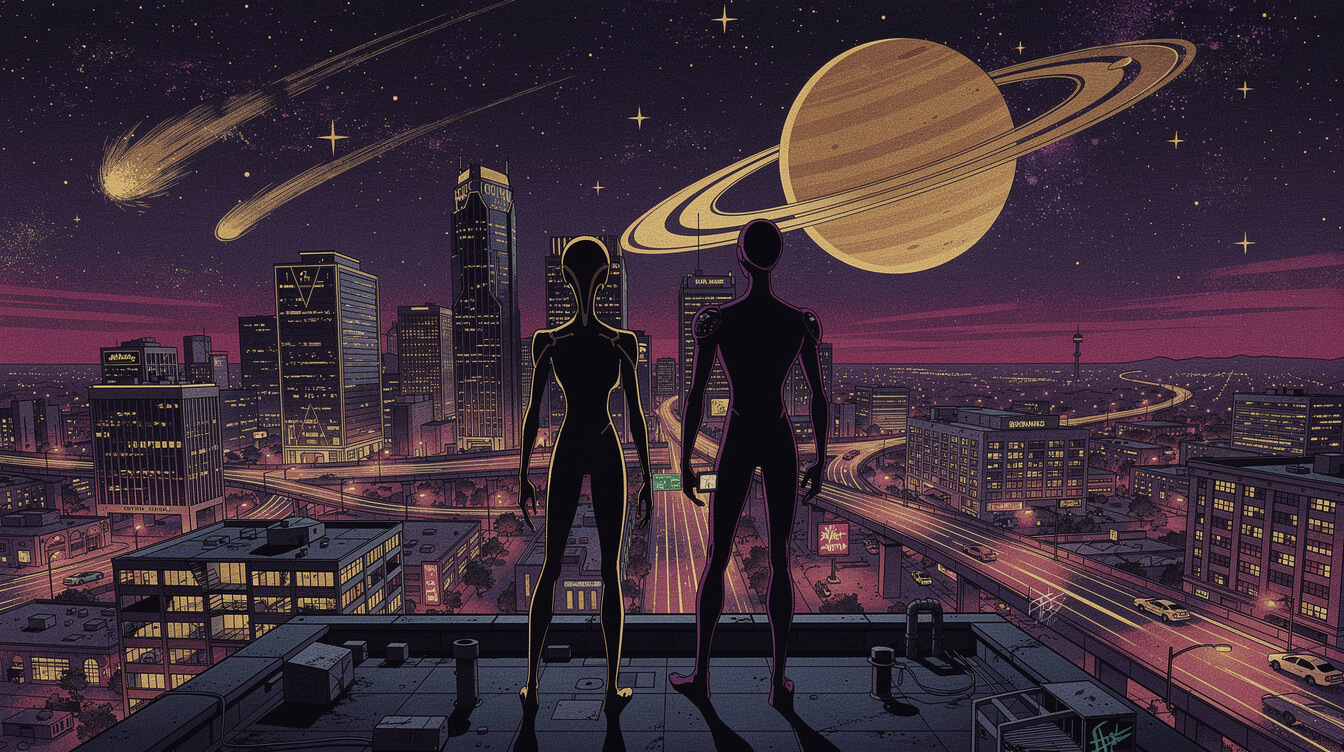
And then there’s the cosmic read — the one most casual listeners miss. ATLiens is hip-hop’s first proper afrofuturist statement. The lineage is right there in plain sight: Sun Ra’s Arkestra calling Saturn home in the 1950s, Parliament-Funkadelic landing the Mothership in the 1970s, Earth, Wind & Fire dressed like pyramid pharaohs in space gold, Afrika Bambaataa’s Planet Rock in 1982. Black music has been building escape pods out of America for seventy years. ATLiens slotted hip-hop into that lineage with intention. Listen to 13th Floor (Growing Old) with that in mind — it’s not a rap song, it’s a meditation that happens to rhyme.
The Cover Art: Hip-Hop’s Black-and-White Comic-Book Moment
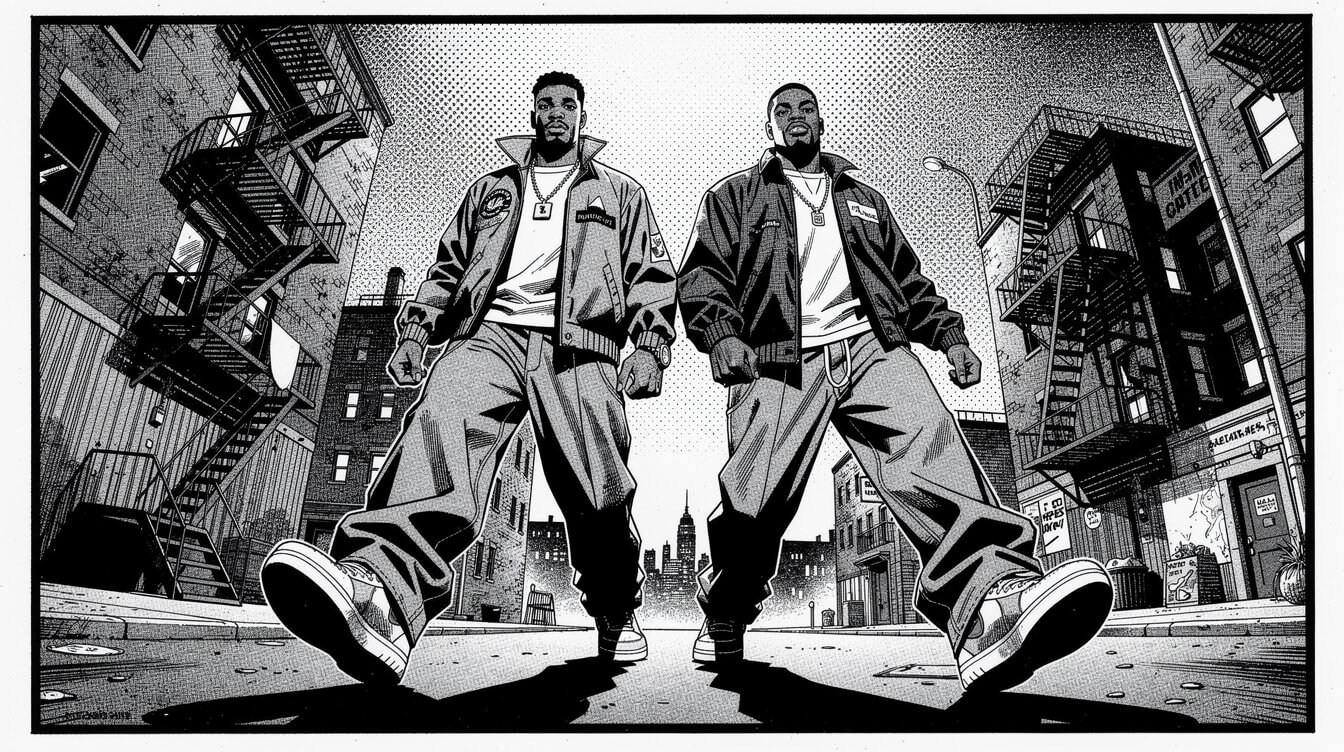
Open up the original 1996 sleeve. There are no photographs. No record-label promo shots. No menacing black-and-white portraits of the rappers. Instead: a comic book. The cover is a panel drawn by Vincent Carlton and Cassandra Williams — André and Big as superheroes mid-flight over Atlanta, all manga-inspired ink lines, halftone shading, and dramatic foreshortening. The interior gatefold continues the story across multiple panels. It is, in 1996, the most graphic-design-forward cover in mainstream hip-hop.
Why does that matter? Because the cover does the thesis work without a single lyric. The cover says: we are not going to be photographed for you, we are going to be drawn. We are not going to pose, we are going to fly. We are not selling rappers to you, we are selling protagonists in a story we control. Compare it to literally any other major-label rap album cover of 1996 — almost universally photographed, almost universally posed for street credibility — and ATLiens looks like a record sent back in time from twenty years later.
For the cultural-product community — for everyone who treats album art as wearable history — ATLiens is a foundational text. The comic-book aesthetic, the panel layouts, the black-and-white ink work — it all primed the visual language for what hip-hop merch and album-art apparel would become. If you live in the album-art space the way we do, the same instinct that made ATLiens’ cover untouchable in 1996 is the one that drives our entire OutKast Aquemini T-Shirt and the broader album-art tee catalog — wearable receipts for records that built the culture.
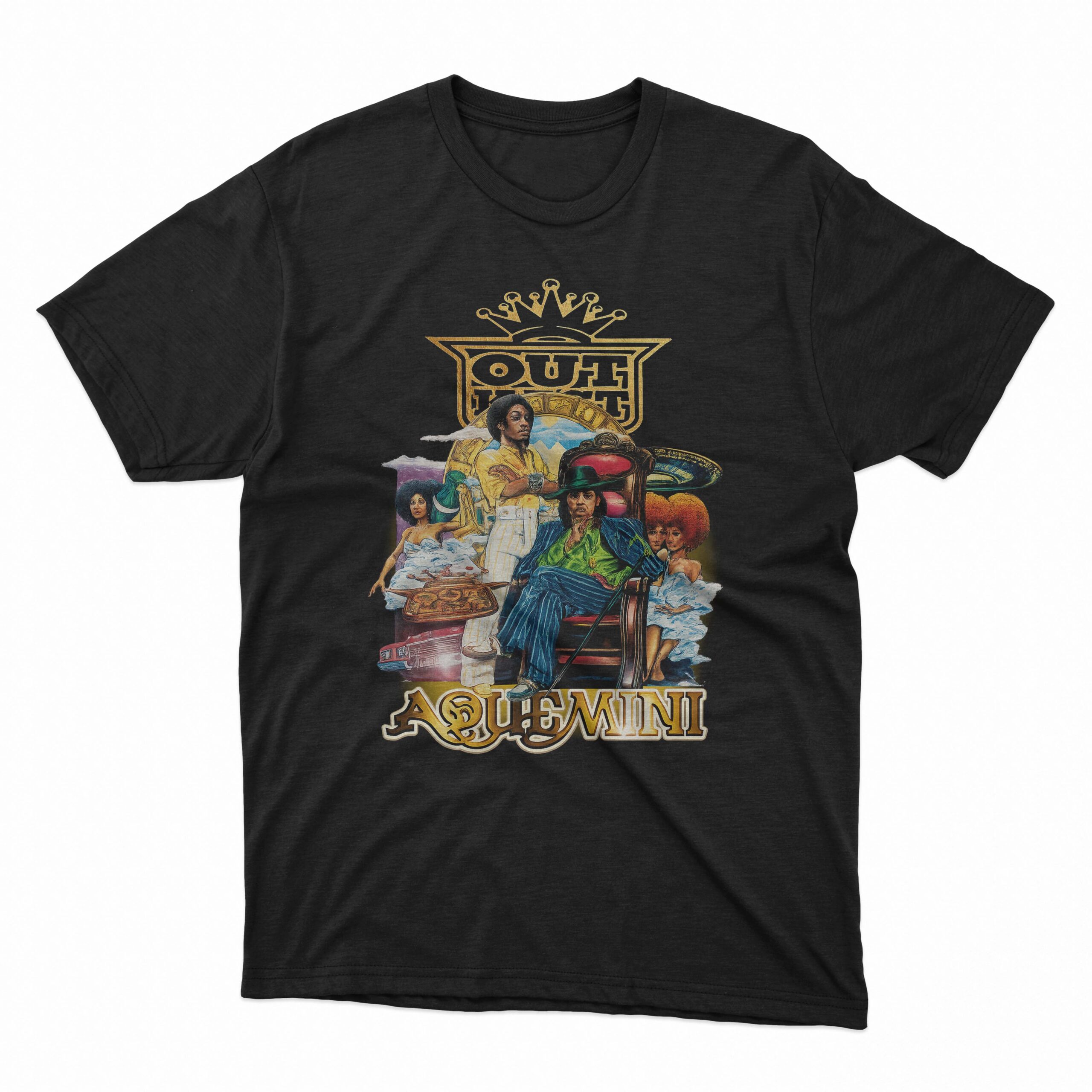
Wear the OutKast Catalog
Premium fan-art tribute to OutKast’s 1998 masterpiece — Bella Canvas 3001, soft-hand print, available in Black, Navy, and Chocolate. Built for heads who treat album art like a flag.
The Organized Noize → Dungeon Family Lab
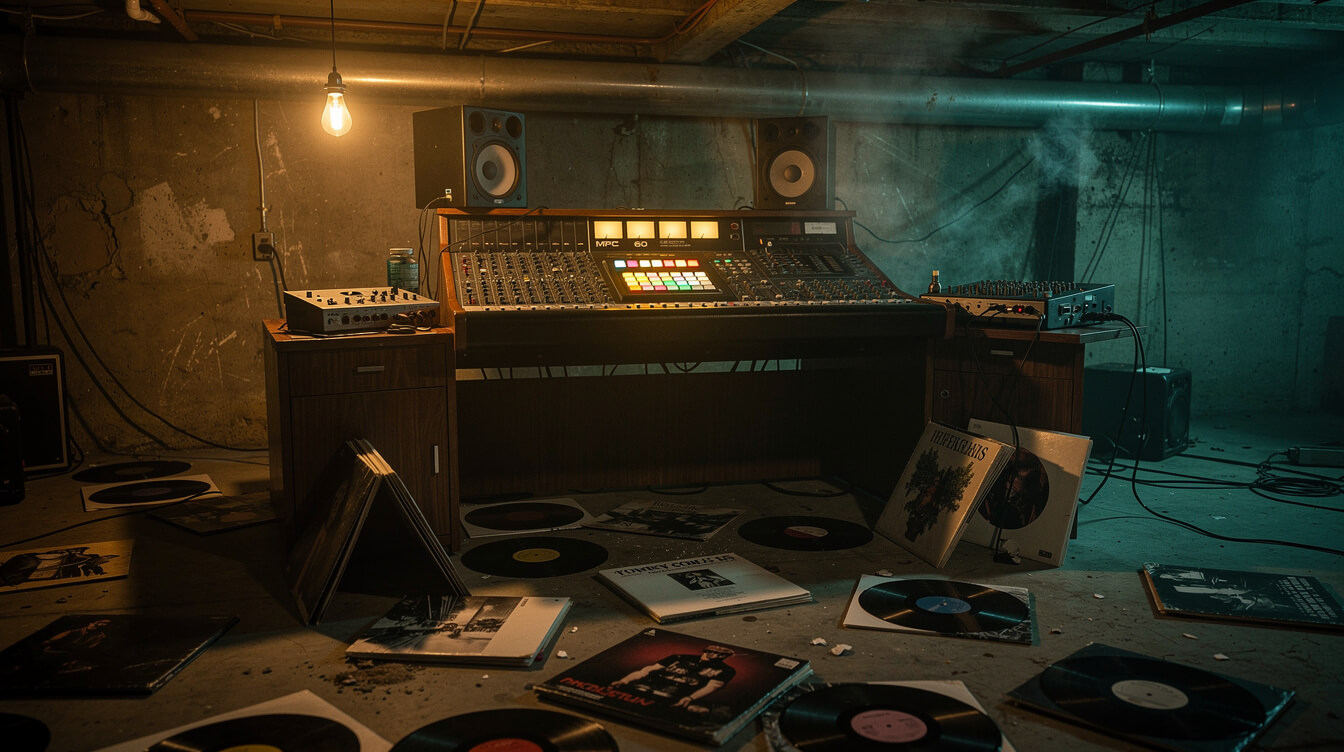
You cannot tell the ATLiens story without telling the Dungeon story. Organized Noize — Rico Wade, Ray Murray, and Sleepy Brown — were the production trio who built the OutKast sound in a literal basement (the “Dungeon”) in East Point, Georgia, in the back of Wade’s mother’s house. The Dungeon wasn’t a studio in the polished sense. It was a living, smoke-filled, vinyl-stacked, instrument-cluttered cave where Atlanta’s entire alternative hip-hop scene crash-landed in the mid-90s.
The “Dungeon Family” — the loose collective named after that basement — would eventually count OutKast, Goodie Mob (Cee-Lo, Big Gipp, Khujo, T-Mo), Witchdoctor, Society of Soul, Backbone, and Cool Breeze as members. ATLiens is a Dungeon Family record top to bottom. Cee-Lo guests on In Due Time. Cool Breeze, Khujo, and T-Mo show up scattered through the credits. Sleepy Brown’s vocal hooks are the unsung secret weapon of the OutKast sound — without him, Elevators doesn’t lift off, Wheelz of Steel doesn’t roll the same way.
The other production wrinkle most casual listeners miss: this is the first OutKast album where the duo themselves take co-production credit. The title track and Wheelz of Steel are Outkast self-produced, not Organized Noize. That’s the moment André and Big Boi started becoming the production-savvy auteurs they’d fully become on Aquemini and Stankonia. LaFace had given them more creative control and advance money after Southernplayalistic‘s platinum certification, and they used it to graduate from clients-of-a-production-trio to peers.
The sound itself — warm Wurlitzer keys, dusted live drums, vinyl crackle worked into the mix as texture, ghost-of-funk basslines, gospel and Curtis Mayfield blood transfusions — was an alternative to both East Coast boom-bap and West Coast G-funk. It wasn’t trying to compete with either. It was building a third pole. By 1998, that third pole would tilt the entire genre.
Track-by-Track: The Editorial Core
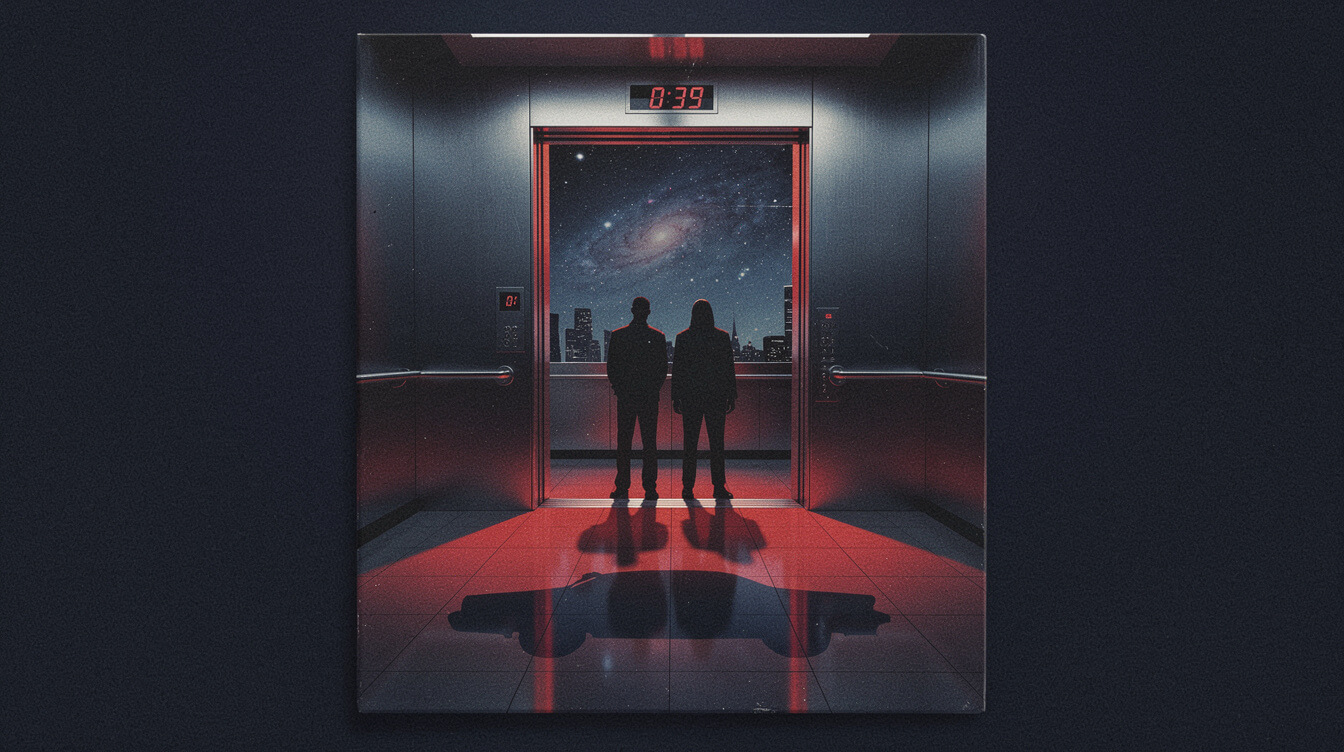
You don’t need a full fifteen-song walkthrough — you need the spine. Here are the five tracks that hold the record up.
Elevators (Me & You). The lead single. Organized Noize production at its hypnotic minimalist peak — a two-note synth riff, a clipped drum loop, a Sleepy Brown chorus that sounds like it’s coming from inside a passing car. André’s verse is the one everyone quotes (“one for the money, yes, uh, two for the show”), but Big Boi’s verse is the structural marvel — the cadence work alone could teach a master class. The song peaked at #1 on the Hot Rap Songs chart and #12 on the Hot 100, OutKast’s first crossover. Their entire post-ATLiens career runs through this song.
ATLiens (title track). Outkast self-produced. The drums are sparse, the bass is patient, the verses are intricate. André raps about not drinking or smoking on the bridge (“now throw your hands in the air / and wave ’em like you just don’t care”), and the whole song is a kind of recruitment poster for the alien lifestyle they’re proposing. Spiritual without being preachy.
Wheelz of Steel. The other Outkast self-produced cut, and the album’s hidden masterpiece. Drums that knock like a Volvo trunk, scratching cuts that work like punctuation, and a Big Boi verse that’s basically a tour through Atlanta’s geography in tightly braided slang. If you needed proof that Big Boi was always the technician — that the André-is-the-genius / Big-is-the-rapper framing was always a cheap shorthand — start here.
Jazzy Belle. The third single and the album’s most-played song on Southern radio at the time. Mellow keys, jazz inflection, and a sharp lyrical premise: a portrait of a woman they grew up around, drawn without judgment and without romance. The kind of writing it takes most rappers fifteen years to grow into. André was 21 when he wrote his verse.
13th Floor (Growing Old). The album’s spiritual centerpiece. Big Rube opens with a spoken-word piece that’s basically a Dungeon Family mission statement. The beat is half-funk, half-prayer. André’s verse confronts mortality and lineage in a way you simply did not hear on 1996 hip-hop albums. Aquemini‘s “Liberation” comes from this seed. Stankonia‘s “Toilet Tisha” comes from this seed. Every introspective OutKast moment after 1996 traces back to the floor below the elevator.
The rest of the album — Two Dope Boyz (In a Cadillac), Mainstream, Decatur Psalm, Babylon, E.T. (Extraterrestrial), Ova Da Wudz, Millennium, Mainstream, Wailin’ — is connective tissue. None of it is filler. The cohesion is one of the reasons ATLiens still listens like a continuous statement instead of a singles compilation.
The Bridge Album Read: 1994 → 1998
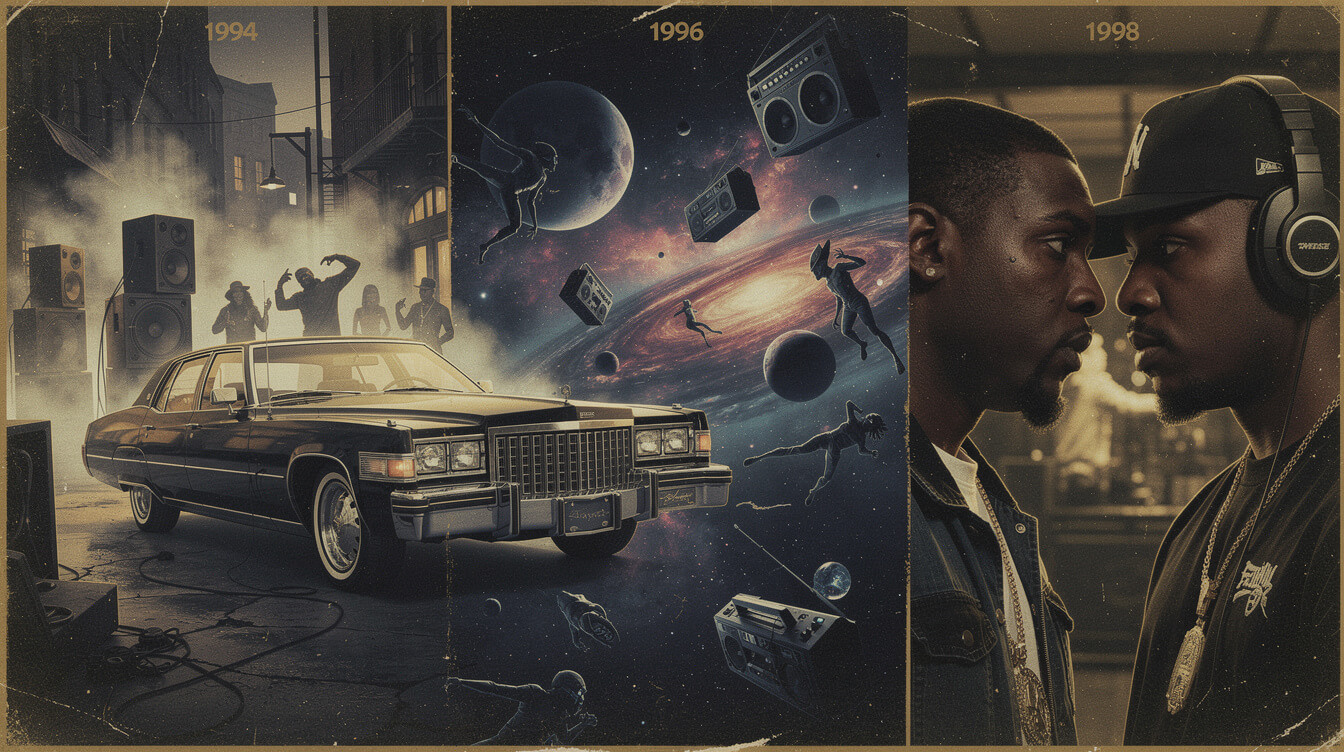
Here’s the structural argument most ranked-album lists miss. ATLiens is the bridge. Take it out of the discography and the whole arc collapses.
1994 — Southernplayalisticadillacmuzik. The debut. Funk-grounded, Cadillac-shined, Player’s Ball–fueled. OutKast as a Southern rap duo with a regional sound and a regional audience. The album sold platinum but it didn’t break the coast-versus-coast paradigm. It was an entry permit, not a passport.
1996 — ATLiens. The cosmic pivot. André and Big trade the Cadillac for a spaceship. They drop the gold-rope iconography for ink-drawn alter egos. They self-produce two tracks. They put Sun Ra in the soil under the Southern hip-hop tree. Most importantly, they prove that an album can be commercially huge (2x platinum, #2 on the Billboard 200) while being aesthetically weird. That permission slip is the one Aquemini cashes in.
1998 — Aquemini. The synthesis. ATLiens’ cosmic ambition meets Southernplayalistic’s funk grounding meets a sudden expansion of boom-bap, P-Funk, country soul, and Live Band Atlanta. Aquemini wins on the back of the permission ATLiens earned. Rosa Parks, SpottieOttieDopaliscious, Da Art of Storytellin’ — none of those songs exist if ATLiens hadn’t already proven you could put a 13th Floor on a hip-hop album.
So when ranked-album lists slot ATLiens behind Aquemini and Stankonia, they’re measuring the wrong thing. Aquemini is the better album in the sense that the synthesis is more complete. Stankonia is the better album in the sense that the commercial moment is bigger. But ATLiens is the most important album in the catalog because it’s the one that made the other two possible.
If you want the full ranked argument, our OutKast albums ranked guide walks the entire seven-album catalog (the studio LPs plus Idlewild) and makes the case for where each one actually sits in the canon.
Legacy: What ATLiens Made Possible
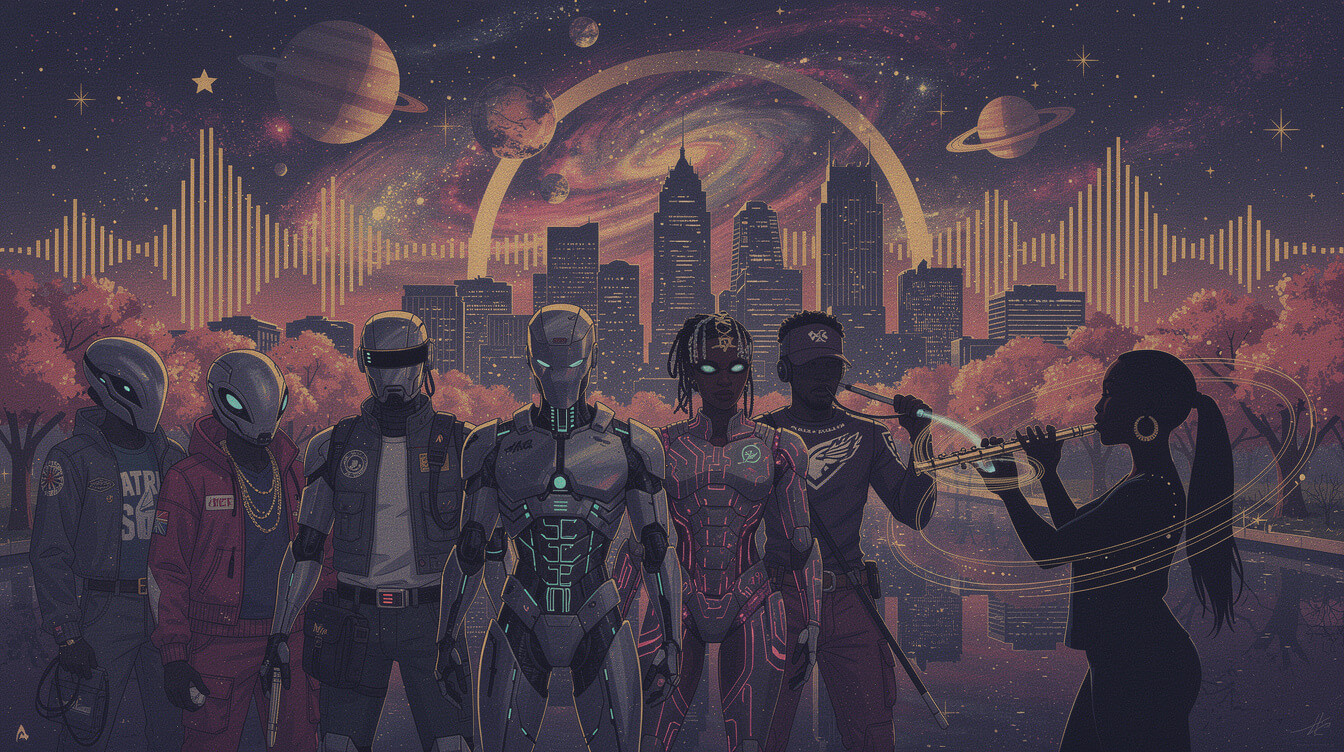
Pull on the ATLiens thread far enough and most of the last twenty-five years of adventurous hip-hop unspools.
Lil Wayne’s spaceship era. The Tha Carter III cover. The “I’m an alien” Lollipop-era visuals. The entire premise of being Black, Southern, weird, and untouchable — Wayne is running the ATLiens playbook in eyeshadow. He’s said as much in interviews. André and Big Boi were the first Southern stars who made strange a profitable lane.
Janelle Monáe’s Metropolis / ArchAndroid arc. Janelle is Wondaland-born and Atlanta-raised; she’s said repeatedly that OutKast — and ATLiens specifically — was the proof of concept that an entire afrofuturist album cycle could be commercially viable. The ArchAndroid alter ego, the cinematic concept arcs, the genre-collapsing sound design — that’s the ATLiens DNA on a 2010 timeline.
André 3000’s flute-album exit. When André dropped New Blue Sun in 2023 — an instrumental flute album with no rapping — the response from people who hadn’t been paying attention was “what is this.” The response from people who had been paying attention was “of course.” The 13th Floor / Growing Old André was always going to end up here. The cosmic ambition was always going to outgrow the rap form. ATLiens told you that in 1996.
Atlanta as the gravitational center. When Atlanta became hip-hop’s dominant city in the 2010s — when Migos, Future, Young Thug, 21 Savage, and Playboi Carti collectively bent the genre’s center of gravity south — they were inheriting a city OutKast had already proved could host the genre’s future. ATLiens is the document where Atlanta stops being a regional outpost and starts being a destination. The fashion, the slang, the production aesthetic that defined ’90s hip-hop style — the South was always part of the story, but ATLiens is the moment it became unignorable.
And speaking of legacy in human form — André 3000 turned 51 in May. Big Boi turned 51 the year before. Both of them recorded ATLiens at 21. Sit with that for a second. The cosmic record you’ve been listening to for thirty years was made by two kids who’d been legally able to drink for less than a year. That’s the kind of artist density that doesn’t happen often. Wu-Tang’s 36 Chambers dropped when most of the Clan were in their early twenties too. There’s a pattern in hip-hop’s foundational albums — the genre rewards twenty-somethings who treat the form like a laboratory.
Frequently Asked Questions About ATLiens
When did ATLiens come out?
ATLiens was released on August 27, 1996, by LaFace Records and Arista. It was OutKast’s second studio album, following Southernplayalisticadillacmuzik (1994) and preceding Aquemini (1998).
What does ATLiens mean?
ATLiens is a portmanteau of “ATL” (Atlanta) and “aliens.” On the surface it nods to OutKast being Atlanta natives who felt like outsiders inside hip-hop’s coastal mainstream. Underneath, it’s an afrofuturist statement — connecting OutKast’s cosmic aesthetic to a Black-music lineage running from Sun Ra and Parliament-Funkadelic to Earth, Wind & Fire and Afrika Bambaataa.
Who produced ATLiens?
The album was primarily produced by Organized Noize — the Atlanta production trio of Rico Wade, Ray Murray, and Sleepy Brown — with two tracks (the title track and Wheelz of Steel) self-produced by OutKast. It was the first OutKast album where André and Big Boi took co-production credit, and it marked the moment they started becoming auteurs in their own right.
How did ATLiens chart?
ATLiens debuted at #2 on the Billboard 200 (held off by Toni Braxton’s Secrets) and hit #1 on the Top R&B/Hip-Hop Albums chart. It went platinum within a year and was eventually certified 2x platinum by the RIAA, with over 2 million units shipped in the U.S. The lead single Elevators (Me & You) peaked at #12 on the Billboard Hot 100 and #1 on Hot Rap Songs.
Is ATLiens better than Aquemini?
Different question than the one most people are asking. Aquemini is more cohesive as a complete artistic statement and is usually ranked higher. But ATLiens is the album that made Aquemini possible — it earned OutKast the creative permission and commercial proof-of-concept to swing as hard as they did in 1998. If you want the synthesis, listen to Aquemini. If you want the pivot — the moment Southern hip-hop became cosmic — listen to ATLiens.
What’s the best song on ATLiens?
Depends on what you’re after. Elevators (Me & You) for the hook-craft and the cultural impact. Wheelz of Steel for Big Boi’s structural rapping. 13th Floor (Growing Old) for the spiritual weight. Jazzy Belle for the writing. Pick one and a real OutKast head will argue with you about it. That’s the album doing its job.
Final Thoughts: The Most Underrated Southern Rap LP, Period
Thirty years on, ATLiens is the OutKast album you reach for when you want to remember what hip-hop was capable of before it got self-conscious. It’s the album that proves Southern rap could go full afrofuturist without diluting the genre’s gravity. It’s the album where two 21-year-olds from East Point stopped asking for permission and started building a parallel universe.
Most ranked-album lists won’t get this right. The 30th-anniversary press cycle that should be happening right now won’t happen. Pitchfork won’t write the long read. But the album doesn’t need the cosign — it’s been doing the work in the background of every adventurous Black record made since 1996. The next time someone hands you a “best Southern hip-hop albums” list and ATLiens is at #4 or #5, hand it back. It’s #1, and it has been for thirty years.
Put it on. Start with You May Die (Intro) and let the elevator open.
Get the Culture in Your Inbox
Hip-hop deep reads, anniversary anchors, and first looks at new drops from the Custom Creative catalog — straight to your inbox, no fluff.

🎧 Never Miss a Drop
Exclusive product releases, hip-hop deep dives, and member-only discounts. Straight to your inbox.
Free forever. No spam. Unsubscribe anytime.
Get the Culture, Delivered
Deep dives into hip-hop history, exclusive product drops, and discounts sent straight to your inbox. No spam, just culture.
Join 2,000+ hip-hop heads already in the loop. Unsubscribe anytime.