Public Enemy ‘Can’t Truss It’ at 35: The Bomb Squad Sample Map + Slave-Ship Narrative
Thirty-five years back, on September 24, 1991, Def Jam pressed Apocalypse 91… The Enemy Strikes Black — and buried in the middle of side one was a four-minute Bomb Squad sledgehammer titled “Can’t Truss It.” Public Enemy’s “Can’t Truss It” wasn’t the flashiest single Chuck D and Flavor Flav ever cut. It didn’t have the crossover pop of “Fight the Power” or the meme immortality of “911 Is a Joke.” But listen to it in 2026 — really listen — and it’s the sharpest four minutes the group ever recorded. A rap where the narrator is a slave, then a modern Black worker, then Chuck D again, all inside one verse. A beat that flips gospel horns into anxiety pulses. A music video that reenacts the Middle Passage on prime-time MTV.
Below is the full deep dive: the Bomb Squad sample map, the slave-ship-to-corporate narrative decoded verse by verse, the record’s place on Apocalypse 91, the MTV video that put S1W berets on Cross Colours streetwear racks, the chart run that took a slave-ship rap into the Top 50 R&B, and where to cop the 2026 vinyl reissues.
35 Years On: Why ‘Can’t Truss It’ Still Cuts the Deepest
Every era of Public Enemy has an anchor record. Yo! Bum Rush the Show (1987) had “Public Enemy No. 1.” It Takes a Nation of Millions to Hold Us Back (1988) had “Bring the Noise” and “Rebel Without a Pause.” Fear of a Black Planet (1990) had “Fight the Power” and “911 Is a Joke.” And Apocalypse 91 — the record everyone tries to compare to Nation of Millions and everyone eventually admits is a different animal — had “Can’t Truss It.”
Here’s the thing critics missed in 1991 and are still missing in 2026: “Can’t Truss It” is Public Enemy’s most structurally ambitious record. It’s a first-person Middle-Passage narrative that jump-cuts across three centuries in a single verse. The narrator is a captured African, then a modern Black wage-earner, then Chuck D talking directly to the listener — all before the second hook. No other rap record from 1991 tried anything close to it. Not Death Certificate. Not The Low End Theory. Not Cypress Hill. Not Efil4zaggin. All of those are canonical records. None of them are attempting time-travel narration inside a four-minute pop single.
The reason it still cuts in 2026 is that the pivot the record makes — from literal chattel slavery to modern corporate wage extraction — is the exact conversation hip-hop is having right now. Kendrick Lamar’s “The Heart Part 5.” Denzel Curry’s Melt My Eyez. Killer Mike’s Michael. Every one of those records owes structural debt to what Chuck D and the Bomb Squad built on “Can’t Truss It.” Chuck compressed three centuries of extraction into four minutes and told you the boss and the slaver are the same man in different suits. That was a wild claim to hang a Top 50 R&B single on. It still is.
For the full Chuck D / Flavor Flav / Terminator X / S1W / Bomb Squad architecture that made this record possible, see our deep-dive on every Public Enemy member — Chuck D, Flav, Terminator X, S1W & the extended family. This piece assumes you know who the S1W are. If you don’t, read that first — it changes how the music video below hits.
The Bomb Squad Sample Map — Every Chop Behind the Wall of Sound

The Bomb Squad — Hank Shocklee, Keith Shocklee, Eric “Vietnam” Sadler, and Chuck D — never made beats the way anyone else did. Where DJ Premier chopped one soul loop into a hook, and Pete Rock stacked two horn stabs on a boom-bap kit, the Bomb Squad layered dozens of chops per song. On Nation of Millions they were maximalists. On Apocalypse 91 they were operating under a new copyright regime — the Grand Upright v. Warner ruling landed in December 1991, months after this record, and the industry was already spooked — so the sample layering on “Can’t Truss It” is slightly stripped compared to 1988. But “slightly stripped Bomb Squad” is still four to six samples deep.
The confirmed sample list
- Bill Withers — “Kissing My Love” (1972). The drum break. Withers’ rhythm section, snappy snare on the two-and-four, tight kick pattern. If you know Withers’ Still Bill LP, you’ll recognize the pocket the second the intro drops. This is the record’s spine.
- Melvin Bliss — “Synthetic Substitution” (1973). Additional drum layer. “Synthetic Substitution” is arguably the most-sampled drum break of the golden age, sitting under Ultramagnetic MCs, Naughty By Nature, Nas, and about four hundred other records. The Bomb Squad layered its snare crack under the Withers pocket for extra bite.
- Curtis Mayfield — vocal ad-lib. A brief Mayfield chop peppers the intro — a signature Bomb Squad move, using a Mayfield ad-lib as a texture element rather than a hook.
- The Emotions — “The Best of My Love” (1977). The horn stab that anchors the pre-chorus. Not a Booker T sample despite what half the internet still repeats. Listen to the Emotions’ Maurice White-produced original, drop it a half-step, and there’s the “Can’t Truss It” horn.
- Anonymous vinyl scratch bed. Terminator X threads scratch phrases through the mix — mostly untraceable, likely doubles of the Bomb Squad’s crate-dug loops, not from a single recognizable source.
- James Brown — “Funky Drummer” (1970) — trace elements. The Bomb Squad rarely made a record without at least a whisper of Clyde Stubblefield. On “Can’t Truss It” the Funky Drummer contribution is a texture layer, not the primary break, but it’s there in the hi-hat pattern.
The chorus itself — the sung “Can’t truss it” refrain — is Flavor Flav’s live vocal, treated with slight tape saturation. That’s a Bomb Squad texture, not a sample.
Why the arrangement feels claustrophobic
Hank Shocklee’s production philosophy on Apocalypse 91 was documented in interviews around the record’s release: he wanted the beat to feel like work. Not celebration. Not head-nod. Labor. The way he engineered that was by pushing the horn stabs into the red on every downbeat and running the drum layer through a compressor that squashed the transients into a single wall of sound. It’s the sonic equivalent of a plantation whip crack synced to a factory assembly line. That’s the whole point — the beat is the extraction machine. The lyrics are the human getting ground up in it.
Compare it side-by-side with “Fight the Power” from the year before. “Fight the Power” is loose, joyous, sprawling — a marching band spilling into the street. “Can’t Truss It” is compressed, airless, industrial. That is not an accident. That is the Bomb Squad rendering the difference between resistance and captivity in mix decisions.
The Slave-Ship Narrative, Verse by Verse (Chuck D as First-Person Middle-Passage Witness)
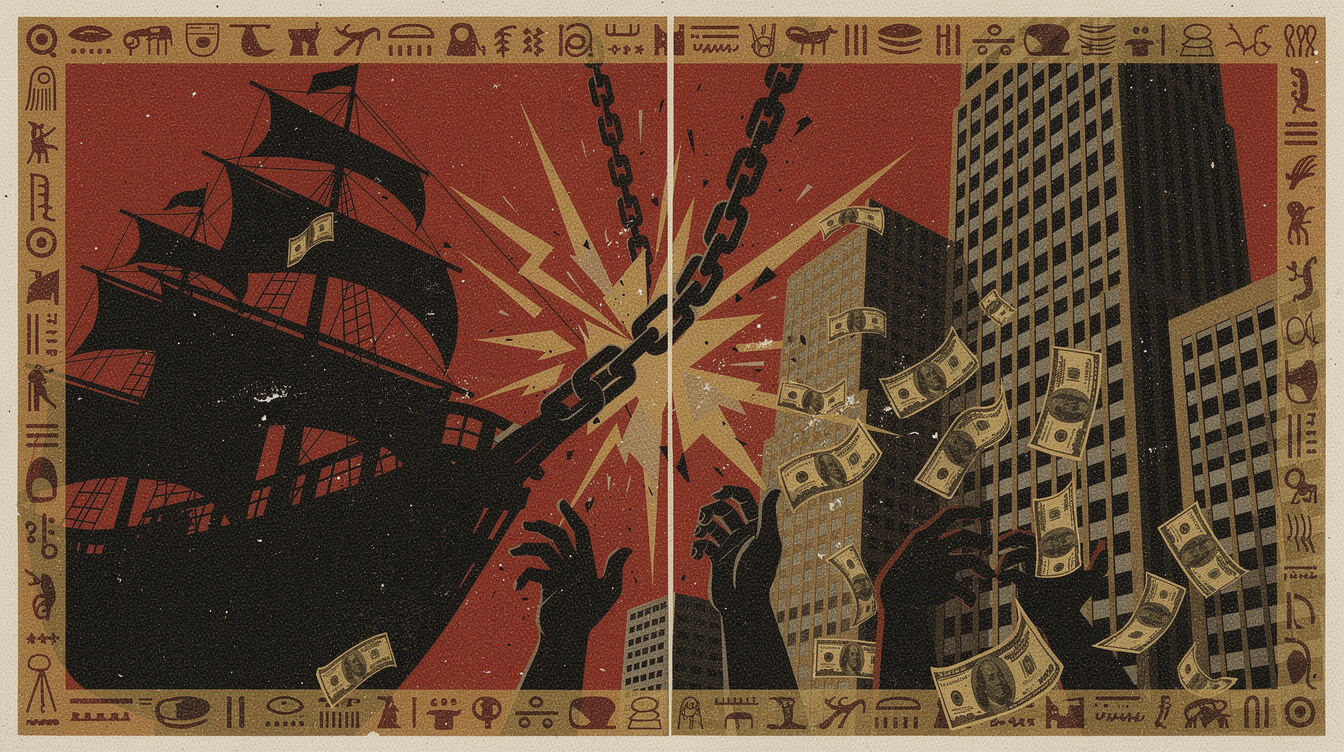
Chuck D wrote three verses on “Can’t Truss It” that operate as one continuous first-person testimony. The narrator does not stay in one time period. He does not stay in one body. And Chuck never signals the jump. You have to catch it in the rhyme scheme.
Verse 1 — The Capture and the Crossing
Verse one opens on the African continent. The narrator is captured, chained, marched to the coast, and loaded onto a ship. Chuck compresses the trans-Atlantic voyage into eight bars: the “boat”, the “storm”, the “crackers on my back”, the “sold like fabric”. He is not editorializing. He is testifying. The voice is present tense. The pronoun is “I.” This is the move that critics miss — Chuck is not narrating history from 1991. He is speaking as a captured African in 1650, in 1780, in 1820. The tense is deliberate.
The killer line in verse one is the one about the “chains and the fees” — the moment the record collapses the slave ship and the corporate ledger into a single image. Chains are literal. Fees are metaphorical. And Chuck makes you feel that both are the same instrument in different centuries.
Verse 2 — The Plantation and the Payroll
Verse two picks up on American soil. The narrator is now enslaved on a plantation, then — without a break in the rhyme scheme — is suddenly a modern Black worker in a warehouse. The transition happens on the word “boss.” One line the boss is the overseer with the whip. The next line the boss is the shift manager with the time card. Chuck does not narrate the transition. He forces you to hear it.
The “overseer / officer” homophone Chuck exploits in verse two is one of the most famous puns in political rap. It’s not a pun for cleverness. It’s a pun that argues an equivalence: the antebellum overseer and the modern police officer are the same job in a different hat. That claim is the ideological center of the record.
Verse 3 — The Contract and the Corporate
Verse three is the most contested. The narrator is now unambiguously in 1991. He’s talking about contracts, about label deals, about “gold in the mouth” bling economics — the record industry as extraction machine. This is where Chuck lands the argument: the slave ship became the plantation became the prison became the corporate contract. Same violence, more paperwork.
The final couplet of verse three loops the narrator back to the top of the record — “can’t truss it” — but now the “it” is not the slaver or the overseer or the officer. The “it” is the entire architecture. The system. The whole apparatus that runs from 1650 to 1991 and, Chuck implies, all the way to now.
Nobody was writing rap verses like this in 1991. Nobody was writing rap verses like this in 2005. In 2026 you can hear the DNA of this structure in Kendrick’s “The Heart Part 5,” in Vince Staples’ Big Fish Theory, in Little Simz’ Sometimes I Might Be Introvert. Chuck D built the template. Everyone since has been remixing it.

Wear the Bomb Squad Era
Fan-art tribute tee for the record that made ‘Can’t Truss It’ possible. Premium combed cotton, screen-print quality — for the heads who play Bomb Squad chaos on a Sunday afternoon and mean it.
Where ‘Can’t Truss It’ Sits on Apocalypse 91 — the Album’s Sharpest 4 Minutes
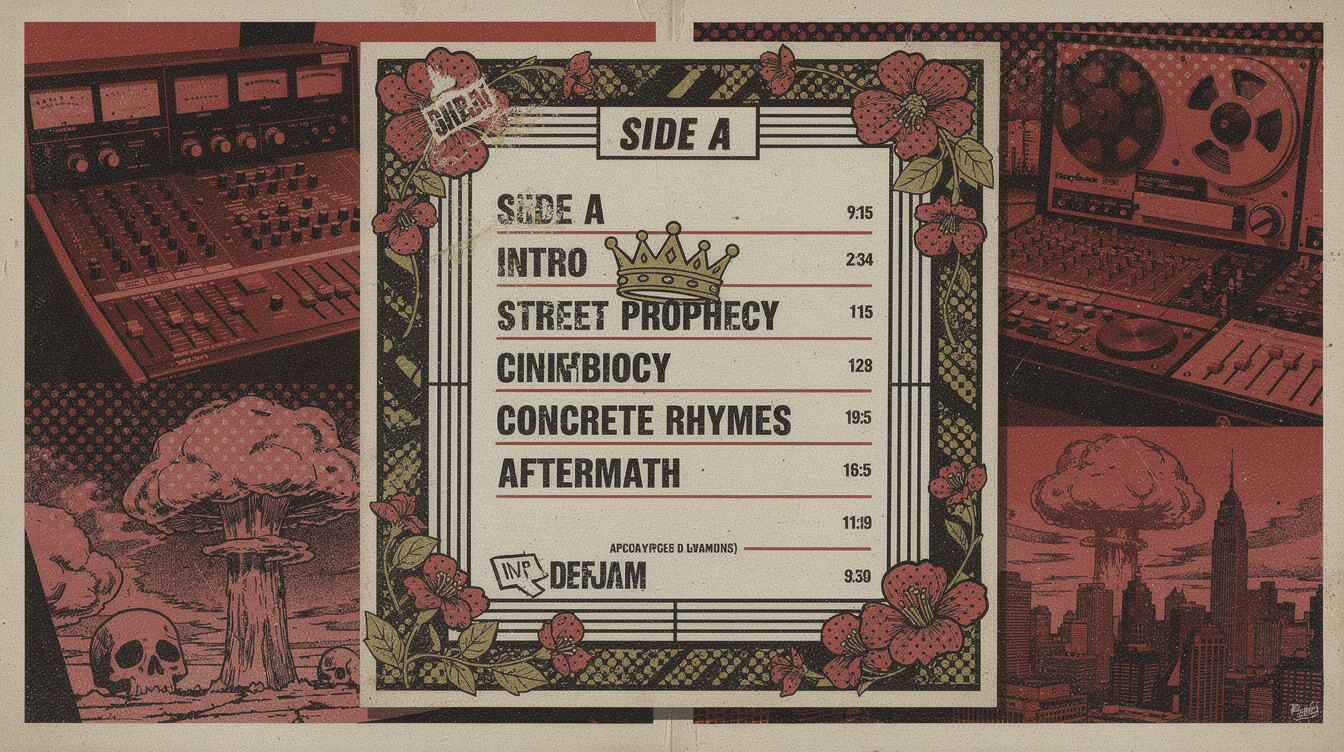
Apocalypse 91… The Enemy Strikes Black is Public Enemy’s fourth studio LP. It landed October 1, 1991 (some pressings show September 24 — the promotional stampers went out earlier), roughly eighteen months after Fear of a Black Planet. It debuted at #4 on the Billboard 200 and hit #1 on the R&B / Hip-Hop chart. It went platinum inside three months. It also fractured the fanbase, because it was a different Public Enemy record than Nation of Millions or Fear.
The tracklist context
The record is bookended by “Lost at Birth” (a scorched-earth opener that reintroduces the group post-Griff controversy) and “Bring Da Noize” (the Anthrax rap-metal collab that would preview the Judgment Night soundtrack era). In between sits “Can’t Truss It” as track six. Placement matters. On a 60-minute LP, track six is the deep-cut position — the record after the pop single (in this case “Shut Em Down” preceded it), the record where the album has to justify its ambition or die trying.
“Can’t Truss It” is the record that justifies Apocalypse 91’s ambition. It’s also the record that argues, retrospectively, why the album is more than a “return to form” and is actually PE’s most focused thesis statement. Nation of Millions is sprawling. Fear is scattered. Apocalypse 91 is targeted — and “Can’t Truss It” is the arrow.
The Bomb Squad vs. Imperial Grand Ministers
A production credit sub-plot: on Apocalypse 91, half the record is Bomb Squad and half is the “Imperial Grand Ministers of Funk” — Cerwin “C-Dawg” DePree, Gary G-Wiz, and Stuart Robertz. It’s the first Public Enemy album where the Bomb Squad hands off tracks to a second production wing. “Can’t Truss It” is a Bomb Squad production (uncredited on some pressings, credited on the CD booklet), which is why it feels like a direct sonic descendant of Fear of a Black Planet’s “Fight the Power” — same production DNA, tighter execution.
The album’s other essentials
Beyond “Can’t Truss It,” Apocalypse 91 carries “Shut Em Down” (the Pete Rock remix would be huge in 1992), “By the Time I Get to Arizona” (the anti-Arizona MLK Day protest record that got PE banned from that state’s radio for a beat), and “Bring Da Noize” with Anthrax. It is a record with four canonical singles. “Can’t Truss It” is the second-largest of the four. Only “Shut Em Down” outperformed it commercially. Nothing on the record outperformed it artistically.
The Music Video: Slave-Ship Imagery + S1W Iconography → Streetwear Afrocentric Wave
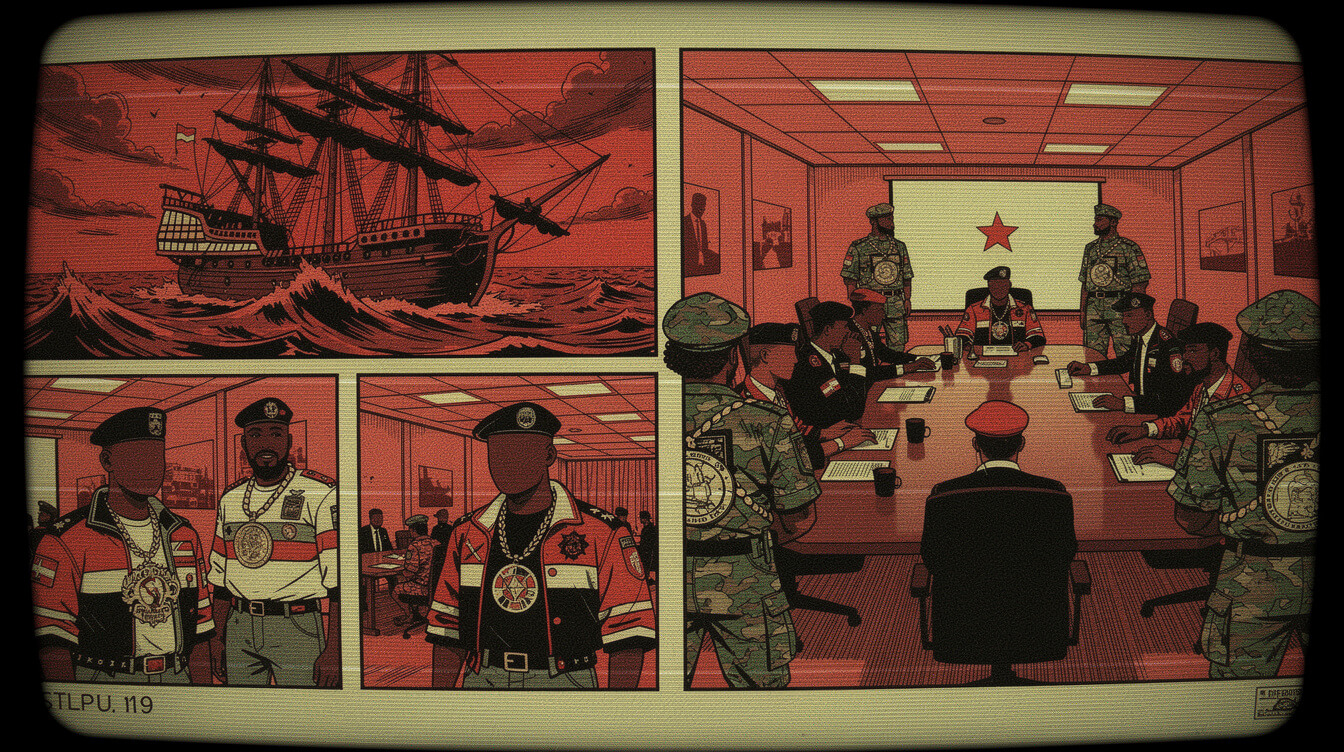
The music video for “Can’t Truss It” — directed by Eric Meza, PE’s collaborator through the Fear of a Black Planet and Apocalypse 91 era — is one of the boldest videos MTV played that year. It’s not a performance clip. It’s not a lifestyle clip. It’s a two-scene film: half of it stages the Middle Passage on a literal slave ship (Chuck D and the S1W in chains, packed in a hold, marched onto a plantation), and half of it puts Chuck D in a 1991 corporate boardroom facing a white executive across a mahogany desk. The video makes the record’s argument visual. It literalizes the pun. The overseer becomes the executive becomes the same face in a different tie.
The S1W in the video
The S1W — Security of the First World, PE’s paramilitary dance / security corps in the black BDU uniforms and berets — appear in both scenes. On the slave ship they’re chained. In the boardroom they stand behind Chuck D as visual protection. The double-framing is deliberate: the same men, dispossessed in one century, standing guard in another. That’s the visual argument the record’s lyrics make about labor and captivity.
The video’s streetwear ripple
Here’s a thread that mainstream hip-hop history keeps missing: the “Can’t Truss It” video, MTV rotation summer/fall 1991, dropped at the exact moment that the Cross Colours, Karl Kani, and FUBU-adjacent Afrocentric streetwear wave was breaking. Chuck D’s black-and-gold color palette in the boardroom scene, the S1W berets, the pyramid iconography in the intercut graphics — that visual language spilled directly into what boutiques were stocking that fall. Cross Colours reported record sales in Q4 1991. That’s not one record’s doing, but the “Can’t Truss It” video is the mainstream MTV visual that put that palette in front of every kid with cable.
You can trace a line from the “Can’t Truss It” video’s black-red-gold palette straight to the aesthetic in our 50-year history of hip-hop album cover art — the way Def Jam’s 1990-92 record sleeves stripped down to bold graphic type and Afrocentric color coding is the same design language “Can’t Truss It” put on television.
MTV controversy
The video ran in regular MTV rotation but with a caveat — MTV attached a brief historical-context tag to the slave-ship scenes on some airings. The label was concerned about a promotional backlash from advertisers over the imagery. That concern did not materialize. The video ran, the record charted, and by year-end “Can’t Truss It” was on multiple critics’ best-of-1991 lists — Rolling Stone, Spin, Village Voice’s Pazz & Jop.
Chart Life: How a Slave-Ship Rap Went Top 50 R&B in 1991
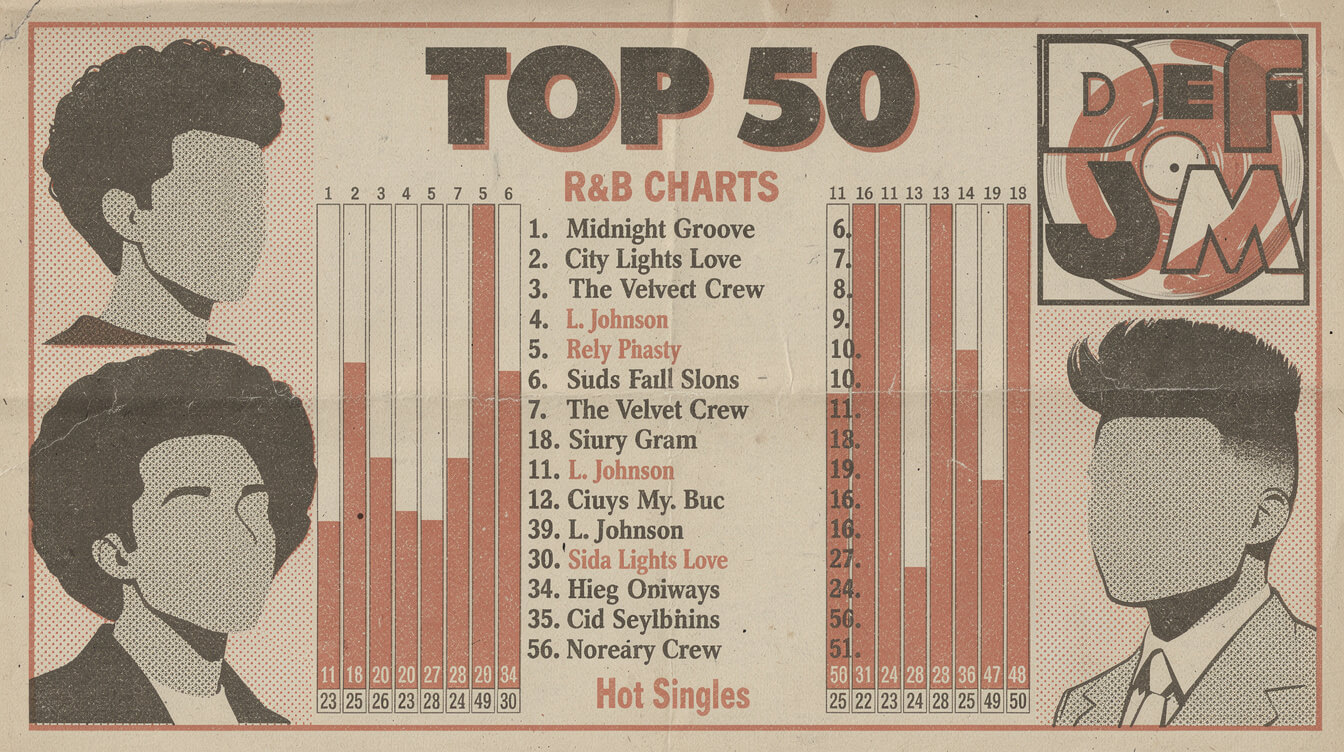
The commercial performance of “Can’t Truss It” is one of the underappreciated stories in early-90s hip-hop chart history. This is not a song that was engineered for Top 40 radio. It has no glossy hook. Its subject matter is chattel slavery. And it still moved units — because Public Enemy’s audience in 1991 was large enough, and Def Jam’s distribution machine strong enough, that even a difficult single crossed over.
The numbers
- Billboard Hot 100: peaked at #50 (December 1991). For context, a top-50 pop peak for a politically-loaded rap single was rare in 1991. Ice Cube’s “Steady Mobbin'” from the same season did not crack the Hot 100. Cypress Hill’s “How I Could Just Kill a Man” peaked at #77.
- Billboard R&B / Hip-Hop Songs: peaked at #9 — top-ten R&B on a slave-ship-metaphor rap is a genuinely wild data point.
- Billboard Rap Singles chart: peaked at #1 (November 30, 1991), holding the top spot for two weeks before being displaced by “Mind Playing Tricks on Me” by Geto Boys.
- UK Singles Chart: peaked at #22 — Public Enemy’s third-largest UK single behind “911 Is a Joke” and “Fight the Power.”
- Certifications: the parent album Apocalypse 91 was RIAA-certified platinum by January 20, 1992 — less than four months after release.
The radio playbook that got it there
Def Jam ran a specific play with “Can’t Truss It.” Because the record was too heavy for pop-radio programming, Def Jam pushed the record to college radio and rap-format R&B stations first. It moved to R&B mainstream over a six-week ramp, and by that point the video was in rotation on MTV’s Yo! MTV Raps, which pulled the record onto pop crossover playlists as a video-driven single. It’s the same distribution playbook Def Jam used for “Fight the Power” in 1989, refined.
The takeaway: in 1991, an all-Black hip-hop group could put a slave-ship metaphor on a Bomb Squad beat and land it at #1 rap, #9 R&B, and #50 pop. The mainstream music industry was, briefly, wide open to this kind of art. That window narrowed after the Grand Upright ruling (December 1991) and the industry’s post-Rodney-King commercial pivot in 1992. “Can’t Truss It” is one of the last records made under the old, sample-liberal, politically-open production regime. That’s part of why it feels irreplicable.
The 2026 Reissue Landscape + Where to Cop the Vinyl
Coming into the record’s 35th anniversary in September 2026, the vinyl reissue market has picked up. Here’s the current state of what you can actually put on a turntable in 2026.
Original 1991 12-inch single
The Def Jam / Columbia 12-inch (catalog 44-74077) came out in three configurations: the LP mix, an “Extended Mix” that added a longer instrumental outro, and an instrumental cut. Discogs mid-market for a VG+ copy is running $18-28 as of Q3 2026. NM sealed copies push $40-55. The picture-sleeve variant (some export pressings had a printed sleeve; the domestic US 12-inch was generic Def Jam label bags) commands a premium — $65-95 for a sealed picture-sleeve.
Apocalypse 91 LP
The original 1991 US double-LP (Def Jam / Columbia C 47374) is common — Def Jam pressed a lot of them. VG+ runs $22-32. Original NM sealed copies remain readily available at $55-80. The audiophile you want to hunt is the 1991 UK first pressing on 180g — that one is scarce enough that clean copies sit in the $110-160 range.
Modern reissues
Get On Down / Real Gone Music have handled recent hip-hop catalog reissues, but as of mid-2026 Apocalypse 91 has not gotten a definitive audiophile reissue treatment. There is a 2014 Music On Vinyl 180g double-LP reissue that is the current audiophile default — $32-45 new, mastered from the original tapes, and worth the price of admission if you’re building a Public Enemy vinyl shelf.
Streaming
Both the LP mix and the extended 12-inch remix are on Spotify, Apple Music, and Tidal. The Tidal master runs at higher resolution and is the streaming default for headphone listening — the Bomb Squad’s compression choices reveal themselves at higher bit depths.
Sample-source vinyl (the collector’s chase)
For heads who want to hunt the Bomb Squad’s crate: Bill Withers’ Still Bill (Sussex, 1972) is easy to find at $12-20 VG+ and mandatory for any hip-hop production shelf. Melvin Bliss’ “Synthetic Substitution” (Sunburst, 1973) 7-inch is a $40-70 chase depending on condition. The Emotions’ 1977 Columbia LP Rejoice containing “The Best of My Love” runs $10-15 clean. Buying the source records changes how you hear the Bomb Squad’s chops — a rite of passage for anyone building a hip-hop production library.
Frequently Asked Questions About ‘Can’t Truss It’
Who produced Public Enemy’s ‘Can’t Truss It’?
The Bomb Squad — Hank Shocklee, Keith Shocklee, Eric “Vietnam” Sadler, and Chuck D — produced “Can’t Truss It.” Apocalypse 91 as an album was co-produced by the Imperial Grand Ministers of Funk (Cerwin DePree, Gary G-Wiz, Stuart Robertz), but the “Can’t Truss It” track credit lands with the Bomb Squad.
What samples did the Bomb Squad use on ‘Can’t Truss It’?
Confirmed samples include Bill Withers’ “Kissing My Love” (drum break spine), Melvin Bliss’ “Synthetic Substitution” (drum layer), The Emotions’ “The Best of My Love” (horn stab), Curtis Mayfield vocal ad-lib, and trace elements from James Brown’s “Funky Drummer.” Terminator X’s scratch phrases add additional texture that’s not traceable to a single source.
What is ‘Can’t Truss It’ actually about?
Chuck D wrote the record as a first-person Middle-Passage-to-corporate-slavery narrative. The narrator is a captured African in verse one, an enslaved plantation worker who morphs into a modern Black worker in verse two, and a 1991 record-industry casualty in verse three. The record’s argument is that the slave ship, the plantation, the police, and the corporate contract are the same violence in different centuries.
How did ‘Can’t Truss It’ chart in 1991?
The single peaked at #50 on the Billboard Hot 100, #9 on the R&B / Hip-Hop Songs chart, and #1 on the Rap Singles chart (holding the top spot for two weeks in late November 1991). Its parent album Apocalypse 91 was RIAA-certified platinum by January 1992.
Where does ‘Can’t Truss It’ rank in Public Enemy’s catalog?
Most critics rank it inside PE’s top ten songs — Rolling Stone’s 2015 PE catalog ranking placed it at #8. Structurally, it’s arguably PE’s most ambitious record: no other track in their catalog attempts three-century, three-character first-person narration inside a four-minute pop single. On artistic ambition alone, some longtime PE heads argue it’s the sharpest four minutes the group ever recorded.
Is ‘Can’t Truss It’ available on vinyl in 2026?
Yes. The original 1991 Def Jam 12-inch single is available on the secondary market ($18-55 depending on condition). The parent album Apocalypse 91 is available on original 1991 US pressings ($22-80), the 1991 UK 180g pressing ($110-160 clean), and the 2014 Music On Vinyl 180g audiophile reissue ($32-45 new).
Final Thoughts: The Sharpest 4 Minutes
Thirty-five years after Def Jam pressed Apocalypse 91, “Can’t Truss It” reads sharper, not softer. That’s the mark of great political art — the record that felt topical in 1991 feels prophetic in 2026. Chuck D’s argument that the slave ship, the plantation, and the corporate contract are the same extraction machine in different centuries is the argument every young rap radical has been making since Kendrick’s To Pimp a Butterfly. Chuck landed it first, on a Bomb Squad beat, in four minutes, in 1991.
The Bomb Squad’s production philosophy on the record — beat as extraction machine, mix as claustrophobia, sample layering as anxiety texture — is the sonic template that any producer working with political rap in 2026 still borrows from. Kenny Beats’ work with Vince Staples on Big Fish Theory. Metro Boomin’s darkest cuts. El-P’s Run the Jewels architecture. All descendants of the wall of sound the Bomb Squad built.
Come September 18, 2026 — the 35th anniversary of the single’s release, ahead of the album’s October 1 anniversary — put “Can’t Truss It” on a real speaker, not phone speakers. Play the LP mix. Then play the extended 12-inch. Then read the verses. It’ll hit different once you’ve heard the chained-then-executive pivot at full volume. That’s the record. That’s the four minutes. That’s why 35 years later it still cuts the deepest.
Stay creative — The Custom Creative Team
Hip-Hop Deep Dives, Weekly
Sample maps, artist retrospectives, drop alerts, and cultural essays — sent to your inbox every Monday. No spam, no filler, just the culture.

🎧 Never Miss a Drop
Exclusive product releases, hip-hop deep dives, and member-only discounts. Straight to your inbox.
Free forever. No spam. Unsubscribe anytime.
Get the Culture, Delivered
Deep dives into hip-hop history, exclusive product drops, and discounts sent straight to your inbox. No spam, just culture.
Join 2,000+ hip-hop heads already in the loop. Unsubscribe anytime.