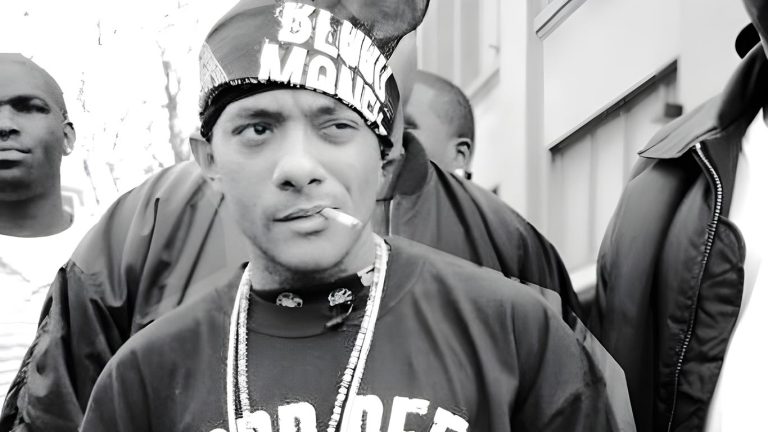
Krush Groove (1985) at 41: The Def Jam Origin Movie That Predicted Every Hip-Hop Biopic to Come
In October 1985, a $3 million Warner Bros. comedy called Krush Groove opened wide across America. It cost less than a mid-tier action picture, had no real movie stars, and was directed by a Black filmmaker most critics had already dismissed as a workhorse. It grossed more than $11 million domestic on a budget that would barely cover craft services on Rocky IV. Wall Street didn’t notice. Rolling Stone barely covered it. And forty years later, almost nobody outside of hip-hop academia can tell you what Krush Groove actually was.
Here’s what it actually was: the first movie that treated hip-hop as a world worth filming from the inside. Loosely based on 21-year-old Russell Simmons, cast almost entirely with the pre-fame Def Jam roster, and shot on the streets and stages where the culture was still being born, Krush Groove is the unofficial ground zero of the hip-hop biopic — the direct ancestor of Notorious, Straight Outta Compton, All Eyez on Me, and every rap-movie that came after. This is the receipts.
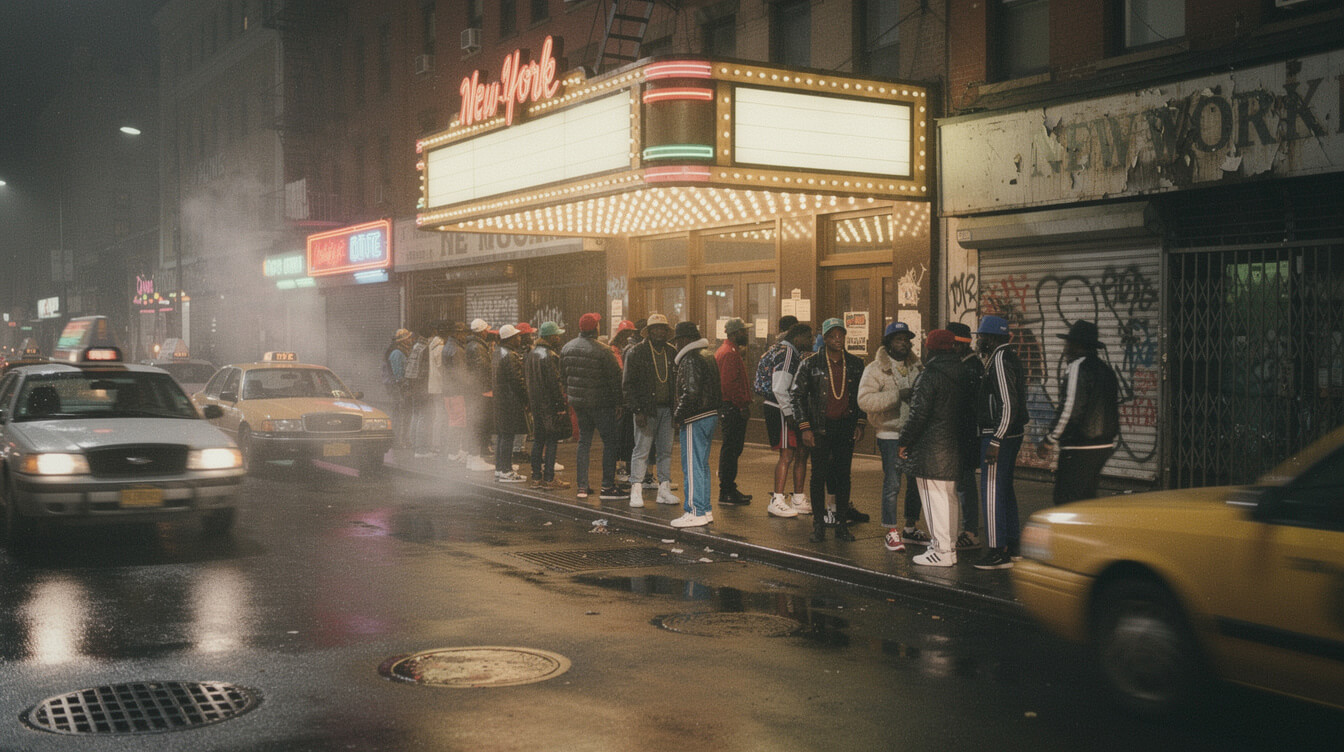
October 1985: When a $3M Def Jam Comedy Grossed $11M Opening Weekend
Krush Groove opened on October 25, 1985, in 515 theaters. Its opening weekend was $3,082,102 — enough to knock Once Bitten off the top-ten and land it at #4 for the frame. That number sounds small until you remember the film’s total production budget was reportedly $3 million. Warner Bros. earned back the entire negative cost in three days. By the end of its theatrical run, Krush Groove had grossed $11,038,911 domestic — a 3.6x return on cost before video, cable, or international.
Nobody had done this before. Not with rap. Rap in 1985 was still, per the New York Times‘ editorial board, “a fad.” Sugar Hill Records was collapsing. Run-DMC’s King of Rock had just gone gold. LL Cool J’s Radio wouldn’t drop until November. The Beastie Boys were an unsigned punk band Rick Rubin had recently talked into rapping. And in a Manhattan office above a delicatessen, a 21-year-old kid from Hollis named Russell Simmons was managing basically the entire New York rap scene out of a rolodex he kept in a briefcase.
Warner Bros. saw the numbers on the pre-sales — Fat Boys shows selling out Radio City, Kurtis Blow going platinum, Run-DMC’s King of Rock making rock stations play a rap record for the first time — and greenlit a movie. They didn’t know it was going to change the shape of American cinema for forty years. They thought they were making a break-dancing knockoff. What they got was the first document, on 35mm, of a culture that hadn’t yet realized it was going to eat the world.
The Real Russell: How Krush Groove Fictionalized 21-Year-Old Russell Simmons
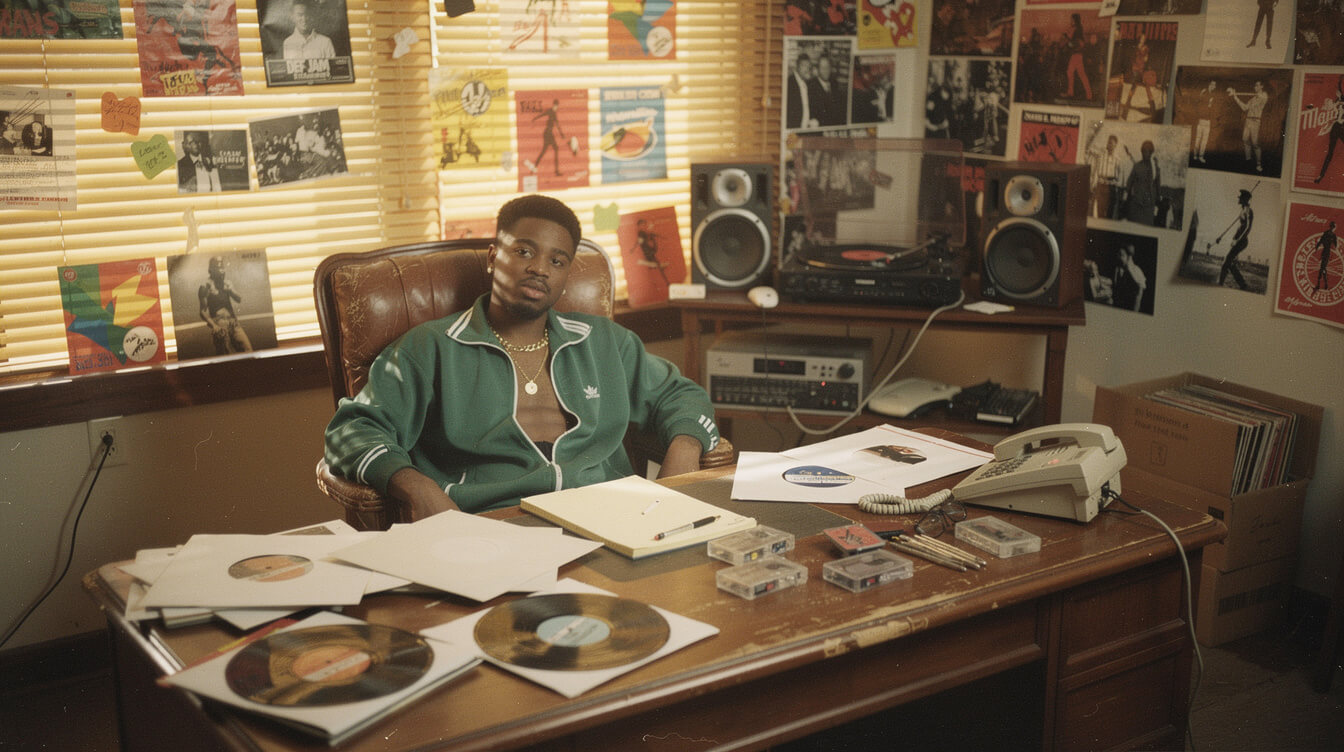
The main character of Krush Groove is a music manager named Russell Walker, played by Blair Underwood. He runs a scrappy rap label out of a cramped office. He manages his brother’s group (Run-DMC — Run is literally Russell Simmons’ younger brother Joey), plus a fat comedy trio (Fat Boys) and a young rapper named Kid (Kurtis Blow, playing himself). He can’t pay the pressing plant, so he borrows money from a loan shark. He falls in love with a singer (Sheila E). He almost loses everything, then he saves everything, and the credits roll on a big block-party finale.
Russell Walker is Russell Simmons. Not “based on.” Not “inspired by.” Loosely, thinly, obviously Russell Simmons — with the serial numbers filed off just enough to protect Warner Bros. from being sued by an actual loan shark. Russell Simmons was 21 when the film was shot. He had co-founded Def Jam Recordings with a 21-year-old NYU dropout named Rick Rubin the year before, out of Rubin’s dorm room at Weinstein Hall. He was managing Run-DMC, Kurtis Blow, and Whodini. He was, by any reasonable measure, the most important business person in rap music, and almost nobody outside of five square miles in New York had ever heard his name.
Krush Groove is not a documentary. Russell Simmons was not, to be clear, involved with a loan shark. But the film’s picture of what running a rap label looked like in 1985 — the hustle, the too-many-artists-not-enough-payroll math, the way New York rap was being built one 12-inch single at a time by a bunch of kids in their early twenties — is closer to accurate than almost anything Hollywood has ever produced about the industry. The office in the movie is the office. The chaos in the movie is the chaos. It’s a fictional feature that accidentally became the best surviving primary-source document of the Def Jam origin story we have.
The Cast as Def Jam Roster Snapshot: Run-DMC, LL Cool J, Beastie Boys’ First Film
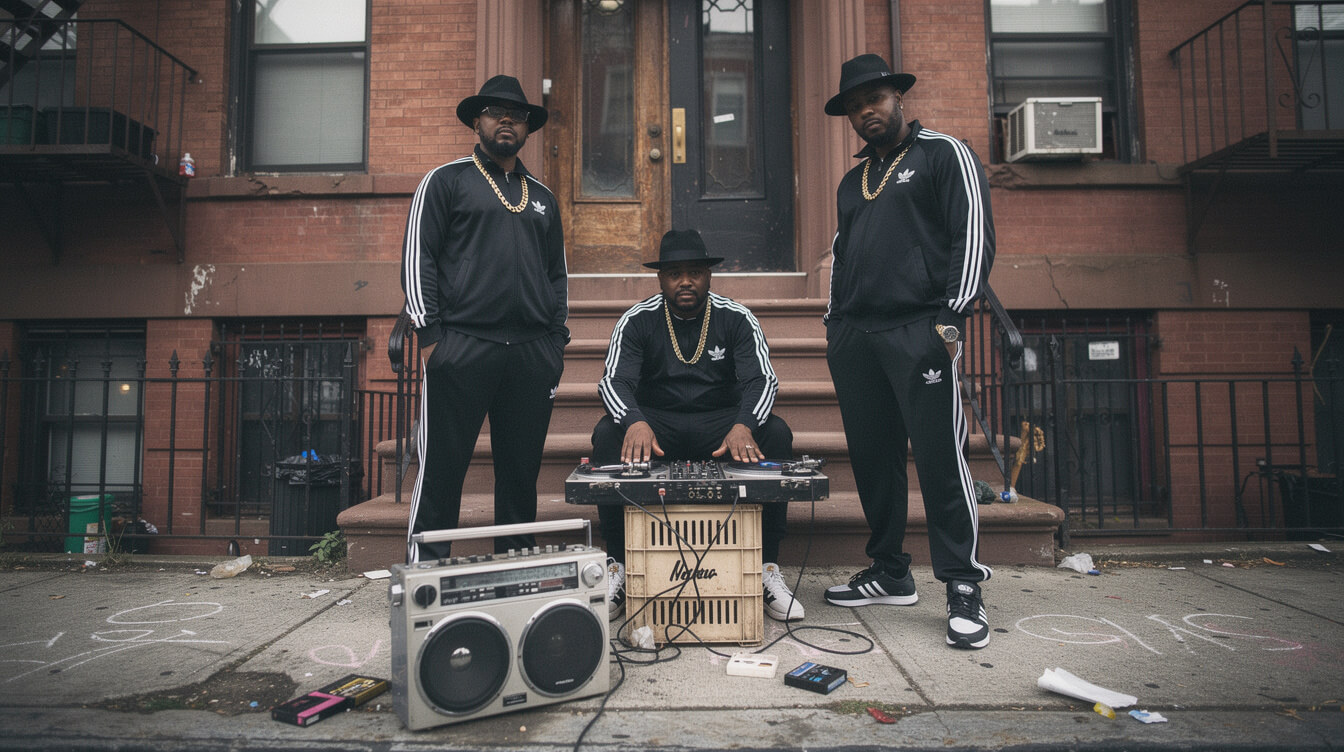
Here’s the cast list you don’t see anywhere. In Krush Groove, playing themselves:
- Run-DMC — Run (Joseph Simmons), DMC (Darryl McDaniels), and Jam Master Jay. Their first film appearance. King of Rock had been out for eight months. Raising Hell — the album that would break rap into the American mainstream via “Walk This Way” — was seven months away.
- LL Cool J — his first-ever film appearance. In one scene he barges into Russell’s office to audition, unspools a verse from what would become “I Can’t Live Without My Radio,” and gets thrown out. He was 17 years old. Radio dropped four weeks after the movie premiered.
- The Beastie Boys — Ad-Rock, MCA, and Mike D. Their first-ever film appearance. They perform “She’s On It” in a small club scene. Licensed to Ill was still 14 months out. Yauch was 21. They looked, to the audience at the time, like a novelty act — three white kids from downtown NYC pretending to rap. History would eventually correct that read.
- Kurtis Blow — plays the fictional rapper “Kid.” Blow was, at the time, the biggest solo rapper in America and Russell Simmons’ first management client. His single “Basketball” had just dropped.
- The Fat Boys — Prince Markie Dee, Kool Rock-Ski, and Buff Love (a.k.a. the Human Beat Box). Fresh off The Fat Boys going gold. Second act of the film is basically their star vehicle.
- Sheila E. — plays the love interest. She was Prince’s percussionist and had a hit with “The Glamorous Life” the year before. She sings “Holly Rock” in the film and effectively serves as the movie’s cross-over play — the audience already knew her from MTV.
- The Disco Three / New Edition — cameos.
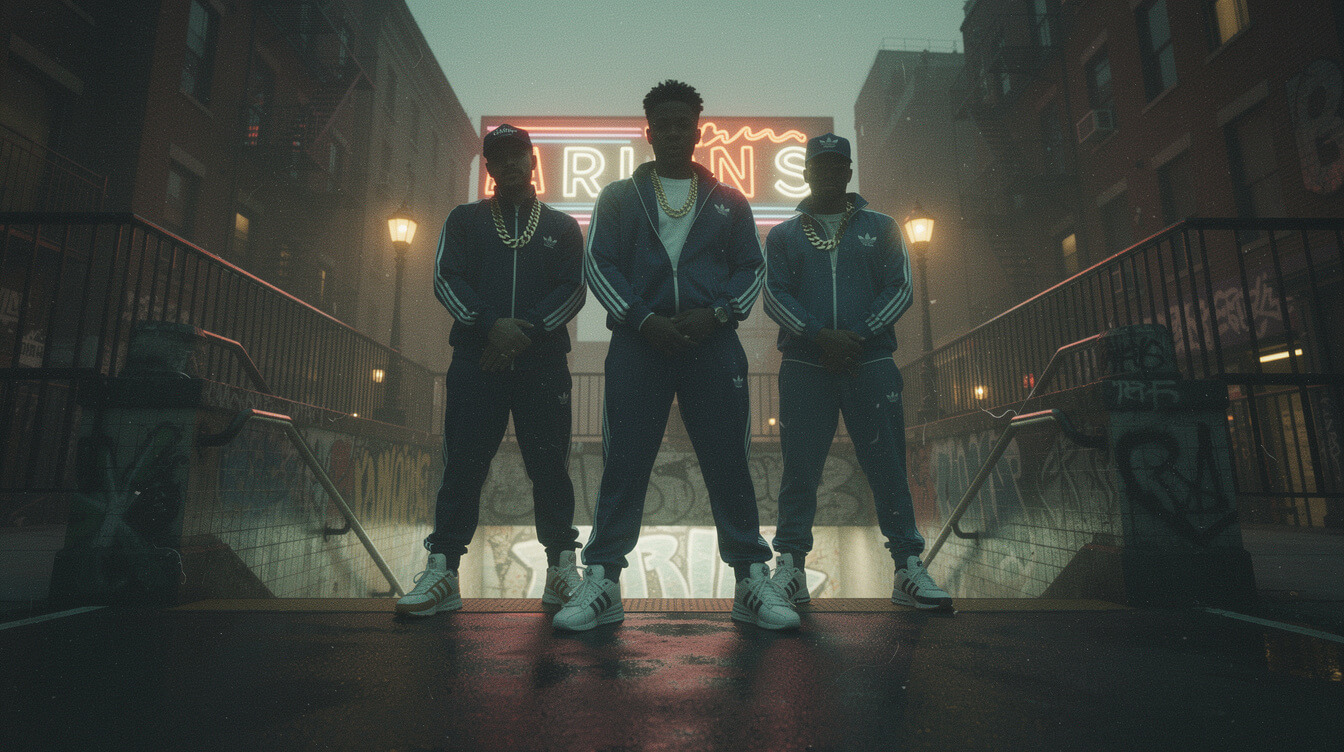
Read that list again. That is the entire founding roster of what would become the most valuable music catalog in New York rap history, on 35mm, in one movie, mostly before anyone in the cast was famous. There is no equivalent document of Motown in 1961, or of Sun Records in 1955, or of Chess in 1948. Krush Groove is the closest thing hip-hop has to a founding-era ensemble photograph, and it happens to be a feature film. If you want to understand how Run-DMC’s Adidas-shell-toe uniform, the Kangol hat, and the fat rope-chain aesthetic became the visual grammar of American rap, this is where you look — the whole lineage traces through the artist-designer lineage that built the $60B hip-hop fashion industry.
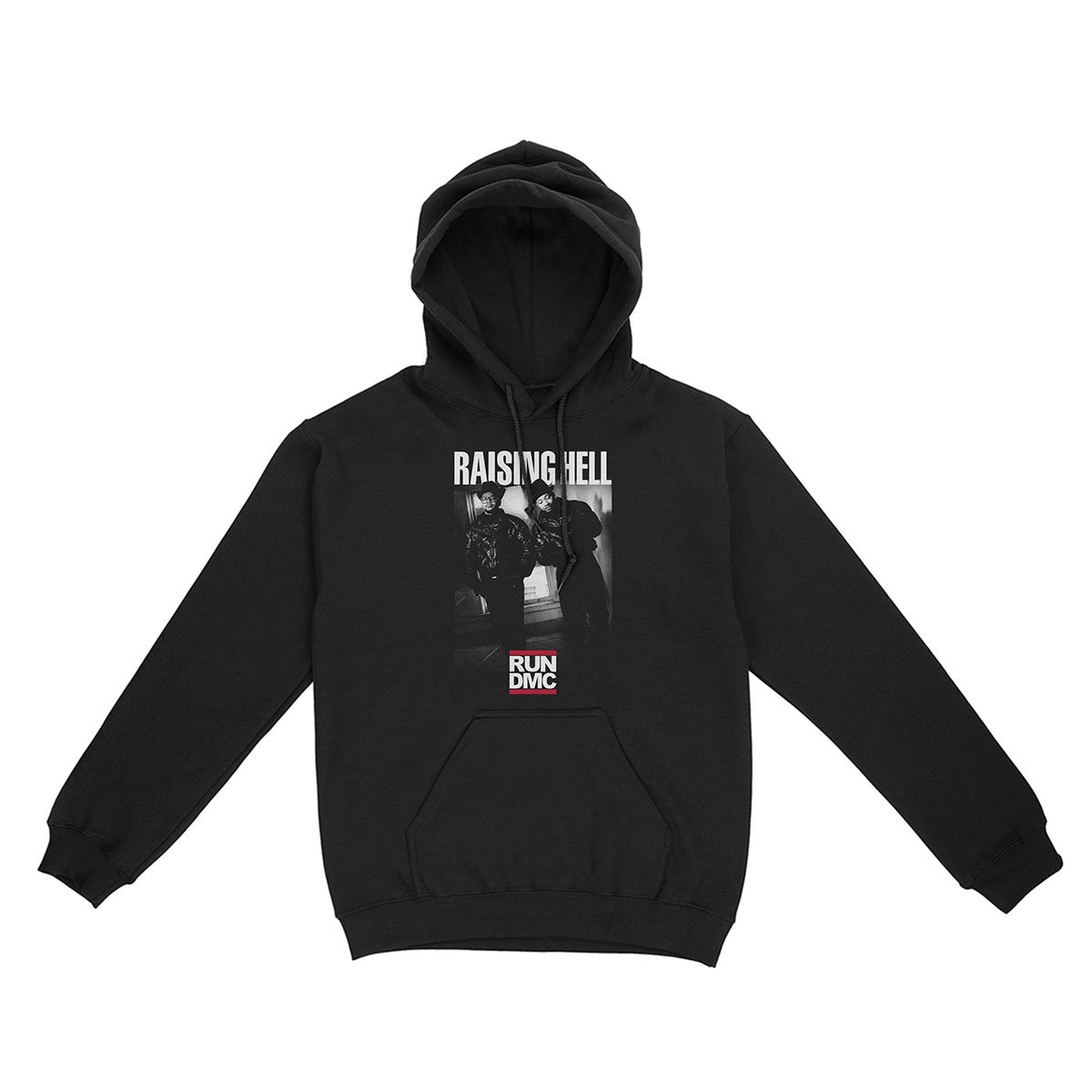
Wear the Album That Changed Everything
Run-DMC’s Raising Hell dropped seven months after Krush Groove — the album that finally kicked rap through Hollywood’s front door. This hoodie honors the drop that turned three kids from Hollis into the first rap superstars.
Fat Boys, Kurtis Blow, Sheila E & New Edition: The Wider 1985 Hip-Hop / R&B Universe
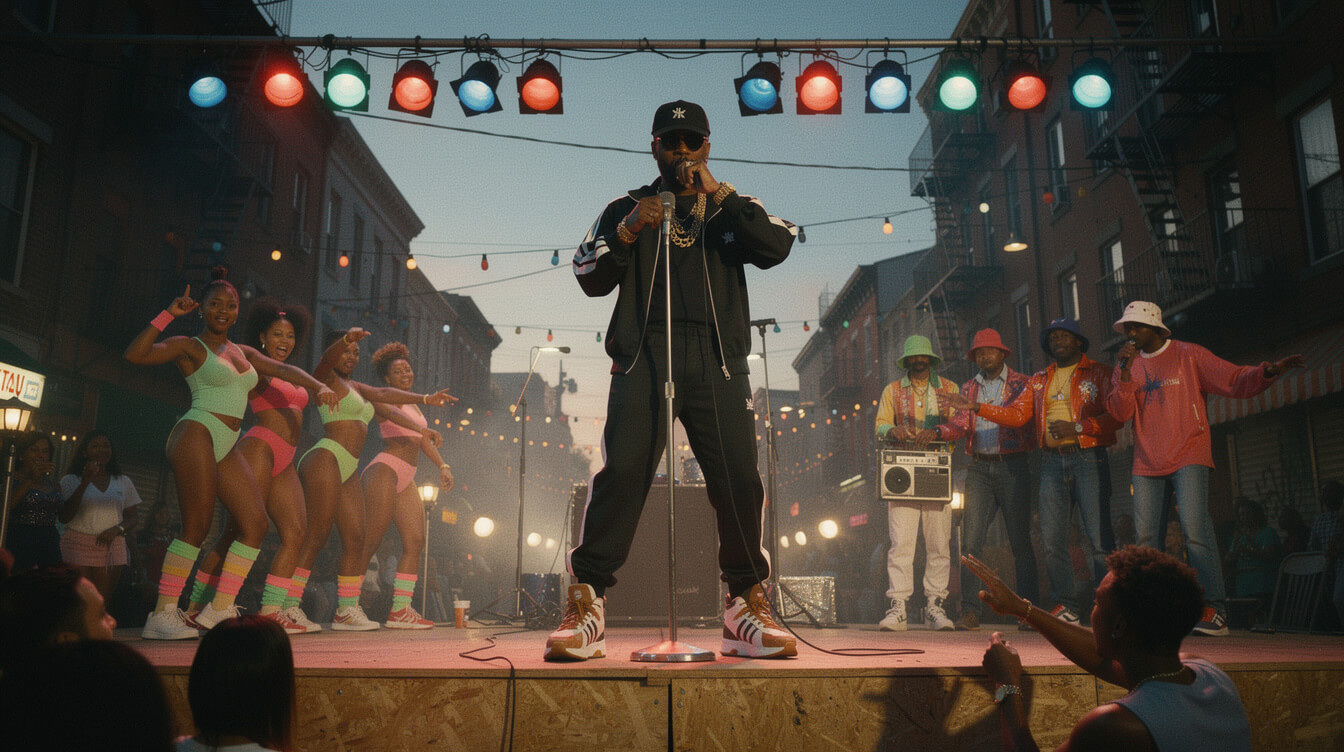
Zoom out from the Def Jam roster and Krush Groove also functions as a snapshot of the wider 1985 Black-music universe — the moment where rap, freestyle, R&B, and funk were all still bleeding into each other on the same stages and the same radio playlists. Sheila E was Prince’s protégé. New Edition was signed to MCA and about to spawn Bobby Brown, BBD, and eventually Bad Boy through Bell Biv DeVoe’s DNA. The Fat Boys were literally sponsored by Swatch. Kurtis Blow was performing on Soul Train. And into that world walks a 17-year-old kid from Queens with a boombox on his shoulder rapping about his radio.
That radio moment is a great excuse to shout out our LL Cool J — I Can’t Live Without My Radio Tee, which pays tribute to the single he essentially auditions with in Krush Groove. When people talk about “the moment LL arrived,” they usually mean the Radio LP or the American Bandstand appearance. But if you want the receipt, the Krush Groove office-audition scene is the earliest surviving film footage of James Todd Smith doing his thing. He is a full year older when Radio drops. In the movie he’s still a kid.
The film also gives you the Fat Boys performing “All You Can Eat” in a Sbarro (yes, a Sbarro — product placement so on-the-nose it circles back to art), Kurtis Blow doing “If I Ruled the World” a full ten years before Nas would flip the phrase into a Lauryn Hill collaboration, and New Edition doing “My Secret” as an in-between act. If you had wanted, in October 1985, to buy a single ticket that would let you see every single person who mattered in New York rap and R&B performing at their pre-fame peak — this was the ticket. And it was $4.50.
Michael Schultz & Cooley High: The Black-Cinema Director Nobody Credits for Hip-Hop Film
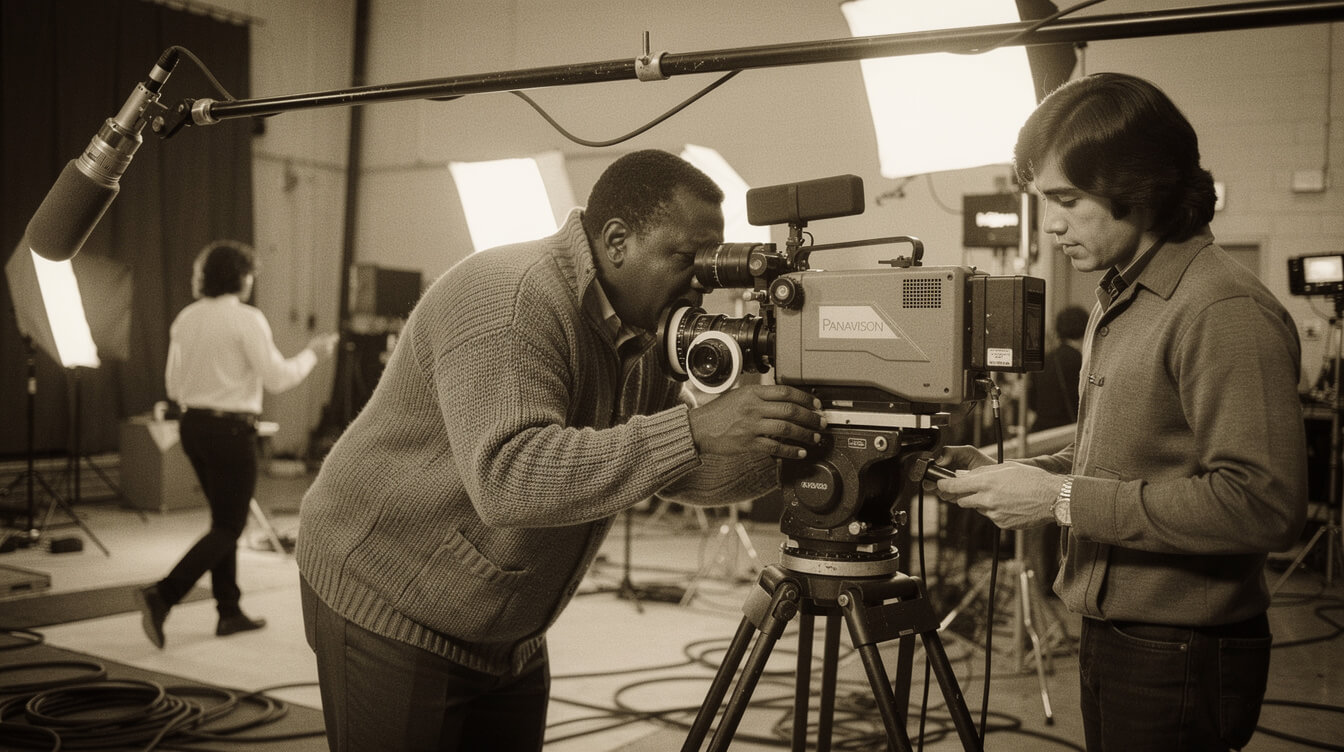
Krush Groove was directed by Michael Schultz. If you don’t know his name, that’s not an accident — Schultz is one of the most under-credited directors in Black American cinema. Before Krush Groove, Schultz had directed Cooley High (1975, the film that basically invented the ’70s Black-teen-in-the-hood dramatic comedy — and directly inspired John Singleton, Spike Lee, and the Hughes Brothers), Car Wash (1976, an ensemble comedy scored by Norman Whitfield that pre-figured every “day-in-the-life ensemble” movie for the next thirty years), and The Last Dragon (1985, a martial-arts musical produced by Berry Gordy that dropped six months before Krush Groove).
Schultz had also, quietly, been directing episodic television for two decades — everything from Baretta to The Rockford Files to Starsky & Hutch. He knew how to shoot fast, cheap, and clean. He knew how to work with musicians who had never acted (Car Wash gave The Pointer Sisters their first substantial screen time). And crucially, he knew how to shoot Black interior spaces — the barbershop, the record label, the club, the Sbarro — with a documentary intimacy that Hollywood almost never granted to Black subjects.
When you watch Krush Groove now, forty years later, the direction is not what dates the film. What dates the film is the wardrobe. Schultz’s actual filmmaking — the way he blocks the audition scene, the way he pulls a two-shot in the loan-shark meeting, the way the block-party finale gives every artist their own dedicated performance space instead of cutting them into montage — is craft. It is the work of a man who had already directed Cooley High and knew how to make a Black-cast ensemble movie sing. Every hip-hop biopic that came after — from Krush Groove‘s spiritual heir Menace II Society (1993) to Notorious (2009) to Straight Outta Compton (2015) — is standing on a Michael Schultz shot. He doesn’t get the credit. He built the vocabulary.
Krush Groove → Beat Street → Wild Style: The Three-Film Hip-Hop Cinema Trilogy
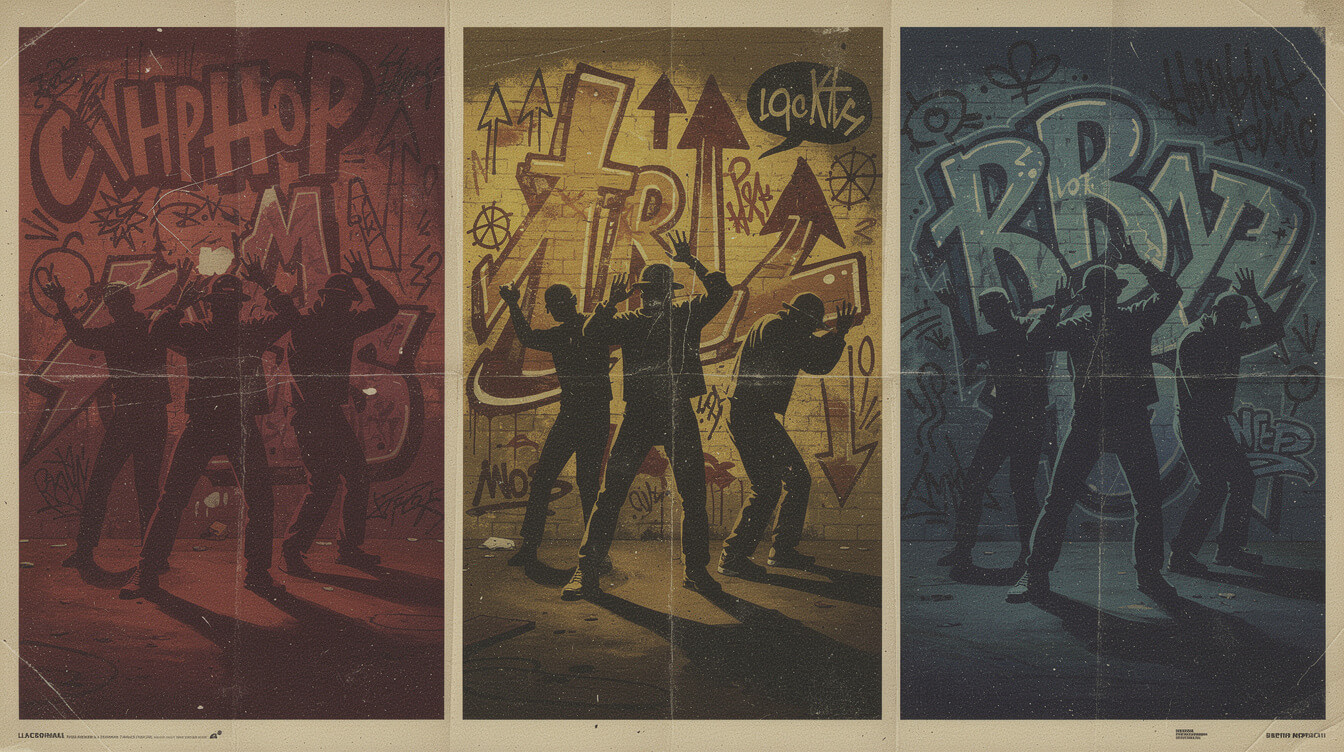
You cannot understand Krush Groove in isolation. It is the third and final entry in the founding trilogy of American hip-hop cinema — a three-film sequence, 1982 to 1985, that established the visual vocabulary, the character types, and the narrative shape of every rap movie that would ever be made.
Wild Style (1982)
Charlie Ahearn’s low-budget docu-fiction hybrid. Shot in the Bronx with actual graffiti writers (Lee Quiñones, Fab 5 Freddy), actual b-boys (Rock Steady Crew), and actual MCs (Grandmaster Flash and the Furious Five, Cold Crush Brothers, Fantastic Five). Not really a “film” in the traditional sense — more a document of hip-hop’s four pillars (MC, DJ, graffiti, break dance) being captured on camera just as the culture crystallized. Budget: reportedly under $200K. Cultural weight: incalculable.
Beat Street (1984)
Stan Lathan’s studio version of what Wild Style had done underground. Produced by Harry Belafonte, released by Orion Pictures. Featured Rock Steady Crew, Grandmaster Melle Mel, and the Us Girls — plus a plotline about two brothers, a DJ (Kenny Kirkland’s character) and a b-boy (Robert Taylor’s character), navigating uptown-to-downtown ambition. Beat Street is the middle film in the trilogy: bigger budget than Wild Style, smaller cultural specificity, but the first hip-hop movie your parents might have seen on cable.
Krush Groove (1985)
The industry film. Where Wild Style filmed the pillars and Beat Street filmed the neighborhood, Krush Groove filmed the business. It is the first hip-hop movie that treats rap not as a subculture to be documented but as a music industry to be dramatized — with a manager, a roster, a loan shark, a pressing-plant deadline, and a Warner Bros. budget. That shift matters. It’s the moment the culture stopped being an anthropological object and started being an economic engine.
Take those three films together — Ahearn’s Wild Style, Lathan’s Beat Street, and Schultz’s Krush Groove — and you have the entire foundational grammar of every hip-hop movie made in the last forty years. Every “kid from the block gets discovered” narrative goes back to Beat Street. Every “the label owes the pressing plant money” scene goes back to Krush Groove. Every DJ-cutting-a-record montage goes back to Wild Style. If you want the trilogy on your shelf, watch them in release order and pay attention to how quickly the visual language of an entire genre was invented and locked in — three movies, three years, permanent template.
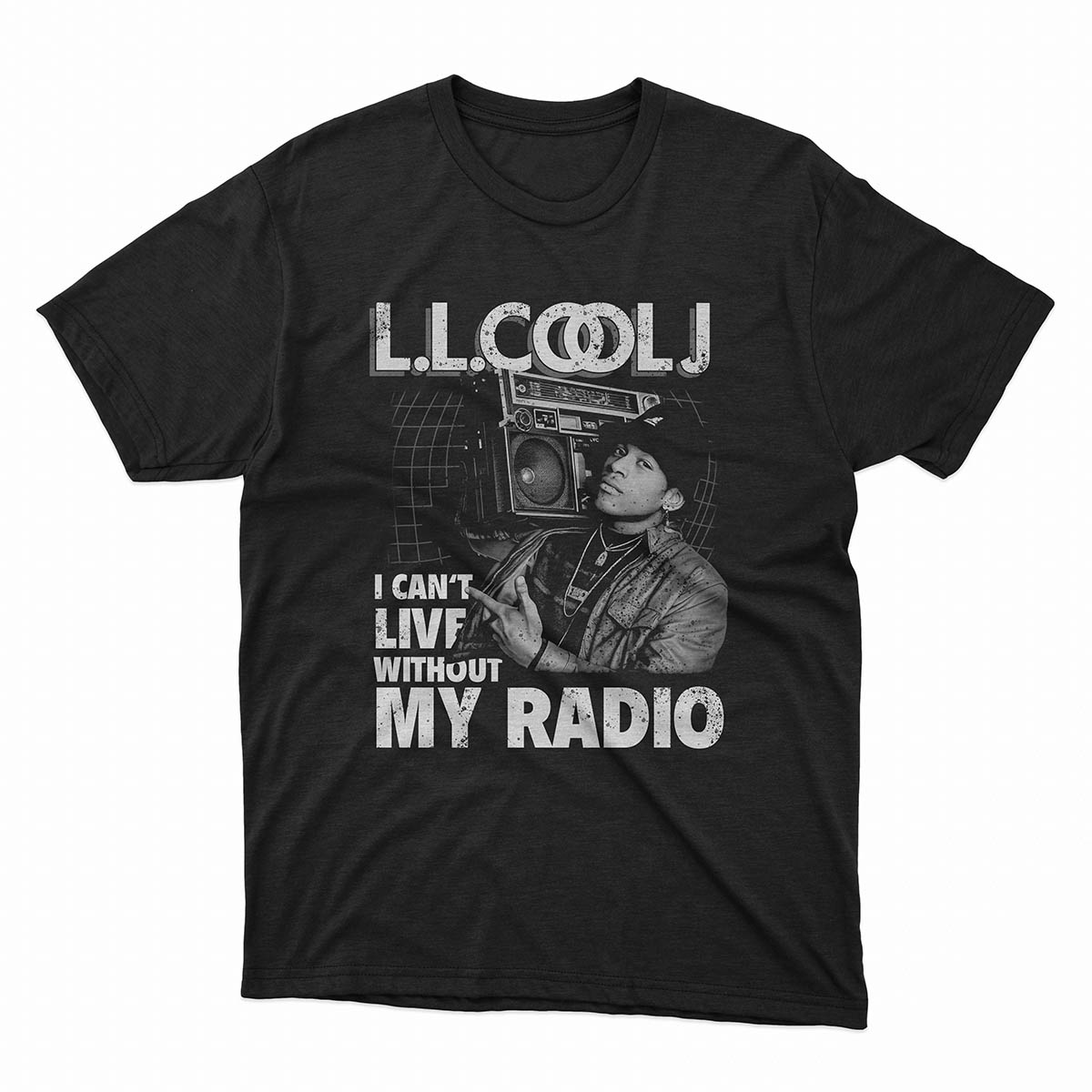
LL’s Debut Single. On a Tee.
The first verse LL Cool J ever performed on camera was in Krush Groove — an early cut of the same track that would launch his career weeks later. This tee salutes the 17-year-old kid with the boombox who walked into Def Jam and never left.
From Krush Groove to Straight Outta Compton: 40 Years of Hip-Hop Biopic Lineage
Here is the full lineage. Trace it and every rap movie of the last forty years slots into a chain that starts, unambiguously, with Krush Groove:
- 1982 — Wild Style (Charlie Ahearn). Documentary-hybrid. Four pillars.
- 1983 — Style Wars (Tony Silver). PBS graffiti documentary. Not fiction, but a foundational reference text.
- 1984 — Beat Street (Stan Lathan). Studio picture, neighborhood story.
- 1985 — Krush Groove (Michael Schultz). Industry story. The first biopic.
- 1985 — Rappin’ (Joel Silberg). Cannon Films’ Krush Groove knockoff, Mario Van Peebles vehicle. Instantly forgotten.
- 1988 — Colors (Dennis Hopper). Not hip-hop centered but Ice-T’s “Colors” title track is the first mainstream rap film-theme.
- 1991 — Boyz n the Hood (John Singleton). Not a biopic, but Ice Cube’s first film role. The cross-pollination begins.
- 1992 — Juice (Ernest Dickerson). Tupac’s first lead role. A direct Krush Groove descendant — young man in the culture, dramatized.
- 1993 — Menace II Society (Hughes Brothers). MC Eiht’s first major role, Larenz Tate’s break, the definitive Watts hood-film.
- 1995 — Above the Rim (Jeff Pollack). Tupac, again. Warren G, Nate Dogg soundtrack.
- 1998 — Belly (Hype Williams). DMX, Nas. Aesthetics-first hip-hop cinema at its peak.
- 2002 — 8 Mile (Curtis Hanson). Eminem plays not-quite-himself. The Krush Groove formula — rap protagonist, rap surroundings, dramatized origin story — inflated to $41M budget and $242M gross.
- 2005 — Get Rich or Die Tryin’ (Jim Sheridan). 50 Cent plays not-quite-himself. Direct Krush Groove descendant, industry-focused variation.
- 2009 — Notorious (George Tillman Jr.). Jamal Woolard as Biggie. Fully realized modern hip-hop biopic — the shape of which was invented, tentatively and cheaply, by Michael Schultz in 1985.
- 2015 — Straight Outta Compton (F. Gary Gray). $28M budget, $201M box office. The genre’s Godfather — a rap-label origin story that is, essentially, Krush Groove shot with prestige-drama craft and a Universal marketing budget. The pressing-plant scene is still in there. The manager-figure (Paul Giamatti’s Jerry Heller) is still in there. The finale that unifies the roster is still in there. It’s the same movie. It just cost 65 times as much.
- 2017 — All Eyez on Me (Benny Boom). Demetrius Shipp Jr. as Tupac. Formula intact.
- 2021 — The Harder They Fall (Jeymes Samuel). Not a biopic per se, but a Black-Western with a hip-hop soundtrack and Jay-Z producing. Shows the influence bleeding beyond the biopic form itself.
Every one of those films — and this is the actual argument, receipts included — is walking in a template that Krush Groove set in October 1985. Rap-star cast playing themselves or thinly-fictionalized versions of themselves; industry stakes (money, contracts, betrayals, roster politics); a narrative that ends with the crew unified on a stage or in a studio; performance sequences that double as showcases for whichever artists were peaking that year. That’s Krush Groove. That’s Straight Outta Compton. That’s All Eyez on Me. That’s Get Rich or Die Tryin’. That’s what a Havoc biopic would be if Mobb Deep ever got the Universal treatment. That’s what a Jay-Z biopic will look like if it ever gets made — and given how much of Jay’s mythology is already dramatizable, it is only a matter of time.
Frequently Asked Questions About Krush Groove
Is Krush Groove based on a true story?
Loosely, yes. The film’s protagonist Russell Walker is a fictionalized version of real-life Def Jam co-founder Russell Simmons, who was 21 years old at the time and managing much of the New York rap scene out of a small office. The loan-shark subplot is invented. The pre-fame Def Jam roster performing themselves is entirely real.
Who was in Krush Groove?
Run-DMC, LL Cool J (his first film appearance), the Beastie Boys (their first film appearance), Kurtis Blow, the Fat Boys, Sheila E, and New Edition — plus Blair Underwood in the lead as the Russell-Simmons stand-in and Sheila E as the love interest. Almost every cast member played themselves or a thinly disguised version of themselves.
Who directed Krush Groove?
Michael Schultz — the veteran Black-cinema director whose earlier credits include Cooley High (1975), Car Wash (1976), and The Last Dragon (1985). Schultz is one of the most under-credited directors in American cinema; his fingerprints are on the visual vocabulary of every hip-hop biopic that came after Krush Groove.
How much did Krush Groove cost to make?
Approximately $3 million — an extraordinarily low budget even for 1985. It grossed over $11 million domestically, making it one of the most profitable Warner Bros. releases of the year on a return-on-investment basis.
Where can I watch Krush Groove now?
As of 2026, Krush Groove streams intermittently on HBO Max and rents on Amazon and iTunes. Physical media collectors can find it on DVD (Warner Archive) though a proper Blu-ray restoration has never been issued — a genuine cultural crime given the film’s importance to the American hip-hop canon.
Is Krush Groove the first hip-hop movie?
No — it’s the third film in the founding trilogy, after Wild Style (1982) and Beat Street (1984). But it is the first hip-hop biopic, the first film to dramatize the rap-industry business specifically, and the first film to feature what would become the founding Def Jam roster.
Final Thoughts: Why Krush Groove Deserves a 40th-Anniversary Reappraisal
Watch Krush Groove today and you’ll see a lot that dates it — the wardrobe, the pacing, the loan-shark subplot’s plot mechanics. What doesn’t date is the fact that you are watching the actual founding roster of American commercial hip-hop, on 35mm, mostly before they were famous, mostly playing themselves, in a movie that predicted the shape of every rap film that would ever be made after it. There is no other document like it. There will never be another document like it, because the moment it captured only happened once.
The fact that Krush Groove isn’t taught in film schools, isn’t in the Criterion Collection, doesn’t have a proper Blu-ray restoration, and isn’t cited alongside The Godfather and Do the Right Thing as a foundational American film — that’s not because it isn’t important. It’s because hip-hop’s own history keeps getting written by people who weren’t there. Forty years in, the culture is finally big enough, and confident enough, to write the receipts down. And the receipts start with a $3 million Warner Bros. movie that opened on October 25, 1985, and quietly changed everything.
Stay creative — The Custom Creative Team
Get the Culture in Your Inbox
Deep hip-hop dives, artist retrospectives, and first look at our drops — no fluff, no filler, no corporate spam.

🎧 Never Miss a Drop
Exclusive product releases, hip-hop deep dives, and member-only discounts. Straight to your inbox.
Free forever. No spam. Unsubscribe anytime.
Get the Culture, Delivered
Deep dives into hip-hop history, exclusive product drops, and discounts sent straight to your inbox. No spam, just culture.
Join 2,000+ hip-hop heads already in the loop. Unsubscribe anytime.