The Roots Members Explained: Every Musician in Hip-Hop’s Only Real Band, Then and Now (2026 Complete Roster)
Ask a casual hip-hop fan to name the Roots members and you’ll get “Questlove and Black Thought.” Ask a Roots head and you’ll get a lineage — a Philadelphia band that has cycled through fifteen musicians across nearly forty years, from a SEPTA subway platform to the Rockefeller Center studio floor. That distinction — lineage, not lineup — is why The Roots are hip-hop’s only real band, and why understanding the roster means understanding four distinct eras of a sound the culture never stops borrowing from.
This guide walks the full 2026 roster the way the band itself organized: by era. Not the Wikipedia bullet list. Not the Revolt ranking. The eras that changed the band’s DNA — the CAPA basement, Illadelph, the Rich Nichols years, and Late Night — and the fifteen musicians who defined each one. Includes the Malik B tribute that most write-ups still rush through, and the Rich Nichols footnote most people skip entirely.
Why “The Roots Members” Is the Wrong Question
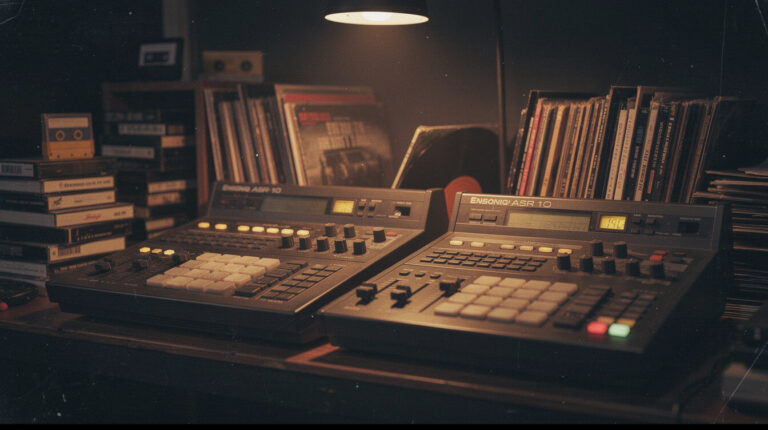
Every other rap group in history is a collective of MCs plus a producer. Wu-Tang, De La, Tribe, Outkast, Migos, Griselda — the through-line is voices, and beats are hired out. The Roots inverted that grammar in 1987 and never went back. They are a band first: a rhythm section, a horn line, keys, guitar, DJ, human beatbox, one lead MC. Songs are written, arranged, road-tested, mutated on stage, and finally cut in a studio where the band already knows the changes. Nobody else in the culture works that way.
That’s why asking “who are the Roots members?” and expecting a two-name answer misses the whole point. The correct answer is closer to how you’d talk about Booker T. and the M.G.’s, or the Meters, or Fela’s Africa 70 — a house band with a rotating pit of specialists, held together by a nucleus that never leaves the room. Questlove has been on drums every night since 1987. Black Thought has been on the mic every night since 1987. Everyone else is an era. Understanding the roster means understanding which era you’re listening to.
The next four sections walk the eras chronologically. The final section is the definitive lineup card — fifteen musicians, roles, entry dates, and where they are in 2026.
The Founding Core (1987–1994): Questlove, Black Thought, and the CAPA Origin
The Roots were born inside Philadelphia High School for the Creative and Performing Arts — CAPA, on South Broad Street. Ahmir “Questlove” Thompson had a jazz-band drummer for a father (Lee Andrews of the doo-wop group Lee Andrews & the Hearts) and had been playing kits since he could hold sticks. Tariq “Black Thought” Trotter was a battle-rapper from South Philly who had lost his mother to gun violence at fourteen and was writing verses that read like classroom notebooks full of triple entendres. They met inside a music-theory class and started playing together in the lunchroom. The band existed before it had a name.
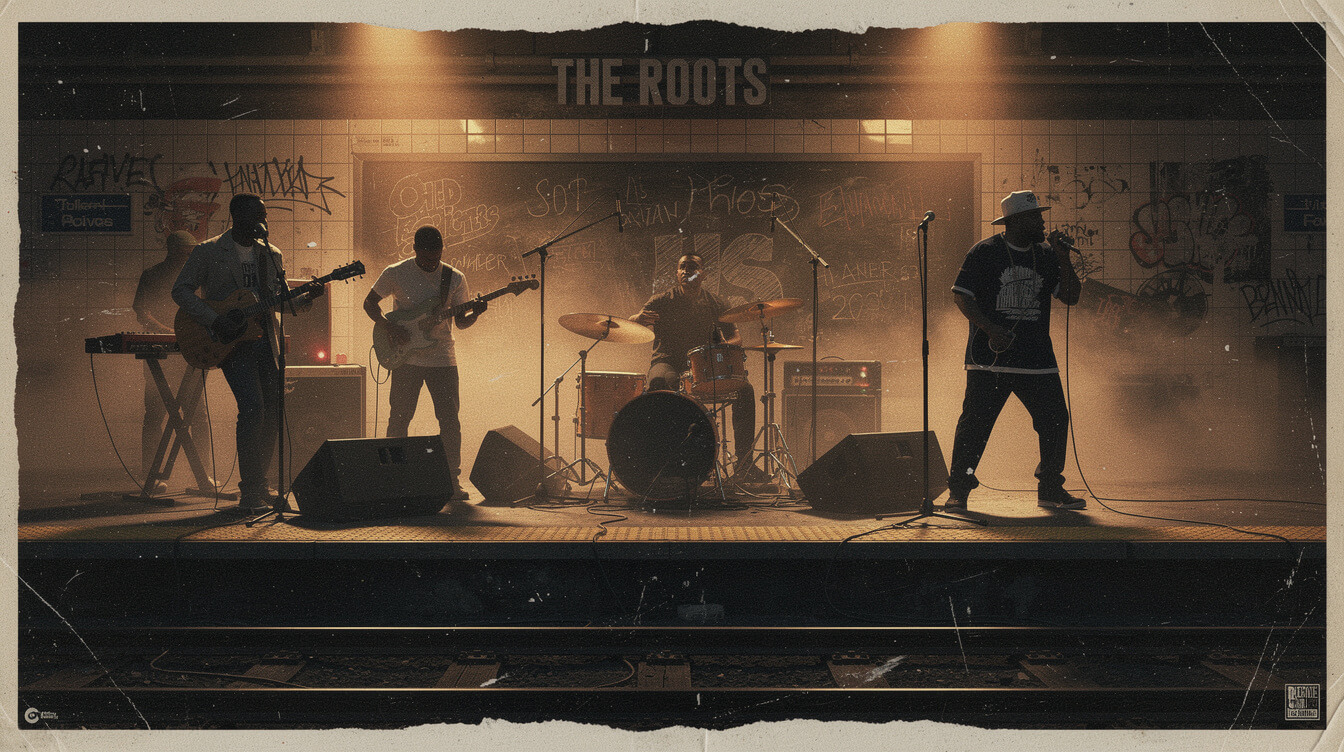
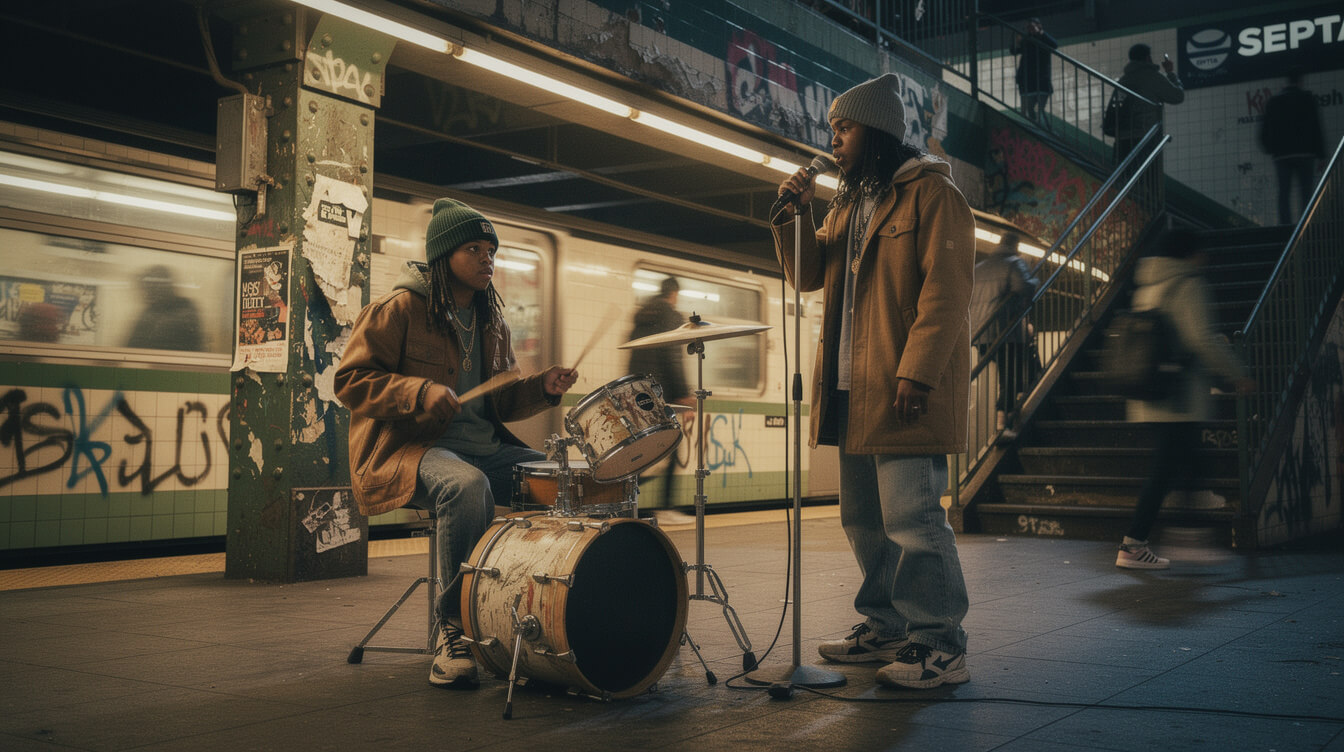
Their first performance vehicle was two teenagers on the South Street subway platform: Ahmir on a stripped-down drum kit, Tariq freestyling to commuters. The math was ruthless — if you can hold a crowd of tired workers on a SEPTA platform with nothing but a snare, kick, and a mouth, you can hold anyone. That platform is where the band’s default performance ethic — drum kit + MC + no backing track, ever — was forged. Nearly forty years later it is still the rule.
The lineup expanded through the CAPA network. Bassist Josh “Rubberband” Abrams joined for the earliest gigs; keyboardist Scott Storch (yes, the same Scott Storch who later produced Fat Joe, Dr. Dre, and half the 2000s pop chart) came in for the mid-1990s recordings. Leonard “Hub” Hubbard replaced Abrams on bass in 1992 and became the low-end anchor for the next thirteen years. The band self-financed their first release, Organix, in 1993 while on tour in Germany, selling it out of a suitcase. Geffen signed them off the strength of that tour, and Do You Want More?!!!??! hit shelves in January 1995 as their major-label debut. No samples. All live. That single decision — a rap album with a live rhythm section, no drum machine, no chopped break — was a challenge no one in 1995 was ready for.
The Illadelph Era (1994–1999): Malik B, Rahzel, Scott Storch, and the Sound That Made The Roots Untouchable
This is the era true heads argue about. From Do You Want More?!!!??! (1995) through Illadelph Halflife (1996) and into Things Fall Apart (1999), The Roots absorbed a rotating cast of Philadelphia specialists who each pushed the band somewhere it hadn’t been. Malik B — full name Malik Basit Abdul-Basit — was Black Thought’s foil, a second MC whose delivery was drier, more paranoid, more menacing. Rahzel “The Godfather of Noyze” joined on human beatbox and did things with his throat and a microphone that engineers assumed were multitrack overdubs until they saw him do it live. Scott Storch played keys on Do You Want More?!!!??! and Illadelph Halflife and left before Things Fall Apart — his replacement, Kamal Gray, would become the longest-serving pianist in the band’s history.
DJ Scratch of EPMD did guest cuts on the early records; then Scratch (Kyle Jones — no relation to DJ Scratch, and yes the naming is a mess) came in as the band’s full-time turntablist. Dice Raw, a Philly MC who joined for Illadelph Halflife at seventeen, contributed hooks and verses across nearly every subsequent album. If you’re wondering how the Illadelph-era sound got so dense — the answer is this pit of ten to twelve musicians circulating through the studio, everyone contributing, nobody quite fitting a headcount.
The visual language of that era was as distinct as the sonics. Roots heads gravitate to the Jedi Mind Tricks “Servants in Heaven, Kings in Hell” tee because that’s the same Philly hip-hop cousin — the same overcast palette, the same dread-tinged philosophy, the same city on the album covers. The Illadelph aesthetic wasn’t marketing — it was zip codes.
Things Fall Apart, released February 23, 1999, is where the era peaks. Erykah Badu on “You Got Me.” Common on “Act Too (The Love of My Life).” Mos Def on “Double Trouble.” Eve on “You Got Me” as originally written. Every guest is a scene-mate, not a rented feature. The album went platinum, took Best Rap Performance by a Duo or Group at the 2000 Grammys, and established The Roots as the band the entire golden-age generation trusted to hold the line as boom bap started ceding chart real estate to bling-era rap. That trust never really left, even after the band itself did.
Malik B: The Underrated Voice of Illadelph Halflife (1972–2020)
Malik B died on July 29, 2020. He was 47. No official cause was ever released; his family asked for privacy, and the band honored it. What we can say is that his departure from The Roots’ touring lineup after Things Fall Apart was tied to substance struggles he was open about in later interviews, and the reasons he never fully rejoined the road band were the same reasons.
He never left the family, though. He returned as a featured MC on Phrenology (2002), Game Theory (2006), and Rising Down (2008). His verse on “Water” from Phrenology — the song is a direct address to Malik about his addiction, written by Black Thought — is one of the most emotionally naked recordings in the band’s catalog. Malik’s response verses across those three albums are not the work of a guest. They’re the work of a founding member using the only stage he had left.
What made him special: a completely dry delivery, no vibrato, no showmanship, that made his lines land like documents. On “Panic!!!” from Illadelph Halflife — “I roll thick with the gats to click / Ain’t no way for you to blast this s—t” — the calm is what scares you. He was Black Thought’s opposite number. Where Thought went technical and elastic, Malik went flat and inevitable. You could not out-menace him because he wasn’t performing menace; he was reporting the weather.
If you’ve only known The Roots since How I Got Over or the Fallon era, go back and put Illadelph Halflife on. Listen for the verses that aren’t Black Thought. That’s the man the culture is still catching up to.
Rest in power to Malik B. Long may the Halflife stay in rotation.
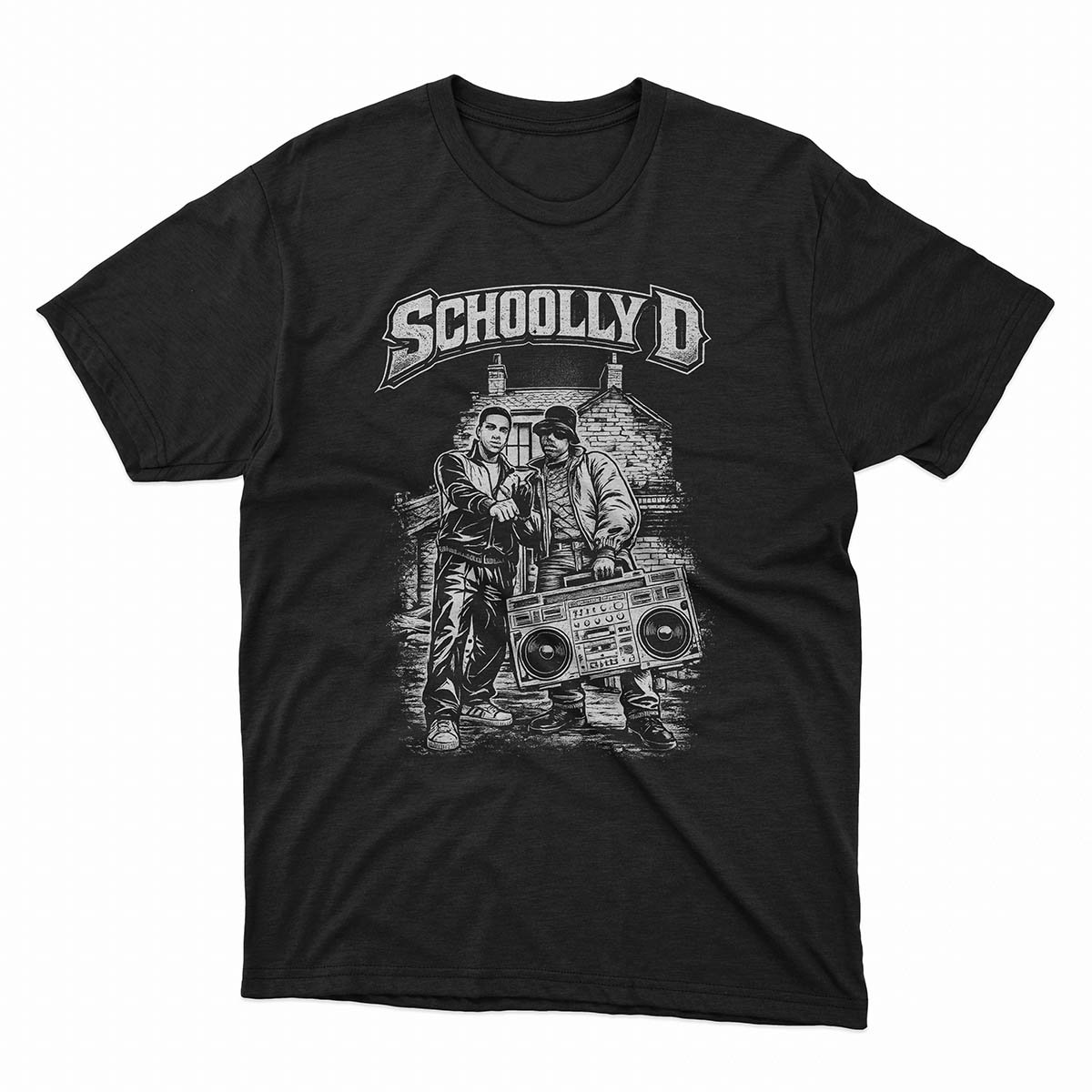
Shop the Philly Boom Bap Catalog
Illadelph-era Philadelphia hip-hop lives in the tees we cut for the culture. Schoolly D built the city’s rap DNA — the same DNA The Roots inherited.
The Rich Nichols Era (1999–2014): Kamal Gray, Kirk Douglas, James Poyser, and the Sound Evolution
Every write-up about the Roots members skips Rich Nichols. Do not skip Rich Nichols. He was the band’s manager, co-producer, and unofficial founding member from the very first Geffen negotiation in 1994 through his death from leukemia on July 18, 2014. Questlove has said publicly, more than once, that Rich functioned as the band’s producer in the George Martin sense — a permanent presence in the room whose ear shaped every mix. When Rich died, the band’s public-facing output slowed noticeably, and Questlove described the loss as “the Roots losing our compass.”
Under Rich, the roster stabilized. James Poyser — a Philadelphia keyboardist and Soulquarians co-founder alongside Questlove, D’Angelo, and J Dilla — joined as the second keys player and Rhodes specialist. Kamal Gray settled in as the primary pianist. Kirk “Captain Kirk” Douglas came in as full-time guitarist around 2003, bringing a blues and rock-guitar vocabulary that reshaped the darker later albums — you can hear it clearest on Rising Down (2008), where the guitar starts doing what Malik used to do. Hub left in 2007; Owen Biddle stepped in on bass through 2011.
The Rich Nichols years are the band’s most sonically ambitious. Phrenology (2002) leaned hard into hardcore and drum-and-bass detours. The Tipping Point (2004) is the funk album most listeners underrate. Game Theory (2006) is a grief record — Dilla had just died, and half the album is a Detroit-Philly conversation about mortality. Rising Down (2008) is the political record — a Bush-era autopsy that goes as dark as any album in mainstream hip-hop. How I Got Over (2010) is the pivot, the album that let neo-soul influences (Joanna Newsom, Monsters of Folk covers) sit next to Dice Raw and Phonte verses.
Nobody was cutting music like this at a major label. That the band survived a five-album run of unrelenting artistic risk without commercial collapse is a Rich Nichols achievement as much as anyone’s.
The Late Night / Tonight Show Roster (2009–Present)
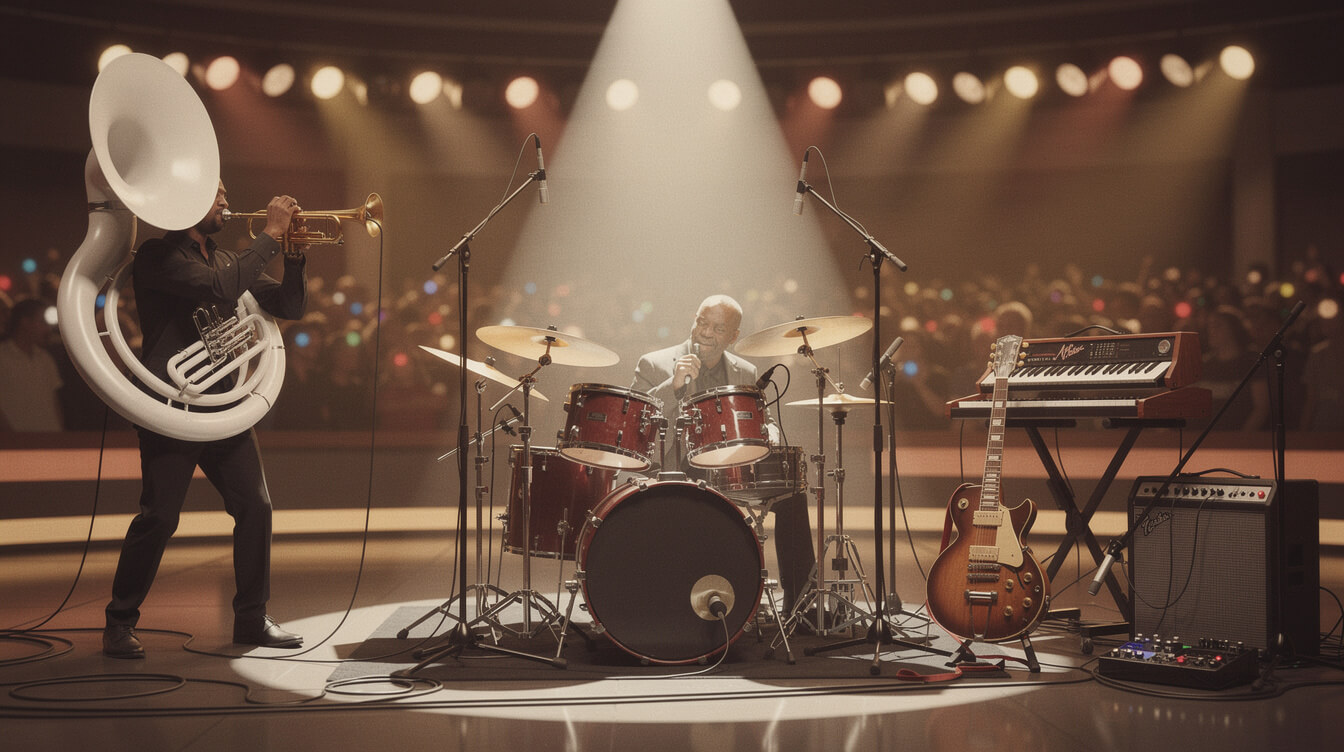
On March 2, 2009, The Roots debuted as the house band on Late Night with Jimmy Fallon. On February 17, 2014, they followed Fallon over to The Tonight Show, replacing Doc Severinsen’s old real estate. That role — five nights a week, 30 Rockefeller Plaza, roughly 200 broadcasts a year — is the largest single ongoing gig in hip-hop history. It also permanently reshaped the roster.
Damon “Tuba Gooding Jr.” Bryson joined on sousaphone, giving the band a portable low-end for the TV format where a bass rig wasn’t practical. Dave Guy came in on trumpet — you know him from Sharon Jones & the Dap-Kings, and if you’ve listened to any Amy Winehouse it’s his horn arrangements. Ray Angry took over as touring keyboardist. Jeremy Ellis contributed finger-drumming interstitial pieces for a period. Mark Kelley slid in on bass after Owen Biddle. The house-band lineup crystallized around 2015: Questlove (drums), Black Thought (MC), Kamal Gray (keys), James Poyser (keys), Kirk Douglas (guitar), Mark Kelley (bass), Tuba Gooding Jr. (sousaphone), Dave Guy (trumpet), Ray Angry (keys/utility), Frank Knuckles (percussion).
The gig changed the recording output. Post-2009 albums came slower and stranger — undun (2011) was a concept record about a fictional dying character. …And Then You Shoot Your Cousin (2014) was a 33-minute concept opera. Then Rich Nichols died, and the studio albums stopped for a decade. The band was too busy playing five nights a week and building an Late Night catalog of guest appearances that reads like a full second discography — Fela Kuti’s son Femi in the studio, Prince sitting in on guitar, John Legend duetting with Black Thought. Every night was a session. The albums moved to the airwaves.
Fans who came in through Fallon sometimes assume the Roots have always sounded like the tight, brassy, TV-optimized version. They haven’t. The Late Night era is the fourth phase of a four-phase band. It’s not the whole story.
The Complete Roots Members: 15 Musicians, 40 Years, One Continuous Band
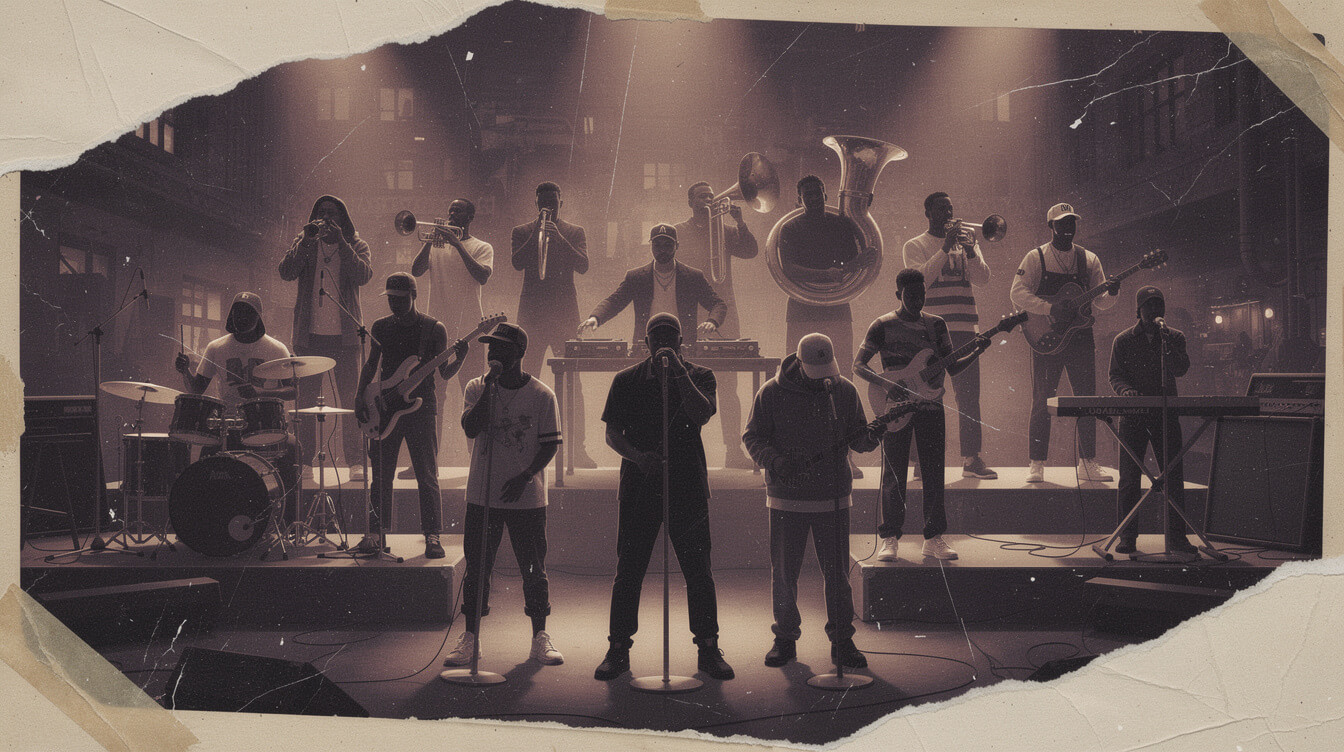
Here is the definitive roster of The Roots members through 2026, era-tagged and current-status noted. Fifteen musicians, one band.
- Ahmir “Questlove” Thompson — drums, band leader, co-founder, 1987–present. Also Emmy-winning filmmaker (Summer of Soul, 2021).
- Tariq “Black Thought” Trotter — lead MC, co-founder, 1987–present. Solo Streams of Thought series (2018–2021) plus Cheat Codes with Danger Mouse (2022).
- Malik B — MC, Illadelph-era co-front, 1993–1999 touring / 2002–2008 features. Died July 29, 2020.
- Leonard “Hub” Hubbard — bass, 1992–2007. Died December 16, 2021 (multiple myeloma).
- Rahzel — human beatbox, 1993–1999. Occasional guest appearances since; toured with Björk.
- Scott Storch — keys, 1994–1997. Left to become one of the top pop-rap producers of the 2000s.
- Scratch (Kyle Jones) — beatbox / turntables, 1993–2003. Solo work as a Philly beatbox veteran.
- Kamal Gray — keys, 1997–present. The band’s longest-serving pianist.
- Dice Raw — MC / hook vocalist, 1996–present. Concept-album co-writer on undun.
- James Poyser — keys, 1999–present. Soulquarian, Erykah Badu / D’Angelo / Common producer-collaborator.
- Kirk “Captain Kirk” Douglas — guitar, 2003–present. Rock/blues vocabulary — the sound of every Late Night guest tribute.
- Owen Biddle — bass, 2007–2011. Left to focus on solo and session work.
- Damon “Tuba Gooding Jr.” Bryson — sousaphone / tuba, 2007–present. Made the sousaphone a hip-hop instrument.
- Mark Kelley — bass, 2011–present. Current touring bassist.
- Ray Angry — keys, 2013–present. Also plays with D’Angelo & the Vanguard.
Beyond the core fifteen, honorable mentions in the extended family include Rich Nichols (manager, co-producer, “sixth Root” — died 2014), Dave Guy (trumpet, Late Night house-band regular but formally a Dap-Kings member), and Frank Knuckles (percussion, Late Night regular). This is the Roots-family cartography most write-ups flatten.
If you’re rebuilding your Illadelph-era listening rotation, our Baduizm at 29 deep-dive covers the Erykah Badu link that put “You Got Me” on the map, and our 15 Best Jill Scott Songs, ranked walks the Philadelphia neo-soul lineage that grew directly out of the same Illadelph ecosystem — Jill was a co-writer on “You Got Me” before Erykah cut the final vocal.
Frequently Asked Questions About The Roots Members
Who are the founding members of The Roots? Ahmir “Questlove” Thompson (drums) and Tariq “Black Thought” Trotter (MC), who met at Philadelphia’s High School for the Creative and Performing Arts (CAPA) in 1987. Early bassist Josh “Rubberband” Abrams played on the earliest CAPA-era sets; Leonard “Hub” Hubbard replaced him in 1992 and stayed through 2007.
What happened to Malik B from The Roots? Malik Basit Abdul-Basit was the band’s second MC from 1993 through Things Fall Apart (1999). He stepped away from the touring lineup after that album amid substance struggles he later spoke about publicly, but returned as a featured guest on Phrenology, Game Theory, and Rising Down. He died on July 29, 2020, at age 47. No official cause was released at his family’s request.
Who is the drummer for The Roots? Ahmir “Questlove” Thompson has been the sole drummer since 1987. He is also the band’s musical director, a five-time Grammy winner, and the director of the Oscar-winning documentary Summer of Soul (2021).
Are The Roots still together in 2026? Yes. They remain the house band on The Tonight Show Starring Jimmy Fallon at 30 Rockefeller Plaza, tour selectively, and headline their annual Roots Picnic festival in Philadelphia every June. New studio album End Game was formally announced by the band in 2024 with no confirmed 2026 release date as of this writing.
Why are The Roots The Tonight Show band? They joined Late Night with Jimmy Fallon as house band on March 2, 2009, and followed Fallon to The Tonight Show on February 17, 2014. Fallon has cited a decade of shared musical taste; Questlove has cited the format’s five-nights-a-week improvisation as the reason a rap-rooted band could function as a network house band without losing its identity.
Who was Rich Nichols and why does he matter to The Roots? Rich Nichols was the band’s manager and co-producer from 1994 until his death from leukemia on July 18, 2014. Questlove has called him the band’s “sixth Root” and the George Martin figure who shaped every album’s final sound. His death marked the pause in studio output that has stretched into the present era.
Final Thoughts: The Only Band the Culture Has
Hip-hop’s history is thick with groups and thin with bands. The distinction matters because a band is a body that outlives its own personnel. Members leave, members die, members go on to produce Britney Spears or drop solo albums or step into film — and the body keeps playing. That is what The Roots have been for nearly forty years, and it is why the fifteen members catalogued above are not a lineup card so much as a lineage.
The next time somebody asks you who the Roots members are, don’t say two names. Say four eras. Say a Philadelphia subway platform in 1987 and a Rockefeller Center studio in 2026 and every stop in between. Say Malik B. Say Rich Nichols. Say the band that made rap prove itself as a live-music tradition and never let anyone forget it.
Stay creative.
Hip-Hop Heads Only
Weekly deep-dives on the culture, artist history you won’t find on Wikipedia, and first look at every Custom Creative drop. No spam. Just the good stuff.

🎧 Never Miss a Drop
Exclusive product releases, hip-hop deep dives, and member-only discounts. Straight to your inbox.
Free forever. No spam. Unsubscribe anytime.
Get the Culture, Delivered
Deep dives into hip-hop history, exclusive product drops, and discounts sent straight to your inbox. No spam, just culture.
Join 2,000+ hip-hop heads already in the loop. Unsubscribe anytime.