Today in Hip-Hop — August 29: Katrina at 21, The Storm That Scattered New Orleans Rap And Rebuilt It Somewhere Else
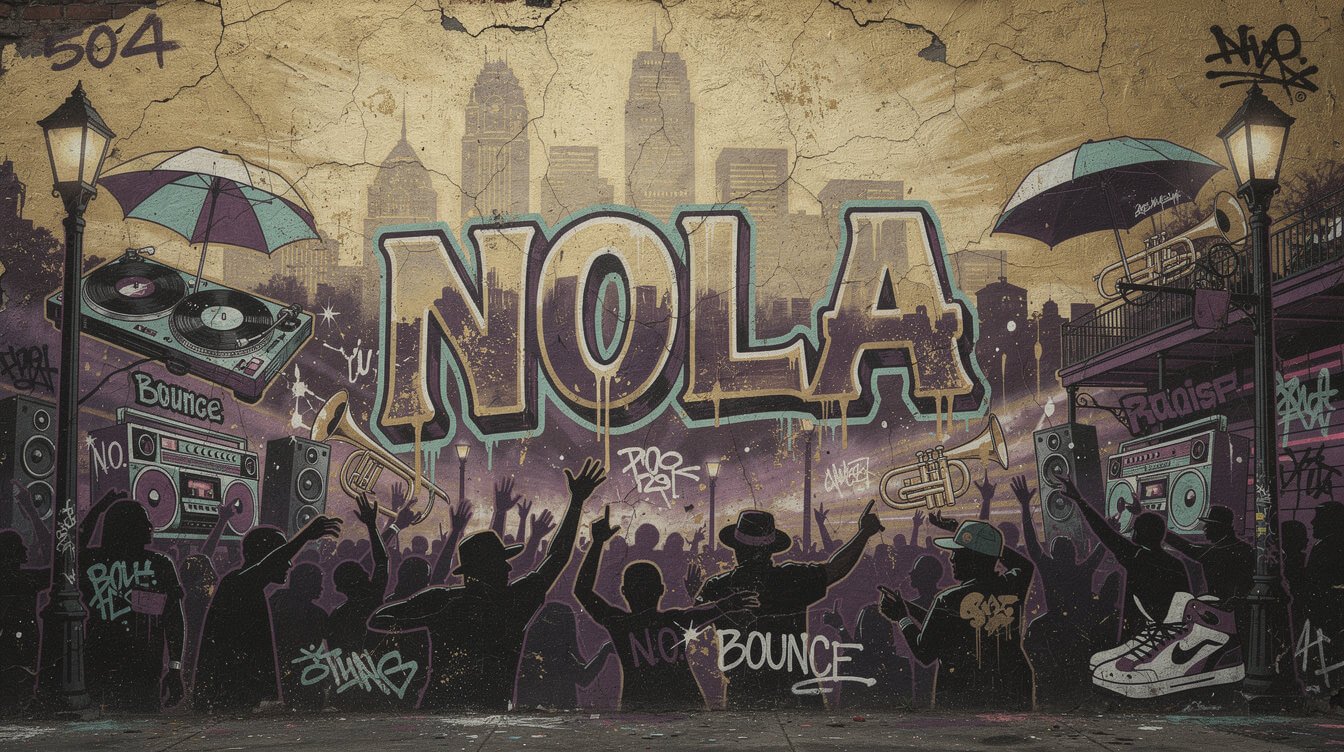
On August 29, 2005 — 21 years ago today — Hurricane Katrina made landfall on the Gulf Coast and put the wealthiest hip-hop scene south of Atlanta underwater. Cash Money’s Uptown headquarters. Juvenile’s Slidell house. Master P’s Calliope Projects. Baby’s Magnolia. Mannie Fresh’s studios. The storm didn’t just displace people — it displaced a sound. And the sound never came home the same way.
The scene that got washed away
In August 2005, New Orleans was arguably the most productive rap city in America not named Atlanta or Los Angeles. Cash Money Records was mid-empire — Bryan “Baby” Williams and Ronald “Slim” Williams ran it out of Uptown, Mannie Fresh had just exited the roster the year before, and a 22-year-old Dwayne Michael Carter Jr. was three months from dropping Tha Carter II (December 6, 2005), the album that rewired what “best rapper alive” was supposed to mean. No Limit had cooled off from its late-90s Master P peak but was still the biggest Black-owned business Louisiana had ever seen. Juvenile — still four years past the platinum ceiling of 400 Degreez — was shaping every mainstream rap record that came through the South.
And then there was bounce. Fifteen years deep by 2005 — DJ Jubilee’s Uptown block parties, Big Freedia’s early flag-planting at Café Brasil, Sissy Nobby and Katey Red rewriting queer bounce’s ceiling — every second-line, every ward-corner party, every high school gym in the city ran on the same “Triggerman” break. That was the ambient sound of New Orleans hip-hop when the water started coming.
The diaspora
Then the levees broke. Studios flooded. Master tapes disappeared. Cash Money’s business office got destroyed. Baby and Slim relocated the label to Miami and never fully came back. Lil Wayne moved to Miami too, then Houston, then a couch, then whatever hotel would take him — and the couch-and-hotel grind that produced the Dedication and Da Drought mixtape run (2005-2007) became one of the most creatively fertile stretches any rapper has ever had. Wayne didn’t rewrite “best rapper alive” from a studio. He rewrote it from a diaspora.
Juvenile lost his Slidell house and most of what was in it. B.G. was already halfway out the Cash Money door and Katrina finished the exit. Mystikal — already three years into his Rap-A-Lot / prison-hold-pattern — watched his hometown come apart from a Louisiana cell. Master P had moved much of the No Limit operation to LA by 2005 already, but the storm burned whatever was left of the Baton Rouge / New Orleans axis he’d built off of E-40’s West Coast handshake.
The people who stayed rebuilt something different. Curren$y‘s Jet Life independent-grind model — the aesthetic every SoundCloud rapper claims to have invented — is a post-Katrina survival mechanism as much as a lifestyle. Big Freedia‘s national bounce breakthrough only happens because the storm forced the media to finally look at what had been in front of them for two decades. Rob49 and the current NOLA drill wave sit on top of a hip-hop city that got cleaned out and re-seeded twice — once by the water in 2005, again by the record industry’s Atlanta-pivot in the years after.
The moment four days later that most heads still remember
Four days after landfall, on September 2, 2005, Kanye West stood next to a visibly frozen Mike Myers on NBC’s A Concert for Hurricane Relief telethon and said it: “George Bush doesn’t care about Black people.” The line wasn’t scripted. The NBC producers cut to Chris Tucker within seconds. It became — instantly, and permanently — one of the single most important political statements any hip-hop artist has ever made on network television. Kanye said later he wasn’t proud of the delivery but stood by every word. The moment is inseparable from what August 29 means in hip-hop history.
Also today in hip-hop
- Michael Jackson would have turned 68. Born August 29, 1958, in Gary, Indiana. Not a rapper — but the ghost sitting on every producer’s shoulder. Q-Tip produced “Butterflies” on Invincible (2001). Kanye West has named MJ his single biggest north star every chance he’s gotten. There isn’t a hip-hop record from the last thirty years that doesn’t owe MJ something — a snare, a swing, a bridge, a run-up, a whole approach to what a crossover looks like without giving up the culture that raised you.
- Bounce as a genre survived the storm because the culture was too portable to drown. YouTube (still brand-new in 2005), then Twitter, then Vine, then TikTok kept exporting the sound faster than the city could rebuild its studios. Every time you hear a “wobbedy-wobbedy” or a Triggerman break on a national single, that’s New Orleans talking through the diaspora it never asked for.
- The Ninth Ward is still rebuilding. Twenty-one years is not a milestone number. It’s just what the calendar landed on. That’s the point — for the artists and neighborhoods this storm hit, no year has ever really been the anniversary of it being over.
Stay creative — The Custom Creative Team

🎧 Never Miss a Drop
Exclusive product releases, hip-hop deep dives, and member-only discounts. Straight to your inbox.
Free forever. No spam. Unsubscribe anytime.
Get the Culture, Delivered
Deep dives into hip-hop history, exclusive product drops, and discounts sent straight to your inbox. No spam, just culture.
Join 2,000+ hip-hop heads already in the loop. Unsubscribe anytime.