De La Soul Songs: The Deep Cuts, Native Tongues Legacy, and Why Their Catalog Is Hip-Hop’s Best-Kept Secret
In the summer of 2021, something shifted in the culture. Thirty-two years of samples, legal headaches, and record label politics finally cleared, and De La Soul’s first six albums hit streaming for the first time. A whole generation pressed play. Real ones had been waiting since 1989. The de la soul songs that shaped an era were finally accessible without a USB drive from a cousin or a specific blog bookmarked in 2009.
Then, on February 12, 2023, Trugoy the Dove died at 54. Congestive heart failure. David Jolicoeur was gone, and suddenly the streaming era felt bittersweet. The catalog that took decades to liberate now carried the weight of a memorial. A cruel irony the culture is still processing.
This guide goes deeper than Billboard’s top 10. That list is a starting point, not a destination. De La Soul’s discography spans seven albums and 30-plus years of overlooked genius. Here is the full entry point: the D.A.I.S.Y. Age origin story, the debut that rewrote hip-hop’s rulebook, the deep cuts only true fans know, the Native Tongues movement that changed the culture’s consciousness, and the DNA fingerprints De La Soul left on the best rap music being made today.
The D.A.I.S.Y. Age: What Made De La Soul Different from Day One
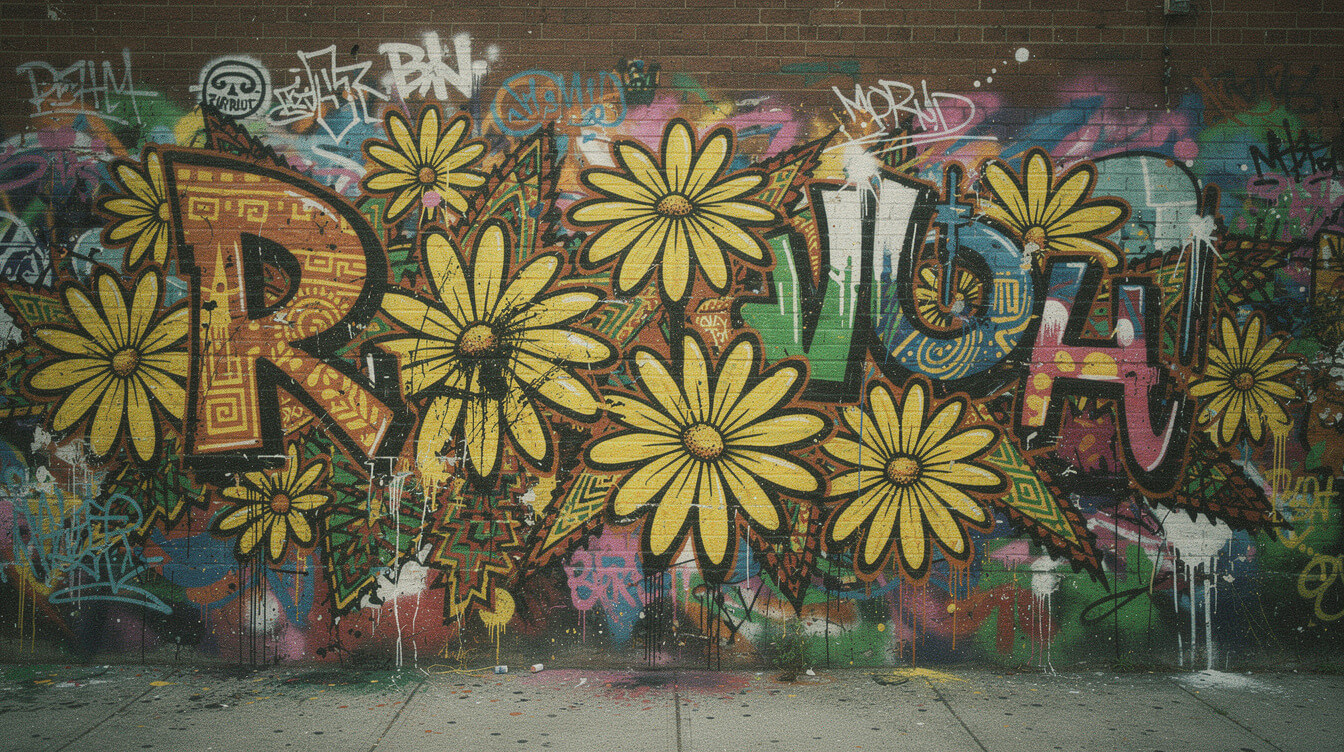
D.A.I.S.Y. stands for “Da Inner Sound, Y’all.” Three teenagers from Amityville, Long Island put that on wax in 1989 and meant every syllable. Posdnuos, Trugoy the Dove, and Maseo were not trying to be gangsters. They were not performing toughness for an audience that expected street credentials. They wore dashikis and talked about daisy flowers and inner peace while N.W.A. was rapping about Compton from 2,800 miles away. Both were radical. Both were telling the truth about two different Americas.
The D.A.I.S.Y. Age was not naivety. It was defiance. In 1989, hip-hop’s dominant commercial narrative was hardening toward the West Coast gangsta aesthetic that would define the early 90s. De La Soul walked directly against that current. They made hip-hop weird on purpose, sampling Johnny Cash, Hall and Oates, and Steely Dan in the same record set. They built skits from game show audio. They rapped in riddles and wordplay that demanded attention.
“Me Myself and I” became their signature hit, reaching number one on the Billboard R&B/Hip-Hop Songs chart in 1989. It is the song casual listeners know. But “Me Myself and I” is almost the wrong entry point into De La Soul, because it is the most accessible thing they made. The real D.A.I.S.Y. Age lives in tracks like “Potholes in My Lawn,” “Ghetto Thang” (which balanced their playfulness with real darkness about street life), and “Eye Know,” which flips Steely Dan’s “Peg” with such casual confidence it still sounds impossible.
Prince Paul, their producer and co-architect, was the technical genius behind the D.A.I.S.Y. Age sound. He had been cutting records for Stetsasonic, developing the craft. When he linked with De La Soul, they invented a full aesthetic together. You did not listen to songs. You lived inside the record. That was new in 1989. It still feels new.
3 Feet High and Rising: The Debut That Rewrote the Rulebook
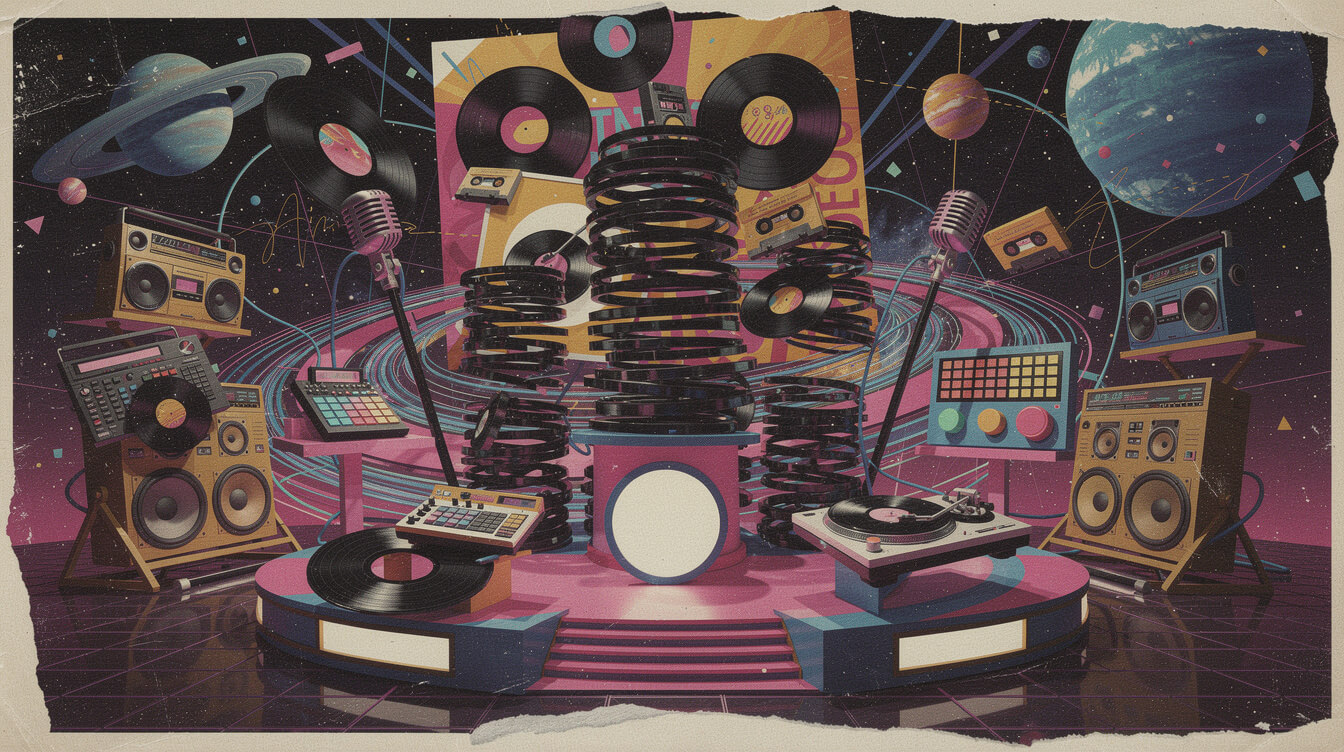
3 Feet High and Rising dropped March 3, 1989. It has 24 tracks. The title comes from a Johnny Cash flood song. The album opens with a game show where contestants answer hip-hop trivia to win prizes, and those skits thread through the entire record like chapters in a novel. Nothing in hip-hop had been built like this before.
The sampling philosophy was the real breakthrough. Prince Paul and De La Soul treated all recorded music as raw material. They sampled Funkadelic. They sampled the Turtles. They sampled Liberace and Otis Redding and country records. The mix was intentionally jarring and intentionally genius. Hip-hop had been sampling since Kool Herc in 1973, but no one had done it with this level of conceptual playfulness and range.
That freedom carried legal consequences. The Turtles, specifically Mark Volman and Howard Kaylan, sued over the use of “You Showed Me” in “Transmitting Live From Mars.” The case became one of the early markers in how the music industry would approach sample clearances. The irony is that some of the legal battles that made hip-hop sampling more expensive and restrictive were partly triggered by the most creative sample-based album ever made.
The album’s essential cuts beyond the obvious:
- “Jenifa Taught Me (Derwin’s Revenge)” samples a hook that does not leave your head for decades.
- “Transmitting Live From Mars” is the album’s most beautiful moment, flipping the Turtles into something dreamlike and melancholy.
- “Say No Go” addressed crack addiction in 1989, two years before most mainstream hip-hop acknowledged the epidemic directly.
- “A Little Bit of Soap” is a flex of Prince Paul’s range, flipping a 1961 doo-wop record into a hip-hop moment that still sounds fresh.
- “Eye Know” remains one of the most musically complex love songs in the genre, built on Steely Dan and Otis Redding samples woven together with precision.
The album went gold and influenced every alternative and conscious hip-hop act that followed. Questlove has cited it. Pharrell has cited it. Nearly every producer working in the abstract or experimental corner of hip-hop owes a debt that traces directly to Prince Paul’s work here.
Beyond the Top 10: The Deep Cuts Every Fan Needs
Billboard’s 2023 top 10 is a reasonable list. “Me Myself and I,” “Ring Ring Ring,” “Stakes Is High,” “Rock Co.Kane Flow.” It covers the hits and a few album tracks. But De La Soul’s catalog rewards obsession. The deep cuts are where the real work lives.
“Millie Pulled a Pistol on Santa” (from De La Soul Is Dead, 1991) is the most underrated De La Soul song ever made. Three verses. No hook. Just Posdnuos telling the story of a girl whose father is abusing her, the Christmas gun, and the aftermath. It is one of hip-hop’s best storytelling tracks, full stop. It should be mentioned alongside “Brenda’s Got a Baby” in any conversation about narrative hip-hop. That it is not in mainstream discussions about De La Soul is the culture’s blind spot.
“A Roller Skating Jam Named ‘Saturdays’” (also De La Soul Is Dead) is pure joy. It captures a New York Saturday in 1991 with more specificity than a photograph. Queen Latifah on the hook. If this song does not make you want to lace up skates, nothing will.
“Stakes Is High” is the 1996 title track and De La Soul’s mission statement for their second chapter. The beat hits harder than anything in their catalog up to that point. They are all angry about the same thing: what hip-hop was becoming in 1996. Materialism, violence for spectacle, authenticity traded for chart position. De La Soul saw it coming and said so on record. That track ages better every decade. The album featured contributions from Q-Tip and a then-rising Common, signaling that the Native Tongues intellectual tradition was expanding even as the collective’s peak era was closing.
“Rock Co.Kane Flow” featuring MF DOOM from The Grind Date (2004) is the one track you play for anyone who needs convincing that De La Soul’s late-career work is essential. Produced by Jake One out of Seattle, the beat is a hollow chamber of precision. DOOM goes over it like he owns the room. Trugoy responds in kind. It is one of the greatest pairing tracks in golden age adjacent hip-hop, made in 2004, which shows you that De La Soul never had a genuinely bad era. If you love the lyricism on display in GZA’s Liquid Swords, this track belongs in the same conversation.
“Ego Trippin’ (Pt. 2)” from De La Soul Is Dead is the purest distillation of their self-aware humor. They were aware of being called hippies by the culture, and they responded with self-deprecation so sharp it became shield and manifesto at once.
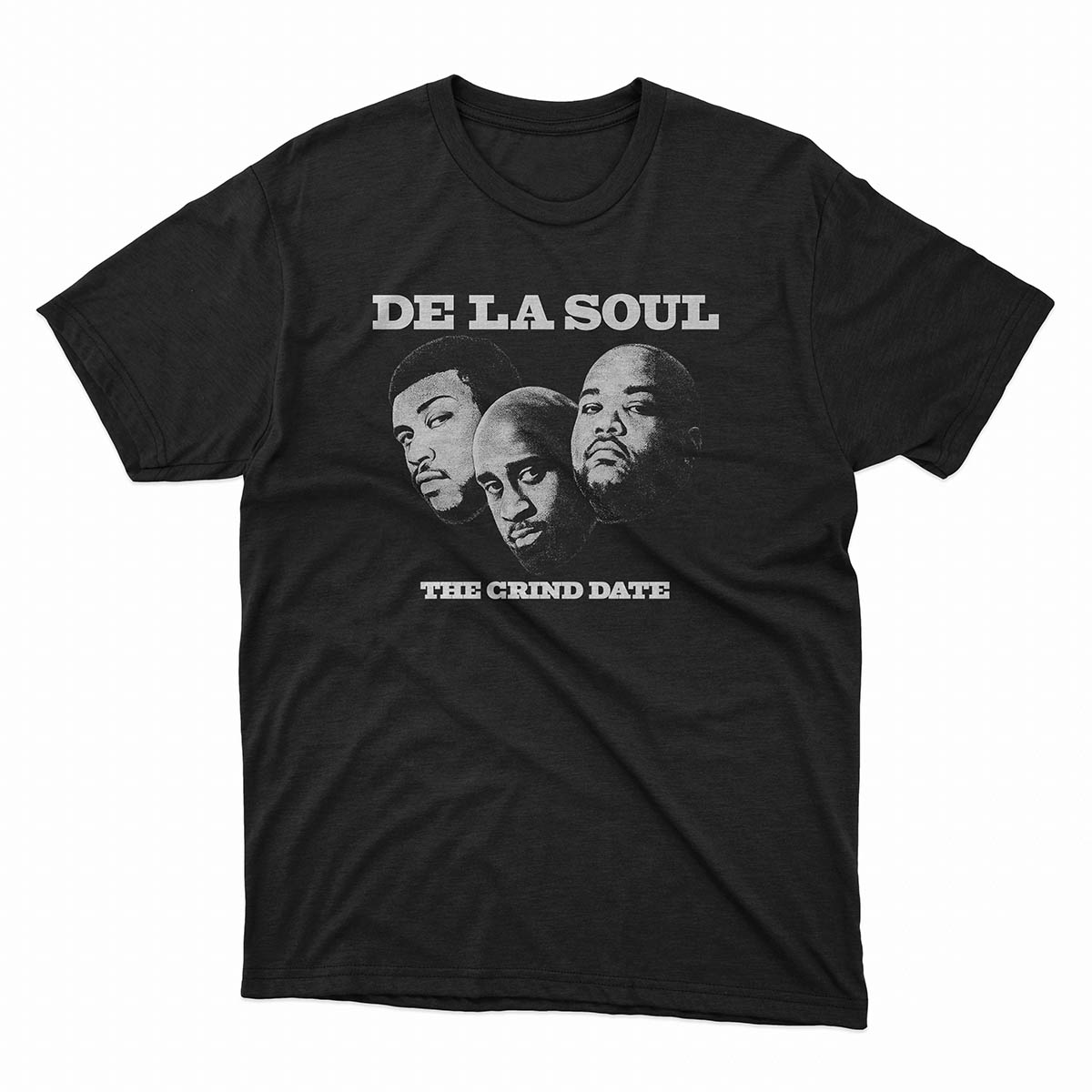
If your De La Soul playlist is shorter than 25 tracks, you have only scratched the surface. The De La Soul Grind Date T-Shirt we carry pays tribute to their 2004 comeback that most people slept on. The album deserved more recognition in real time. The shirt is for heads who know what The Grind Date actually meant.
The Grind Date Tee
For heads who know The Grind Date was underrated on arrival. 100% cotton, De La Soul’s 2004 LP in wearable form. Wear what the culture slept on.
The Native Tongues Movement: De La Soul’s Intellectual Tradition
The Native Tongues is not an official label or a signed agreement. It is a family. A loose collective of artists who found each other in the late 80s through shared values, shared samples, and a shared belief that hip-hop could be Afrocentric and joyful and intelligent all at once. De La Soul, A Tribe Called Quest, and the Jungle Brothers formed the core. Queen Latifah, Black Sheep, Monie Love, and Leaders of the New School (which included a young Busta Rhymes) moved in the same orbit.
The collective’s most representative track is “Buddy.” The 1989 song brought Q-Tip, the Jungle Brothers’ Mike Gee, and Queen Latifah together over a production that sounds like a block party happening in real time. It does not sound like a manifesto. It sounds like friends having fun. That is precisely the point. The Native Tongues were making hip-hop that felt like community rather than competition.
What they stood against was as important as what they stood for. The idea that authenticity in hip-hop required either danger or misery. De La Soul made their Afrocentrism feel like curiosity rather than dogma. ATCQ made jazz samples feel like home. The Jungle Brothers were the most explicitly Afrocentric of the three, connecting the movement to a deeper Black cultural history that reached beyond hip-hop into the African diaspora at large.
The movement’s peak runs from 1989 to roughly 1994. After that, the group fragmented, individual artists took different paths, and the cohesive Native Tongues aesthetic splintered into the many streams that fed alternative hip-hop through the 90s. But the fingerprints are everywhere in what came after. If you love the The Roots’ commitment to live-instrument hip-hop as a full artistic tradition, you are living in a world Native Tongues helped build.
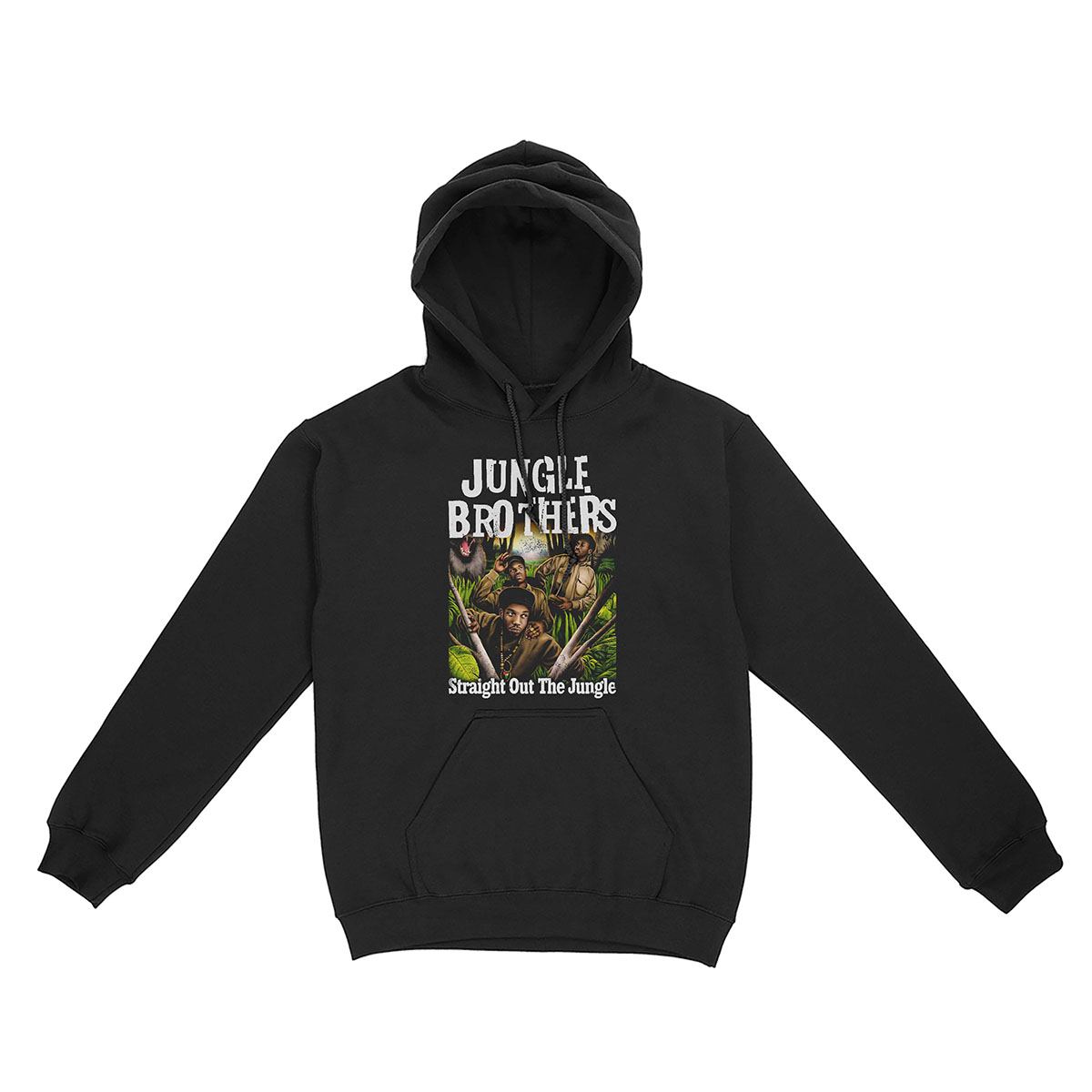
The Jungle Brothers dropped their debut Straight Out the Jungle in 1988, technically one year before 3 Feet High and Rising, making them the first Native Tongues album even if they rarely get that headline credit. The Jungle Brothers Straight Out the Jungle Hoodie is the move for anyone who wants to rep the full Native Tongues family tree, not just the headline names.
Jungle Brothers Straight Out the Jungle Hoodie
Rep the Native Tongues’ first family. The Jungle Brothers dropped before De La Soul’s debut hit shelves and sparked the whole movement. Now it’s a hoodie worth wearing.
J Dilla, Kendrick Lamar, Anderson Paak: How De La Soul Built Today’s Hip-Hop
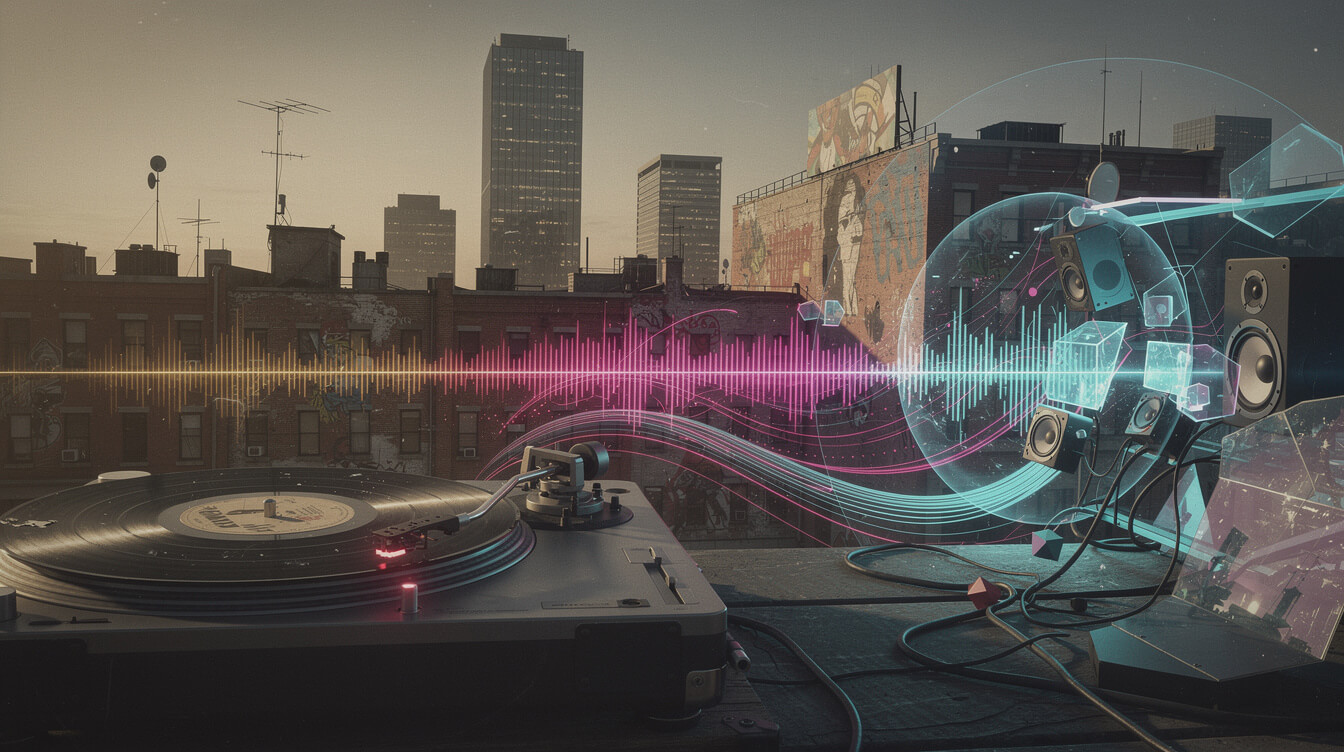
The easy version of influence is direct: De La Soul was on a track with this person, or they co-signed that artist. The real version is deeper. It is a way of thinking about what hip-hop can be, passed forward through decades of music without ever requiring formal acknowledgment.
J Dilla’s relationship to De La Soul’s legacy is aesthetic, not biographical. Dilla made Donuts (2006) from a hospital bed, building a universe out of sound fragments. That album’s logic, the way it treats recordings as raw material to be cut and looped and restructured until they give up new meaning, is Prince Paul’s logic from 1989. The DNA is undeniable. Dilla was digging in crates that De La Soul helped organize and name.
Kendrick Lamar’s To Pimp a Butterfly (2015) is the most direct De La Soul lineage in contemporary hip-hop. Jazz samples, Afrocentric consciousness, an album that demands engagement as a full body of work rather than individual singles. The moral seriousness. The social critique delivered with craft and beauty rather than bluntness. That is “Stakes Is High” energy, amplified to the scale of 2015’s hip-hop landscape. The tradition is in the DNA of the record. The influence is structural, not cosmetic.
Tyler the Creator named his era-defining album Flower Boy. A flower. The D.A.I.S.Y. Age is the most famous floral metaphor in hip-hop history. Tyler’s whole aesthetic, the anti-gangsta palette, the playfulness with darkness, the deliberate uncoolness as its own form of cool, is a continuation of what three kids from Amityville were doing in 1989 when they wore daisies instead of gold chains. You do not have to cite a source to carry a tradition forward.
Anderson Paak’s genre fluidity, his refusal to be contained by what hip-hop is supposed to sound like, comes from the same tradition. De La Soul spent 30 years making hip-hop that did not apologize for sounding different. That permission echoes through every artist who decided to be weird on purpose and found an audience for it. If you want to follow that neo-soul thread further, check how Erykah Badu’s Baduizm carried the same spirit into a different lane.
Frequently Asked Questions: De La Soul Songs
What is De La Soul’s most famous song?
“Me Myself and I” is their most commercially successful track. It reached number one on the Billboard R&B/Hip-Hop Songs chart in 1989 and became their calling card. Heads who know the full catalog will tell you the deeper cuts hit harder.
Is De La Soul’s catalog on Spotify and Apple Music?
Yes. Since 2021, when Reservoir Media acquired Tommy Boy Records’ catalog, De La Soul’s first six albums became available on all major streaming platforms. 3 Feet High and Rising, De La Soul Is Dead, Buhloone Mindstate, Stakes Is High, and more are all accessible now.
What happened to Trugoy the Dove?
Trugoy the Dove, born David Jolicoeur, died on February 12, 2023, at age 54. The cause was congestive heart failure. His death came just as the streaming era was finally giving De La Soul’s catalog the wider audience it had deserved for decades.
What does D.A.I.S.Y. stand for?
D.A.I.S.Y. stands for “Da Inner Sound, Y’all.” It was De La Soul’s early aesthetic manifesto, representing positivity, creativity, Afrocentrism, and a refusal to conform to commercial expectations at a moment when hip-hop was being pressured to harden in a single direction.
Which De La Soul album should I start with?
Start with 3 Feet High and Rising (1989) for the origin story. Move to De La Soul Is Dead (1991) for the deep cuts and the maturation. Then Buhloone Mindstate (1993) for the jazz era. Stakes Is High (1996) for the pivot. And The Grind Date (2004) for the late-career comeback. Each album is a complete world worth entering.
What was De La Soul’s relationship to the Native Tongues?
De La Soul were one of the three founding acts of the Native Tongues collective, alongside A Tribe Called Quest and the Jungle Brothers. The collective was a culturally significant grouping of Afrocentric, alternative hip-hop artists based in New York who prioritized consciousness, creativity, and community over commercial pressure.
Final Thoughts: Why De La Soul Songs Matter Now More Than Ever
De La Soul’s catalog had 30 years to become myth. The sample clearance issues kept it off streaming while every other golden age classic was a search away. That absence created a mystique. It also created a gap in music education that the streaming era is now closing, one play at a time.
Trugoy the Dove is gone. That fact sits heavy on anyone who was paying attention. But the music is still here. Every de la soul song, from the D.A.I.S.Y. Age experiments to the late-career fire of The Grind Date, is accessible now. No excuses. No waiting for the right hard drive.
The producers sampling them in 2026 are going to dig deeper than the hits. They are going to find “Millie Pulled a Pistol on Santa” and “Rock Co.Kane Flow” and “A Roller Skating Jam Named ‘Saturdays’” and realize they have been standing on this foundation without knowing it. For those who already know, the streaming era is confirmation of what was always true. For those just arriving: welcome. You have a lot of ground to cover, and all of it is worth your time.
Stay creative. The Custom Creative Team.
Stay Plugged Into the Culture
Hip-hop history, deep cuts, and new drops from the CC catalog, direct to your inbox. No filler, all culture.

🎧 Never Miss a Drop
Exclusive product releases, hip-hop deep dives, and member-only discounts. Straight to your inbox.
Free forever. No spam. Unsubscribe anytime.
Get the Culture, Delivered
Deep dives into hip-hop history, exclusive product drops, and discounts sent straight to your inbox. No spam, just culture.
Join 2,000+ hip-hop heads already in the loop. Unsubscribe anytime.