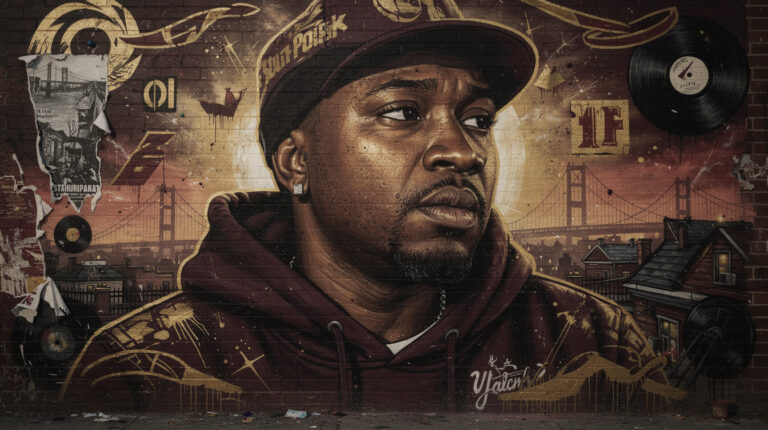
Run-DMC Adidas: How a Song About Laceless Shell Toes Became Hip-Hop’s First Million-Dollar Deal
The Run-DMC Adidas story usually gets told in three beats: a song, a concert, a check. That version isn’t wrong, but it skips the best parts. “My Adidas” started as a comeback aimed at a Queens doctor who said kids in unlaced sneakers looked like felons. The famous Madison Square Garden sneaker salute was a setup arranged by the group’s co-manager. And the “million-dollar deal” is a number nobody outside the room has ever seen on paper. This is the full Run DMC Adidas story: why the song was a rebuttal, what happened at the Garden, what the deal was really worth, why the laces came out, and how to wear the Hollis uniform in 2026 without looking like you’re in costume.
Quick context. Run-DMC was Joseph “Run” Simmons, Darryl “DMC” McDaniels and Jason “Jam Master Jay” Mizell, three kids from Hollis, Queens. By 1986 they’d already made two albums and played Live Aid. Their third album, Raising Hell, turned them into the biggest act in rap. One single off that record changed how every sneaker company on earth does business. Let’s get into it.
May 1986: “My Adidas” Drops and the Run-DMC Adidas Story Begins
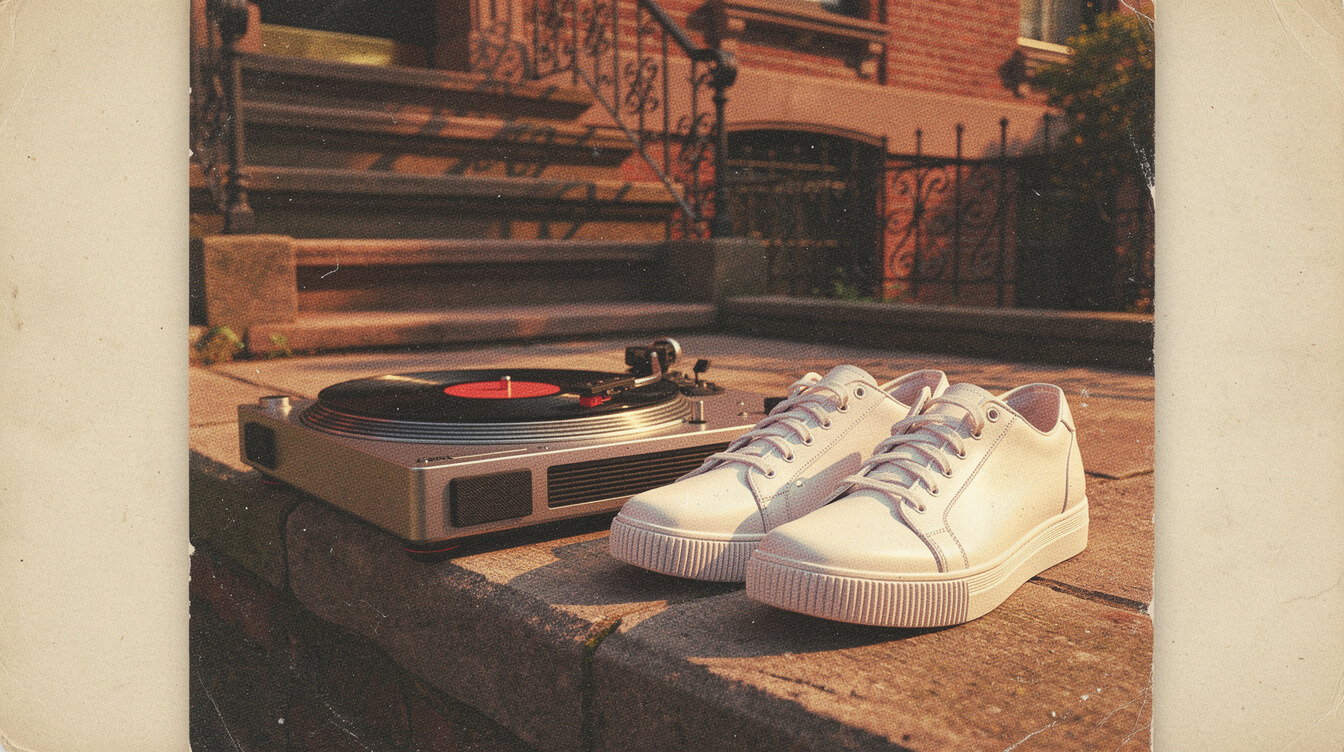
Raising Hell came out on May 15, 1986, on Profile Records. “My Adidas” followed as a single on May 29, with “Peter Piper” on the flip. The album was cut at Chung King in Manhattan over roughly three months, after the group came home from a long run on the road. Rick Rubin and Russell Simmons are credited as producers, but DMC has always pushed back on how much that credit means. “Rick and Russell got production credit, but we really did everything,” he said. “Every rhyme was written on the road and had been practiced and polished.”
A love letter nobody paid for
Here’s the part that gets lost: when “My Adidas” was written, nobody was paying Run-DMC to wear anything. The late sneaker historian Gary Warnett called it “a strictly self-funded love letter” in his 2016 Mr Porter piece. DMC tells the same story about growing up in Hollis: you saved your allowance or took any job you could find just to get a fresh pair. The group wore Adidas long before they had a record deal, never mind a sneaker deal.
The lyrics are a map of their world
Read the verses closely and you get the whole Run-DMC biography in sneaker form. “My Adidas walk through concert doors / And roam all over coliseum floors / I stepped on stage at Live Aid” points back to July 13, 1985, when they played the biggest charity concert in history. We covered that day in our Today in Hip-Hop look back at Run-DMC crashing Live Aid. “My Adidas touch the sand of a foreign land” is about touring overseas. “My Adidas are seen on the movie screen” most likely nods to Krush Groove (1985), which the group appeared in, the Def Jam origin film we broke down in our Krush Groove retrospective.
“Standin’ on two fifth street”
The most local line in the song is Run’s “My Adidas, standin’ on two fifth street.” That’s 205th Street in Hollis. In 2009, New York City renamed the corner of 205th Street and Hollis Avenue “Run-DMC JMJ Way” in honor of the group and Jam Master Jay. So the block Run was standing on in the song now has the group’s name on the street sign. If you ever make the trip to Queens, that’s the corner.
The Bally line
The song closes with “We started in the alley, now we chill in Cali / And I won’t trade my Adidas for no beat-up Ballys.” Bally was a Swiss luxury brand, and Harlem’s Doug E. Fresh was known for wearing them. Warnett read the line as a mostly friendly jab at Doug E. and the Get Fresh Crew. Either way, the point is clear: Run-DMC weren’t chasing luxury. They were bragging about the shoe every kid on their block could actually afford.
How it charted
“My Adidas” went to No. 5 on Billboard’s Hot Black Singles chart and No. 10 on Hot Dance Music/Maxi-Singles Sales. It came back fourteen years later, hitting No. 33 on Hot Rap Singles in 2000. It wasn’t the group’s biggest hit. “Walk This Way” with Aerosmith, released on July 4, 1986, reached No. 4 on the Hot 100. But “My Adidas” is the one that changed an industry. Questlove ranked it sixth on his 2012 Rolling Stone list of the greatest hip-hop songs and called it “hip-hop’s tipping point.” For the full album story, see our piece on Raising Hell hitting No. 1, 40 years ago.
Not an Ad, a Rebuttal: Dr. Deas and “Felon Sneakers”
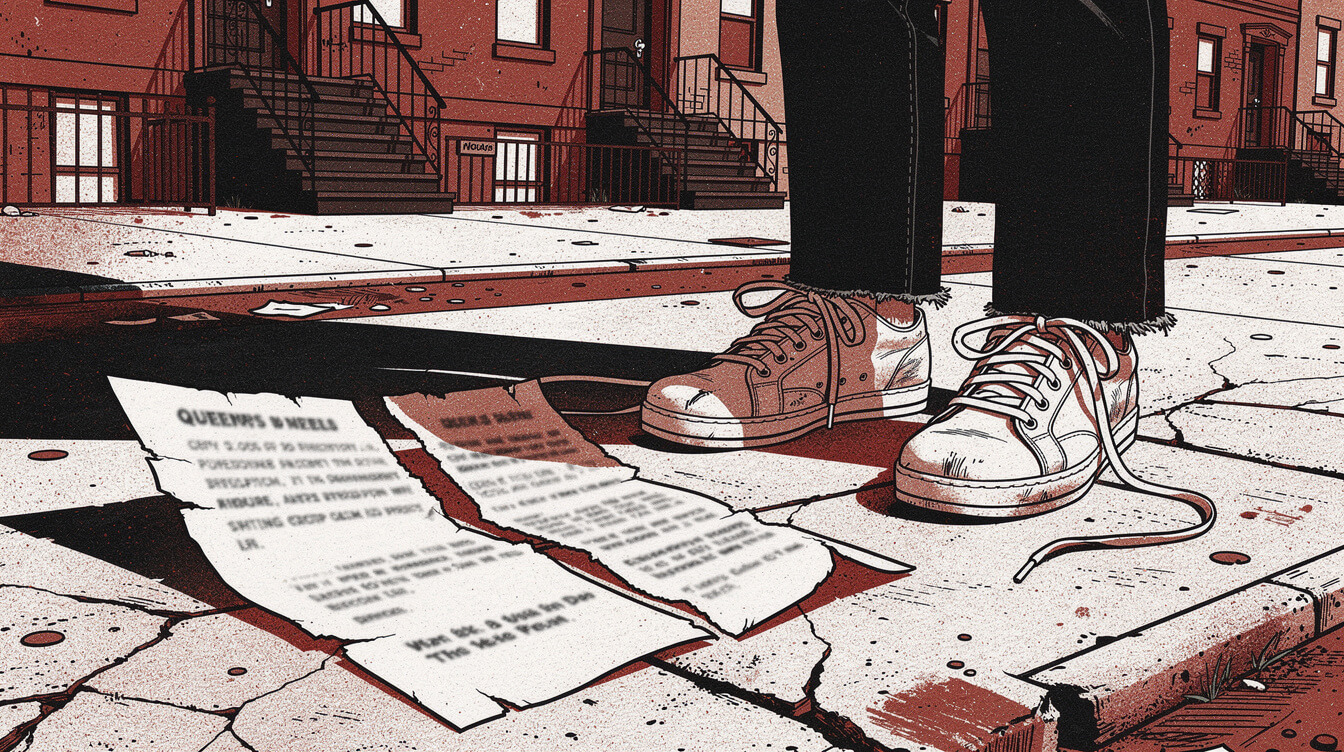
Most people hear “My Adidas” as the first great sneaker ad in rap. DMC has said again and again that it was the opposite: a defense of the kids who wore them. “It was a song that was about our sneakers, but it was bigger than just talking about how many pairs of sneakers we had,” he told MTV News in 2011. “People would look at the b-boys, the b-girls and go, ‘Oh, those are the people that cause all the problems in here.’ … So they was judging the book by its cover, without seeing what was inside of it.”
Who was Dr. Deas?
The book-judger had a name. Dr. Gerald Deas was a physician in Jamaica, Queens, as well as a poet, playwright and community activist. In 1985 he wrote a poem called “Felon Sneakers” warning young Black men about the street culture around sneakers. One line went: “If an unlucky brother winds up in jail, his felon sneakers can’t get him bail.” Music-credit databases also list a 1985 recorded version of “Felon Sneakers,” with Deas credited as the writer. When The New York Times profiled Dr. Deas in 2000, near the end of his career, it described him as an old-fashioned country doctor working in the big city. And it quoted the poem.
How DMC heard it
In his telling for Sole Collector, DMC remembers it as a pamphlet passed around the neighborhood, which he calls “Fellon Shoes.” He says it painted kids “that wore Lee jeans and Kangol hats and gold chains and PUMAs and adidas without shoe laces” as “the thugs, the drug dealers and the low lifes of the community.” His response: “We’re young; we’re educated. A lot of us go to school; a lot of us have jobs.” In a 2021 interview with AXS TV, he said he took Deas’s words personally. “Yeah, I wear Adidas, but I’m a student at St. John’s University. My friend’s wearing Adidas, but he had to work three jobs just to save up and get a pair.”
The answer is in the bars
Once you know about Deas, the lyrics read differently. “I wore my sneakers but I’m not a sneak.” “My Adidas only bring good news / And they are not used as felon shoes.” Those are direct replies. Even “My Adidas touch the sand of a foreign land” works as a rebuttal: the shoes Deas tied to jail had carried these kids around the world and onto the Live Aid stage.
Fair to the doctor
It would be easy to make Deas the villain, and that’s not quite fair. He was a working doctor trying to keep young men in his neighborhood out of prison, in the middle of the crack era. Run-DMC’s point was that the clothes didn’t make the criminal. Both men were arguing about the same kids from different sides. The group’s answer just happened to have a beat under it, and it reached a lot more people.
Madison Square Garden, July 19, 1986: The Run-DMC Adidas Sneaker Salute

By summer 1986, the Raising Hell tour was everywhere. DMC remembers looking out the back of the tour bus in Detroit, Boston, Chicago, LA and Virginia and seeing fans in Adidas tracksuits “from head to toe.” Meanwhile, according to DMC, people inside Adidas were looking at their sales charts and seeing a line that had been flat for years suddenly “shot through the roof.” Nobody at the company could explain it.
Lyor Cohen’s setup
Lyor Cohen, Run-DMC’s co-manager at Rush Management (and later a major record executive), worked out what was going on first. As JayQuan’s 2026 book Run-DMC and Raising Hell: 40 Years tells it, Cohen filmed the group’s live shows and sent the footage to Adidas. Then he invited an Adidas executive named Angelo Anastasio to see the band in person. Anastasio was based in Los Angeles and worked with athletes, celebrities and the club scene. In DMC’s version, his first reaction was “What the hell is a Run-DMC?”
“If you got Adidas on, hold ’em up”
On July 19, 1986, Run-DMC played the Garden. Anastasio was backstage. During “My Adidas,” Run told the crowd to take off a sneaker and hold it in the air. DMC tells it like this: “D, take it off your feet; hold it up. What’s those? Everybody in here, if you got adidas on, hold ’em up.” The arena filled with shell toes. Anastasio flew back to LA and told the company the sales spike was real and had a name. Then he went to Germany to explain to Adidas headquarters what rap music was.
How many people actually held up a shoe?
This is where the legend inflates. DMC’s own telling says “40,000 people in a sold-out Madison Square Garden.” Guinness World Records uses the same 40,000 figure. But the Garden’s arena tops out at roughly 20,000 to 22,000 people for a concert, and Sneaker Freaker‘s 2026 deep dive puts attendance at about 20,000. So the room was full, but it held about half the number in the story. That doesn’t make the moment any smaller. It shows how fast this story became myth.
Timing was everything
Look at the calendar. “My Adidas” came out May 29. “Walk This Way” came out July 4 and would go on to reach No. 4 on the Hot 100. The Garden show was July 19. Adidas saw the sneaker salute at the exact moment Run-DMC was crossing over to white suburban rock fans. The brand wasn’t just buying credibility with b-boys in Queens. It was buying access to the biggest new audience in American music.
The Run-DMC Adidas Deal: What Was Actually Signed
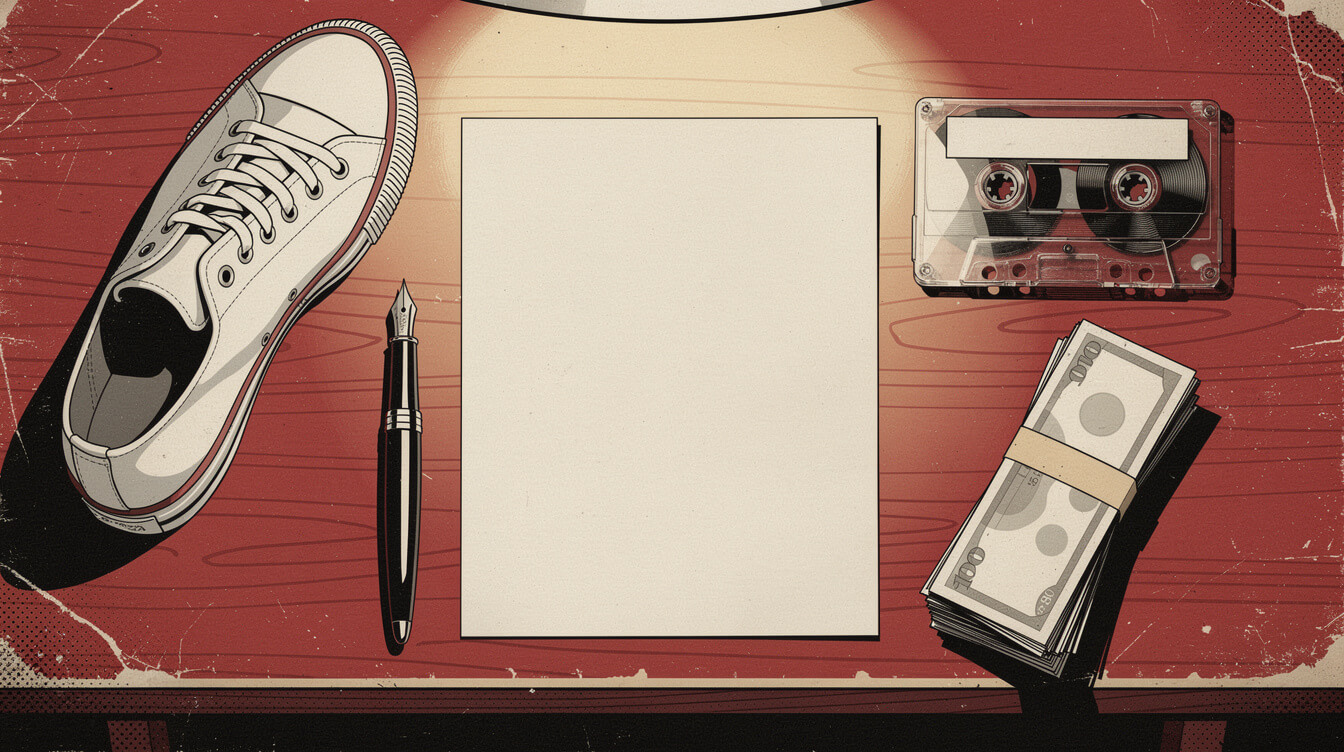
After the Garden, the group made a short video aimed straight at the company. They performed an a cappella verse to Adidas and finished by shouting “Give us a million dollars!” That clip is where the famous Run-DMC Adidas figure comes from. And that raises the question every head eventually asks: how much was the Run-DMC Adidas deal really worth?
The million-dollar myth vs. the record book
Most retellings, including Mr Porter, Business of Fashion and plenty of sneaker sites, say $1 million. That’s the number the group asked for on camera, so it stuck. Guinness World Records lists the deal at $1.6 million, signed in mid-1986, under the record “first non-sporting sneaker endorsement.” Sneaker Freaker and Wikipedia also give $1.6 million, both calling it “reported.” The contract itself has never been published, so the honest answer is this: the group asked for a million, and the figure in the record books is $1.6 million. Either way, no musician had gotten an athletic shoe deal before. In 1986 that was an unheard-of amount for a rap group.
The first non-athletes
Before Run-DMC, sneaker money went to people who played sports. Guinness calls Run-DMC “the first individuals outside sport to be given a deal for sneakers.” That’s the real milestone. The exact number matters less than the fact that a sneaker brand decided a rap group could move product the way an NBA star could.
The Cadillac collection
The Run-DMC Adidas partnership went well beyond a check. Adidas built a Run-DMC product line with tracksuits, tees and sweatshirts. By 1988 there were four Run-DMC shoes. The high-top Eldorado and Fleetwood and the low-top Brougham were named after Cadillac models, the group’s favorite cars. The fourth, the Ultrastar, was a Superstar with an elastic tongue built to be worn without laces. In other words, Adidas turned the group’s habit into a product feature. Original pairs from that era still turn up on the resale market today.
The copycats came fast
Warnett noted that the deal set off a wave of lyrical name-drops aimed at getting sponsored. He pointed to Heavy D and the Boyz angling for Nike in 1987, MC Shan lining up with Puma, and LL Cool J signing with the upstart brand Troop. Every rapper suddenly knew a sneaker brand might be listening. (For the LL side of that era, see our LL Cool J T-shirt guide.)

The Album That Opened With My Adidas
Raising Hell is the record that took rap from Hollis to the Garden to the sneaker boardroom. Our Raising Hell Run-DMC tee puts the 1986 classic on a black shirt that goes with shell toes and anything else in your closet.
Why No Laces? The Run-DMC Adidas Look, Explained
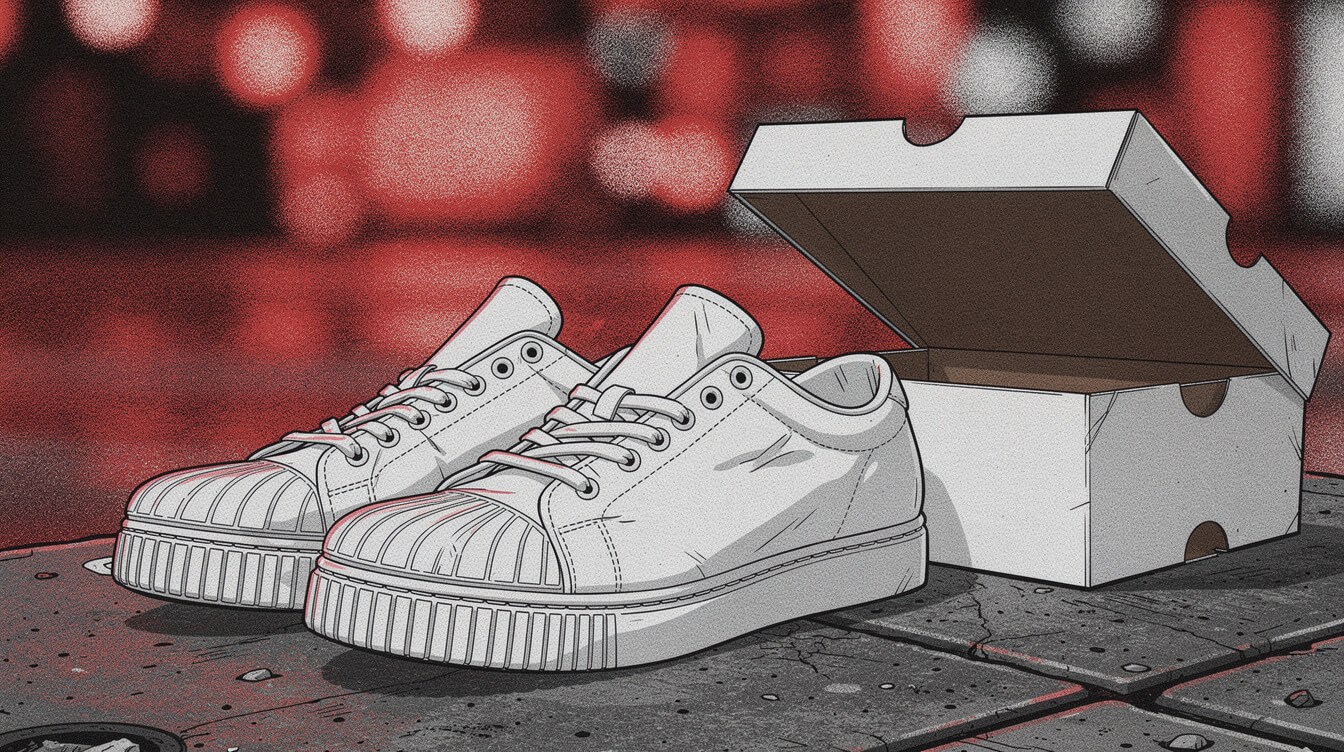
Laceless shell toes with the tongue popped up are the signature of the whole Run-DMC Adidas look. It’s also the most-asked question about the group. The awkward part is that the two members out front have told it two different ways.
Run’s version: jailhouse style
Run has explained it as a street style borrowed from prison. “There were guys that wore hats like those and sneakers with no shoestrings. It was a very street thing to wear, extremely rough. They couldn’t wear shoelaces in jail and we took it as a fashion statement.” Laces were taken from inmates so they couldn’t be used to hurt themselves or anyone else. Run even tied it to the song: “That’s why DMC says ‘My Adidas only bring good news and they are not used as felon shoes.'” Warnett’s history backs up the street part. He wrote that laceless sneakers, black Lee jeans, goose-down leather jackets, Cazal glasses and gold rope chains “had long been the look of New York hustlers” before Run-DMC took it mainstream.
DMC’s version: no time to lace
DMC tells it differently, and he’s done so on the record more than once. In an interview with the Rock and Roll Hall of Fame he said: “A lot of people relate it to jail culture, because they would take the laces… That’s not what we got it from.” His story goes back to buying sneakers on Jamaica Avenue in Queens: “We were so excited about having the new ones on, we didn’t take time to lace them up. We just put the new ones on without the laces. There was no time to waste.” He made the same point to AXS TV in 2021: kids were so hyped about new shoes they didn’t bother lacing them.
The lyric that backs DMC
Go back to the song. “With no shoestring in ’em, I did not win ’em / I bought ’em off the ave with the black Lee denim.” “The ave” is the shopping strip, and in Hollis that means Jamaica Avenue. The verse is about buying the shoes, not about being locked up. It fits DMC’s version almost word for word.
So which is true?
Probably both. The laceless look was already around on New York streets, and some of that came from people coming home from jail. Teenagers on Jamaica Avenue picked it up because it looked hard, and also because they couldn’t wait to wear their new pairs. Run and DMC are each describing a real part of the same scene. What’s documented is that the two of them tell it differently, and DMC has pushed back on the jail story directly. Our take: don’t let anyone tell you there’s one clean answer.
The detail hidden inside the Smithsonian pair
Here’s a receipt most sneakerheads never see. The National Museum of African American History and Culture holds a 2013 limited-edition pair of Run-DMC Superstars. Under the tongue, the museum notes describe wide elastic bands attached to the insole and hidden from the outside, “allowing the shoes to be worn without laces in the style popularized by Run-D.M.C.” The inside of the tongue reads “JMJ 4EVER.” The box even includes a pair of black fat laces, for anyone who wants the other classic ’80s look.
The Full Hollis Uniform: Superstars, Tracksuits, Kangols, Ropes and Cazals
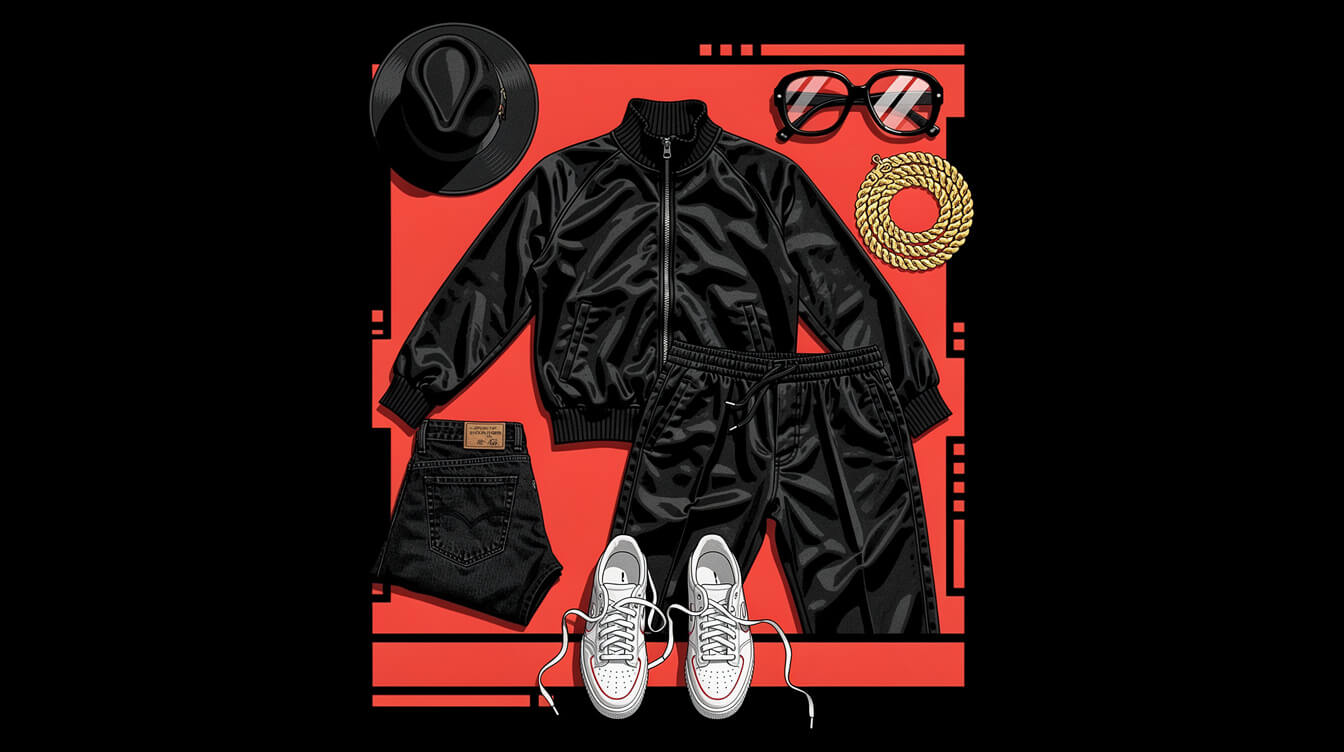
The sneakers were only one piece. Run-DMC’s real revolution was showing up on stage in the same clothes their fans wore on the street. Before them, rap acts like Grandmaster Flash and the Furious Five and Afrika Bambaataa performed in glam-rock leather, studs and rhinestones. Run-DMC dropped all of that for jeans, sneakers and hats. Wikipedia credits much of the look to Jam Master Jay’s own street style. Russell Simmons saw how Jay dressed and insisted the whole group follow his lead.
The Superstar itself
Adidas introduced the Superstar in 1969 as a low-top version of its Pro Model basketball shoe. It was the first low-top basketball sneaker with an all-leather upper, and the rubber toe cap gave it the “shell toe” nickname. Kareem Abdul-Jabbar wore it, and by 1973 more than 75% of NBA players reportedly did too. By the time Run-DMC picked it up, it was an old basketball shoe that the hoops world had already moved on from. Hip-hop gave it a second life. In 2015, Adidas sold more than 15 million pairs of Superstars.
The black tracksuit
The matching Adidas tracksuit is the other half of the look. The best-known image is from the 1987 Together Forever tour with the Beastie Boys: all three members crouched in front of the Eiffel Tower in three-stripe tracksuits, rope chains and black fedoras, with unlaced shell toes. After the deal, Sneaker Freaker reports, the group got custom tracksuits with their names on the chest, and Adidas even made rope chains and rings with shell-toe and trefoil designs. The same piece shows one of Jam Master Jay’s gold Superstar chains on display at the Rock and Roll Hall of Fame in Cleveland.
Black fedoras and Kangols
Black fedoras were Run-DMC’s trademark on stage, and Kangols were all over Queens at the time. If you want the full story on the Kangol side of ’80s rap, check our tribute to Kangol Kid of UTFO.
Cazals, ropes and Lee denim
Big Cazal frames, thick gold rope chains (the “dookie ropes”), black leather jackets and dark Lee jeans complete the kit. The song even names the jeans: “With Lee on my legs and Adidas on my feet.” For a wider look at how all of this spread through the decade, see our guide to eighties hip-hop fashion.
The layer we’d add
We don’t sell sneakers or tracksuits, and we’re not affiliated with Adidas. What we do make is the piece that sits on top of the look. Our Raising Hell Run-DMC Hoodie puts the 1986 album on a heavyweight black hoodie, and it pairs naturally with a black track jacket and white shell toes. If you’d rather wear the earlier era, the Rock Box Hollis tribute tee goes back to the King of Rock days.
From Hollis to Every Rapper-Brand Deal Since, and How to Wear It in 2026
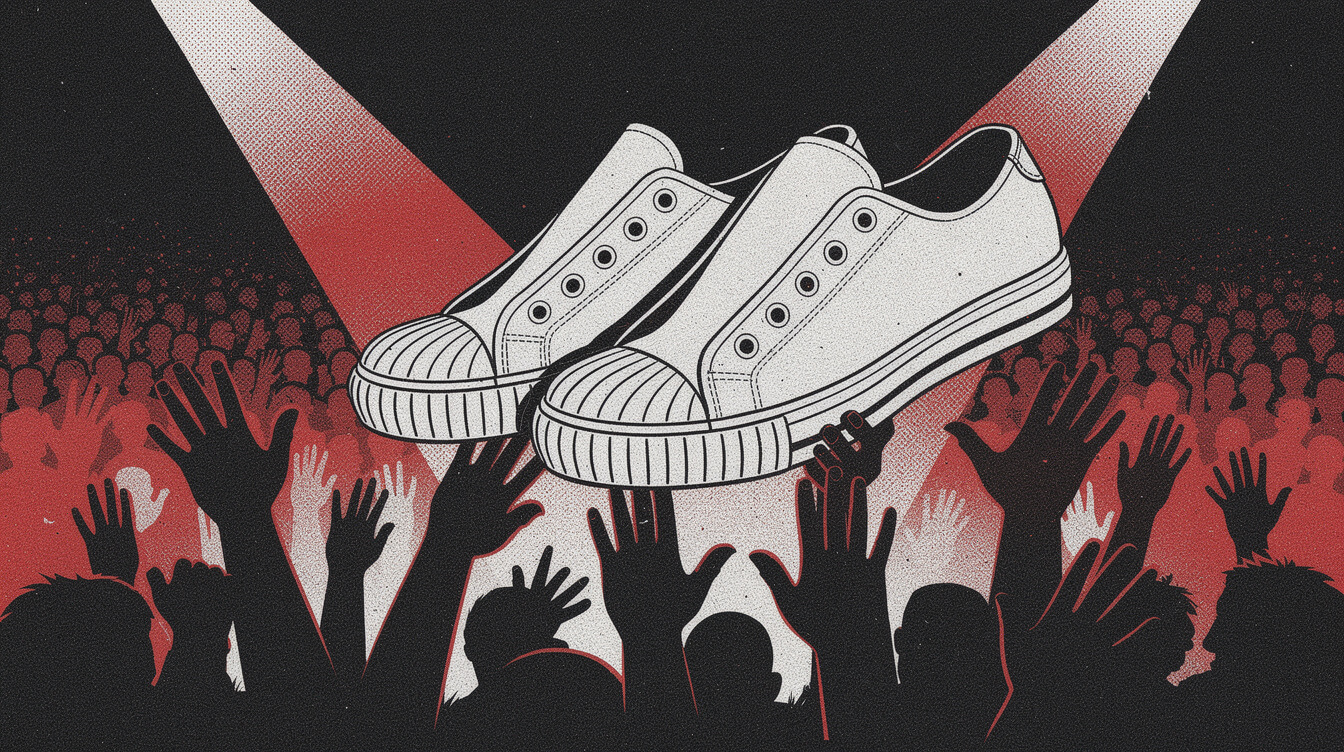
Every artist sneaker deal you can name traces back to the Run-DMC Adidas moment at the Garden. Adidas itself went on to sign Missy Elliott, Snoop Dogg, Pharrell and Kanye West. Reebok (Jay-Z, 2003), Converse (Tyler, the Creator) and Nike (Kendrick Lamar, Travis Scott) all followed with music partnerships of their own. As Questlove put it, “hip-hop meant big, big dollars. The gates were open: shows in stadiums, albums going multi-platinum, endorsement deals.” “My Adidas” was where that started.
Run-DMC built a relationship, not just a deal
The difference between Run-DMC and a lot of later partnerships is how long it lasted. In 2005, Adidas included a Run-DMC Superstar in its 35th Anniversary Music Series. The 2013 tribute pair in the Smithsonian carries “JMJ 4EVER” inside the tongue. Plenty of rapper-brand deals since have ended in a messy split; Kanye’s Adidas run is the obvious example. This one has been going for four decades.
The shoes as a memorial
There’s a heavier side too. Jam Master Jay was shot and killed in his Queens studio on October 30, 2002. Fans built a memorial outside with Adidas sneakers, albums and flowers. Run and DMC announced the end of the group soon after. Two men were convicted of the murder in February 2024. Every time the Run-DMC Adidas story gets retold, it’s also a story about Jay, the DJ whose personal style set the template in the first place. We’ve written more about him in this piece on Jam Master Jay.
How to wear the look without cosplay
Wearing the full 1986 uniform at once looks like a Halloween costume. Pick one or two pieces and keep the rest modern:
- Start with the shoes. White leather shell toes with black stripes are still easy to find. Lace them, pull the laces out, or go the fat-lace route. All three are historically accurate.
- One statement piece, not five. A black track jacket or a rope chain is enough. Skip the fedora unless you can really pull it off.
- Dark denim or black pants. The Lee jeans line is a good reminder that the base was simple and dark.
- Let a graphic do the talking. A Run-DMC album tee or hoodie tells people you know the history without dressing like you’re in a tribute act.
- Know the story. If someone asks about your shell toes, you can now tell them about Dr. Deas, the Garden and the $1.6 million question.
A holiday tie-in
If you’re shopping for a Run-DMC fan this season, remember that Run-DMC’s other evergreen is “Christmas in Hollis,” released November 25, 1987. Our Christmas in Hollis Run-DMC tribute hoodie is the seasonal pick.
Run DMC Adidas FAQ
What Adidas shoes did Run-DMC wear?
The Adidas Superstar, the white leather shell toe with black stripes, usually worn without laces and with the tongue pushed up. After the 1986 deal, Adidas also made Run-DMC shoes: the Eldorado, Fleetwood, Brougham and the laceless-friendly Ultrastar.
Did Run-DMC have a deal with Adidas?
Yes. After the Madison Square Garden show on July 19, 1986, Adidas signed Run-DMC to an endorsement deal. Guinness World Records lists it as the first sneaker deal given to anyone outside sport.
How much was the Run-DMC Adidas deal worth?
Guinness World Records puts it at $1.6 million. Many retellings say $1 million, because that’s what the group asked for on camera (“Give us a million dollars!”). The contract has never been made public.
Why did Run-DMC wear Adidas without laces?
Run has said the look came from street style tied to jail, where laces were taken from inmates. DMC has said that’s not where they got it, and that kids buying new pairs on Jamaica Avenue were too excited to lace them. Both versions are on the record from the members themselves.
Was “My Adidas” a paid advertisement?
No. The song was written and released before any deal existed. DMC says it was a response to Dr. Gerald Deas’s “Felon Sneakers,” which linked sneaker culture to crime. The deal came after Adidas saw the song driving sales.
When did “My Adidas” come out?
The single came out May 29, 1986. It’s on Raising Hell, which was released May 15, 1986.
How many people held up their sneakers at Madison Square Garden?
The story usually says 40,000, and that’s the number DMC and Guinness use. The Garden’s arena holds roughly 20,000 to 22,000 for a concert, so the real crowd was a sold-out house of around 20,000.
What is “two fifth street” in “My Adidas”?
205th Street in Hollis, Queens. In 2009 the corner of 205th Street and Hollis Avenue was named Run-DMC JMJ Way.
Who was the Adidas executive at the concert?
Angelo Anastasio. Run-DMC’s co-manager Lyor Cohen invited him to the Garden show.
Final Thoughts: The Song Came First
The Run-DMC Adidas story gets remembered as the first big rap sponsorship, and it was. But the order matters. The song came first. Three kids from Hollis wrote about the sneakers they’d saved up for, partly to answer a neighborhood doctor who said those sneakers made them look like criminals. Their fans held those shoes in the air because they already loved them. The money came after. That’s why it still feels real 40 years later when a lot of brand deals since have felt like ads.
So when you lace up a pair of shell toes (or don’t), you’re wearing more than a basketball shoe from 1969. You’re wearing an argument about who gets judged by their clothes, a crowd at the Garden, a number nobody can agree on, and a DJ whose style started all of it. Wear it like you know that.
Want more Run-DMC history? Start with our Run-DMC group overview, our birthday piece on DMC, the Hollis architect, and our look at Tougher Than Leather.
Stay creative — The Custom Creative Team
Get the Culture in Your Inbox
Artist deep-dives, album anniversaries, sneaker and cover-art receipts, and first dibs on new drops. No spam, just hip-hop.

🎧 Never Miss a Drop
Exclusive product releases, hip-hop deep dives, and member-only discounts. Straight to your inbox.
Free forever. No spam. Unsubscribe anytime.
Get the Culture, Delivered
Deep dives into hip-hop history, exclusive product drops, and discounts sent straight to your inbox. No spam, just culture.
Join 2,000+ hip-hop heads already in the loop. Unsubscribe anytime.