Black Moon Enta Da Stage: The 1993 Brooklyn Debut That Built Duck Down
Three weeks before Wu-Tang dropped 36 Chambers, three Brooklyn teenagers put out a record that sounded like a basement with the lights cut. Black Moon’s Enta Da Stage came out October 19, 1993 on Wreck, the hip-hop imprint of a house-music label called Nervous. It never went gold. The sound it built still runs through New York rap 33 years later: drums up front, treble filtered off, jazz smothered under bass. It also launched Smif-N-Wessun, Duck Down and the whole Boot Camp Clik. This is the full story of Black Moon Enta Da Stage. Who made it, where, with what gear, what got sampled, what the critics said, and the receipts behind the myths.
Quick note on sources: the details below come from the original 1993 liner credits (via Discogs), the group’s own interviews (Red Bull Music Academy 2011 and 2012, DJBooth 2018, POW Mag and Albumism 2024), and contemporary reviews. Where the members’ stories differ, we say so instead of picking one.
Black Moon Enta Da Stage at a Glance
Start with the receipts. Most write-ups of this album get at least two of these wrong, including Wikipedia.
The quick facts
- Released: October 19, 1993. AllMusic lists November 15, 1993; Duck Down and The Source mark October 19.
- Label: Wreck Records, the hip-hop imprint of Nervous Records. CD catalog NRV 2002-2, distributed by Max Entertainment.
- Recorded: The back cover reads “Pre-production recorded at the Dewgarde Crib of Hits. All tracks recorded at D&D, New York City.” The Crib of Hits was the Dewgarde brothers’ home setup.
- Producers: Da Beatminerz. That’s DJ Evil Dee (Ewart Dewgarde) and his older brother Mr. Walt (Walter Dewgarde). Buckshot (then “Buckshot Shorty”) gets a co-production credit on the opener.
- Executive producers: Big Dru Ha and “M.W.” That’s Nervous owner Mike Weiss, whose full name shows up on a later reissue. Discogs mislinks the initials to Mr. Walt.
- Length: 14 tracks on CD, running 56:11. Wikipedia’s 56:54 doesn’t add up from the track times.
- Charts: No. 33 on Top R&B/Hip-Hop Albums and No. 7 on Heatseekers, per the AllMusic chart data Wikipedia cites. We couldn’t confirm those peaks against a second source.
- Certification: None. The live RIAA database has no Black Moon entry. Any “platinum” claim you see on social media is false.
Who’s who in the credits
Black Moon is a trio. Buckshot (Kenyatta Blake) is the lead voice and he’s on 13 of the 14 tracks. 5ft, also billed 5ft Accelerator, is printed as “K. Reid” in the liner notes. Sources split on his first name, so we’ll leave it at the initial. DJ Evil Dee handles the cuts and most of the beats. Mr. Walt isn’t a member of the group, but he’s the other half of the production team, and the name was his first. More on that below.
Guest list: Tek and Steele (Smif-N-Wessun, making their debut), Havoc of Mobb Deep, and Dru Ha himself, the Nervous employee who became Buckshot’s business partner. Backing vocals are credited to D.E.A. and Lynn Blackwell. Main engineer: Leo “Swift” Morris.
CD vs. vinyl vs. cassette
Format matters with this record. The original 12-track LP leaves off “Ack Like U Want It” and “Slave.” “Ack” went to vinyl separately, as the B-side of the “How Many Emcee’s” 12-inch. The cassette is disputed. Discogs lists 13 tracks with no “Ack,” but in the 2011 RBMA lecture, host Jeff “Chairman” Mao remembers it on tape. One more correction: you’ll read that “Shit Iz Real” isn’t on streaming. It is. Spotify carries all 14 tracks.
Before the Album: Moonlighting, Knapsacks and a Bronx Kitchen
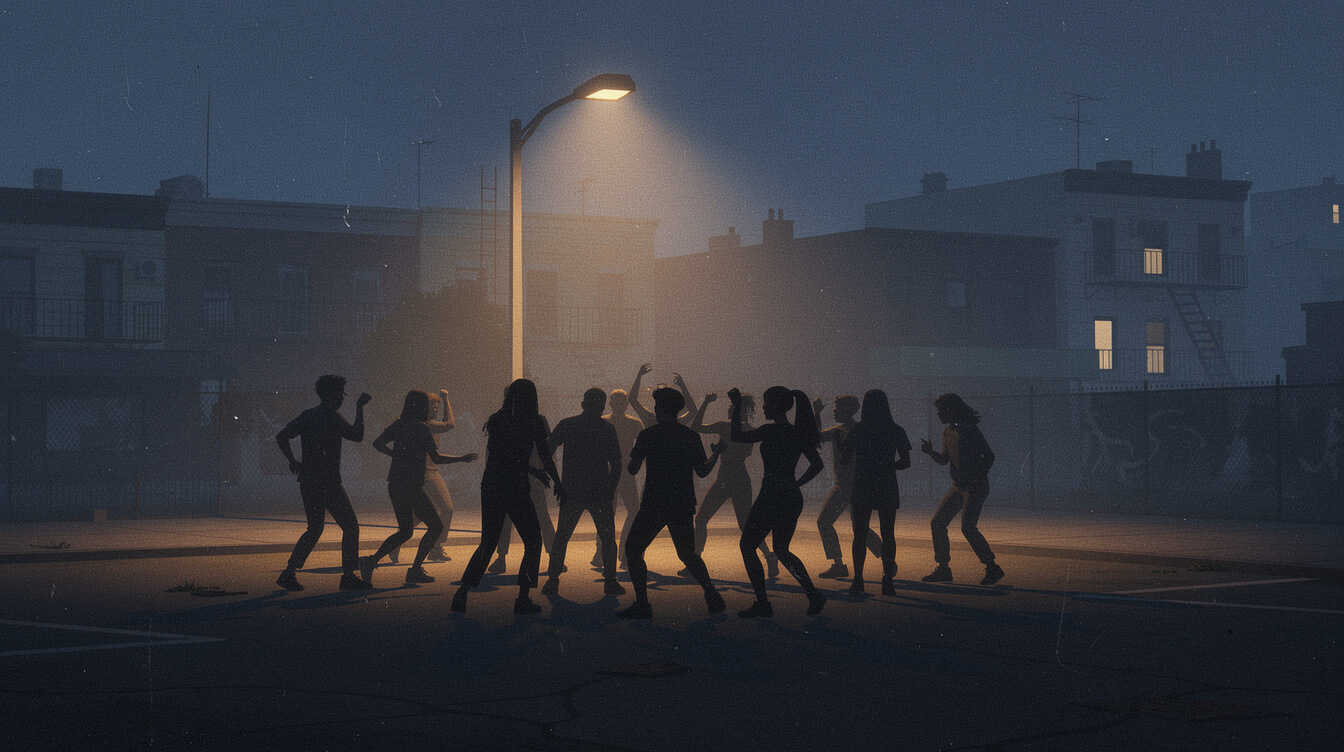
Black Moon is a Brooklyn story, but not from just one block. In the 2012 RBMA “5×5” interview, 5ft says he met Evil Dee at Bushwick High School and met Buckshot in Brownsville. Buckshot named Franklin Avenue as home, and said the crew came from “different parts of Brooklyn, Coney Island, Franklin Avenue, Bushwick.” When people call this album “Crown Heights” or “Bushwick” or “Brownsville,” the honest answer is all three.
The name came from a Bruce Willis TV show
Here’s the origin most people don’t know. “Black Moon” was Mr. Walt’s production-crew name before it was a rap group. Evil Dee told the RBMA crowd in 2011 that Walt was a fan of Moonlighting, the ’80s detective show with Bruce Willis and Cybill Shepherd, where the agency is called Blue Moon. “So, Walt just changed the Blue Moon to Black Moon.” Later, when the MCs needed a name, they took it. The producers became Da Beatminerz.
And the acronym? “Brothers Lyrically Acting Combining Kickin’ Music Out On Nation” gets repeated everywhere. Its only real source is Ego Trip’s Book of Rap Lists (1999). None of the members tell it that way in their interviews, so treat it as a backronym.
The lineup history is also messier than the textbook version. Brian Coleman’s Check the Technique traces the group through the names Unique Image and High Tech, and lists a fourth member, Finsta, who left before the record deal. Buckshot has told it differently. In a 2014 Unkut interview, he says he and 5ft were dancers and MCs and Evil Dee pulled them into “my group… Black Moon.” Both versions agree on one thing: Evil Dee was the hub.
Mr. Walt’s name came from Q-Tip
Before they made records, both Dewgarde brothers worked in record stores. In a 2024 Albumism interview, Walt explained he worked at the Music Factory in Jamaica, Queens. When Q-Tip shouted out “Mr. Walt” and the Music Factory on The Low End Theory, it was him, and that’s how the name stuck. Remember it. The Tribe connection comes back when we get to the production.
“Yo! Knapsacks!”: the signing
The deal came out of a club night run by promoter Maria Davis. Buckshot was interning at MCA Records at the time, which is how he got the slot. At the 2011 RBMA lecture, 5ft said the night was running long and the group had their coats and bookbags on, ready to walk out, when Davis gave them five minutes. Buckshot’s version, to Unkut in 2014, is that they ran on stage with the book bags still on. As they came off, somebody yelled “Yo! Knapsacks!” It was DJ Chuck Chillout: “Y’all want a record deal? Meet me Monday.” Chillout was working at Nervous Records, and that’s how they got to owner Mike Weiss. Coleman’s book credits A&R rep Gladys Pizarro with pushing Weiss to sign them. Weiss confirmed to the Winter Music Conference in 2018 that she was at Nervous in that first year.
“Who Got da Props?” was written at Chuck Chillout’s place in the Bronx. Buckshot told the RBMA crowd that he and 5ft were writing on the floor while Chillout was “in the kitchen cooking burgers.” The beat almost got lost. It wasn’t on their demo, and Evil Dee says it was Buck, the one who keeps every tape, who dug it up on an old cassette and picked it. They recorded it at Such-a-Sound in Brooklyn, not D&D as Wikipedia says. That studio had no turntable setup, so Evil Dee cut the scratches sitting on the floor.
The single nobody expected
“Who Got da Props?” came out on Nervous in October 1992 and caught on slowly. It peaked in March 1993 at No. 86 on the Billboard Hot 100 and No. 60 on the R&B chart. Wikipedia’s album page says the group was surprised it charted, and that Weiss then talked them into making a full album. Buckshot was still a teenager. Around the same time he and Drew “Dru Ha” Friedman, who worked at Nervous, started Duck Down Management. Everything else came out of that partnership.
How Da Beatminerz Built the Enta Da Stage Sound

If you only take one thing from Black Moon Enta Da Stage, take the sound. It’s sometimes called “basement” boom bap. The kick and snare sit right in your face. The samples are mostly jazz and soul, but you hear them through a wall. The treble’s almost gone and the bassline does most of the work. A 2005 Oh Word review put it neatly: the Beatminerz “took the already dark sound of The Low End Theory and one-upped it.”
The gear: SP-1200, S950, and a lot of cassettes
Evil Dee has named the E-mu SP-1200 and Akai S950 as the studio workhorses, in RBMA’s 2011 lecture and again to Albumism in 2024. The home setup was more improvised. Asked on Equipboard what they used on the album, Mr. Walt answered: “AKAI 612 Sampler & Casio SK100. Put the samples on CASSETTE and then took them to the studio.” DJBooth’s 2018 retrospective says the same thing: a lot of the jazz samples were captured from cassette.
That’s part of the sound. Tape smears the high end and softens transients before the sampler even touches it. 5ft told RBMA that Evil Dee “used to make beats over a double tape deck cassette jump-off. I would be bucking, like, ‘How you making beats off that?'”
“Yesterday’s Auto-Tune”
The weirdest-sounding moment on the record came from an engineering accident. On “Shit Iz Real,” a sample went through an Ultra-Harmonizer, the outboard pitch box singers used to tune vocals. Evil Dee called it “yesterday’s Auto-Tune” in the RBMA lecture. Engineer Swift meant to send the sample through the compressor and sent it through the harmonizer instead. The pitch changed and they kept it, which is the Beatminerz approach in a nutshell.
Built from records, not just around them
“Powaful Impak!”, the opener and the one track Buckshot co-produced, is built almost entirely from other hip-hop records. Evil Dee broke it down at RBMA: a Kenny Dope record, Gang Starr’s “Just to Get a Rep” bassline cut in half, the end of Eric B. & Rakim’s “I Ain’t No Joke,” and “Scenario” scratches. He said the point was to “catch everybody out there.” It’s a crate-digger’s joke as an album intro.
The hooks: the whole block in the booth
The other signature is the hooks. Nearly every chorus is a crowd of voices yelling at once: Smif-N-Wessun, Mr. Walt, Havoc, D.E.A. and the trio. “It’s just a bunch of wild kids having a smoke, hanging, and creating music,” Evil Dee told DJBooth. He says most of the record was laid down on his four-track at home, then finished at D&D. Those group shouts are why Wikipedia calls them “Black Moon hooks,” and they became the Boot Camp Clik’s calling card.
Black Moon Enta Da Stage Track by Track: Samples and Credits

This section sticks to what’s provable. A sample is only named if the 1993 liner notes or the single’s label credit it, or if the producers have confirmed it on record, or if two independent sample databases agree. A lot of the “sample lists” that circulate fail that test.
1–5: Powaful Impak! through Buck Em Down
- “Powaful Impak!” Buckshot solo, produced by Evil Dee with Buckshot Shorty. Built from hip-hop records, as above.
- “Niguz Talk Shit.” Buckshot solo, Evil Dee on the boards.
- “Who Got da Props?” The loop is Ronnie Laws’s 1975 jazz-funk cut “Tidal Wave.” Evil Dee played it at the RBMA lecture, and Genius lists it too. The drums are Lightnin’ Rod’s “Sport” layered with the Skull Snaps break “It’s a New Day.”
- “Ack Like U Want It.” Buckshot and 5ft trade verses. Evil Dee and Walt both have credits. CD-only on the original pressing.
- “Buck Em Down.” Built on Donald Byrd’s “Wind Parade,” written by Larry Mizell. The Buck Em Down 12-inch credits the sample. The single and its video used the Da Beatminerz Remix as the A-side. The remix charted in October 1994 at No. 81 R&B.
6–10: The Smif-N-Wessun debut through the Barry White flip
- “Black Smif-n-Wessun.” Tek and Steele’s first appearance on record. The groove comes from Ahmad Jamal’s “Misdemeanor,” per Evil Dee and a published sample breakdown.
- “Son Get Wrec.” The only track Buckshot isn’t on, so it’s 5ft’s solo spotlight. 5ft told RBMA the original beat was the same sample that later showed up on Lil’ Kim’s “No Time,” but they couldn’t clear it. Evil Dee said he liked the replacement better anyway.
- “Make Munne.” Mr. Walt production, Buckshot solo.
- “Slave.” Short, eerie, drumless. Evil Dee told POW Mag in 2024 it was basically an unfinished song. CD-only.
- “I Got Cha Opin.” The album version is Mr. Walt’s. He told POW Mag it was inspired by Janet Jackson’s “That’s the Way Love Goes.” The Remix became the third single and charted at No. 93 on the Hot 100 in April 1994. It’s built on Barry White’s “Playing Your Game, Baby,” and the 12-inch credits the sample as licensed from Polygram, with the original song’s writers added to the credits. In a 2024 Albumism interview, Evil Dee says White’s side took “50% publishing and he wanted $3,000.” In the same interview he adds that “the only thing on that beat that’s not Barry White is the hi-hat.”
11–14: Shit Iz Real through U Da Man
- “Shit Iz Real.” The Ultra-Harmonizer accident. Evil Dee production.
- “Enta Da Stage.” Mr. Walt production. Genius lists Alice Coltrane’s “Journey in Satchidananda,” and a second sample breakdown agrees. Wikipedia’s writer list also names Ernie Watts and four members of Onyx. The 1993 liners don’t print any of those names, so they aren’t original liner credits. Genius does list an Onyx “Shifftee” sample, which would explain the Onyx names, but that’s one source.
- “How Many MC’s…” The second single. The loop is Grover Washington Jr.’s “Hydra,” and the hook quotes BDP’s “My Philosophy” line “How many MCs must get dissed.” Evil Dee told RBMA: “Mr. Walt put that together. Buck actually co-produced that.” It peaked at No. 97 R&B and missed the Hot 100. Its song page lists it at No. 20 on Bubbling Under.
- “U Da Man.” The posse cut, and the first time Boot Camp is on wax together: Buckshot, 5ft, Tek, Steele, Big Dru Ha and Havoc. Buckshot told Unkut he “had Havoc as opposed to Havoc and Prodigy” just because he was closer to Havoc.
Want the album on your chest? We made a Black Moon Enta Da Stage T-Shirt that flips the classic crew shot into a bold red-block design, with Black Moon up top and enta da stage underneath. It comes in black, navy and chocolate.
The Cover, the Reviews and the Gold Plaque That Never Came

Chi Modu shot the cover
The cover photo is by Chi Modu, the photographer whose portraits of Biggie and 2Pac became some of the era’s defining images. Art direction is credited to Merge One / C². Buckshot told RBMA that 5ft wears a star and crescent on the cover “because that’s how we rolled in Bushwick.” Fat Beats’ 2017 Complete Edition booklet included outtakes from that shoot.
What the critics said in 1993–94
Reviews were split, and the split still shapes how the album is talked about. The Source gave it 4 mics in its November 1993 issue. Cheo Hodari Coker called it “a stunning debut” and described the sound as “elegant madness.” Vibe’s Chris H. Smith praised the “sincerity” and the absence of “cartoonish renderings of ghetto life.”
The pushback came from the rock press. In Rolling Stone, Touré reviewed it alongside Kurious’s debut and criticized it for “ignorance,” writing that the group “leave blank the ultimate canvas – the self.” The Village Voice’s Joe Levy said they sounded “less like gang-bangers than neighbourhood kids who wish they were in a gang.” Read those now and you can hear the generation gap.
The verdict that’s held up is AllMusic’s. Vincent Thomas gave it 4.5 stars and wrote: “Listen to this album and you can hear hip-hop change.” He called it “an album that deserves its own node on the hip-hop timeline.”
The lists
The Source put Enta Da Stage on its 100 Best Rap Albums list in 1998. Rolling Stone, which had given it three stars in 1994, ranked it No. 141 on its 200 Greatest Hip-Hop Albums of All Time in 2022. Twenty-eight years and a full turnaround.
Why it never went gold
There are two sales numbers in circulation. Buckshot told Brian Coleman it sold “over 400,000.” A Duck Down figure cited on Wikipedia puts it at “just over 350,000” in the US as of June 2006. Neither has been audited, and neither ever turned into an RIAA plaque.
The group’s explanation is about the label, not the music. “Nervous, the label that put it out, specialized in house music. They didn’t understand us,” 5ft told DJBooth in 2018. “We still here though, without the Platinum plaques.” Buckshot put it more bluntly to Unkut in 2014: “we got jerked, we got done real bad, but I ain’t mad at none of it.”
Look at the competition, too. 36 Chambers and Midnight Marauders both came out three weeks later, on the same day. Then Illmatic (see our Illmatic deep dive), Ready to Die and Mobb Deep’s The Infamous (our Infamous at 30 piece). All of those went gold or better on major-label muscle. Enta Da Stage got there first, on a label whose main business was house 12-inches.
The Crew It Launched: Duck Down, Smif-N-Wessun and the Boot Camp Clik
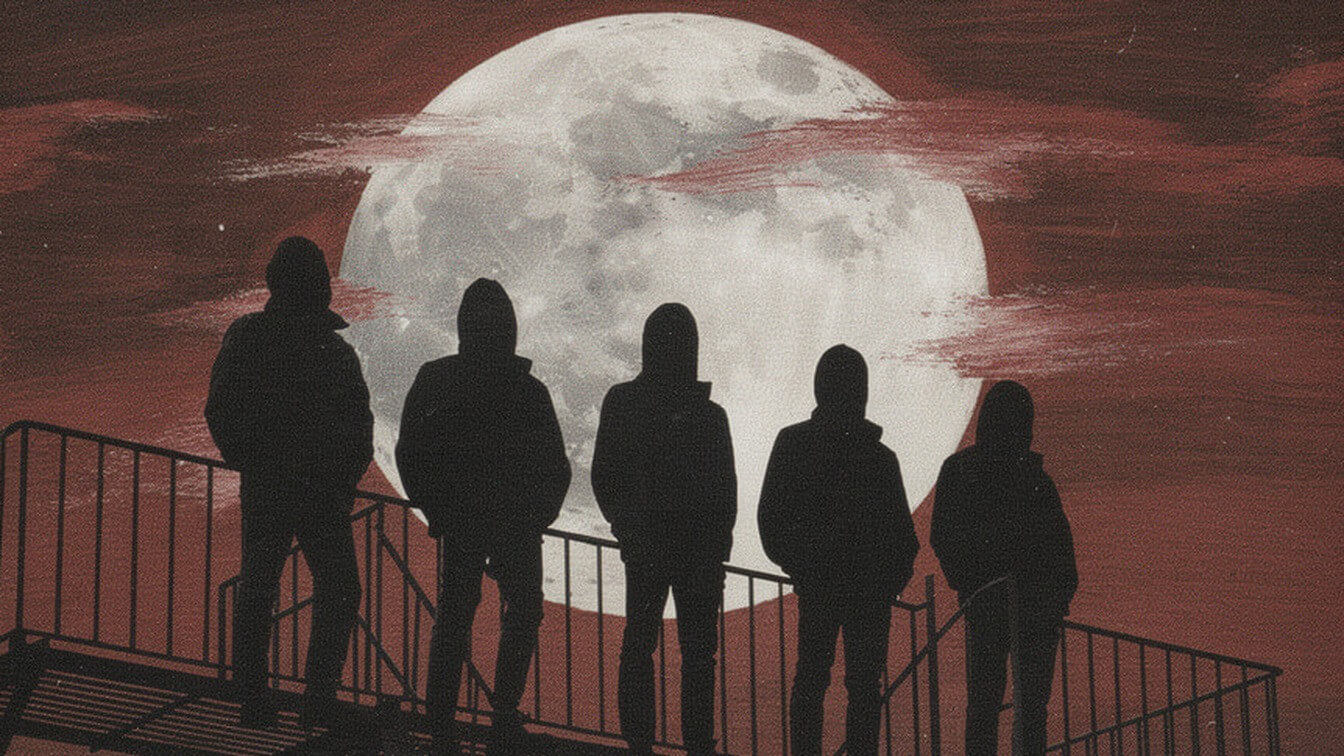
The album’s biggest legacy might be the business it started. Buckshot was still a teenager, and he was running a management company while he made his debut. In a 2005 interview with MVRemix, he described the Enta da Stage era as “constant struggle.” He was fighting to get Smif-N-Wessun a fair deal, fighting for Heltah Skeltah, and “trying to bring my record company into existence.”
From management company to label
Dru Ha explained the logic to RapReviews in 2006. “We started Duck Down more as a management company out of a necessity because we were on an independent label called Nervous Records.” Once they managed Smif-N-Wessun too, “we weren’t seeing what we thought was a fair share going through Nervous.” So by the time Heltah Skeltah came along, they wanted their own label. Duck Down Management became Duck Down Records in the mid-’90s (most sources say 1995), and it’s still putting out records three decades later.
Smif-N-Wessun first, Heltah Skeltah second
Get this right, because even The Source got it wrong in a 2024 anniversary post. Enta Da Stage introduced Smif-N-Wessun (on “Black Smif-n-Wessun” and “U Da Man”). It did not introduce Heltah Skeltah. Rock and Sean Price first appeared on Smif-N-Wessun’s Dah Shinin’ in January 1995. (We cover Sean P’s whole run in our Sean Price guide.)
The Boot Camp run that followed:
- Dah Shinin’ (January 10, 1995, Wreck/Nervous). Smif-N-Wessun’s debut, produced entirely by Da Beatminerz. The closest sibling Enta Da Stage has.
- Nocturnal (June 18, 1996, Duck Down/Priority). Heltah Skeltah’s debut, with a wider producer bench.
- Da Storm (October 29, 1996, Duck Down/Priority). O.G.C.’s debut.
- For the People (1997). The first full Boot Camp Clik album.
Smif-N-Wessun later had to perform as Cocoa Brovaz after a cease-and-desist from the gun maker. Black Moon had its own name problem. Its long fight with Nervous over the name and contract lasted through the late ’90s. Meanwhile Diggin’ in dah Vaults (1996), a remix collection, came out on Nervous, and the second album, War Zone, didn’t arrive until February 1999 on Duck Down. After that came Total Eclipse (2003) and Rise of da Moon (2019).
If you’re repping the extended family, our Sean Price Mic Tyson T-Shirt covers the Brownsville side of the Clik.
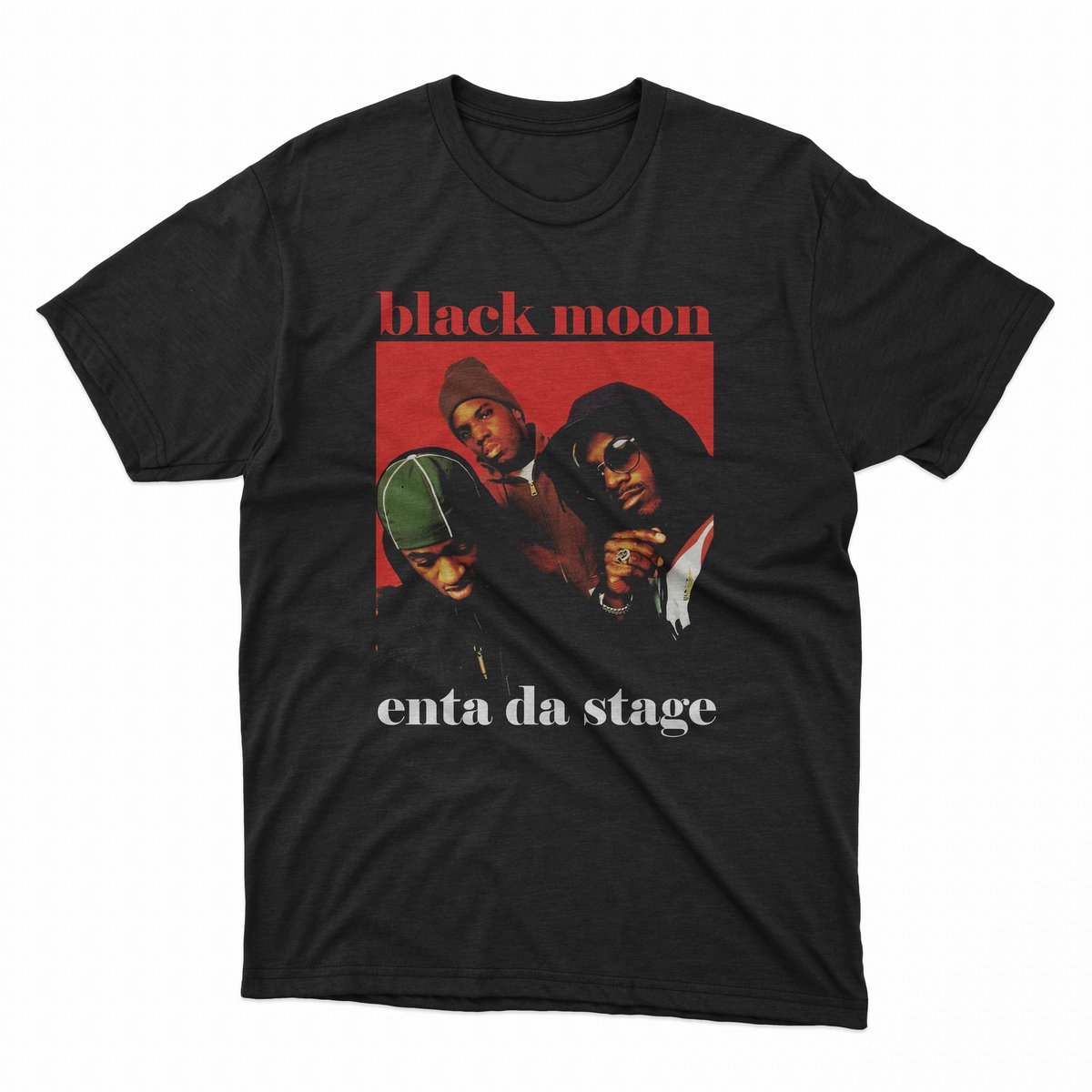
Enta Da Stage, Worn Right
We made the Black Moon Enta Da Stage tee for heads who know the Boot Camp started on this record. Bold red-block crew design, premium Bella Canvas cotton, black, navy or chocolate.
Where Da Beatminerz went next
The Beatminerz sound became its own brand. Evil Dee mixed Rawkus’s first Soundbombing tape in 1997 (that story is in our Rawkus Records history). Da Beatminerz produced Black Star’s “Astronomy (8th Light)” and Eminem’s “Any Man” on Soundbombing II. One common mix-up: they did not produce Black Star’s “Hater Players.” That was Shawn J. Period.
The Lineage: Who Learned From Enta Da Stage
Lineage claims about this album get inflated a lot. Here’s what’s on the record.
9th Wonder’s “Black Moon state of mind”
The clearest testimony comes from 9th Wonder. In a 2005 AllHipHop interview, the year he and Buckshot released the collaboration album Chemistry, he said: “I’ve been a fan since 92′. He influenced me to recreate that same sound up til’ now. I was in a ‘Black Moon state of mind.'” He also said “Who Got the Props?” and “How Many MC’s” changed his life. Buckshot went on to make Survival Skills with KRS-One in 2009. That’s a full circle for a crew whose “How Many MC’s” hook quoted “My Philosophy.”
The quote you shouldn’t repeat
Wikipedia, and sites that copy it, say AllMusic wrote that “Biggie Smalls’ suicidal thoughts and Noreaga’s boisterous thuggery both have their roots here.” The current AllMusic review by Vincent Thomas doesn’t contain that line, and neither does the “aggressive nihilism… Kool G Rap” quote credited to a “Chris Witt.” Both may be from older versions of the page. Neither can be verified today, so we’re not using them as AllMusic’s words.
Still standing in 2026
The Clik never really stopped. Boot Camp Clik put out “Wotcha Call Strength” in July 2023, their first group single in about 16 years. Smif-N-Wessun released Infinity in 2025. Fat Beats’ 2017 Complete Edition (a 6xLP box limited to 1,000 copies, plus 3xCD and 3xcassette, with instrumentals, 13 remixes and B-sides, and an 18-page booklet of new interviews) is still the definitive physical version. There was no 25th or 30th anniversary reissue, whatever some listings imply.
Black Moon Enta Da Stage FAQ
When did Black Moon release Enta Da Stage?
October 19, 1993, on Wreck Records, the hip-hop imprint of Nervous Records. AllMusic lists November 15, 1993, but Duck Down and The Source mark October 19.
Who produced Enta Da Stage?
Da Beatminerz: DJ Evil Dee (Ewart Dewgarde) and Mr. Walt (Walter Dewgarde). Evil Dee produced most tracks. Mr. Walt did “Make Munne,” “I Got Cha Opin,” the title track and co-produced others. Buckshot co-produced “Powaful Impak!” and, by Evil Dee’s account, “How Many MC’s…”. Executive producers were Big Dru Ha and Mike Weiss.
Who are the members of Black Moon?
Buckshot (Kenyatta Blake), 5ft (credited “K. Reid”) and DJ Evil Dee. Mr. Walt is Evil Dee’s older brother and the other half of Da Beatminerz, and the name “Black Moon” was originally his production crew’s.
Is Enta Da Stage certified gold?
No. The RIAA database has no Black Moon certifications. Reported sales are 350,000 to 400,000, depending on who’s counting.
What does “Black Moon” stand for?
The popular backronym is “Brothers Lyrically Acting Combining Kickin’ Music Out On Nation.” It traces to Ego Trip’s Book of Rap Lists, not the members. By Evil Dee’s account, the name came from Moonlighting‘s Blue Moon detective agency, with Mr. Walt swapping Blue for Black.
What samples are on “Who Got da Props?” and “How Many MC’s…”?
“Who Got da Props?” loops Ronnie Laws’s “Tidal Wave” over drums from Lightnin’ Rod’s “Sport” and Skull Snaps’ “It’s a New Day.” “How Many MC’s…” uses Grover Washington Jr.’s “Hydra,” and its hook quotes BDP’s “My Philosophy.”
Did Heltah Skeltah or Sean Price appear on Enta Da Stage?
No. The guests are Smif-N-Wessun, Havoc and Dru Ha. Heltah Skeltah debuted on Smif-N-Wessun’s Dah Shinin’ (1995).
Is the whole album on streaming?
Yes. All 14 CD tracks, including “Shit Iz Real,” are on Spotify. The original vinyl is the version that’s short two songs.
Final Thoughts
Black Moon Enta Da Stage is the rare classic whose influence beat its sales. A record built on cassette-dubbed jazz, a home four-track and a $3,000 Barry White clearance ended up setting the template for mid-’90s New York. Three teenagers who got “jerked” by their label turned the experience into Duck Down, a label that’s still running long after most of their 1993 competitors’ deals ended. Run it front to back tonight, CD sequence, with good headphones. Pay attention to how little treble there is, and how much room that leaves for Buckshot.
If this one sent you down the 1993 rabbit hole, keep going with 36 Chambers, which came three weeks later, and Mobb Deep’s story, the other half of Havoc’s 1993 résumé.
Stay creative — The Custom Creative Team
Get the Culture in Your Inbox
Liner-note receipts, studio stories, anniversaries and first dibs on new drops. No spam, just hip-hop.

🎧 Never Miss a Drop
Exclusive product releases, hip-hop deep dives, and member-only discounts. Straight to your inbox.
Free forever. No spam. Unsubscribe anytime.
Get the Culture, Delivered
Deep dives into hip-hop history, exclusive product drops, and discounts sent straight to your inbox. No spam, just culture.
Join 2,000+ hip-hop heads already in the loop. Unsubscribe anytime.