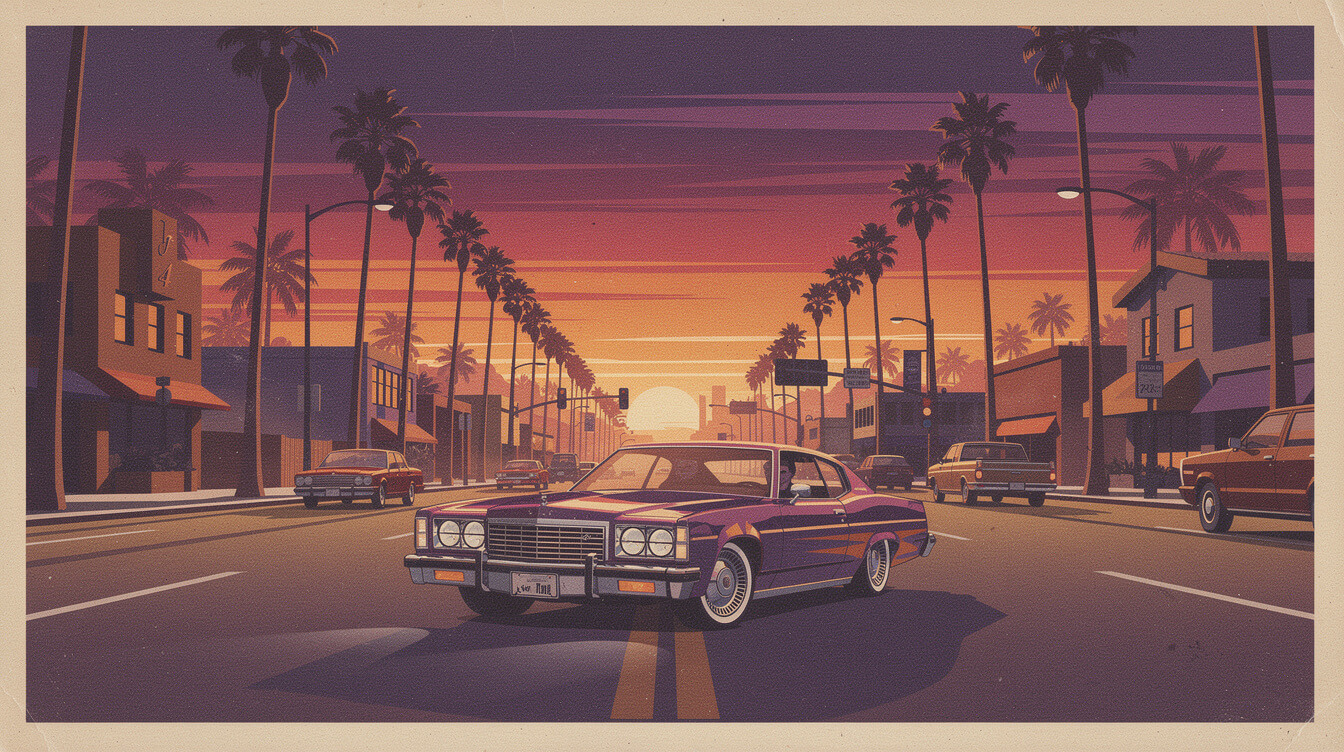
Warren G Songs: Regulate, the 213 Tape and the Long Beach Connector Behind G-Funk
Ask most people to name Warren G songs and you get one answer: “Regulate.” Fair. It’s one of the defining records of the ’90s, a double-platinum story-song with no real hook that still runs every summer. But stopping there misses the bigger story. Warren Griffin III is the Long Beach producer who put Snoop Dogg’s tape in front of Dr. Dre, dug crates for The Chronic, built a triple-platinum debut largely out of his own apartment, and kept the G-funk sound going after Death Row’s other stars moved on.
This is the full run of Warren G songs worth knowing: the 213 origin, how “Regulate” got made, every cut on Regulate… G Funk Era, the later records nobody talks about, the beats he built for other people, and a 10-song primer to close it out. Every chart number and credit here was checked against at least two sources, because the Warren G story already carries a few myths and we’re not adding to them.
Long Beach, 213 and the Tape That Changed Death Row
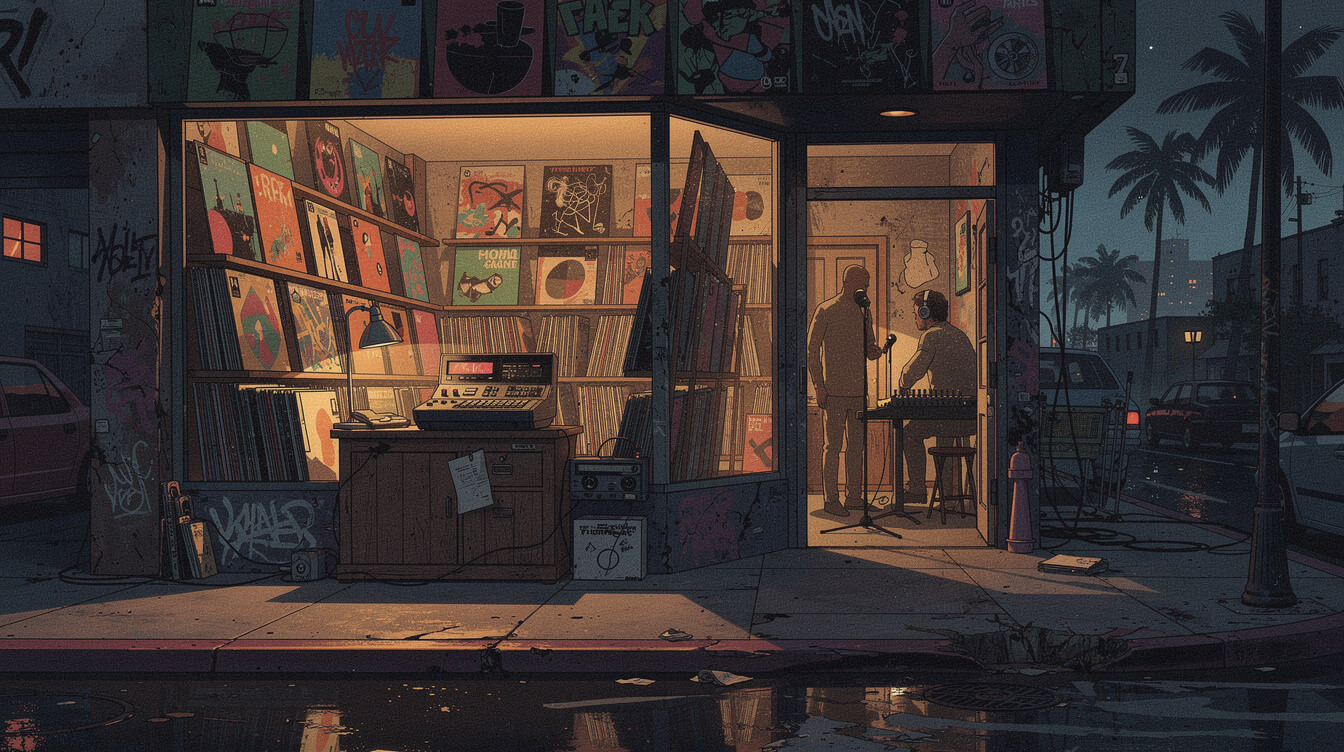
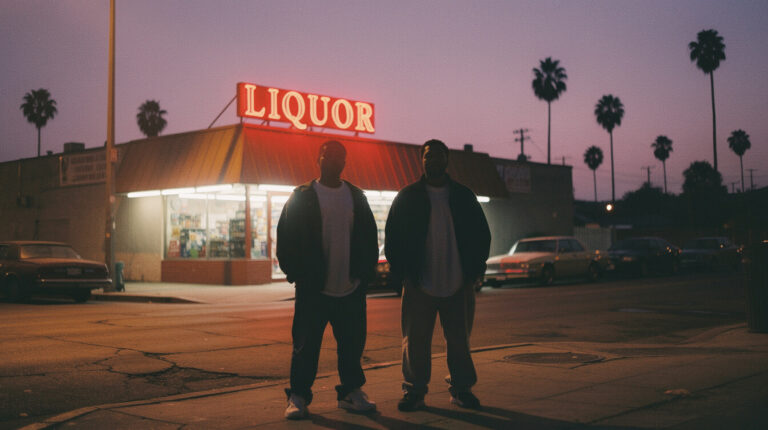
Before there were any Warren G songs on the radio, there was a back room in a Long Beach record shop. Warren, Snoop (still rapping as Snoop Rock back then) and Nate Dogg practiced and cut demos in the small studio at V.I.P. Records. They called themselves 213, after the area code, a direct nod to the Oakland group 415. “They 415, that’s they area code,” Warren told Rolling Stone in 2014. “So we might as well call ourselves 213 and represent from where we from down here.”
The tape that went everywhere except a label
The 213 tapes got dubbed and passed hand to hand across L.A. County: Long Beach, Compton, Watts, South Central, Pomona. Street-level famous, but no deal. Warren had an obvious connection in Dr. Dre, his stepbrother, but Dre was already a star with N.W.A and wasn’t rushing to hear his little brother’s demo.
The bachelor party
Then came the phone call that changed West Coast rap. Warren rang Dre to catch up and found him at a bachelor party for producer Andre “LA Dre” Bolton. Warren showed up, noticed the same records kept repeating, and asked to put his tape on. LA Dre loved it and pulled Dr. Dre over. Dre heard Snoop on that tape and told them to come to the studio on Monday. Snoop didn’t believe Warren when he called with the news. The two had been arguing, so Snoop hung up on him, and Warren had to get Dre on a three-way call to confirm the studio invite.
Everything after that is the record. Snoop debuted on Dre’s “Deep Cover” in 1992, then all over The Chronic, then Doggystyle, a record with Long Beach fingerprints all over it and the reason we made our Doggystyle T-Shirt. Nate Dogg signed to Death Row. 213 split up as a working group the moment it succeeded. That’s the irony at the root of the catalog: the guy who opened the door ended up standing outside it. Death Row had a deep roster and a long line, so Warren went his own way, and the Warren G songs that followed grew out of that decision. (213 did finally release an album, The Hard Way, a full decade later in 2004.)
What Warren actually brought to The Chronic
Warren’s role on The Chronic is mostly crate work, and he’s specific about it. He says he bought the Parliament record behind “Let Me Ride” in Torrance, brought Dre the Isaac Hayes sample that became “Stranded on Death Row,” and played Dre a beat he’d made with Mista Grimm that turned into “Little Ghetto Boy.” Look at the liner notes, though, and his only track credit is the spoken intro to “Deeez Nuuuts,” plus a co-writing credit on that song. It’s a pattern you’ll see across Warren G songs and the records around them: the work happened, but the credits don’t show it.If you rep that album, our Dr. Dre – The Chronic T-Shirt carries the same family tree. Jeff Weiss put it well in the Washington Post: The Chronic is a Parliament-Funkadelic record, “but it is the sound of Long Beach, too.”
Regulate: The Sample, the Soundtrack and the Story-Song Formula

“Regulate” didn’t come from a big studio. It came from Warren’s apartment on Long Beach Boulevard: equipment in the bedroom, the vocal booth in the bathroom and closet, an MPC 60, a Numark mixer, a Technics 1200 and a pile of records. He’d been playing Michael McDonald’s “I Keep Forgettin’ (Every Time You’re Near),” a 1982 soft-rock hit he remembered from his parents’ house parties, and decided it would be “so different” to rap over it.
The Young Guns intro
The intro came from the TV. Warren was watching Young Guns (1988) when Casey Siemaszko’s Charlie Bowdre delivered the “regulators” speech. “I heard that and I lost it,” Warren said. “I’m a put it on anyway.” Engineer Greg Geitzenauer helped him hook a rented VHS straight into the MPC to grab the line. The track also lifts from Bob James’s “Sign of the Times” and nods to Dre’s “Let Me Ride.” Here’s a detail from the liner notes: the original 1994 US CD lists only Warren Griffin III and Nathaniel Hale as writers on “Regulate.” The McDonald loop that carries the whole song goes uncredited there, while the album credits samples from Junior, One Way and Don Julian elsewhere.
No hook, just four bars at a time
Nate Dogg stopped by, heard the beat and started writing on the spot. They traded four-bar sections until they hit sixteen, in the back-and-forth style of Snoop and Dre on “Nuthin’ But a ‘G’ Thang” (and, as Warren said, Run-DMC before them). They never wrote a chorus. “The record sample was banging so hard, we didn’t need a god-darn hook,” Warren said. A&R Paul Stewart called it “one of the only pop songs that doesn’t have a vocal hook.” Geitzenauer added the low string pad and the little organ lick at the end of the chorus. Warren admits his first reaction to them was “what the f— is that?” Then he kept both.
The rights fight behind the hit
Then came the business problem. Warren had just signed with Def Jam. Nate was on Death Row. Death Row A&R Mike Lynn played the song for Jimmy Iovine, who wanted it as the lead single for the Above the Rim soundtrack (Death Row/Interscope, March 1994). Stewart called the negotiations between Suge Knight’s camp and Def Jam “definitely contentious.” Def Jam eventually cleared Death Row to use the single, then put the same song on Warren’s own album. Both labels profited from it.
It went to No. 2 on the Billboard Hot 100, was certified platinum by August 1994 and double platinum in 2017, and earned a 1995 Grammy nomination for Best Rap Performance by a Duo or Group. Russell Simmons’s explanation for why it traveled worldwide: “the melody plays no matter what the language.”
Regulate meaning, briefly
For anyone searching it: “Regulate” is a story-song about a single night in Long Beach. Warren goes looking for women, walks into a dice game and gets robbed at gunpoint. Nate rolls up and handles the robbers. The night ends with the two of them picking up the women whose car broke down. “Regulate” is Old West slang for enforcing order, which is why the Young Guns intro fits so well. It’s a gangsta-rap plot delivered as a quiet-storm slow jam, and that mix is the template for the whole album.
The Leiber and Stoller twist
Here’s a detail most fans don’t know. Look up “Regulate’s” full songwriter credits today, after the sample was cleared, and you’ll find Jerry Leiber and Mike Stoller, the duo who wrote “Hound Dog” and “Stand by Me,” next to Warren, Nate, McDonald and Ed Sanford. That’s not because of anything Warren did. McDonald’s song shares its title and opening line with Leiber and Stoller’s 1962 “I Keep Forgettin'” for Chuck Jackson, and they were credited on McDonald’s version as a result. So the most G-funk record of 1994 has the “Hound Dog” writers on its credits. Michael McDonald liked the record and cleared the sample. “They still get a check from that,” Warren said. “I made the record bigger than what they did.”
Regulate… G Funk Era, Track by Track: The Essential Warren G Songs

Regulate… G Funk Era came out on June 7, 1994 on Violator, distributed by Def Jam’s Rush Associated Labels. It runs 36 minutes 50 seconds and lists Warren G as producer on every track. It debuted at No. 2 on the Billboard 200 with about 176,000 copies in its first week, topped the R&B/Hip-Hop albums chart and went triple platinum. The New York Times called it “the first gangster rap album with crossover appeal.” Spin said Warren “wasn’t cut out to be a hardass. He’s a romantic, in love with soft sound.”
One correction worth making: you’ll see it claimed online (including on Warren’s own Wikipedia page) that the album sold “a million copies in three days.” The album’s first-week figure, about 176,000, doesn’t support that. It didn’t need the exaggeration; the real numbers are impressive enough.
1. “Regulate” (feat. Nate Dogg)
Covered above. The album version is the cleaned-up re-record. The original version cut in his apartment was rougher and more explicit, and Warren says he doesn’t even have a copy.
2. “Do You See”
Built on Junior’s “Mama Used to Say,” which is credited in the liner notes, with Nate Dogg back on vocals. This is Warren’s autobiography track, the one where he explains that 213 was originally “Warren G, Nate Dogg and Snoop Rock,” with V.I.P. Records showing up in the video. It was meant to be the first single. Warren told Rolling Stone it couldn’t be cleared because the original hook borrowed the melody of the Christmas carol “Do You Hear What I Hear?” and “the Bible Belt was tripping.” It came out as the third single and peaked at No. 42.
3. “Gangsta Sermon” and 6. “’94 Ho Draft”
Short skits featuring B-Tip and the late comedian Ricky Harris. They’re the connective tissue that makes the album feel like a Long Beach radio show rather than a stack of singles.
4. “Recognize” (feat. the Twinz)
The first sign of Warren’s role as a talent connector. The Twinz, Long Beach brothers Deon and Dewayne Williams, get the spotlight a year before he produced nearly their whole album.
5. “Super Soul Sis” (feat. Jah Skills)
A deep cut built on One Way’s “Don’t Stop,” an early-’80s funk record and one of only three samples the original liner notes credit. It shows how much Warren’s sound leaned on soul and boogie rather than straight P-Funk.
7. “So Many Ways”
The slow-jam center of the album, co-written with the Twinz’ Dewayne Williams, who also trades vocals with Warren and Lady Levi. It’s quiet-storm rap with Warren’s soft, conversational flow up front, the side of him Spin called “a romantic.”
8. “This D.J.”
The second single and the real proof Warren wasn’t a one-hit artist. It’s Warren alone on the mic, with G-Child and O.G.L.B. on backing vocals, and it’s the clearest showcase of his laid-back solo style. It reached No. 9 on the Hot 100, went gold and earned Warren a 1995 Grammy nomination for Best Rap Solo Performance in the same year “Regulate” got its duo nod. He lost both, to Queen Latifah’s “U.N.I.T.Y.” and Salt-N-Pepa’s “None of Your Business.” Being nominated in both rap performance categories in the same year as a debut artist says a lot about how hard that summer was his.
9. “This Is the Shack” (feat. the Dove Shack)
Another Long Beach crew gets a showcase, and the Dove Shack named their own 1995 album after it. It’s the most laid-back track on a laid-back record.
10. “What’s Next” (feat. Lil Malik)
Lil Malik, of the group Illegal, takes the feature. It’s one of the harder-edged cuts on the album. Christgau’s line about the album’s “coolly menacing” music fits this track best.
11. “And Ya Don’t Stop”
A solo Warren cut and a fan favorite. It sits at No. 5 on the one crowd-voted Warren G list that ranks in Google, and it’s built on Don Julian’s “Janitzio,” one of the three samples the original liner notes actually credit.
12. “Runnin’ wit No Breaks”
The closing posse cut, with Jah Skills, Bo Roc, G Child and the Twinz. It’s the whole Long Beach roster on one track.

The Record Warren G Dug the Crates For
Before “Regulate,” there was The Chronic, and that Long Beach sound starts with the 213 tape Warren put on at a bachelor party. Our Chronic tee is for anyone who knows how far back the G-funk family tree goes.
After the Hit: Warren G Songs From 1995 to Now

The narrative says Warren G disappeared after 1994. The chart history says otherwise.
Take a Look Over Your Shoulder (1997)
The second album, released in March 1997 on Def Jam/RAL, reached No. 11 on the Billboard 200 and went gold within two months. Critics called it a letdown next to the debut, but it produced three charting singles. “I Shot the Sheriff” reworks Bob Marley’s lyric over a beat borrowed from EPMD’s “Strictly Business,” which itself sampled the Wailers original. It reached No. 20 and went gold. “Smokin’ Me Out,” with Ron Isley on vocals, reached No. 35.
“What’s Love Got to Do with It” (feat. Adina Howard, 1996)
From the Supercop soundtrack and later included on the second album, this flip of Tina Turner’s 1984 hit only reached No. 32 in the US but went to No. 2 in the UK. Warren’s audience overseas was arguably stronger than his audience at home in this period.
“Prince Igor” (The Rapsody feat. Warren G & Sissel, 1997)
This is the oddest entry in the catalog and it worked. Warren rapped over Borodin’s Polovtsian Dances with Norwegian soprano Sissel singing, and the result was a European hit (top 10 in Germany, No. 3 in Sweden). Borodin gets the songwriting credit.
I Want It All (1999)
The third album, released on his own G-Funk imprint through Restless, has Warren mostly producing while Nate, Snoop, Kurupt, RBX, Eve, Slick Rick, Jermaine Dupri and Mack 10 handle much of the rapping. The title track with Mack 10 reached No. 23, his last Top 40 hit as lead artist, and the album went gold.
The Return of the Regulator (2001) and the independent years
The lead single “Lookin’ at You” was produced by Dr. Dre — the stepbrothers working together on a Warren single. The album stalled at No. 83 and was his last on a major label. After that he went independent: In the Mid-Nite Hour (2005), with “I Need a Light” featuring Nate Dogg and “Get U Down” featuring Ice Cube, B-Real and Snoop; The G Files (2009), where “100 Miles and Running” pairs Nate, recorded before his 2007–2008 strokes, with Raekwon; and 213’s long-delayed The Hard Way (2004), which finally put the trio on an album together.
“Party We Will Throw Now!” and Regulate… G Funk Era, Part II (2012–2015)
After Nate Dogg’s death in 2011, Warren treated the unreleased vocals Nate left behind with care. “Party We Will Throw Now!” (2012) put Nate’s hook next to The Game on a tribute EP. Then came the 2015 EP Regulate… G Funk Era, Part II, released August 6, with Nate on all four songs and appearances from E-40, Too Short, Jeezy and Bun B. Its lead single, “My House,” is the closest thing to a 213 reunion we’ll ever get.
He’s kept releasing music since, with singles like “Cali 2 Canada” and “Let Me Breathe” in 2024. You’ll see a 2026 “new single” mentioned in some AI search summaries; we couldn’t find it in any release database, so we’re not listing it.
Warren G the Producer: Beats He Built for Others
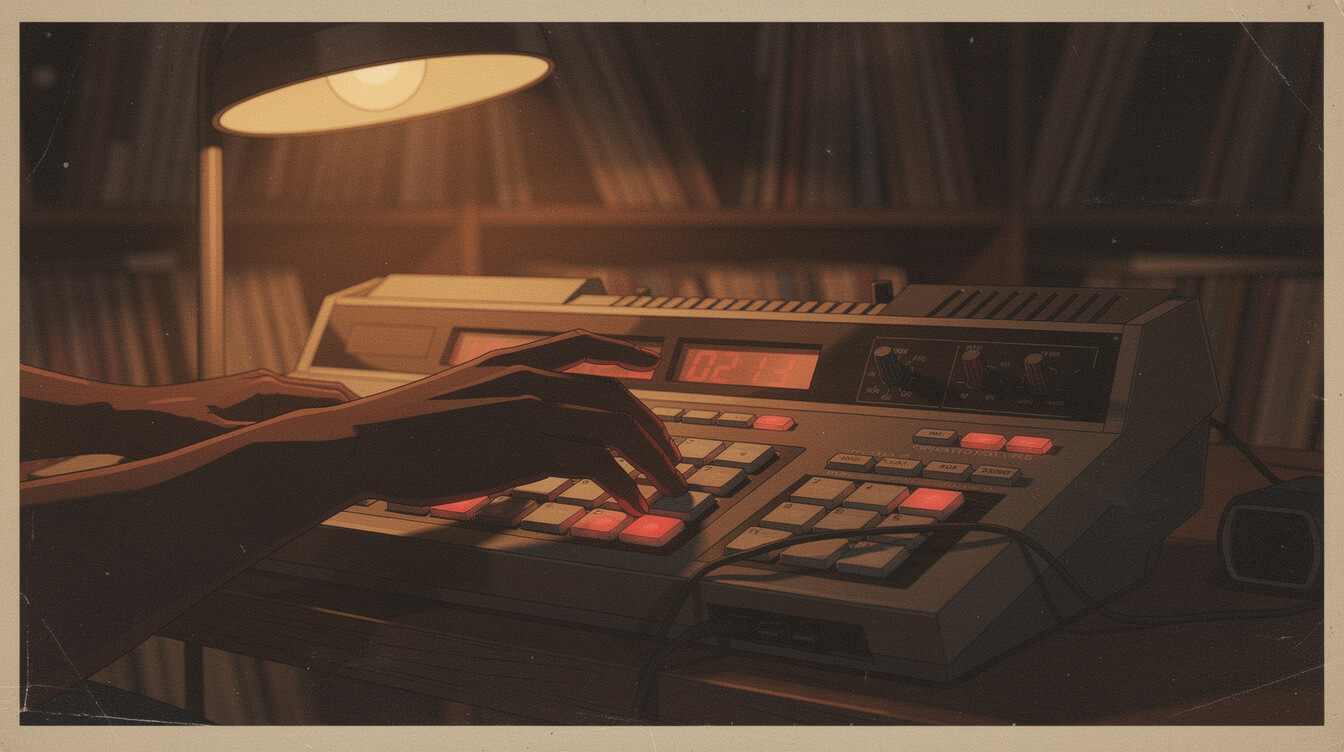
Here’s where the “one-hit artist” label falls apart completely. A lot of the strongest Warren G songs aren’t on Warren G albums. Paul Stewart, the A&R who managed him early on, said he first thought of Warren “as a producer,” not an artist. Def Jam was the one that saw a rapper.
“Indo Smoke” (Mista Grimm, 1993)
This is where the solo run started. John Singleton, who met Warren at Dre’s studio, asked him for a song for the Poetic Justice soundtrack. Warren produced Mista Grimm’s “Indo Smoke” and slipped in uncredited vocals from himself and Nate Dogg, a full year before “Regulate.” Stewart sent the video to Def Jam’s Chris Lighty, who called back asking who the guy rapping in the back seat was. That call led to the Def Jam deal.
The 2Pac connection
Warren co-produced Thug Life’s “How Long Will They Mourn Me?” (1994) with Nate Dogg and Professor Jay. It’s a eulogy for ‘Pac’s friend Kato, and Nate sings the hook. Warren also has two production credits on ‘Pac’s posthumous R U Still Down? (Remember Me) (1997), including “Lie to Kick It.” If you’ve worn out Thug Life Vol. 1, you’ve already been listening to Warren G beats without knowing it. Our deep dive on every Tupac album, living and posthumous covers where those records sit in his catalog.
Twinz, Dove Shack and the G-Funk imprint
Warren used his Def Jam leverage to bring his Long Beach circle with him. He produced 13 of the 14 tracks on Twinz’ Conversation (1995), a project by Long Beach twins Deon and Dewayne Williams released through his own G-Funk imprint via Def Jam/RAL, and he worked on The Dove Shack’s This Is the Shack the same year. Both groups had already appeared on his debut (“Recognize” and “This Is the Shack”), so the album worked as a showcase for his roster. Warren keeps bringing people with him. That instinct to connect people is the thread running through his whole career.
“Nobody Does It Better” (Nate Dogg feat. Warren G, 1998)
The 213 bond held up after 213 itself ended. Warren produced and featured on Nate’s “Nobody Does It Better,” which reached No. 18 on the Hot 100 in 1998 and gave Nate a solo hit from his long-delayed debut. If you want to go deeper on Nate’s run as the West Coast’s hook specialist, we covered it on his 57th birthday.
Eastsidaz and the 2000s
When Snoop put together Tha Eastsidaz in 2000, Warren produced “Big Bang Theory” on the group’s debut and featured on “Be Thankful.” The Death Row years had pulled the 213 trio apart, and they kept reconnecting on records anyway.
Is Warren G Related to Dr. Dre?

Yes. They’re stepbrothers, not blood relatives. Warren’s parents divorced when he was four. In 1982 he moved in with his father, Warren Griffin Jr., in North Long Beach. His father’s new wife was Verna, Andre Young’s mother, which made a teenage Warren G and a young Dr. Dre family.
Warren has always called him “my brother,” and the relationship explains a lot about the Warren G songs that followed. He had more access to Dre’s studio than almost anyone, he could get Dre to pick up the phone for a three-way call with Snoop, and he could see from up close that staying in Dre’s shadow would mean waiting in line. Wikipedia sums up his move to Def Jam as “not desiring a career in his mentor and stepbrother’s shadow.” That’s the most accurate reading of the choice.
Did that choice cost him? On paper, maybe. His name barely appears on The Chronic‘s credits. But “Regulate” was his own, built in his own apartment and released on his own label deal. That’s the trade he made. For the Dre side of the family history, see our era-by-era guide to Dr. Dre songs.
The Warren G Songs 10-Song Primer

If you’re starting from zero, or making a playlist for someone who only knows one song, this is the order to play them in. It covers his own hits, the deep cuts and the records he built for other people, which is the only way to hear his full range.
- “Regulate” (feat. Nate Dogg, 1994): the obvious one, and still essential. The Young Guns intro, the McDonald loop, no hook. Hot 100 No. 2.
- “This D.J.” (1994): the follow-up that proved it wasn’t luck. Hot 100 No. 9, Grammy-nominated.
- “Do You See” (1994): the 213 origin story in his own words, and the single that almost came first.
- “Indo Smoke” (Mista Grimm, 1993): the record that got him the Def Jam deal. Warren and Nate sing uncredited.
- “Ain’t No Fun (If the Homies Can’t Have None)” (Snoop Doggy Dogg, 1993): the Doggystyle posse cut with Warren, Nate and Kurupt. Never a single and an underground classic anyway.
- “How Long Will They Mourn Me?” (Thug Life, 1994): Warren co-produced, Nate sings the hook, ‘Pac writes a eulogy. A side of his production people forget.
- “And Ya Don’t Stop” (1994): the deep cut fans keep voting up.
- “What’s Love Got to Do with It” (feat. Adina Howard, 1996): the Tina Turner flip that went No. 2 in the UK.
- “Nobody Does It Better” (Nate Dogg feat. Warren G, 1998): Warren produced, 213 reunited, Hot 100 No. 18.
- “I Want It All” (feat. Mack 10, 1999): his last Top 40 hit as lead artist, and proof he was still making hits at the end of the decade.
Pair the list with our Snoop Dogg 55th-birthday piece to hear the 213 story from the other side, and with our look at Kendrick Lamar’s GNX to hear the G-funk sound coming back thirty years later.
Warren G Songs FAQ
What is Warren G’s most famous song?
“Regulate” with Nate Dogg (1994). It reached No. 2 on the Billboard Hot 100, went double platinum in the US and was nominated for a Grammy. It first appeared on the Above the Rim soundtrack before opening his debut album.
What does “Regulate” sample?
The main loop is Michael McDonald’s 1982 hit “I Keep Forgettin’ (Every Time You’re Near).” It also samples Bob James’s “Sign of the Times,” interpolates Dr. Dre’s “Let Me Ride,” and opens with dialogue from the 1988 film Young Guns.
Is Warren G Dr. Dre’s brother?
He’s Dre’s stepbrother. Warren’s father married Dre’s mother, Verna, and Warren moved into that North Long Beach household in 1982. They aren’t blood relatives, but Warren has always called Dre his brother.
Who was in 213?
Warren G, Snoop Dogg and Nate Dogg. They came together in Long Beach in the early ’90s, recorded demos at V.I.P. Records and named themselves after the 213 area code. Their only album, The Hard Way, came out in 2004.
Did Warren G produce for Tupac?
Yes. He co-produced Thug Life’s “How Long Will They Mourn Me?” (1994) and has production credits on ‘Pac’s posthumous R U Still Down? (Remember Me) (1997), including “Lie to Kick It.”
Did Warren G produce The Chronic?
Not officially. He says he brought Dre samples and ideas, including the record behind “Let Me Ride” and the Isaac Hayes loop on “Stranded on Death Row,” but his only track credit on the album is the intro (and a co-writing credit) on “Deeez Nuuuts.”
What is Warren G doing now?
Still performing, still in Long Beach. In 2025 he joined the ownership group of Long Beach’s new Pioneer League baseball club, which is set to play at Blair Field.
Final Thoughts: Warren G, the Connector
When you list all the Warren G songs in one place, the “one-hit wonder” idea doesn’t survive. He played the tape that started Snoop’s career. He brought the soul records into Dre’s studio. He made a triple-platinum debut from a Long Beach apartment, two Grammy-nominated singles, a top-five UK hit (“What’s Love Got to Do with It”), and beats for ‘Pac, Nate Dogg, the Twinz and Tha Eastsidaz. He also kept 213 recording together years after Death Row split them up.
“Regulate” earned its place. But the bigger story is that West Coast hip-hop in the ’90s depended on the people who connected others, and Warren G was the clearest example. Start with the primer, then work through the rest.
Stay creative — The Custom Creative Team
Get the Culture in Your Inbox
Album-art stories, anniversaries, liner-note receipts and first dibs on new drops. No spam, just hip-hop.

🎧 Never Miss a Drop
Exclusive product releases, hip-hop deep dives, and member-only discounts. Straight to your inbox.
Free forever. No spam. Unsubscribe anytime.

Get the Culture, Delivered
Deep dives into hip-hop history, exclusive product drops, and discounts sent straight to your inbox. No spam, just culture.
Join 2,000+ hip-hop heads already in the loop. Unsubscribe anytime.