Dr. Dre Songs, Era by Era: The 40-Year Catalog of the Producer Who Rebuilt the West Coast Three Times
Most lists of Dr. Dre songs stop at the same five singles. That misses the point. Dre has rebuilt the sound of West Coast rap at least three times in forty years: once with drum machines and sequins in a Compton nightclub, once with Moog leads and Parliament records at Death Row, and once with a three-note piano riff that still opens car stereos worldwide. A 1986 Dre record, a 1992 Dre record and a 1999 Dre record sound like three different producers. They aren’t. It’s one obsessive perfectionist changing his tools.
This guide walks the whole catalog era by era: the songs he rapped on, the songs he made with N.W.A, and the songs he built for everybody else. For each era you get the essential records and the production “tell” that gives it away, plus the receipts most lists skip: the ghostwriters, the session players, and a few famous “Dre beats” that Dre didn’t actually make.
Why “Dr. Dre Songs” Means Three Different Things
Type “Dr. Dre songs” into a streaming app and you’ll get “Still D.R.E.,” “The Next Episode” and “Forgot About Dre.” Fair enough. But Dre’s catalog really has three layers, and you need all three to understand him.
Layer one: Dre the artist
This is the smallest pile. Dre has released only three solo studio albums: The Chronic (1992), 2001 (1999) and Compton (2015). Add a handful of soundtrack singles (“Deep Cover,” “Been There, Done That”) and the 2010–2011 Detox-era singles and you’ve basically covered the songs with his name on top.
Layer two: Dre the group member
Before he was a solo star, Dre was a DJ and producer in two crews: the World Class Wreckin’ Cru and N.W.A. On those records he’s sometimes rapping, sometimes scratching, and always programming the drums.
Layer three: Dre the producer
This is the biggest pile by far, and it’s where most of his hits live. Snoop’s Doggystyle, Eminem’s breakthrough singles, Mary J. Blige’s only Hot 100 number one, 50 Cent’s “In da Club”: none of those are “Dr. Dre songs” on paper, and all of them are Dr. Dre songs in every way that matters. Any honest ranking has to count them, which is exactly why the video countdowns that exclude producer-only credits end up so thin.
The catch: not every “Dre beat” is a Dre beat
The flip side is that Dre’s name gets attached to records he didn’t produce. Aftermath releases, Dre-executive-produced albums and songs where Dre only raps a verse all get filed under him. We’ll flag those as we go, because the credits tell a more interesting story than the myth.
Dr. Dre Songs From the Wreckin’ Cru and N.W.A Years (1984–1991)
Dre’s first studio was a back room. In the early ’80s, Alonzo “Lonzo” Williams ran a Compton nightclub called Eve After Dark, and he built a group around the club’s young DJs: Andre Young and Antoine Carraby, better known as Dr. Dre and DJ Yella. That group was the World Class Wreckin’ Cru.
The swap-meet mixtape DJ
Before any record deal, Dre was already a selector with a following. He sold mixtapes at the Roadium Swap Meet, blending Parliament, Uncle Jamm’s Army, Egyptian Lover and East Coast records. That’s the jewel to hold onto: the P-Funk that powers The Chronic was in Dre’s crates a decade before he made the album.
“Surgery” and the electro years
“Surgery” (1984), released on Williams’ own Kru-Cut label, is the starting point: a rattling, sci-fi electro track built for the dance floor, with Dre billed as the man you call to the operating room. Follow it with “Juice” and “Turn Off the Lights,” the slow jam with Michel’le that became the group’s biggest hit. Yes, the Wreckin’ Cru wore sequins and lace. Yes, rivals have been clowning Dre about the photos ever since. It doesn’t matter. This is where he learned arrangement, low end and how to make a record that works in a club.
N.W.A and the Ruthless boom
By 1987 Dre and Yella were working for Eazy-E’s Ruthless Records, and the sound got harder fast. Dre and Yella produced Eazy’s solo debut Eazy-Duz-It (1988), with lyrics by Ice Cube, MC Ren and The D.O.C., and then N.W.A’s Straight Outta Compton. The tell of this era is density: stacked breakbeats, sirens, scratched vocal stabs and drum machine kicks hitting harder than anything else in LA. We’ve already gone track by track through Straight Outta Compton, with every sample and producer credit, so we won’t repeat it here. If you rep the album that started it all, the NWA Straight Outta Compton T-Shirt is the one we’d reach for.
The D.O.C. record that predicted G-funk
The most underrated Dre production of the Ruthless years is The D.O.C.’s No One Can Do It Better (1989). Dre produced it, and its funk-heavy cuts like “The Formula” point straight at the sound he’d perfect three years later. Months after its release, a car accident crushed The D.O.C.’s larynx and ended his career as a rapper. It didn’t end his influence. He became Dre’s most important writer, which matters a lot in the next section.
Niggaz4Life and the exit
N.W.A’s final album, Niggaz4Life (1991), produced by Dre and Yella, climbed to number one on the Billboard 200 in its second week. It was an independently distributed album getting there with no radio support. Then the group came apart. The exit stories conflict, so here they are with names attached: Suge Knight said Dre was being underpaid by Ruthless, and Eazy-E later said he signed Dre’s release only after Knight and two men threatened him with pipes and bats. Either way, Dre walked out of Ruthless and into Death Row.
The Chronic and the Death Row G-Funk Blueprint (1992–1996)
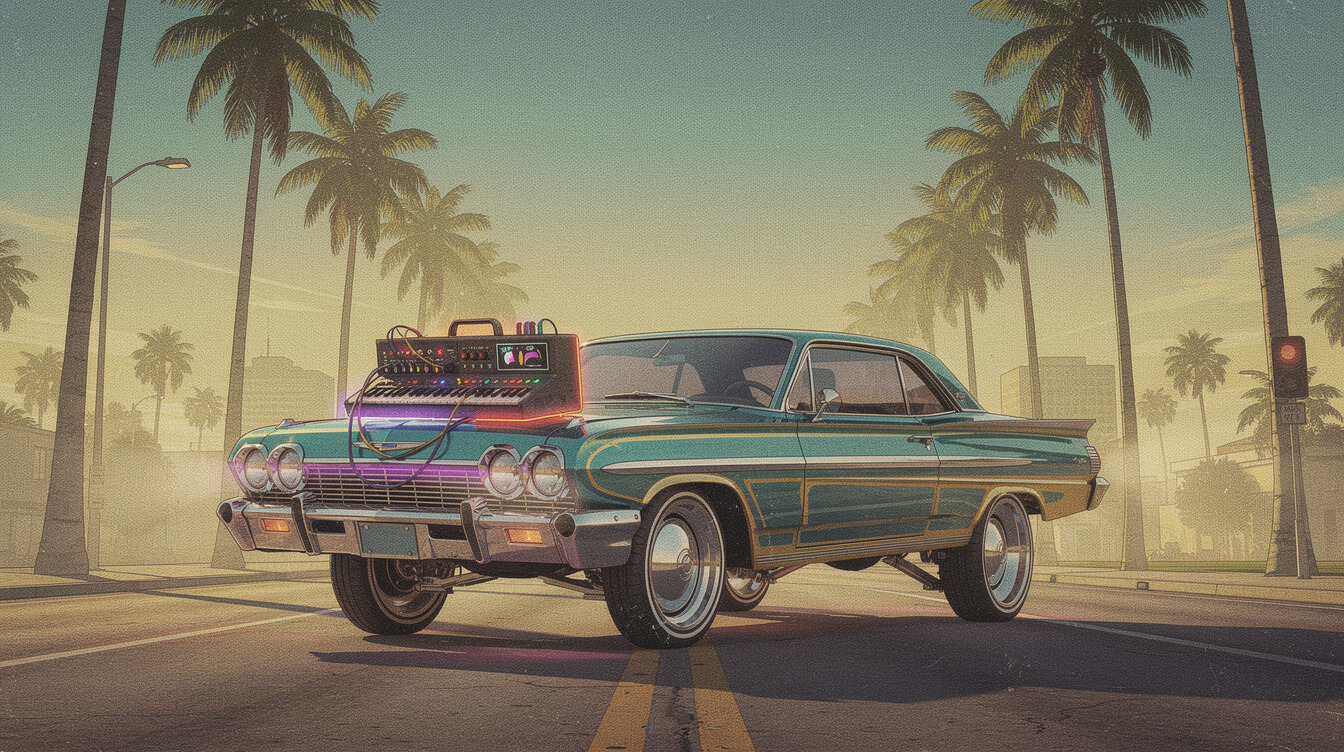
This is the era everyone means when they say “G-funk”: rolling Parliament and Funkadelic grooves slowed to a cruise, live bass, and a high, whining synth lead floating over the top. Dre didn’t invent funk sampling, but on The Chronic, released December 15, 1992, he turned it into a full sound system. The album peaked at number three on the Billboard 200, went triple platinum, and sold an estimated 5.7 million copies in the US.
“Deep Cover” (1992): the introduction
Before The Chronic, there was the title track to a Laurence Fishburne film. “Deep Cover” was the first time anyone heard Snoop Doggy Dogg on a record, and the original vinyl credit says so: “Dr. Dre introducing Snoop Doggy Dogg.” The menacing bassline set the template.
“Nuthin’ but a ‘G’ Thang”: the song that stalled at number two
“Nuthin’ but a ‘G’ Thang” is the purest example of the era. It’s built on Leon Haywood’s 1975 groove “I Want’a Do Something Freaky to You,” replayed and slowed down. It peaked at number two on the Hot 100 and never made number one, because Snow’s “Informer” was sitting on top of the chart. That high whistling lead most people call the G-funk whistle wasn’t a sample. Session player Colin Wolfe played it on a Moog, and Wolfe also played much of the bass and keys on the album. Warren G, Snoop’s stepbrother and the man who brought Snoop to Dre in the first place, worked on drum programming.
“Fuck wit Dre Day”: the diss with a groove
The second single went after Eazy-E and Luke over a reworked Funkadelic “(Not Just) Knee Deep” bounce, and it peaked at number eight on the Hot 100. The video’s “Sleazy-E” character holding a “Will Rap For Food” sign is still one of the meanest jokes in rap video history.
“Let Me Ride”: the Grammy winner
“Let Me Ride” lifts its hook from Parliament’s “Mothership Connection (Star Child)” (“swing down, sweet chariot, stop and let me ride”), and it won Dre the Grammy for Best Rap Solo Performance at the 1994 ceremony. It’s the quietest single on the album, and maybe the most influential: it’s pure late-night cruising music.
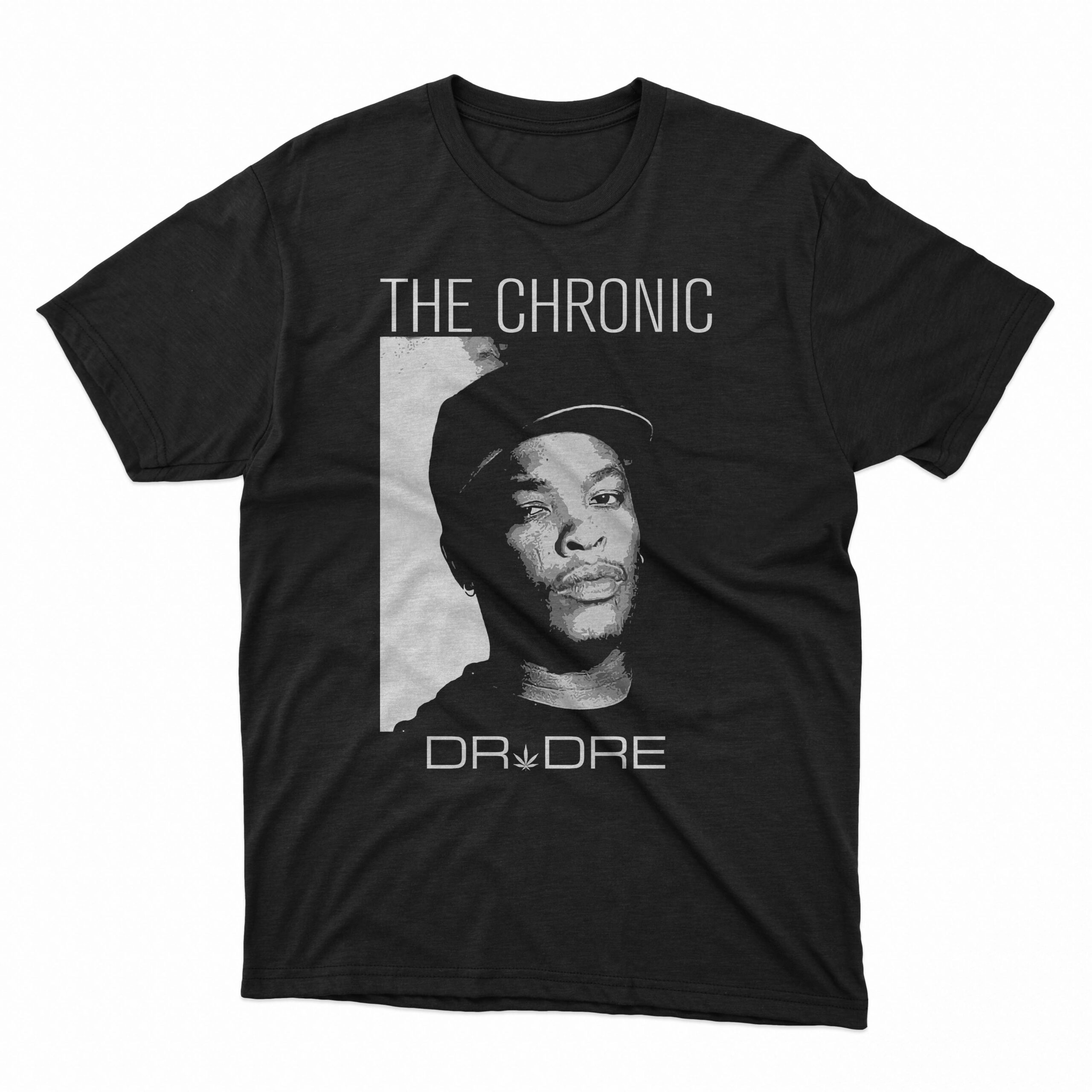
The Album That Invented G-Funk
December 1992 changed the sound of the West Coast for good. Our Dr. Dre The Chronic tee puts the record that launched Death Row and the G-funk era on a black shirt built for a slow ride with the windows down.
The ghostwriter in the room
Here’s the receipt most Chronic retrospectives leave out: Dre was the sound, but he wasn’t writing alone. The D.O.C., now without a rapping voice, ran quality control on the lyrics, and he’s credited as a co-writer on the album. His rule for the room, as recounted by the Recording Academy, was simple: write 16 lines on the legal pad, and when you hit 16, you’re done. That discipline is a big reason The Chronic sounds so lean.
Doggystyle: the Dre album that isn’t a Dre album
Dre produced Snoop’s debut Doggystyle (November 1993), and it debuted at number one with 806,000 copies sold in its first week, a record for a debut artist at the time. The credit question is still debated: Suge Knight later claimed Daz Dillinger did much of the beat work, while Snoop has said Daz and Warren G made beats but Dre produced the record. If you only own one Death Row album besides The Chronic, make it this one, and the Doggystyle T-Shirt is our tribute to it. (We marked Snoop’s 55th birthday yesterday with a look at the cousin who drew the Doggystyle cover.)
“California Love”: the last Death Row hit
“California Love” started as a Dre record. The original version, produced by Dre with Roger Troutman’s talkbox on the hook and a Joe Cocker “Woman to Woman” piano loop underneath, was meant for a Dre project before it became 2Pac’s comeback single. As a double A-side with “How Do U Want It,” it spent two weeks at number one on the Hot 100 in July 1996. The slower version on All Eyez on Me is a different mix built on a different sample, so check which one your playlist is serving you. By the time it topped the chart, Dre was gone. He left Death Row in March 1996 and started Aftermath the same month. For the rest of that story, see our guide to every Tupac album.
Aftermath and 2001: The Piano Riff That Reset Everything (1996–2001)

The Aftermath years started rough. Then Dre threw out the G-funk playbook and made the cleanest, hardest-hitting rap record of the decade.
“Been There, Done That” and the shaky start
The 1996 compilation Dr. Dre Presents the Aftermath went platinum but got mixed reviews, and its single “Been There, Done That” was literally a goodbye to gangsta rap. The Firm’s The Album (1997), with Nas, AZ, Foxy Brown and Nature, debuted at number one and still went down as a disappointment with critics and fans. Call it the platinum flop. The whispers said Dre had lost it. He hadn’t. He’d just changed tools, and he’d answer the whispers by name on his next album.
“Still D.R.E.”: the riff and the ghostwriter
2001 came out on November 16, 1999, and its lead single, “Still D.R.E.,” is the most recognizable Dr. Dre song in the world. The tell is that staccato three-note piano figure, played by a young Scott Storch, with Mel-Man adding drums and Dre polishing until it was spotless. The lyrics came from Jay-Z, who’s a credited writer. Dre explained it in a 1999 interview with Blaze: the first draft was all diamonds and Bentleys, so Jay sat down for twenty minutes and came back with a verse that sounded like LA. The wildest stat: “Still D.R.E.” peaked at only number 93 on the Hot 100 in 1999. It reached number 23 in 2022, twenty-three years later, after the Super Bowl halftime show.
“The Next Episode”: the actor’s sample
“The Next Episode,” produced by Dre and Mel-Man, peaked at number 23 in the US and number 3 in the UK. That brass-and-guitar riff comes from “The Edge,” a David Axelrod composition recorded in 1967 by David McCallum, the actor best known as Illya Kuryakin in The Man from U.N.C.L.E. and later as Ducky on NCIS. It’s also the song that gave the world Nate Dogg’s closing “smoke weed every day” outro. Read more about Nate Dogg, the LBC’s hook king.
“Forgot About Dre”: the Grammy and the answer
“Forgot About Dre,” with Eminem, was the album’s answer to everyone who’d written Dre off after the Aftermath stumbles. It won Best Rap Performance by a Duo or Group at the 2001 Grammys. That same night, Dre took home Producer of the Year (Non-Classical).
The deep cuts that show the method
“Xxplosive” is the 2001 deep cut producers study. Its slinky groove comes from “Bumpy’s Lament,” a track Isaac Hayes wrote for the 1971 Shaft soundtrack, credited to Soul Mann & the Brothers. Listen to it next to “The Next Episode” and you’ll hear the whole method: live bass from Mike Elizondo, sparse keys, and drums so crisp they sound like they’re right next to you. 2001 went six times platinum.
Dr. Dre Songs He Built for Everyone Else
Here’s where the producer layer takes over. Some of the biggest Dr. Dre songs aren’t credited to him as an artist at all.
Eminem: the Slim Shady takeover
Dre produced Eminem’s breakout single “My Name Is” (1999), which interpolates Labi Siffre’s “I Got The…” and won a Grammy. On “Guilty Conscience,” Dre plays the good-angel voice against Eminem’s devil, and “The Real Slim Shady” (produced by Dre and Mel-Man) reached number 4 on the Hot 100. Eminem’s own catalog runs much deeper than the Dre years, including the Royce da 5’9″ reunion we covered in our Hell: The Sequel anniversary.
Mary J. Blige and Eve: the R&B crossover
“Family Affair” (2001) gave Mary J. Blige the only Hot 100 number one of her career, six weeks at the top. That same year, Dre and Scott Storch produced Eve and Gwen Stefani’s “Let Me Blow Ya Mind,” which peaked at number two and won the first-ever Grammy for Best Rap/Sung Collaboration.
50 Cent and The Game: the G-Unit years
“In da Club” (2003), produced by Dre with Mike Elizondo, spent nine weeks at number one on the Hot 100 and finished as Billboard’s top song of the year. Two years later, Dre and Elizondo produced The Game’s “How We Do,” which hit number 4. Here’s a common myth to correct: The Game’s “Hate It or Love It” isn’t a Dre beat. It was produced by Cool & Dre, a Miami duo, with Dr. Dre adding production. More on 50’s run in our 50 Cent birthday piece, and on The Game’s post-Aftermath reset in our R.E.D. Album look-back. If The Documentary is your era, the The Game The Documentary T-Shirt covers it.
Busta Rhymes: the Big Bang twist
Dre co-executive produced Busta’s The Big Bang (2006), which became Busta’s only number one album, and he produced cuts like “Get You Some.” But its biggest single, “Touch It,” was a Swizz Beatz beat. We covered that album in our Big Bang at 20 piece.
Kendrick Lamar: the executive producer era
Dre was executive producer of Kendrick Lamar’s good kid, m.A.A.d city (2012) and mixed it, and he’s featured on “The Recipe” and “Compton.” Here’s another correction: he didn’t produce either song. Scoop DeVille made “The Recipe,” and Just Blaze made “Compton.” Dre’s fingerprint is the polish, the mix and the co-sign. That co-sign echoes all the way to GNX and the West Coast G-funk revival.
Compton, Detox and the Long Silence (2001–Now)
After 2001, Dre’s solo career went quiet for sixteen years, and the reason became one of rap’s longest-running punchlines: Detox.
Detox: announced, teased, scrapped
Dre started talking about a final album called Detox in the early 2000s. The project got two big singles about a decade later, “Kush” (2010, with Snoop Dogg and Akon) and “I Need a Doctor” (2011, with Eminem and Skylar Grey), which reached number 4 on the Hot 100. Here’s another credit twist: Dre didn’t produce either song. DJ Khalil and Bekon made “Kush,” and Alex da Kid made “I Need a Doctor.”
So, did Dr. Dre ever drop Detox?
No. In August 2015, on his Beats 1 radio show The Pharmacy, Dre said it plainly: Detox didn’t come out because he didn’t like it. “It wasn’t good,” he said, and he couldn’t do that to his fans. It’s a strange kind of jewel: one of the most anticipated rap albums ever was shelved by its own producer’s quality control.
Compton (2015): the surprise album
Instead, Dre dropped Compton on August 7, 2015, inspired by the making of the Straight Outta Compton film. It launched as an Apple Music and iTunes exclusive, debuted at number two on the Billboard 200, and Dre pledged his artist royalties to a performing arts and entertainment facility for young people in Compton. It’s also a showcase for new voices, especially Anderson .Paak, who signed to Aftermath the next year. For the companion story, read our breakdown of the Straight Outta Compton soundtrack.
After Compton: games, halftime and Missionary
Dre’s newest music has shown up in unexpected places. In December 2021, GTA Online: The Contract made a whole storyline about recovering Dre’s stolen phone full of unreleased tracks, and new Dre songs dropped inside the game. In February 2022, he headlined the Super Bowl LVI halftime show at SoFi Stadium with Snoop, Eminem, Mary J. Blige and Kendrick Lamar, with 50 Cent and Anderson .Paak joining. The show won an Emmy. In December 2024, he produced all of Snoop Dogg’s Missionary, released on Death Row and Aftermath together, which is a full-circle moment. There is no confirmed new Dre solo album as of this writing, so ignore any “Dre 2026 album” posts until he says it himself.
His health
Dre was hospitalized with a brain aneurysm in January 2021. In a 2024 interview, he revealed he’d also suffered three strokes during roughly two weeks in intensive care. About a year later, he was headlining the Super Bowl.
Where to Start: A 10-Song Dr. Dre Primer
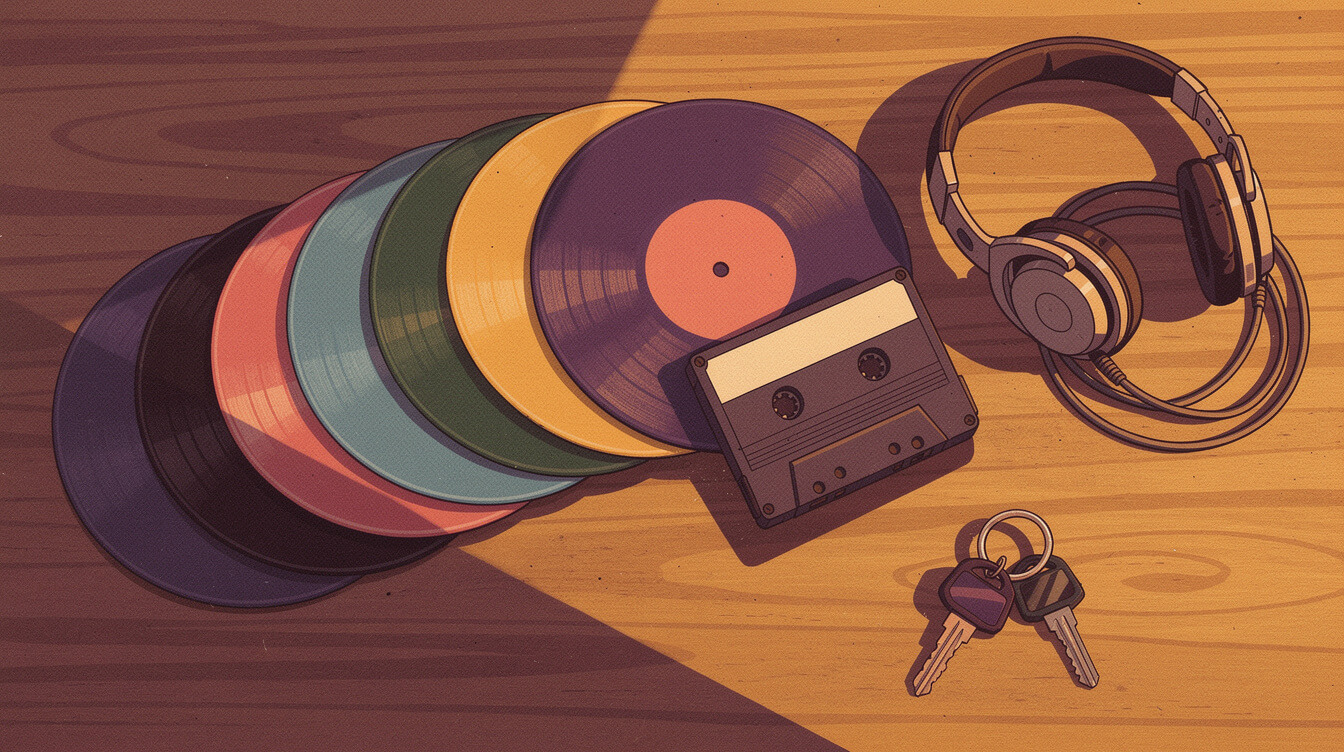
If you only have forty minutes, play these ten in order. They’re chosen to cover every era and every layer, not just the obvious hits.
- World Class Wreckin’ Cru – “Surgery” (1984). Where it all starts: electro, sequins and a drum machine.
- N.W.A – “Straight Outta Compton” (1988). The density era at full power.
- The D.O.C. – “The Formula” (1989). The G-funk preview hiding on a Ruthless record.
- Dr. Dre feat. Snoop Doggy Dogg – “Deep Cover” (1992). The introduction.
- Dr. Dre feat. Snoop Doggy Dogg – “Nuthin’ but a ‘G’ Thang” (1992). The blueprint, with Colin Wolfe’s Moog on top.
- Dr. Dre – “Let Me Ride” (1993). The Grammy winner and the purest cruising record.
- 2Pac feat. Dr. Dre & Roger Troutman – “California Love” (original, 1995). The last Death Row smash.
- Dr. Dre feat. Snoop Dogg – “Still D.R.E.” (1999). Scott Storch’s riff and Jay-Z’s pen.
- 50 Cent – “In da Club” (2003). Nine weeks at number one, Dre and Mike Elizondo on the boards.
- Dr. Dre feat. Kendrick Lamar, Marsha Ambrosius & Candice Pillay – “Genocide” (2015). The late-career statement from Compton, with the student from good kid riding shotgun.
Want a deeper dive into another all-time great’s catalog? We wrote about Rakim’s songs, including the lost Dr. Dre record the two made at Aftermath.
Dr. Dre Songs FAQ
What is Dr. Dre’s most famous song?
“Still D.R.E.” (1999) is his most recognized song worldwide, though it only peaked at number 93 on the Hot 100 when it came out. Commercially, his biggest chart hits as a lead artist are “Nuthin’ but a ‘G’ Thang” (number 2) and “I Need a Doctor” (number 4). Counting productions, “In da Club” and “Family Affair” were bigger still.
Did Dr. Dre write his own lyrics?
Often not, and he’s never hidden it. The D.O.C. was a key writer during the Chronic era, and Jay-Z wrote “Still D.R.E.” Dre’s genius is as a producer and editor: he knows exactly what a verse needs to sound like and who can write it.
Who played the G-funk whistle on “Nuthin’ but a ‘G’ Thang”?
Session musician Colin Wolfe, on a Moog synthesizer. Wolfe also played bass and keys across much of The Chronic.
Did Dr. Dre ever release Detox?
No. He said in August 2015 that he shelved it because it wasn’t good enough, and released Compton instead. “Kush” and “I Need a Doctor” were the only official Detox-era singles.
Is Dr. Dre a billionaire?
Yes, according to Forbes. After years of Dre calling himself hip-hop’s first billionaire following the 2014 sale of Beats to Apple for $3 billion, Forbes added him to its billionaires list in 2026.
Did Dr. Dre have a stroke?
He suffered a brain aneurysm in January 2021 and has said he also had three strokes while in intensive care. He recovered and performed at the Super Bowl about a year later.
Final Thoughts: Still the Standard
Line up all the Dr. Dre songs in order, from “Surgery” to Missionary, and the common thread isn’t a sound. It’s a standard. He threw away the electro when the street wanted something harder, traded sample-heavy G-funk for live keys and session players when everyone else started copying it, and threw away an entire album when it wasn’t good enough. The credits show he never did it alone: Yella, The D.O.C., Colin Wolfe, Warren G, Mel-Man, Scott Storch, Mike Elizondo and Jay-Z all have fingerprints on the classics. But the ear deciding what was finished was always Dre’s.
Start with the primer, then go deep on one era. And when somebody tells you “Hate It or Love It” or “Touch It” is a Dre beat, now you’ve got the receipts.
Get the Culture in Your Inbox
Producer deep-dives, album anniversaries, sample and liner-note receipts, and first dibs on new drops. No spam, just hip-hop.

🎧 Never Miss a Drop
Exclusive product releases, hip-hop deep dives, and member-only discounts. Straight to your inbox.
Free forever. No spam. Unsubscribe anytime.
Get the Culture, Delivered
Deep dives into hip-hop history, exclusive product drops, and discounts sent straight to your inbox. No spam, just culture.
Join 2,000+ hip-hop heads already in the loop. Unsubscribe anytime.